Japanese destroyer Hibiki (1932)
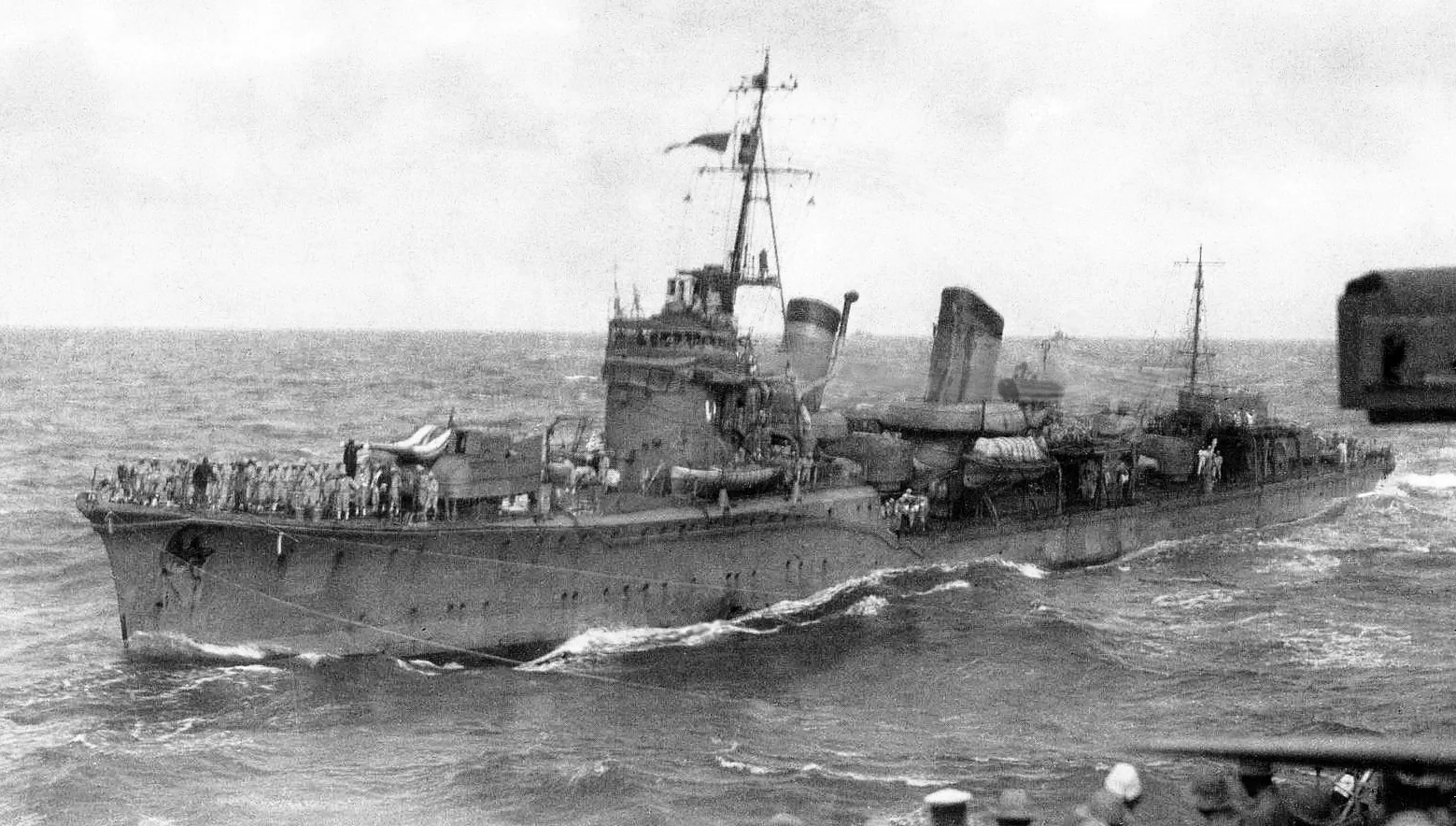
Service
- as Hibiki31 March 1933 — 5 October 19452,193 days of the war
- as Verniy (Верный)5 April 1947 — 20 February 1953
- Name
- Hibiki
- Pennant / hull number
- 1932
- Namesake
- "Echo"
- Builder
- Maizuru Naval Arsenal
- Ordered
- 1923
- Laid down
- 21 February 1930
- Launched
- 16 June 1932
- Commissioned
- 31 March 1933
- Struck
- 5 October 1945
- Fate
- Sunk as target mid-1970s
- Status
- Wreck
Specifications
- Displacement, standard
- 1,750 long tons (1,778 t)
- Length
- 118.41 m (388.5 ft) OA
- Beam
- 10.4 m (34.1 ft)
- Draught
- 3.2 m (10.5 ft)
- Speed
- 38 knots (70.4 km/h, 43.7 mph)
- Range
- 5,000 nmi (9,260 km)
- Complement
- 219
- Main gun
- 127 mm (5 in)
Hibiki was a Akatsuki-class destroyer (1931) destroyer of the Imperial Japanese Navy. She carried the pennant number 1932. She was named for "Echo". Maizuru Naval Arsenal laid her keel on 21 February 1930. She entered service on 31 March 1933, having been launched on 16 June 1932.
She was one of two ships of her class. The class followed the Fubuki-class destroyer and was succeeded by the Hatsuharu-class destroyer.
Displacement was 1,750 long tons. She measured 118.4 m (388 ft) long with a beam of 10.4 m (34 ft). Her designed speed was 38 knots, and she carried a complement of 219. Her main battery was of 127 mm (5 in) calibre.
She served with the Imperial Japanese Navy as Hibiki until 5 October 1945. She then passed to the Soviet Navy, serving as Verniy (Верный) from 5 April 1947. She was in commission for 2,193 days of the Second World War. She was struck from the register on 5 October 1945.
She was expended as a target. The wreck survives.
Written from the harvested record. Every figure above is sourced; the wording is this site's own.
Armament and machinery
Armament and machinery
- Propulsion
- 4 × Kampon type boilers
- 2 × Kampon Type Ro geared turbines
- 2 × shafts at 50000 ihp
- Armament
- 6 × Type 3 127 mm 50 caliber naval guns (3×2)
- up to 22 × Type 96 25 mm AT/AA Guns
- up to 10 × 13 mm AA guns
- 9 × 610 mm (24 in) torpedo tubes
- 36 × depth charges
Sister ships
Sources
- Facts harvested from Japanese destroyer Hibiki (1932) on Wikipedia. Figures only — no wording is taken from it.
- Photograph: Shizuo Fukui — Kure Maritime Museum, Japanese Naval Warship Photo Album: Destroyers , edited by Kazushige Todaka, p. 71 — Public domain — Wikimedia Commons