United States Navy — Light cruiser
USS Atlanta (CL-104) — service history
This is the full service history. For the vessel's particulars, photograph and specifications, see the entry.
In the words of the US Navy. The account below is reproduced verbatim from the Dictionary of American Naval Fighting Ships, compiled by the Naval History and Heritage Command — a work of the United States Government, in the public domain, and the only text on this site not written here.
Before commissioning
A city in northwestern Georgia. Originally called Terminus and later Marthasville, the community was renamed Atlanta when it was incorporated as a city in 1847. Since Atlanta served as the center of the South's system of military supplies during the first three years of the Civil War, General William Tecumseh Sherman made her a main objective in his drive across the Confederacy to the sea. The city, which was almost completely destroyed by Sherman's artillery during the siege in the late summer of 1864, was rebuilt with comparative rapidity during the Reconstruction period. Atlanta became the state capital in 1868 and has since grown into one of the South's most important centers of industry, transportation, and finance.
When Atlanta, a screw gunboat acquired by the Navy in the autumn of 1858, was bought outright on 26 May 1859 under a lease-purchase option contained in the contract of charter, she was renamed Sumpter (q.v.).
Second World War 1939–1945
1943
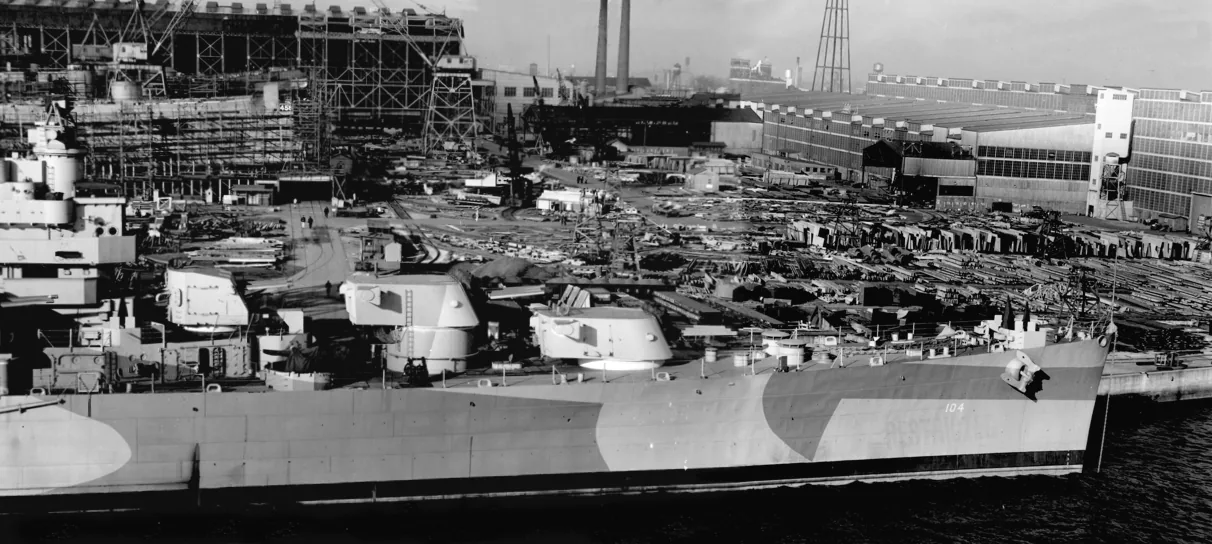
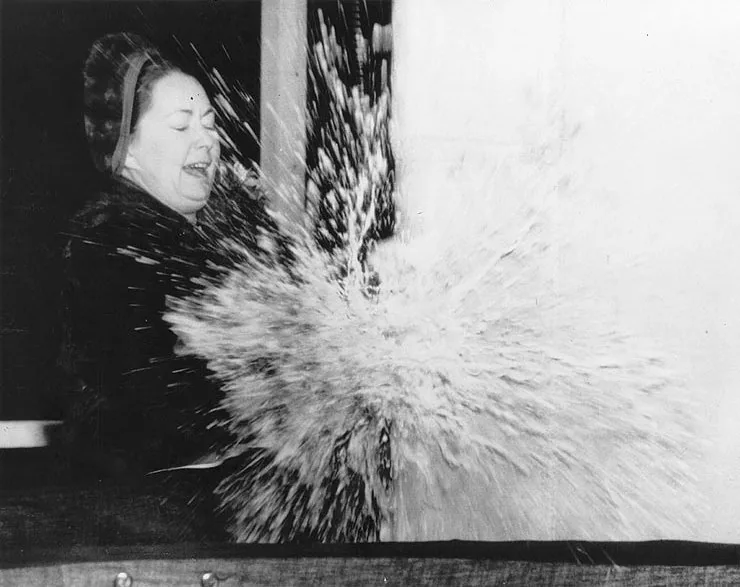
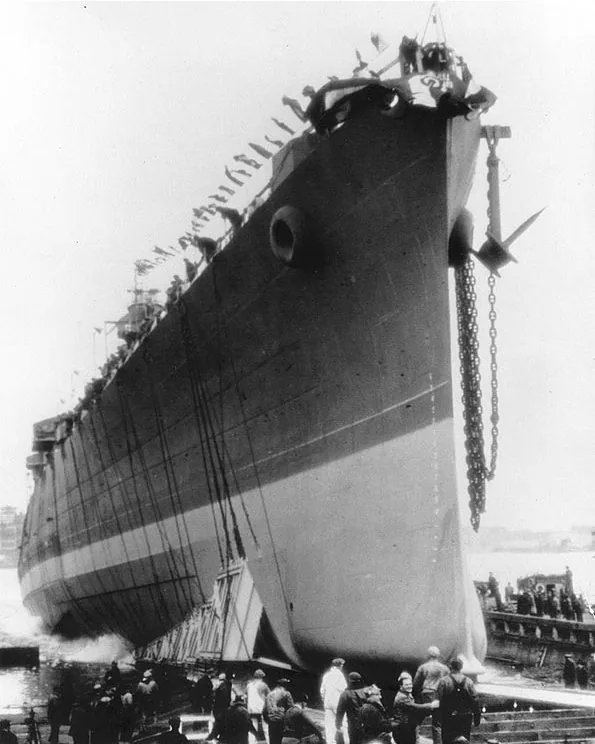
The fourth Atlanta (CL-104) was laid down on 25 January 1943 at Camden, N.J., by the New York Shipbuilding Corp.; launched on 6 February 1944; sponsored by Mrs. John R. Marsh (better known by her pen name, Margaret Mitchell, the author of the novel Gone With The Wind) who also sponsored the cruiser Atlanta (CL-51); and commissioned on 3 December 1944, Capt. B. H. Colyear in command.
1945
After commissioning, the light cruiser got underway on 5 January 1945 for shakedown training in the Chesapeake Bay and the Caribbean. Upon the completion of those exercises, Atlanta arrived at Norfolk on 14 February and then moved up the coast to Philadelphia. After a period in the navy yard there, she sailed on 27 March for the Pacific. She stopped at Guantanamo Bay, Cuba, and transited the Panama Canal before reaching Pearl Harbor on 18 April. From 19 April to 1 May, the ship conducted training exercises in Hawaiian waters. She then sailed to Ulithi and reported to Task Force (TF) 58 on 12 May.
From 22 to 27 May, Atlanta served with the Fast Carrier Task Force operating south of Japan near Okinawa while its aircraft struck targets in the Ryukyus and on Kyushu to support forces fighting for Okinawa. Her task group broke up on 13 June, and Atlanta entered San Pedro Bay, Philippines, on 14 June. Following two weeks of upkeep, she sailed on 1 July with Task Group (TG) 38.1 and once again protected the fast carriers launching strikes against targets in the Japanese home islands. During these operations, the cruiser took part in several shore bombardment missions against Honshu and Hokkaido.
Atlanta was operating off the coast of Honshu when the Japanese surrendered on 15 August 1945. On 16 September, she entered Tokyo Bay and remained there through 29 September.
Post-war 1946–1949
1946
With over 500 passengers on board, the cruiser sailed on 30 September for the United States. She paused en route at Guam before arriving in Seattle, Wash., on 24 October. The vessel then proceeded to the shipyard at Terminal Island, Calif., for an extensive overhaul. She was ready to return to sea on 3 January 1946 and got underway for Sasebo, Japan.
From January through June, Atlanta operated amone several Far Eastern ports which included Manila, Philippines; Tsingtao and Shanghai, China; Okinawa; Saipan; Nagasaki, Kagoshima, and Yokosuka, Japan. In June, she returned via Guam to the United States and arrived at San Pedro, Calif., on the 27th. Two days later, the cruiser entered the San Francisco Naval Shipyard for overhaul. On 8 October, she headed toward San Diego for sea trials.
1947
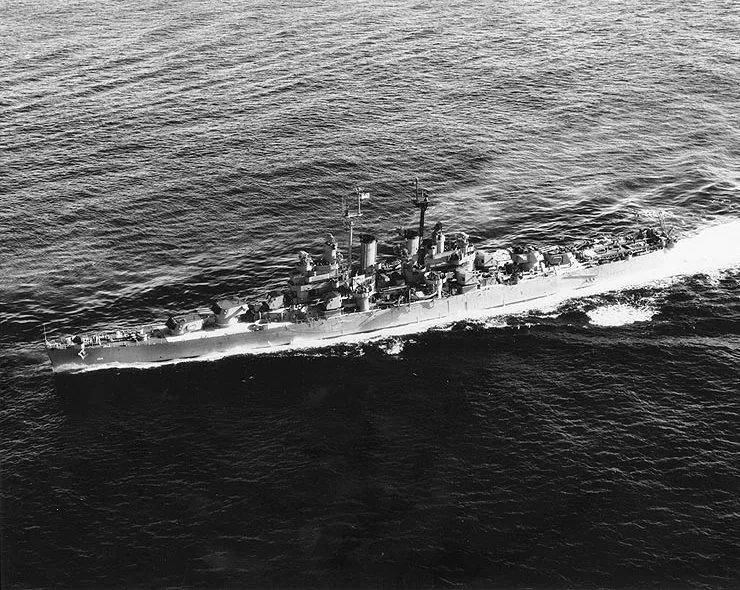
The cruiser remained in southern California waters until 23 February 1947, when she left for maneuvers off Hawaii. On 1 May, she departed Pearl Harbor with TF 38 for a visit to Australia. The ships stayed in Sydney through 27 May, then sailed for San Pedro, Calif., via the Coral Sea, Guadalcanal, Tulagi, and Guam. She dropped anchor at San Pedro on 28 July. A series of maneuvers off the California coast ensued, the Atlanta returned to Pearl Harbor on 28 September. She continued on to Yokosuka, Japan. After two days at anchor there, she sailed to Tsingtao, China. Other ports of call during the deployment were Hong Kong; Singapore; and Keelung, China. On 27 April 1948, the cruiser got underway and proceeded via Kwajalein and Pearl Harbor to San Diego.
Following her arrival back in the United States on 19 May, Atlanta conducted exercises off San Diego. She paid a visit to Juneau, Alaska, from 29 June to 6 July. She then arrived at Seattle on 12 July to begin a major overhaul. The cruiser returned to San Diego for local maneuvers on 20 November.
1949
In early February 1949, the ship embarked naval reservists for a training cruise and operated between San Diego and San Francisco until 1 March when she entered the Mare Island Naval Shipyard to commence deactivation. Atlanta was decommissioned on 1 July 1949 and placed in the Pacific Reserve Fleet. Her name was struck from the Navy list on 1 October 1962, and she was earmarked for disposal.
Vietnam War period 1964–1975
1964
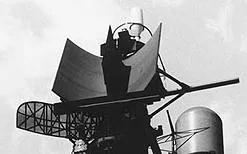
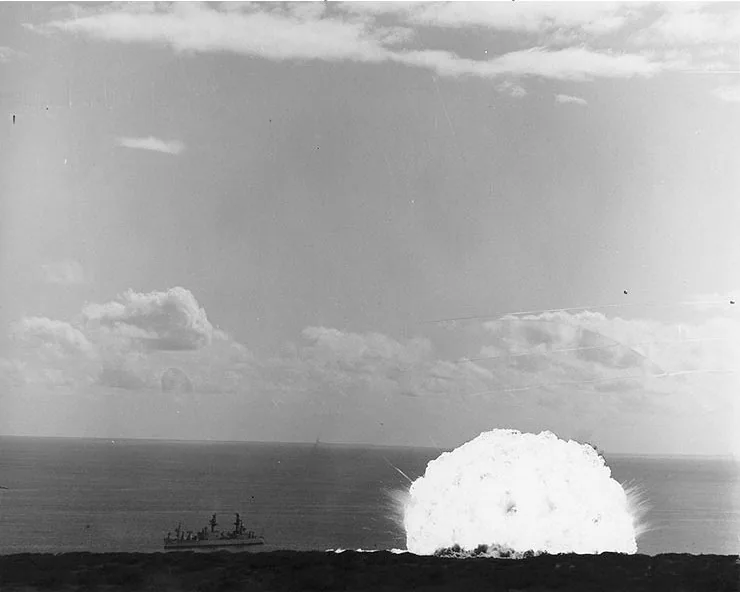
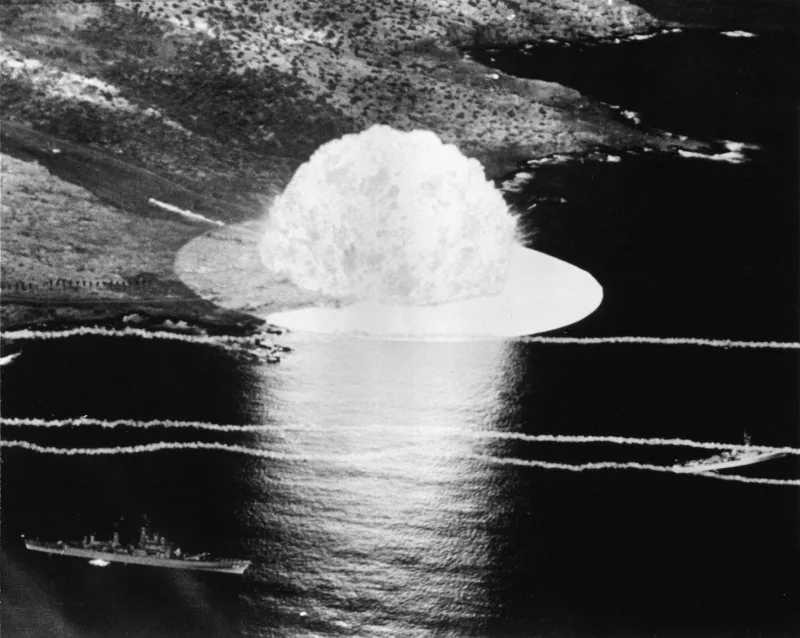
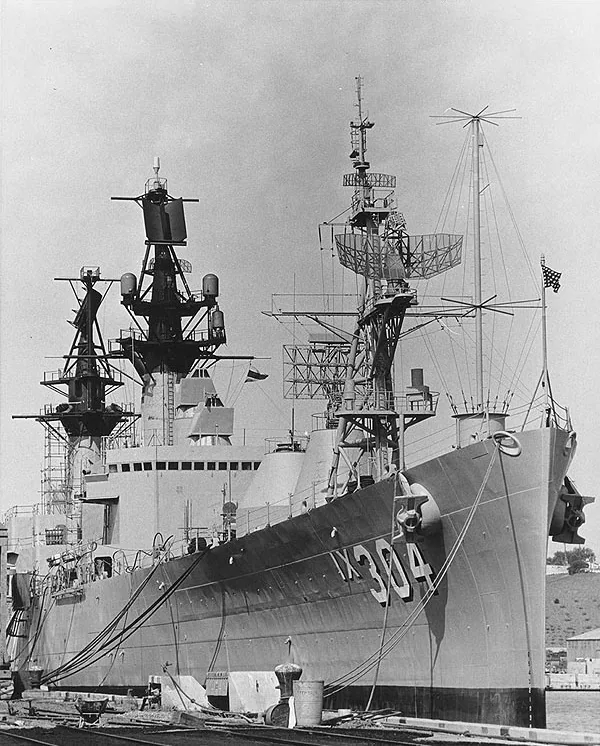
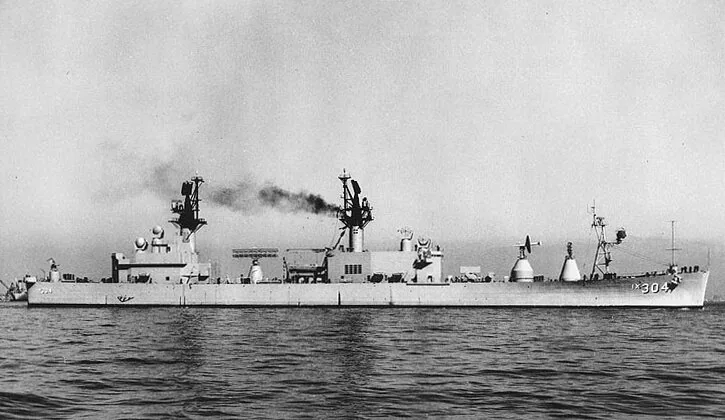
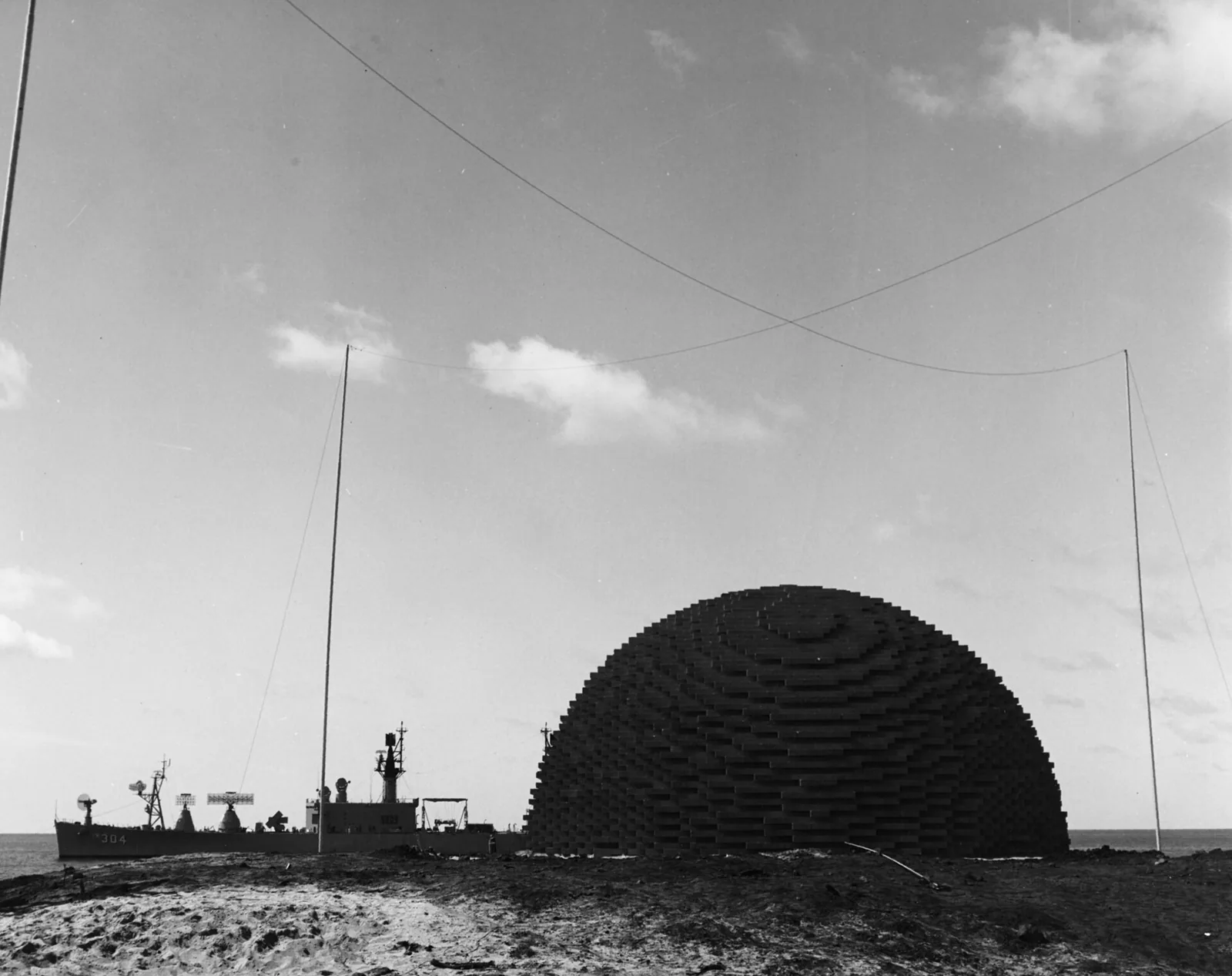
Atlanta's career, however, had not yet ended. Instead, she underwent an extensive modification at the San Francisco Naval Shipyard. Reinstated on the Navy list as IX-304 on 15 May 1964, the vessel was converted to a target ship for studies of the effects of high energy air explosions on naval ships. The changes included cutting her hull down to the main deck level and erecting various experimental superstructures-designed for guided missile frigates and guided missile destroyers-on her deck. In these configurations she was subjected to explosions to determine whether or not the experimental structures could satisfactorily combine essential lightness with equally essential strength and blast resistance. These three tests were conducted off the coast of Kahoolawe, Hawaii, in early 1965. Atlanta was damaged, but not sunk, by the experiments. She was laid up at Stockton, Calif., sometime late in 1965. Her name was again struck from the Navy list on 1 April 1970, and the former light cruiser was sunk during an explosive test off San Clemente Island, Calif., on 1 October 1970.
Other photographs
Held for this vessel, and not tied to any part of the account above.




References
Every work this entry draws on. There are no numbered markers in the text above: what we hold is the provenance of the page — this history, this article, these photographs.
- History Atlanta IV (CL-104) Dictionary of American Naval Fighting Ships, Naval History and Heritage Command. A work of the United States Government, in the public domain — the only text on this site reproduced verbatim.
- Facts USS Atlanta (CL-104) Structured facts only — dates, dimensions, armament and fate. No wording is taken from it. Harvested 1 August 2026.
- Photograph USS Atlanta (CL-104) leaves Seattle on 27 June 1948 (NH 98878) Unknown author — U.S. Navy photo NH 98878 — Public domain — Wikimedia Commons
- Photograph 80-G-165992 Cleveland class camouflage measure 33 Unknown author — history.navy.mil — Public domain — Wikimedia Commons
- Photograph USS Atlanta (CL-104) at New York Shipbuilding Corporation, Camden, New Jersey (USA), on 22 November 1944 (19-LCM-CL104-9-10) U.S. Navy — U.S. Navy Bureau of Ships photos 19-LCM-CL104-9 and 19-LCM-CL104-10 from usndazzle.com — Public domain — Wikimedia Commons
- Photograph USS Atlanta (CL-104) at sea, en route to Sydney, Australia, 13 May 1947 Unknown author — U.S. Navy photo NH 98877 — Public domain — Wikimedia Commons
- Photograph AN-SPS-39 Atlanta 1964 U.S. Navy — Official U.S. Navy photo NH 98885 (cropped) from the U.S. Naval History and Heritage Command — Public domain — Wikimedia Commons
- Photograph Christening of USS Atlanta (CL-104) by Margaret Mitchell Marsh, 6 February 1944 US Navy Employee — Naval Historical Center — Public domain — Wikimedia Commons
- Photograph Detonation of explosives near USS Atlanta (IX-304), Operation Sailor Hat, shot Charlie, 1965 US Navy Employee — Naval Historical Center — Public domain — Wikimedia Commons
- Photograph Margaret Mitchell Christens USS Atlanta (CL-104) 1944 Department of the Navy--Naval Historical Center. — This image has been extracted from another file — Public domain — Wikimedia Commons
- Photograph Margaret Mitchell Christens USS Atlanta (CL-104) U.S. Naval Historical Center Photograph — Department of the Navy--Naval Historical Center — Public domain — Wikimedia Commons
- Photograph Operation Sailor Hat Charlie Shot US Navy Employee — USS England Official Site on the USS England Sailor Hat Page — Public domain — Wikimedia Commons
- Photograph Photo NH 98882 USS Atlanta (IX-304) US Navy Employee — https://www.history.navy.mil/our-collections/photography/numerical-list-of-images/nhhc-series/nh-series/NH-98000/NH-98882.html — Public domain — Wikimedia Commons
- Photograph TNT detonation on Kaho'olawe Island during Operation Sailor Hat, shot Bravo, 1965 US Navy Employee — Naval Historical Center / http://www.history.navy.mil/photos/events/ev-1960s/ev-1965/op-sa-ht.htm — Public domain — Wikimedia Commons
- Photograph USS Atlanta (CL-104) at Melbourne 1947 Australian armed forces — Public domain — Wikimedia Commons
- Photograph USS Atlanta (CL-104) at sea, en route to Sydney, Australia, 13 May 1947 (cropped) Unknown author — U.S. Navy photo NH 98877 — Public domain — Wikimedia Commons
- Photograph USS Atlanta (CL-104) June 1948 Unknown author — Transferred from en.wikipedia to Commons by Common Good using CommonsHelper . http://www.history.navy.mil/photos/images/h98000/h98879c.htm http://www.history.navy.mil/photos/images/h98000/h98879.jpg — Public domain — Wikimedia Commons
- Photograph USS Atlanta (CL-104) leaves Seattle on 27 June 1948 (NH 98878) (cropped) Unknown author — U.S. Navy photo NH 98878 — Public domain — Wikimedia Commons
- Photograph USS Atlanta (CL-104) slides down the shipways, 6 February 1944 US Navy Employee — Naval Historical Center — Public domain — Wikimedia Commons
- Photograph USS Atlanta (IX-304) off the San Francisco Naval Shipyard following conversion, late 1964 US Navy Employee — Naval Historical Center — Public domain — Wikimedia Commons
- Photograph USS Atlanta (IX-304) with 500 ton-TNT charge in April 1965 U.S. Navy — Official U.S. Navy photo USN 1110434 from the U.S. Navy Naval History and Heritage Command — Public domain — Wikimedia Commons