United States Navy — Destroyer
USS Edison (DD-439) — service history
This is the full service history. For the vessel's particulars, photograph and specifications, see the entry.
In the words of the US Navy. The account below is reproduced verbatim from the Dictionary of American Naval Fighting Ships, compiled by the Naval History and Heritage Command — a work of the United States Government, in the public domain, and the only text on this site not written here.
Before commissioning
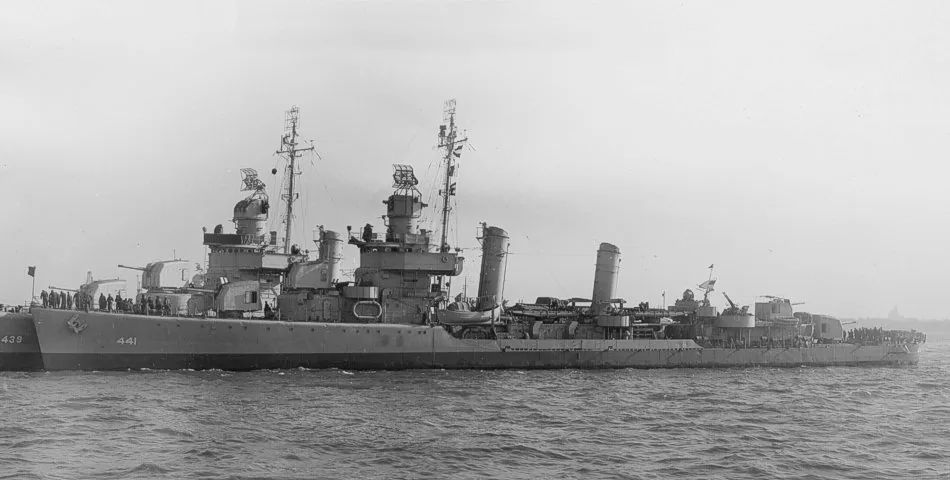
Thomas Alva Edison, born 11 February 1847 in Milan, Ohio, was one of the most prolific and imaginative inventors in world history. The importance of his accomplishments was highlighted when Congress in 1928 awarded him a gold medal for development and application of inventions which revolutionized civilization. Much of his work was of direct benefit to the Navy. He died 18 October 1931 in West Orange, N.J.
Second World War 1939–1945
1940
Edison (DD-439) was launched 23 November 1940 by Federal Shipbuilding and Dry Dock Co., Kearny, N.J.; sponsored by Mrs. Thomas A. Edison, widow of the inventor; and commissioned 31 January 1941, Lieutenant Commander A. C. Murdaugh in command.
In the months following commissioning Edison operated on the east coast, training and exercising with the fleet, with passenger and mail runs to Argentia. In November she escorted a convoy to Iceland, her first of many voyages which kept the lifelines open to northern bases and Britain.
1942 Fedhala
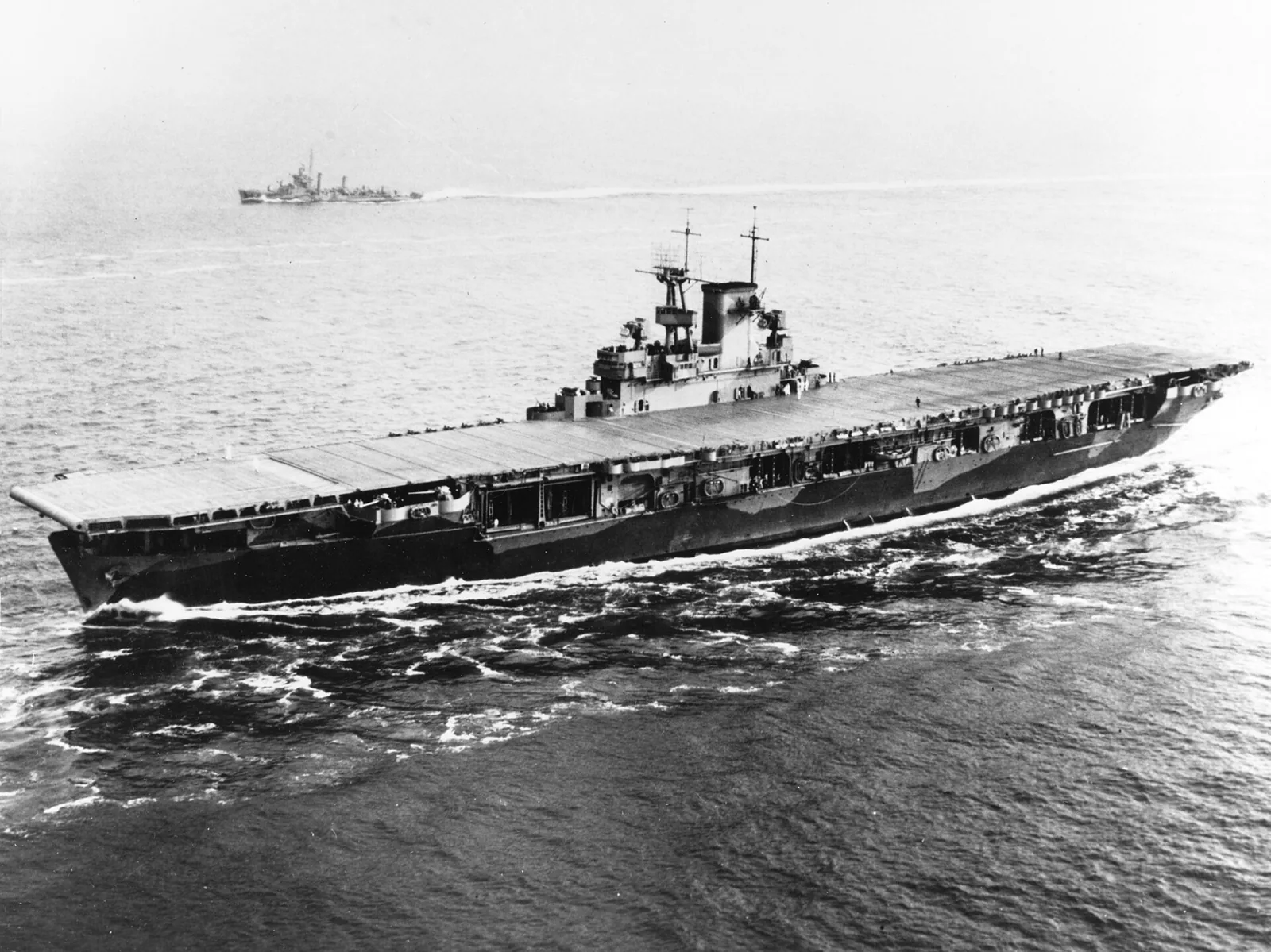
On 24 October 1942 Edison set sail from Norfolk with a task group bound for the invasion at Fedhala, French Morocco, 8 November. She engaged shore batteries at Cape Fedhala and protected shipping lying off the beachheads. Returning to Norfolk 1 December, Edison made a voyage to Gulf ports escorting tankers, then resumed safeguarding convoys from New York and Norfolk to Casablanca and Oran.
1943 Sicily
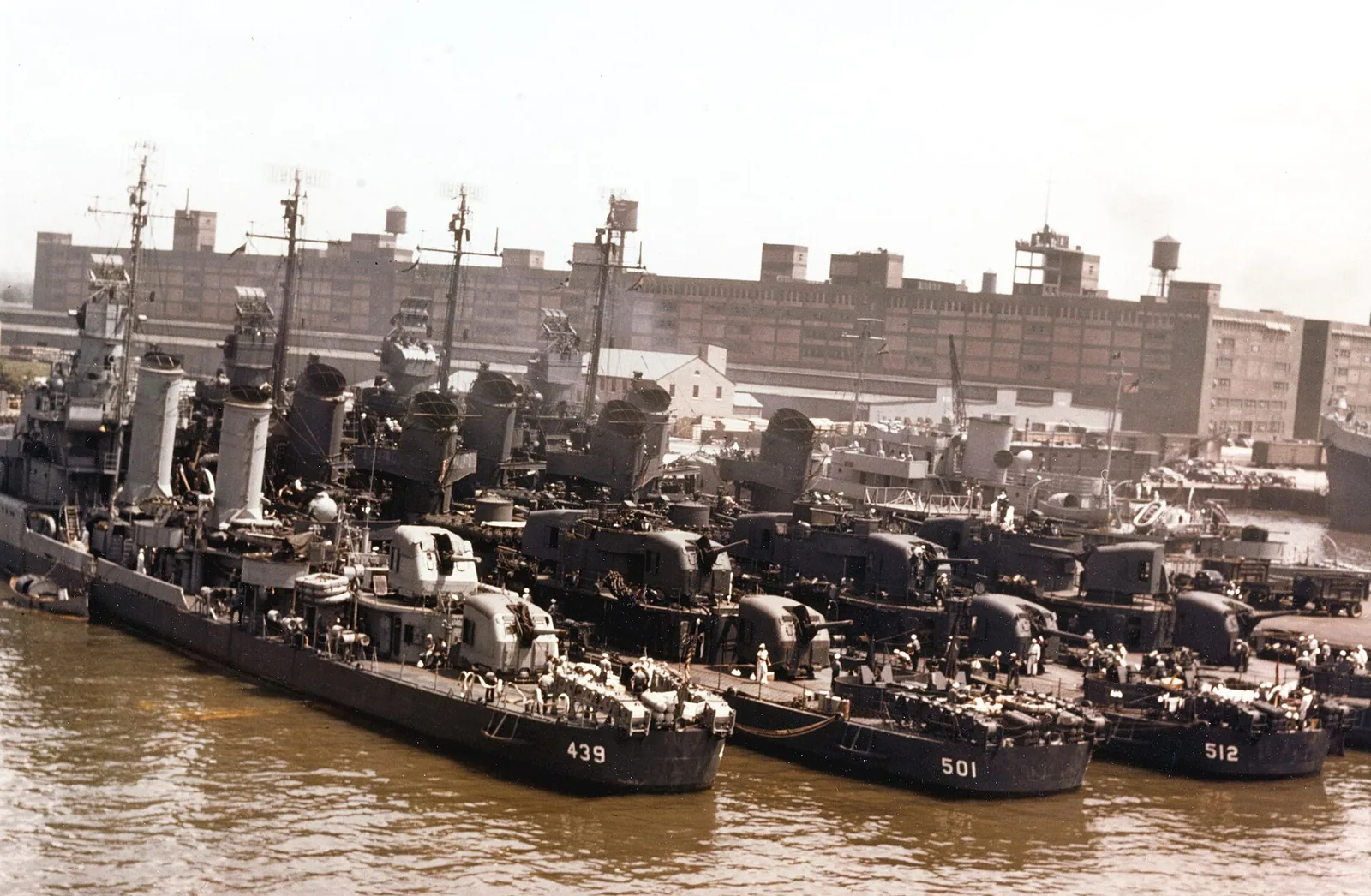
From July 1943 to February 1944 Edison served in the Mediterranean. On 10 July she provided fire support for the troops landing on Sicily to which she escorted support convoys from Algiers and Bizerte until September. She screened the assault transports in the invasion at Salerno 9 September, and remained off the beaches to guard minesweepers and provide fire support for the advancing troops. Continuing Mediterranean escort duty, on 16 December Edison screened while Woolsey (DD-437) forced U-73 to the surface with depth charges and sank it with gunfire. Edison picked up 11 survivors. On 21 January 1944 Edison arrived off Anzio to patrol during the invasion landings. She provided fire support to the beleagured troops and escorted transports and cargo ships to the beachhead until February, then sailed home for overhaul.
1944
Edison returned to the Mediterranean 1 May 1944 for escort and patrol off Italy. On 15 August she was in the thick of the invasion of southern France. Until the end of the year, she continued to pound shore batteries, railroads, and troop concentrations as well as patrol. At New York 17 January 1945, Edison underwent overhaul, then escorted a convoy to Havre during April and May.
1945
Edison sailed intercoastal from New York 8 June 1945, and was training at Pearl Harbor when the war ended. She reached Japan in September for the occupation. She left Nagoya 3 November to be a weather station in the Aleutians. The destroyer returned to San Francisco 30 December, then continued to the east coast where she was placed out of commission in reserve at Charleston 18 May 1946, later in Philadelphia, where she lay at end of 1962.
References
Every work this entry draws on. There are no numbered markers in the text above: what we hold is the provenance of the page — this history, this article, these photographs.
- History Edison (DD-439) Dictionary of American Naval Fighting Ships, Naval History and Heritage Command. A work of the United States Government, in the public domain — the only text on this site reproduced verbatim.
- Facts USS Edison (DD-439) Structured facts only — dates, dimensions, armament and fate. No wording is taken from it. Harvested 1 August 2026.
- Photograph USS Edison (DD-439) Unknown author — Unknown source — Public domain — Wikimedia Commons
- Photograph USS Edison (DD-439), USS Schroeder (DD-501), USS Spence (DD-512) and USS Foote (DD-511) at naval Station Norfolk in 1943 (80-G-K-14999) Lieutenant Charles Kerlee, USNR — U.S. Navy photo 80-G-K-14999 — Public domain — Wikimedia Commons
- Photograph USS Wasp (CV-7) entering Hampton Roads on 26 May 1942 Unknown author — U.S. Navy photo 80-G-12240 — Public domain — Wikimedia Commons
- Photograph USS Wilkes (DD-441) at anchor in December 1942 USN — Official U.S. Navy Bureau of Ships photo 19-N-40413 available at Destroyerhistory.org — Public domain — Wikimedia Commons