United States Navy — Aircraft carrier
USS Essex (CV-9) — service history
This is the full service history. For the vessel's particulars, photograph and specifications, see the entry.
In the words of the US Navy. The account below is reproduced verbatim from the Dictionary of American Naval Fighting Ships, compiled by the Naval History and Heritage Command — a work of the United States Government, in the public domain, and the only text on this site not written here.
Second World War 1939–1945
1941
The fourth Essex (CV-9) was laid down on 28 April 1941; by Newport News Shipbuilding and Dry Dock Co., at Newport News, Va.; launched on 31 July 1942; sponsored by Mrs. Artemus L. Gates, wife of the Assistant Secretary of the Navy for Air; and commissioned on 31 December 1942, Capt. D.B. Duncan in command. She was reclassified to an attack aircraft carrier (CVA-9) on 1 October 1952, and an antisubmarine warfare support aircraft carrier (CVS-9) on 8 March 1960.
1943 Tarawa
Following her shakedown cruise Essex sailed to the Pacific in May 1943 to begin a succession of victories which would bring her to Tokyo Bay. Departing Pearl Harbor, she participated with TF 15 in carrier operations against Marcus Island (31 August 1943); was designated flagship of TF 14 and struck Wake Island (5-6 October); launched an attack with TG 50.3 against the Gilbert Islands where she also took part in her first amphibious assault, the landing on Tarawa (18-23 November). Refueling at sea, she cruised as flagship of TG 50.3 to attack Kwajalein (4 December). Her second amphibious assault delivered in company with TG 58.2 was against the Marshalls (29 January-2 February 1944).
Essex in TG 58.2 now joined with TG 58.1 and 58.3, to constitute the most formidable carrier striking force to date, in launching an attack against Truk (17-18 February) during which eight Japanese ships were sunk. En route to the Marianas to sever Japanese supply lines, the carrier force was detected and received a prolonged aerial attack which it repelled in a businesslike manner and then continued with the scheduled attack upon Saipan , Tinian and Guam (23 February).
After this operation Essex proceeded to San Francisco for her single wartime overhaul. She then joined carriers Wasp (CV-18) and San Jacinto (CVL-30) in TG 12.1 to strike Marcus Island (19-20 May) and Wake (23 May). She deployed with TF 58 to support the occupation of the Marianas (12 June-10 August); sortied with TG 38.3 to lead an attack against the Palau Islands (6-8 September), and Mindanao (9-10 September) with enemy shipping as the main target, and remained in the area to support landings on Peleliu . On 2 October she weathered a typhoon and 4 days later departed with TF 38 for the Ryukyus.
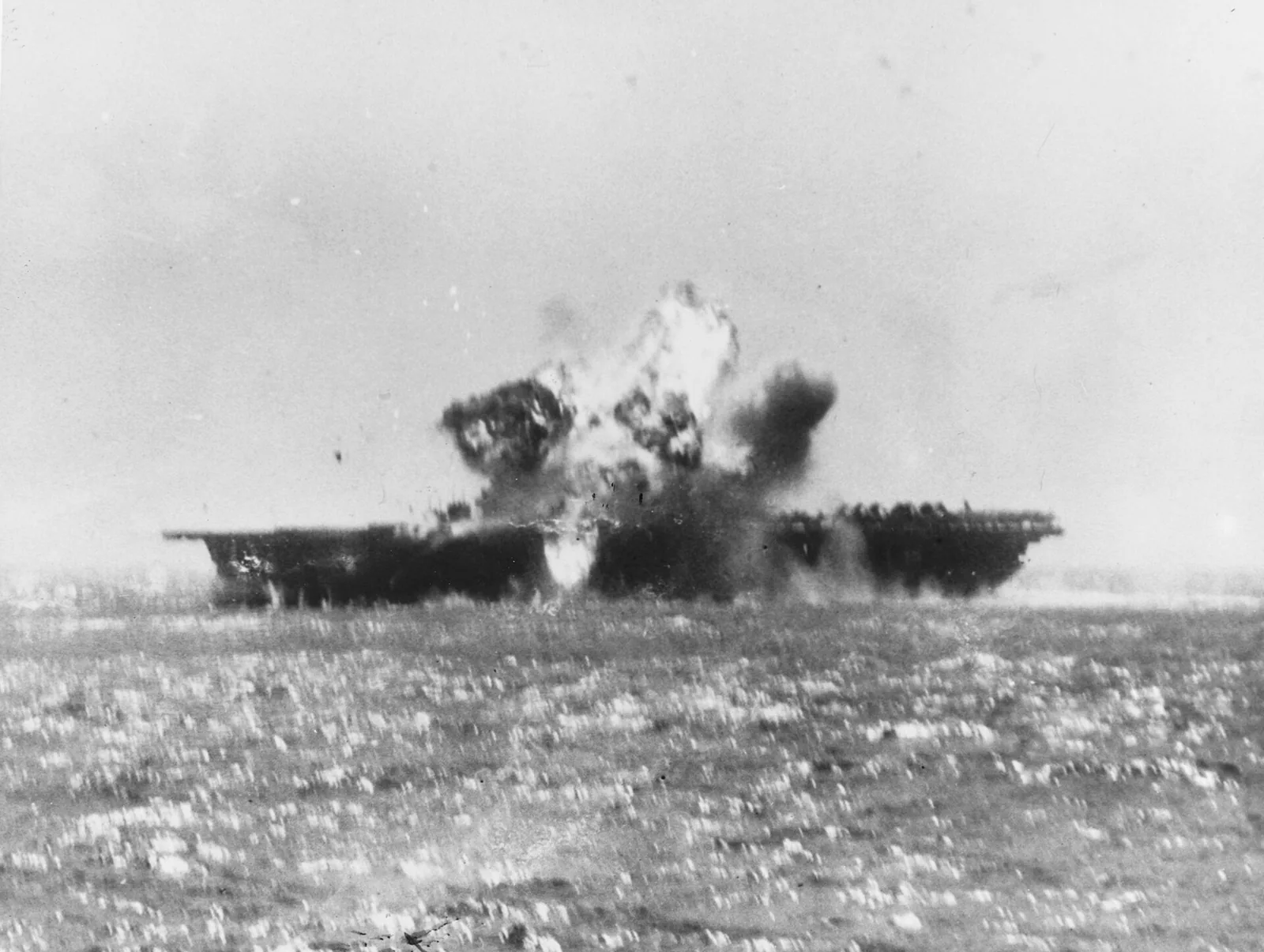
For the remainder of 1944 she continued her frontline action, participating in strikes against Okinawa (10 October), and Formosa (12-14 October), covering the Leyte landings, taking part in the battle for Leyte Gulf (24-25 October), and continuing the search for enemy fleet units until 30 October when she returned to Ulithi, Caroline Islands, for replenishment. She resumed the offensive and delivered attacks on Manila and the northern Philippine Islands during November. On 25 November, for the first time in her far-ranging operations and destruction to the enemy, Essex received injury. A kamikaze hit the port edge of her flight deck landing among planes gassed for takeoff, causing extensive damage, killing 15, and wounding 44.
1945 Iwo Jima
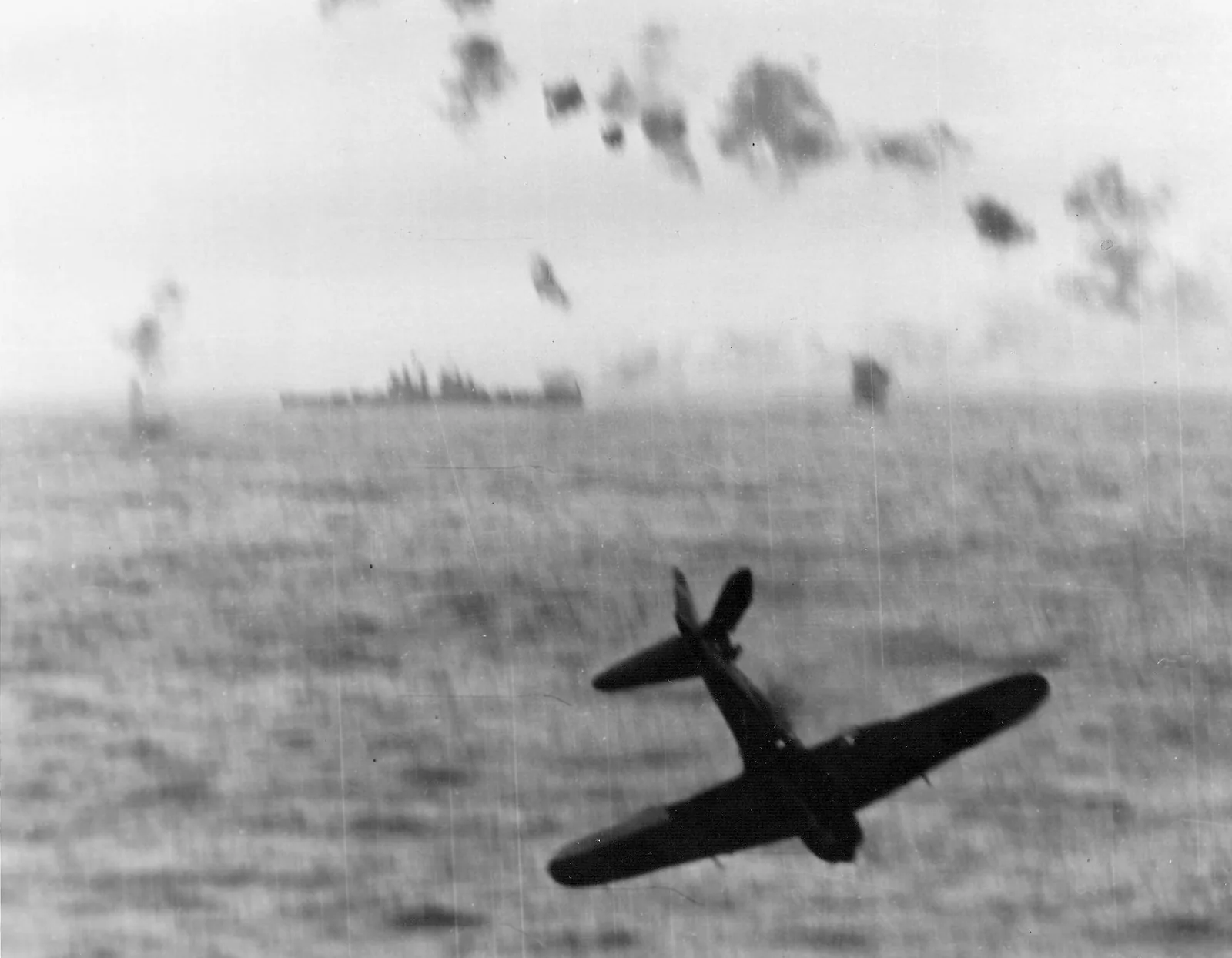
This "cramped her style" very little. Following quick repairs we find her with 3d Fleet off Luzon supporting the occupation of Mindoro (14-16 December). She rode out the typhoon of 18 December and made special search for survivors afterwards. With TG 38.3 she participated in the Lingayen Gulf operations, launched strikes against Formosa, Sakishima, Okinawa, and Luzon. Entering the South China Sea in search of enemy surface forces, the task force pounded shipping and conducted strikes on Formosa, the China coast, Hainan, and Hong Kong. Essex withstood the onslaught of the third typhoon in 4 months (20-21 January 1945) before striking again at Formosa, Miyakp Shima and Okinawa (26-27 January).
During the remainder of the war she operated with TF 58, conducting attacks against the Tokyo area (16-17, and 25 February) both to neutralize the enemy's airpower before the landings on Iwo Jima and to cripple the aircraft manufacturing industry. She sent support missions against Iwo Jima and neighboring islands, but from 23 March to 28 May was employed primarily to support the conquest of Okinawa .
Post-war 1946–1949
1947
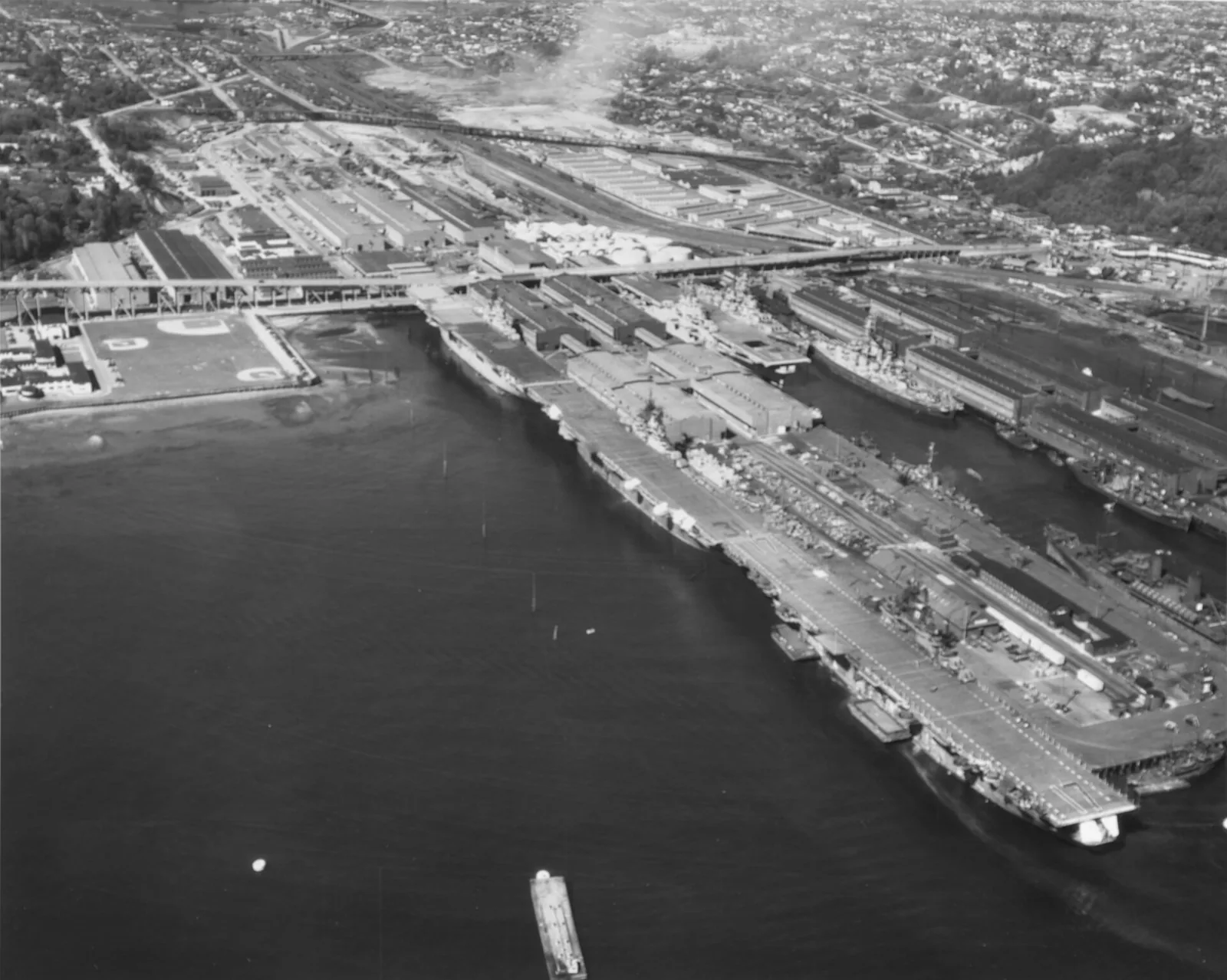
In the closing days of the war, Essex took part in the final telling raids against the Japanese home islands (10 July-15 August). Following the surrender , she continued defensive combat air patrols until 3 September when she was ordered to Bremerton, Wash., for inactivation. On 9 January 1947 she was placed out of commission in reserve.
Korean War period 1950–1953
1951
Modernization endowed Essex with a new flight deck, and a streamlined island superstructure, on 15 January 1951 when recommissioned, Captain A. W. Wheelock commanding.
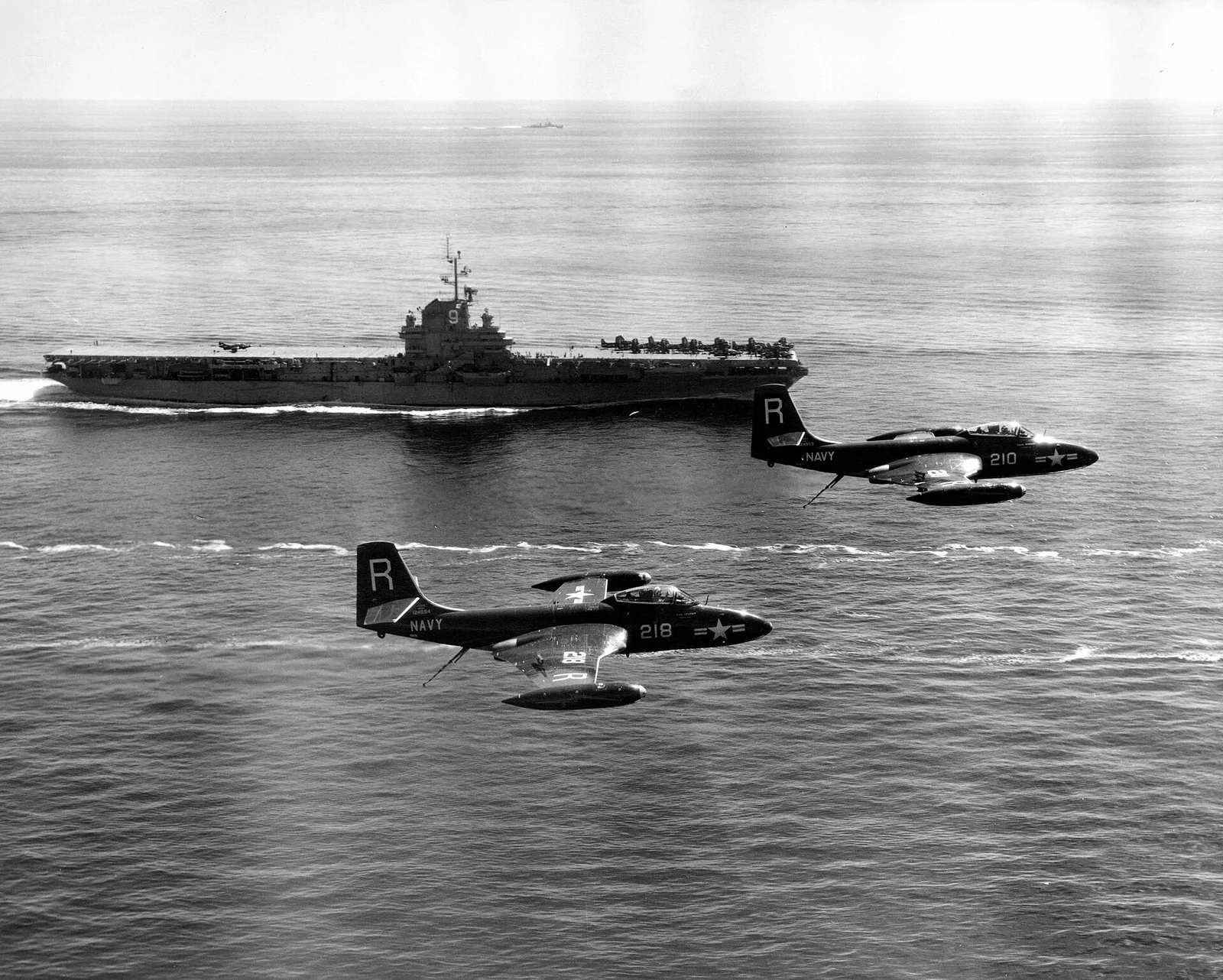
After a brief cruise in Hawaiian waters she began the first of three tours in Far Eastern waters during the Korean war . She served as flagship for Carrier Division 1 and TF 77. She was the first carrier to launch F2H "Banshee" twin-jet fighters on combat missions; on 16 September 1951 one of these planes, damaged in combat, crashed into aircraft parked on the forward flight deck causing an explosion and fire which killed seven. After repairs at Yokosuka she returned to front-line action on 3 October to launch strikes up to the Yalu River and provide close air support for U.N. troops.
1953
On 1 December 1953 she started her final tour of the war, sailing the China Sea with the Peace Patrol. From November 1954 to June 1955 she engaged in training exercises, operated for 3 months with the 7th Fleet, assisted in the Tachen Islands evacuation, and engaged in air operations and fleet maneuvers off Okinawa.
Cold War 1954–1963
1955
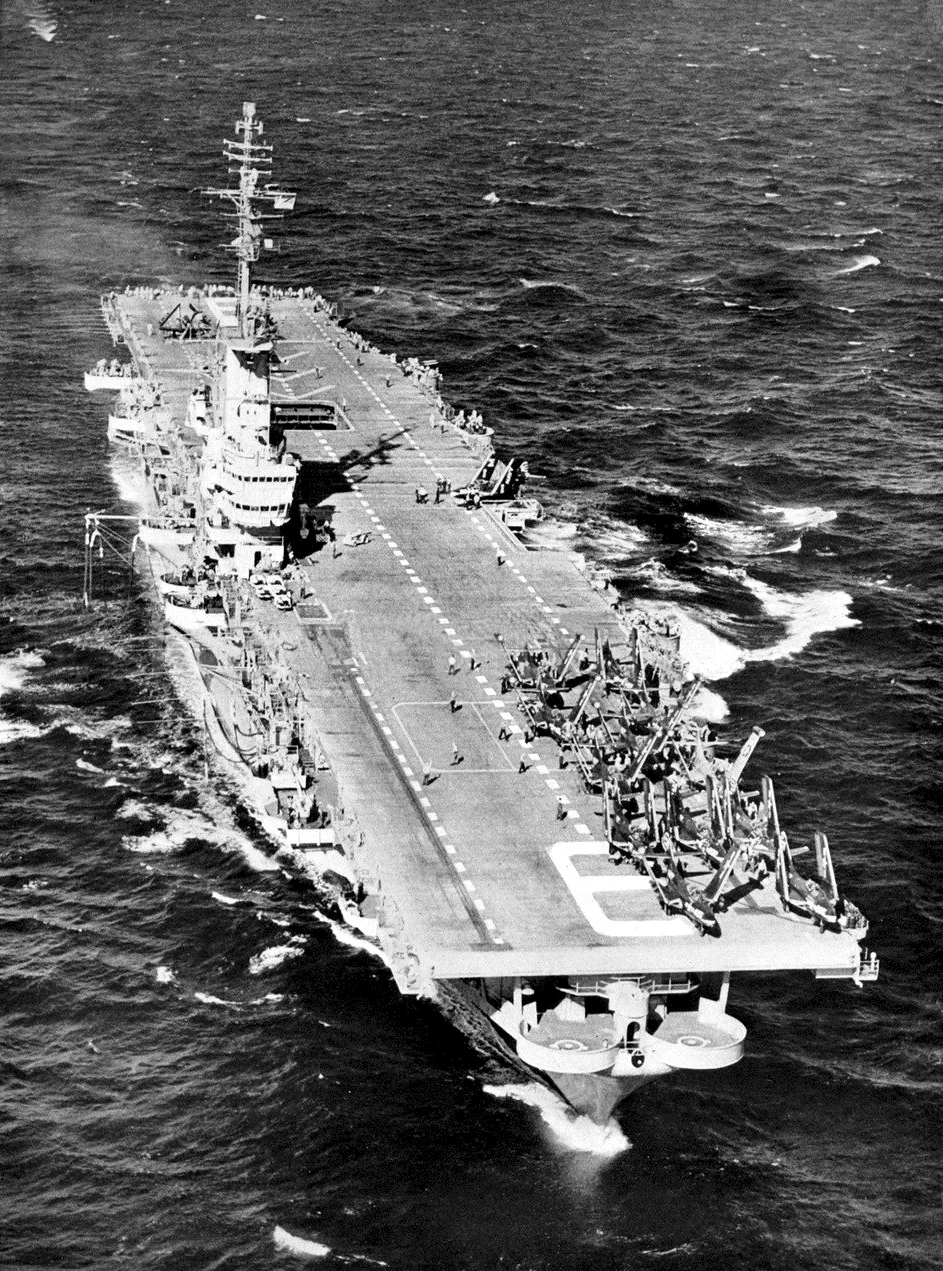
In July 1955 Essex entered Puget Sound Naval Shipyard for repairs and extensive alterations, including installation of an angled flight deck. Modernization completed, she rejoined the Pacific Fleet in March 1956. For the next 14 months the carrier operated off the west coast, except for a 6-month cruise with the 7th Fleet in the Far East. Ordered to join the Atlantic Fleet for the first time in her long career, she sailed from San Diego on 21 June 1957, rounded Cape Horn, and arrived in Mayport, Fla., on 1 August.
1958
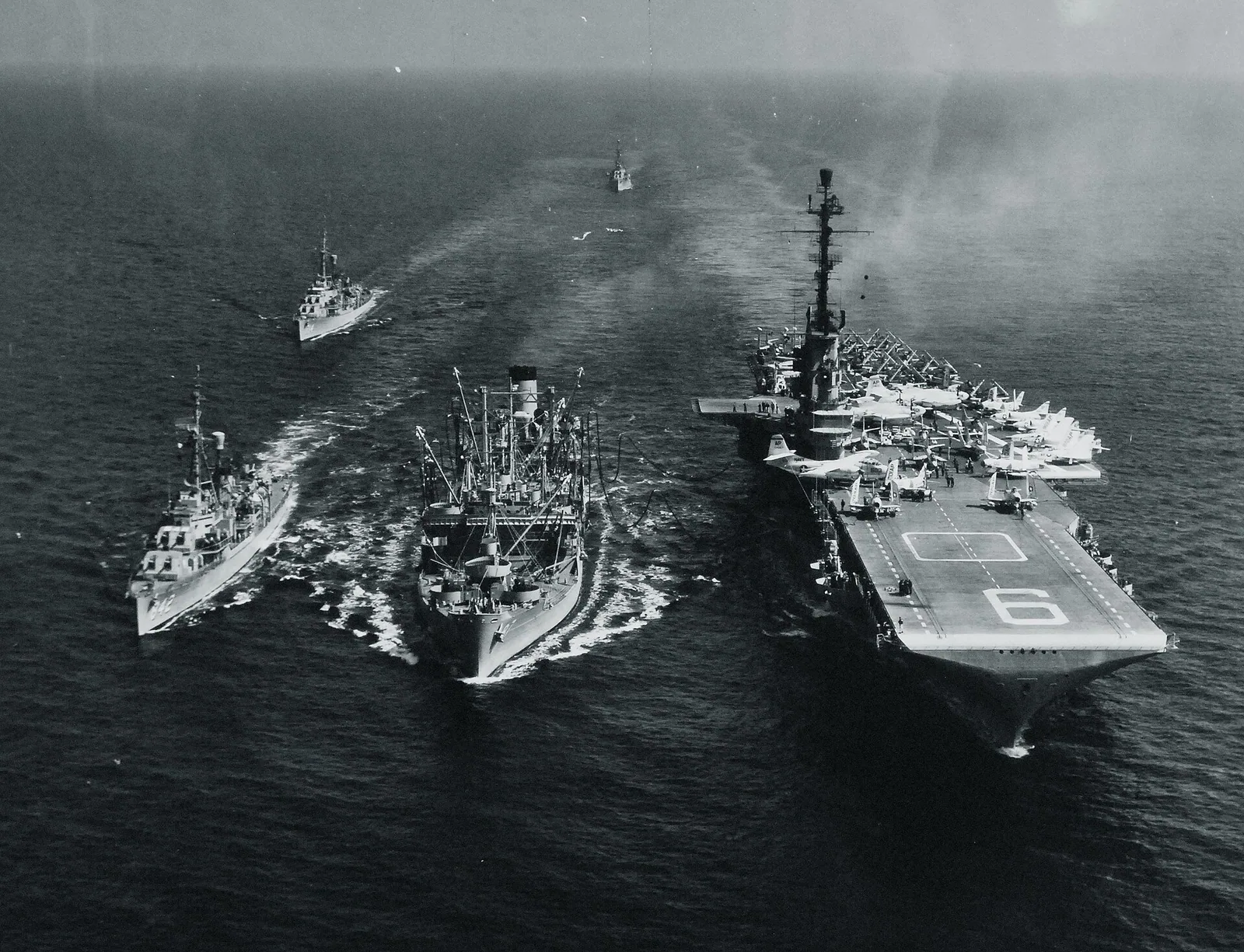
In the fall of 1957 Essex participated as an antisubmarine carrier in the NATO exercises, "Strike Back," and in February 1958 deployed with the 6th Fleet until May when she shifted to the eastern Mediterranean. Alerted to the Middle East crisis on 14 July 1958 she sped to support the U.S. Peace Force landing in Beirut, Lebanon, launching reconnaissance and patrol missions until 20 August. Once again she was ordered to proceed to Asian waters, and transitted the Suez Canal to arrive in the Taiwan operational area where she joined TF 77 in conducting flight operations before rounding the Horn and proceeding back to Mayport.
Essex joined with the 2d Fleet and British ships in Atlantic exercises and with NATO forces in the eastern Mediterranean during the fall of 1959. In December she aided victims of a disastrous flood at Frejus, France.
In the spring of 1960 she was converted into an ASW Support Carrier and was thereafter homeported at Quonset Point, R.I. Since that time she has operated as flagship of Carrier Division 18 and Antisubmarine Carrier Group Three. She conducted rescue and salvage operations off the New Jersey coast for a downed blimp; cruised with midshipmen, and was deployed on NATO and CENTO exercises. In November she joined the French navy in Operation "Jet Stream" and since that time has continued her widespread activities in protection of freedom and peace.
Essex received the Presidential Unit Citation, and 13 battle stars for World War II service; 4 battle stars and the Navy Unit Commendation for Korean war service.
Other photographs
Held for this vessel, and not tied to any part of the account above.

References
Every work this entry draws on. There are no numbered markers in the text above: what we hold is the provenance of the page — this history, this article, these photographs.
- History Essex IV (CV-9) Dictionary of American Naval Fighting Ships, Naval History and Heritage Command. A work of the United States Government, in the public domain — the only text on this site reproduced verbatim.
- Facts USS Essex (CV-9) Structured facts only — dates, dimensions, armament and fate. No wording is taken from it. Harvested 1 August 2026.
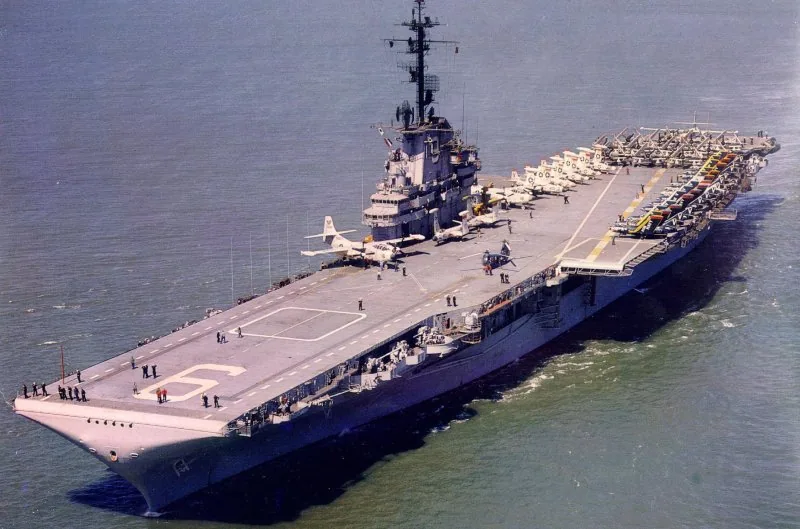
- Photograph USS Essex CVS-9 June 1967 Photographer: PHCS Jackman, U.S. Navy — U.S. Navy National Museum of Naval Aviation photo No. 1996.488.242.072 — Public domain — Wikimedia Commons
- Photograph USS Essex (CV-9) is hit by a Kamikaze off the Philippines on 25 November 1944 U.S. Navy, photographed from USS Langley (CVL-27). — =Official U.S. Navy photo 80-G-273032 from the U.S. Navy Naval History and Heritage Command — Public domain — Wikimedia Commons
- Photograph USS Essex (CVA-9) at sea c1956 USN — U.S. Navy photo [1] available at Navsource.org — Public domain — Wikimedia Commons
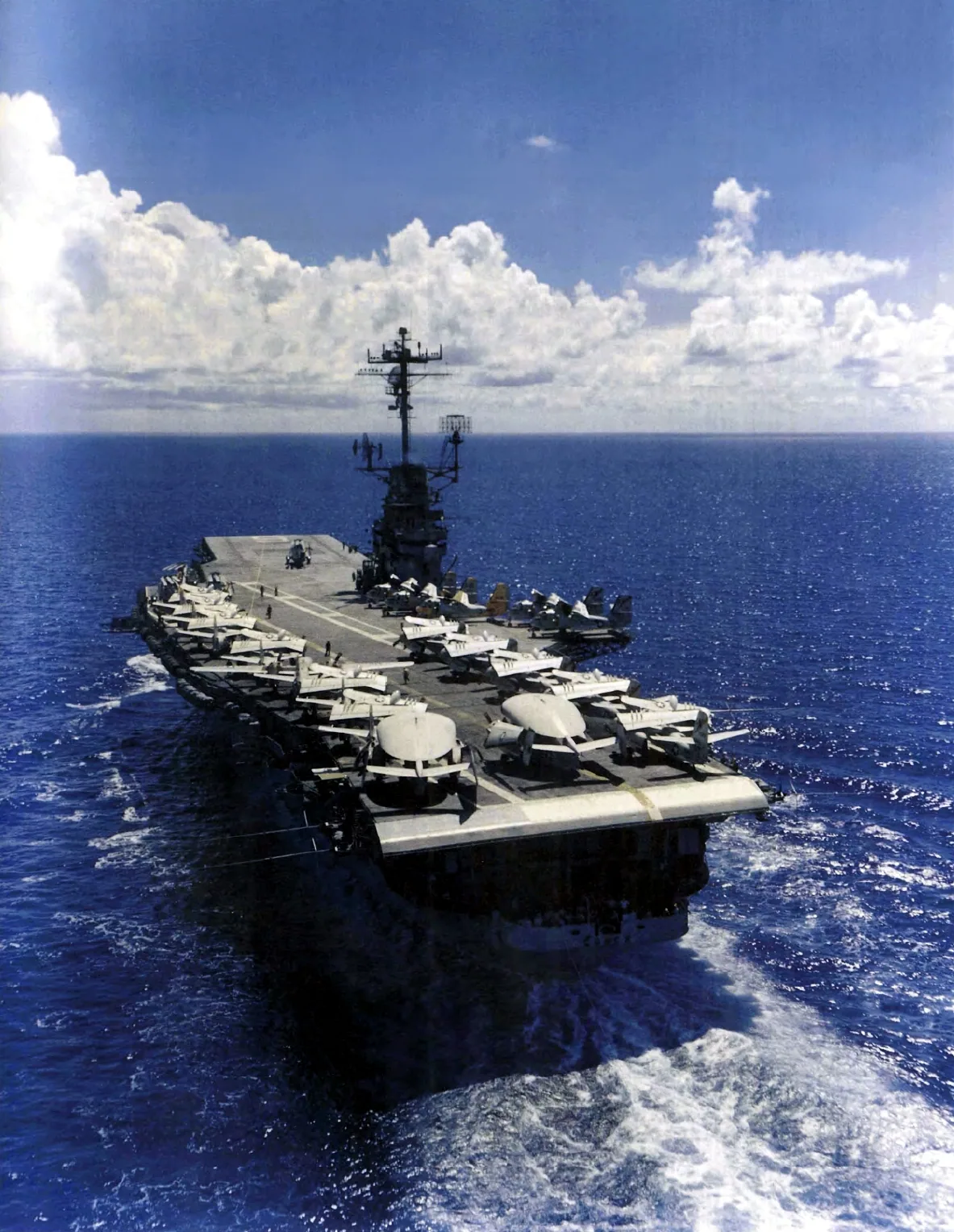
- Photograph Aft view of USS Essex (CVS-9) underway c1962 U.S. Navy — In: Utz, Curtis A., Cordon of Steel: The U.S. Navy and the Cuban Missile Crisis , U.S. Naval History and Heritage Command, Department of the Navy, Washington , D.C., 1993, ISBN 0-945274-23-8 , p. 17. from the U.S. Navy Naval History and Heritage Command — Public domain — Wikimedia Commons
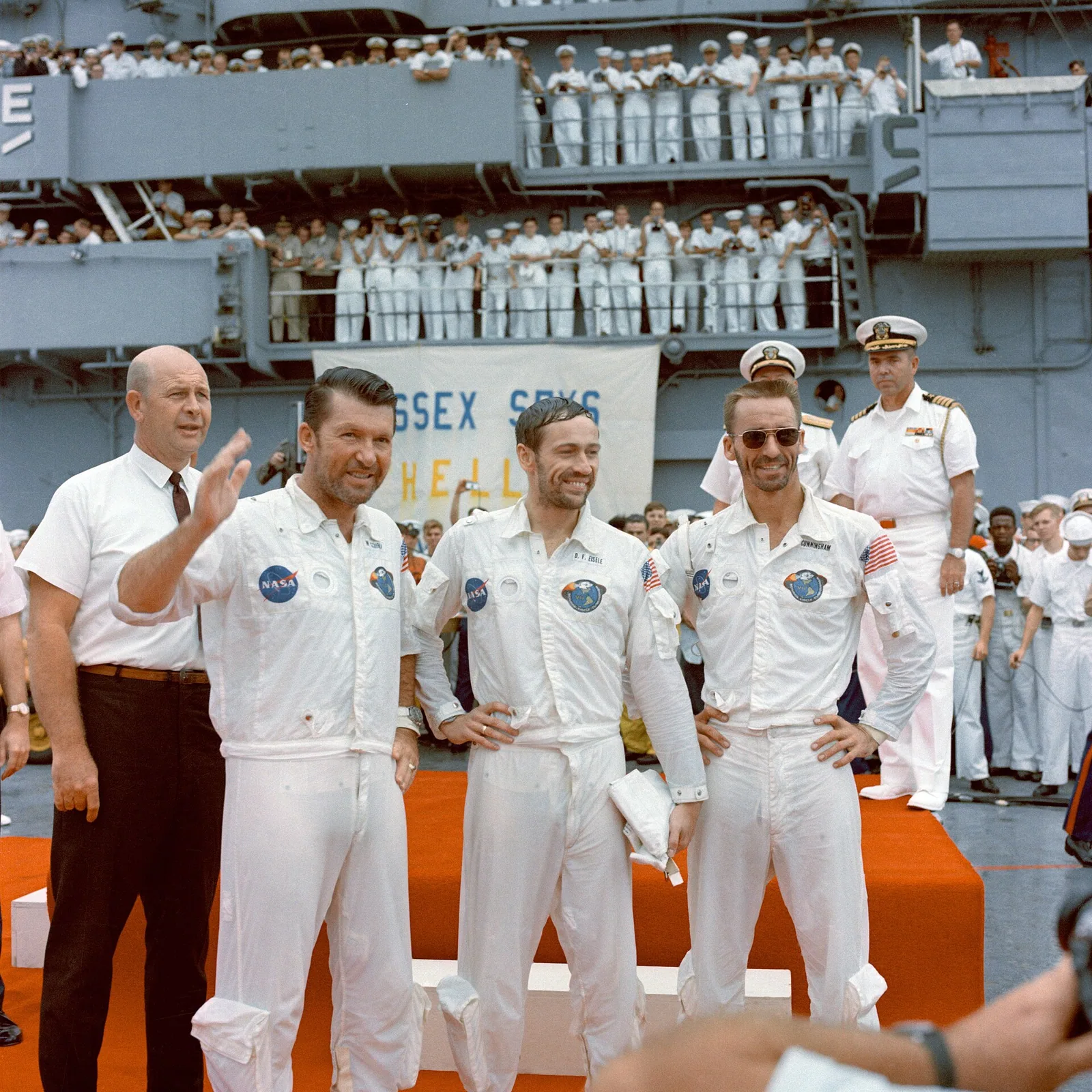
- Photograph The Apollo 7 crew is welcomed aboard the USS Essex NASA — NASA Image of the Day — Public domain — Wikimedia Commons
- Photograph 330-ps-9118 15727541202 o Unknown author — National Museum of the U.S. Navy — Public domain — Wikimedia Commons
- Photograph A4D-2 Skyhawks of VA-34 in flight over USS Essex (CVS-9) during the Bay of Pigs Invasion in April 1961 Robert L. Lawson — Photo [1] from U.S. Department of State, Office of the Historian: The Bay of Pigs Invasion and its Aftermath, April 1961–October 1962 — Public domain — Wikimedia Commons
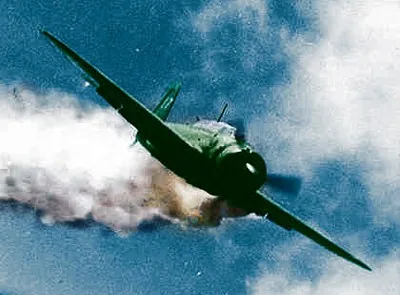
- Photograph A6M before crashing near USS Essex (CV-9) 1945 U.S. Navy — U.S. Navy National Museum of Naval Aviation photo No. 1996.488.242.089 — Public domain — Wikimedia Commons
- Photograph Aircraft carriers at Seattle in January 1947 USN — U.S. Navy photo 80-G-373247 from the USS Essex (CVS-9) 1967 cruise book available at Navysite.de — Public domain — Wikimedia Commons
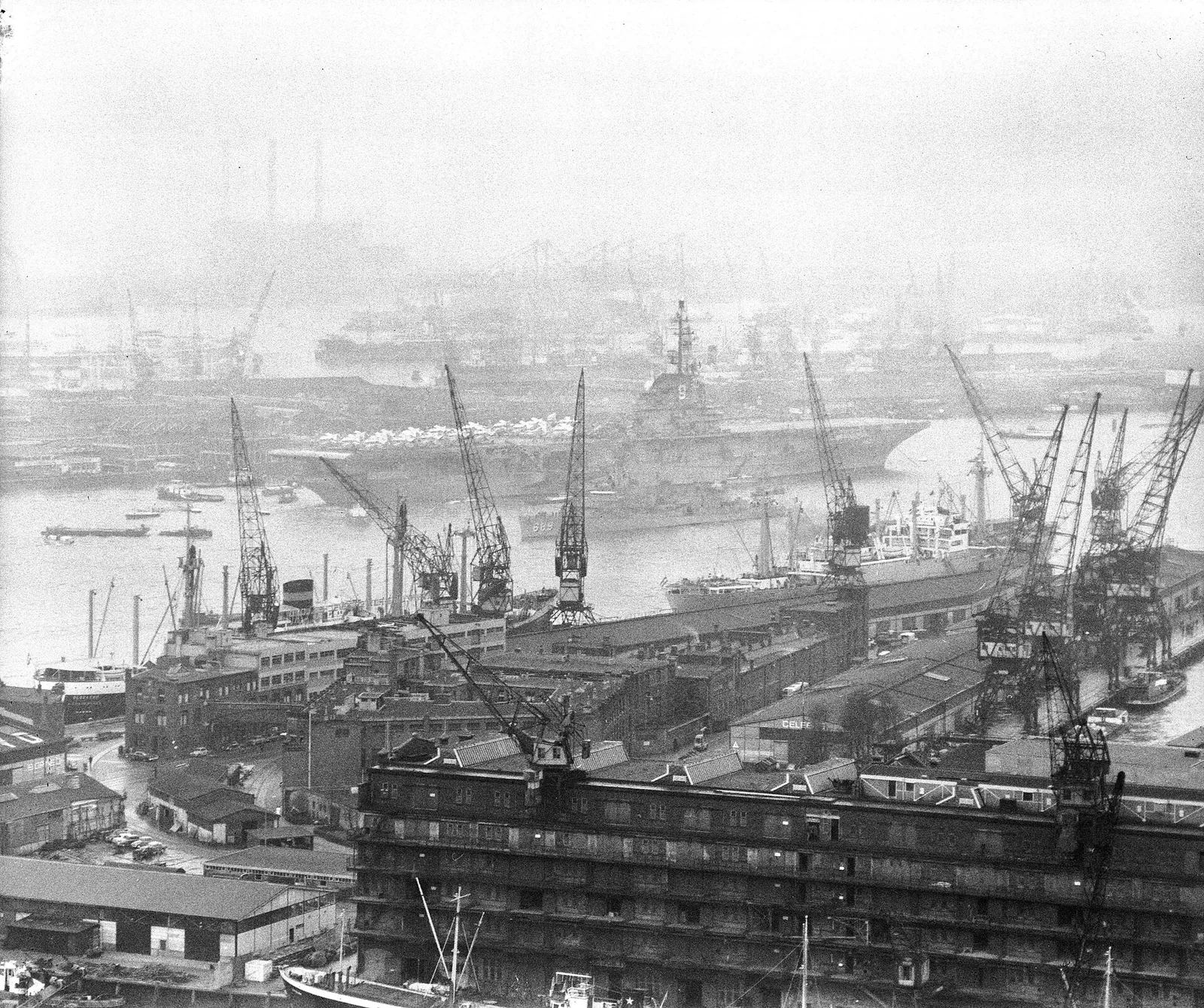
- Photograph Amerikaans vlootbezoek aan Rotterdam, Bestanddeelnr 913-3342 Eric Koch for Anefo — http://proxy.handle.net/10648/a9f1dbe4-d0b4-102d-bcf8-003048976d84 — CC0 — Wikimedia Commons
- Photograph Bow view of USS Essex (CVA-9) underway c1955 U.S. Navy — U.S. Navy photo [1] from the USS Essex (CVA-9) 1954-1955 cruise book available at Navysite.de — Public domain — Wikimedia Commons
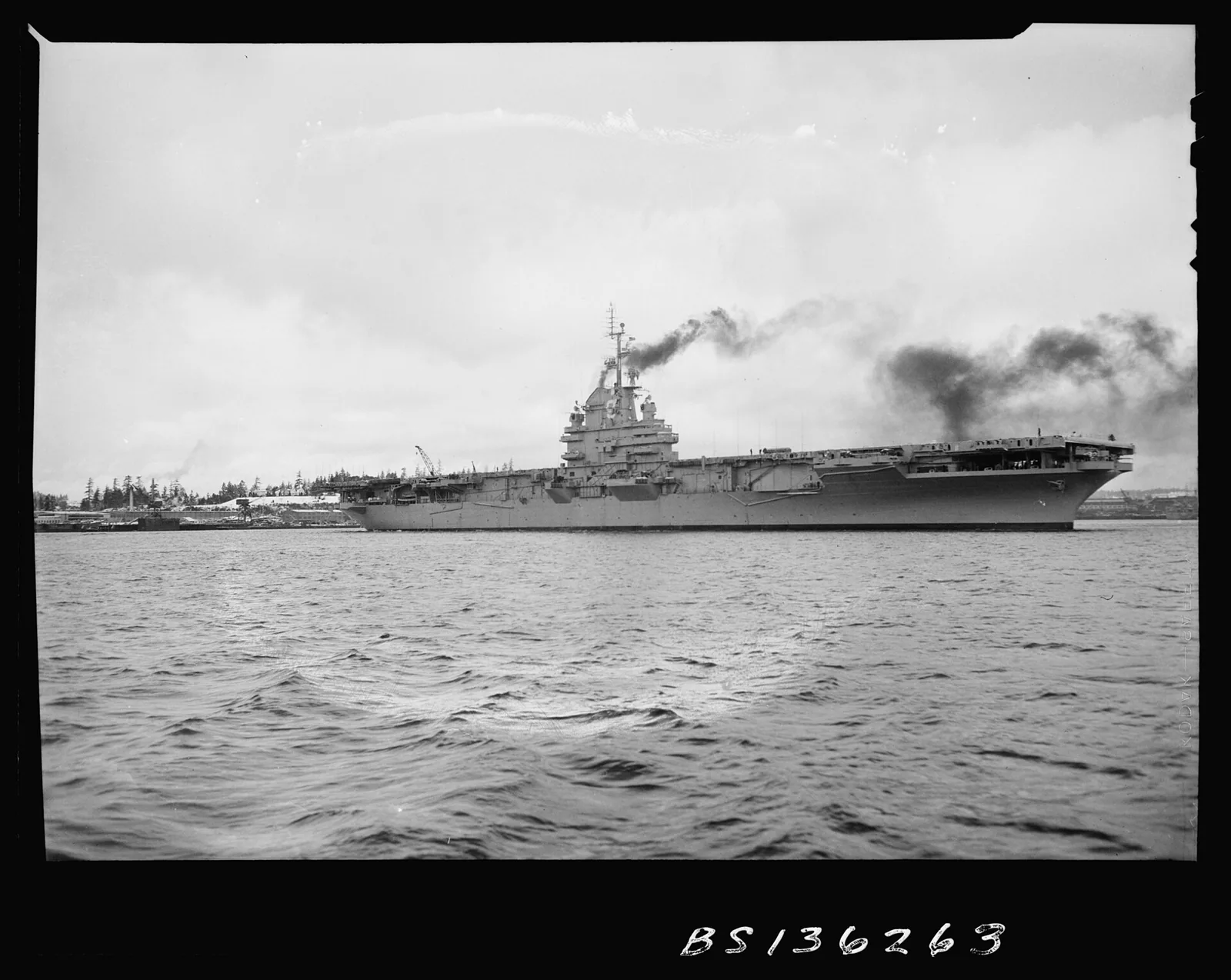
- Photograph CV 9 Enex - DPLA - 48dbc0f3228b31da183c77f4b51066a4 Department of Defense. Department of the Navy. Bureau of Ships. 9/18/1947-5/1/1966 — This file was contributed to Wikimedia Commons by National Archives and Records Administration as part of a cooperation project. The donation was facilitated by the Digital Public Library of America , via its partner Digital Public Library of America . Record in source catalog DPLA identifier: 48dbc0f3228b31da183c77f4b51066a4 National Archives Identifier: 7578119 — Public domain — Wikimedia Commons
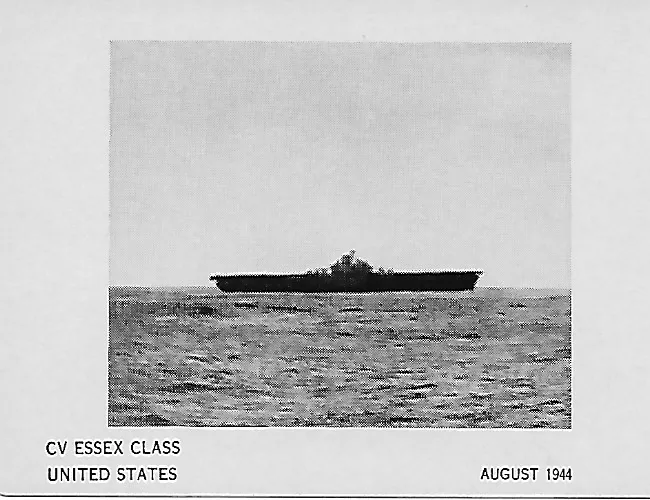
- Photograph CV Essex silhouette United States Navy Bureau of Aeronautics — Public domain — Wikimedia Commons
- Photograph D4Y Yoshinori Yamaguchi col Unknown author — Public domain — Wikimedia Commons
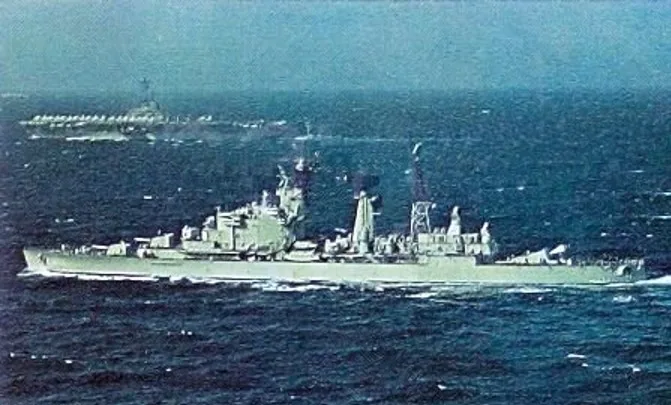
- Photograph De Zeven Provincien en USS Essex (1967) U.S. Navy — U.S. Navy photo [1] from the USS Essex (CVS-9) 1967 cruise book available at Navysite.de — Public domain — Wikimedia Commons
- Photograph F2H-2 Banshees of VF-172 fly by USS Essex (CV-9) off Korea, circa 1951 (NH 97270) Unknown author — U.S. Navy photo NH 97270 — Public domain — Wikimedia Commons
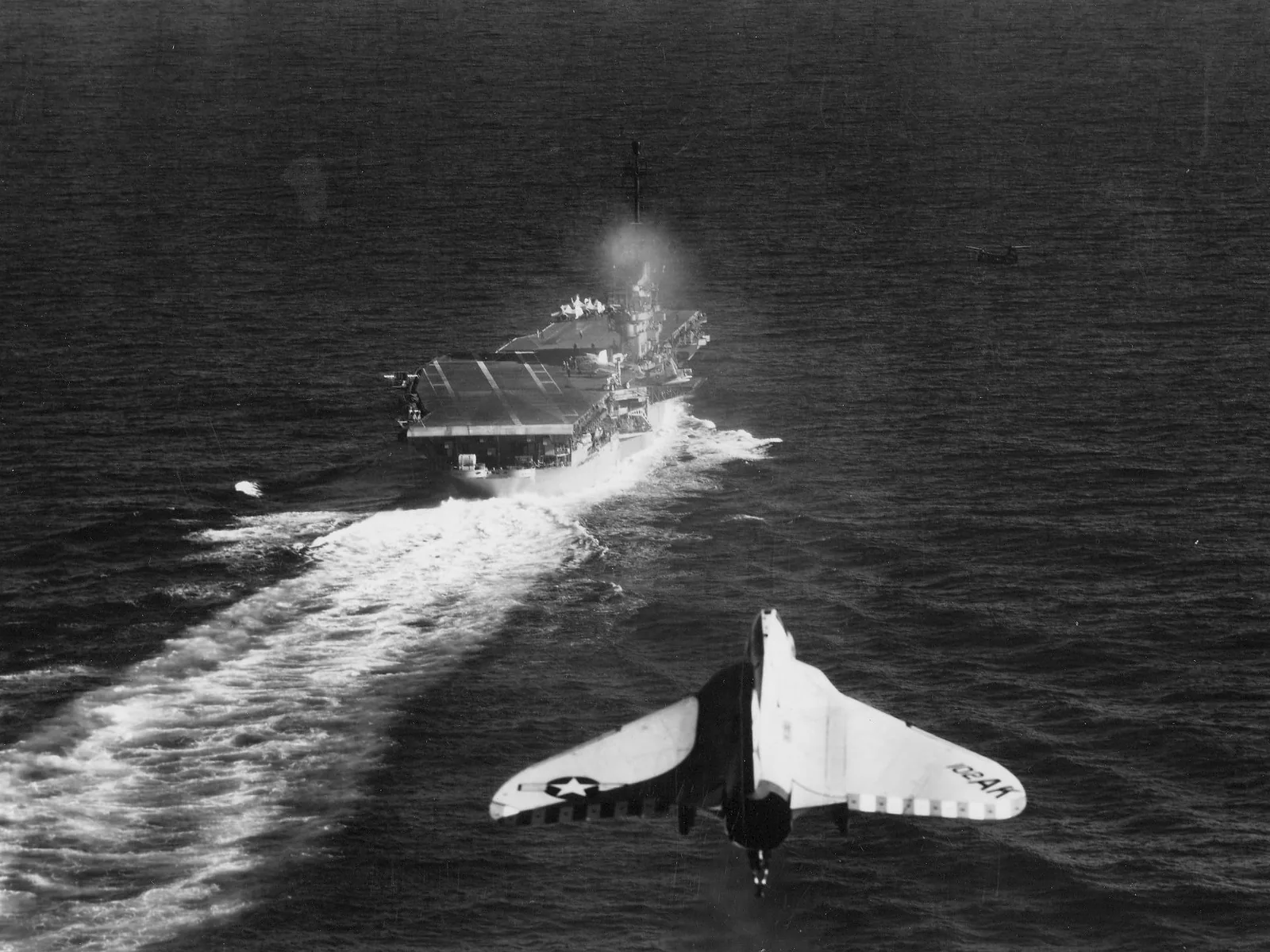
- Photograph F4D-1 Skyray of VF-13 approaching USS Essex (CVA-9), circa in 1959 (NNMA.1996.253.7325.006) U.S. Navy — U.S. Navy Naval Aviation News September 1960 [1] ; U.S. Navy National Museum of Naval Aviation photo No. NNMA.1996.253.7325.006 — Public domain — Wikimedia Commons
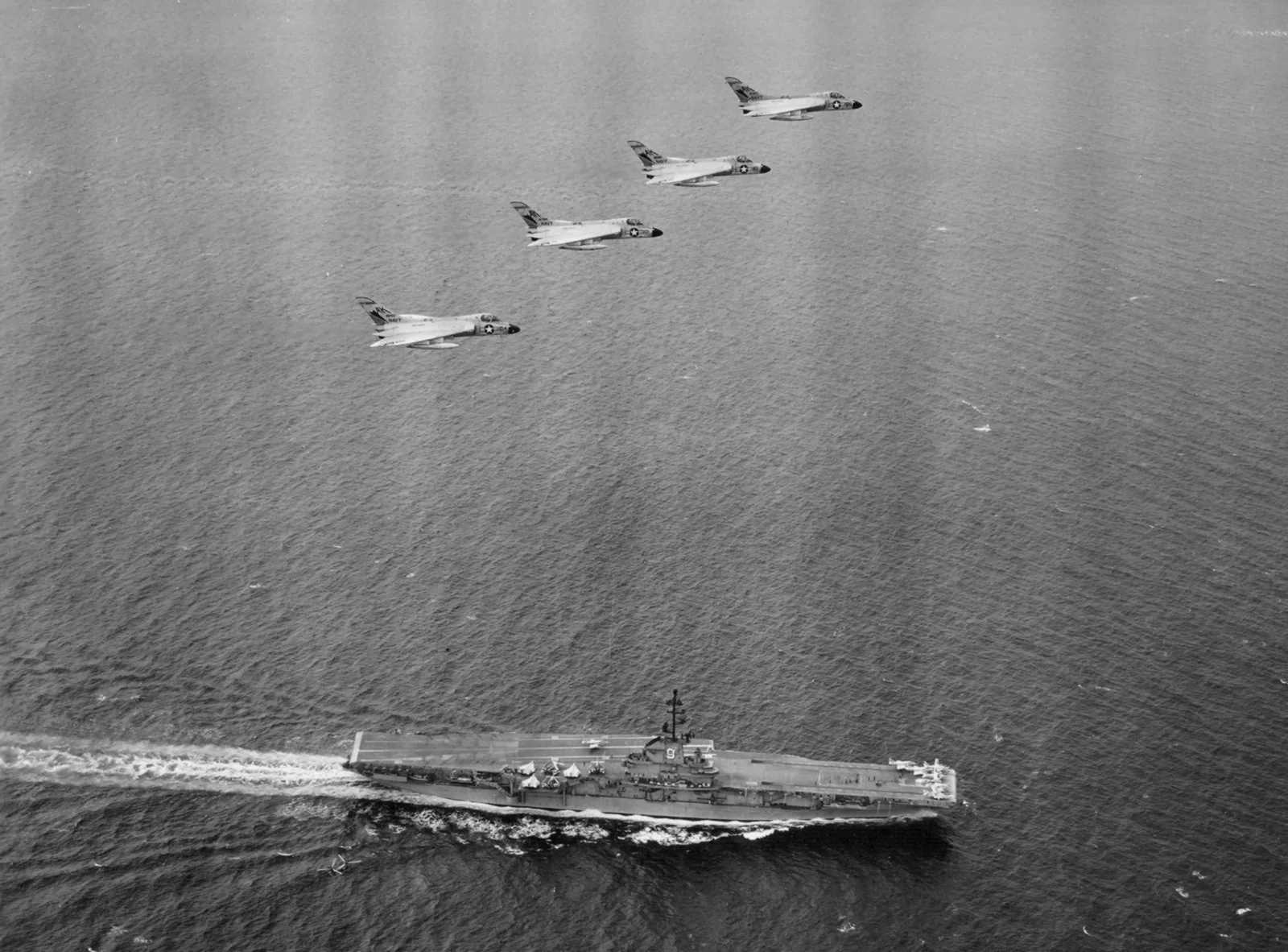
- Photograph F4Ds VF-13 over USS Essex (CVA-9) 1960 U.S. Navy — U.S. Navy National Museum of Naval Aviation photo No. 1996.488.242.067 — Public domain — Wikimedia Commons
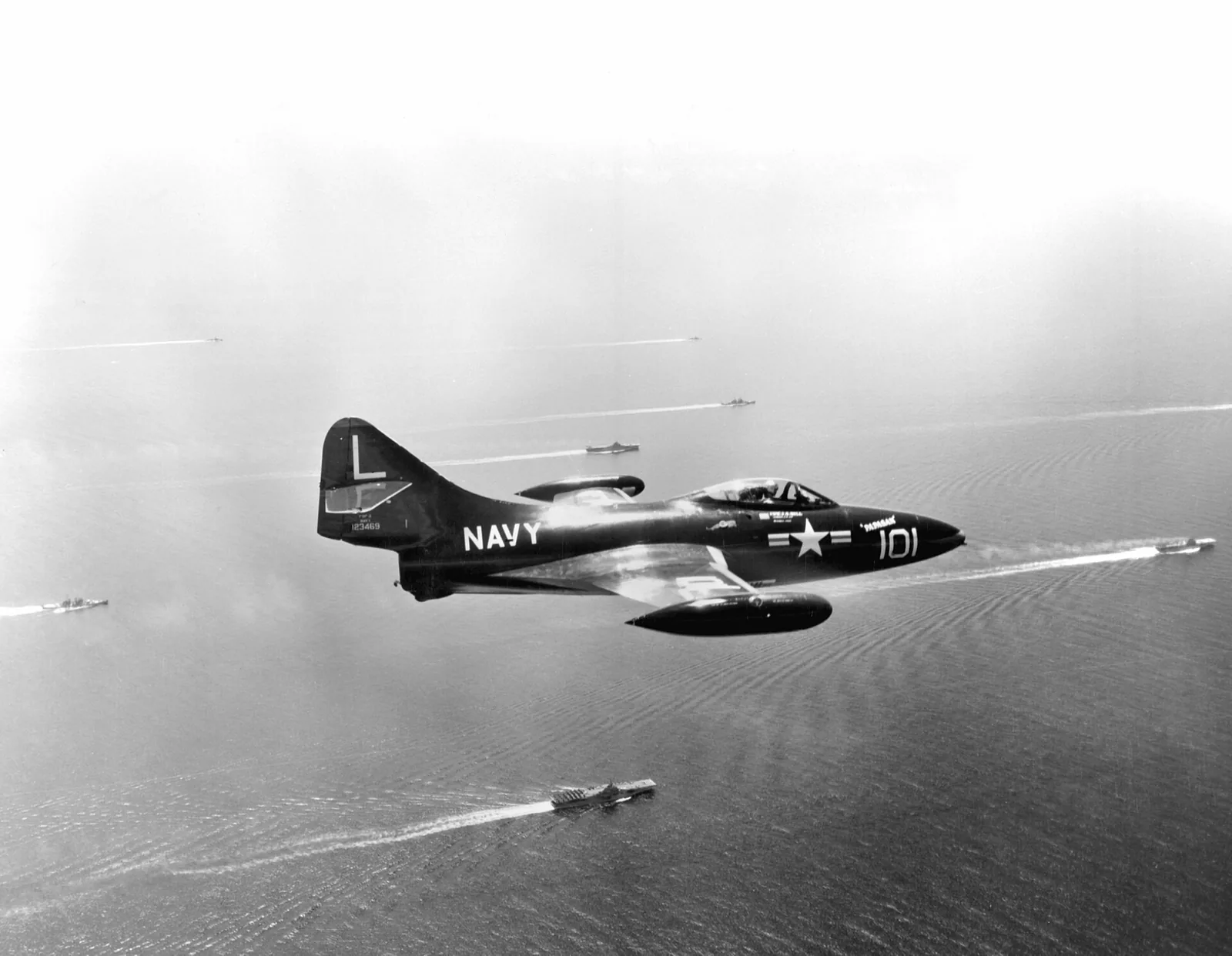
- Photograph F9F VF-71 over TF77 1952 USN — U.S. www.defenseimagery.mil photo no. HN-SN-98-07207; NARA file no. 80-G-480645 — Public domain — Wikimedia Commons
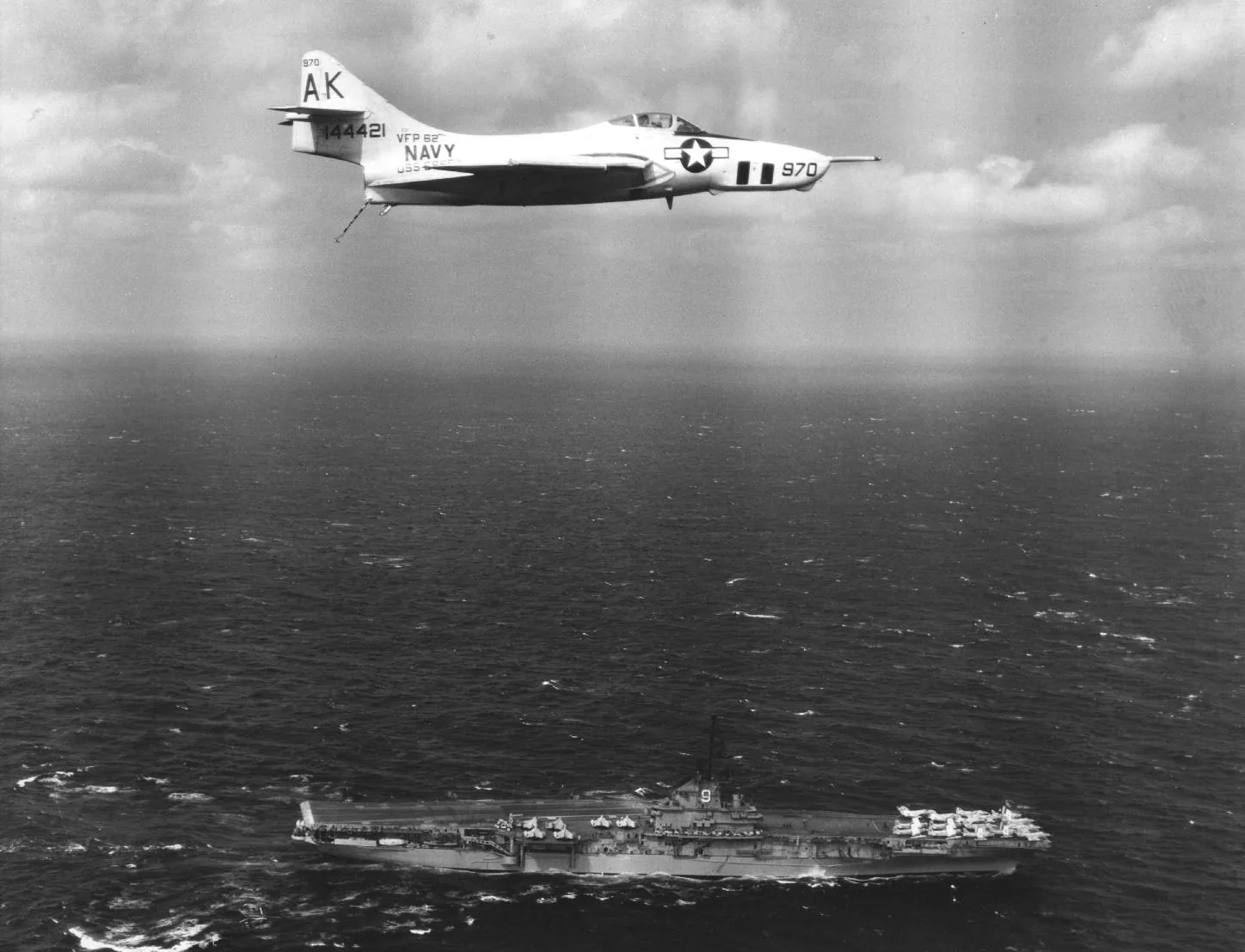
- Photograph F9F-8P of VFP-62 over USS Essex (CVA-9) in 1960 U.S. Navy — U.S. Navy National Museum of Naval Aviation photo No. 1996.253.7406.058 — Public domain — Wikimedia Commons