United States Navy — Cruiser
USS Guam (CB-2) — service history
This is the full service history. For the vessel's particulars, photograph and specifications, see the entry.
In the words of the US Navy. The account below is reproduced verbatim from the Dictionary of American Naval Fighting Ships, compiled by the Naval History and Heritage Command — a work of the United States Government, in the public domain, and the only text on this site not written here.
Second World War 1939–1945
1943
The second Guam (CB-2) was launched 12 November 1943 by the New York Shipbuilding Corp., Camden, N.J.; sponsored by Mrs. George Johnson McMillan, wife of Captain McMillan, former governor of Guam; and commissioned 17 September 1944, Captain Leland P. Lovette in command.
1945
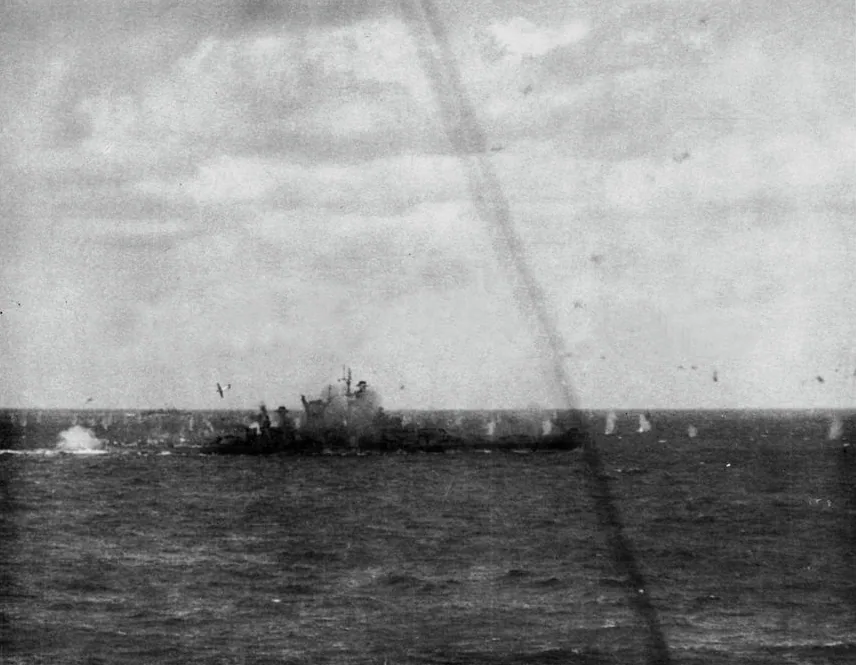
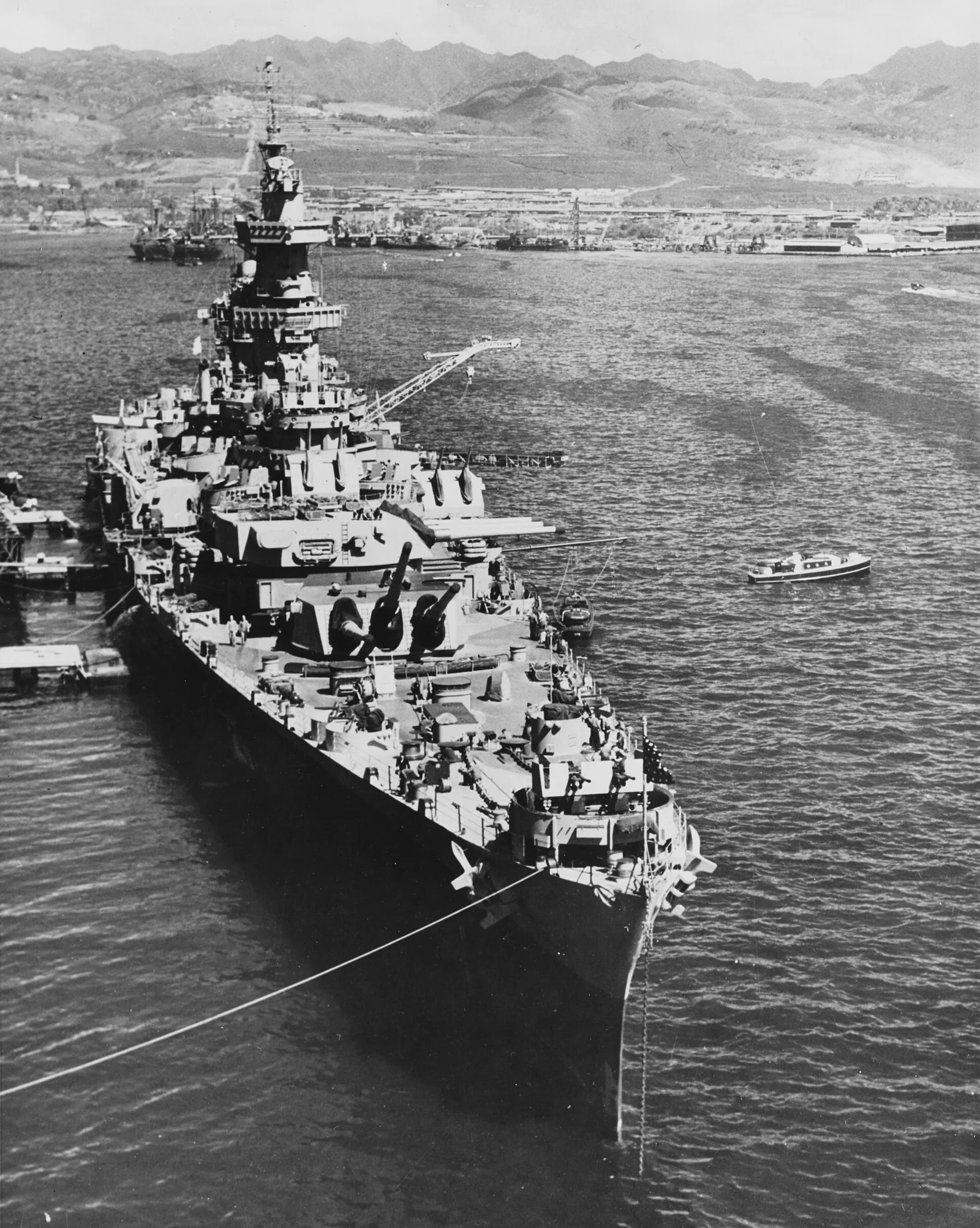
After shakedown off Trinidad Guam departed Philadelphia 17 January 1945 and joined the Pacific Fleet at Pearl Harbor 8 February via the Canal Zone. Shortly thereafter Guam was visited by Secretary of the Navy Forrestal. Clearing Pearl Harbor 3 March Guam sailed into Ulithi 13 March where she joined forces with her sister ship Alaska and other fleet units to form another of Admiral Marc Mitscher's famed task groups.
Sortie was made from Ulithi next day and Admiral A. W. Radford's Task Force 58, one of the most powerful task forces in naval history, proceeded to vicinity of Kyushu and Shikoku, arriving the morning of 18 March. In her group sailed some of the most gallant ships ever to go in harm's way: carriers Yorktown, Intrepid, Inde pendence, and Langley; battleships Missouri and Wisconsin; cruisers Alaska, St. Louis, San Diego, Flint; and 15 destroyers in the screen. Guam's battle debut soon came. The fight began with five kamikaze attacks on the carriers. Guam's guns were directed at the raiders. During this first battle, the carriers Enterprise and Intrepid, both in Guam's force, were damaged but continued to operate. Enterprise took a bomb hit near her island structure; a suicide plane crashed Intrepid's flight deck aft and glanced off and plunged into the sea. Continued air attacks during the afternoon resulted in the destruction of four enemy planes by Guam's group, one of which she splashed. The next afternoon Guam was despatched to escort damaged Franklin from the combat area. This lasted until 22 March.
After replenishing Guam rejoined Task Group 58.4 and departed for combat area in vicinity of Okinawa Gunto, Japan. On the night of 27 to 28 March 1945 Admiral P. S. Low's Cruiser Division 16 in Guam conducted bombardment of the airfield on Minami Daito. Then until 11 May Guam supported carrier operations off the Nansei Shoto.
After repairs and replenishment at Ulithi Guam again departed for the waters east of Okinawa, as a unit of Admiral Halsey's 3d Fleet, Task Group 38.4. Here she continued to support the carriers launching fighter sweeps over the Kyushu airfields. On 9 June Guam, Alaska, and five destroyers conducted a 90-minute bombardment of Okino Daito. Course was then set for Leyte Gulf, arriving San Pedro Bay 13 June after almost 3 months of continuous operations in support of the Okinawa campaign.
Guam now got a new assignment as flagship of Cruiser Task Force 95, composed of large cruisers Guam and Alaska, four light cruisers, and nine destroyers. This force steamed into the East China and Yellow Seas between 16 July and 7 August 1945 on a shipping raid. Direct results were few, but the fact that a surface sweep of Japan's home waters could be made without harm proved the overwhelming dominance and mobility of American sea power. Guam's group retired to Okinawa 7 August.
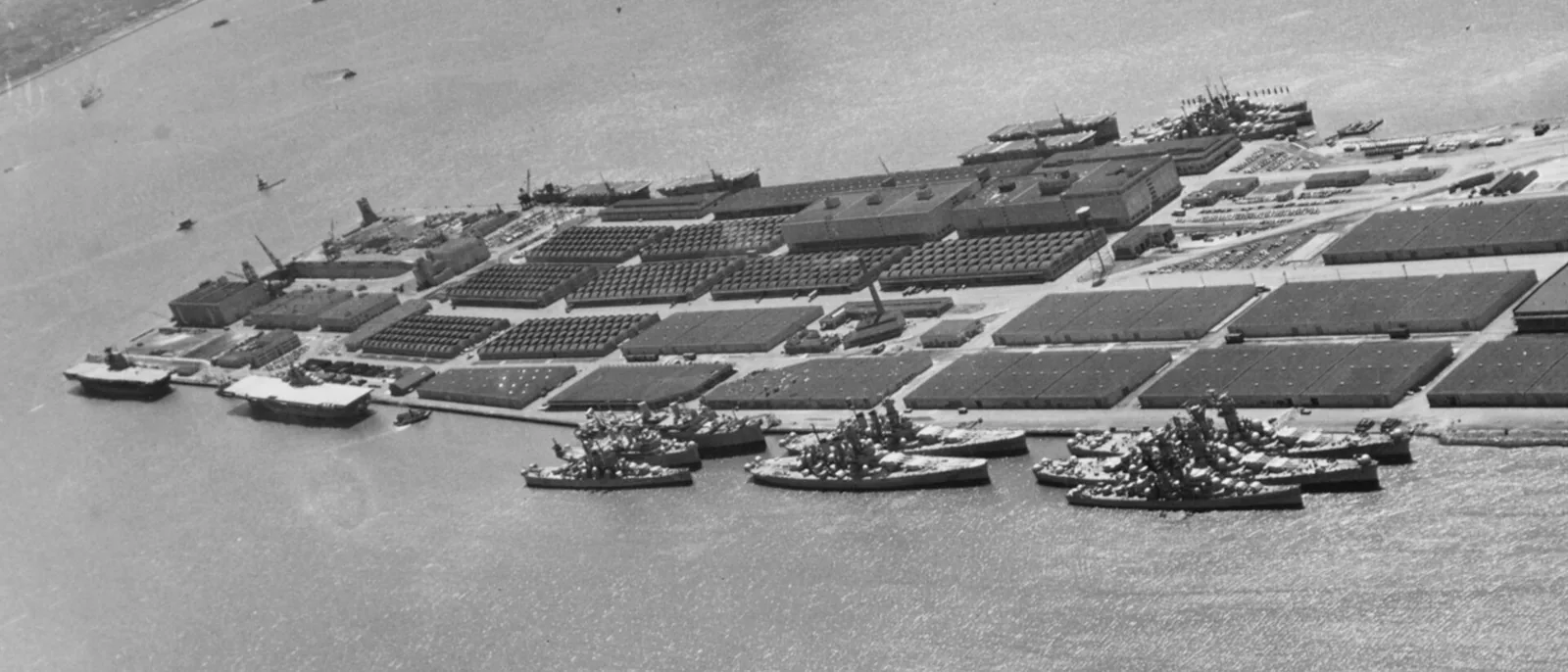
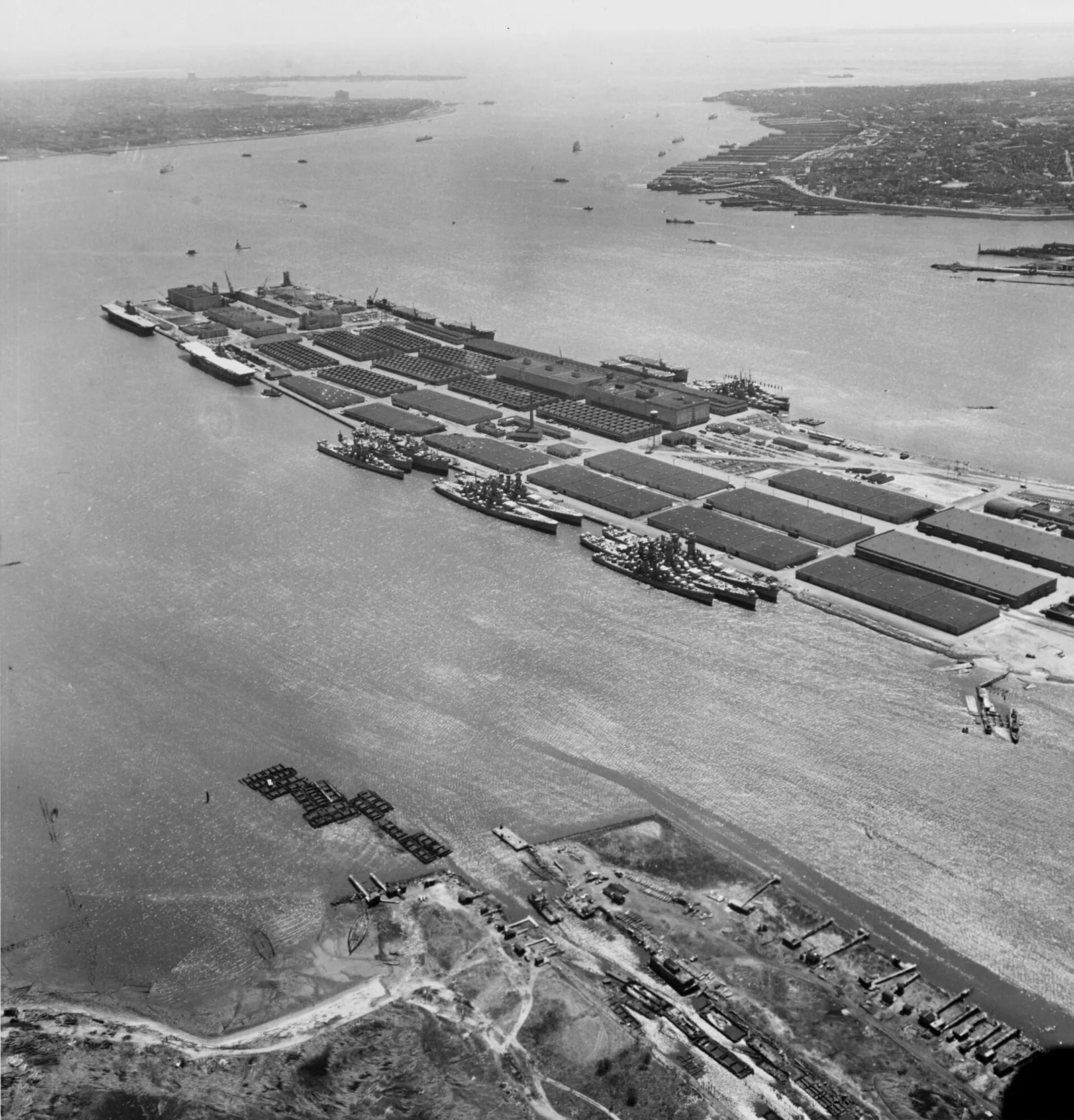
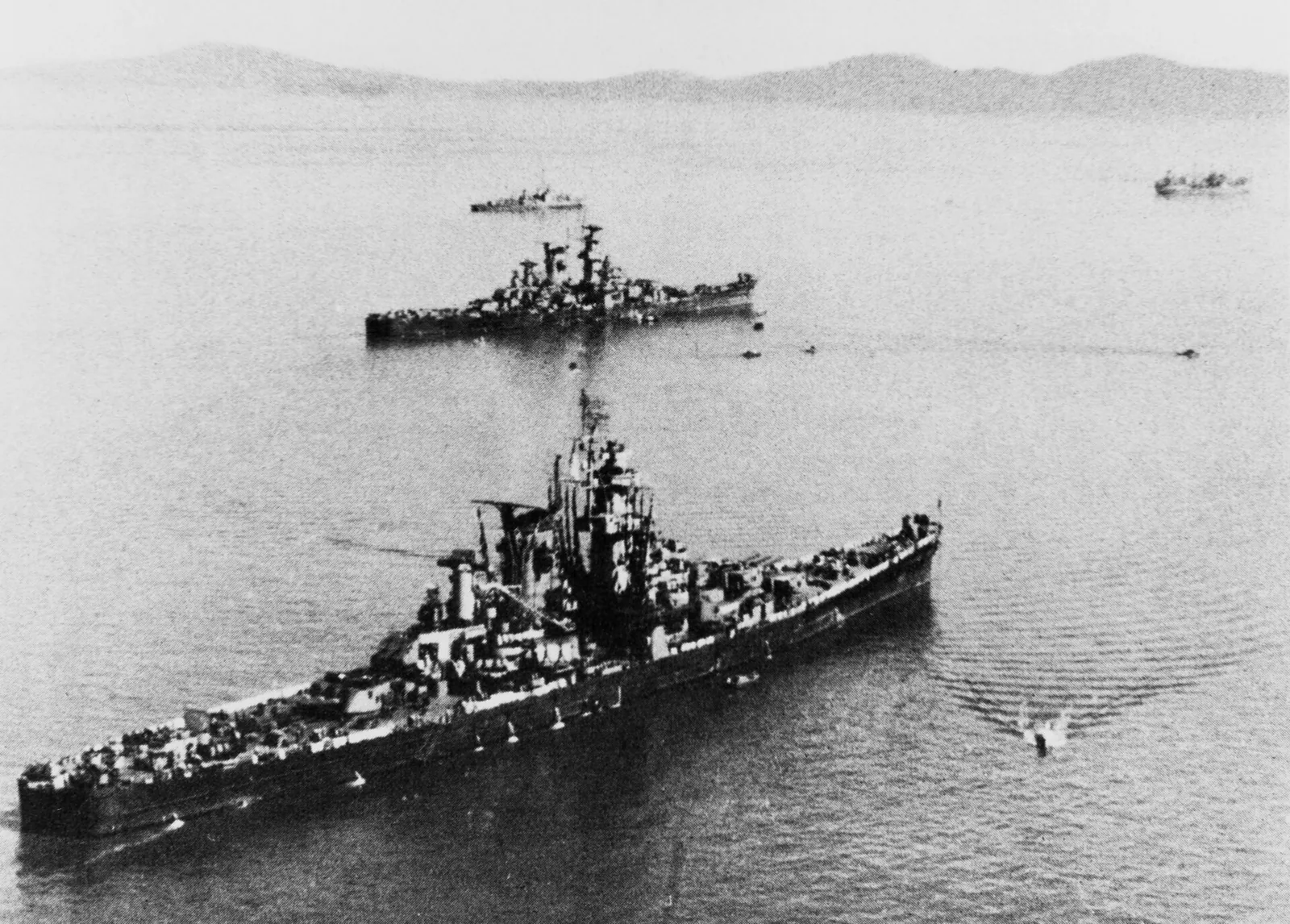
A few days later Guam became the flagship of Rear Admiral Low's North China Force and circled the Yellow Sea parading American naval might before the major ports of Tsingtao, Port Arthur, and Darien. She then steamed into Jinsen, Korea, 8 September 1945 to guarantee occupation of that liberated country. Guam departed Jinsen 14 November and reached San Francisco 3 December landing a contingent of Army troops for discharge. Clearing San Francisco 5 December 1945, Guam arrived Bayonne, N.J., 17 December. She remained there and decommissioned 17 February 1947; Guam berthed with the New York Group, Atlantic Reserve Fleet until 1 June 1960 when her name was struck from the Navy List. She was sold for scrapping 24 May 1961 to the Boston Metals Co., Baltimore, Md.
Other photographs
Held for this vessel, and not tied to any part of the account above.



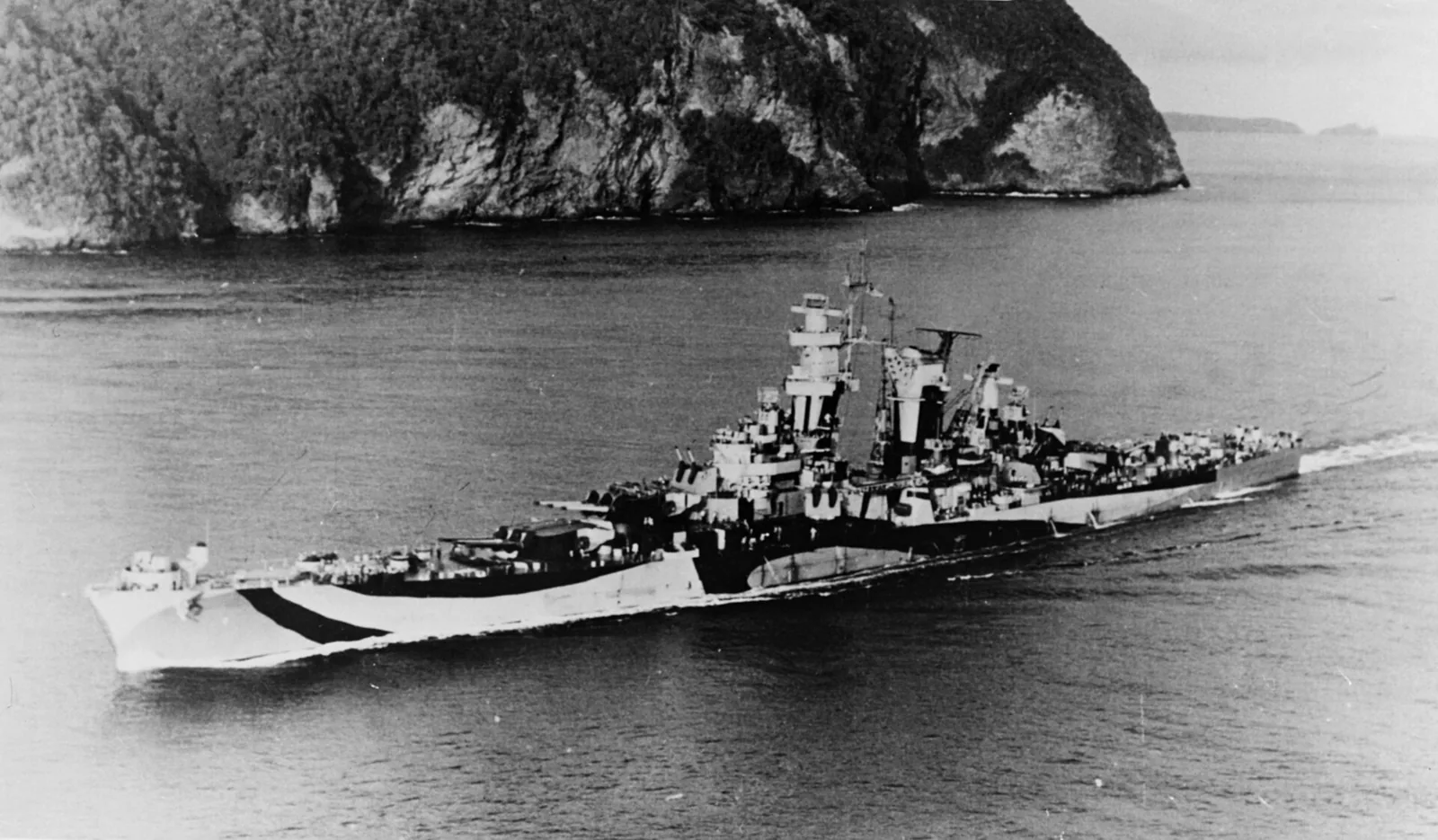
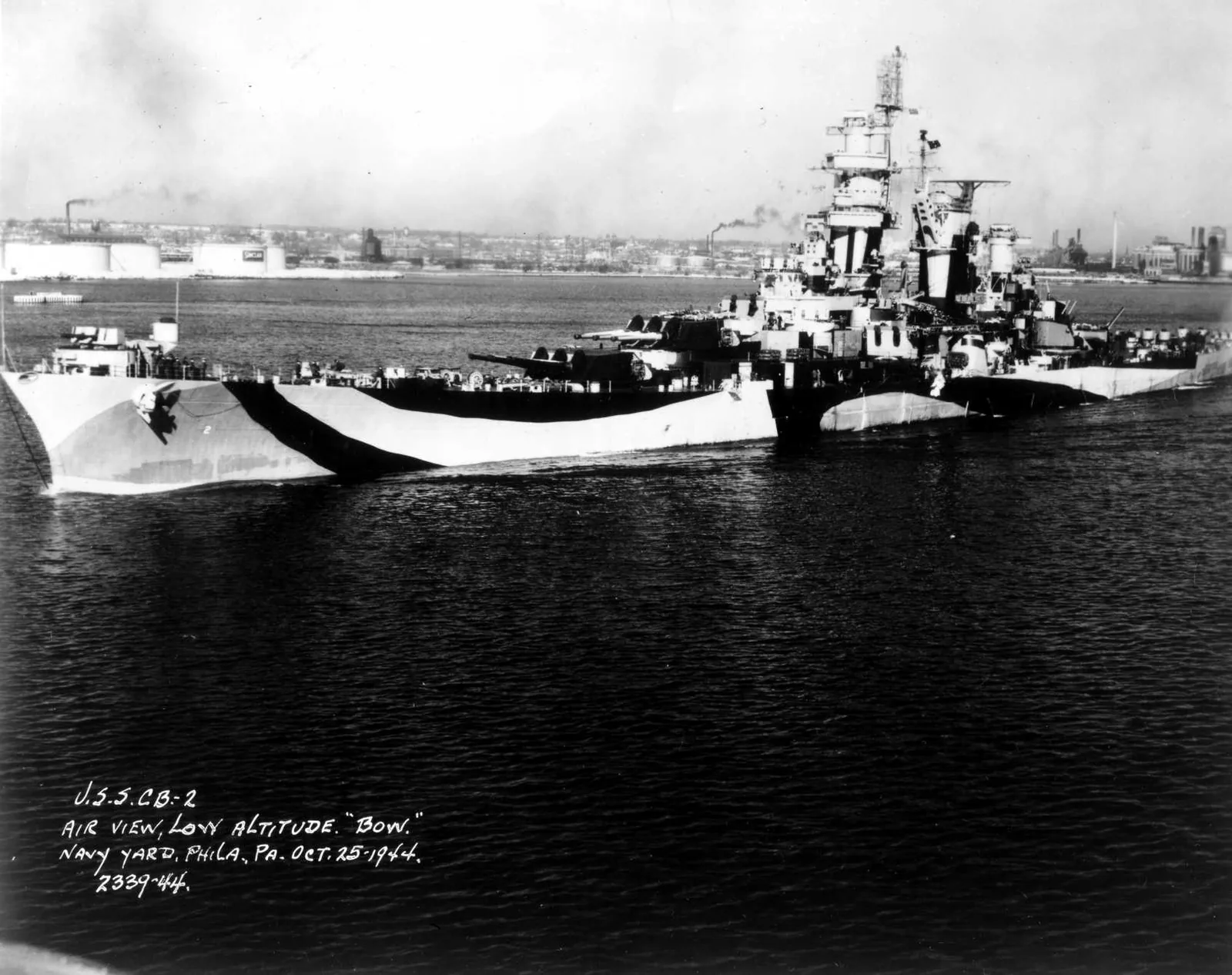
References
Every work this entry draws on. There are no numbered markers in the text above: what we hold is the provenance of the page — this history, this article, these photographs.
- History Guam II (CB-2) Dictionary of American Naval Fighting Ships, Naval History and Heritage Command. A work of the United States Government, in the public domain — the only text on this site reproduced verbatim.
- Facts USS Guam (CB-2) Structured facts only — dates, dimensions, armament and fate. No wording is taken from it. Harvested 1 August 2026.
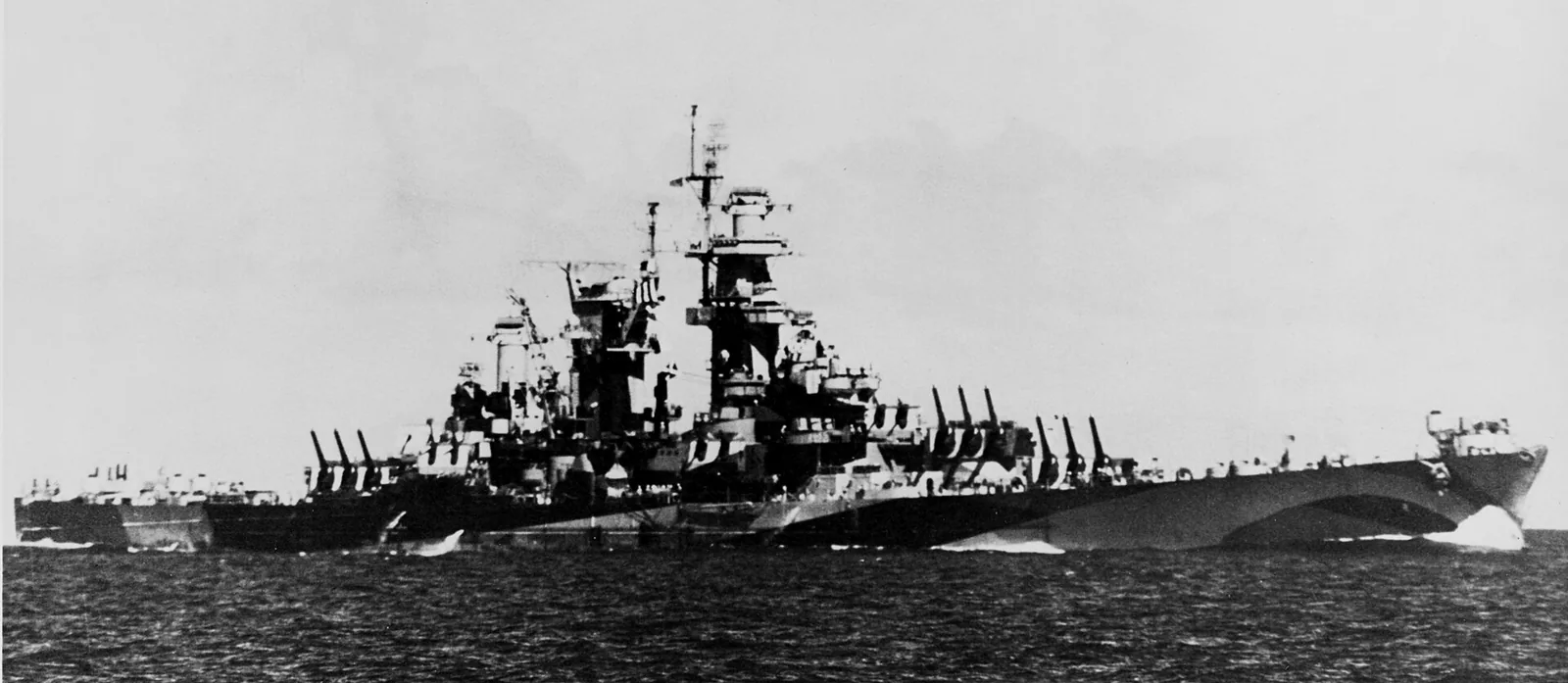
- Photograph USS Guam (CB-2) coming out of a turn, circa 1944 (NH 97131) Unknown author — U.S. Navy photo NH 97131 — Public domain — Wikimedia Commons
- Photograph CB-2 Guam 1944 Colosseum — Own work — CC BY-SA 3.0 — Wikimedia Commons
- Photograph Japanese aircraft crashes off USS Guam (CB-2), in 1945 U.S. Navy — U.S. Navy photo [1] from the USS Guam (CB-2) World War II cruise book available at Navysite.de — Public domain — Wikimedia Commons
- Photograph Aerial view of USS Guam (CB-2) off Trinidad, 13 November 1944 (NH 97132) Unknown author — U.S. Navy photo NH 97132 — Public domain — Wikimedia Commons
- Photograph CB-2 Guam 1945 Colosseum — Own work — CC BY-SA 3.0 — Wikimedia Commons
- Photograph Diesel engine room on USS Guam (CB-2) US Navy Employee — Naval Historical Center — Public domain — Wikimedia Commons
- Photograph U.S. Navy reserve ships at the Bayonne Naval Supply Depot, 15 April 1953 (80-G-480262) (cropped) Unknown author — U.S. Navy photo 80-G-480262 — Public domain — Wikimedia Commons
- Photograph U.S. Navy reserve ships at the Bayonne Naval Supply Depot, 15 April 1953 (80-G-480262) Unknown author — U.S. Navy photo 80-G-480262 — Public domain — Wikimedia Commons
- Photograph USS Guam (CB-2) and USS Alaska (CB-1) at anchor off the coast of China in 1945 U.S. Navy — Official U.S. Navy photo NH 90742 from the U.S. Navy Naval History and Heritage Command — Public domain — Wikimedia Commons
- Photograph USS Guam (CB-2) at Pearl Harbor, 21 February 1945 US Navy Employee — Naval Historical Center — Public domain — Wikimedia Commons
- Photograph USS Guam (CB-2) conducting main battery gunnery practice in late 1944 (NH 90736) (cropped) Unknown author — U.S. Navy photo NH 90736 — Public domain — Wikimedia Commons
- Photograph USS Guam (CB-2) conducting main battery gunnery practice in late 1944 (NH 90736) Unknown author — U.S. Navy photo NH 90736 — Public domain — Wikimedia Commons
- Photograph USS Guam (CB-2) firing main battery, 1944-45 US Navy Employee — Naval Historical Center — Public domain — Wikimedia Commons
- Photograph USS Guam (CB-2) in the Delaware River, January 1945 US Navy Employee — Naval Historical Center — Public domain — Wikimedia Commons
- Photograph USS Guam (CB-2) off Inchon (Korea) in September 1945 U.S. Navy — Official U.S. Navy photo NH 90741 from the U.S. Navy Naval History and Heritage Command — Public domain — Wikimedia Commons
- Photograph USS Guam (CB-2) off the Philadeplphia Naval Shipyard on 25 October 1944 Official U.S. Navy photograph — U.S. Navy photo 2345-44 from Navsource.org — Public domain — Wikimedia Commons
- Photograph USS Guam (CB-2) underway off Trinidad on 13 November 1944 (NH 67519) Unknown author — U.S. Navy photo NH 67519 — Public domain — Wikimedia Commons
- Photograph USS Guam (CB-2), Oct 1944 US Navy — https://www.navsource.net/archives/04/1202/040202.htm — Public domain — Wikimedia Commons