United States Navy — Destroyer
USS Herbert J. Thomas — service history
This is the full service history. For the vessel's particulars, photograph and specifications, see the entry.
In the words of the US Navy. The account below is reproduced verbatim from the Dictionary of American Naval Fighting Ships, compiled by the Naval History and Heritage Command — a work of the United States Government, in the public domain, and the only text on this site not written here.
Before commissioning
Herbert J. Thomas was born 8 February 1918 in Columbus, Ohio. From July to October 1941, he had enlisted service with the Army Air Corps. Sergeant Thomas enlisted in the Marine Corps Reserve 3 March 1942 at Charleston, W. Va., and after basic training was assigned to the 2d Marine Brigade. He was killed while serving with the 3d Marine Division during the battle at the Koromokina River, Bougainville, Solomon Islands, 7 November 1943. Discovering a gun emplacement difficult to approach, he carefully placed his men around him in strategic positions from which they were to charge after he had thrown a grenade into the emplacement. When the grenade struck vines and fell back into the midst of his group, Sergeant Thomas deliberately flung himself upon it to smother the explosion, valiantly sacrificing his life for his comrades. For his heroic conduct he was awarded the Medal of Honor.
Second World War 1939–1945
1945
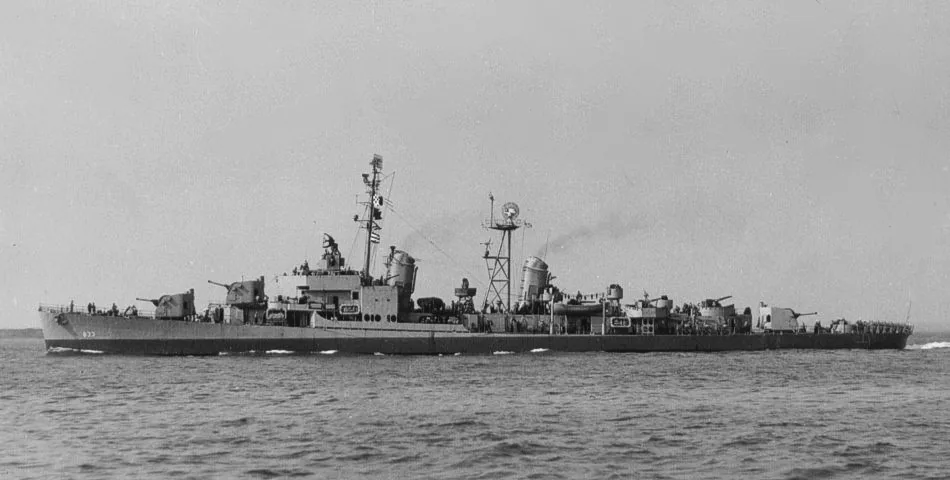
Herbert J. Thomas (DD-833) was launched 25 March 1945 by Bath Iron Works Corp.; sponsored by Miss Audrey Irene Thomas, sister of Sergeant Thomas; and commissioned 29 May 1945, Comdr. Robert T. S. Keith in command.
After shakedown along the East Coast and in the Caribbean Herbert J. Thomas transited the Panama Canal and joined the Western Pacific Forces supporting the occupation of Japan and Korea at war's end.
Post-war 1946–1949
1947
After operations with the 7th Fleet out of Japan during most of 1946 and patrol duty in Korean waters, she sailed late November via Guam and Pearl Harbor, arriving San Diego 21 December. Herbert J. Thomas sailed 6 January 1947 via the Canal Zone arriving Newport, R.I., 6 February. Between February 1947 and 22 May 1950 she conducted operations along the East Coast and in the Caribbean and made three deployments with the 6th Fleet to the Mediterranean. During the latter part of 1948 she was assigned duty as a Naval Academy practice ship, giving 6-day antisubmarine indoctrinations.
Korean War period 1950–1953
1950
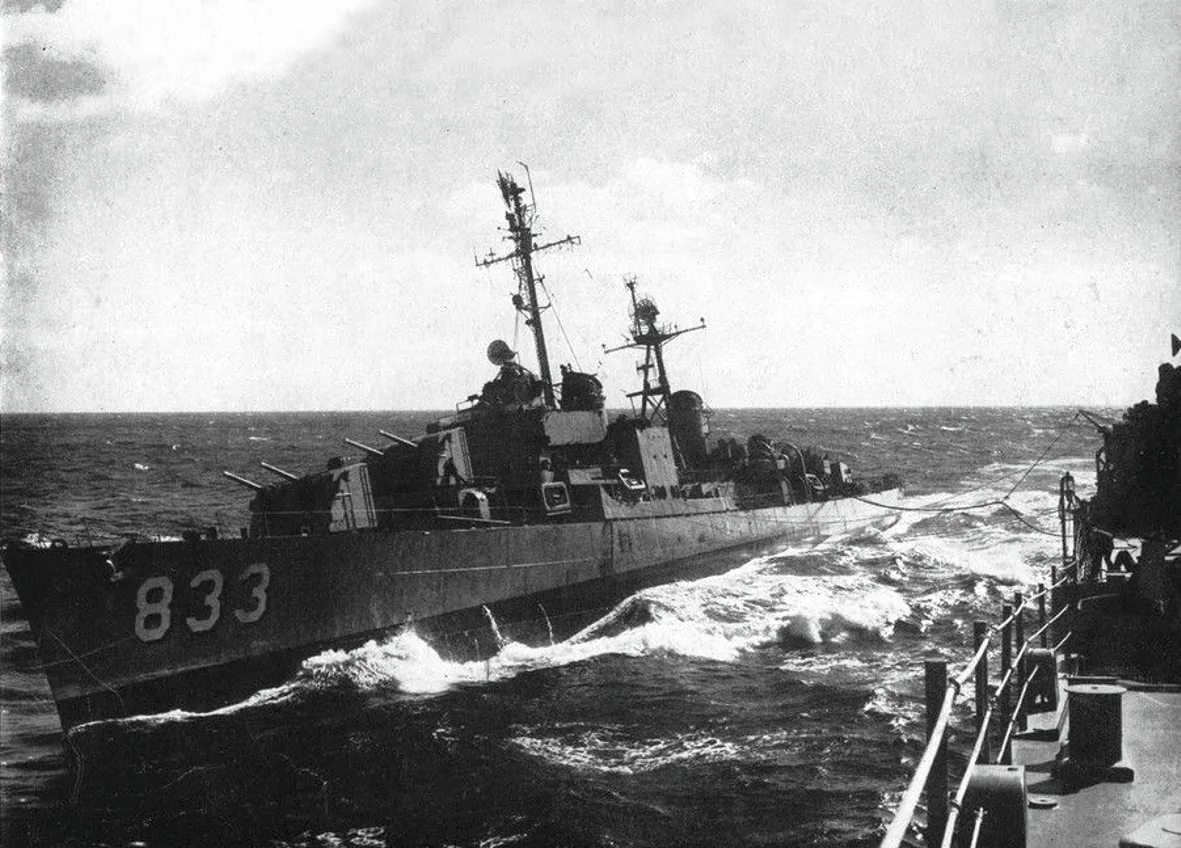
Herbert J. Thomas had just returned from the Mediterranean and was in Cartagena, Colombia, when hostilities broke out in Korea in June 1950. She immediately proceeded to Pearl Harbor and joined the Pacific Fleet. In July she joined Task Force 77 (7th Fleet Striking Force) operating off the coast of Korea in the Yellow Sea, effectively checking the enemy. A month later Herbert J. Thomas was assigned to the blockading force on Korea's east coast, and rendered highly effective gunfire support missions for our forces at Pohang, inflicting much damage on the enemy. While operating with the blockading forces, she furnished interdiction fire all along the eastern coast and fired a diversionary mission for British commandos who were landed from submarine Perch to destroy a vital railroad tunnel.
At 1329 on the afternoon of 4 September, Herbert J. Thomas was on picket duty about 60 miles north of Admiral Ewen's main force when she made radar contact on unidentified aircraft and reported this to Valley Forge planes passing overhead. A division of Corsairs which was orbiting northeast of the force was vectored out. The raid was now estimated on course 160°, speed 180 knots. As the fighters turned to meet it, it separated into two parts, one retiring in the direction whence it came. Sighting the fighters, the bogey nosed down, increased speed and began evasive action, but turned toward Korea rather than westward toward China. The division leader flew over him in an attempt to identify and reported a twin-engined bomber with red star markings. The intruder opened fire and was subsequently shot down. Herbert J. Thomas proceeded to the spot where the plane splashed and recovered the body of a Russian aviator. Artificial respiration continued for an hour but brought no sign of life.
1951
For the next 3 months she was assigned patrol duty and operations with Task Force 77. Departing 24 January 1951, Herbert J. Thomas arrived San Diego 12 February and spent the remainder of the year operating in that area. Returning to Korea 25 January 1952 she joined Task Force 77 for 1 month and spent 2 weeks on the bombline performing vital gunfire support and screening duties. Late February Herbert J, Thomas took up patrol duty in the Formosa Straits and in April was assigned duty in the Songjin area. In this she coordinated the operations of several ships in the Songjin-Chongjin area.
After a brief period with the 7th Fleet Striking Force she joined the Blockading and Escort Force off the east coast of Korea. On 11 May she dueled with shore batteries in Wonsan Harbor where she received one hit with no casualties and slight damage. Quick to retaliate, Herbert J. Thomas dealt severely with the enemy, inflicting much damage. The remainder of the month was spent on patrol, bombarding and furnishing fire support for mine-sweeping operations in the Serisan, Songjin and Chongjin areas.
1953
Retiring to Yokosuka Herbert J. Thomas sailed 8 June for San Diego, arriving the 26th. Assigned the new home-port of Long Beach, she operated in that area until departing 2 February 1953 for duty with the Far Eastern Naval Forces. Arriving Yokosuka 27 February, Herbert J. Thomas joined the 7th Fleet Striking Force and screened the carriers launching strikes on North Korea. From 4 April to 19 May she was assigned electronics countenneas-ures duties in addition to call fire missions on gun emplacements and radar stations, effectively checking the enemy.
Herbert J. Thomas joined Task Force 72, 12 June and operated out of Kaoshiung, Formosa, enforcing the blockade between Formosa and the communist Chinese mainland. Sailing from Yokosuka 14 August she reached Long Beach 30 August, from whence she proceeded to Mare Island for overhaul and armament conversion.
Cold War 1954–1963
1954
Herbert J. Thomas departed 5 May 1954 for her fourth tour in the Far East. After operating in the Philippines and out of Yokosuka, she proceeded 23 July to Kaoshiung, Formosa, to take up patrol duty. Returning to Long Beach 5 December, she spent the next 5 months operating with carrier Kearsarge in that area.
1955
From 14 June 1955 to 1 March 1958 Herbert J. Thomas made three more deployments to the Far East. During these tours she operated with the fast carrier task forces and had duty on the Taiwan Patrol, helping to stabilize the Chinese situation and protect vital American interests.
1958
On 25 October 1958, Herbert J. Thomas deployed again with other units of the 7th Fleet to the Far East, serving with pride as a good-will ambassador for the United States. She trained with Japanese destroyers in antisubmarine exercises and operated again with fast carrier groups. In August 1959, the destroyer represented the United States Navy at the first raising of the 49-State flag at Sitka, Alaska.
1963
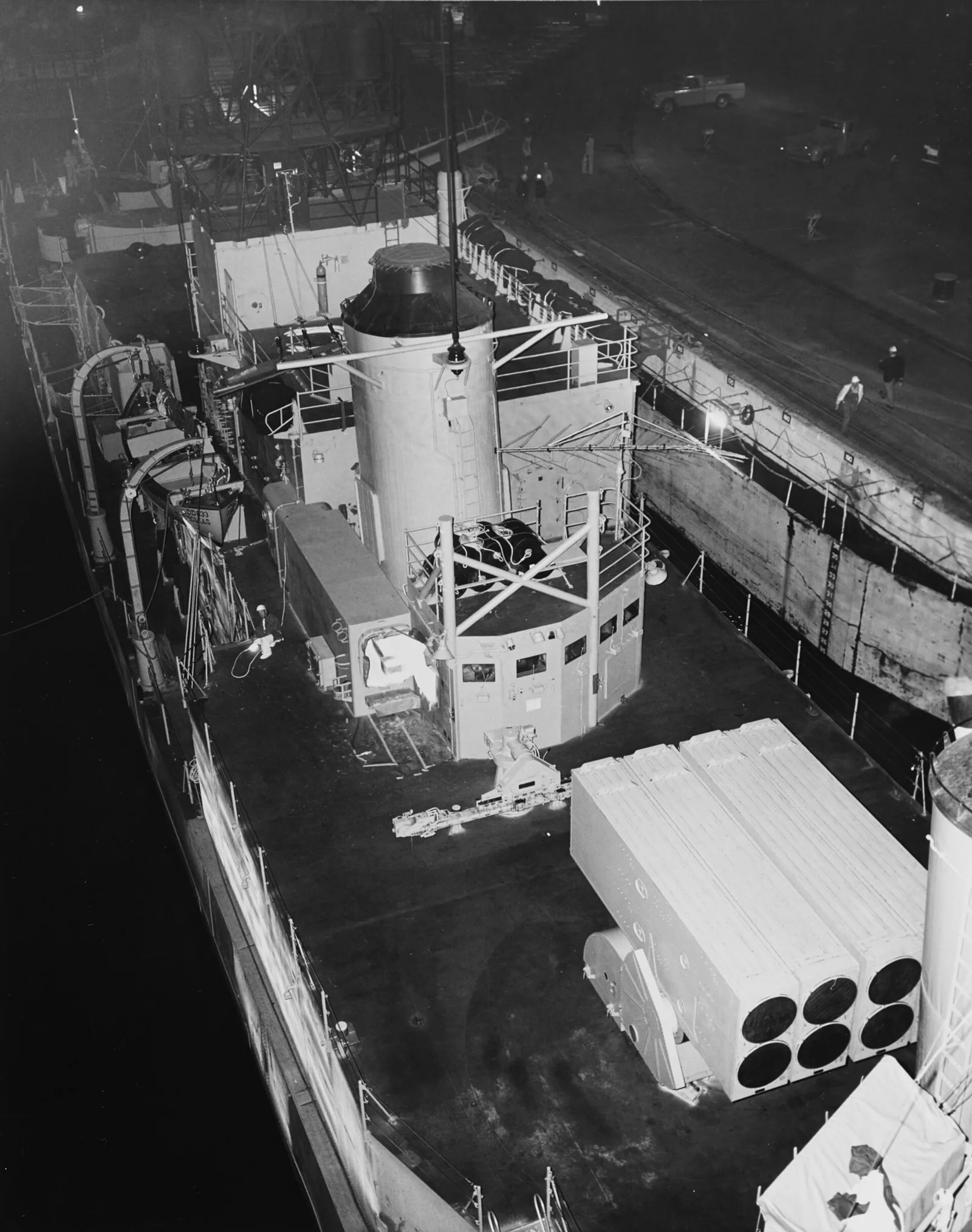
"Thomas" deployed regularly to the Far East until 9 July 1963, when she entered Mare Island Naval Shipyard, Vallejo, Calif., and remained in commission in reserve for a 12½-month modernization overhaul. During the FRAM I conversion, the destroyer received an entirely new superstructure, designed to protect the ship against biological and chemical agents as well as radioactive fallout, and the Antisubmarine Rocket (ASROC) system.
Vietnam War period 1964–1975
1966
Returning to full commission 31 July, Herbert J. Thomas completed her FRAM I conversion 30 August and operated along the West Coast until sailing for the Far East 14 September 1966. Arriving at Yankee Station off South Vietnam 16 October, she joined CTG 77.7 in screening Franklin D. Roosevelt (CVA-42) during strikes against communist targets ashore. She retired toward the Philippines 16 November, arriving Subic Bay 3 days later en route to Kaoshiung, Taiwan, for patrol duty in the Strait of Formosa 24 November through 16 December. Back off Vietnam 19 December, Herbert J. Thomas aided ground forces with three weeks of naval gunfire support.
1967
Following a short period of carrier escort duty on Yankee Station in mid-January, Herbert J. Thomas sailed for home on 5 February 1967, arriving in San Diego via Yokosuka on the 24th. After leave and upkeep, the warship conducted refresher training and local operations through the summer and fall. The destroyer finally departed California for a Far East cruise on 28 December, arriving at Yankee Station via Japan and the Philippines on 14 March 1968. The warship conducted shore bombardment missions off II and III Corps areas of responsibility in April and May as part of the Vietnamese counter-offensive after Tet, targeting enemy concentrations ashore. The destroyer also conducted patrols off Taiwan in June before sailing home on 15 June, arriving in San Diego via Sasebo on 5 July. Herbert J. Thomas spent the last three months of the year in overhal at Long Beach.
1969

After completing refresher training that spring, the destroyer departed San Diego for her next Western Pacific deployment on 4 June 1969. Arriving in the Tonkin Gulf on 3 July, Herbert J. Thomas began three weeks of positive identification and radar advisory zone (PIRAZ) duty (air traffic coordination) as well as the occassional shore bombardment mission. Following a port visit to Sasebo in early August, the warship conducted another three-week PIRAZ tour before putting in to Hong Kong on 15 September. She conducted one more shore bombardment patrol in October before turning for home on 1 November, arriving in San Diego via Subic Bay, Guam, Midway and Pearl Harbor on 23 November.
1970
In the summer of 1970, Herbert J. Thomas served as a school and training ship for NROTC midshipmen. In late August, the warship failed a final service inspection and was immediately tapped for inactivation. Herbert J. Thomas decommissioned at San Diego on 4 December 1970. She was struck from the Navy list 1 February 1974 and transferred to the Republic of Taiwan through the Security Assistance Program (SAP) on 1 June 1974. The destroyer served in the Taiwanese Navy as Han Yang (D 915) until retired on 16 August 1999.
Other photographs
Held for this vessel, and not tied to any part of the account above.
References
Every work this entry draws on. There are no numbered markers in the text above: what we hold is the provenance of the page — this history, this article, these photographs.
- History Herbert J. Thomas (DD-833) Dictionary of American Naval Fighting Ships, Naval History and Heritage Command. A work of the United States Government, in the public domain — the only text on this site reproduced verbatim.
- Facts USS Herbert J. Thomas Structured facts only — dates, dimensions, armament and fate. No wording is taken from it. Harvested 1 August 2026.
- Photograph USS Herbert J. Thomas (DDR-833) underway in San Francisco Bay on 13 June 1957 (NH 94309) Unknown author — U.S. Navy photo NH 94309 — Public domain — Wikimedia Commons
- Photograph USS Herbert J Thomas (DD-833) at Hong Kong 1969 USN — Official U.S. Navy photograph [1] from the USS Herbert J. Thomas (DD-833) 1969 Cruise Book — Public domain — Wikimedia Commons
- Photograph ASROC launcher of USS Herbert J. Thomas (DD-833) in 1965 U.S. Navy — Official U.S. Navy photo NH 73637 from the U.S. Navy Naval History and Heritage Command — Public domain — Wikimedia Commons
- Photograph DASH deck and hangar of USS Herbert J. Thomas (DD-833) in 1965 U.S. Navy — Official U.S. Navy photo NH 73636 from the U.S. Navy Naval History and Heritage Command — Public domain — Wikimedia Commons
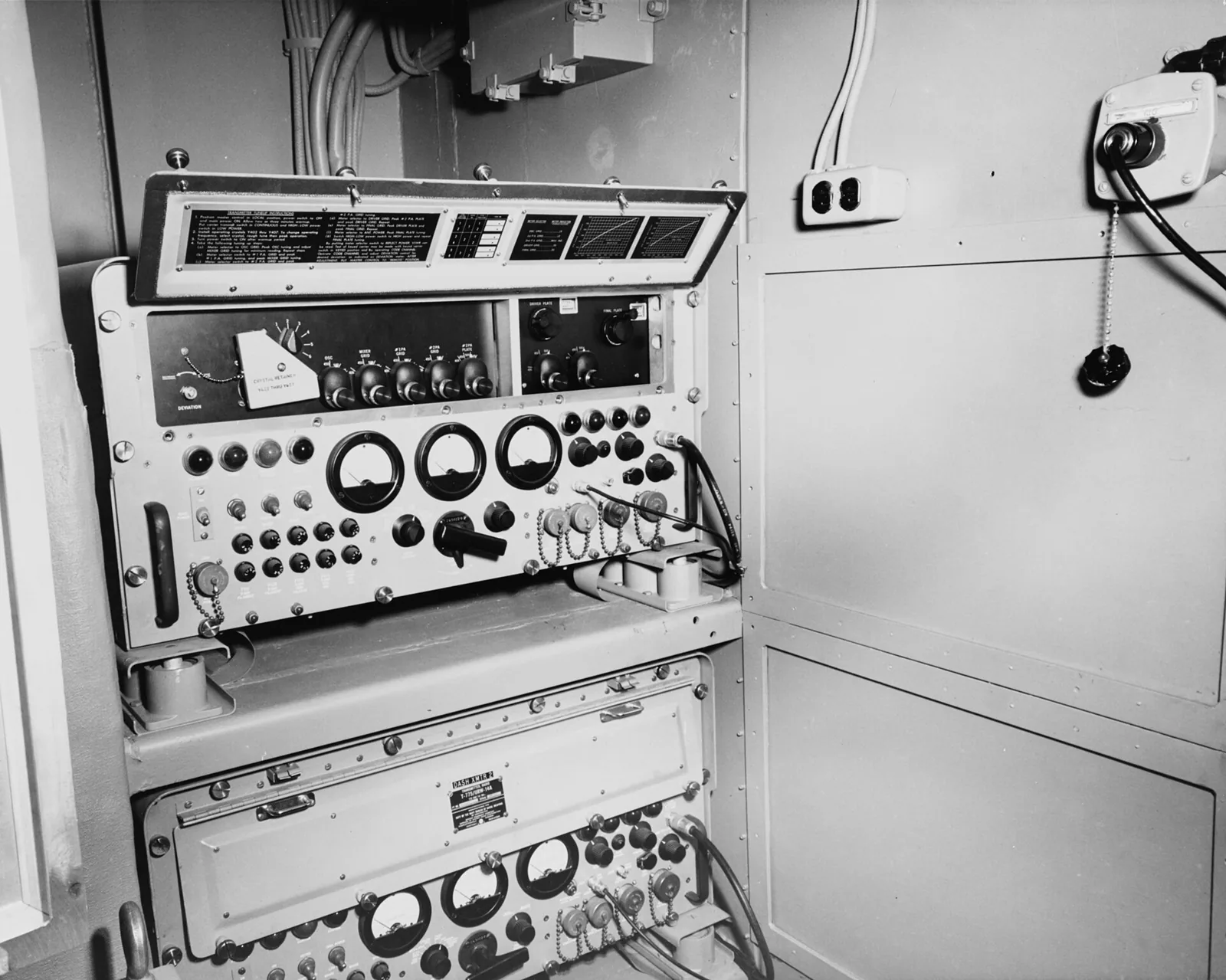
- Photograph DASH equipment room on USS Herbert J. Thomas (DD-833) in 1965 U.S. Navy — Official U.S. Navy photo NH 73641 from the U.S. Navy Naval History and Heritage Command — Public domain — Wikimedia Commons
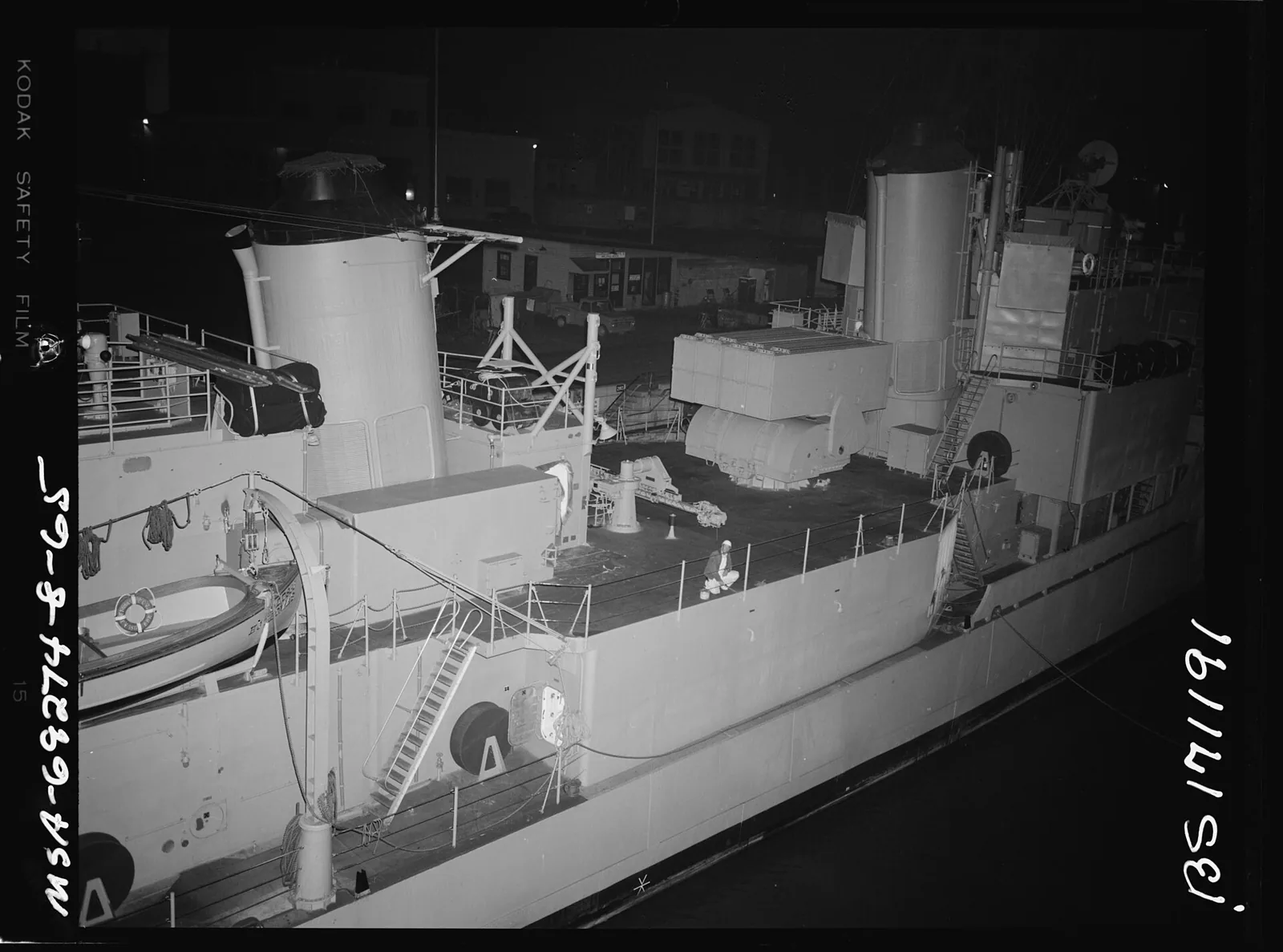
- Photograph DD-833 Thomas - DPLA - 7e0620d9c7c3dd58014ca95e93ccb20e Department of Defense. Department of the Navy. Bureau of Ships. 9/18/1947-5/1/1966 — This file was contributed to Wikimedia Commons by National Archives and Records Administration as part of a cooperation project. The donation was facilitated by the Digital Public Library of America , via its partner Digital Public Library of America . Record in source catalog DPLA identifier: 7e0620d9c7c3dd58014ca95e93ccb20e National Archives Identifier: 24744617 — Public domain — Wikimedia Commons
- Photograph USS Herbert J. Thomas (DD-833) during FRAM at Mare Island c1965 USN — Official U.S. Navy photograph [1] from the USS Herbert J. Thomas (DD-833) 1969 Cruise Book — Public domain — Wikimedia Commons
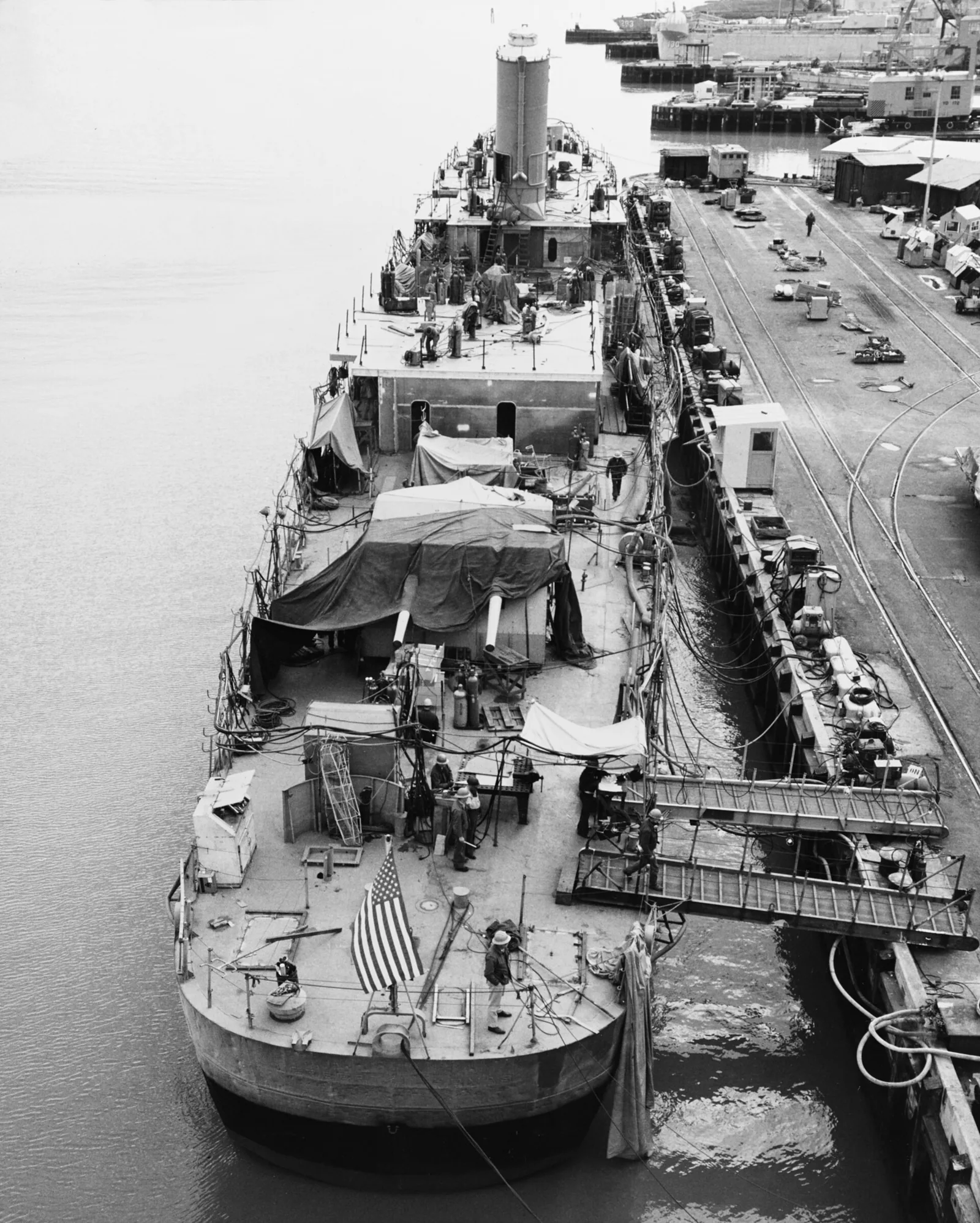
- Photograph USS Herbert J. Thomas (DD-833) during FRAM I at Mare Island in January 1965 U.S. Navy — Official U.S. Navy photo USN 1110729 from the U.S. Navy Naval History and Heritage Command — Public domain — Wikimedia Commons
- Photograph USS Herbert J. Thomas (DD-833) in dry dock at Mare Island c1965 USN — Official U.S. Navy photograph [1] from the USS Herbert J. Thomas (DD-833) 1969 Cruise Book — Public domain — Wikimedia Commons
- Photograph USS Herbert J. Thomas (DD-833) in July 1969 USN — Official U.S. Navy photograph [1] from the USS Herbert J. Thomas (DD-833) 1969 Cruise Book — Public domain — Wikimedia Commons
- Photograph USS Herbert J. Thomas (DD-833) off Boston in May 1945 USN — Official U.S. Navy Bureau of Ships photo 19-N-85270 available at Destroyerhistory.org — Public domain — Wikimedia Commons
- Photograph USS Herbert J. Thomas (DD-833) underway in 1948 USN — U.S. Navy photo [1] from USS Coral Sea (CVB-43) publication "The Natural" 1948, Vol. 1 No. 13 available at usscoralsea.net — Public domain — Wikimedia Commons
- Photograph USS HERBERT J. THOMAS (DD-833) U.S. Navy — https://www.history.navy.mil/content/history/nhhc/our-collections/photography/numerical-list-of-images/nhhc-series/nh-series/NH-73000/NH-73638.html — Public domain — Wikimedia Commons
- Photograph USS Herbert J. Thomas (DDR-833) is refueled by USS Roanoke (CL-145), in 1949-1950 U.S. Navy — U.S. Navy photo [1] from the USS Roanoke (CL-145) 1949-1950 cruise book available at Navysite.de — Public domain — Wikimedia Commons
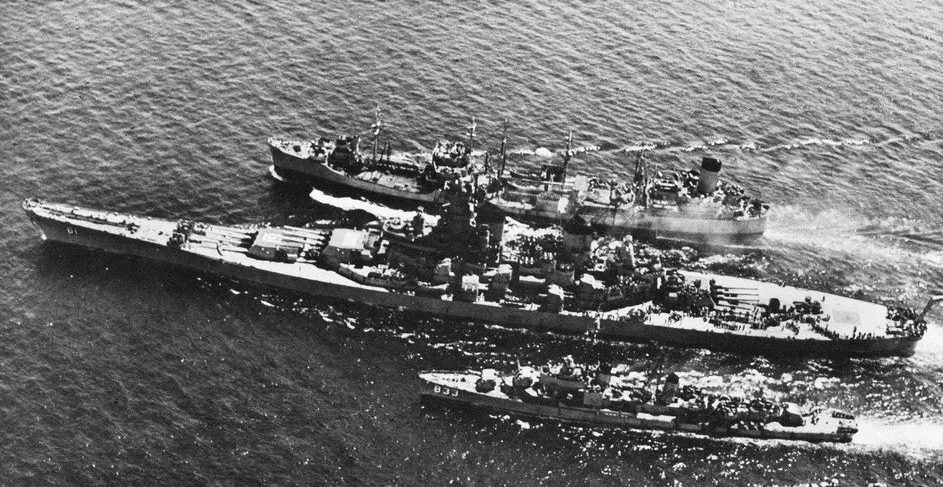
- Photograph USS Iowa (BB-61) and USS Herbert J. Thomas (DD-833) with oiler off Korea in 1952 U.S. Navy — U.S. Navy photo [1] from the USS Iowa (BB-61) 1951-1952 cruise book available at Navysite.de — Public domain — Wikimedia Commons