United States Navy — Destroyer
USS Lloyd Thomas (DD-764) — service history
This is the full service history. For the vessel's particulars, photograph and specifications, see the entry.
In the words of the US Navy. The account below is reproduced verbatim from the Dictionary of American Naval Fighting Ships, compiled by the Naval History and Heritage Command — a work of the United States Government, in the public domain, and the only text on this site not written here.
Before commissioning
Lloyd Thomas was born 10 March 1912 at Nelsonville, Ohio; graduated from Ohio University in June 1935; was appointed aviation cadet 4 October 1938; and commissioned ensign 26 October 1939. He Joined Torpedo Squadron 6 in Enterprise 13 December 1939 and a year later was promoted to lieutenant (jg.). He gave his life in his squadron’s immortal attack in the Battle of Midway 4 June 1942, and was posthumously awarded the Navy Cross for extraordinary heroism and courage in combat.
Second World War 1939–1945
1943
Lloyd Thomas (DE-312) was laid down by Mare Island Navy Yard 23 August 1943; construction was canceled 13 March 1944, prior to launching.
1944
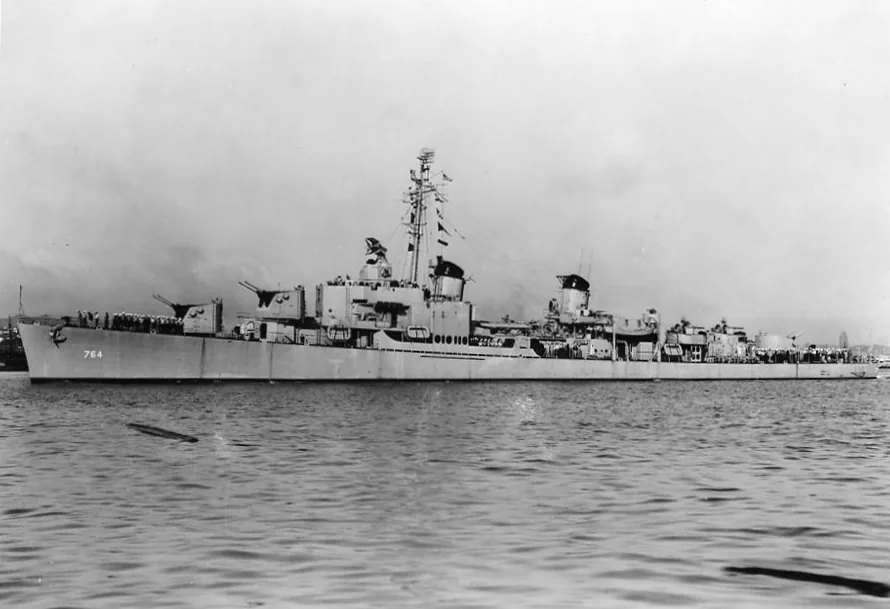
Lloyd Thomas (DD-764) was laid down by Bethlehem Steel Co., Shipbuilding Division, San Francisco, Calif., 26 March 1944; launched 5 October 1945; sponsored by Mrs. Lloyd Thomas, widow of Lieutenant (jg.) Thomas; and commissioned 21 March 1947, Comdr. J. I. Cone in command.
Post-war 1946–1949
1948
After shakedown off San Diego and a training cruise in Hawaiian waters, the new destroyer departed the west coast 16 January 1948 for a round-the-world training and good will voyage. In company with aircraft carrier Valley Forge (CV-45) and three other destroyers, Lloyd Thomas visited Sidney, Australia, Hong Kong, and Tsingtao, China. After Tsingtao, Lloyd Thomas, William C. Lawe (DD-763), and Valley Forge proceeded westward, touching Singapore, Ceylon, and Saudi Arabia, transited the Suez Canal and the Straits of Gibraltar, then steamed north for calls at Bergen, Norway, and Southhampton, England. The formation left England 13 March 1948, spent five days in New York City, and arrived at home port San Diego 11 June, having steamed 46,168 nautical miles during the 5-month voyage.
During the rest of 1948, the destroyer trained reservists and conducted local operations off southern California. In 1949, after conversion to a hunter-killer type destroyer at San Francisco Navy Yard, the ship joined the Atlantic Fleet at Newport, R.I., in October and steamed north with 2d Fleet for cold weather exercises in the Arctic.
Korean War period 1950–1953
1950
Returning home for the holidays, the destroyer operated between Bermuda and Puerto Rico during the first two months of 1950. She was redesignated DDE-764 on 4 March 1950. Following four months of antisubmarine exercises and a midshipmen cruise early in July, the ship departed Newport 15 July for a 5-day call at Koykavik, Iceland. Returning from Iceland in early August, she left Newport for Norfolk 6 September in company with three other destroyers. Just off Norfolk the destroyers rendezvoused with Coral Sea (CVB-43) and escorted the carrier to the Mediterranean. After rigorous operations with the 6th Fleet and calls at Sardinia, Sicily, and Golfo Juan, France, Lloyd Thomas and her sister destroyers departed Gibraltar 1 November to escort Midway (CVB-41) home. They arrived Norfolk 9 November and the destroyers made Newport the next day.
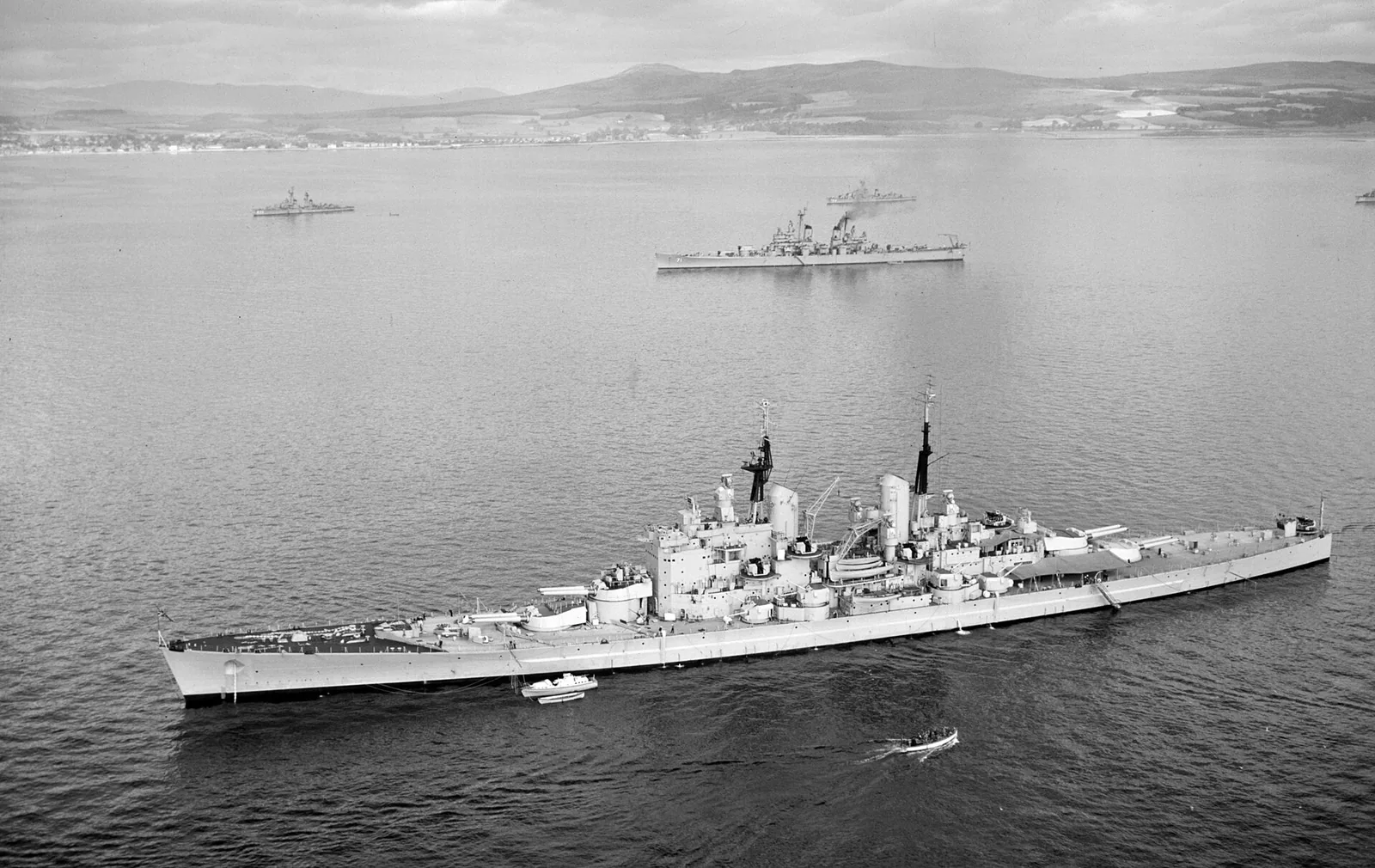
Over the next two years, the warship conducted antisubmarine operations in the Caribbean and made yearly voyages to the Mediterranean. The 1952 voyage included a NATO amphibious landing on the coast of Denmark (Operation “Mainbrace”) and port calls in Scotland and England. During 1953 she again operated with NATO, this time in the Mediterranean, and visited Cannes and Naples.
Cold War 1954–1963
1955
In early 1954, Lloyd Thomas assisted the new canted-deck carrier Antietam (CVS-36) in the intricacies of antisubmarine warfare. From August to January 1955, the destroyer again operated with NATO units in the Mediterranean. Except for a quick run to Lisbon, Lloyd Thomas spent the rest of 1955 operating in home waters. The highpoint of 1956 was a summer midshipman cruise to Spain and the British Isles in company with the famous battlewagon Wisconsin (BB-64).
1957
On 4 January 1957 the ship departed Newport with Destroyer Division 242 and submarine Batfish (SS-310) for South America to acquaint friendly navies in Colombia, Peru, Ecuador, and Chile with the newest techniques in antisubmarine warfare. Returning to Newport from Chile 18 March, she conducted local operations until departing 12 August for five months of patrol duty in the Mediterranean and Red Seas.
She spent most of 1958 in the Caribbean, with Operation “Springboard” that spring and refresher training during September and October. In 1959, besides hunter-killer training off Norfork and a summer midshipman cruise to Quebec, Lloyd Thomas again operated with NATO in European waters. During 1960, the ship returned to the Mediterranean, spending June through September with the 6th Fleet. Between exercises she visited Palma de Majorca, Barcelona, and Naples.
1961
From March to December 1961, Lloyd Thomas underwent a FRAM II conversion, a rehabilitation and modernization program designed to add years of service to destroyers built shortly after World War II. After leaving New York Naval Shipyard she commenced six weeks of refresher training at Guantanamo Bay. Redesignated DD-764 on 30 June 1962, the destroyer operated along the east coast until departing 7 September 1962 for a 6-month tour to the Mediterranean and Middle East. During her duty with the Middle East Force in January and February 1963, the ship visited Ceylon, crossed the equator, and called at the Indian Naval Base in Visakhaptnam. She arrived Newport early in March and resumed operations from her home port.
Vietnam War period 1964–1975
1964
The warship returned to the Mediterranean in May 1964 for the joint French-American amphibious Operation “Fairgame II.” Then after a brief call at Athens, she spent June and July in the Near East, showing the flag and promoting good will in the nations bordering the Red Sea and Persian Gulf.
From 10 October to 19 November 1964, Lloyd Thomas escorted 28,000 Marines from Little Creek to the coast of Spain during operation “Steelpike I”, the largest peacetime amphibious operation ever conducted. “Steelpike I” demonstrated that the Navy could quickly and convincingly thwart aggression anyplace in the world.
1966
During 1965 the destroyer, after installing new electronic gear to update her antisubmarine capabilities, trained in Guantanamo, then participated in the late summer antisubmarine operation, CANUS-SILEX, with the Royal Canadian Navy in the western Atlantic. On 15 February 1966 she deployed from Newport again to the Mediterranean. Here during the ensuing months she made an important contribution to 6th Fleet deterrent patrols.
1967
Returning to Newport 8 July, the destroyer entered drydock for three weeks beginning 29 July, at Bethlehem Shipyard, Boston. Resuming operations on 22 August, she was plane guard for Wasp (CVS-18) during the recovery phase of the Gemini XII operation, 4 through 18 November. On 1 March 1967 Lloyd Thomas, with the rest of Destroyer Squadron 10, departed Newport for another cruise to the Mediterranean. During this deployment, the Six Day War broke out between Israel and her Arab neighbors. The 6th Fleet, including Lloyd Thomas , sailed in the eastern Mediterranean to deter Soviet activity and keep hostilities localized. The warship arrived back at Newport 20 July and operated out of her home port the remainder of the year. On 7 May 1968, after a brief tour of exercises in the Caribbean, the destroyer entered Boston for overhaul. Back in service in the fall, she returned to local operations out of Newport into 1969. Following a port visit to New York in March 1970, Lloyd Thomas sailed south and west to Pearl Harbor, arriving at her new home port there via the Panama Canal and San Diego on 27 April.
1970
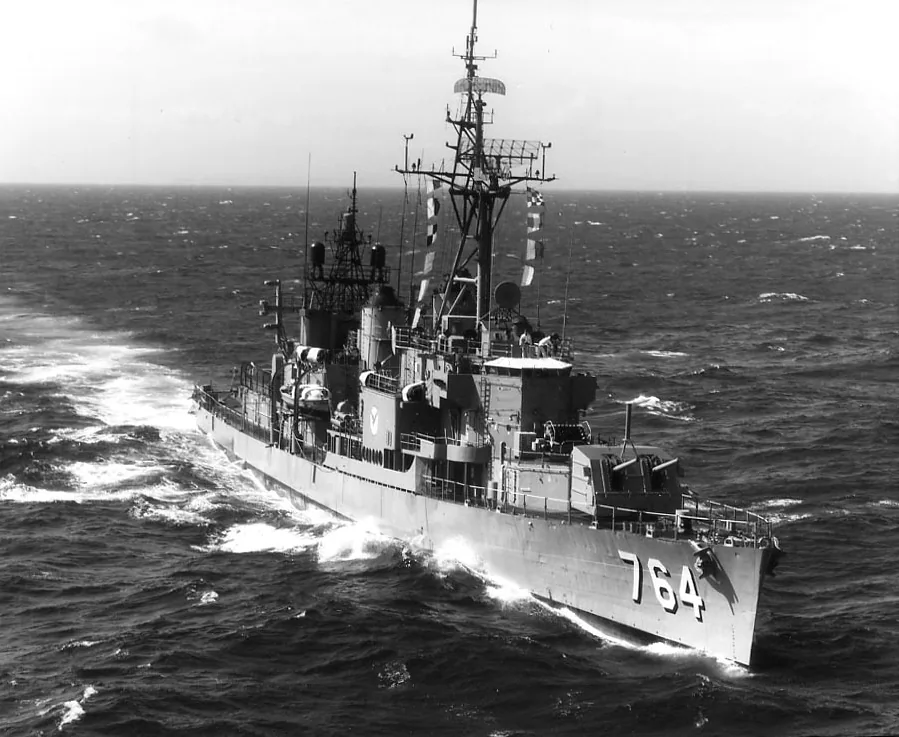
The destroyer got underway for her first western Pacific deployment in over 20 years on 12 August 1970, arriving off the coast of Vietnam on 7 September. Assigned to the gun line, the destroyer provided naval gunfire support to troops ashore for four days until suffering an in-bore shell explosion in Mount 51, killing three sailors and injuring ten others. Detached from shore bombardment duty after repairs at Subic Bay, the warship served on the Northern Search and Rescue Station in the Tonkin Gulf until mid-October. After visits to Okinawa and Yokosuka, Japan, for the installation of a new gun mount, the warship returned to the gunline in November and December. Following a port visit to Bangkok, Thailand, for the holidays, LLoyd Thomas served on the gunline, on search and rescue station and at Yankee Station escorting aircraft carriers until 15 February 1971 when she turned for home, arriving at Pearl Harbor on 26 February. After leave and upkeep, and local operations off Hawaii, the destroyer got underway 8 October for surveillance operations of Soviet activities in the Bering Sea above the Arctic Circle, returning back to Pearl Harbor on 12 November.
1972
After a service inspection carried out in March 1972, Lloyd Thomas was slated for disposal as part of the massive draw down of old naval forces in the early 1970s. Decommissioned at Pearl Harbor on 12 October 1972, the destroyer was struck from the Navy List and transferred to the Republic of Tawan that same day. She served as Dang Yang in the Taiwanese Navy until disposed of in the late 1990s.
Other photographs
Held for this vessel, and not tied to any part of the account above.

References
Every work this entry draws on. There are no numbered markers in the text above: what we hold is the provenance of the page — this history, this article, these photographs.
- History Lloyd Thomas (DD-764) Dictionary of American Naval Fighting Ships, Naval History and Heritage Command. A work of the United States Government, in the public domain — the only text on this site reproduced verbatim.
- Facts USS Lloyd Thomas (DD-764) Structured facts only — dates, dimensions, armament and fate. No wording is taken from it. Harvested 1 August 2026.
- Photograph USS Lloyd Thomas (DD-764) at Newport RI c1951 PH3 Eugene McFadden, USN (USS Cascade (AD-16)) — U.S. Navy photo [1] from Navsource.org — Public domain — Wikimedia Commons
- Photograph HMS Vanguard (23), USS Quincy (CA-71) destroyers anchor in the Firth of Clyde, Scotland (UK), during NATO Operation Mainbrace, in September 1952 (80-G-K-12832) Unknown author or not provided — U.S. National Archives and Records Administration — Public domain — Wikimedia Commons
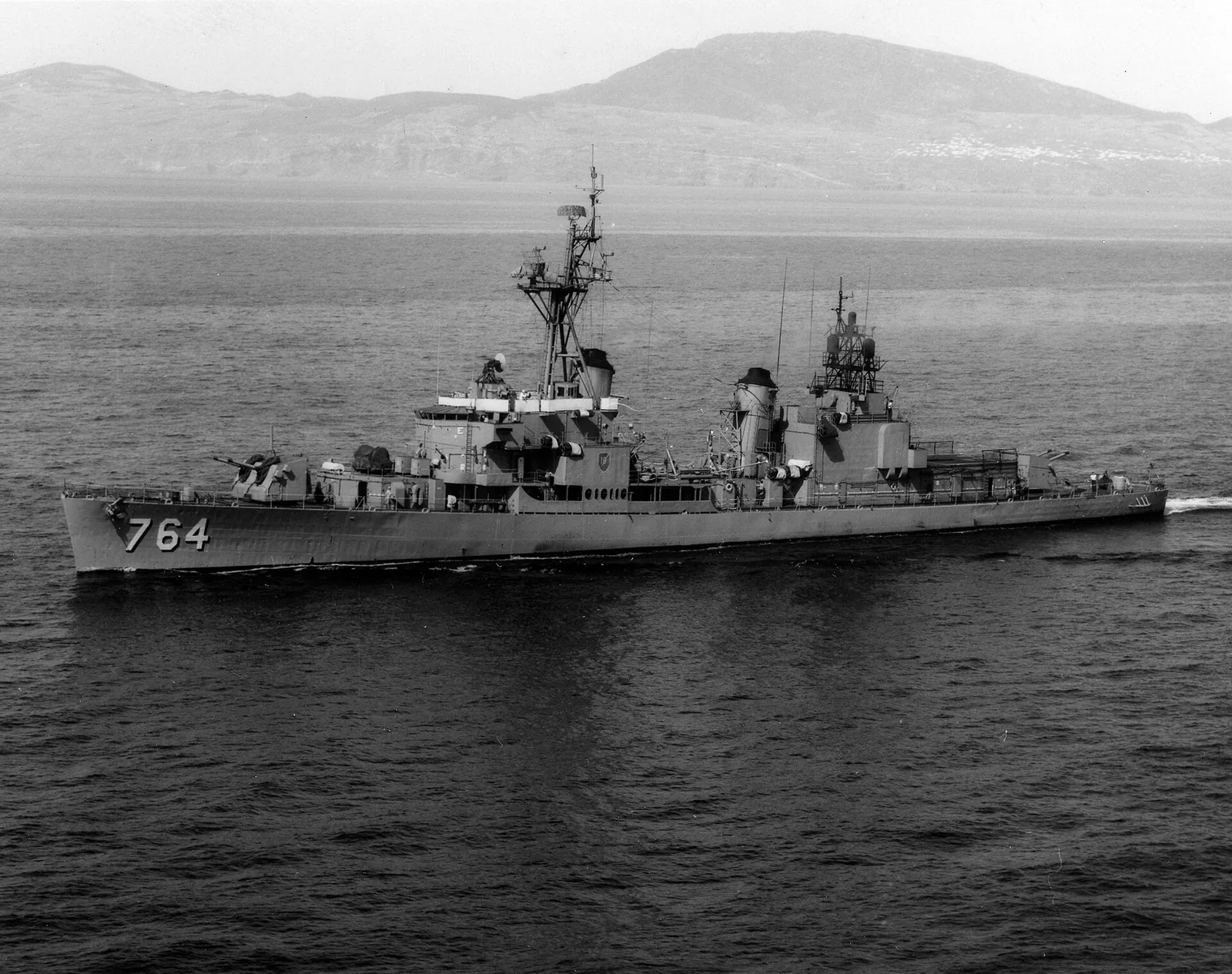
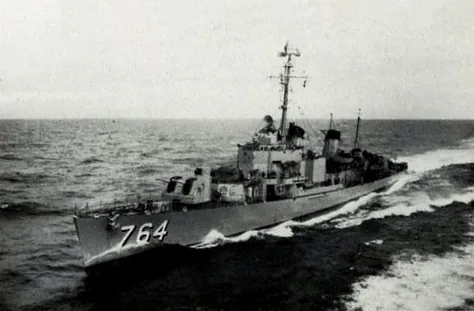
- Photograph USS Lloyd Thomas (DD-764) at sea in the 1960s U.S. Navy — Official U.S. Navy photo UA 22.01.01 from the U.S. Navy Naval History and Heritage Command — Public domain — Wikimedia Commons
- Photograph USS Lloyd Thomas (DD-764) in San Francisco Bay 1947 U.S. Navy — Official U.S. Navy photo 80-G-371339 from the U.S. Navy Naval History and Heritage Command — Public domain — Wikimedia Commons
- Photograph USS Lloyd Thomas (DD-764) underway off Oahu in 1970 PH1 Dixon M. Dreher, U.S. Navy — Official U.S. Navy photo NH 107281 from the U.S. Navy Naval History and Heritage Command — Public domain — Wikimedia Commons
- Photograph USS Lloyd Thomas (DD-764) underway, in the 1960s (PC13311) Arnold Art Store — Photo PC13311 from the collections of the Florida Memory Project — Public domain — Wikimedia Commons
- Photograph USS Lloyd Thomas (DDE-764) underway in early 1952 U.S. Navy — U.S. Navy photo [1] from the USS Cabot (CVL-28) 1952 cruise book available at Navysite.de — Public domain — Wikimedia Commons