United States Navy — Destroyer
USS Lofberg — service history
This is the full service history. For the vessel's particulars, photograph and specifications, see the entry.
In the words of the US Navy. The account below is reproduced verbatim from the Dictionary of American Naval Fighting Ships, compiled by the Naval History and Heritage Command — a work of the United States Government, in the public domain, and the only text on this site not written here.
Before commissioning
Gus Brynolf Lofberg, Jr., born in Manitou, Mich., 6 April 1903, graduated from the Naval Academy 2 June 1927. He served on board such ships as Concord (CL-10) , William B. Preston (DD-344), Mae Leish (DD-220). Arctic (AF-7), and California (BB-44) before receiving his first command, Little (DD-79) on 27 February 1942.
Second World War 1939–1945
1942
Six months later Little was engaged in the fierce struggle waged over Guadalcanal Island. On the night of 4 September 1942 his destroyer unhesitatingly challenged a vastly superior Japanese naval force then engaged in shelling American-held shore positions. Lieutenant Commander Lofberg was listed as "missing in action" after his ship was set afire and sunk. For this action he was posthumously awarded the Silver Star Medal.
1943
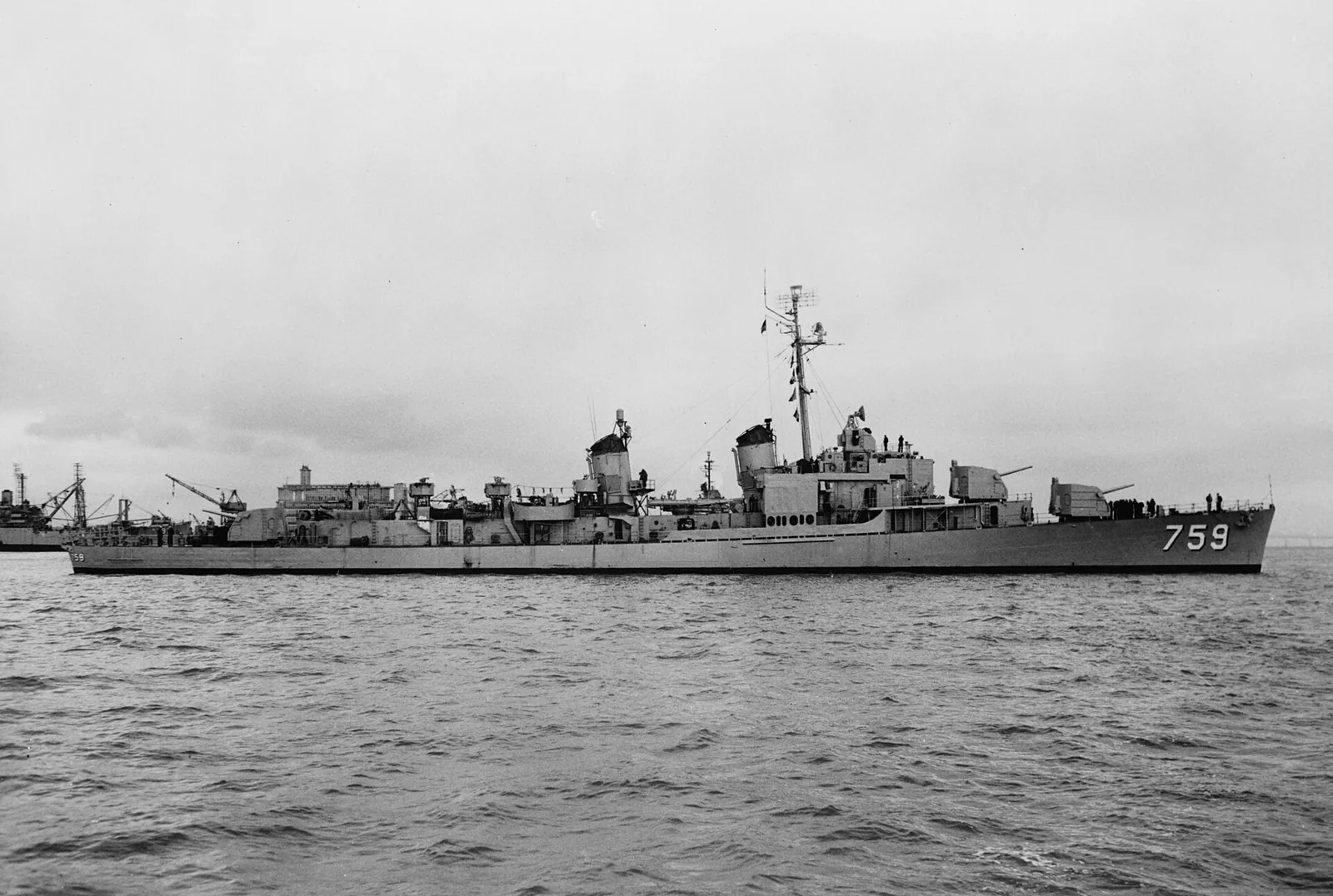
Lofberg (DD-759) was laid down 4 November 1943 by Bethlehem Steel Co., San Francisco, Calif; launched 12 August 1944; sponsored by Mrs. G. B. Lofberg, Jr., widow of Lieutenant Commander Lofberg; and commissioned 26 April 1945, Comdr. R. O. Beer in command.
Post-war 1946–1949
1946
After shakedown, Lofberg departed the west coast for the war zone. Since the formal surrender of Japan occurred almost 6 weeks before she arrived Tokyo Bay, 13 October, this trim fighting ship turned to occupation duty. First came the clearing of mines from Japanese harbors, then a series of shuttle runs between Okinawa and Shanghai, and finally her return to San Francisco 28 March 1946 with a group of marines embarked at Tsingtao, China.
1947
Lofberg was now temporarily assigned to the 3d Reserve Fleet During the next year she restricted her sailing to short 2-week coastal cruises to train Naval Reserves. On 1 July 1947 Lofberg resumed operations with the Pacific Fleet as flagship for DesRon 7.
Three years later the outbreak of the Korean war tested the Navy-s peacetime stress upon continuous training and physical readiness. On 30 September, under the command of Comdr. R. W. McElrath, Lofberg departed San Francisco on the first of three tours of duty in the new war zone. These operations extended over a 3-year period.
Korean War period 1950–1953
1951
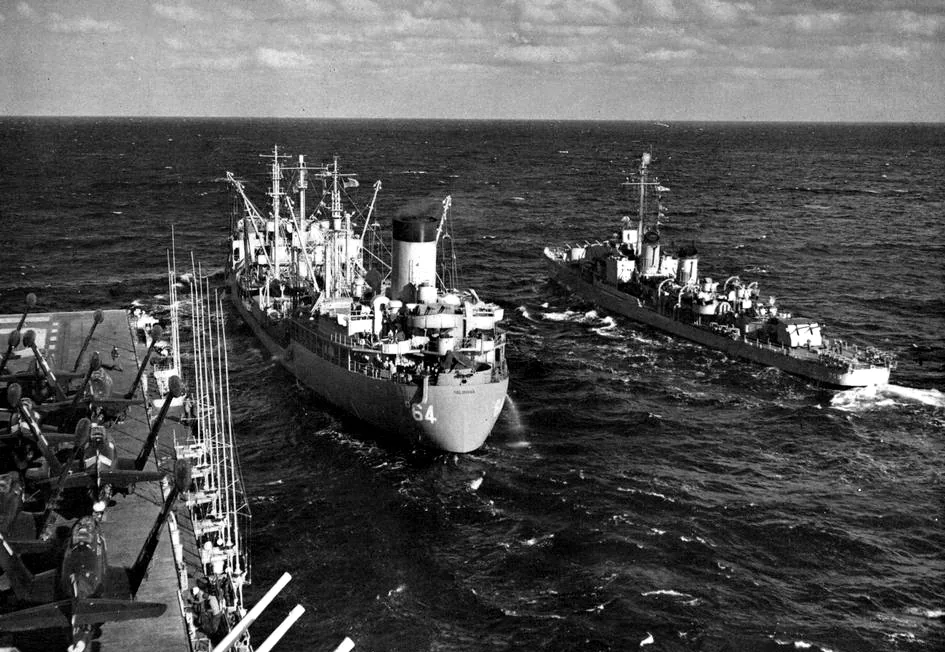
Upon her initial arrival in Korean waters she became part of the screen for the fast carriers of TF 77. Planes from these carriers played an important part in successful evacuations in November and December of U.N. troops from North Korea in the wake of Chinese Communist intervention. Shifted temporarily to TG 96.8, she participated in gunfire support missions first off Korea's west coast and then in company with Missouri (BB-63) against targets along the eastern coast. As on her two succeeding tours she also took part both in the naval siege of Wonsan, Korea, and the preventive patrolling of the Formosan Straits before returning home on 2 July 1951.
1953
Even after the Korean armistice of July 1953, Lofberg continued to make annual voyages to the Far East to participate in the activities and responsibilities of the 7th Fleet. By the beginning of 1960 she had lost her flagship status to a more modern-type destroyer. Though called upon as a part of the 1961 South China Sea buildup during a new Laotian crisis, this World War II vintage ship soon returned to San Francisco for a FRAM 11 rehabilitation and modernization.
Cold War 1954–1963
1962

Refurbished on 23 July 1962, Lofberg steamed forth to undergo a refresher training cruise and exercises designed to teach the effective use of her new helicopter flight deck. On 22 September she joined DesDiv 153, Pacific Fleet, for tactical training as part of an antisubmarine hunter group. The following April 19th, Lofberg departed the west coast to begin a new series of Far Eastern tours of duty. Lofberg completed her first assignment in time to spend Christmas 1963 at home, but her following voyage lasted from 23 October 1964 until 17 May 1965. To the familiar Formosa Strait patrol was added in February new duties off the coast of war ravaged South Vietnam. These duties included participation in the coastal barrier patrol initiated to prevent the infiltration of men and supplies from Communist North Vietnam.
Vietnam War period 1964–1975
1966
Once home from the newest war zone, Lofberg underwent a 3-month drydock period and in October commenced tactical exercises in the southern California operation area. The destroyer reentered the South China Sea 26 April 1966, and during the next 6 months served first on Yankee Station and then provided gunfire support to Allied forces ashore. While assigned to the latter duties she participated in operation -Deck House 11".
Since that time, into 1969, Lofberg has continued to rotate duty with the 1st and 7th Fleets as those arms of the Navy seek to establish, and keep, peace in the Pacific.
Other photographs
Held for this vessel, and not tied to any part of the account above.
References
Every work this entry draws on. There are no numbered markers in the text above: what we hold is the provenance of the page — this history, this article, these photographs.
- History Lofberg (DD-759) Dictionary of American Naval Fighting Ships, Naval History and Heritage Command. A work of the United States Government, in the public domain — the only text on this site reproduced verbatim.
- Facts USS Lofberg Structured facts only — dates, dimensions, armament and fate. No wording is taken from it. Harvested 1 August 2026.
- Photograph USS Lofberg (DD-759) off San Francisco on 3 May 1945 (19-N-83460) U.S. Navy Bureau of Ships — U.S. Navy Bureau of Ships photo 19-N-83460 available at destroyerhistory.org — Public domain — Wikimedia Commons
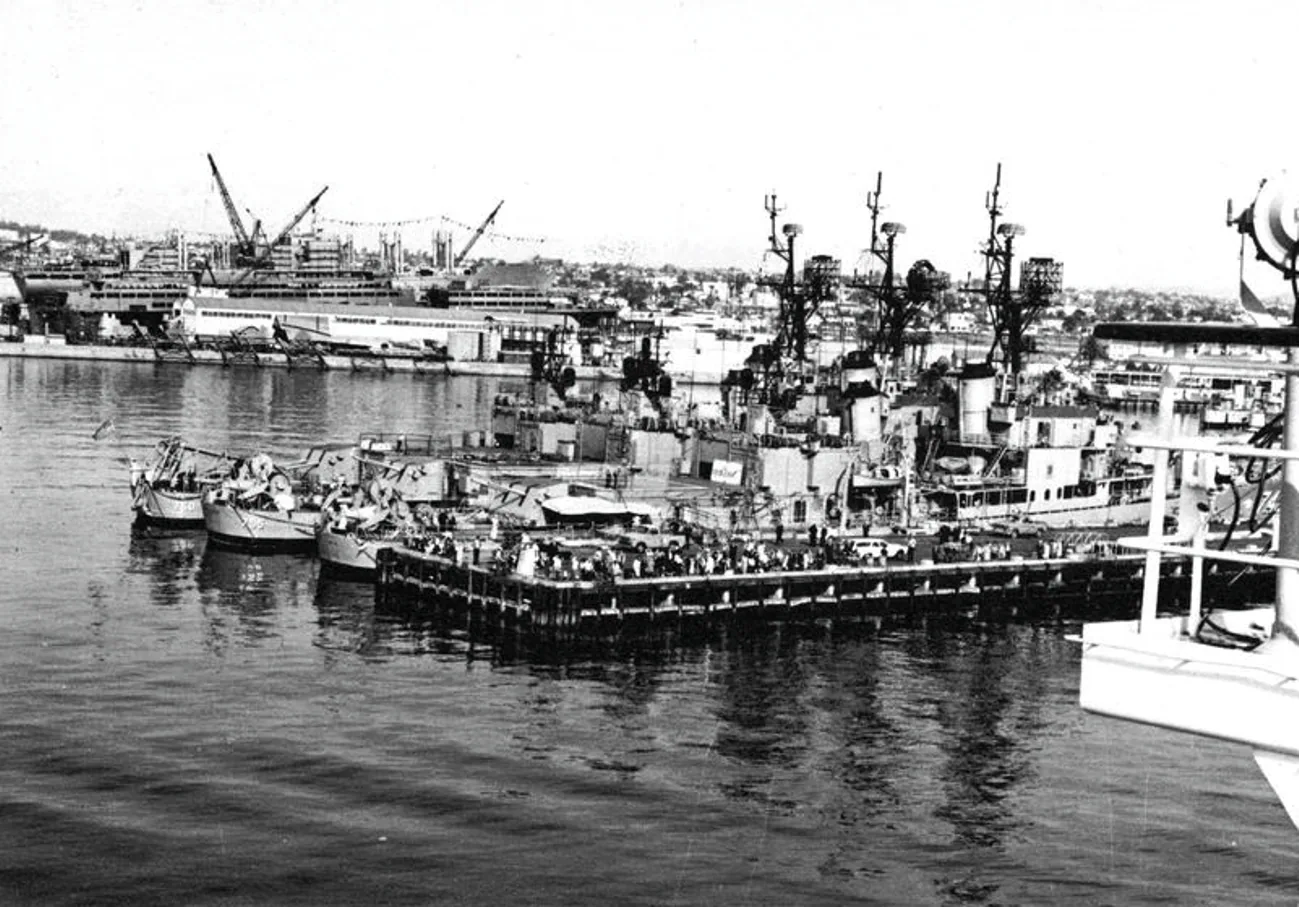
- Photograph Allen M. Sumner-class destroyers at Naval Base San Diego, California (USA), in December 1966 U.S. Navy — U.S. Navy photo [1] from the USS Sanctuary (AH-17) 1967 cruise book available at Navysite.de — Public domain — Wikimedia Commons
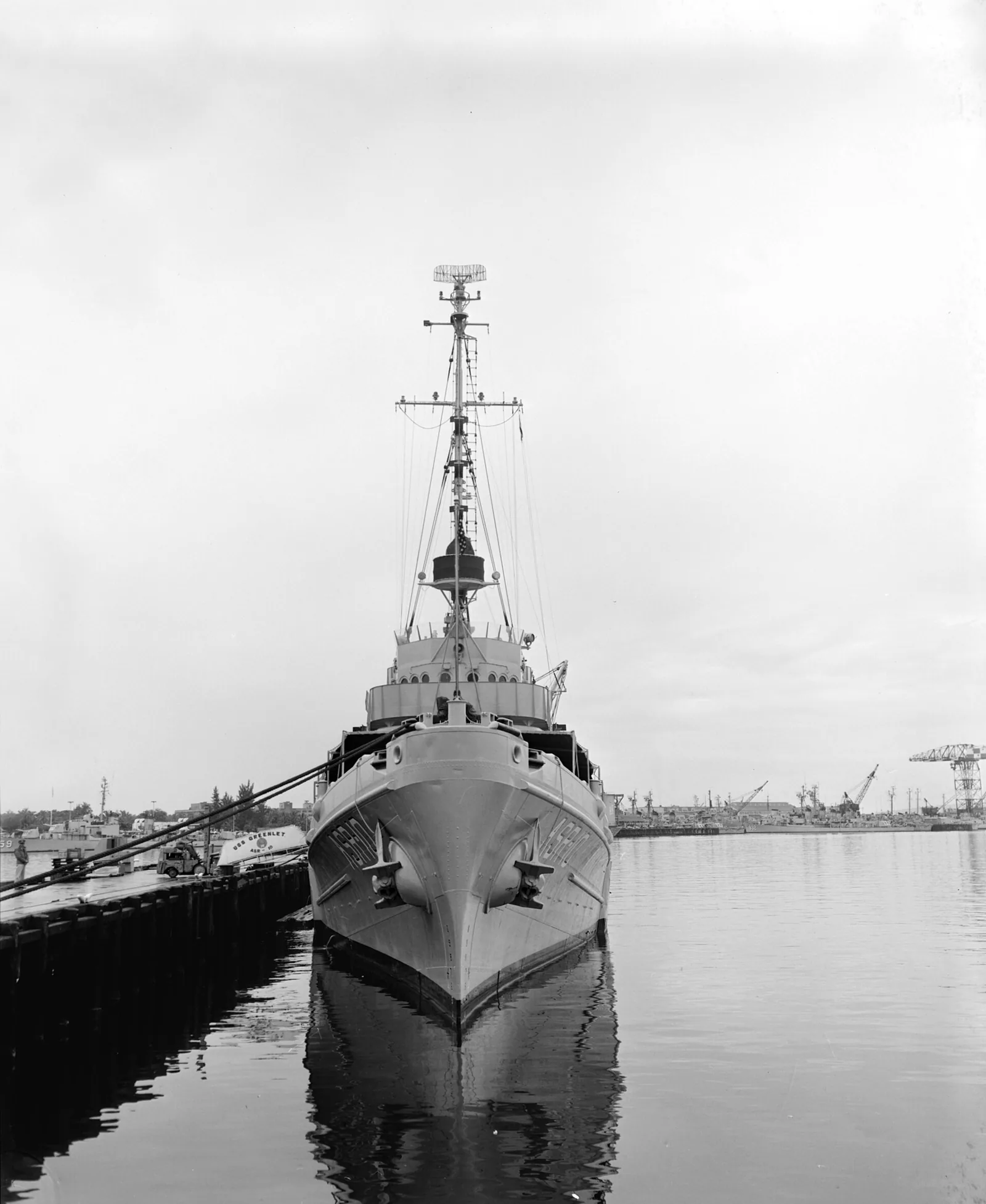
- Photograph Bow view of USS Greenlet (ASR-10) at Pearl Harbor, Hawaii (USA), in May 1955 (7576743) U.S. Navy Bureau of Ships photo 19-NN-ASR-10 Greenlet-151974 — Public domain — Wikimedia Commons
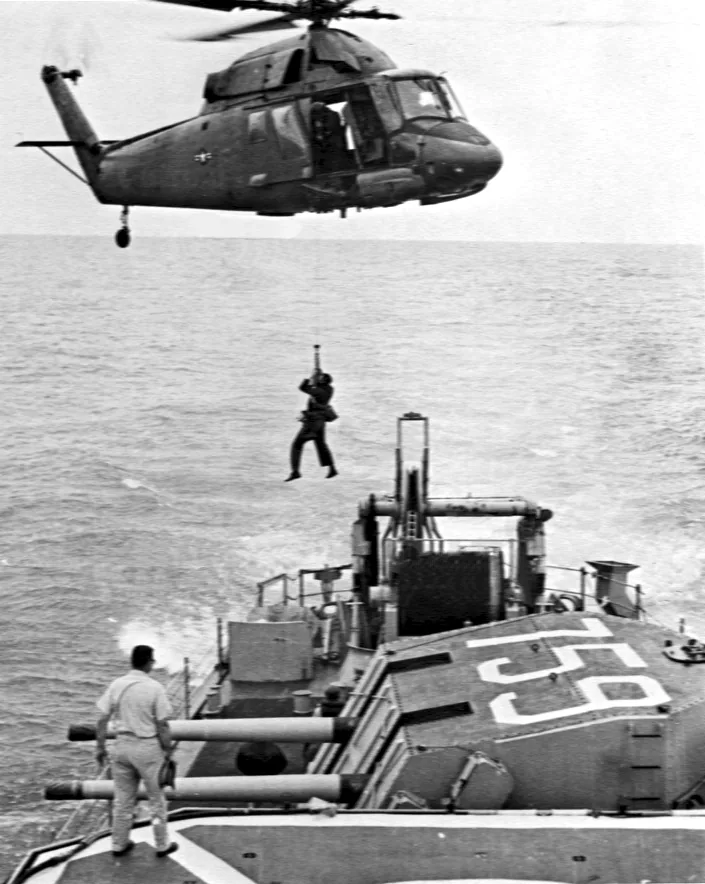
- Photograph UH-2 of HC-7 lifting man from USS Lofberg (DD-759) 1970 USN — U.S. Navy photo [1] from the USS Lofberg (DD-759) 1970 cruise book available at Navysite.de — Public domain — Wikimedia Commons
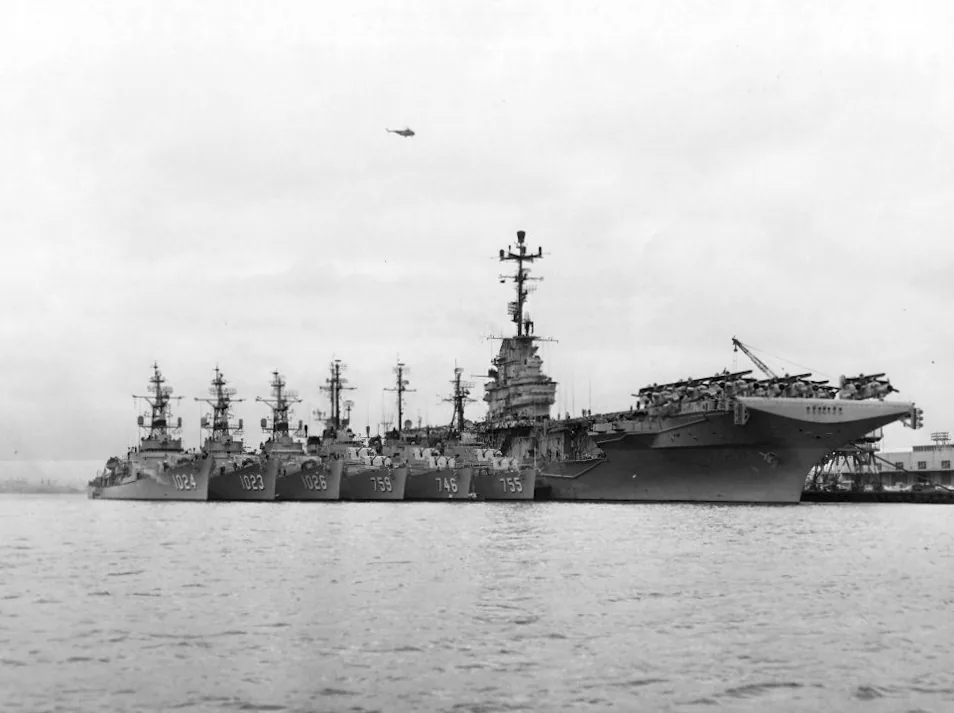
- Photograph USS Kearsarge (CVS-33) with esccorts at San Diego in 1961 USN — U.S. Navy photo [1] from Navsource.org — Public domain — Wikimedia Commons
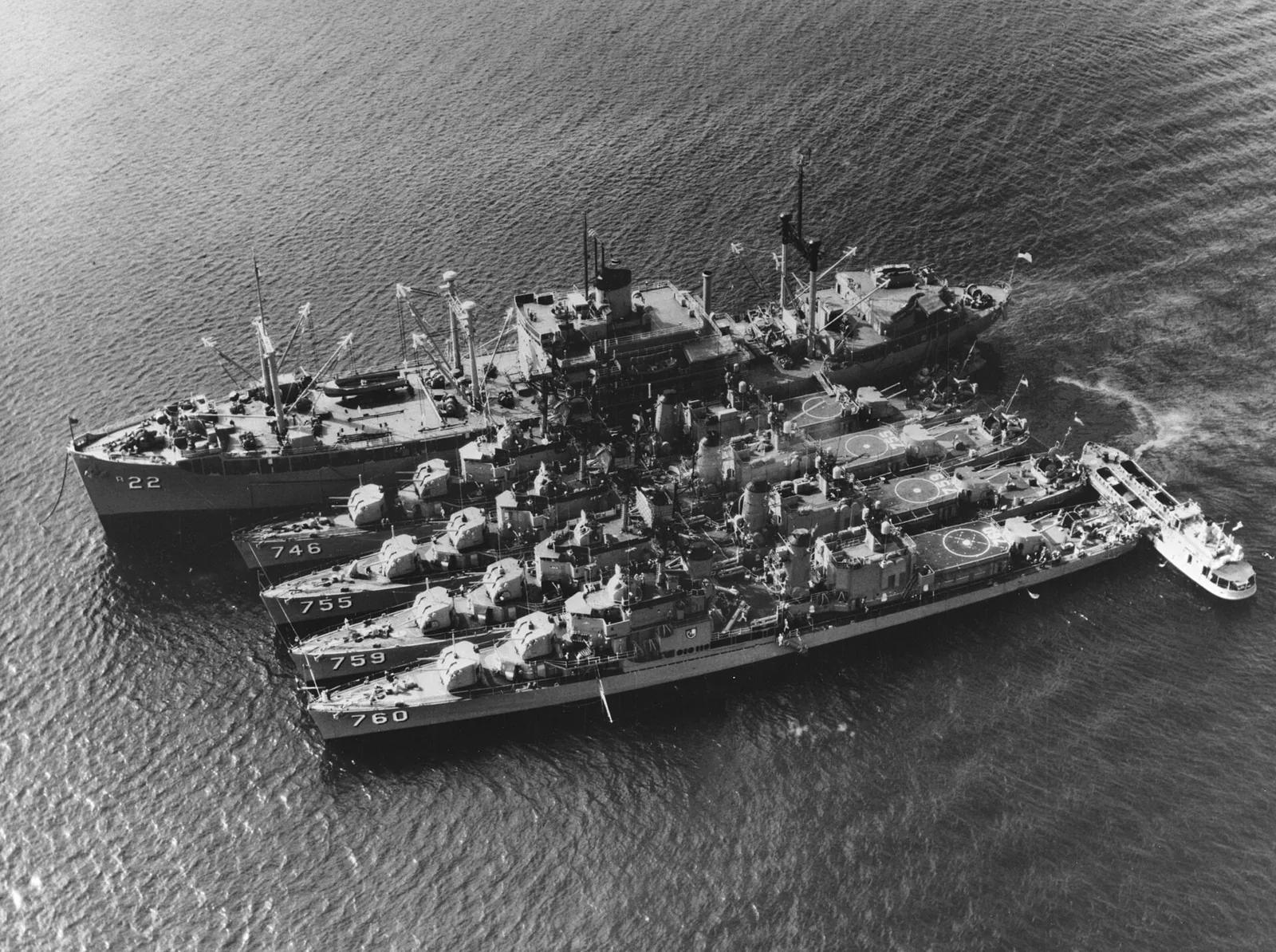
- Photograph USS Klondike (AR-22), USS Taussig (DD-746), USS John A. Bole (DD-755), USS Lofberg (DD-759) and USS John W. Thomason (DD-760) at Subic Bay on 1 November 1963 (NH 82517) Unknown author — U.S. Navy photo NH 82517 — Public domain — Wikimedia Commons
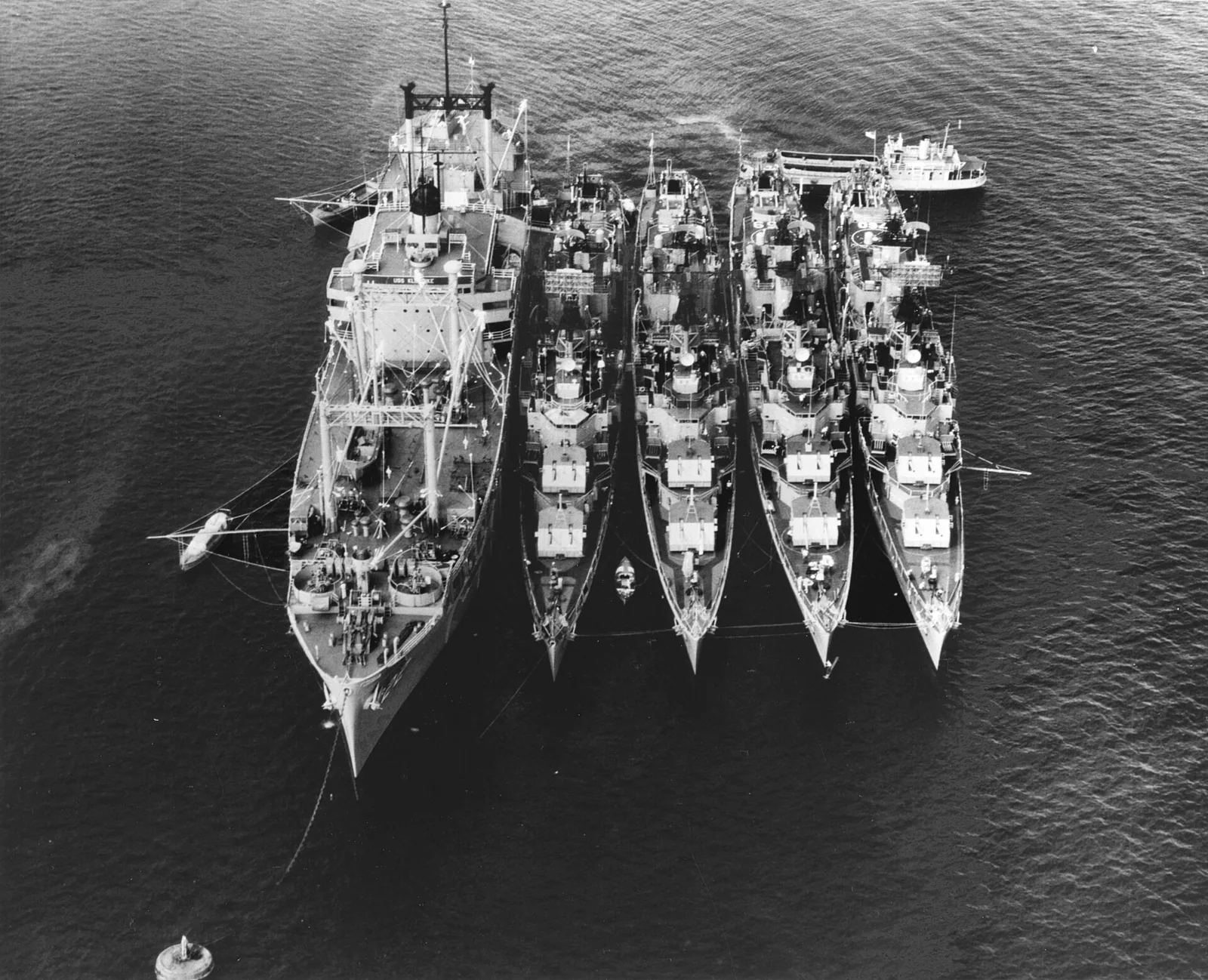
- Photograph USS Klondike (AR-22), USS Taussig (DD-746), USS John A. Bole (DD-755), USS Lofberg (DD-759) and USS John W. Thomason (DD-760) at Subic Bay on 1 November 1963 (NH 82518) Unknown author — U.S. Navy photo NH 82518 — Public domain — Wikimedia Commons
- Photograph USS Lofberg (DD-759) off the San Francisco Naval Shipyard on 23 March 1957 U.S. Navy Burau of Ships photo 19-NN - DD-759 Lofberg - 157493 — Public domain — Wikimedia Commons
- Photograph USS Lofberg (DD-759) underway during the 1960s U.S. Navy — Official U.S. Navy photo NH 73140 from the U.S. Navy Naval History and Heritage Command — Public domain — Wikimedia Commons
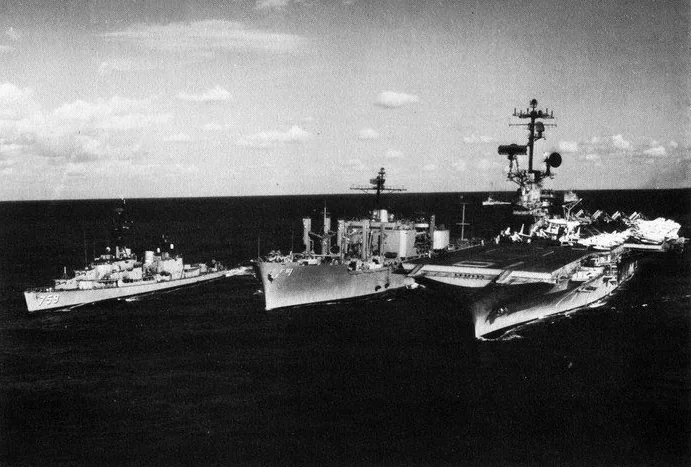
- Photograph USS Mars (AFS-1) replenishing Hancock (CVA-19) and Lofberg (DD-759) c1965 USN — U.S. Navy photo [1] from the USS Hancock (CVA-19) 1964-65 cruise book available at Navysite.de — Public domain — Wikimedia Commons
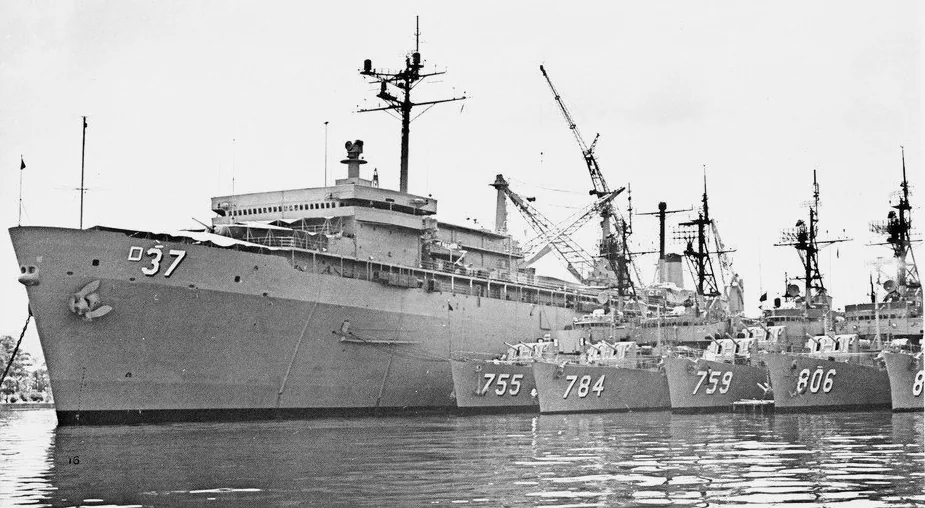
- Photograph USS Samuel Gompers (AD-37) with destroyers 1970 USN — U.S. Navy photo [1] from the USS Samuel Gompers (AD-37) 1970 cruise book — Public domain — Wikimedia Commons
- Photograph USS Valley Forge (CV-45) approaching USS Tolovana (AO-64), in 1951-1952 U.S. Navy — U.S. Navy photo [1] from the USS Valley Forge (CV-45) 1951-1952 cruise book available at Navysite.de — Public domain — Wikimedia Commons