United States Navy — Light cruiser
USS Milwaukee (CL-5) — service history
This is the full service history. For the vessel's particulars, photograph and specifications, see the entry.
In the words of the US Navy. The account below is reproduced verbatim from the Dictionary of American Naval Fighting Ships, compiled by the Naval History and Heritage Command — a work of the United States Government, in the public domain, and the only text on this site not written here.
Great War and before
1918
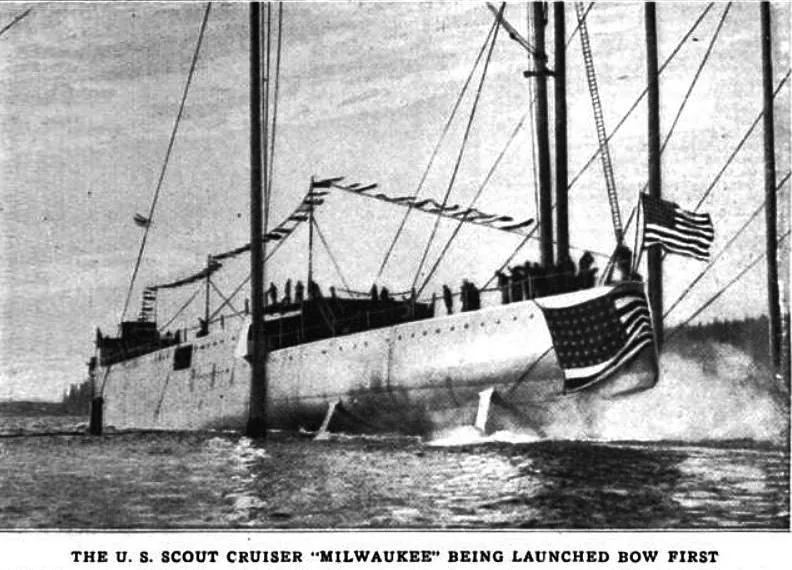
The third Milwaukee (CL‑5) was laid down on 13 December 1918 at Seattle, Wash., by the Seattle Construction & Dry Dock Co., Seattle, launched by the Todd Dry Dock & Construction Co., of Seattle, on 24 March 1921; sponsored by Mrs. Rudolph Pfeil [Josephine Schulz], appointed to the honor by the Mayor of Milwaukee in recogniotion of the work for U.S. salors and soldiers during the Great War [World War I]; and commissioned on 20 June 1923, Capt. William C. Asserson in command.
Interwar 1919–1938
1923
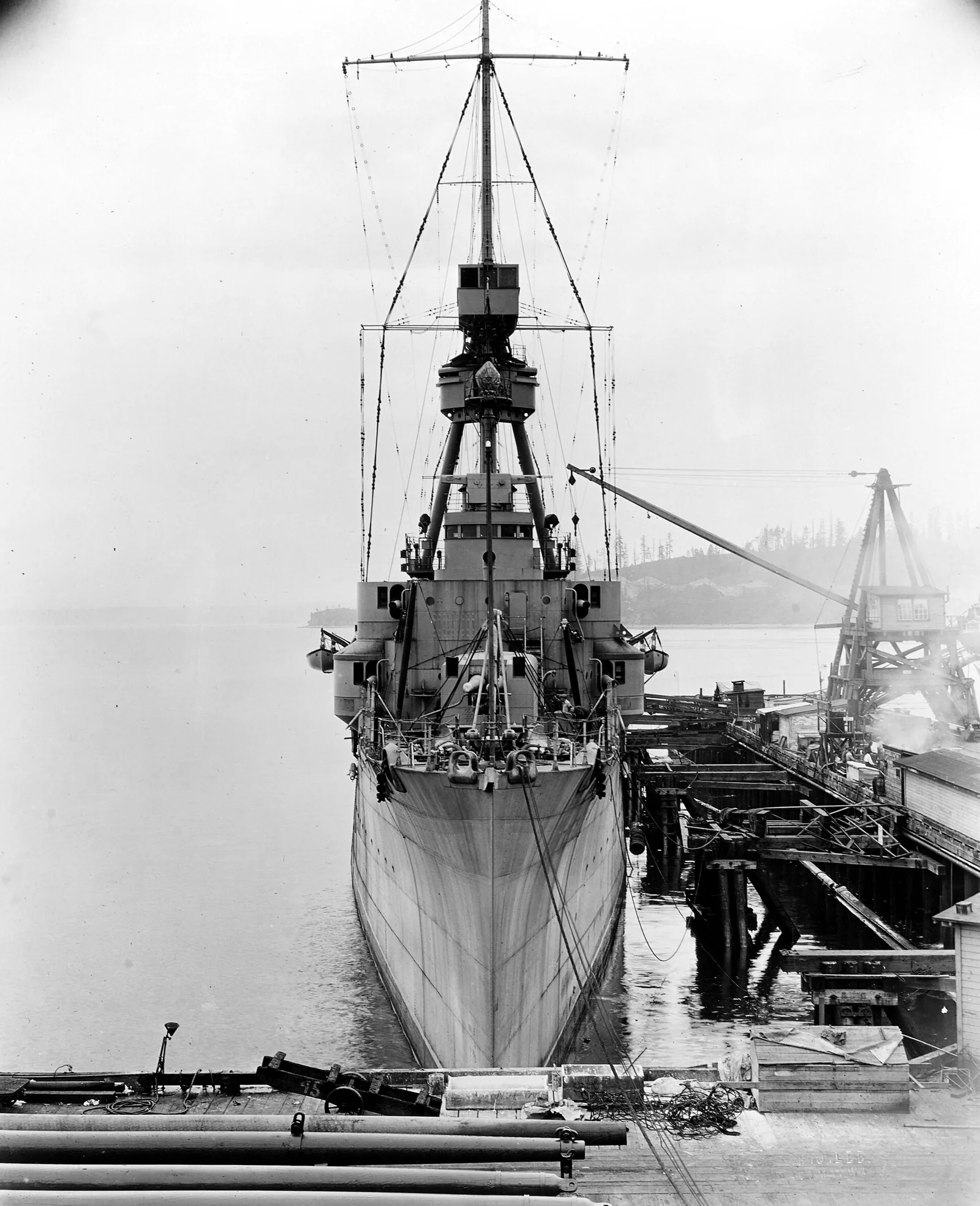
Shakedown took the new cruiser to Australia via Hawaii, Somoa, Fiji Islands, and New Caledonia, for the Pan‑Pacific Scientific Congress which opened in Sydney on 23 August 1923. Fitted with the finest sonic depth‑finding equipment, Milwaukee gathered knowledge of the Pacific on route.
1926
Although she served primarily in the Pacific during the decades between the world wars, the highlights of her peacetime service came in the Caribbean. On 24 October 1926, Milwaukee and the destroyer Goff (DD-247) arrived at the Isle of Pines from Guantanamo Bay to assist victims of a fierce hurricane that had devastated the island four days before. The U.S. ships established a medical center at the city hall in Nueva Gerone, furnished the stricken area over 50 tons of food, replaced telephone lines which had been swept away, and maintained wireless communication with the outside world. The efficient and tireless labors of the crews won the respect and gratitude of everyone in the area.
Over a decade later while steaming north of Hispaniola and Puerto Rico on 14 February 1939, Milwaukee recorded the greatest depth yet discovered in the Atlantic, 5,041 fathoms, or 30,246 feet. The spot has thenceforth been designated "Milwaukee Depth."
1937
Totalitarianism was then threatening to shatter world peace and to snuff out freedom. Over a year before, Japanese military hotheads had bombed U.S. gunboat Panay ( PR-5) n the Yangtze River near Hankow, China, on 12 December 1937, testing American determination to remain in the Orient Milwaukee, as part of the U.S. Navy's response to the challenge, got underway from San Diego on 3 January 1938 on a cruise to the Far Fast, which took her to Hawaii, Samoa, Australia, Singapore, the Philippines, and Guam. As tension abated she returned home on 27 April.
The new breed of dictators needed a more forceful lesson. Late in the summer of 1939, Hitler invaded Poland plunging Europe into war. Somewhat over two years later Japan attacked Pearl Harbor, drawing the United States into the conflict.
Second World War 1939–1945
1941
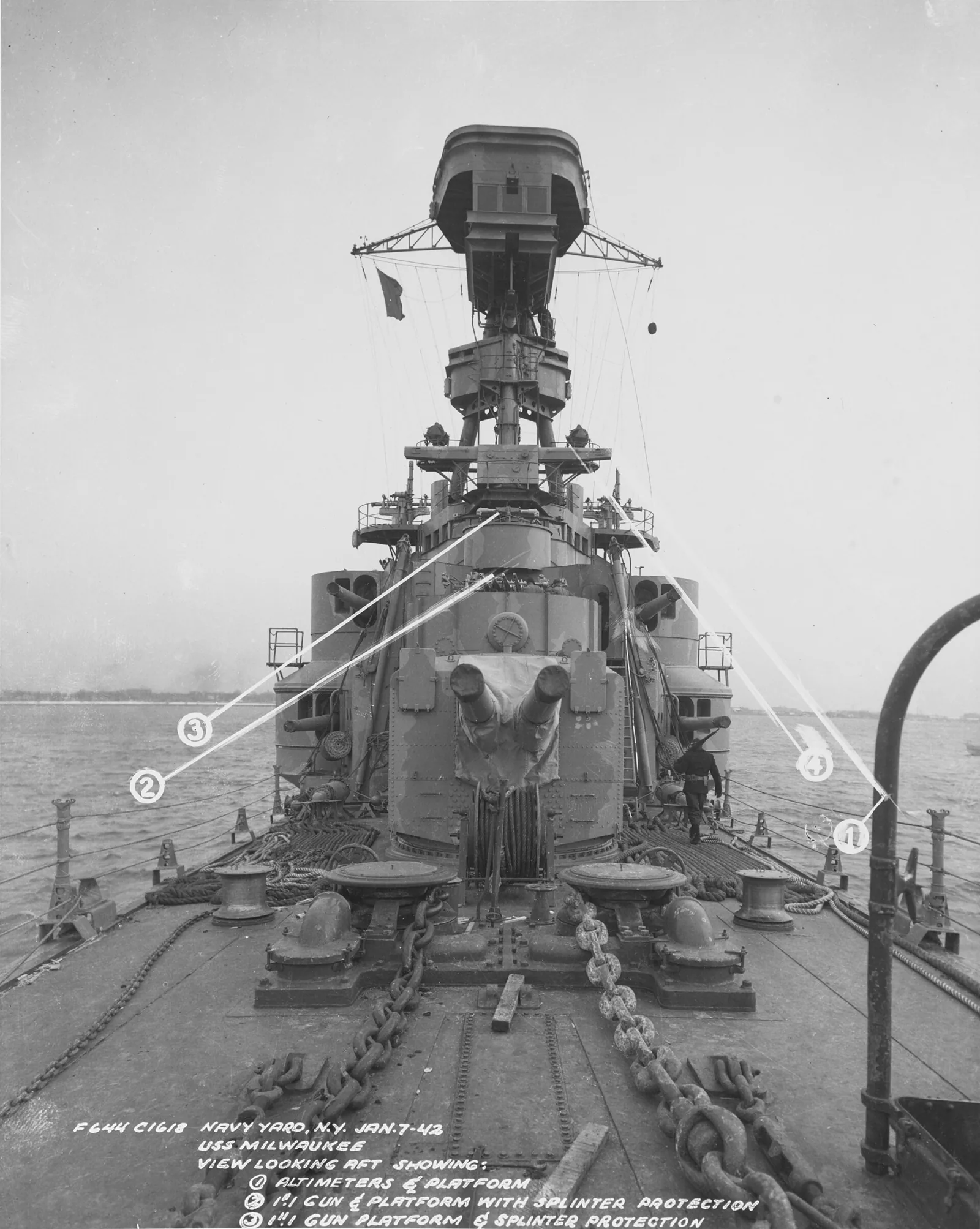
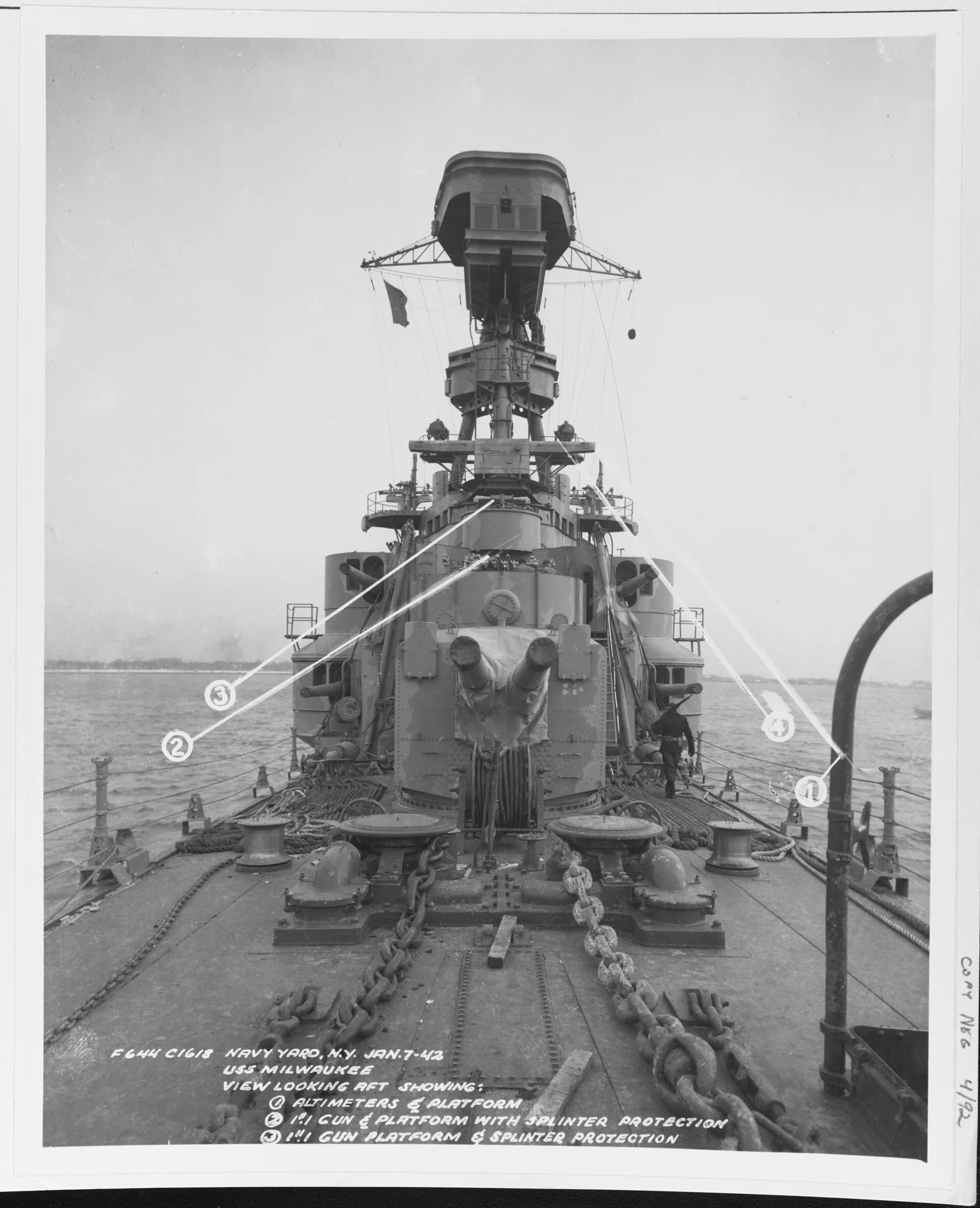
Milwaukee, Capt. Forrest B. Royal, was in New York Navy Yard for overhaul when Japan struck. Departing New York on 31 December 1941, Milwaukee escorted a convoy to the Caribbean and arrived Balboa on 31 January 1942, transited the Panama Canal, and escorted eight troop transports to the Society Islands. Returning to the Atlantic through the canal 7 March, she stopped at Trinidad en route to Recife, Brazil, where she joined the South Atlantic Patrol Force.
1942
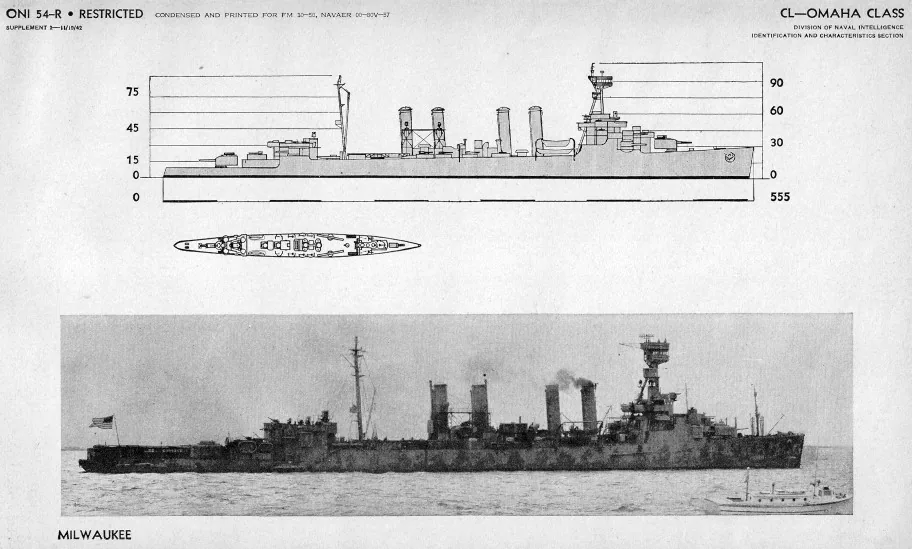
For the next two years Milwaukee made repeated patrols from ports of Brazil, steaming from the border of French Guiana, down to Rio do Janeiro, and across the Atlantic Narrows almost to the African coast. On 19 May 1942 while steaming from Ascension Island toward Brazil, she received SOS signals from Commandante Lyra, and sped to the assistance of the Brazilian merchantman, torpedoed by a German U‑boat off the coast of Brazil. On reaching the scene that morning, Milwaukee found Commandante Lyra abandoned, burning forward and aft, and listing to port.
Destroyer Moffett (DD‑362) picked up 16 survivors and Milwaukee rescued 25 others, including the ship's master. Cruiser Omaha (CL‑4) and destroyer McDougal (DD‑358) were soon on the rescue scene. While Milwaukee refueled at Recife, Omaha-s salvage, party jettisoned deck cargo and ready ammunition for deck guns from the burning Brazilian merchantman. Milwaukee immediately returned to the scene. Her salvage party jettisoned cargo, to lighten the Brazilian. The fires were brought under control as Commandante Lyra was towed towards Fortaleza, Brazil, arriving on 24 May.
Milwaukee put out of Recife on 8 November 1942 in company with cruiser Cincinnati (CL‑6) and destroyer Somers (DD‑381) seeking German blockade runners. On 21 November 1942 the task force encountered a strange ship which turned out to be the German blockade runner Annaliese Essenberger. Milwaukee challenged the unidentified ship who replied with the call letters L‑J‑P‑Y, the international call of Norwegian freighter Sjhflbred. The Allied secret identification signal brought no reply. The two American cruisers maneuvered to cover destroyer Somers chasing the enemy into a small rain squall. At 0651, when Somers had closed to four miles, smoke and flames poured from the enemy who lowered boats. Minutes later the first of three tremendous explosions hurled wreckage hundreds of feet in the air and the freighter settled by the stern. Then the Norwegian flag was hauled down and the German merchant swastika flag was raised at the main. The German motorship heeled over to port and sank by the stern. Milwaukee took aboard 62 prisoners from four liferafts.
1943
On the morning of 2 May 1943 while Milwaukee was under repairs at Recife, her crew showed great initiative and skill fighting a fire on tanker Livingston Roe which threatened the harbor.
1944

Milwaukee continued her South Atlantic patrols until 8 February 1944 when she departed Bahia, Brazil, for the New York Navy Yard. She stood out from New York 27 February as a unit of the ocean escort for a convoy which reached Belfast, Northern Ireland, 8 March 1944. On 29 March 1944 Milwaukee put to sea, en route to Murmansk, Russia, with British Convoy JW58. A German submarine was sunk during the night. The following day enemy planes shadowing the convoy were shot down by fighter planes launched from HMS Activity. A wolfpack of German submarines tried to penetrate the convoy screen during the night of 31 March 1944 but was driven off. The following night seven German submarines shadowed the convoy but they, too, were driven off with the possible loss of one enemy submarine. That morning carrier‑based planes reported sinking a German submarine ten miles astern.
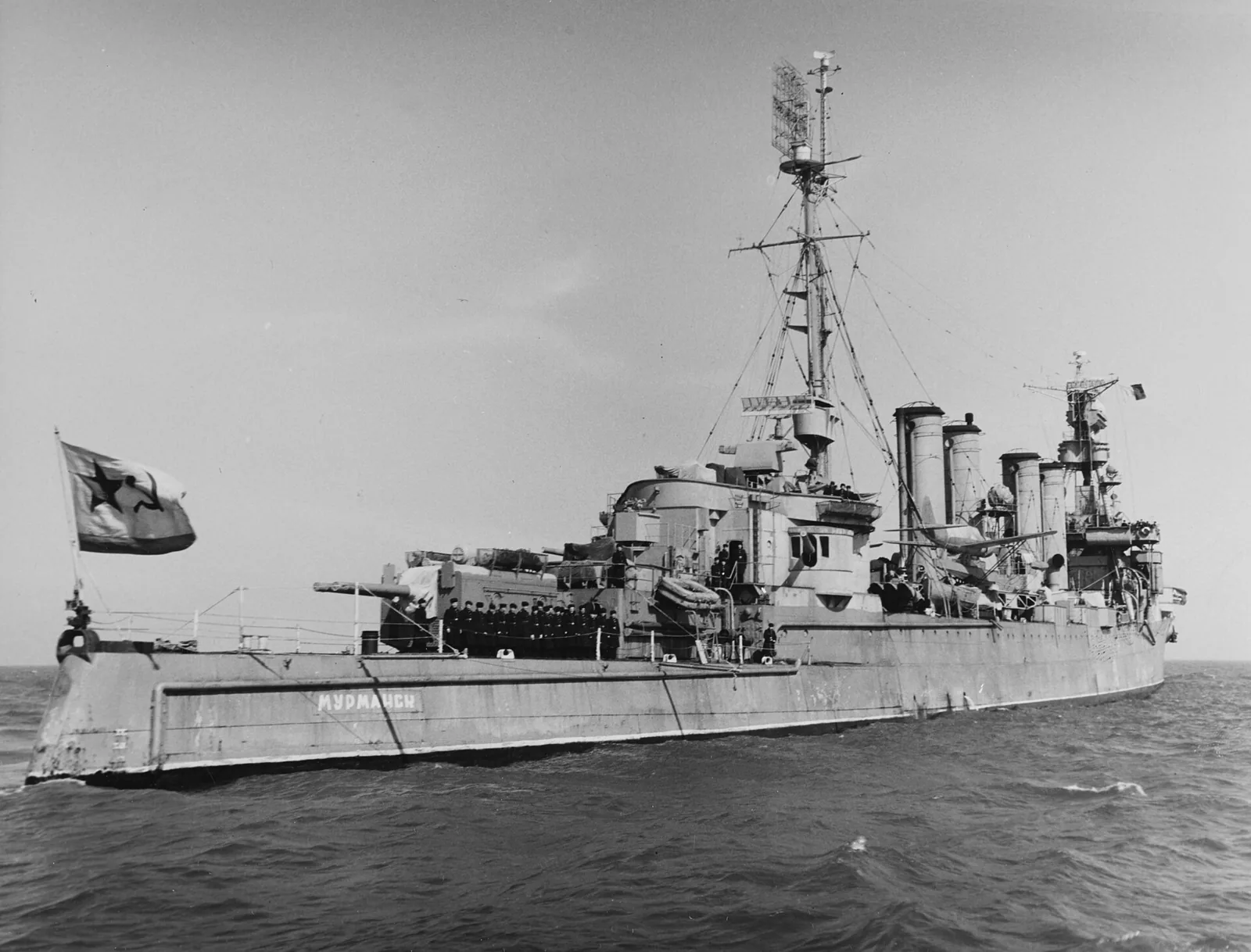
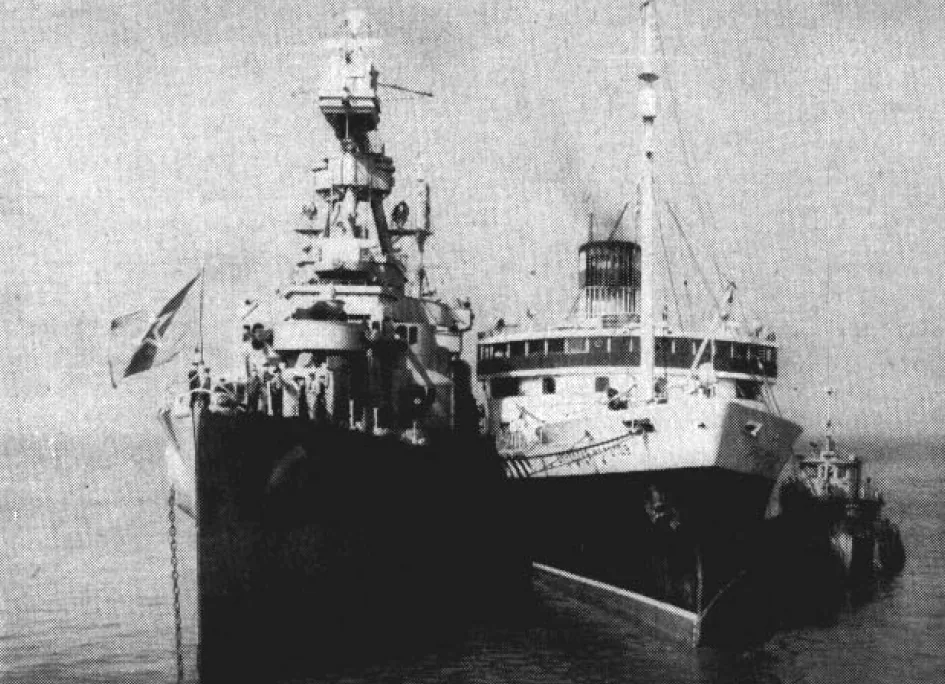
On 4 April 1944, four escorts of the Soviet Navy joined the convoy now headed for Archangel. A few hours later Milwaukee left the convoy and headed for Kola Inlet. There on 20 April 1944 the ship was transferred on loan to the Soviet Union under lend‑lease. She commissioned in the Russian Navy as Murmansk and performed convoy and patrol duty along the Atlantic sealanes throughout the remainder of the war. Transferred back to the United States 16 March 1949, Milwaukee, the first of 15 American warships returned by Russia, entered Philadelphia Naval Shipyard 18 March 1949, and was sold for scrapping 10 December 1949 to the American Shipbreakers, Inc., Wilmington, Del.
Other photographs
Held for this vessel, and not tied to any part of the account above.

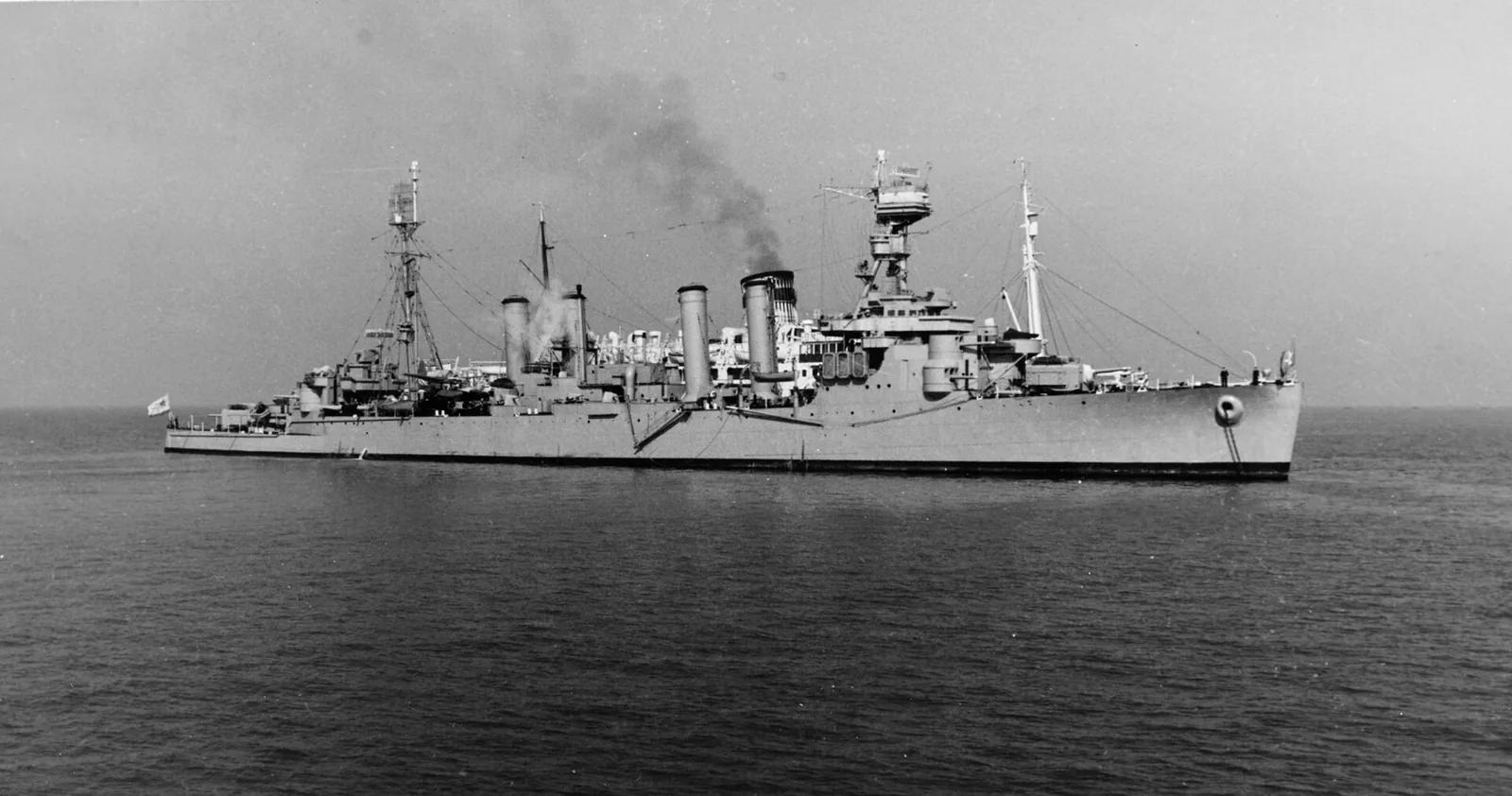
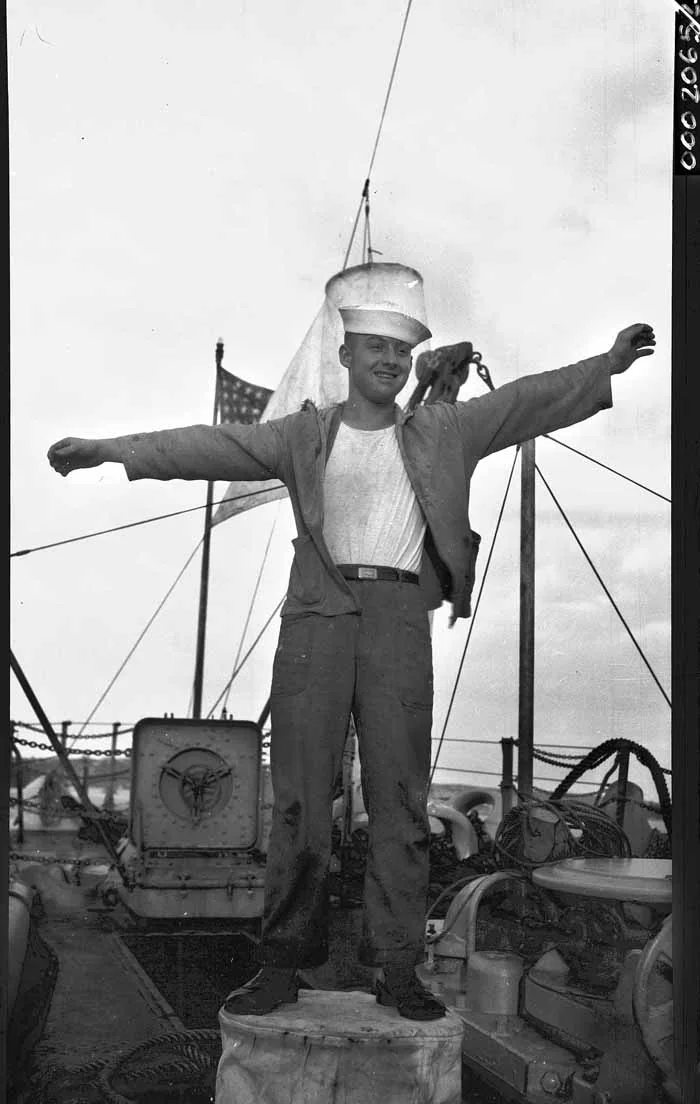
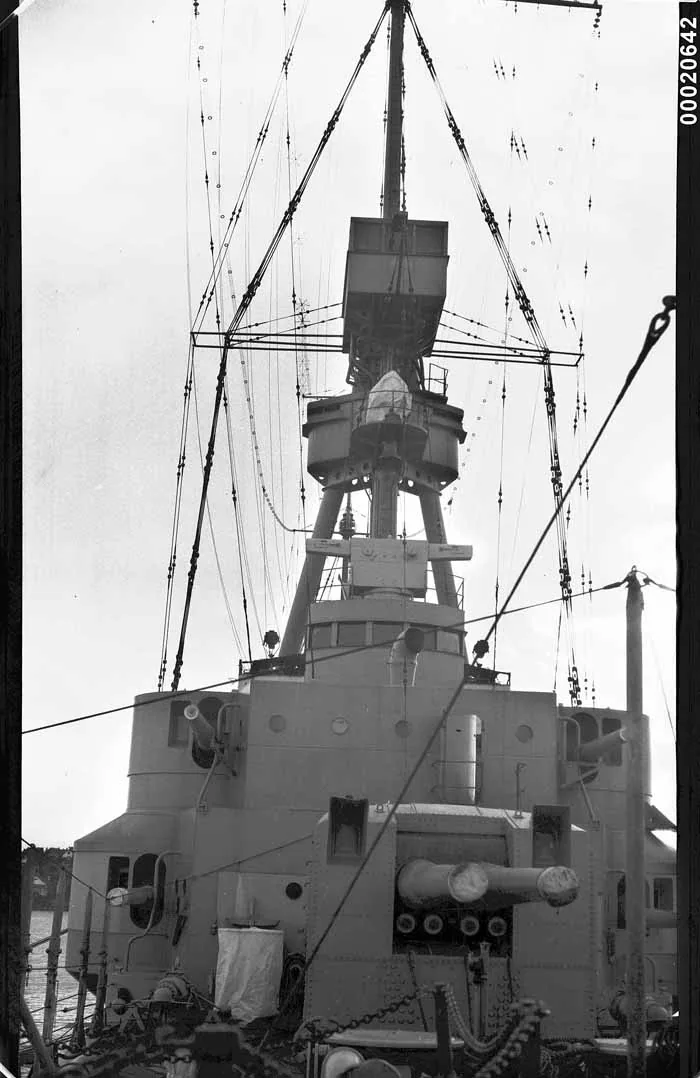
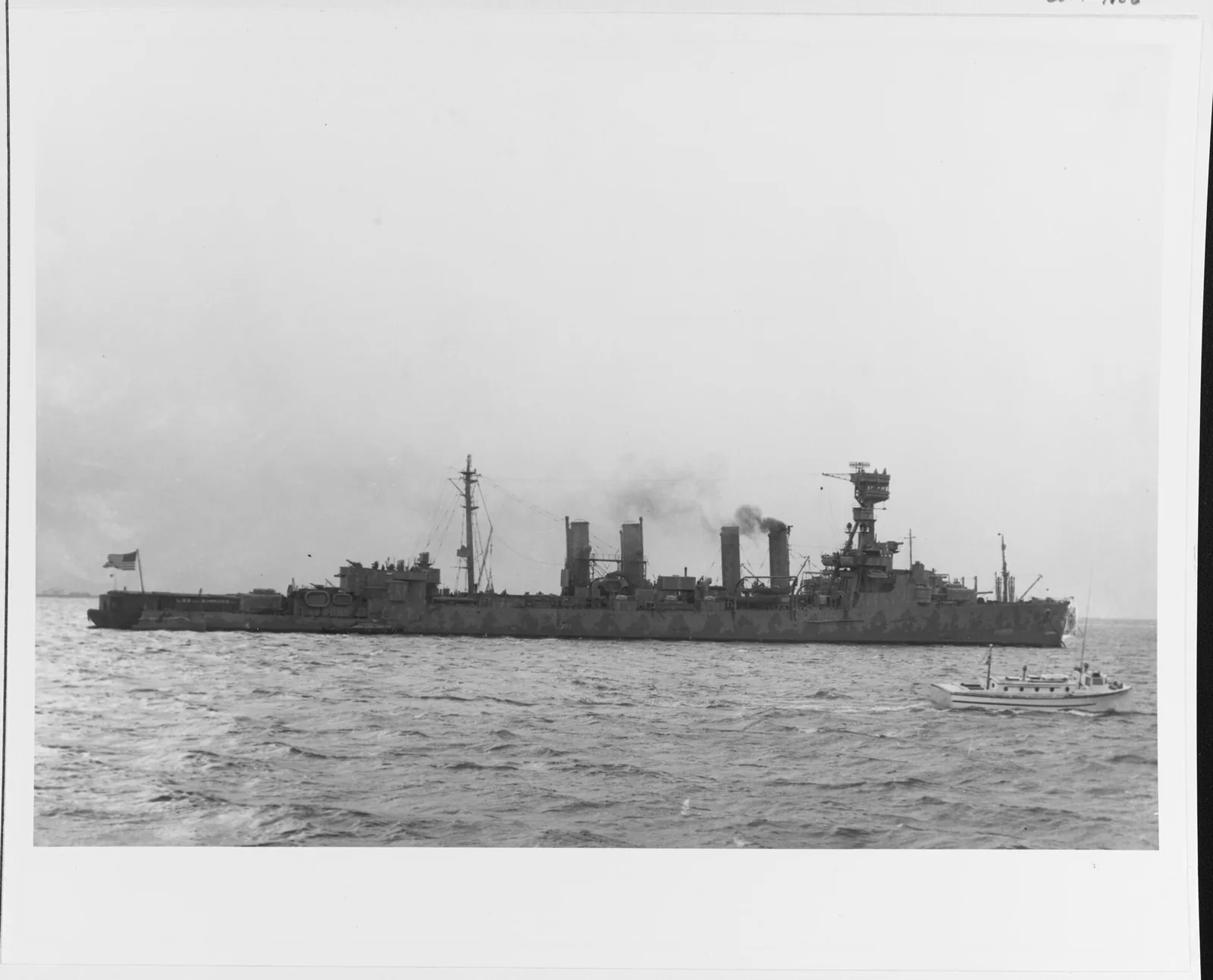


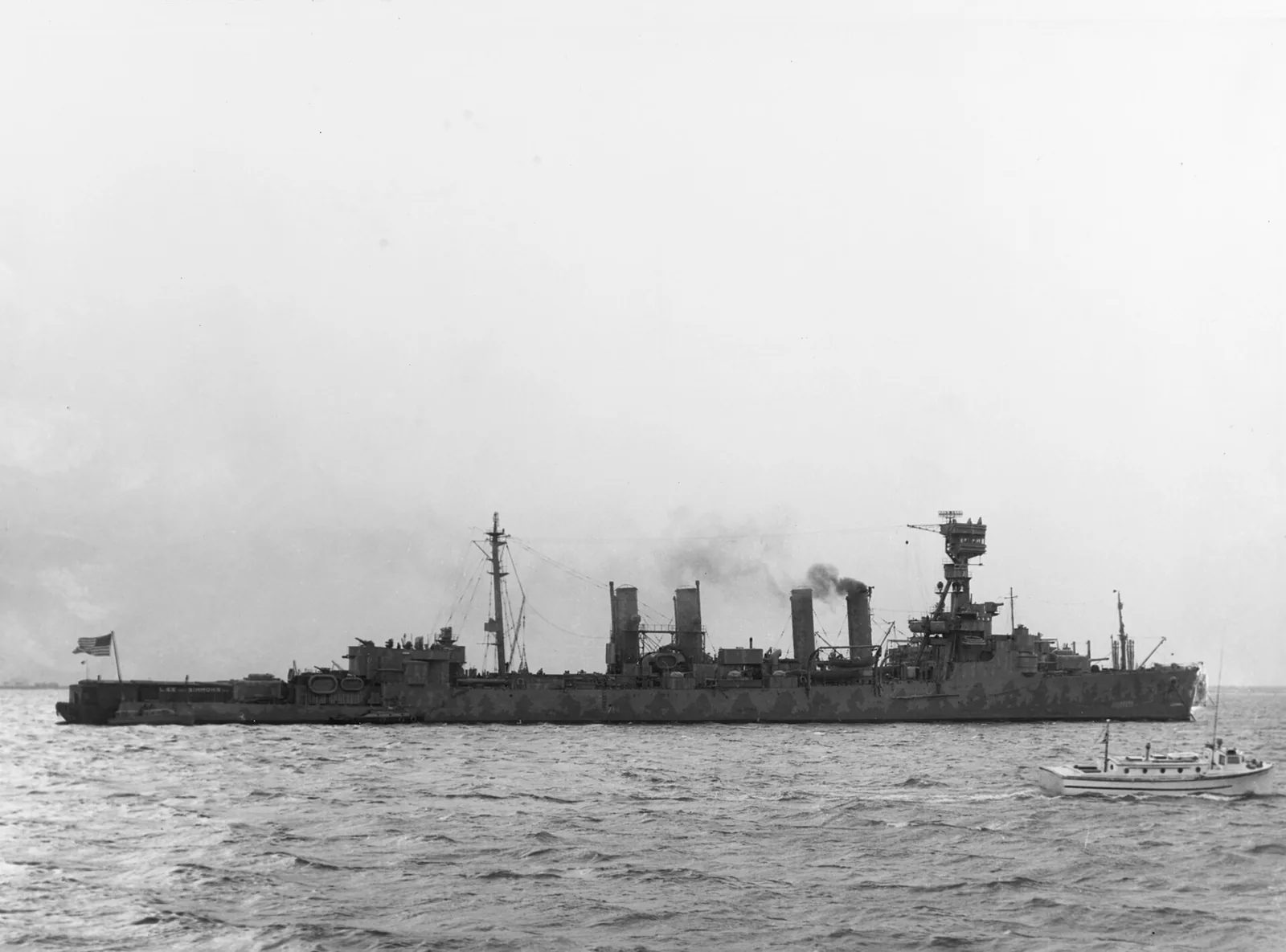
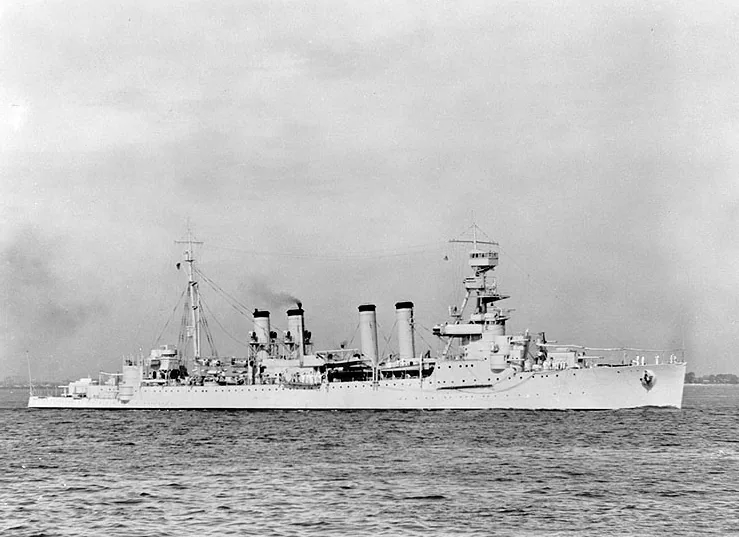
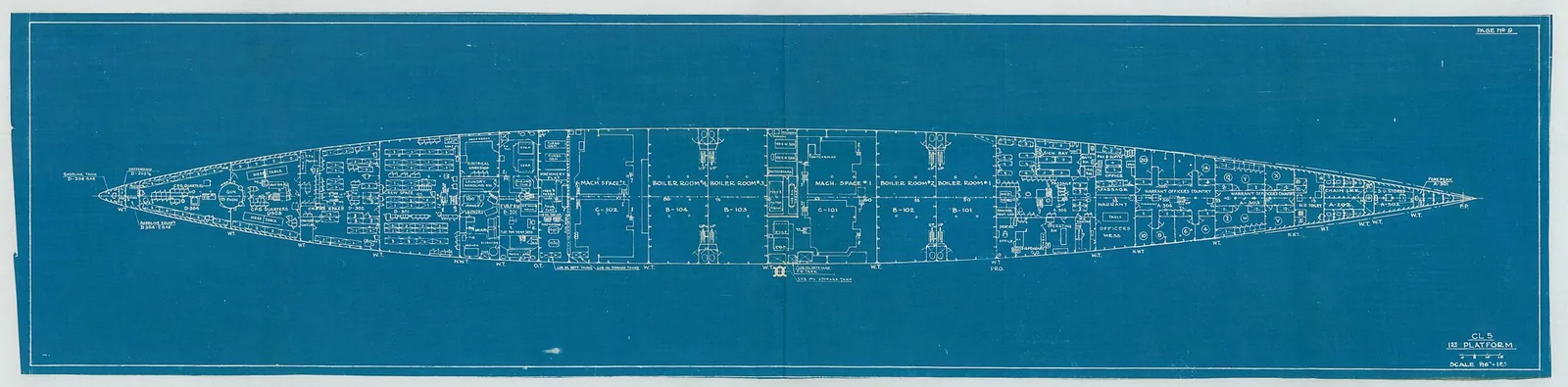
References
Every work this entry draws on. There are no numbered markers in the text above: what we hold is the provenance of the page — this history, this article, these photographs.
- History Milwaukee III (CL-5) Dictionary of American Naval Fighting Ships, Naval History and Heritage Command. A work of the United States Government, in the public domain — the only text on this site reproduced verbatim.
- Facts USS Milwaukee (CL-5) Structured facts only — dates, dimensions, armament and fate. No wording is taken from it. Harvested 1 August 2026.
- Photograph USS Milwaukee (CL-5) off New York City, circa in August 1943 (19-N-51513) Unknown author — U.S. Navy photo 19-N-51513 — Public domain — Wikimedia Commons
- Photograph Omaha class cruiser drawing USN — U.S. Office of Naval Intelligence ship identification chart on acepilots.com [1] — Public domain — Wikimedia Commons
- Photograph Soviet cruiser Murmansk off Lewes, Delaware (USA), on 8 March 1949 (NH 71451) Unknown author — U.S. Navy photo NH 71451 — Public domain — Wikimedia Commons
- Photograph Launching of USS Milwaukee (CL-13) at Todd Dry Dock & Construction Co., 24 March 1921 Unknown author — Popular Mechanics Magazine 1921 — Public domain — Wikimedia Commons
- Photograph Omaha-class light cruiser USS Milwaukee at Tacoma, Washington 1923. Note the narrow beam of this class. (51036574556) tormentor4555 — Omaha-class light cruiser USS Milwaukee at Tacoma, Washington 1923. Note the narrow beam of this class — Public domain — Wikimedia Commons
- Photograph SLNSW 8366 US cruiser Milwaukee Sam Hood — http://www.acmssearch.sl.nsw.gov.au/search/itemDetailPaged.cgi?itemID=8366 (item) http://www.acmssearch.sl.nsw.gov.au/search/itemDetailPaged.cgi?itemID=37473 (album) http://www.acmssearch.sl.nsw.gov.au/search/itemDetailPaged.cgi?itemID=395018 (collection) — Public domain — Wikimedia Commons
- Photograph Soviet cruiser Murmansk off Lewes, Delaware (USA), on 15 March 1949 (NH 71455) Unknown author — U.S. Navy photo NH 71455 — Public domain — Wikimedia Commons
- Photograph Unidentified US naval crewman of the USS MILWAUKEE (III) (3294312212) Australian National Maritime Museum on The Commons — https://www.flickr.com/photos/anmm_thecommons/3294312212/ — No restrictions — Wikimedia Commons
- Photograph USS MILWAUKEE (3293486919) Australian National Maritime Museum on The Commons — https://www.flickr.com/photos/anmm_thecommons/3293486919/ — No restrictions — Wikimedia Commons
- Photograph USS Milwaukee (CL-5) - 19-N-27088 Unknown author — 19-N-27088 — Public domain — Wikimedia Commons
- Photograph USS Milwaukee (CL-5) - 19-N-27091 Unknown author — This image has been extracted from another file — Public domain — Wikimedia Commons
- Photograph USS Milwaukee (CL-5) - 19-N-27091 Unknown author — 19-N-27091 — Public domain — Wikimedia Commons
- Photograph USS Milwaukee (CL-5) before transfer to the Soviet Union, circa in April 1944 Unknown author — Arkhiv fotografiy korabley russkogo i sovetskogo VMF (Архив фотографий кораблей русского и советского ВМФ) — Public domain — Wikimedia Commons
- Photograph USS Milwaukee (CL-5) being returned from the USSR in 1949 U.S. Navy — U.S. Navy All Hands magazine May 1949 , p. 36 — Public domain — Wikimedia Commons
- Photograph USS Milwaukee (CL-5) Delaware, 1949 U.S. Naval Historical Center Photograph. — Photo #: NH 71458 - Naval History and Heritage Command — Public domain — Wikimedia Commons
- Photograph USS Milwaukee (CL-5) launches a torpedo during exercises, circa 1925 (NH 85126) Unknown author — U.S. Navy photo NH 85126 — Public domain — Wikimedia Commons
- Photograph USS Milwaukee (CL-5) off Ivittuut, Greenland, in July 1924 (NH 96690) Unknown author — U.S. Navy photo NH 96690 — Public domain — Wikimedia Commons
- Photograph USS Milwaukee (CL-5) off the New York Naval Shipyard on 7 January 1942 (19-N-27088) Unknown author — This image has been extracted from another file — Public domain — Wikimedia Commons
- Photograph USS Milwaukee (CL-5) underway, circa the early 1930s (NH 97979) Unknown author — U.S. Navy photo NH 97979 — Public domain — Wikimedia Commons
- Photograph USS Milwaukee (CL-5)- 1st Platform - NARA - 83833055 Unknown author or not provided — U.S. National Archives and Records Administration — Public domain — Wikimedia Commons