United States Navy — Destroyer
USS Morris (DD-417) — service history
This is the full service history. For the vessel's particulars, photograph and specifications, see the entry.
In the words of the US Navy. The account below is reproduced verbatim from the Dictionary of American Naval Fighting Ships, compiled by the Naval History and Heritage Command — a work of the United States Government, in the public domain, and the only text on this site not written here.
Before commissioning
Robert Morris, born in Liverpool, England, 20 January 1734, emigrated to Maryland in 1747. The next year he moved to Philadelphia where, after brief schooling, he entered the service of the Willings, shipping merchants. Rising to partnership in 1754, Morris rapidly attained great power and influence in the commercial and political life of America. Appointed to the Pennsylvania Committee of Safety in June 1775, he was extremely active, arming both Pennsylvanian and Continental forces. Joining the Continental Congress in November 1776, he was a signer of the Declaration of Independence.
Morris' key role in the financial affairs of the new nation led to his appointment as Superintendent of Finance in May 1781 and Agent of Marine that September. His extraordinary skill in both offices greatly contributed to American success in the Revolution. A delegate to the Constitutional Convention, Morris served in the U.S. Senate 1789‑1795, but declined to stand for reelection. He continued his leadership in business and banking until impoverished when values of his extensive land holdings collapsed. Morris died in Philadelphia 8 May 1806.
Interwar 1919–1938
1938
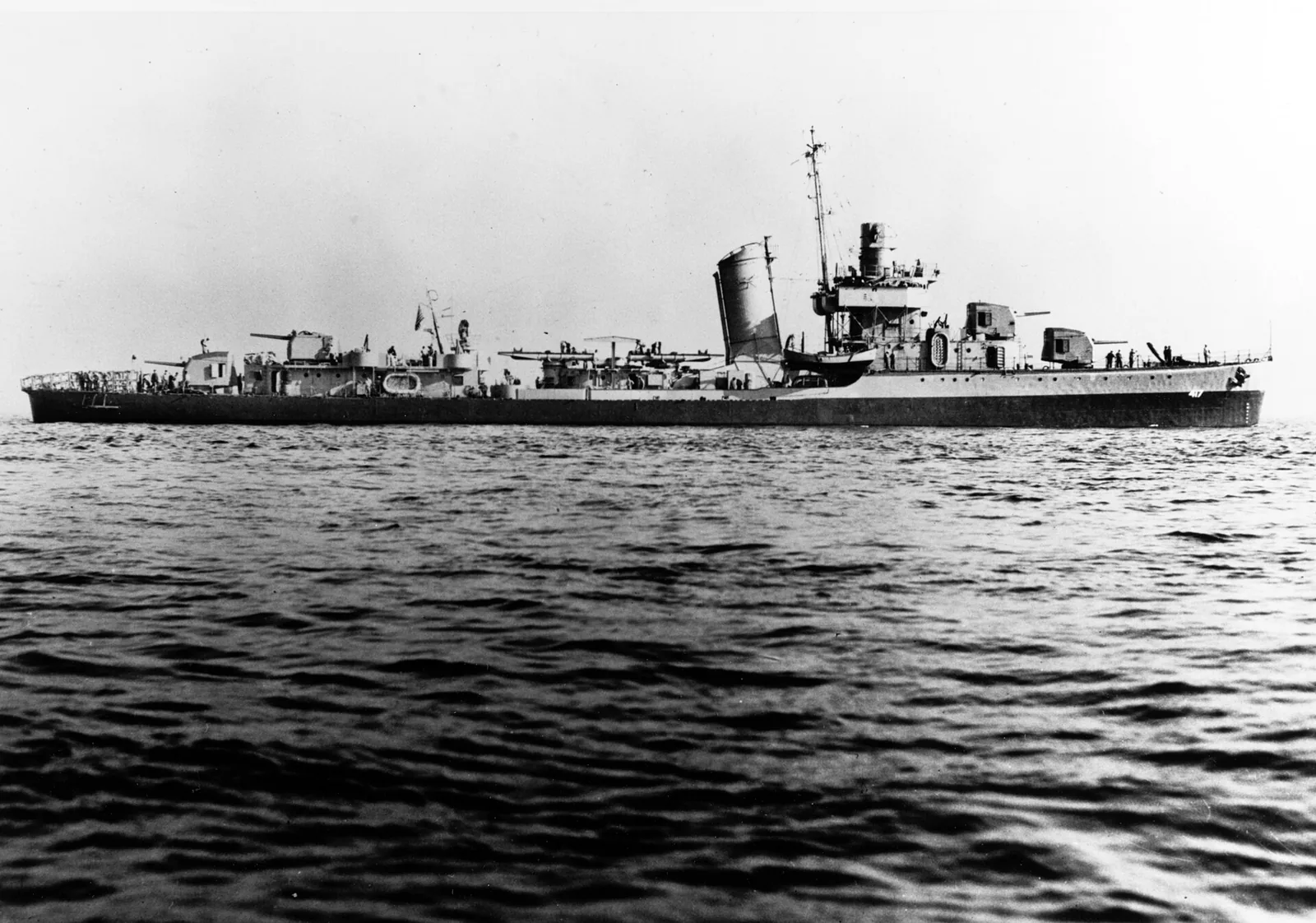
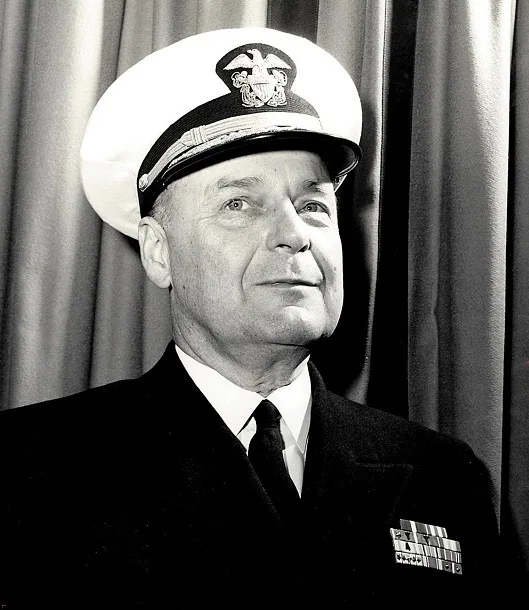
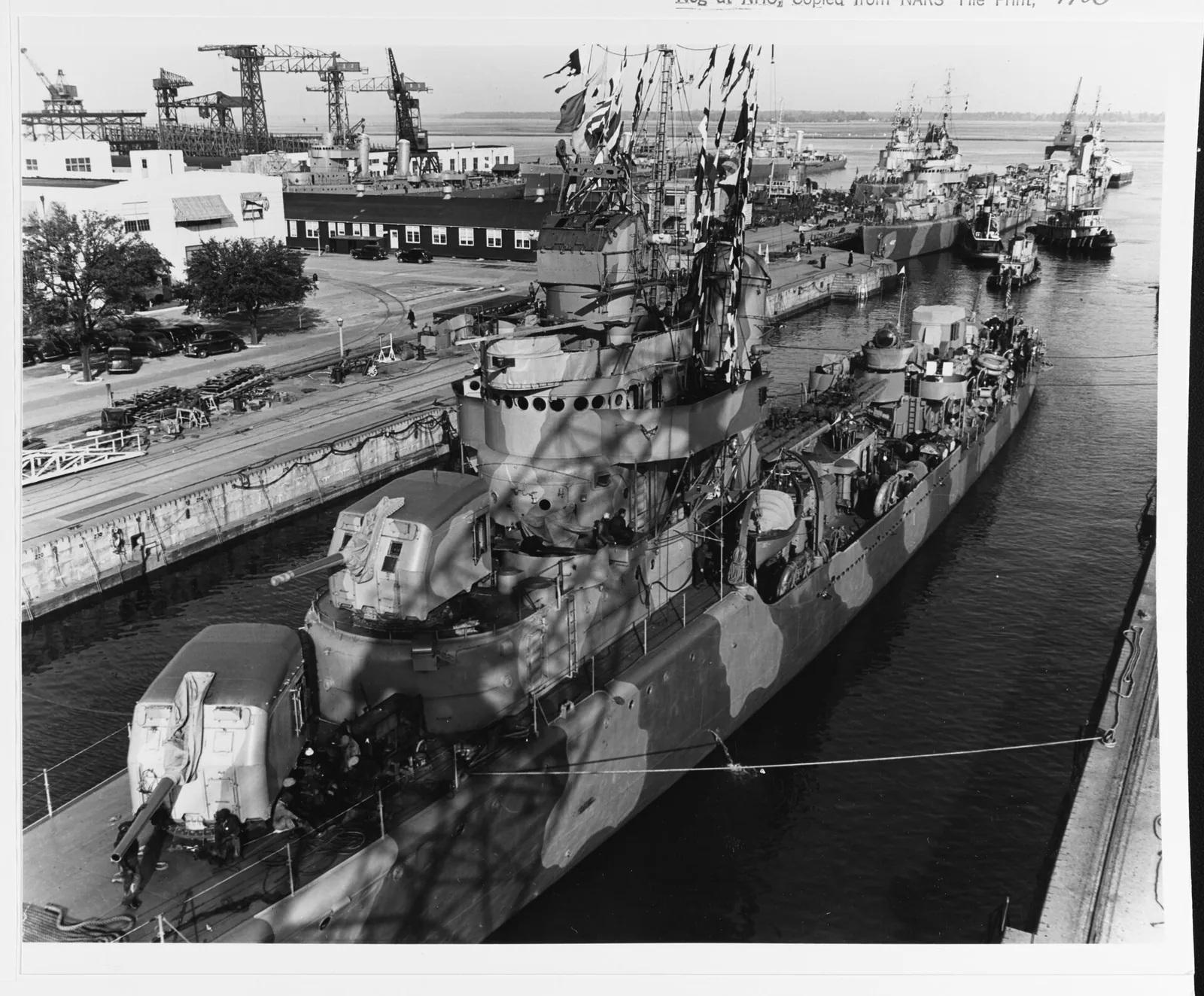
The seventh Morris (DD‑417) was laid down at the navy yard, Norfolk, Va., 7 June 1938; launched 1 June 1939; sponsored by Mrs. Charles R. Nutter, great‑granddaughter of Commodore Charles Morris; and commissioned 5 March 1940, Comdr. H. B. Jarrett in command.
Second World War 1939–1945
1942 Coral Sea
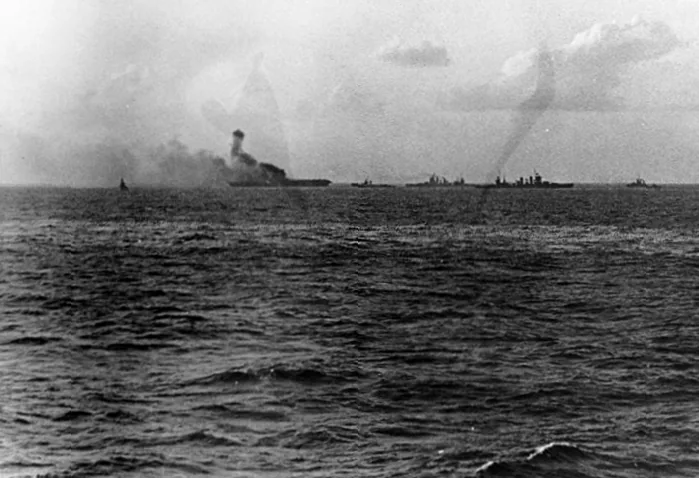
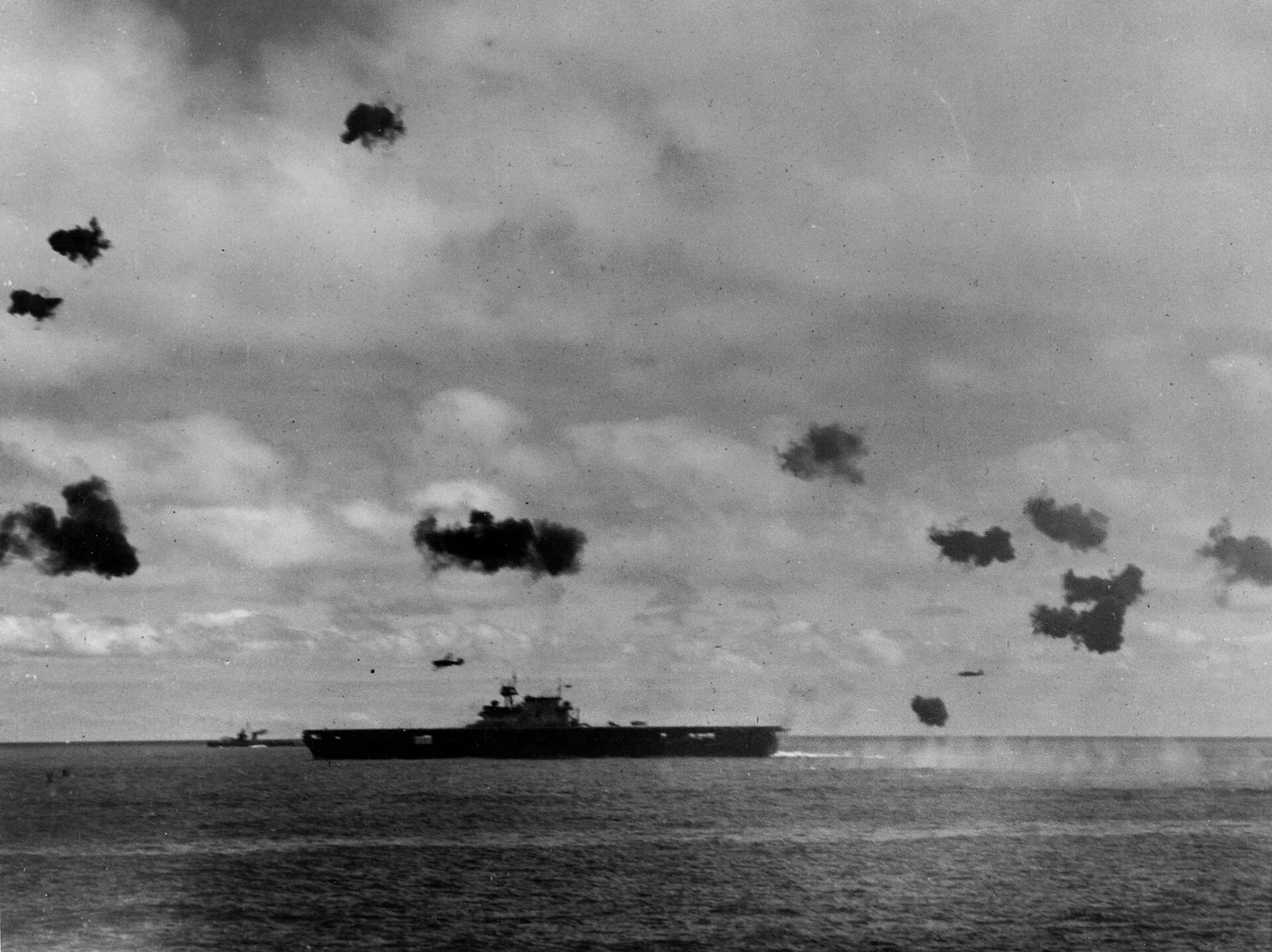
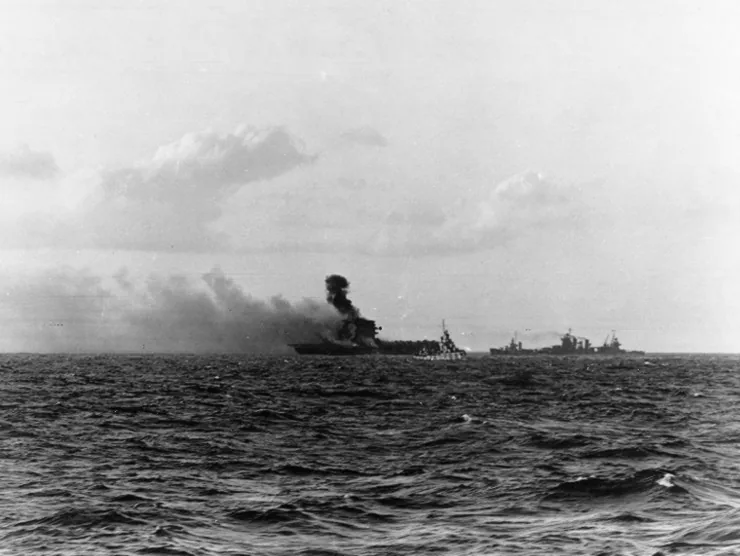
Morris, flagship of DesRon 2, followed her shakedown with routine training schedules until the summer of 1941 when she joined the North Atlantic Patrol. With the entry of the United States into World War II, she entered the Charleston, N.C., Navy Yard, where she was equipped with the first fire control radar to be installed on a destroyer. By 3 January 1942 she was underway for Pearl Harbor, rejoining her squadron there at the end of February. Attached to TF 17, the destroyer sailed 16 March, for Noumea, and into her first major enemy engagement, the Battle of Coral Sea. Prior to the battle, she guarded the carriers of the task force as their planes struck at enemy shipping in Tulagi Harbor and in the Lousiade Archipelago. During the 4‑day battle, 4 to 8 May, she splashed one enemy plane and damaged two while screening Yorktown and Lexington and, when the latter was heavily damaged, pulled alongside to rescue some 500 survivors. Damage received during the rescue forced her back to Pearl Harbor where hurried repairs put her back into condition for the Battle of Midway a month later. In that action she again pulled alongside a sinking carrier, Yorktown, to rescue over 500 survivors.
Morris-s next action came in late August when she joined TF 61 in support of the Guadalcanal campaign. For the next 2 months she screened carriers and patrolled among the Solomons. On 25 October, following a 3‑day independent sweep through the Gilberts, she rejoined TF 17 and took part in the Battle of the Santa Cruz Islands. During the action she destroyed six aircraft and once more came to the rescue of a sinking carrier, this time Hornet from which she took on 550 survivors. As in other rescue operations her superstructure was damaged, but, after repairs at Espiritu Santo, she was back in the Guadalcanal area, first operating with Enterprise and then as supply unit escort to the Russel.
1943
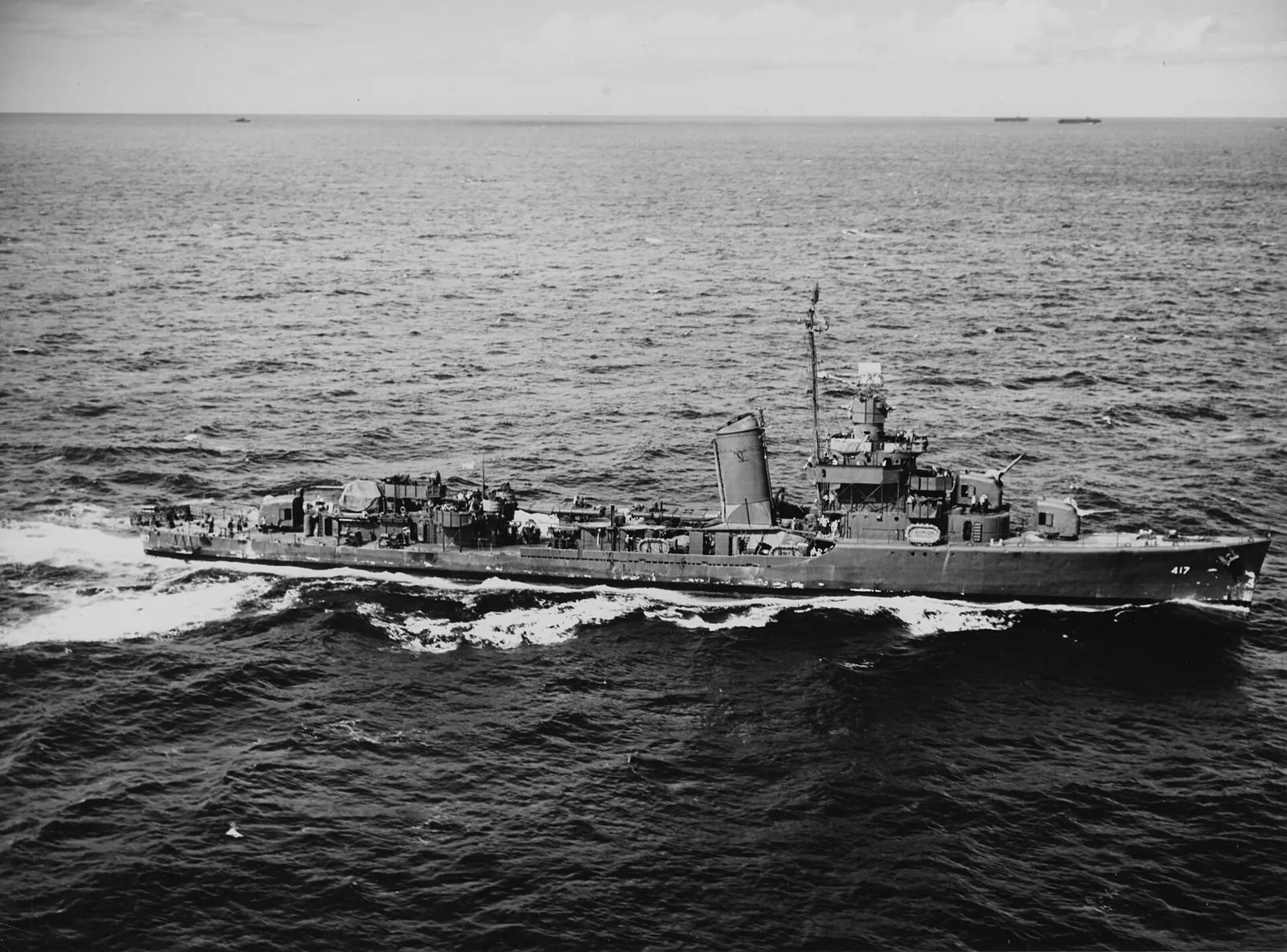
In May 1943 Morris departed the southern Pacific and sailed north to support the capture and occupation of Attu and Kiska, the Aleutian end of the Japanese ribbon defense. Thence, after the Kiska operation, she returned to San Francisco for a 7‑week overhaul. In November she again joined an air support group escorting Liscome Bay, Coral Sea, and Corregidor in the Gilbert Islands offensive, during which, for a fourth time, she went to aid a sinking carrier, Liscome Bay. As the task forces pressed further into the central Pacific, Morris sailed with them into the Marshalls. On 30 January 1944 she led a column of warships in a shore bombardment mission against Wotje. Thence she steamed to Kwajalein Atoll, where, while providing close fire support off Namur, she wiped out a Japanese counterattack force from an adjacent island. In mid‑February she departed Kwajalein and moved with TG 51.11 to support the seizure and occupation of Eniwetok. Arriving on the 17th, she continued carrier operations through the 24th when she sailed for Pearl Harbor.
1944 Philippines
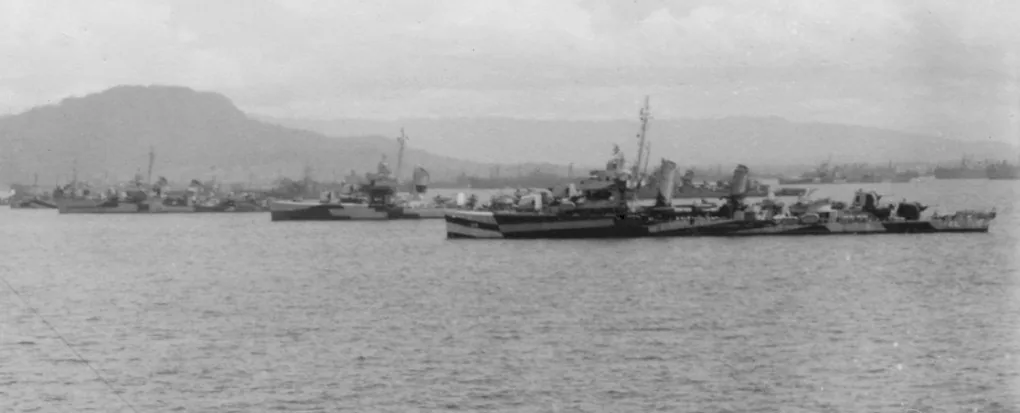
DD‑417 returned to combat in April 1944, when as a unit of the 7th Fleet she took part in all the western New Guinea landings, beginning with Hollandia. In May and June she give fire support in the Toem‑Wakde‑Sarmi areas and then during the Biak Island operation. In July she went against enemy guns on Noemfoor Island and then at Cape Sansapor. In August she participated in operations against Halmahera and Morotai and then began preparations for the initial invasion of the Philippines.
On 16 October, with TG 8.6, she got underway for Leyte Gulf. Safely delivering her charges, transports with the first reinforcement groups aboard, on the 21st, she took up anti‑aircraft station and, for several days, experienced meetings with the newest Japanese tactics, the kamikaze. Throughout the next month she continued to escort troops and supplies to Leyte. With the dawn of the new year, 1945, she was enroute north for the Luzon operations. Arriving within the week she participated in preinvasion bombardment and then provided fire support during the landings on the 9th. For 18 days she patrolled, bombarded and fought off kamikazes.
Post-war 1946–1949
1947
Detached from the 7th Fleet after Luzon, Morris rejoined the 5th Fleet and prepared for Okinawa. On 1 April she arrived off Kerama Retto with TG 51.11. For the next 5 days she escorted transports and oilers and cruised in various assigned sectors on antiaircraft and antisubmarine patrols. On the 6th, while patrolling station A‑11, a "Kate," carrying either a heavy bomb or torpedo, closed in on her. Morris' guns scored hits and set the plane afire, but could not stop it. Shortly after 1815 it crashed into the ship on the portside, between the No. 1 and No. 2 guns. Fires caused by the explosions spread quickly. Two hours were needed to bring them under control with another 30 minutes to extinguish them. Morris then returned to Kerama Retto where temporary repairs somewhat corrected her demolished bow and subsequent draft of 18 feet 3 inches, her large protrusion of plating on the starboard side and her damaged steering. On 22 May she started out across the Pacific and on 18 June entered the Hunters Point Drydock, San Francisco. Declared neither seaworthy nor habitable, she was decommissioned 9 November; struck from the Naval Register 28 November; stripped and sold to Franklin Shipwrecking 2 August 1947 and then resold to the National Metal & Steel Corp., Terminal Island, Calif., 17 July 1949.
Other photographs
Held for this vessel, and not tied to any part of the account above.

References
Every work this entry draws on. There are no numbered markers in the text above: what we hold is the provenance of the page — this history, this article, these photographs.
- History Morris VII (DD-417) Dictionary of American Naval Fighting Ships, Naval History and Heritage Command. A work of the United States Government, in the public domain — the only text on this site reproduced verbatim.
- Facts USS Morris (DD-417) Structured facts only — dates, dimensions, armament and fate. No wording is taken from it. Harvested 1 August 2026.
- Photograph USS Morris (DD-417) in October 1943 Mare Island Naval Shipyard 7237-43 — Public domain — Wikimedia Commons
- Photograph 80-G-442084 Rear Admiral Harry Bean Jarrett, USN Naval History and Heritage Command — Vice admiral Harry B. Jarrett, USN — Public domain — Wikimedia Commons
- Photograph Cruisers and destroyers stand by the sinking USS Lexington (CV-2), 8 May 1942 (NH 76561) photographed from USS Portland (CA-33) — U.S. Navy photo NH 76561 — Public domain — Wikimedia Commons
- Photograph Japanese torpedo bombers fly past USS Yorktown (CV-5) on 4 June 1942 USN, photographed from USS Pensacola (CA-24). — Official U.S. Navy photograph 80-G-32241 , now in the collections of the U.S. National Archives — Public domain — Wikimedia Commons
- Photograph US destroyers in Humboldt Bay in October 1944 H.F. Klawitter, U.S. Army Signal Corps — U.S. Army Signal Corps photo SC 260657 from Navsource.org — Public domain — Wikimedia Commons
- Photograph USS Arcturus (AK-18) at Norfolk, Virginia (USA), on 12 November 1940 Unknown author — U.S. Navy photo 80-G-179338 — Public domain — Wikimedia Commons
- Photograph USS Minneapolis (CA-36) and destroyers stand by the sinking USS Lexington (CV-2), 8 May 1942 (80-G-16668) Unknown author — U.S. Navy photo 80-G-16668 — Public domain — Wikimedia Commons
- Photograph USS Morris (DD-417) - 19-N-26590 Unknown author — This image has been extracted from another file — Public domain — Wikimedia Commons
- Photograph USS Morris (DD-417) - 19-N-26590 Unknown author — 19-N-26590 — Public domain — Wikimedia Commons
- Photograph USS Morris (DD-417) off Boston, Massachusetts (USA), on 3 September 1941 (NH 94443) Unknown author — U.S. Navy photo NH 94443 — Public domain — Wikimedia Commons
- Photograph USS Morris (DD-417) underway at sea on 6 December 1943 (NH 107277) Unknown author — U.S. Navy photo NH 107277 — Public domain — Wikimedia Commons