United States Navy — Destroyer
USS Myles C. Fox (DD-829) — service history
This is the full service history. For the vessel's particulars, photograph and specifications, see the entry.
In the words of the US Navy. The account below is reproduced verbatim from the Dictionary of American Naval Fighting Ships, compiled by the Naval History and Heritage Command — a work of the United States Government, in the public domain, and the only text on this site not written here.
Before commissioning
(DD‑829: dp. 2,425; l. 390'6"; b. 41'1"; dr. 18'6"; s. 35 k.; cpl. 367; a. 6 5", 12 20mm., 8 20mm., 5 21" tt., 2 dct.; cl. Gearing )
Myles Crosby Fox was born in New York City 13 October 1918; graduated from Williams College in 1939; enlisted in the Marine Corps Reserve 4 May 1939; was commissioned second lieutenant 29 November 1940; and promoted to first lieutenant 11 April 1942. In the initial assault on the Solomons, Fox was with a Marine Raider battalion during the seizure of Tulagi on the night of 7 August 1942. He ignored mortal wounds to deploy his men skillfully in filling a key gap in the American lines, thus repulsing an enemy attack with heavy losses. He was posthumously awarded the Navy Cross for his great valor.
Second World War 1939–1945
1944
Myles C. Fox (DD‑829) was laid down by the Bath Iron Works Corp., Bath, Maine, 14 August 1944; launched 13 January 1945; sponsored by Mrs. James C. Fox, mother of Lieutenant Fox; and commissioned at Boston 20 March 1945, Comdr. John S. Fahy in command.
1945 Japan
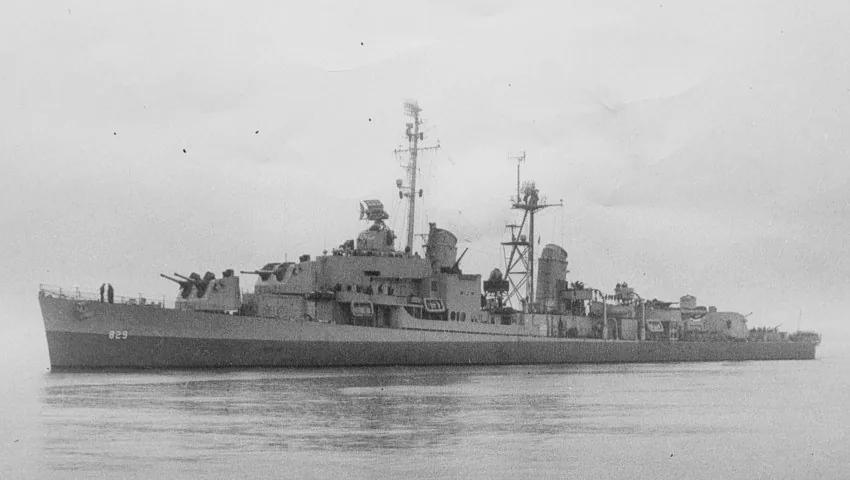
After Caribbean shakedown and training off New Jersey, Miles C. Fox sailed 5 July 1945 for the Panama Canal, San Diego, and Hawaii, arriving Pearl Harbor on the 28th. She departed Pearl Harbor 10 August for the Marshalls, receiving word en route of cessation of hostilities. After calling at Eniwetok, she continued to Japan, anchoring in Tokyo Bay 9 September to begin duty screening carriers providing air cover for the occupation landings on Japan.
Post-war 1946–1949
1946
The destroyer served in the occupation until sailing for Saipan 8 January 1946. On 25 March, she headed from the Marianas for San Diego with veterans aboard for transportation home. Arriving 11 April, she operated along the west coast until 6 January 1947, when she sailed for the Far East, arriving Yokosuka on the 25th. In ensuing months she called at principal ports of Japan with missions to Korea, China, Okinawa, and Hong Kong.
On 19 July Myles C. Fox and Hawkins (DD‑873) with British escort ship HMS Hart saved the crew and passengers of SS Hong Kheng after the passenger ship had run aground on Chilang Point some 8 miles north of Hong Kong. Six motorboats, two from each warship, and two skiffs from Hong Kong, made 76 trips to rescue some 1,800 survivors.
1948
Myles C. Fox departed Yokosuka 23 September and reached San Diego 8 October. After west coast operations and overhaul, she made another Far Eastern cruise, 2 October-23 December 1948, operating principally in the ocean approaches to Tsingtao, China, with fast carrier forces. She then operated out of San Diego until sailing 2 May 1949 for a new home port, Newport, R.I. She had been redesignated a radar picket destroyer (DDR‑829) 18 March 1949.
1949
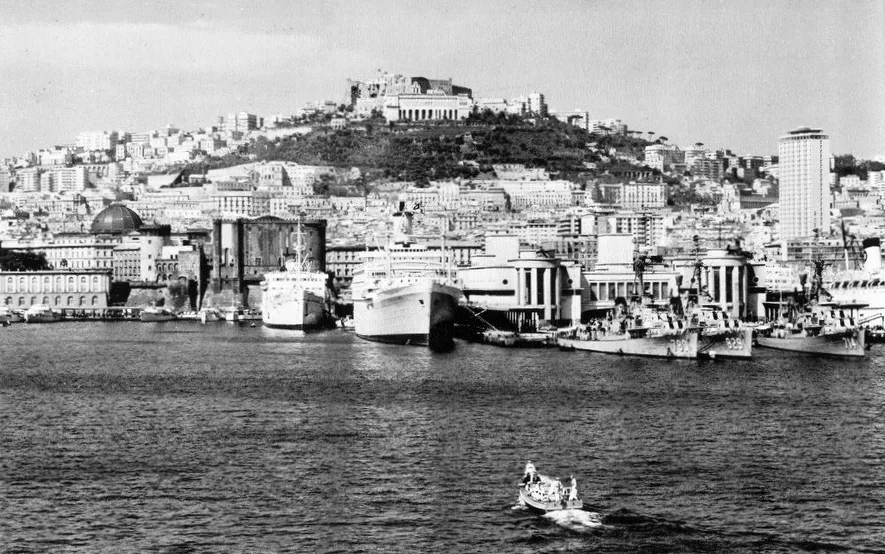
Following arrival Newport 23 May 1949, the ship served in the North Atlantic for a year before getting underway from Norfolk 3 May 1950 for the Mediterranean. Her 6th Fleet operations included simulated attack problems with submarines and other fleet readiness exercises. She visited ports of France, Italy, Turkey, Trieste, Greece, and Spain, cleared Gibraltar 1 October, and returned to Newport on the 10th.
Korean War period 1950–1953
1951
Repairs in New York Naval Shipyard, convoy exercises to Bermuda, and tactics in the Virginia Cape area kept her busy until 20 March 1951 when she put to sea with a carrier striking force that reached Gibraltar 6 April. She returned from this Mediterranean cruise to Newport 4 October.
1952
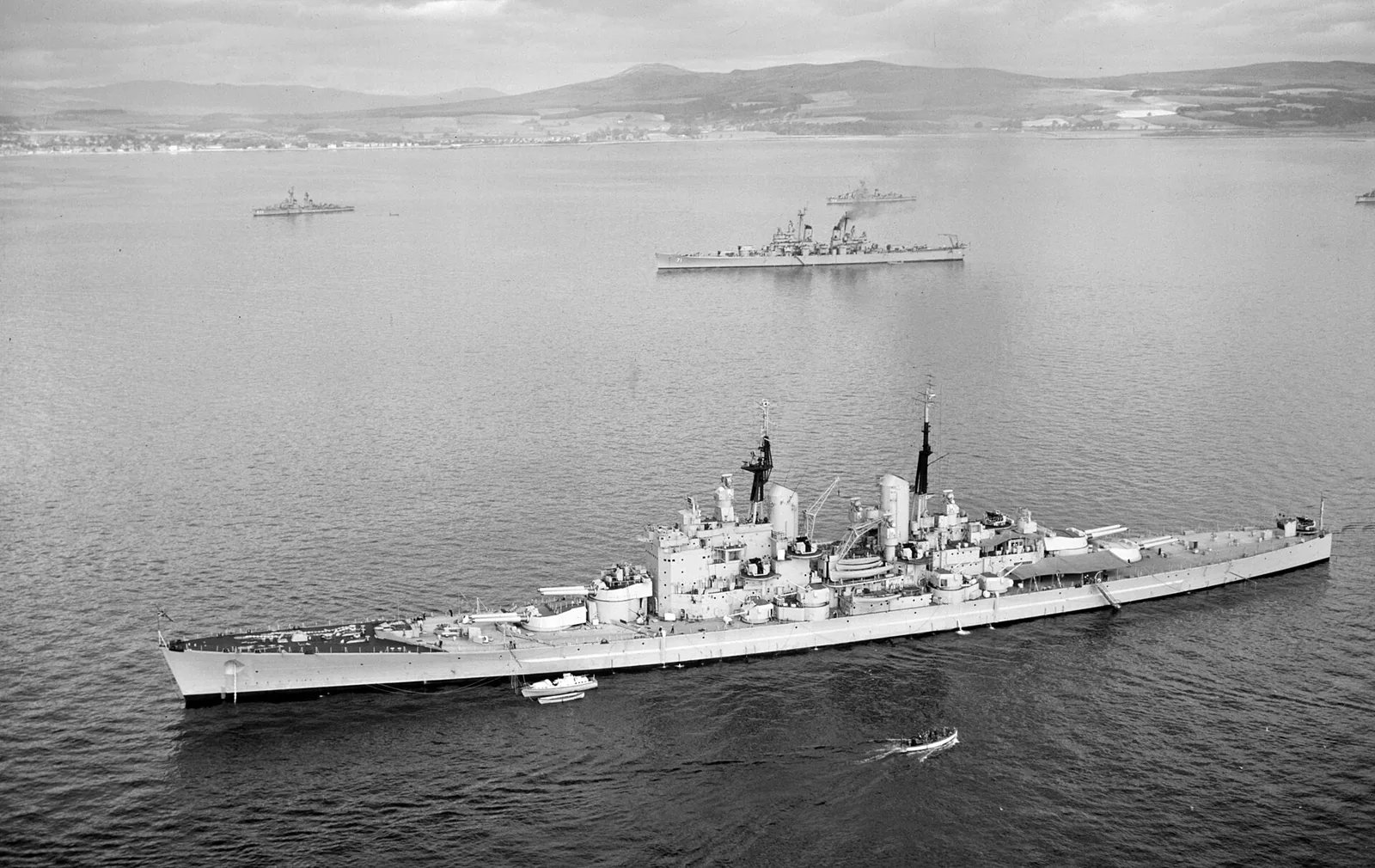
After working on the east coast for almost a year, she stood out from Newport 26 August 1952 with a fast carrier striking force built around Midway (CVB‑41) and Franklin D. Roosevelt (CVB‑42). This cruise took her to Greenock, Scotland, and thence into the Norwegian Sea as a unit of the NATO force guarding the free world. She visited ports of the British Isles before proceeding by way of Lisbon to the Mediterranean for another tour with the powerful 6th Fleet, returning Newport 4 February 1953.
1953
On 8 June 1953 Myles C. Fox left Norfolk on a midshipman cruise that included good will calls at Rio de Janeiro and Cartagena, Colombia. She debarked the midshipmen at the Naval Academy 5 August and returned to Newport. For the next 2 years she operated an the east coast and in the Caribbean. She departed Newport 2 May 1955 for the Mediterranean. After 3 months with the 6th Fleet, she returned to Newport 25 August.
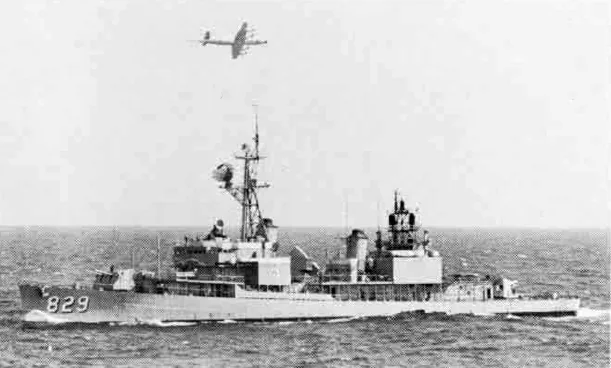
During the ensuing years, Myles C. Fox continued this pattern of service, alternating operations on the east coast and in the Caribbean with 6th Fleet deployments. In 1961 she won the Battle Efficiency "E," and in 1964 her home port was changed to Boston. That year the ship underwent FRAM I overhaul and modernization, and she was redesignated DD‑829 on 1 April.
Vietnam War period 1964–1975
1966
The destroyer was assigned to the Gemini 8 recovery team 6 March 1966 and stationed in the eastern Atlantic. While off the coast of Africa, she sped to the aid of Swedish freighter M/V Palma which was afire. For 3 days firefighting teams battled the blaze before Caloosahatchee (AO‑98) and Charles P. Cecil (DD‑835) arrived to lend a hand. The combined efforts of these U.S. Navy ships finally extinguished the flames, and Palma resumed steaming under her own power.
1967
After DASH qualifications off the Virginia Capes, the destroyer operated along the east coast until getting underway for the Far East 4 October. Steaming via the Panama Canal, Hawaii, Japan, and the Philippines, the destroyer arrived off the coast of North Vietnam 7 January 1967. While in the war zone Myles C. Fox delivered numerous fire support missions against enemy ground forces and installations. Her guns also damaged three enemy junks and two Communist sampans. She headed home on the second half of a round‑the‑world cruise 20 February and arrived Newport from Suez and Gibraltar 25 April.
1968
Myles C. Fox operated on the east coast and in the Caribbean during most of 1967. She entered Boston Naval Shipyard 26 September for overhaul through 81 January 1968.
Other photographs
Held for this vessel, and not tied to any part of the account above.
References
Every work this entry draws on. There are no numbered markers in the text above: what we hold is the provenance of the page — this history, this article, these photographs.
- History Myles C. Fox (DD-829) Dictionary of American Naval Fighting Ships, Naval History and Heritage Command. A work of the United States Government, in the public domain — the only text on this site reproduced verbatim.
- Facts USS Myles C. Fox (DD-829) Structured facts only — dates, dimensions, armament and fate. No wording is taken from it. Harvested 1 August 2026.
- Photograph USS Myles C Fox (DD-829) underway in early 1970s USN — Official U.S. Navy photograph [1] via navsource.org — Public domain — Wikimedia Commons
- Photograph USS Myles C. Fox (DD-829) off of Boston on 30 April 1945 (19-N-82184) U.S. Navy Bureau of Ships — U.S. Navy Bureau of Ships photo 19-N-82184 from destroyerhistory.org — Public domain — Wikimedia Commons
- Photograph HMS Vanguard (23), USS Quincy (CA-71) destroyers anchor in the Firth of Clyde, Scotland (UK), during NATO Operation Mainbrace, in September 1952 (80-G-K-12832) Unknown author or not provided — U.S. National Archives and Records Administration — Public domain — Wikimedia Commons
- Photograph US Navy destroyers at Naples ca in 1959 USN — U.S. Navy photo [1] from the USS Essex (CVA-9) 1959-60 cruise book available at Navysite.de — Public domain — Wikimedia Commons
- Photograph USS Myles C Fox (DD-829) off Venezuela 1970 USN — U.S. Navy Naval Aviation News October 1970 [1] — Public domain — Wikimedia Commons