United States Navy — Destroyer
USS Noa (DD-841) — service history
This is the full service history. For the vessel's particulars, photograph and specifications, see the entry.
In the words of the US Navy. The account below is reproduced verbatim from the Dictionary of American Naval Fighting Ships, compiled by the Naval History and Heritage Command — a work of the United States Government, in the public domain, and the only text on this site not written here.
Before commissioning
Loveman Noa was born 5 October 1878 at Chattanooga, Tenn. Appointed to the Naval Academy as a midshipman 5 September 1896, he graduated in June 1900, and was ordered to the Asiatic station in gunboat Mariveles. The morning of 26 October 1901 Midshipman Noa, with an armed crew of six men, put off from Mariveles in a small boat to watch for craft engaged in smuggling contraband from the island of Leyte to Samar. When ready to return to Mariveles, they found the wind and the tide against them. As the boat was taking on water, they put into a small cove on the island of Samar. While scouting the adjacent jungle, Noa, was attacked and stabbed four times by Filipino insurgents. He died before aid could reach him.
Second World War 1939–1945
1945
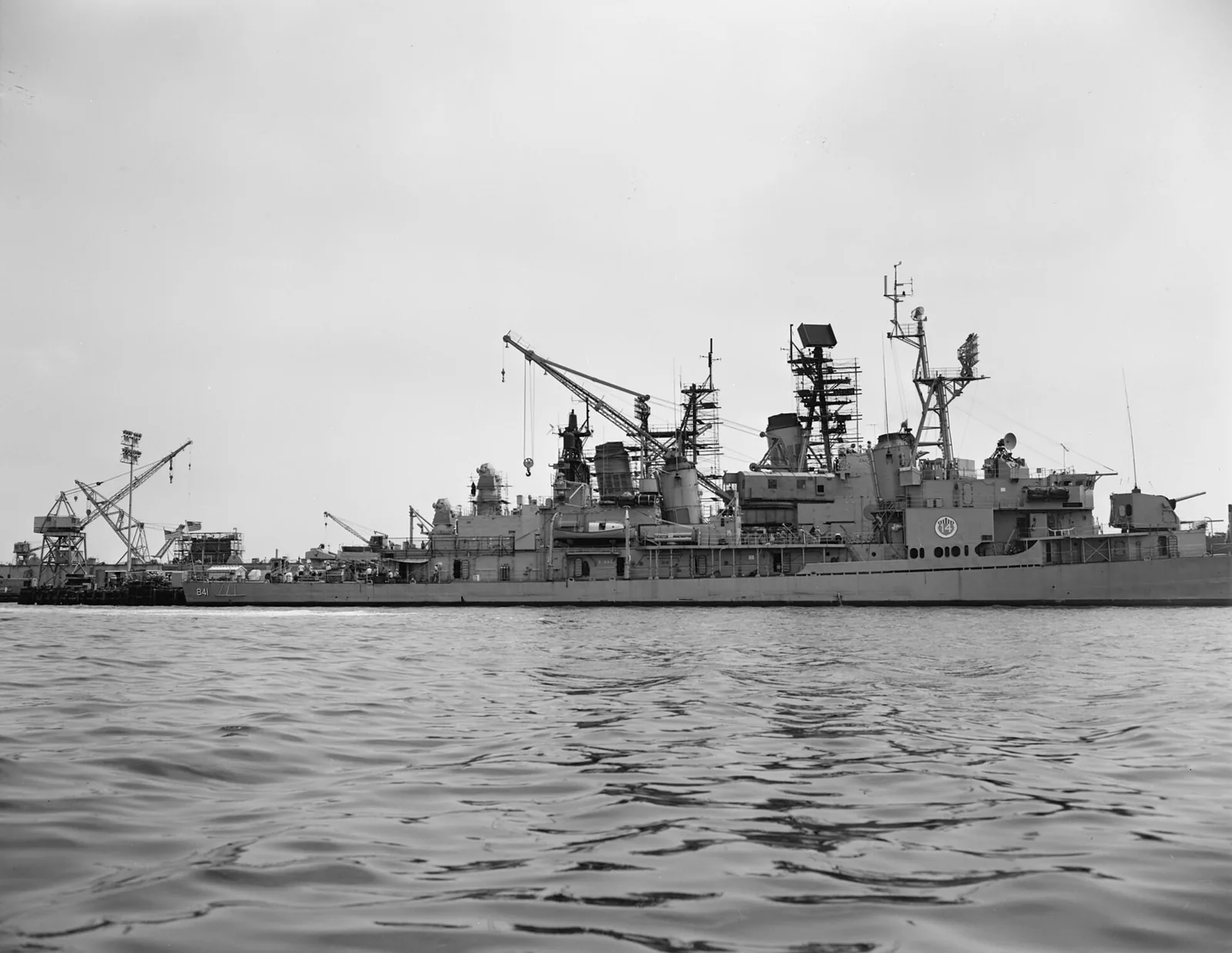
The second Noa (DD 841) was laid down by the Bath Iron Works, Bath, Maine, 26 March 1945; launched 30 July 1945, sponsored by Mrs. James Cary Jones, Jr., wife of Rear Admiral James Cary Jones, Jr., USN; and commissioned 2 November 1945, Comdr. R.L. Nolan, Jr., USN, in command.
After shakedown at Guantanamo Bay, Cuba, Noa departed her homeport of Norfolk, Va. for her first Mediterranean deployment. She called at Gibraltar, Nice, Naples, Malta, Venice, Piraeus and Lisbon. After participating in fleet maneuvers in the South Atlantic in early 1947 Noa returned to the United States. For the next two years she exercised in type training, underwent overhaul and acted as school training ship for the Fleet Sonar School, Key West, Fla.
Post-war 1946–1949
1949
Noa served as rescue destroyer for Mindoro (CVE-120) during June and July 1949. From September 1949 through January 1951 she engaged in extended anti-submarine training in a permanent Hunter-Killer Group as a unit of Destroyer Squadron Eight. She also made a second Mediterranean deployment during this period. In early 1951 she participated in Convex II, a large scale convoy escort exercise, after which she called at Baltimore, Md. The next two years were devoted to upkeep and operational type training along the East coast.
Korean War period 1950–1953
1953
In August 1953 Noa departed Norfolk on a 42,000 mile around-the-world cruise. She arrived Sasebo, Japan 3 October and spent four months operating in the Sea of Japan with Task Force 77. Here she participated in operational readiness exercises while maintaining truce patrol off the Korean coast.
In November 1953 Noa operated in Japanese waters as part of a Hunter-Killer Group. She patrolled the Korean coast together with USS Cone (DD 866) in late November and early December. From then until her return to the United States in April 1954, Noa engaged in underway training. Upon her return to Norfolk she was reassigned to hunter-killer duty in the Atlantic.
Cold War 1954–1963
1956
During overhaul in the summer of 1955 Noa was outfitted with experimental sonar equipment that she tested in the Key West area. She departed Norfolk Naval Shipyard in February 1956 for her third Mediterranean deployment. Upon return to homeport the following summer she trained in the eastern Atlantic. In the spring 1957 she steamed to the Caribbean for operation Springboard 1-57 and Desairdex 1-57.
1957
After completion of a three month overhaul at Norfolk Naval Shipyard in August 1957 she steamed for five weeks of refresher training at Guantanamo and for shore bombardment exercises at Culebra Island, Puerto Rico. In winter of 1957-8, Noa served as test ship for experimental radio equipment and in spring 1958 she was again taking part in Springboard exercises in the Caribbean.
March 1957 saw Noa as a participant in Lantphibex 1-58, an exercise designed to test the latest amphibious warfare concepts. During the summer 1958 Noa participated in Sixth Fleet operations during the Lebanon crisis. After a short tour in the Persian Gulf she returned to Norfolk and joined the Second Fleet for Lantphibex 2-58.
1959

In February 1959 Non again deployed to the Mediterranean. She participated in Sixth Fleet exercises through April 1 when she steamed for the Middle East via the Suez Canal. She called at Massawa, Ethiopia; Bombay, India; Bahrain, Saudi Arabia; Bandar Shapir, Iran; and Aden. Late June Noa rejoined the Sixth Fleet after having gone eighty-three days without replenishment. She returned to Norfolk 1 September, and transferred from Destroyer Squadron Six to Squadron Fourteen, with a new homeport at Mayport, Fla. Through spring 1960 she operated off the Atlantic Coast and in the Caribbean, She entered the Philadelphia Naval Shipyard 25 May for a FRAM 1, and received the latest in ASW weapons.
1961
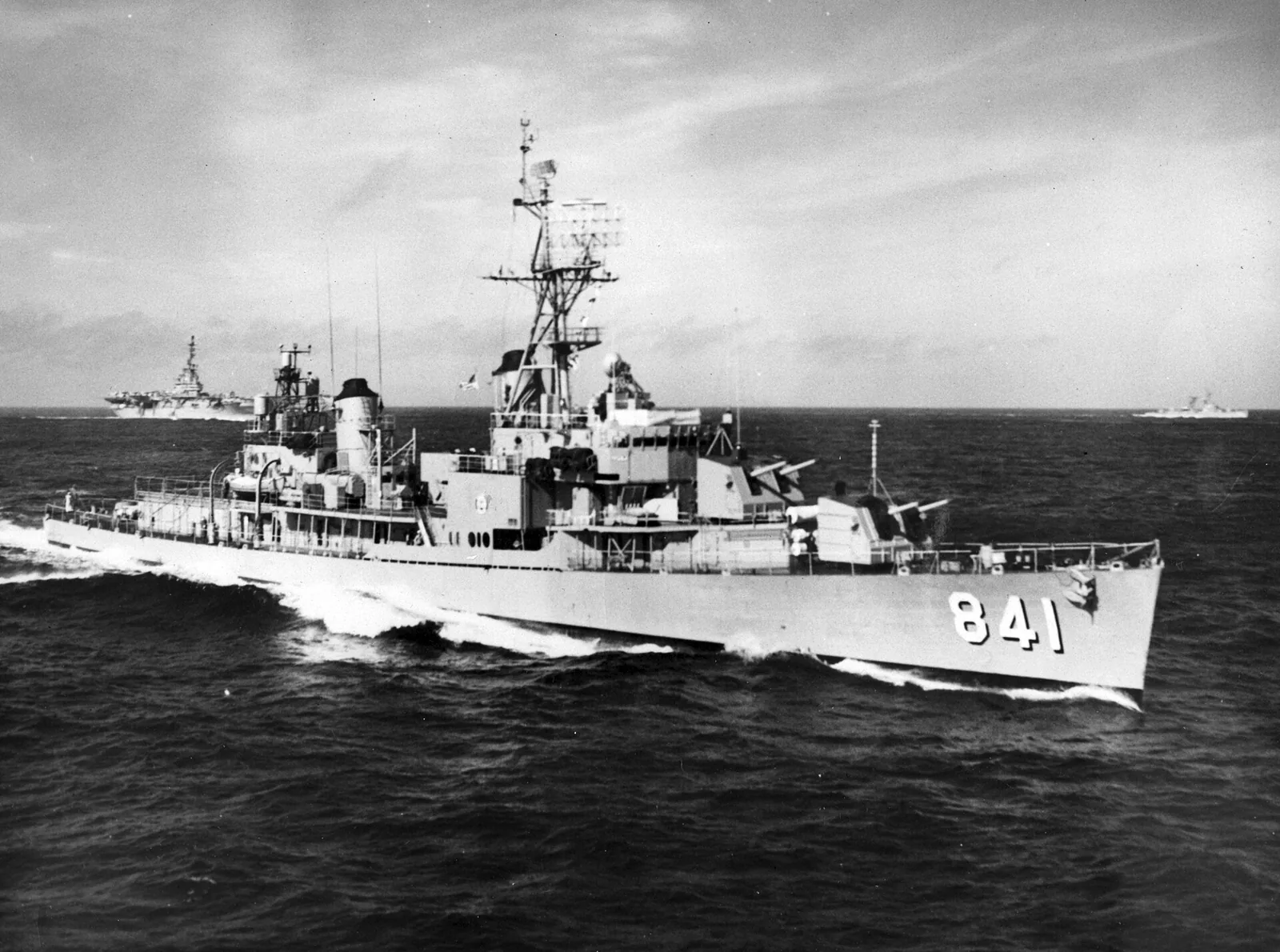
Noa completed her Fram I overhaul 2 May 1961 and rejoined the Atlantic Fleet. After a four week Ready-for-Sea period and ASROC qualification trials she reported to Fleet Training Command, Guantanamo for six weeks refresher training. Noa returned to Mayport 23 July for a two week tender period alongside Yellowstone (AD-27).
1962
Type training followed and Noa steamed for the United Kingdom, for combined exercises in the Eastern Atlantic with the British Navy. She arrived Portsmouth, England 6 November, and also called at Belfast and Dublin before standing in to homeport 20 December. After leave and upkeep Noa resumed ASW training 29 January 1962 in the western Atlantic.
Noa returned to Mayport 6 February for modifications to her boatdavits and briefings in preparation for the recovery of America's first astronaut and his space capsule. Preparations completed, she steamed 11 February for the Project Mercury Recovery area in the Southwestern Atlantic, she reported on station 14 February as part of the 24 ship recovery task force.
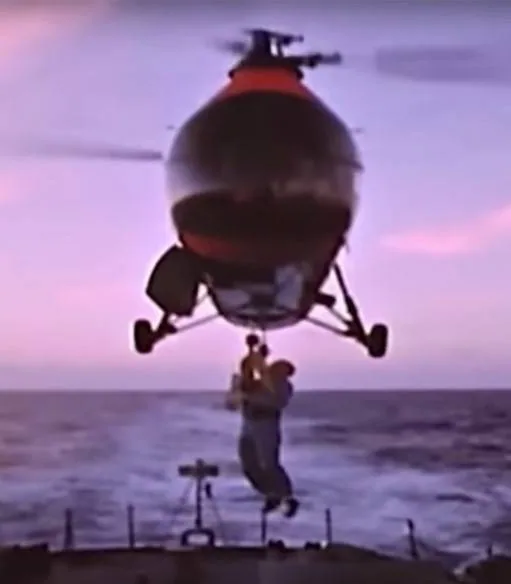
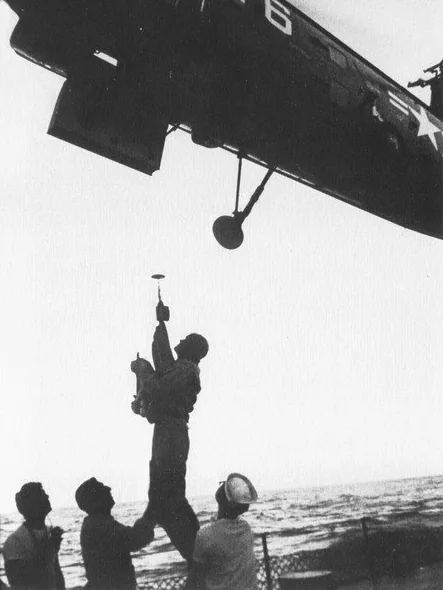
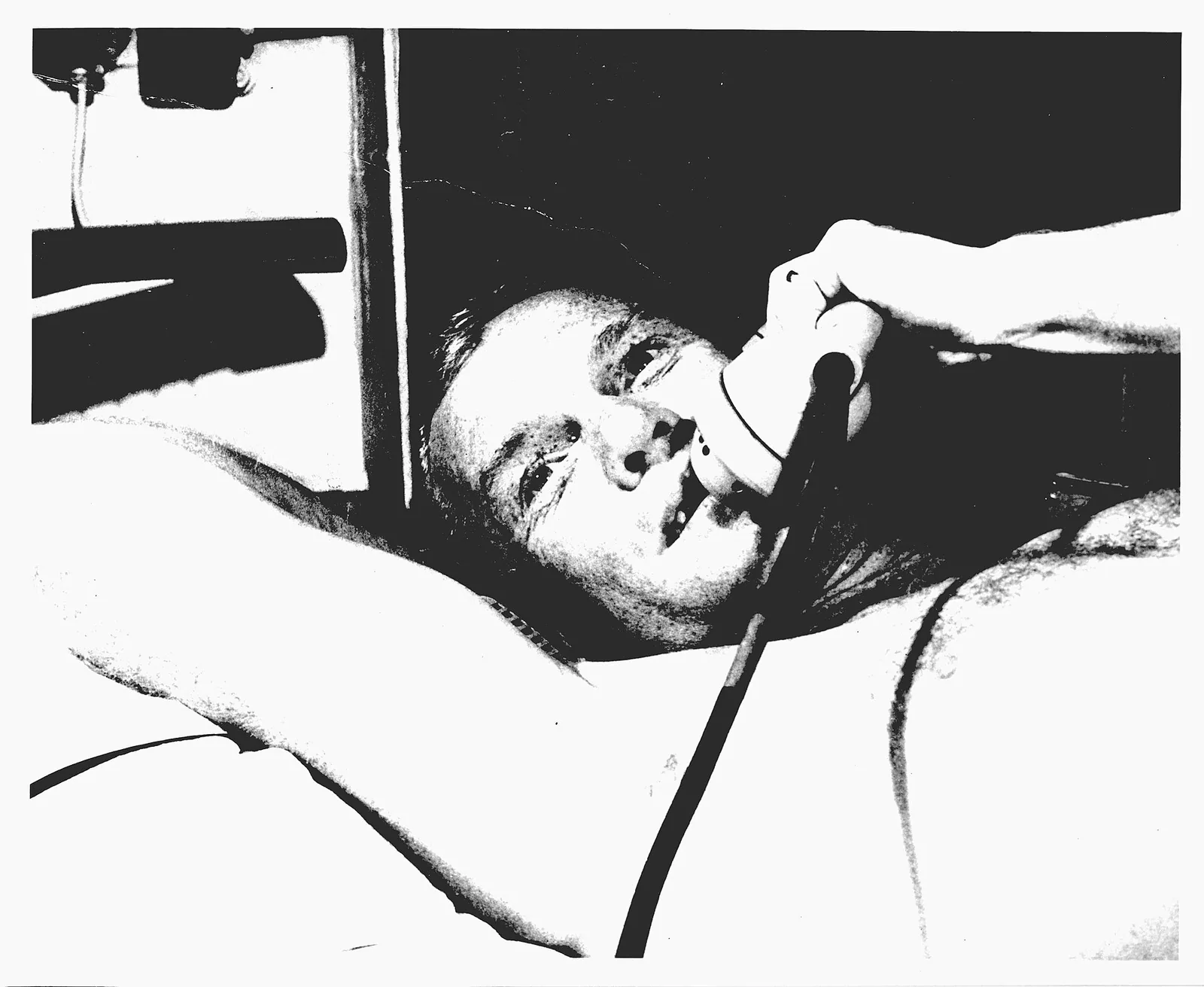
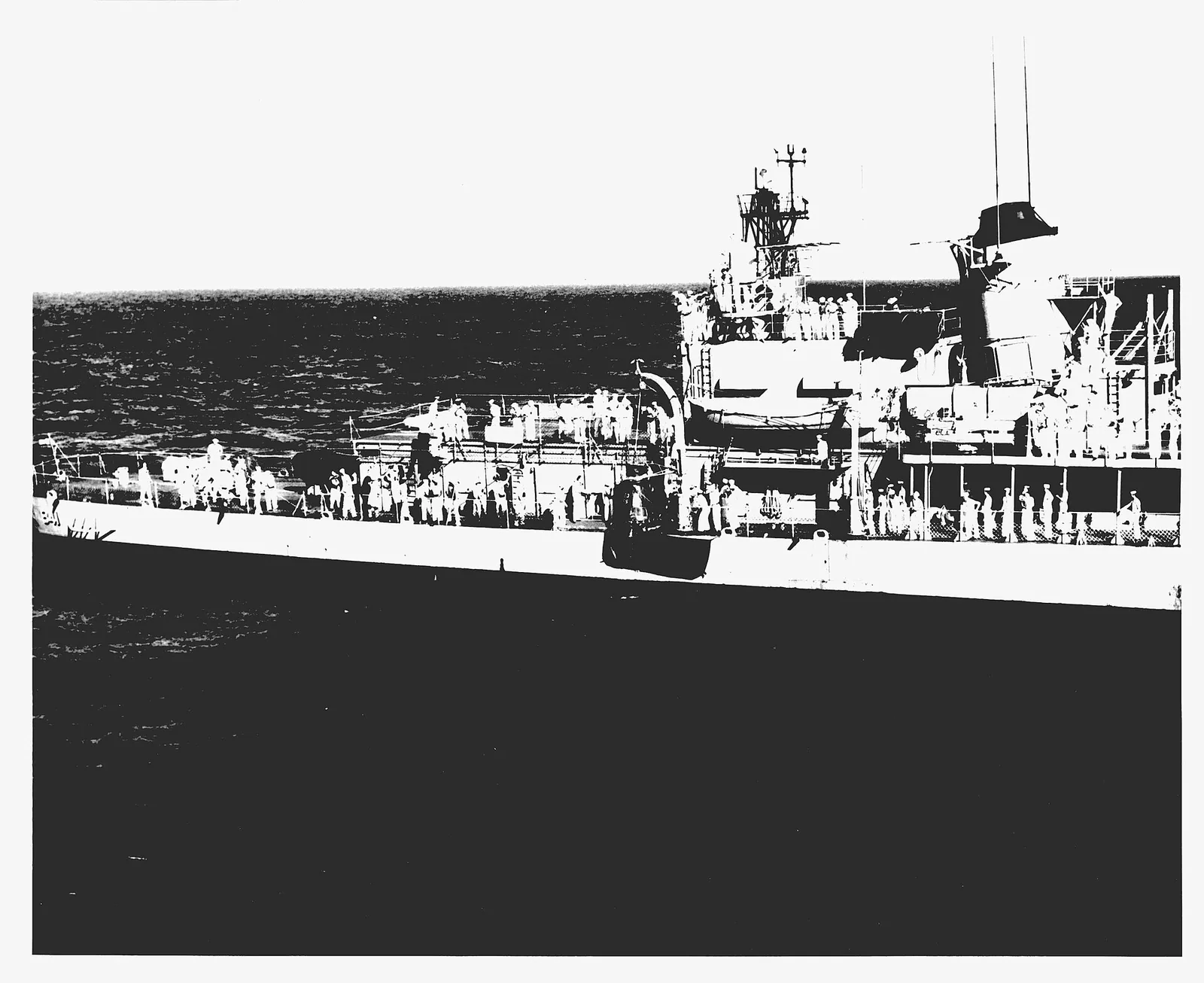
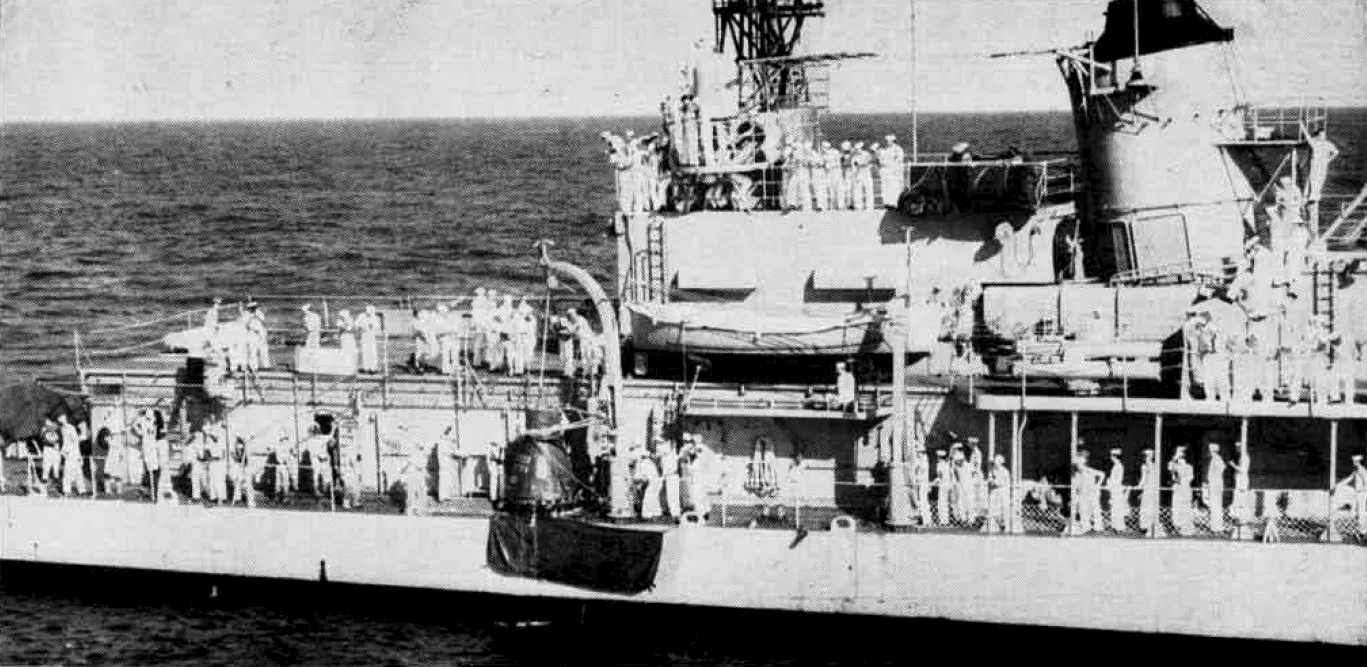
After two reschedulings of the space flight, Noa put in at San Juan for two days. She was underway 19 February for the recovery station, located 200 miles WNW of San Juan. At precisely 1440, five hours and 53 minutes after blastoff, Friendship Seven reentered the atmosphere with a loud sonic boom that was clearly audible 20 February in Noa. She first sighted and recovered Lt. Col. John H. Glenn, Jr., USMC, Project Mercury Astronaut, after he had completed his historic three orbits of the earth and splashed down a mere three miles from the destroyer. Col. Glenn remained in Noa for three hours before a helicopter transferred him to Randolph (CVS-15), prime recovery ship.
Upon completion of recovery operations, Noa returned to Mayport for ASW operations with Task Group Alfa until 31 May. Noa has since conducted type training and midshipmen cruises out of her homeport between Mediterranean operational deployments and upkeep. She steamed for the Mediterranean 3 August 1962 for a seven month tour with the Sixth Fleet and 8 February 1964 saw her stand out of Mayport for another six month Mediterranean deployment.
Vietnam War period 1964–1975
1964
Her regularly scheduled overhaul took place at Charlestown from September 1964 through January 1965, followed by a Mediterranean deployment from mid-May through 1 September. Early October 1965 Noa steamed from Mayport for the Gemini VI recovery off the west coast of Africa. The flight was cancelled after the Agena-B rocket designed to launch a docking vehicle failed to achieve an orbital insertion.
1966
Noa then participated in type training and Atlantic Fleet exercises, including High Time, an amphibious exercises in the Caribbean from late January through early March 1966. She also served as a unit of the Gemini 8 recovery forces 14-17 March 1966. Her April-October deployment to the Mediterranean was followed by leave, upkeep and Lantflex (28 November-15 December).
1967 Operation Springboard
In January 1967 Noa received two QH-50 Drone Anti-Submarine Helicopters (DASH). She then served as school ship for the Fleet Sonar School at Key West (28 January-11 February). Operation Springboard took her to the Caribbean 3-11 March and she steamed in Mediterranean waters June through November.
1968

Noa stood out of Mayport 5 January 1968 to conduct a solemn mission-burial at sea of George H. Flynt, YN1 (Ret.). Flynt's last wish was that his remains be consigned to the deep. In honoring his request, made by a man who served his country for 20 years, Noa's sailors gained insight into a unique ceremony for men of the sea.
Noa underwent regular availability and overhaul at Charleston commencing 8 January 1968. Work was completed 17 June and the destroyer was in Mayport 25 June. Because of excessive vibration in her starboard shaft, Noa returned to drydock at Charleston 8 July for one week. She steamed for Guantanamo for refresher training after which she returned to Mayport 11 September. Homeported once again the destroyer conducted maintenance and training and began preparation for deployment to the Pacific.
During October she was in restricted availability at Jacksonville for boiler repairs. She rode out hurricane Gladys 19 October and spent the rest of the year in training and in preparation for 1969 deployment to WestPac.
Other photographs
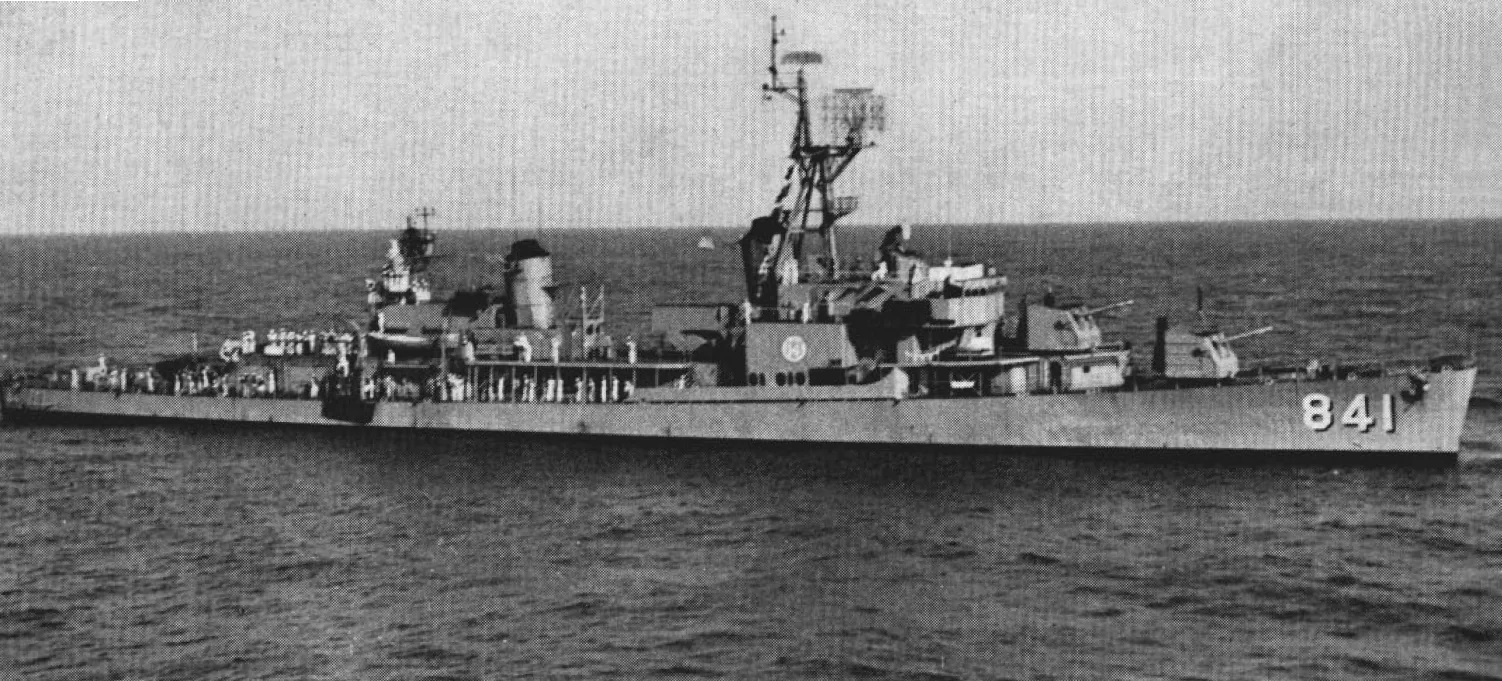
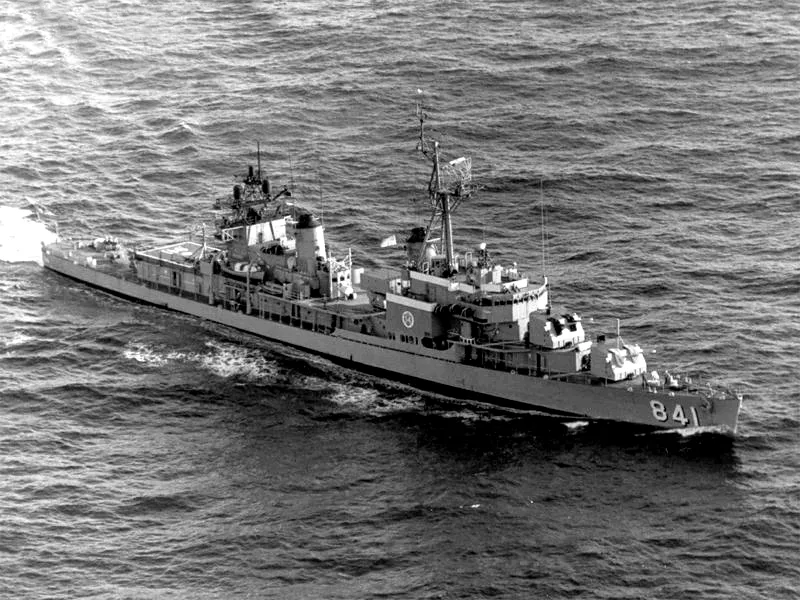
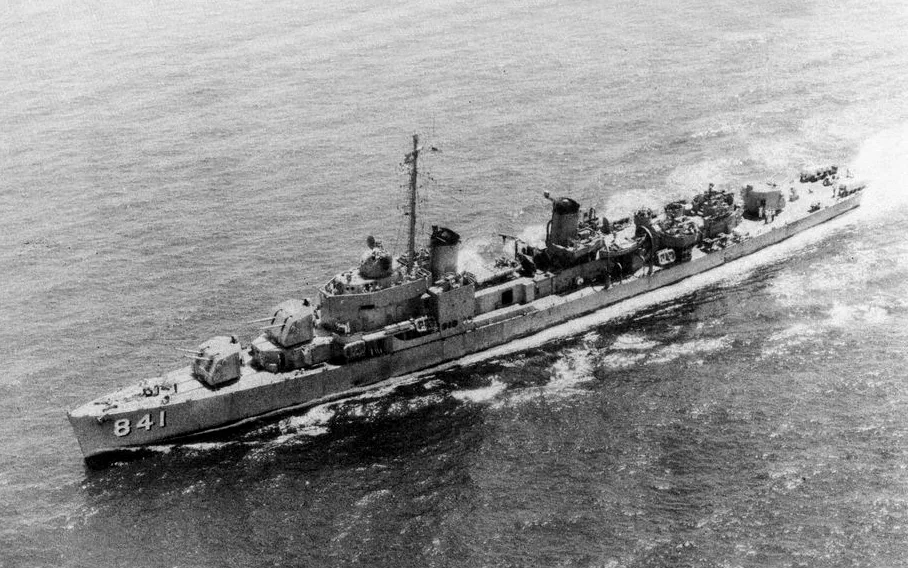
Held for this vessel, and not tied to any part of the account above.

References
Every work this entry draws on. There are no numbered markers in the text above: what we hold is the provenance of the page — this history, this article, these photographs.
- History Noa II (DD-841) Dictionary of American Naval Fighting Ships, Naval History and Heritage Command. A work of the United States Government, in the public domain — the only text on this site reproduced verbatim.
- Facts USS Noa (DD-841) Structured facts only — dates, dimensions, armament and fate. No wording is taken from it. Harvested 1 August 2026.
- Photograph USS Noa (DD-841) underway on 1 April 1965 Travers, U.S. Navy — Official U.S. Navy photo NH 107116 from the U.S. Navy Naval History and Heritage Command — Public domain — Wikimedia Commons
- Photograph John Glenn hoisted aboard helicopter on USS Noa U.S. Navy — source — Public domain — Wikimedia Commons
- Photograph A HUP-3 helicopter picks up John Glenn from USS Noa (DD-841) in 1962 U.S. Navy — U.S. Navy photo [1] from the USS Randolph (CVS-15) 1962 cruise book available at Navysite.de — Public domain — Wikimedia Commons
- Photograph Photograph of Astronaut John H. Glenn, Jr. Talking on the Telephone after Friendship 7 Flight - DPLA - a67c4f9b00b59c2c33ed7190aa8fe35f U.S. Senate. Committee on Aeronautical and Space Sciences. (7/24/1958 - 2/11/1977) — File URL Catalog record — Public domain — Wikimedia Commons
- Photograph Photograph of Recovery of Friendship 7 - DPLA - 82c80996f364195369ea4db4631bc735 U.S. Senate. Committee on Aeronautical and Space Sciences. (7/24/1958 - 2/11/1977) — File URL Catalog record — Public domain — Wikimedia Commons
- Photograph USS Arcturus (AF-52) replenishes USS Noa (DD-841) at sea, 8 November 1962 (USN 1066671) PH3 Cornell, U.S. Navy, aboard USS Boston (CAG-1) — Official U.S. Navy photo USN 1066671 from the ship's entry in the U.S. Navy Dictionary of American Naval Fighting Ships (DANFS) available at the Naval History and Heritage Command — Public domain — Wikimedia Commons
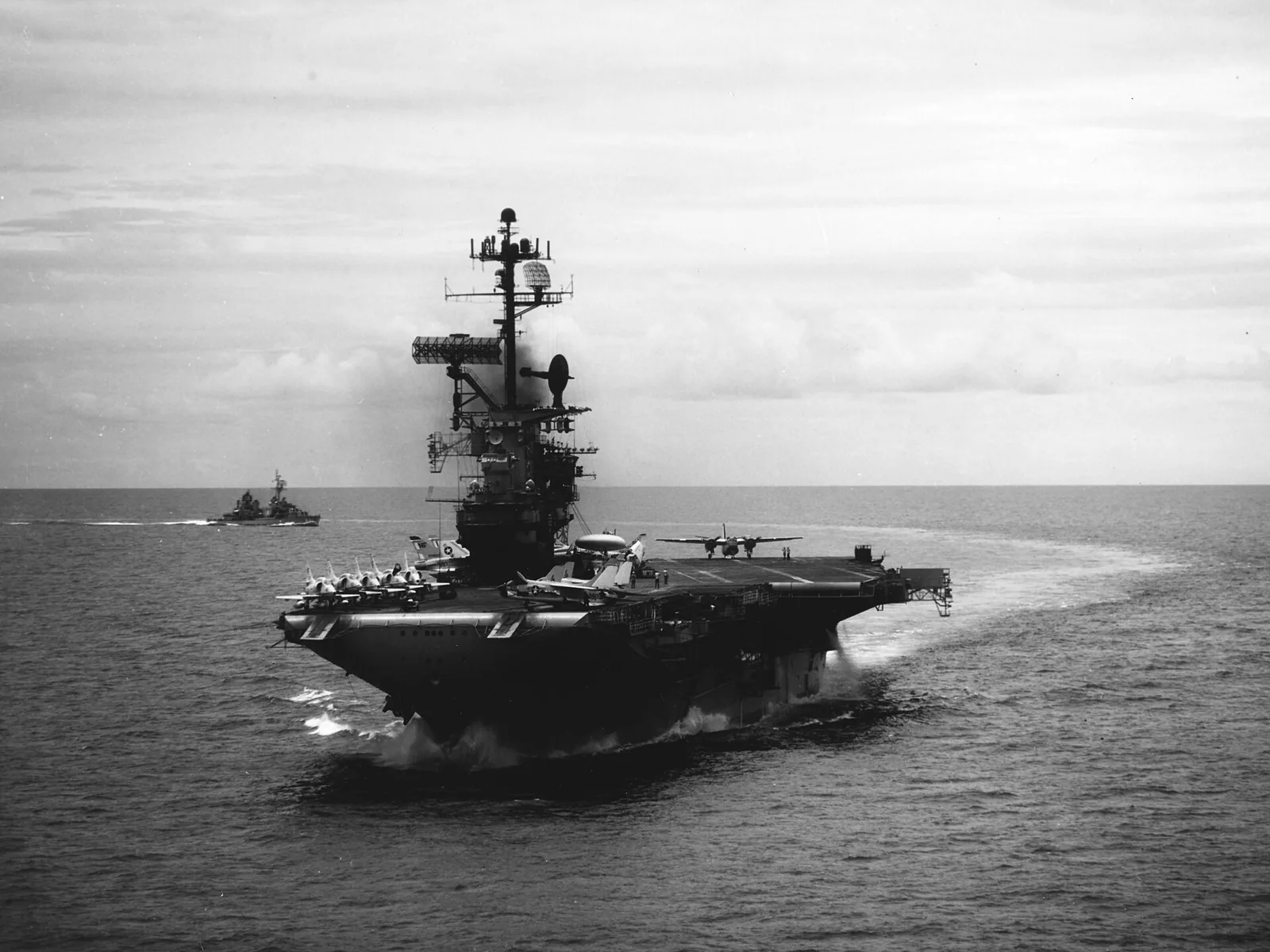
- Photograph USS Bon Homme Richard (CVA-31) and USS Noa (DD-841) underway in the Pacific Ocean c1969 U.S. Navy — Official U.S. Navy photo USN 1142865 from the U.S. Navy Naval History and Heritage Command — Public domain — Wikimedia Commons
- Photograph USS Noa (DD-841) hoists Friendship 7 capsule aboard 1962 USN — U.S. Navy Naval Aviation News / [1] April 1962 , p. 7 — Public domain — Wikimedia Commons
- Photograph USS Noa (DD-841) in heavy seas 1959 USN — U.S. Navy All Hands magazine April 1960 , p. 29 — Public domain — Wikimedia Commons
- Photograph USS Noa (DD-841) in port in the 1960s U.S. Navy Bureau of Ships photo 19-NN - DD-841 Noa - 178004 — Public domain — Wikimedia Commons
- Photograph USS Noa (DD-841) insignia Unknown author — https://www.navsource.net/archives/05/841.htm — Public domain — Wikimedia Commons
- Photograph USS Noa (DD-841) underway c1960s Douglas Kasunic, U.S. Navy — Official U.S. Navy photo UA 536.17 from the U.S. Navy Naval History and Heritage Command — Public domain — Wikimedia Commons
- Photograph USS Noa (DD-841) underway c1962 U.S. Navy — U.S. Navy All Hands magazine April 1962 , p. 6 — Public domain — Wikimedia Commons
- Photograph USS Noa (DD-841) underway in November 1968 (USN 1139389) Unknown author — U.S. Navy photo USN 1139389 in A Brief History of U.S. Navy Destroyers, Part III -- Korea, Vietnam & Cold War — Public domain — Wikimedia Commons
- Photograph USS Noa (DD-841) underway, circa in October 1950 U.S. Navy — U.S. Navy photo [1] from the USS Mindoro (CVE-120) 1950 cruise book available at Navysite.de — Public domain — Wikimedia Commons