United States Navy — Submarine
USS Pargo (SS-264) — service history
This is the full service history. For the vessel's particulars, photograph and specifications, see the entry.
In the words of the US Navy. The account below is reproduced verbatim from the Dictionary of American Naval Fighting Ships, compiled by the Naval History and Heritage Command — a work of the United States Government, in the public domain, and the only text on this site not written here.
Second World War 1939–1945
1942
The first Pargo (SS-264) was laid down 21 May 1942 by Electric Boat Co., Groton, Conn.; launched 24 January 1943; sponsored by Miss Belle Baruch; and commissioned 26 April 1943, Lt. Comdr. Ian C. Eddy in command.
1943
Following shakedown and training Pargo sailed via the Panama Canal to Pearl Harbor, arriving 23 July 1943. The first of her eight war patrols began 18 August and took her into the East China Sea where she twice attacked the enemy, inflicting undetermined damage to several ships before returning to Pearl Harbor 6 October.
After refitting Pargo sailed 30 October in company with Snook (SS-279) and Harder (SS-257) in a wolf-pack. The efforts of the three were well directed against the open sea area northwest of the Marianas where Pargo sank two freighters, Manju Maru and Shoko Maru totaling 7,810 tons, on 29 and 30 November.
1944
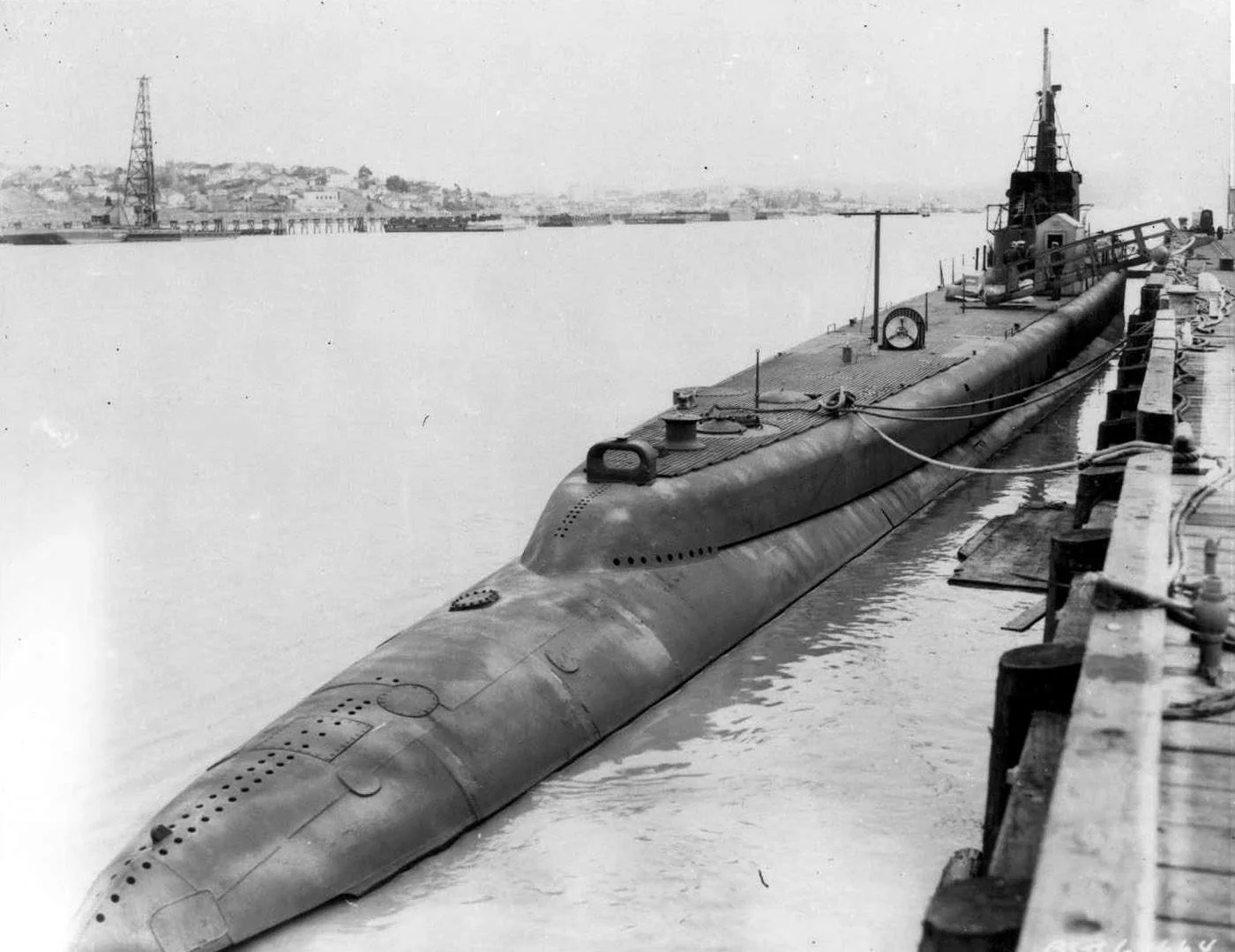
Pargo next underwent overhaul and received a new engine at Mare Island. On 5 March 1944 she was underway for Pearl Harbor and 25 March began her third war patrol. Her mission, to destroy enemy ships in the Philippine and Celebes Seas areas was carried out with several attacks, one of which sank an ex-net tender. Pargo began refitting at Fremantle, Australia 24 May.
Underway 13 June for the Celebes Sea, Pargo noted fewer ships present in the area. She scored well again, however, damaging several and sinking a 5,236 ton cargo ship, Yamagibu Maru.
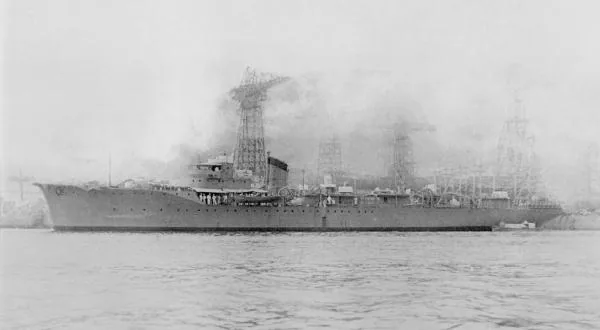
Griffin (AS-13) refitted Pargo at Fremantle to prepare her for her next patrol. From 3 September to 7 October she ranged the South China Sea, pressing her attacks to damage several Japanese ships and to sink two more, including a minelayer.
On 28 October Pargo sailed from western Australian waters in company with Haddo for her sixth patrol. From Exmouth Gulf she continued alone into the South China Sea where she found that increased allied air activity had further diminished use of the shipping lanes. She sank tanker Yuho Maru off Brunei Bay 26 November. Following this action she received from escorts the worst depth charging of her career, but escaped without serious damage, and returned to Australia 21 December.
1945
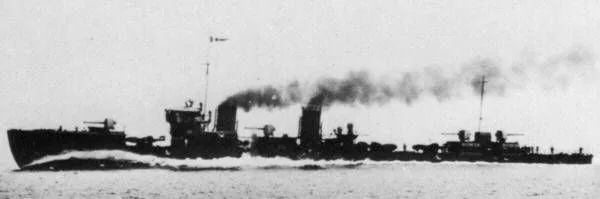
Replenishment and retraining ensued, and on 15 January 1945 Pargo got underway for the Indo-China coast. Six days out she launched a night torpedo attack that damaged several ships. On 10 February she again engaged the enemy and ten days later blew up destroyer Nokaze. Pargo then sailed via Saipan and Pearl Harbor to Mare Island for a modernization overhaul which lasted from 25 March to 17 June.
The submarine's eighth and final patrol spanned the 42 day interval from 14 July to 9 September. Transiting the minefields of Tsushima Straits, she entered the Sea of Japan where she attacked a six-ship convoy. She made her last sinking on 8 August, the passenger-cargo ship Rashin Maru, to total nine for the war. After Japanese capitulation, Pargo remained in the mine-filled waters until after the peace terms were signed and then sailed for Guam.
Post-war 1946–1949
1946
Returning to Pearl Harbor with the knowledge that she had contributed materially to the victory in the Pacific, Pargo assumed post-war duties as part of the squadron based there. She decommissioned 12 June 1946 and was assigned to train Naval Reservists in the 13th Naval District where she remained until 1 June 1960 when her name was struck from the Navy List. Pargo was sold 17 April 1961.
Pargo received eight battle stars for World War II service. All eight of her war patrols were designated as "successful." She is credited with having sunk a total of 27,983 tons of enemy shipping.
Other photographs
Held for this vessel, and not tied to any part of the account above.
References
Every work this entry draws on. There are no numbered markers in the text above: what we hold is the provenance of the page — this history, this article, these photographs.
- History Pargo I (SS-264) Dictionary of American Naval Fighting Ships, Naval History and Heritage Command. A work of the United States Government, in the public domain — the only text on this site reproduced verbatim.
- Facts USS Pargo (SS-264) Structured facts only — dates, dimensions, armament and fate. No wording is taken from it. Harvested 1 August 2026.
- Photograph USS Pargo;0826401 Unknown author — Unknown source — Public domain — Wikimedia Commons
- Photograph USS Pargo;0826404 Unknown author — Unknown source — Public domain — Wikimedia Commons
- Photograph Japanese minelayer Aotaka in 1940 Unknown author — 日本海軍艦艇写真集 潜水艦・潜水母艦p199 — Public domain — Wikimedia Commons
- Photograph Japanese destroyer Nokaze Unknown author — Japanese book "History of Japanese Destroyers" (1992) published by Kaigunsha, p.69 — Public domain — Wikimedia Commons