Royal Navy — Destroyer
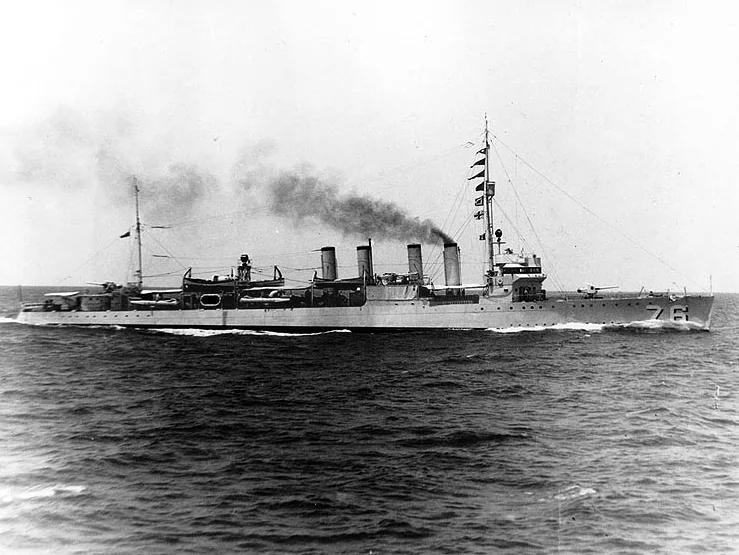
USS Philip (DD-76) — service history
This is the full service history. For the vessel's particulars, photograph and specifications, see the entry.
In the words of the US Navy. The account below is reproduced verbatim from the Dictionary of American Naval Fighting Ships, compiled by the Naval History and Heritage Command — a work of the United States Government, in the public domain, and the only text on this site not written here.
Before commissioning
John Woodward Philip, born in Kinderhook, Columbia County, New York, 26 August 1840, was appointed Midshipman 20 September 1856 and graduated from the Naval Academy 1 June 1861. During the Civil War, he served in Santee, Marion and Sonoma until September 1862 when he was ordered to Chippewa, attached to the South Atlantic Blockading Squadron. While serving in Chippewa, he was wounded during operations against Charleston, S.C., July 1863. He commanded Texas from 18 October 1897 to 29 August 1898. During the Spanish-American War, his ship, with Marblehead, led the attack and silenced the fort on Cayo del Toro, Guantanamo Bay, 15 June 1898. On 3 July 1898, in command of Texas, he participated in the Battle of Santiago Bay, in which Cerevera's Spanish Fleet was destroyed off Santiago de Cuba. He was advanced five numbers in grade 10 August 1898 for eminent and conspicuous service in battle. From 3 September 1898 until 28 December 1898, he served as Commander 2nd Squadron, North Atlantic Fleet, flying his broad pennant in New York. Commencing 14 January 1899, he was in command of the Navy Yard and Naval Station, New York and was promoted to Rear Admiral 3 March 1899. While serving in this duty, Admiral Philip died suddenly 30 June 1900.
Great War and before
1917
The first Philip (Destroyer No. 76) was laid down by the Bath Iron Works, Bath, Me., 1 September 1917; launched 25 July 1918; sponsored by Mrs. Barrett P. Philip; and commissioned at the Boston Navy Yard 24 August 1918, Lt. Comdr. John F. Cox in command.
1918
After being fitted out at Boston, Philip reported to Commander Squadron Two, Cruiser Force, 1 September 1918, to escort convoy HX-47 across the Atlantic, returning from Buncrana, Ireland, under orders of Commander, U.S. Destroyer Forces operating in European waters. She was flagship of Submarine Hunting Group stationed at the Coast Guard Station, Cold Spring, Cape May, N.J. 28 September-11 October. She steamed to Europe with convoy HX-54 which sailed 27 October but returned to New York, 20 November.
Interwar 1919–1938
1919
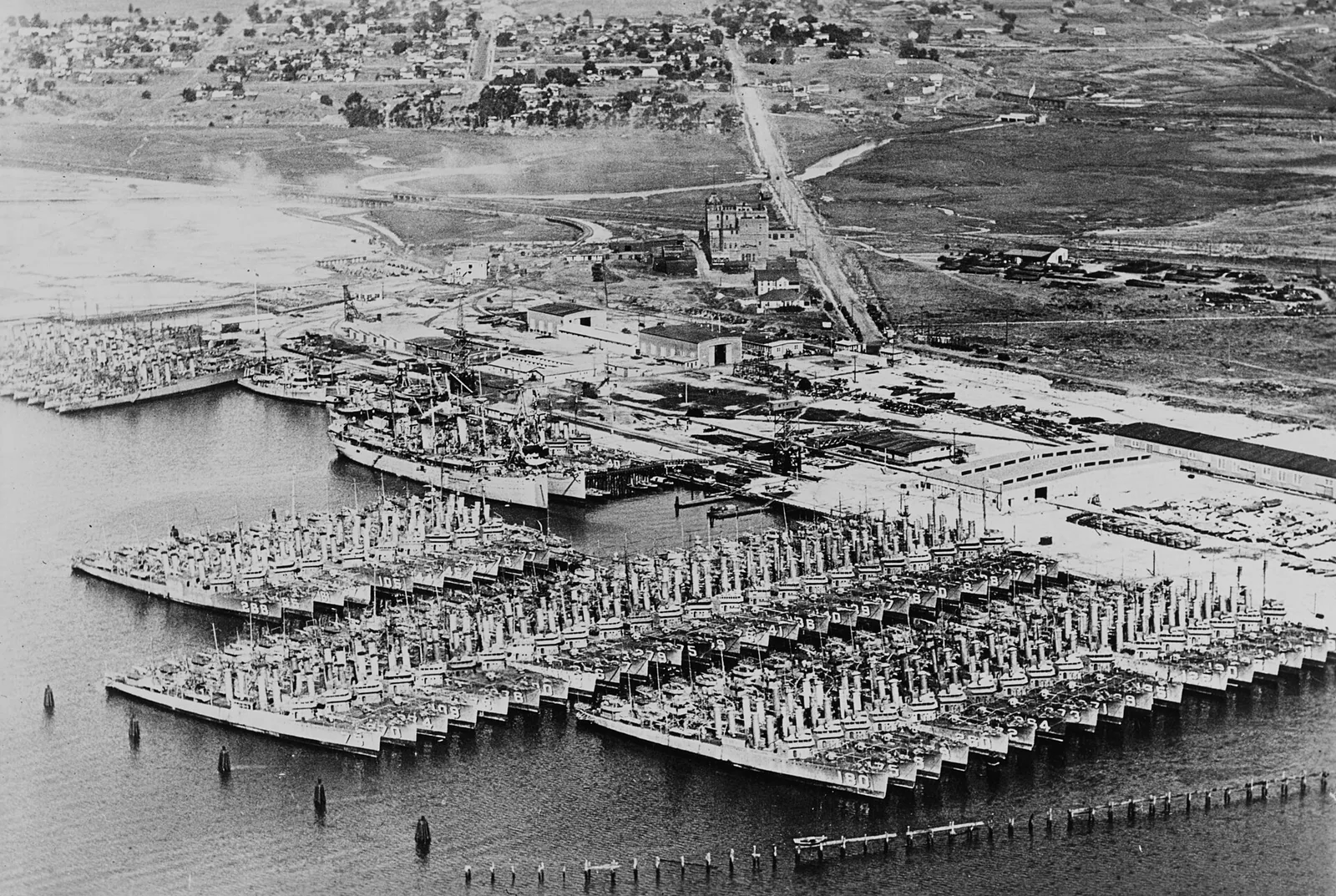
Philip supported the trans-Atlantic flight of the NC-1, NC-3, and NC-4, 11-19 May 1919. With other fleet units, she had a part in Army experimental firing at Fort Hancock, N.Y. She then had orders to duty with Squadron 4, Destroyer Force, Pacific Fleet, and reported at San Diego Destroyer Base 2 August. During the next month she cruised to Pearl Harbor, T.H., and thereafter took part in division maneuvers, fleet movements and tactical exercises, cruising the west coast of the United States, South America, and Canal Zone, having special duty as assigned until 29 May 1922 when Philip was placed out of commission.
1930
When recommissioned 25 February 1930, after her overhaul and reconditioning, Philip was attached to Destroyer Squadrons, Battle Fleet, and conducted maneuvers and gunnery practice for the Reserve Force in the San Diego area. On 3 November she arrived at Corinto, Nicaragua, enroute to the East Coast to join the Training Squadron, arriving New York Navy Yard 6 December. For the instruction of NROTC classes in the year 193 1, she made many departures from Staten Island for the New England coast, Bermuda operating area, and Naval Operating Base, Hampton Roads, Tangier Sound and Quantico, Va., before returning to New York. On 22 December she departed New York to join the Special Service Squadron which operated in the vicinity of Panama, Nicaragua, and El Salvador, for the protection of American interests. Upon being detached Philip entered Mare Island Navy Yard, and from 9 May to 30 July 1932 operated in reduced commission with Destroyer Squadron 20, Rotating Reserve.
1933
At her base in San Diego, from 18 August, Philip operated with Destroyer Division 6, Squadron 2, Battle Fleet, engaging in intensive division training, tactics and torpedo practice, at times operating with Aircraft Battle Force. From December 1933 to July 1934 she was in reduced status as before, later serving successively with Submarine Division 12 and with Cruisers Scouting Force, and with other destroyer divisions.
1934
In July-August 1934 Philip visited Alaskan ports, and made preparations for the Presidential Fleet Review held at San Diego in September-October 1935. Among her many duties, Philip annually participated in fleet problems, engaged in squadron and fleet tactics, acting at times as plane guard for carriers.
1937
She decommissioned at Destroyer Base, San Diego, 2 April 1937, and recommissioned 30 September 1939 for duty with Division 64, Atlantic Squadron, which operated on neutrality patrol in the vicinity of Key West, Fla. She arrived there 11 December, and early the next year as a unit of the Antilles Detachment, she visited Dutch Indies and Venezuelan ports, as well as Guantanamo Bay, Cuba, St. Eustatius, Dry Tortugas, San Juan, P.R., St. Thomas, VA., Culebra Island, and acted as submarine escort to the Canal Zone.
Second World War 1939–1945
1940
Departing Key West for New York Navy Yard 23 July 1940, she was overhauled and following trials arrived at Newport, R.I., enroute to Halifax, Nova Scotia. There she was decommissioned 23 October 1940 and turned over to British authorities in the ships for bases exchange, and renamed Lancaster in the Royal Navy. Her name was struck from the Navy List 8 January 1941. She served as a minelayer and convoy escort in the Royal Navy during World War II, and was reduced to reserve in July 1945.
Other photographs
Held for this vessel, and not tied to any part of the account above.
References
Every work this entry draws on. There are no numbered markers in the text above: what we hold is the provenance of the page — this history, this article, these photographs.
- History Philip I (Destroyer No. 76) Dictionary of American Naval Fighting Ships, Naval History and Heritage Command. A work of the United States Government, in the public domain — the only text on this site reproduced verbatim.
- Facts USS Philip (DD-76) Structured facts only — dates, dimensions, armament and fate. No wording is taken from it. Harvested 1 August 2026.
- Photograph USS Philip (DD-76) Unknown author — U.S. Naval History and Heritage Command photo NH 75533 — Public domain — Wikimedia Commons
- Photograph Laid up destroyers at San Diego in 1922 Unknown author — U.S. Naval History and Heritage Command photo NH 42539 — Public domain — Wikimedia Commons
- Photograph USS Philip (DD-76) underway during the 1930s (NH 75533) Unknown author — U.S. Naval History and Heritage Command photo NH 75533 — Public domain — Wikimedia Commons