United States Navy — Aircraft carrier
USS Princeton (CV-37) — service history
This is the full service history. For the vessel's particulars, photograph and specifications, see the entry.
In the words of the US Navy. The account below is reproduced verbatim from the Dictionary of American Naval Fighting Ships, compiled by the Naval History and Heritage Command — a work of the United States Government, in the public domain, and the only text on this site not written here.
Before commissioning
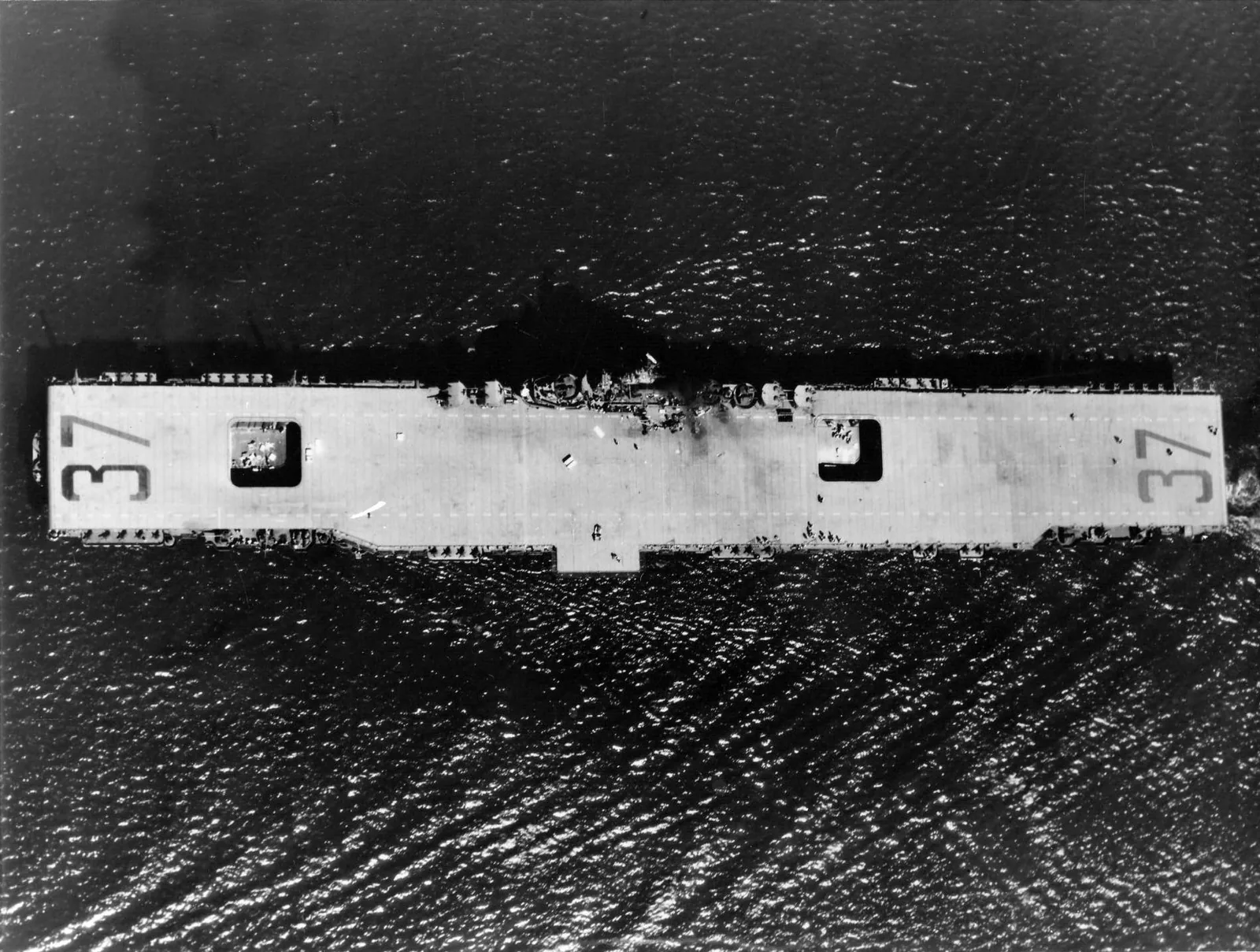
The second U.S. Navy ship to honor the famous Revolutionary War battle of 2-3 January 1777 and the birthplace of Capt. Robert F. Stockton.
Second World War 1939–1945
1943
Valley Forge (CV-37) was laid down at the Philadelphia [Pa.} Navy Yard on 14 September 1943; renamed Princeton on 21 November 1944; launched on 8 July 1945; sponsored by Mrs. Harold Dodds; and commissioned on 18 November 1945, Capt. John M. Hoskins in command.
Post-war 1946–1949
1946
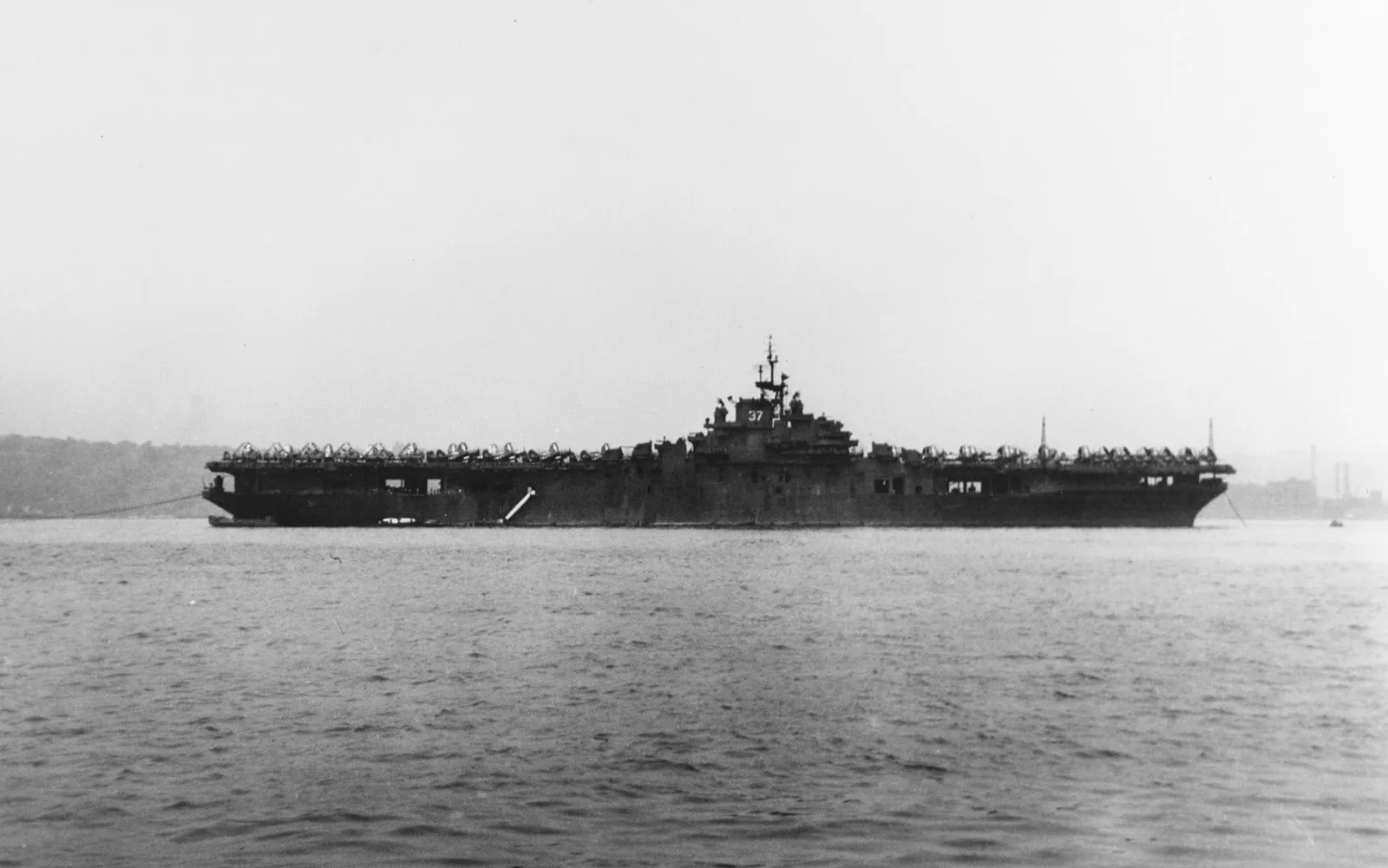
Following shakedown off Cuba, Princeton, with Air Group 81 embarked, remained in the Atlantic and operated with the Eighth Fleet until June 1946. Then transferred to the Pacific Fleet, she arrived at San Diego on the 31st, and departed again 3 July to carry the body of the late Philippine President Manuel Quezon back to Luzon for burial.
From Manila , Princeton joined the Seventh Fleet in the Marianas, becoming flagship of TF 77. During September and October 1946 she operated in Japanese and Chinese waters, then returned to the Marianas where she remained until February 1947. Maneuvers in Hawaiian waters preceded her return to San Diego until 15 March. She cruised the west coast, Hawaiian waters, and the western Pacific (1 October-23 December) during 1948. She then prepared for inactivation and on 20 June was decommissioned and joined the Pacific Reserve Fleet.
Korean War period 1950–1953
1950

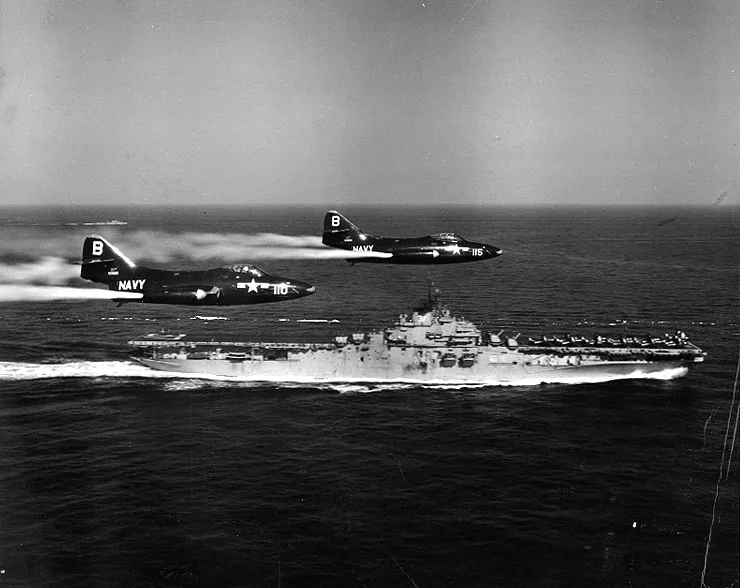
Reactivated with the outbreak of hostilities in Korea fifteen months later, Princeton was recommissioned on 28 August 1950. Intensive training refreshed her reservist crew and on 5 December she joined TF 77 off the Korean coast, her planes and pilots (Air Group 19) making possible the reinstitution of jet combat air patrols over the battle zone. She launched 248 sorties against targets in the Hagaru area to announce her arrival, and for the next six days continued the pace to support marines fighting their way down the long, cold road from the Chosin Reservoir to Hungnam. By the 11th, all units had reached the staging area on the coast. Princeton-s planes with other Navy, Marine, and Air Force squadrons then covered the evacuation from Hungnam through its completion on the 24th.
Interdiction missions followed and by 4 April Princeton-s planes had rendered 54 rail and 37 highway bridges inoperable and damaged 44 more. In May they flew against the railroad bridges connecting Pyongyang with Sunchon, Sinanju, Kachon, and the transpeninsula line. Next they combined close air support with raids on power sources in the Hwachon Reservoir area and with the stabilization of the front there resumed interdiction. For much of the summer they pounded supply arteries, concentrating on highways, and in August Princeton got underway for the United States, arriving at San Diego on the 21st.
1952

Eight months later, on 30 April 1952, Princeton rejoined TF 77 in the combat zone. For 138 days her planes flew against the enemy. They sank small craft to prevent the recapture of offshore islands; blasted concentrations of supplies, facilites, and equipment behind enemy lines; participated in air-gun strikes on coastal cities; pounded the enemy-s hydroelectric complex at Suiho on the Yalu to turn off power on both sides of that river; destroyed gun positions and supply areas in Pyongyan; and closed mineral processing plants and munitions factories at Sindok, Musan, Aoji, and Najin.
Reclassified CVA-37 (I October 1952), Princeton returned to California 3 November for a two month respite from the western Pacific. In February 1953 she was back off the Korean coast and until the end of the conflict launched planes for close air support, -Cherokee- strikes against supply, artillery, and troop concentrations in enemy territory- and against road traffic. She remained in the area after the truce, 27 July, and on 7 September got underway for San Diego.
Cold War 1954–1963
1954 Marines
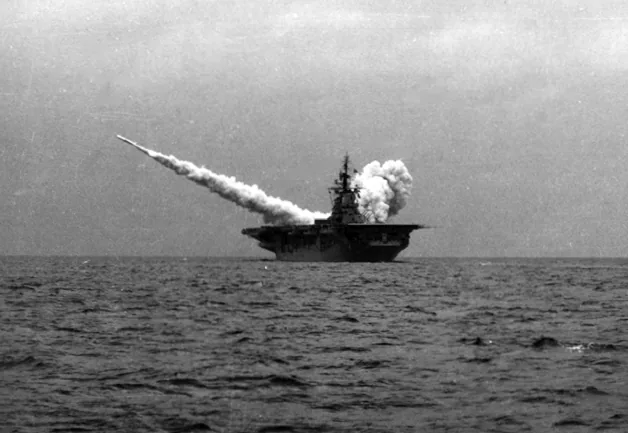
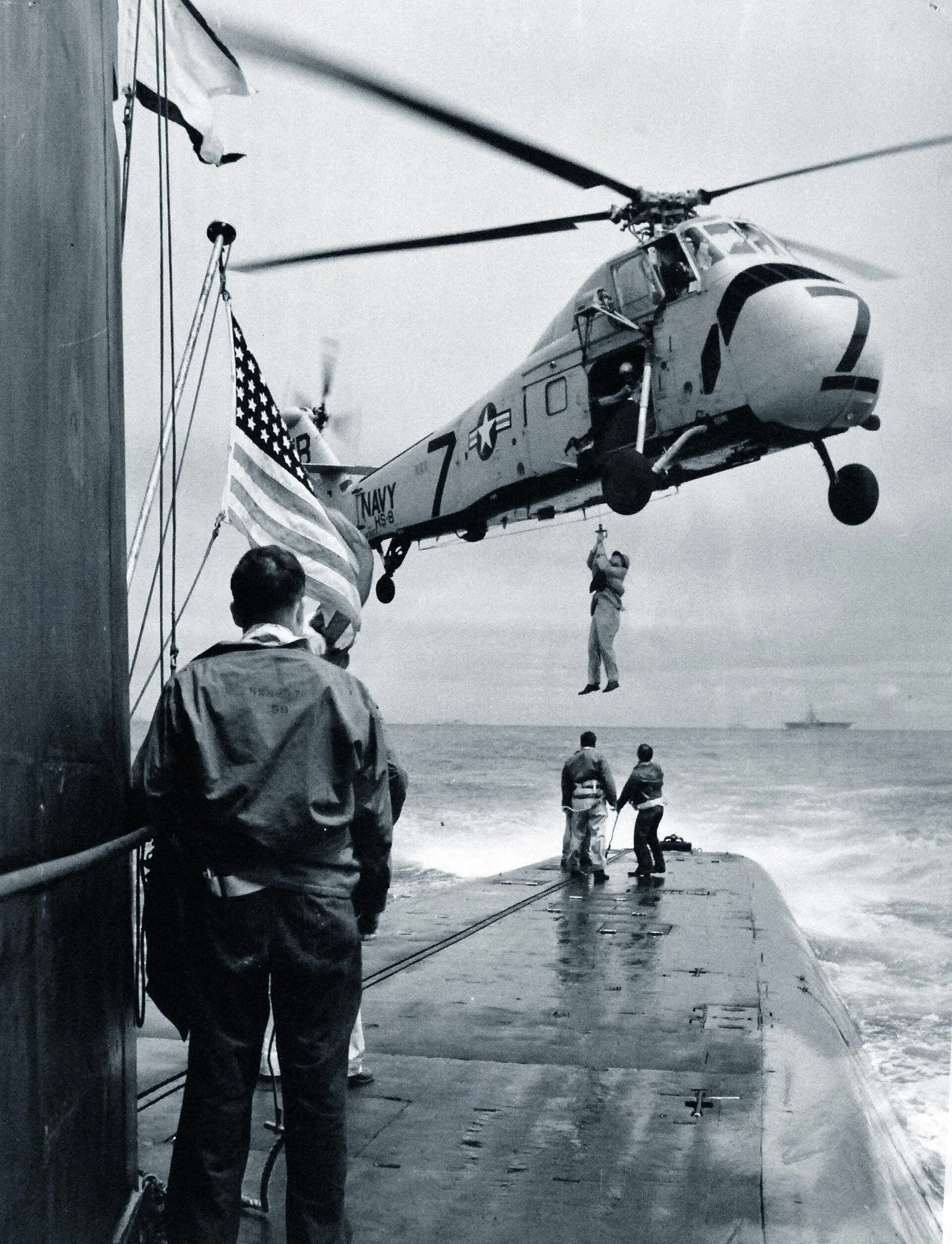
In January 1954, Princeton was reclassified CVS-37 and, after conversion at Bremerton, took up antisubmarine/Hunter-Killer (HUK) training operations in the eastern Pacific. For the next five years she alternated HUK exercises off the west coast with similar operations in the western Pacific and, in late 1957-early 1958, in the Indian OceanPersian Gulf area. Reclassified again, 2 March 1959, she emerged from conversion as an amphibious assault carrier, LPH-5. Capable of transporting a battalion landing team and carrying helicopters in place of planes, Princeton's mission became that of vertical envelopment, the landing of Marines behind enemy beach fortifications and providing logistics and medical support as they attack from the rear to seize critical points, cut enemy supplies, sever communications, and link up with assault forces landed on the beaches.
1961
From May until January, 1960, Princeton trained with Marine units from Camp Pendleton, then deployed to WestPac to train in Okinawan waters. For the next three years she followed a similar schedule, gaining experience in her primary mission. Interruptions came in October 1961 when she rescued survivors of merchantmen Pioneer, Muse and Sheik grounded on Daito Shims, and in April 1962 when she delivered Marine Corps advisors and helicopters to Soc Trang in the Mekong Delta area of the Republic of South Vietnam.
Vietnam War period 1964–1975
1964
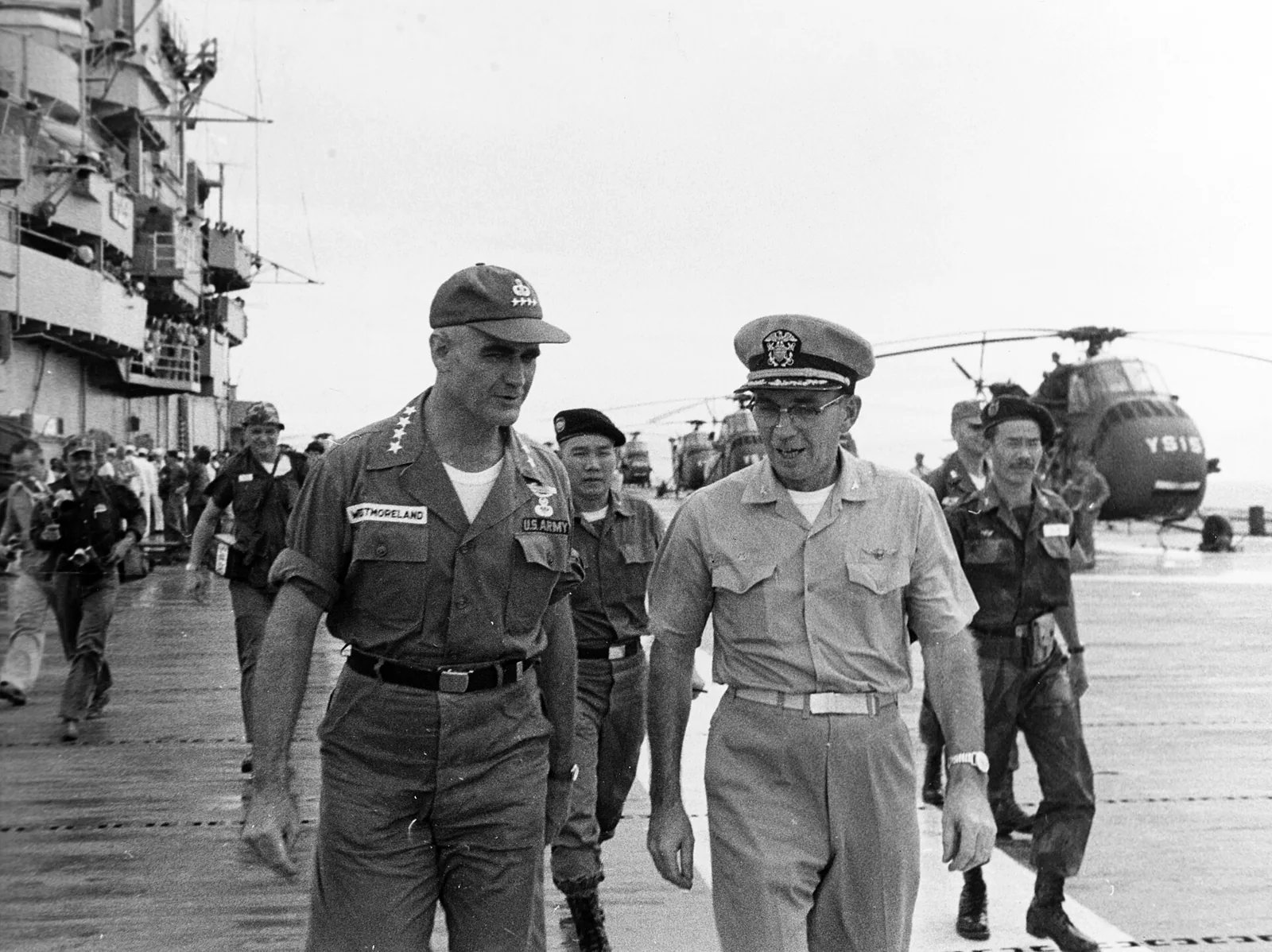
In October 1964 Princeton exchanged WestPac training for the real thing as she returned to Viet Nam and joined the Pacific Fleet's Ready Group in operations against North VietNamese and Viet Cong forces. Combat operations, interrupted in November for flood relief work, continued into the new year, 1965, and culminated in May off Chu Lai as she carried out her primary mission, vertical envelopment, for the first time in combat.
1966
Returning to her homeport, Long Beach, after that operation, she transported Marine Air Group 36 to Viet Nam in August, and in February 1966 got underway for another tour in the combat zone. Relieving Okinawa as flagship for the Amphibious Ready Group, she engaged the enemy in operations "Jackstay," 26 March-6 April, to clear the Rung Sat Special Zone of Viet Cong guerillas, and "Osage" 27 April-4 May, to protect Viet-Namese in the Phu Loc area from Viet Cong "harassment."
Search and destroy missions against Viet Cong and North Vietnamese Army units followed as Princeton provided transportation, medical evacuation, logistics and communication support for the amphibious operation "Deckhouse I," 18-27 June, in the Song Cau district and the Song Cai river valley, then supported 1st Air Cavalry and 101st Airborne units engaged in Nathan Hale to the south of the "Deckhouse I" area. "Deckhouse II" and support for "Hastings" followed as Navy, Marine, and Army units again combined, this time to impede enemy infiltration from the DMZ.
1967
After "Hastings," Princeton sailed for home, arriving 2 September. She deployed again to Viet Nam 30 January-19 June 1967 and again ranged along that long embattled, highly indented coast. In March she assisted in countering an enemy threat to the Marine artillery base at Gio Ling and evacuated wounded from Con Thien mountain. In April she participated in "Beacon Star," in the Khe Sanh area, and supported search and destroy operations in conjunction with "Shawnee." In May her helicopters lifted Marines to the DMZ to block enemy forces withdrawing across the Ben Hai river.
1968
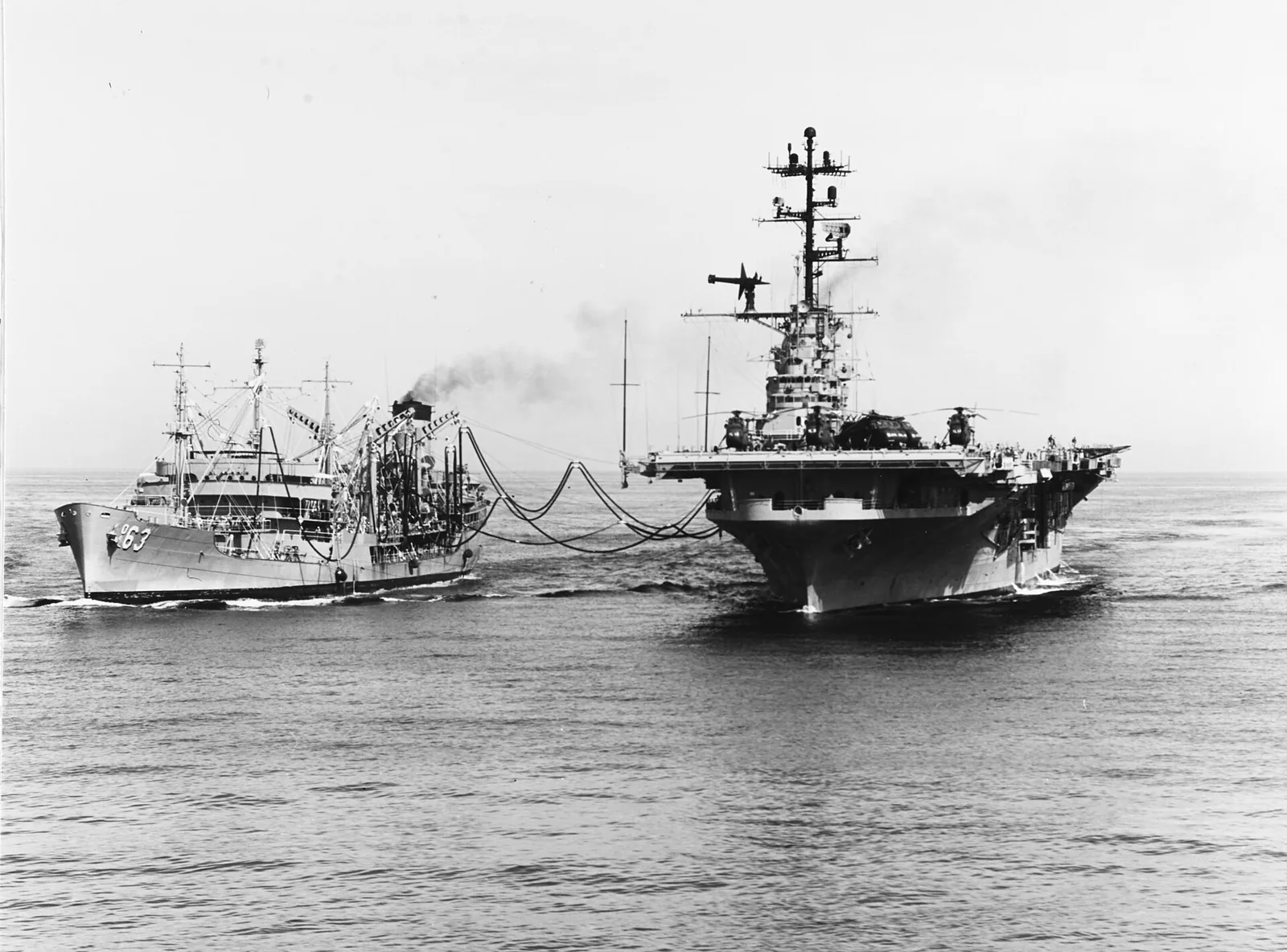
A much needed overhaul followed Princeton-s return to the west coast and in May 1968 she again sailed west to Viet Nam. There, as flagship for Amphibious Ready Group Alpha, she provided amphibious assault carrier services for operations "Fortress Attack" III and IV, "Proud Hunter," "Swift Pursuit," and "Eager Hunter." In December she returned to the United States and in April, 1969 she was designated the prime recovery ship for Apollo 10, the lunar mission which paved the way for Apollo II and the first landing on the moon. Completing that mission successfully, Princeton resumed exercises off the west coast.
1970
Ultimately decommissioned and stricken from the Naval Vessel Register on 30 January 1970, Princeton was sold to Zidell Explorations, Inc., of Portland, Oregon, in September 1972, to be broken up for scrap.
Other photographs
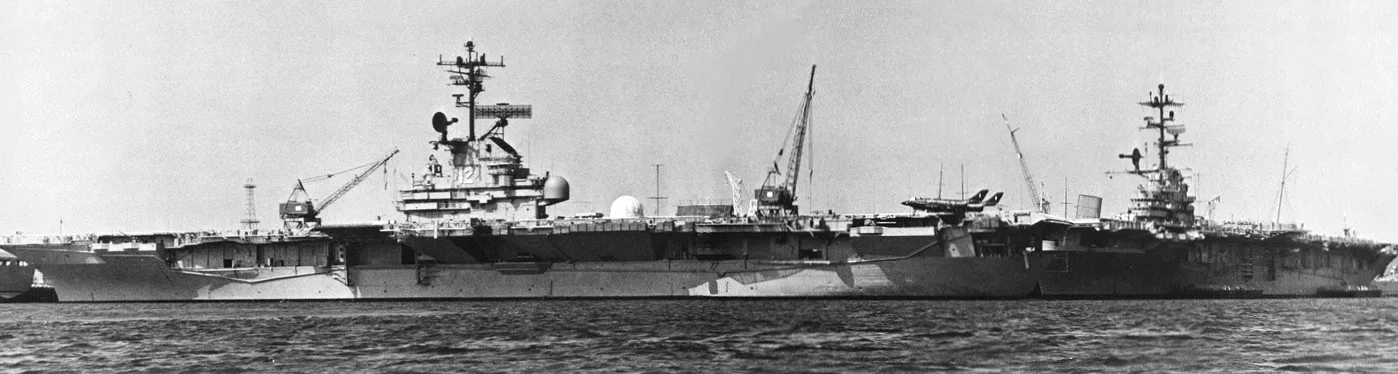
Held for this vessel, and not tied to any part of the account above.




References
Every work this entry draws on. There are no numbered markers in the text above: what we hold is the provenance of the page — this history, this article, these photographs.
- History Princeton V (CV-37) Dictionary of American Naval Fighting Ships, Naval History and Heritage Command. A work of the United States Government, in the public domain — the only text on this site reproduced verbatim.
- Facts USS Princeton (CV-37) Structured facts only — dates, dimensions, armament and fate. No wording is taken from it. Harvested 1 August 2026.
- Photograph Uss princeton lph-5 U.S. Navy — U.S. Navy National Naval Aviation Museum photo NNAM.1996.488.060.030 — Public domain — Wikimedia Commons
- Photograph USS Princeton (CV-37) Tsingtao 1948 U.S. Navy — U.S. Navy National Museum of Naval Aviation photo No. 1996.438.016 [1] — Public domain — Wikimedia Commons
- Photograph HSS-1 Seabat of HS-4 landing on USS Princeton (CVS-37) 1959 USN — U.S. Navy photo [1] from the USS Princeton (CVS-37) 1958 cruise book available at Navysite.de — Public domain — Wikimedia Commons
- Photograph General William Westmoreland aboard USS Princeton (LPH-5), 14 November 1964 (NH 93798) Unknown author — U.S. Navy photo NH 93798 — Public domain — Wikimedia Commons
- Photograph USS Princeton (LPH-5) recovering Apollo 10 capsule (aerial) 1969 U.S. Navy — U.S. Navy National Museum of Naval Aviation photo No. 1996.488.060.028 — Public domain — Wikimedia Commons
- Photograph 330-ps-8455-usn-709907 15986664040 o Unknown author — National Museum of the U.S. Navy — Public domain — Wikimedia Commons
- Photograph 3d Battalion, 4th Marines Loading onto Helicopter Carrier 5, May 1967 Archives Branch, USMC History Division — https://www.flickr.com/photos/60868061@N04/28106026125/ — CC BY 2.0 — Wikimedia Commons
- Photograph A Douglas A4D-1 Skyhawk of VA-93 is loaded aboard USS Ticonderoga (CVA-14), circa in 1957 U.S. Navy — U.S. Navy Naval Aviation News / (Archive) July 1958 [1] , cover — Public domain — Wikimedia Commons
- Photograph F9F VF-71 over TF77 1952 USN — U.S. www.defenseimagery.mil photo no. HN-SN-98-07207; NARA file no. 80-G-480645 — Public domain — Wikimedia Commons
- Photograph F9F-2 Panthers of VF-191 fly past USS Princeton (CV-37) off Korea, circa in May 1951 (NH 97047) Lieutenant (Junior Grade) George Elmies, Composite Squadron 61 (VC-61) — U.S. Navy photo NH 97047 — Public domain — Wikimedia Commons
- Photograph F9F-2 Panthers of VF-191 over Task Force 77 off Korea in 1951 U.S. Navy — U.S. Navy All Hands magazine July 1951 , p. 67 — Public domain — Wikimedia Commons
- Photograph Overhead view of USS Princeton (CV-37) underway off the Philadelphia Naval Shipyard on 11 April 1946 (NNAM.1996.488.060.001) Unknown author — U.S. Navy National Naval Aviation Museum photo NNAM.1996.488.060.001 — Public domain — Wikimedia Commons
- Photograph Regulus missile launch from USS Princeton (CVA-37) c1954 USN — U.S. Navy website "Regulus from Surface Ships" photo [1] — Public domain — Wikimedia Commons
- Photograph US Amphibious Ready Group TG 76-5 underway 1965 U.S. Navy — U.S. Navy photo USN 1142349 in U.S. Marines in Vietnam: The Landing and the Buildup 1965 Part 6 , p. 195 — Public domain — Wikimedia Commons
- Photograph USS Boxer (CV-21) and USS Princeton (CV-37) steam past the capsized hull of USS New York (BB-34) off Hawaii on 8 July 1948 U.S. Navy — Official U.S. Navy photo 80-G-498136 from the U.S. Navy Naval History and Heritage Command — Public domain — Wikimedia Commons
- Photograph USS Chipola (AO-63) refueling Princeton (LPH-5) 1968 PH3 Carty, U.S. Navy — U.S. Navy photo USN 1142529 — Public domain — Wikimedia Commons
- Photograph USS Hancock Kearsarge Princeton at San Diego 1955 U.S. Navy — U.S. Navy National Museum of Naval Aviation photo No. 1996.488.001.016 [1] — Public domain — Wikimedia Commons
- Photograph USS Hornet (CVS-12) and USS Princeton (LPH-5) in 1969 U.S. Navy — U.S. Navy photo [1] from the USS Hornet (CVS-12) 1969 Apollo 11 recovery cruise book available at Navysite.de — Public domain — Wikimedia Commons
- Photograph USS Princeton (CV-37) aerial photo off Korea c1951 U.S. Navy — U.S. Navy National Museum of Naval Aviation photo No. 1996.488.060.009 — Public domain — Wikimedia Commons
- Photograph USS Princeton (CV-37) at anchor, circa in 1946 (NH 68339) Unknown author — U.S. Navy photo NH 68339 — Public domain — Wikimedia Commons