Royal Navy — Destroyer
USS Shubrick (DD-268) — service history
This is the full service history. For the vessel's particulars, photograph and specifications, see the entry.
In the words of the US Navy. The account below is reproduced verbatim from the Dictionary of American Naval Fighting Ships, compiled by the Naval History and Heritage Command — a work of the United States Government, in the public domain, and the only text on this site not written here.
Before commissioning
William Bradford Shubrick born on 31 October 1790 at "Belvedere," Bull's Island, S.C., studied at Harvard before accepting an appointment as a midshipman in 1806. Following service in the Mediterranean in Wasp, he served in Argus along the Atlantic coast of the United States.
After duty in Hornet early in the War of 1812, he was assigned to Constellation; and, while that frigate was at Norfolk, he led a party of Bluejackets in beating off a British boat attack against Craney Island on 22 June 1813. He subsequently won a Congressional medal for service in Constitution during her capture of Cyane and Levant.
During the more than three decades separating the War of 1812 from the Mexican War, Shubrick commanded, in turn, Lexington and Natchez; directed operation of the West Indies Squadron from 1838 to 1840; and headed the Bureau of Provisions and Clothing from 1845 to 1846.
At the outbreak of the war with Mexico, Shubrick requested sea duty and, in Independence, sailed for the California coast to relieve Commodore Sloat in command of American Naval forces there. However. Commodore James Biddle brought his East India Squadron to Monterey, Calif., on 2 January 1847, only a week after Shubrick's arrival and assumed command. In April, Shubrick sailed for the coast of Mexico to head the blockade of Mazatlan and Guaymas. Early in June, Shubrick was recalled to California where Biddle restored him to overall command on 19 July and sailed for the East Coast.
Under Shubrick, the Navy successfully conducted the closing operations of the war on the Pacific coast. Highlights were the capture of Guaymas in October and of Mazatlan in November. San Bias fell in January 1848.
The following spring, Shubrick headed home and took command of the Philadelphia Navy Yard in 1849. He subsequently headed the Bureau of Construction and Repair. In August 1852, he became chairman of the Lighthouse Board.
In October 1858, Shubrick sailed in command of the fleet sent to South American waters to support diplomatic efforts to resolve differences with Paraguay resulting from the firing upon the USS Waterwitch.
In December 1861, Shubrick was retired; and he was promoted to Rear Admiral on the retired list on 16 July 1862. He died in Washington, D.C., on 27 May 1874.
Great War and before
1918
The third Shubrick (Destroyer No. 268) was laid down on 3 June 1918 by the Bethlehem Shipbuilding Corp., Squantum, Mass.; launched on 31 December 1918; sponsored by Mrs. Thomas A. Bayard, granddaughter of Rear Admiral Shubrick; and commissioned on 3 July 1919, Lt. Comdr. C. H. Boucher in command.
Interwar 1919–1938
1919
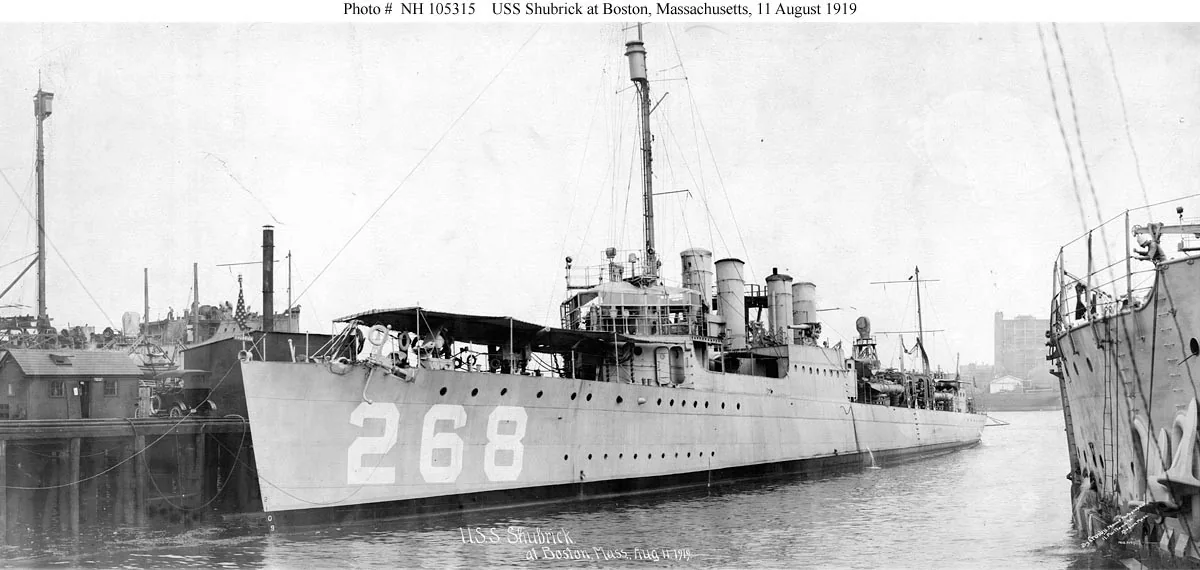
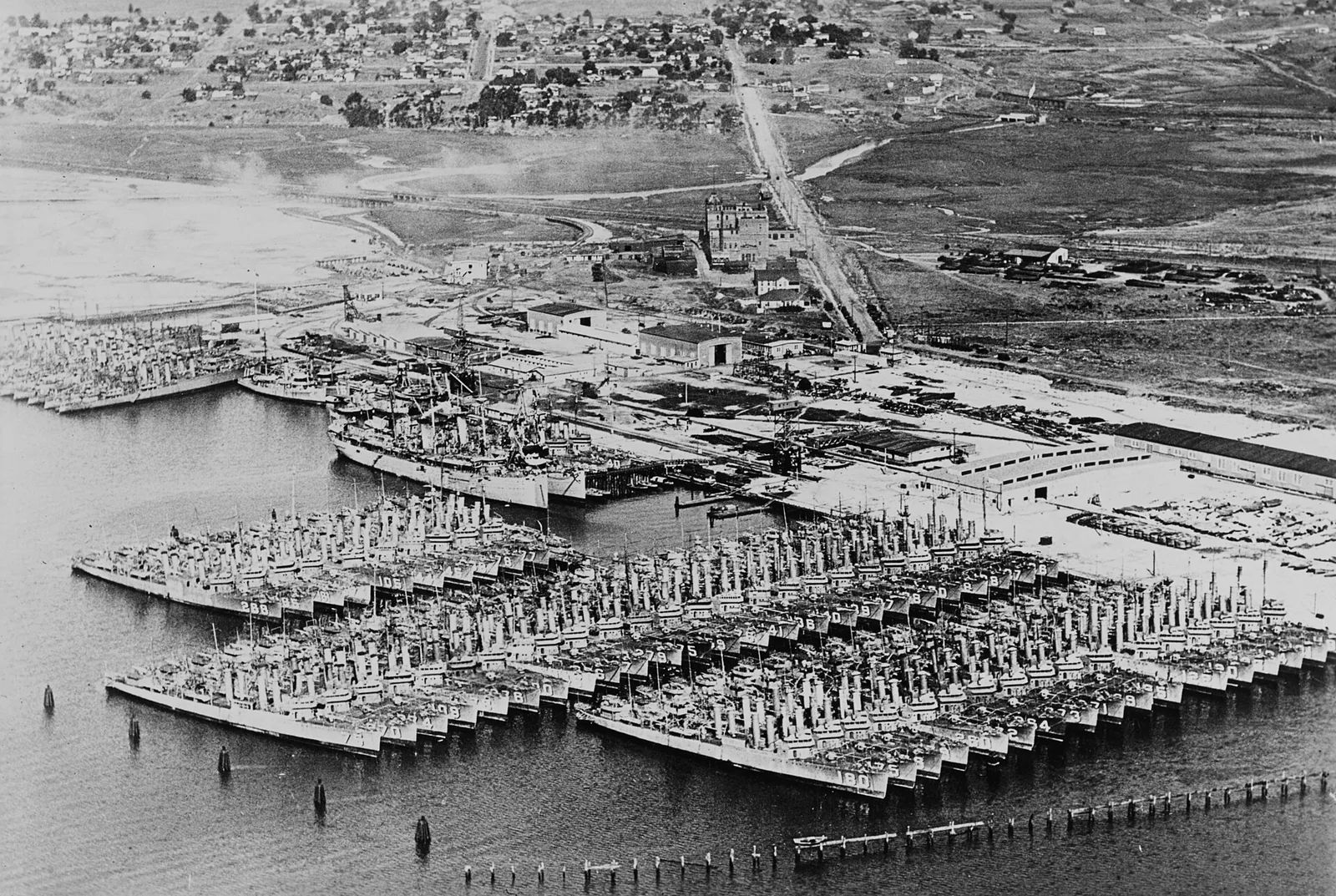
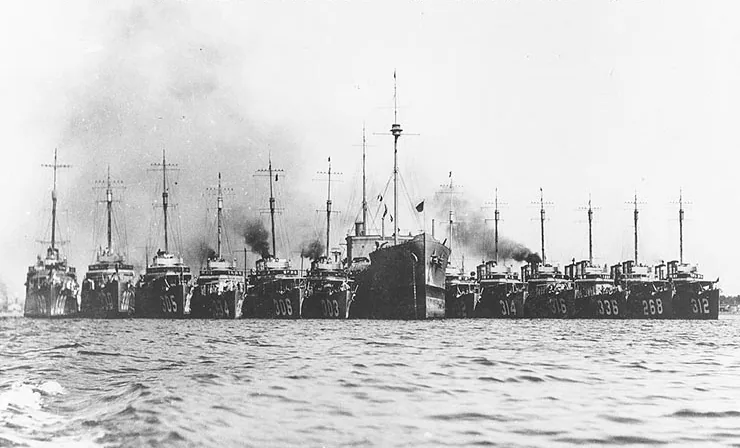
After shakedown out of Newport, Shubrick departed New York on 27 October 1919, carrying currency and diplomatic representatives to Port au Prince, Haiti. After completing this mission on 31 October, she continued to the west coast, where she arrived on 27 November. On arrival at San Diego, she joined a reserve destroyer division; and, after conducting infrequent exercises off San Diego, Shubrick was decommissioned on 8 June 1922.
Second World War 1939–1945
1939
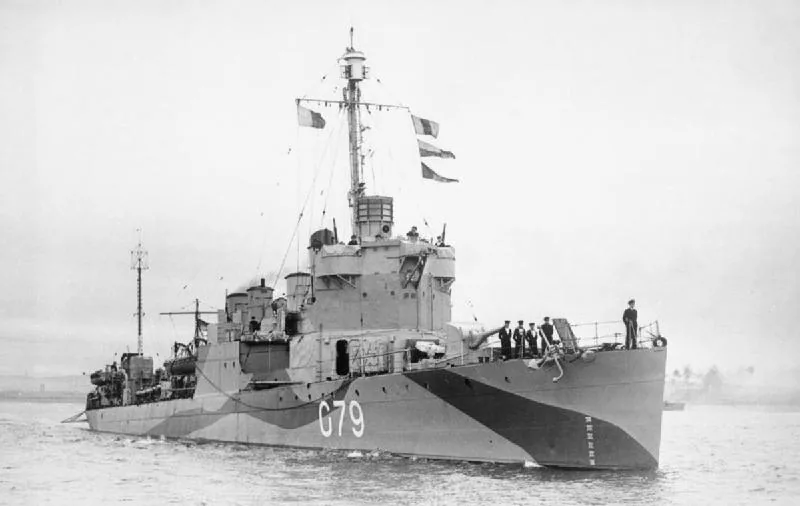
Shubrick was recommissioned on 18 December 1939 at San Diego, shortly after the outbreak of World War II. She refitted at Mare Island from 26 February to 16 March 1940 and departed San Diego for the Atlantic on 22 March. She was stationed in the Caribbean until 29 June, and formed part of the West Gulf Patrol from 13 to 22 May. From 2 July to 30 August, she trained Naval Reservists from Miami, Boston, and New York. She then underwent repairs at New York and Norfolk and departed the latter port on 6 November for Halifax, Nova Scotia. She arrived at Halifax on 21 November, was decommissioned on 26 November, and simultaneously commissioned in the British Navy as HMS Ripley. Shubrick was struck from the Navy list on 8 January 1941. HMS Ripley served on North Atlantic convoy routes until placed in reserve in January 1944. She was scrapped on 20 March 1945 at Sunderland, England.
Other photographs
Held for this vessel, and not tied to any part of the account above.
References
Every work this entry draws on. There are no numbered markers in the text above: what we hold is the provenance of the page — this history, this article, these photographs.
- History Shubrick III (Destroyer No. 268) Dictionary of American Naval Fighting Ships, Naval History and Heritage Command. A work of the United States Government, in the public domain — the only text on this site reproduced verbatim.
- Facts USS Shubrick (DD-268) Structured facts only — dates, dimensions, armament and fate. No wording is taken from it. Harvested 1 August 2026.
- Photograph NH 105315 USS Shubrick (cropped) Taken by Crosby, U.S. Naval History and Heritage Command Photograph — https://www.history.navy.mil/our-collections/photography/numerical-list-of-images/nhhc-series/nh-series/NH-105000/NH-105315.html — Public domain — Wikimedia Commons
- Photograph HMS RIPLEY, 18 September 1943. FL3320 Royal Navy official photographer — http://media.iwm.org.uk/iwm/mediaLib//18/media-18688/large.jpg This photograph FL 3320 comes from the collections of the Imperial War Museums — Public domain — Wikimedia Commons
- Photograph Laid up destroyers at San Diego in 1922 Unknown author — U.S. Naval History and Heritage Command photo NH 42539 — Public domain — Wikimedia Commons
- Photograph NH 105315 USS Shubrick Taken by Crosby, U.S. Naval History and Heritage Command Photograph — https://www.history.navy.mil/our-collections/photography/numerical-list-of-images/nhhc-series/nh-series/NH-105000/NH-105315.html — Public domain — Wikimedia Commons
- Photograph USS Cuyama (AO-3) with 12 destroyers in the early 1920s USN — Official U.S. Navy photo NH 77258 from the U.S. Navy Naval History and Heritage Command — Public domain — Wikimedia Commons