United States Navy — Destroyer
USS Simpson (DD-221) — service history
This is the full service history. For the vessel's particulars, photograph and specifications, see the entry.
In the words of the US Navy. The account below is reproduced verbatim from the Dictionary of American Naval Fighting Ships, compiled by the Naval History and Heritage Command — a work of the United States Government, in the public domain, and the only text on this site not written here.
Before commissioning
Edward Simpson was born in New York City on 3 March 1824. Appointed midshipman in the United States Navy in February 1840, he served afloat until late 1845, when he became a member of the first class of midshipmen to be trained at the new Naval Academy at Annapolis. After graduation on 9 July 1846, Simpson reported to Vixen and participated in numerous bombardments during the Mexican-American War. During the next 15 years, he served afloat in the Brazil and China squadrons and with the Coast Survey, and ashore in two tours at the Naval Academy: first as gunnery instructor, then in 1860 as head of the department of ordnance and gunnery. Finally, he became Commandant of Midshipmen in 1862.
Simpson took command of the monitor, Passaic, in June 1863 and participated in bombardments at Charleston from July to November 1863. From July to December 1864, he commanded Isonomia in the East Gulf Squadron; and, then served from February to April 1865 as Fleet Captain of the West Gulf Blockading Squadron and of the forces attacking Mobile. After the war, he alternated tours of command ashore and afloat with tours of ordnance duty, including a mission to Europe in 1870-72, and command of the torpedo station in 1873 and again in 1874-75. In 1883, he was appointed president of a board to select a site for a government gun factory and made another study trip to Europe. Promoted to Rear Admiral on 9 February 1884, he served as President of the Naval Advisory Board and President of the Board of Inspection and Survey until his retirement on 3 March 1886. Rear Admiral Simpson died in Washington, D.C., on 1 December 1888.
Interwar 1919–1938
1919
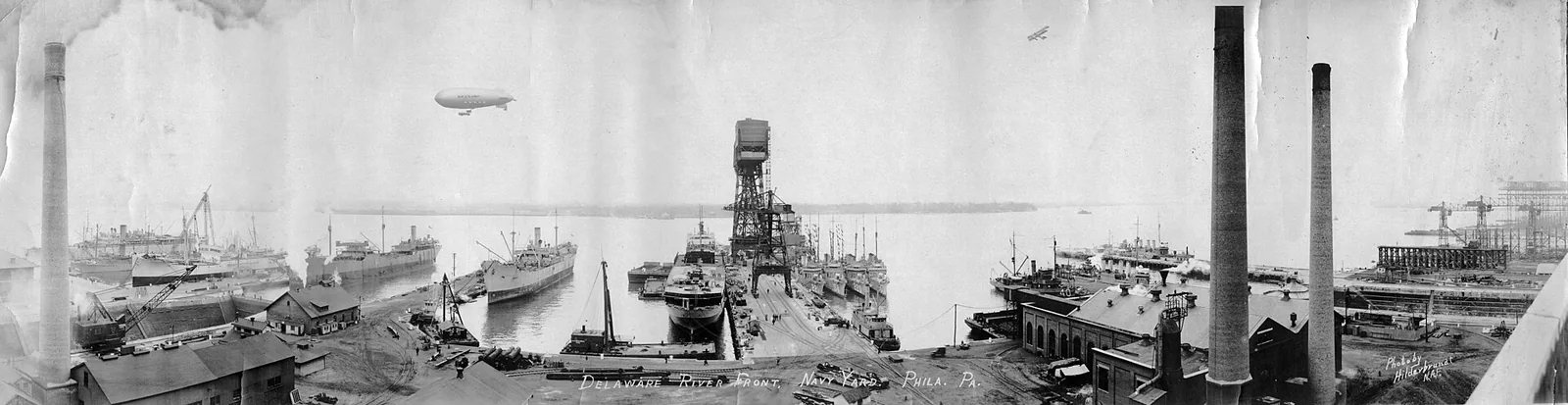
Simpson (DD-221) was laid down on 9 October 1919 by William Cramp and Sons, Philadelphia, Pa.; launched on 28 April 1920; sponsored by Miss Caroline Sterett Simpson, daughter of Rear Admiral Simpson; and commissioned on 3 November 1920, Lt. Comdr. P.T. Berry in command.
1921
Simpson conducted training exercises with the Pacific Fleet during her first year of service, including a cruise to Valparaiso, Chile. She then transited the Panama Canal on 12 December 1921; and, after overhaul at Philadelphia, she sailed from Newport, R.I., for the Mediterranean on 6 June 1922. Between 29 June 1922 and 26 February 1924, Simpson served as a unit of the United States Naval Detachment in Turkish waters under Bear Admiral Mark L. Bristol, protecting American interests during the unrest in the Near East following World War I. Simpson was at Smyrna in September 1923 as the Greek front in Asia Minor collapsed and, on 13 September, after witnessing the massacre of numerous Armenians and the setting of large fires by the Turks, she evacuated the American citizens from the city and carried them to Greece. She then resumed her duties of monitoring the evacuation of Greek refugees from Turkey, protecting United States citizens, and aiding the work of the American Relief Association in the Black Sea and eastern Mediterranean. After a tour of ports in the western Mediterranean and the English Channel, Simpson departed Southampton, England, on 1 July 1924 for overhaul at Norfolk. She then underwent training in the Caribbean and on the west coast before crossing the Pacific for duty with the Asiatic Fleet.
1925
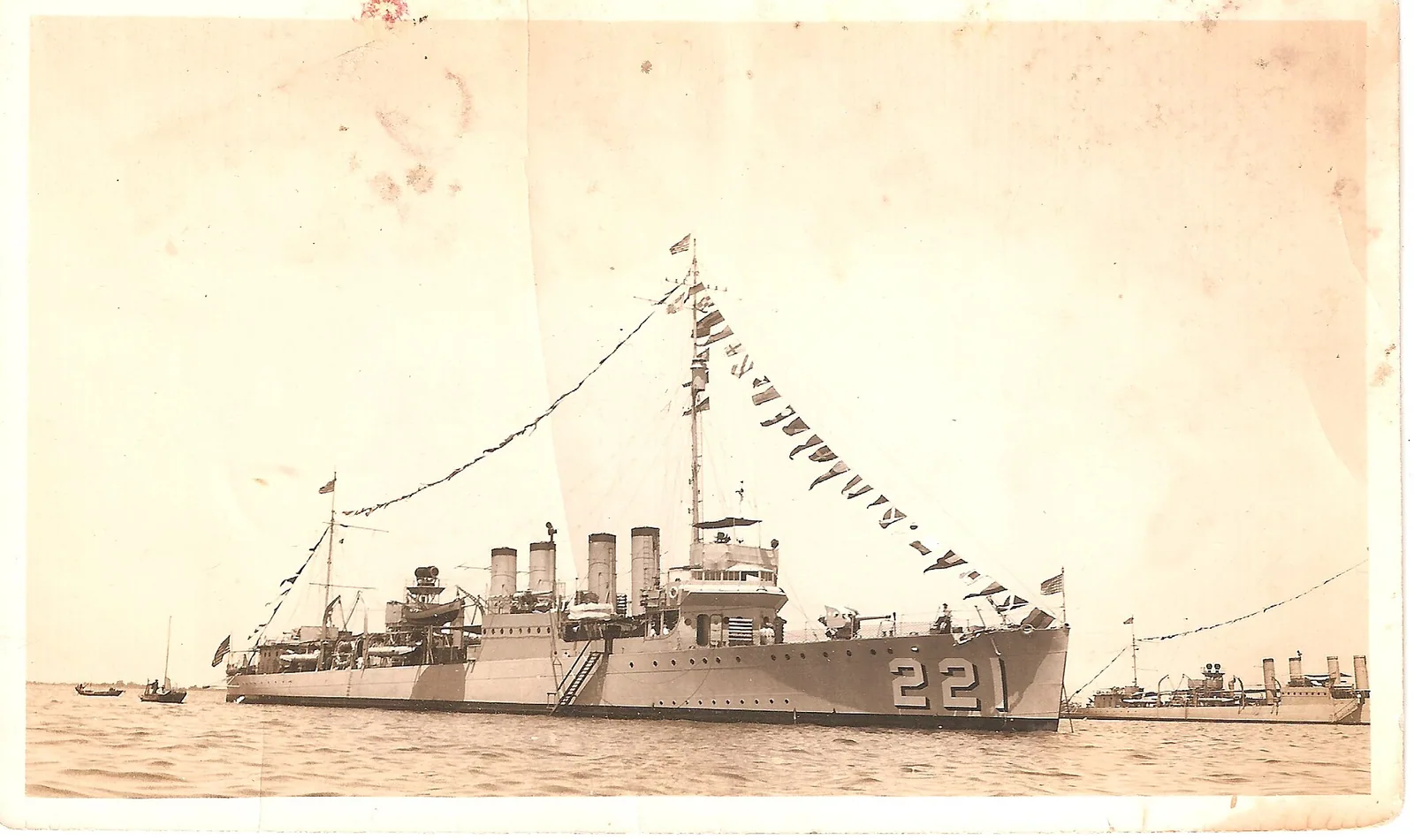
Upon arrival at Chefoo, China, on 14 June 1925, Simpson entered the routine of the Asiatic Fleet, training at bases in Tsingtao and Chefoo in the summer and Manila in the winter, and visiting Chinese ports during the transit each way. During 1925, unrest in China increased, due to the growth in strength of the Kuomin-tang forces under Chiang Kaishek and anti-foreign outbreaks at Shanghai and Canton. Destroyers were detached from the fleet to supplement the normal gunboat patrols on the Yangtze and along the southern coast of China near Canton. Simpson rescued some missionaries at Deep Bay, China, on 2 and 3 July 1925; and, during the next several years, carried out numerous patrols in Chinese waters protecting American lives and property. The destroyer was stationed at Nanking when Japan launched an air and sea attack on Shanghai at the end of January 1932, and she supported American diplomats in the Chinese capital during the critical early days of the crisis, as well as sending important reports to Washington. On 11 February, she moved to Shanghai and, on 23 February, to Swatow, where she remained until 2 April 1932. On 18 April, Simpson departed Manila with her squadron to return to the United States.
1932
After overhaul at Mare Island, Simpson joined Destroyers, Battle Force, at San Diego on 28 September 1932 and conducted fleet exercises and training along the west coast during the next several years. During night exercises in a fleet problem off Guantanamo Bay, Simpson collided with the cruiser, Milwaukee (CL-5), on 7 May 1934, and she underwent repairs at the Philadelphia Navy Yard and summer training at Newport before returning to San Diego on 10 November. She then resumed training with the Pacific Fleet and participated in fleet problems annually in 1936, 1937, and 1938.
Second World War 1939–1945
1939
On 6 March 1939, Simpson transited the Panama Canal to the Atlantic; and, between 5 June and 30 August 1939, she carried out three training cruises for Naval Academy midshipmen. She then commenced training cruises for Naval Reservists; but, at the outbreak of war in Europe, she was assigned Neutrality Patrol duty and sailed for the Caribbean on 6 September. There she carried out patrols and participated in exercises, including a fleet landing exercise at Culebra from 14 February to 10 March 1940. After one training cruise for midshipmen and one for reservists during the summer, she resumed Neutrality Patrol duties in the Caribbean in October.
1941
Simpson was part of a support force formed on 18 March 1941, after the signature of the Lend Lease Act, to protect convoys between America and Britain in the North Atlantic. After several months of coastal escort and patrol duties, she escorted two convoys from Argentina to a rendezvous with British escorts off Greenland between 30 June and 3 September 1941. On 24 September, off Iceland, she joined the first westbound convoy to be escorted by American warships and delivered it safely to Argentina on 4 October. After United States entry into the war in December, her convoy trips were extended to the British Isles, and she remained on transatlantic convoy duty until 28 April 1942, when she entered the Boston Navy Yard for overhaul.
1942
For nearly a year after leaving the yard in May 1942, Simpson escorted convoys up and down the United States east coast. She made one trip to Casablanca in February 1943; and, on 28 April 1943, began overhaul at the New York Navy Yard. At sea again in May, Simpson escorted a convoy from New York to Curacao in the West Indies, and then made two round-trip voyages between Curacao and Londonderry, Northern Ireland. On 29 August 1943, Simpson joined an escort carrier task group centered around Santec (CVE-29) and escorted a convoy from Bermuda to Casablanca. The task group then carried out antisubmarine patrols off the Azores. The group joined a westbound convoy on 22 September but resumed antisubmarine sweeps after a submarine was reported near the Azores on 26 September. Simpson returned to the United States on 12 October but was back in the Azores conducting additional patrols between 28 October and 9 December 1943.
1943
Simpson was designated on 1 December 1943 for conversion to a fast transport, APD-27, but was replaced in January 1944 by George E. Badffer (DD-196), whose conversion was in turn cancelled. Resuming her convoy duties, Simpson escorted Antaeus (AG-67) for over three months from 29 December 1943 to 9 April 1944 as she carried troops up and down the east coast. During the remainder of 1944 and early 1945, Simpson escorted new heavy combatant ships on shakedown and training exercises along the east coast. Among the ships she served were the battleships Wisconsin and Missouri, the large cruiser Alaska, and the carriers Ticonderoga and Antietam.
1945
Simpson was reclassified a miscellaneous auxiliary, (AG-97), effective 23 May 1945. All her armament was removed, and she was fitted with racks for exercise torpedoes and a winch for handling towed targets. She arrived at Guantanamo Bay, Cuba, on 16 June 1945 and provided training services there for nearly a year. On 11 May 1946, the veteran ship arrived at the Philadelphia Navy Yard for inactivation. Struck from the Navy list on 19 June 1946, Simpson was sold on 21 November 1946 to Northern Metals Co., Philadelphia, Pa., for scrapping.
Other photographs
Held for this vessel, and not tied to any part of the account above.

References
Every work this entry draws on. There are no numbered markers in the text above: what we hold is the provenance of the page — this history, this article, these photographs.
- History Simpson I (DD-221) Dictionary of American Naval Fighting Ships, Naval History and Heritage Command. A work of the United States Government, in the public domain — the only text on this site reproduced verbatim.
- Facts USS Simpson (DD-221) Structured facts only — dates, dimensions, armament and fate. No wording is taken from it. Harvested 1 August 2026.
- Photograph USS Simpson (DD-221) anchored off San Diego in the early 1920s U.S. Navy — Official U.S. Navy photo NH 69448 from the U.S. Navy Naval History and Heritage Command — Public domain — Wikimedia Commons
- Photograph Ships at the Philadelphia Naval Shipyard, circa in 1921 (S-574-J) Unknown author — U.S. Naval History and Heritage Command photo S-574-J — Public domain — Wikimedia Commons
- Photograph U.S.S. Simpson, near the Chinese coast c1925 Unknown author — Unknown source — Public domain — Wikimedia Commons
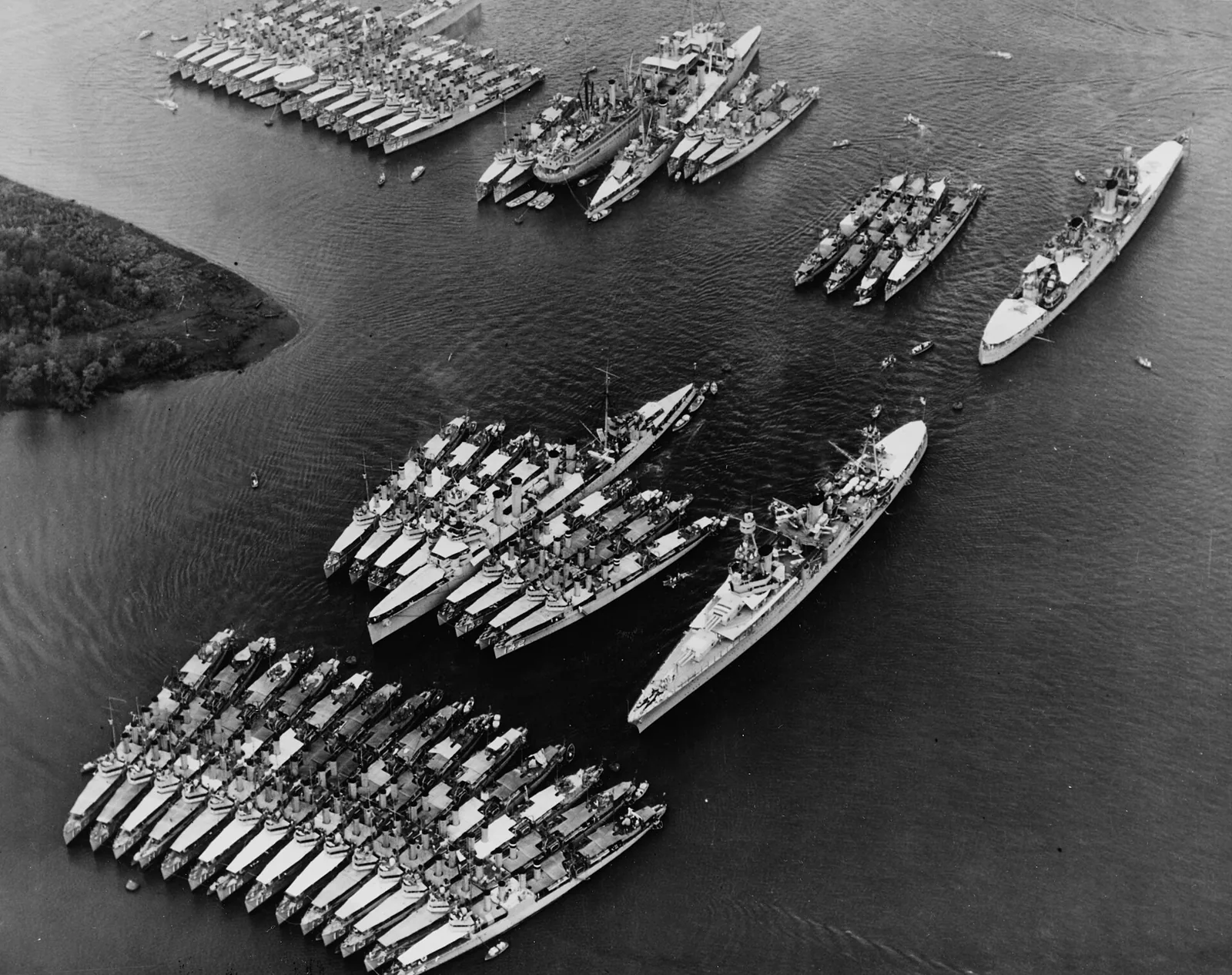
- Photograph US Navy cruisers and destroyers at Balboa, Panama on 23 April 1934 U.S. Navy — Official U.S. Navy photo 80-G-455906 from the U.S. Navy Naval History and Heritage Command — Public domain — Wikimedia Commons
- Photograph USS Simpson (DD-221) USN — Official U.S. Navy photo from the ship's entry in the U.S. Navy Dictionary of American Naval Fighting Ships (DANFS) available at the Naval History and Heritage Command — Public domain — Wikimedia Commons