United States Navy — Destroyer
USS Tillman (DD-641) — service history
This is the full service history. For the vessel's particulars, photograph and specifications, see the entry.
In the words of the US Navy. The account below is reproduced verbatim from the Dictionary of American Naval Fighting Ships, compiled by the Naval History and Heritage Command — a work of the United States Government, in the public domain, and the only text on this site not written here.
Before commissioning
Benjamin Ryan Tillman was born on 11 August 1847 in Edgefield County, S.C. In July 1864, Tillman left school to enter the Confederate Army, but his service to the South during the Civil War was prevented by serious illness. He served as governor of South Carolina from 1890 to 1894; and, during his administration, he founded Clemson Agricultural and Mechanical College. He entered the United States Senate on 4 March 1895, and he held the position of senator for the remainder of his life. During World War I, Tillman was chairman of the Senate Committee on Naval Affairs until his death on 3 July 1918.
Second World War 1939–1945
1941
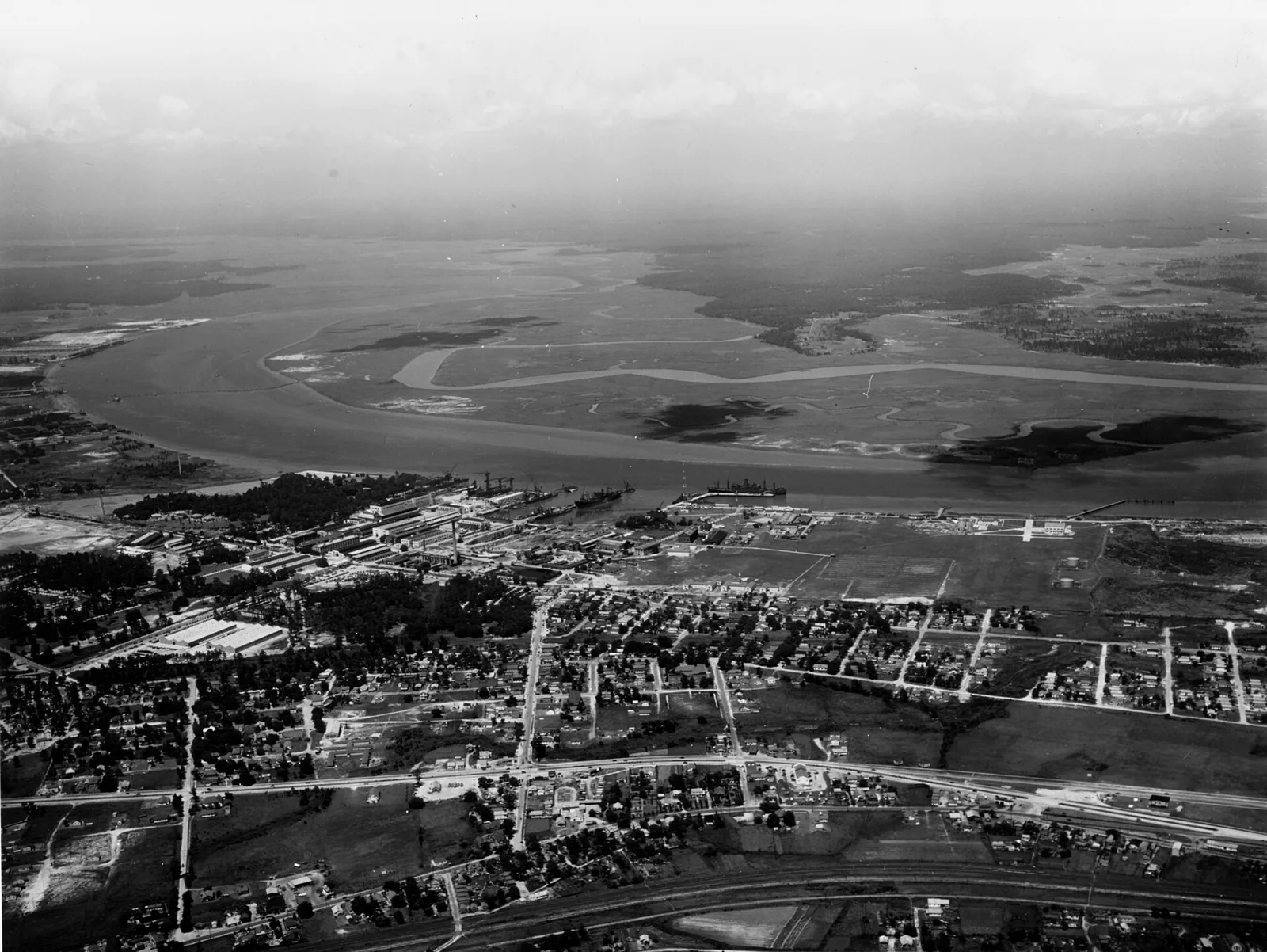
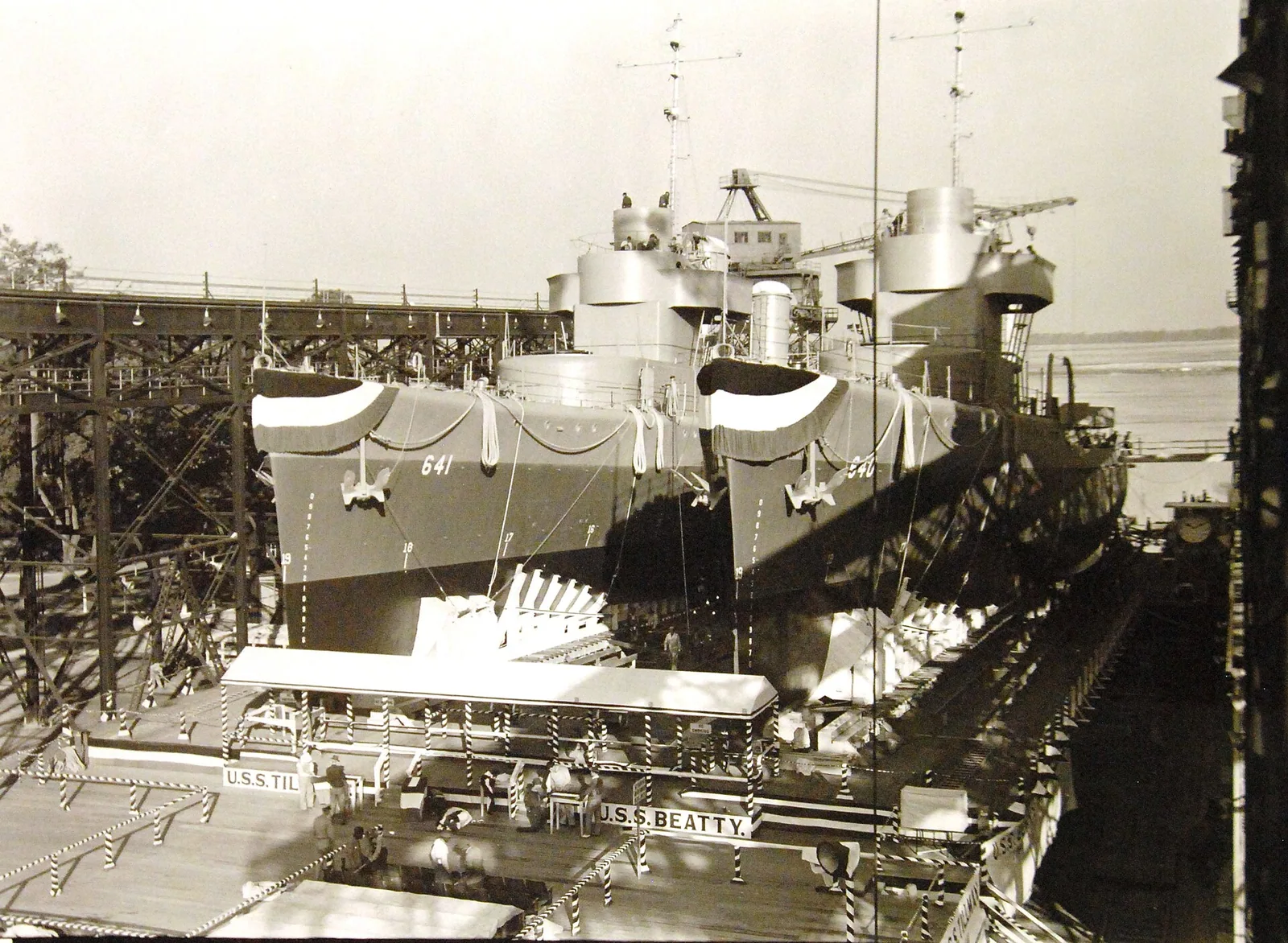
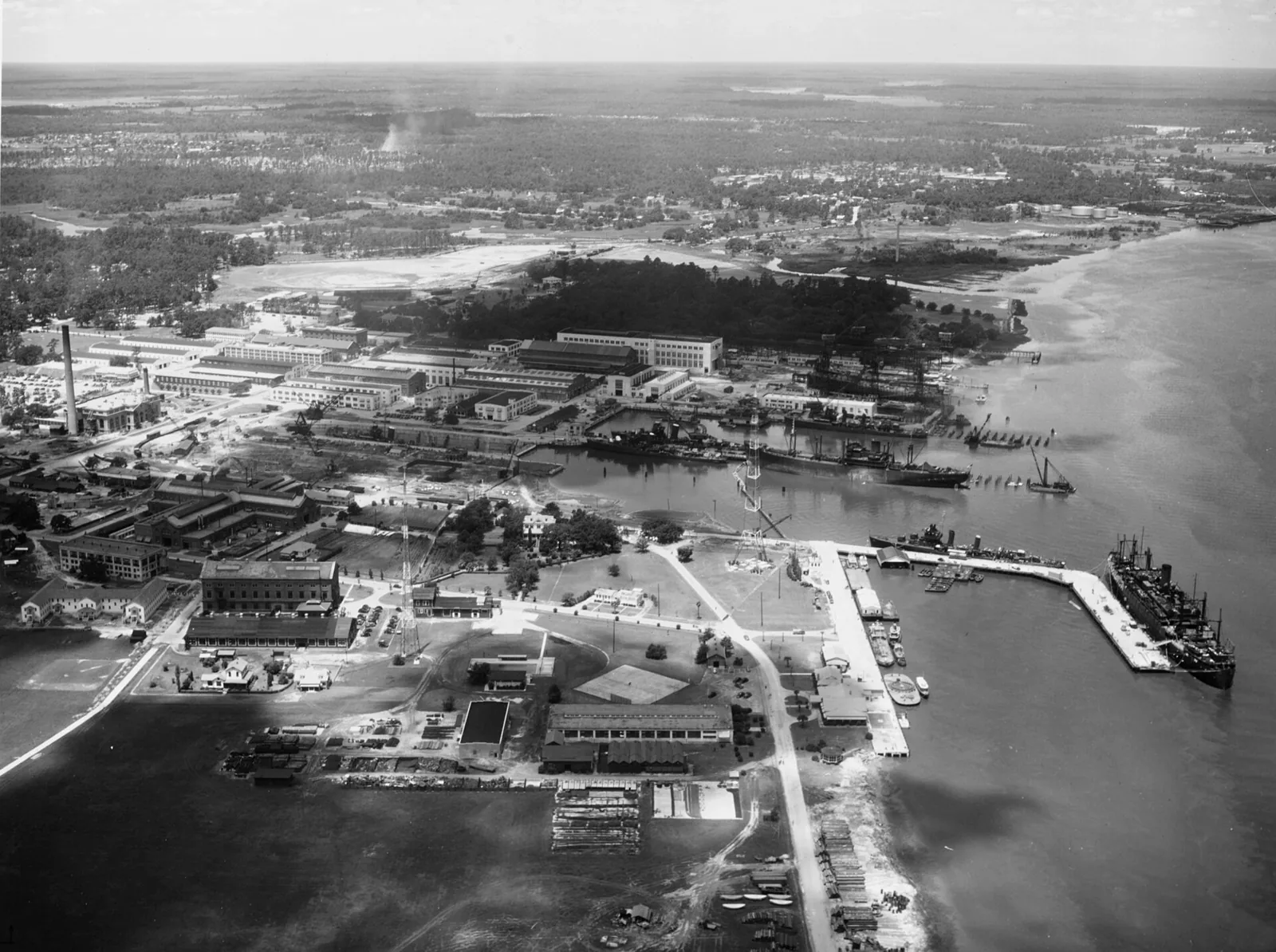
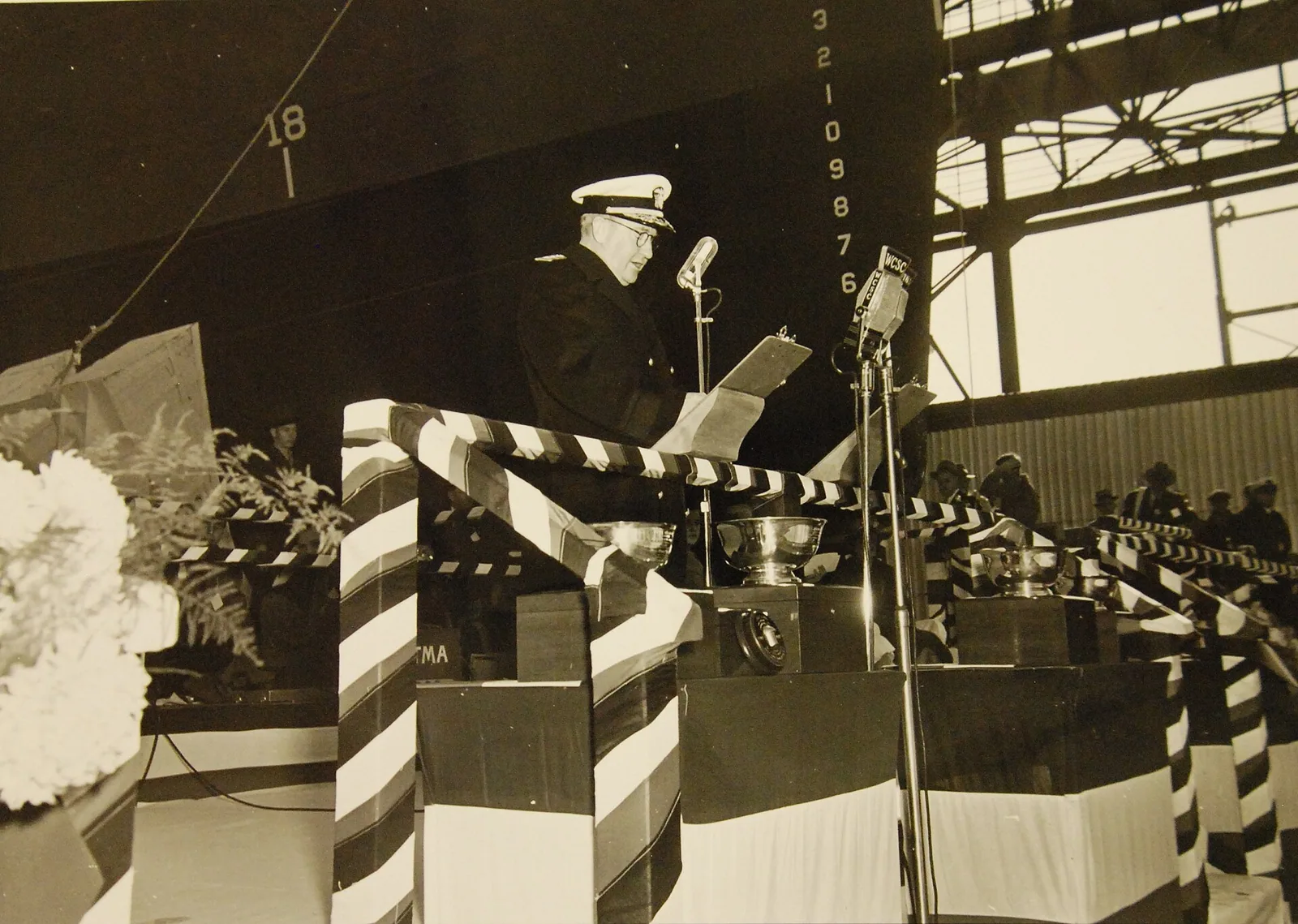
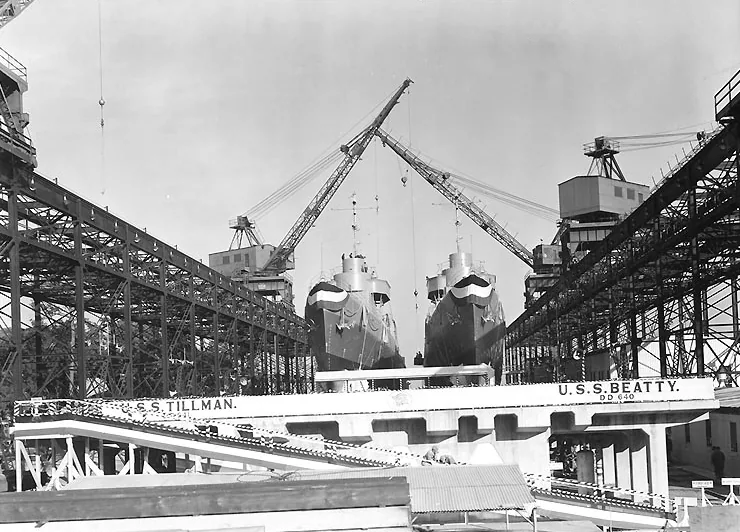
The second Tillman (DD-641) was laid down on 1 May 1941 at Charleston, S.C., by the Charleston Navy Yard; launched on 20 December 1941; sponsored by Mrs. Charles Sumner Moore; and commissioned on 4 June 1942, Lt. Comdr. Francis Douglas McCorkle in command.
1942 Fedhala
From June until September 1942, Tillman underwent sea trials and shakedown off the east coast. In September and October, the new destroyer escorted convoys and participated in exercises on the Eastern Sea Frontier before getting underway on 23 October from Chesapeake Bay with a convoy bound for Operation "Torch," the invasion of North Africa.
Shortly before midnight on 7 November, Tillman reached a point some six miles off the coast of Africa and began screening the unloading transports of the Center Attack Group during the successful assault on Fedhala. While screening off the transport area, Till man engaged an enemy patrol vessel, W-&3, which had attempted to slip six merchant ships into the transport area despite the destroyer's warnings. After coming under fire from Tillman's five-inch guns, the patrol vessel exploded and beached. Tillman later captured three French merchantmen. On 10 November, American troops advancing on Casablanca from the east came under fire from enemy destroyers. Tillman, Augusta (CA-31), and Edison (DD-439) attacked the enemy ships, at the same time drawing fire from the shore batteries including that at El Hank. Maneuvering at speeds up to 34 knots, Tillman fired on the enemy ships, leaving one vessel steaming in circles, before she returned to her station off the transport area. On 12 November, Tillman departed the area escorting a convoy which weathered 50- to 60-foot seas before arriving safely at New York on 1 December.
1943 Sicily
Tillman continued convoy duty in the wintry Atlantic and then participated in exercises off Casco Bay, Maine. Departing New York harbor in the early hours of 8 February 1943, a dark night with unusually strong tides, Tillman sideswiped the paravane boom of an improperly illuminated merchant vessel anchored directly in the channel. After repairs at New York, Tillman operated on the Eastern Sea Frontier in February and March, performing escort duties and participating in exercises. In the spring, the destroyer protected convoys in the Atlantic and Mediterranean.
On 5 July, she screened the sortie from Oran of a convoy bound for Operation "Husky," the invasion of Sicily. In the days that followed, the destroyer provided neutralizing fire on beach defenses and picked off artillery which menaced troops landing near Scoglitti. Before dawn on 10 July, Tillman fired her first salvo into Yellow Beach at 0331, as the assault got underway. At 0430, a stick of six bombs dropped by enemy aircraft exploded 300 yards off Tillman's starboard bow, temporarily knocking out her radar. An hour later, Tillman silenced a shore battery which had been firing on Yellow Beach. Enemy air attackers, flying in low over the land where they were indiscernible by radar, harrassed landing troops and supporting ships. Fear of hitting troops on the beaches forced the Allied ships to withhold their fire when aiming at the low-flying planes. During the night of 10 and 11 July, Tillman patrolled off the invasion beaches. On the llth, she repelled enemy air bombing attacks and supplied fire missions called in by shore observers. On 15 July, Tillman returned to Oran to guard returning transports.
During the remainder of 1943, Tillman escorted convoys in Mediterranean and Atlantic waters, experiencing many dangerous moments as she protected vulnerable merchant vessels from enemy submarines and airplanes. While en route from New York to Bizerte on 2 September 1943, one day after passing through the Strait of Gibraltar, Tillman was attacked by a German torpedo plane. Patchy haze limited visibility to 2,000 yards when the plane, incorrectly identified as friendly, dropped torpedoes. Quick maneuvering saved Tillman from destruction by the torpedo which crossed about 30 yards ahead and passed down her port side trailing a sinister wake. During the same attack, Kendrick (DD-612) was damaged by a German torpedo. Two days later, the convoy arrived at Bizerte, but the illusion of safety in port was dispelled on 6 September by a 30-minute air attack on the harbor. Tillman engaged the attackers with her main battery and machine guns. Thirteen members of her crew were injured when a spent shell exploded on the deck of the ship.
On 6 November 1943, as she steamed off the coast of Algeria, Tillman helped repel a German air attack on the port quarter of a convoy carrying troops and supplies for the Italian campaign. An estimated 25 German aircraft, many equipped with glider-bombs, took part in the raid, and sank two merchantmen and the destroyer Beatty (DD-640). In the first wave of the attack, a Dornier 217 singled out Tillman as the target of her glider-bomb. The radio-controlled missile came in at a terrific speed, but Tillman's machine guns splashed it in a violent explosion only 150 yards off the destroyer's port bow. Soon after, a second glider intended for Tillman's destruction splashed and exploded, again only 150 yards away, as Tillman shot down its launching plane. A third glider splashed off the ship's starboard beam as its parent craft turned back in the face of Tillman's concerted fire. During this first stage of the attack, Tillman maneuvered constantly and rapidly to evade the gliders. Her own safety temporarily secured, Tillman then turned her guns on planes attacking the convoy and splashed another attacker. Soon, the final and fiercest phase of the attack began as five German planes attacked Tillman. As her main battery engaged the raiders, Tillman turned left full rudder to evade torpedoes, two of which passed nearly parallel to the ship at distances of 60 and 100 feet. Moments later, as the destroyer swung to port to regain her station, a heavy explosion shook the ship. This detonation, thought to have been caused by a torpedo exploding in the destroyer's wake, caused her no serious damage; and she turned to the task of rescuing survivors from the sinking merchant freighter SS Santa Elena. She then proceeded to Philippeville to disembark the survivors.
During December 1943 and throughout 1944, Tillman escorted convovs between ports in the United States, the Mediterranean, and the United Kingdom. Occasionally, she varied this duty with overhaul at New York or exercises off New England. In the first three months of 1945, Tillman participated in exercises in the Caribbean and off the east coast before departing on 28 March from Delaware Bay and steaming via the Canal Zone and San Diego for Hawaii.
Following her arrival at Pearl Harbor on 21 April, she took part in exercises in Hawaiian waters, then departed the area on 1 May. Until September, Tillman performed life guard and antisubmarine picket duties out of Guam and Ulithi. On 5 September at Tamil Harbor, the commanding officer of the Japanese garrison on Yap Island formally surrendered to the American Atoll Commander from Ulithi on board Tillman.
1945
The destroyer continued to operate in the Carolines and southern Marianas until 3 November 1945 when she proceeded to Pearl Harbor. Then, continuing on, she steamed via the Panama Canal to the east coast, arriving at Charleston on 11 December 1945 for inactivation.
Other photographs
Held for this vessel, and not tied to any part of the account above.





References
Every work this entry draws on. There are no numbered markers in the text above: what we hold is the provenance of the page — this history, this article, these photographs.
- History Tillman II (DD-641) Dictionary of American Naval Fighting Ships, Naval History and Heritage Command. A work of the United States Government, in the public domain — the only text on this site reproduced verbatim.
- Facts USS Tillman (DD-641) Structured facts only — dates, dimensions, armament and fate. No wording is taken from it. Harvested 1 August 2026.
- Photograph USS Tillman (DD-641) Official U.S. Navy Photograph, from the collections of the Naval Historical Center. — http://www.history.navy.mil/photos/sh-usn/usnsh-t/dd641.htm photo NH 103761 — Public domain — Wikimedia Commons
- Photograph Launching of USS Tillman (DD 641) and USS Beatty (DD 640) 1941 (19194550928) National Museum of the U.S. Navy — Lot 5399-3 — Public domain — Wikimedia Commons
- Photograph USS Tillman (DD-641) Japanese approaching the Tillman William Winnerling Jr. — Photosubmissions 2013051910005159 — CC BY-SA 3.0 — Wikimedia Commons
- Photograph USS Tillman (DD-641) Japanese atoll commander on Tillman William Winnerling Jr. — Photosubmissions 2013051910005159 — CC BY-SA 3.0 — Wikimedia Commons
- Photograph Aerial photo of the US Charleston Naval Shiyard in 1941 U.S. Navy — Official U.S. Navy photo NH 93379 from the U.S. Navy Naval History and Heritage Command — Public domain — Wikimedia Commons
- Photograph Aerial photograph of the US Charleston Naval Shiyard in 1941 U.S. Navy — Official U.S. Navy photo NH 93397 from the U.S. Navy Naval History and Heritage Command — Public domain — Wikimedia Commons
- Photograph Aerial view of the US Charleston Naval Shiyard in 1941 U.S. Navy — Official U.S. Navy photo NH 93378 from the U.S. Navy Naval History and Heritage Command — Public domain — Wikimedia Commons
- Photograph Lot 5399-13 (19194639188) National Museum of the U.S. Navy — Lot 5399-13 — Public domain — Wikimedia Commons
- Photograph Rear Admiral Allen speaking at dual launching of USS Beatty (DD-640) and USS Tillman (DD-641), 1941 (19382169285) National Museum of the U.S. Navy — Lot 5399-7 — Public domain — Wikimedia Commons
- Photograph USS Beatty (DD-640) and USS Tillman (DD-641) at the Charleston Navy Yard in 1941 U.S. Navy — Official U.S. Navy photo NH 41785 from the U.S. Navy Naval History and Heritage Command — Public domain — Wikimedia Commons
- Photograph USS Tillman (DD-641) Japanese atoll commander surrendering Yap Island William Winnerling Jr. — Photosubmissions 2013051910005159 — CC BY-SA 3.0 — Wikimedia Commons
- Photograph USS Tillman (DD-641) photo from on board William Winnerling Jr. — Photosubmissions 2013051910005159 — CC BY-SA 3.0 — Wikimedia Commons