United States Navy — Destroyer
USS Tucker (DD-374) — service history
This is the full service history. For the vessel's particulars, photograph and specifications, see the entry.
In the words of the US Navy. The account below is reproduced verbatim from the Dictionary of American Naval Fighting Ships, compiled by the Naval History and Heritage Command — a work of the United States Government, in the public domain, and the only text on this site not written here.
Interwar 1919–1938
1934
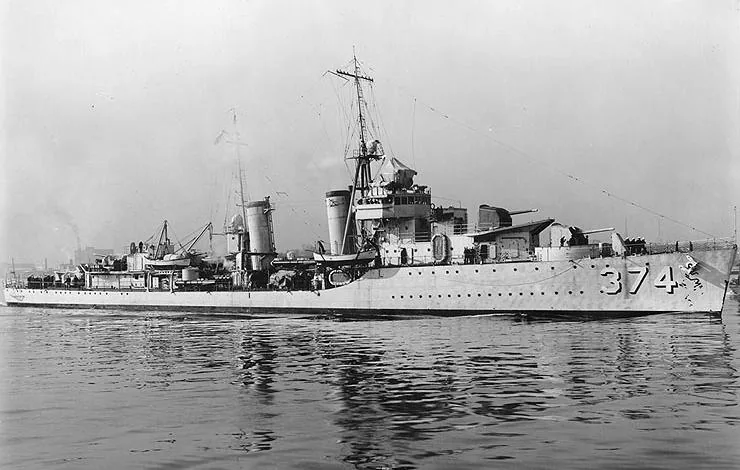
The second Tucker (DD-374) was laid down at Portsmouth, Va., on 15 August 1934 by the Norfolk Navy Yard; launched on 26 February 1936; sponsored by Mrs. Leonard Thorner; and commissioned on 23 July 1936, Lt. Comdr. George T. Howard in command.
Second World War 1939–1945
1939
Following shakedown training, Tucker joined the destroyer forces attached to the United States Battle Fleet and was based at San Diego, Calif. As part of Destroyer Squadron 3, Destroyer Division 6, she operated with the Battle Force along the west coast and in the Hawaiian Islands. In February 1939, she took part in Fleet Problem XX, the naval exercise in the Caribbean personally observed by President Franklin D. Roosevelt from Houston (CA-30).
1941
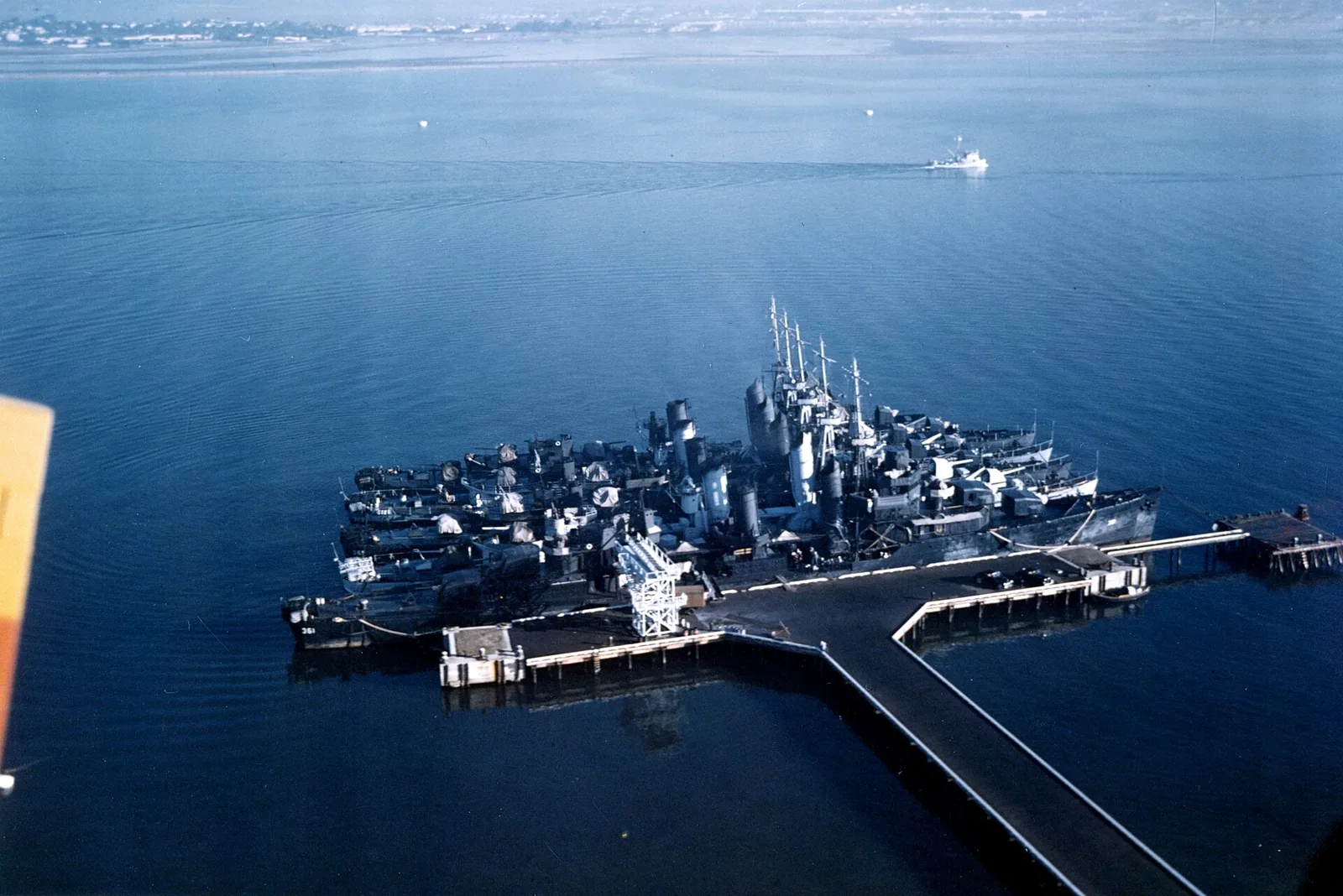
As the international situation in the Pacific worsened, President Roosevelt ordered the Fleet to remain in Hawaiian waters after the conclusion of exercises in the spring of 1940. Tucker then operated between the west coast and Hawaii through the end of the year. On 14 February 1941, she arrived at Pearl Harbor, from San Diego, and then proceeded to New Zealand, arriving at Auckland on 17 March to "show the flag" in that area of the world.
Returning to Pearl Harbor from the South Pacific, she took part in routine exercises at sea before returning to her home port of San Diego, Calif., on 19 September. Getting underway again after a short stay, Tucker steamed to Hawaii as part of Task Force 19 and began operations anew in the Hawaiian Islands in November. After one month of maneuvers in the Hawaiian operating area, she returned to Pearl Harbor for a tender overhaul.
On 7 December 1941, Tucker lay peacefully moored at berth X-8, East Loch, Pearl Harbor, in the center of a nest of five destroyers and tender Whitney (AD-4); to port of Tucker lay Selfridge (DD-375) and Case (DD-370); to her starboard were Reid (DD-365) and Conyngham (DD-371), with Whitney outboard of Conyngham. Suddenly the drone of airplane engines and the roar of exploding bombs and torpedoes shattered the Sunday morning calm; Japanese planes swept over the harbor and wheeled above like hawks.
On board Tucker, GM2c W. E. Bowe observed the unfolding attack and promptly manned a machine gun on the ship's after superstructure, commencing fire even before the general quarters alarm sounded. Within two minutes, the after 5-inch guns came into action, joining the concentrated gunfire emanating from the nest of ships in which Tucker lay. This veritable storm of shells and bullets produced hits on two enemy aircraft, both of which spun into the lush green hills and exploded.
As the damaged fleet licked its wounds and rolled up its sleeves to begin the war, Tucker patrolled off Pearl Harbor before spending the succeeding five months escorting convoys between the west coast and Hawaii. Tucker then received new orders sending her to the South Pacific.
With the reinforcement of United States island bases in the Pacific, Tucker escorted Wright (AV-1) to Tutuila, American Samoa, as part of the drive to fortify these outposts. The destroyer then escorted her charge to Suva, in the Fiji Islands, and thence to Noumea, New Caledonia. Steaming then for Austrialia, she arrived at Sydney on 27 April. After taking on fuel the following day, she visited Melbourne, Perth, and Freman tie before heading back to Sydney.
1942 Midway
In company with Wright, Tucker returned to Suva, arriving there on 3 June 1942, the day before the commencement of the climactic Battle of Midway. For the remainder of June and into the first week of July, Tucker operated out of Suva; then relieved Boise (CL-47) on 10 July on convoy escort duties. On 30 July, the destroyer arrived at Auckland and, the following day, steamed for the Fiji Islands.
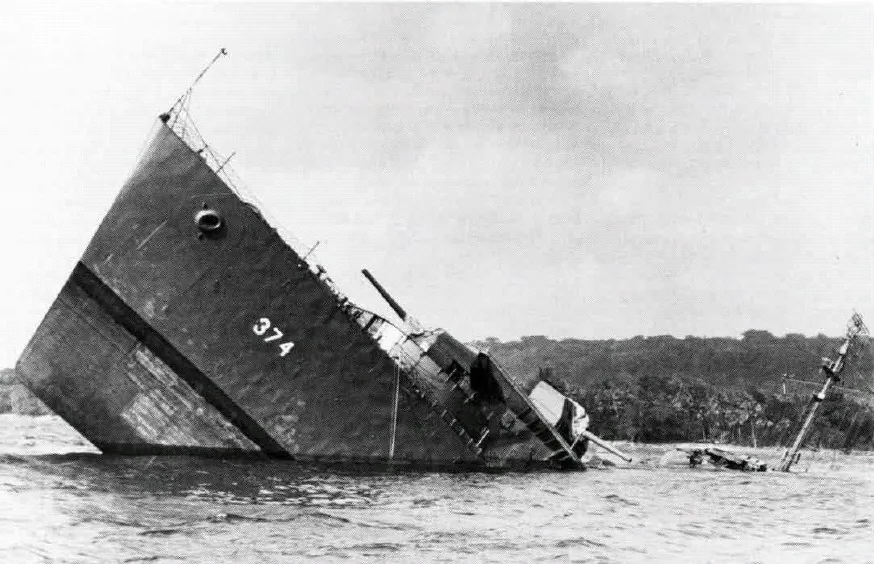
At Suva, she received orders to escort the SS Nira Luckenbach to Espiritu Santo; and, on 1 August, the two ships departed by way of a route north of Efate Island and west of the Malekula Islands. Threading their way through the Bruat channel, both ships then set courses to enter the Segond Channel for the final leg of their voyage to Espiritu Santo. At 2145, Tucker struck a mine which exploded and broke the destroyer's back. She slowed to a halt, mortally stricken, and began folding up like a jack-knife.
The explosion instantly killed three men. Nira Luckenbach quickly sent boats to aid in rescuing the destroyermen as they abandoned their sinking ship.
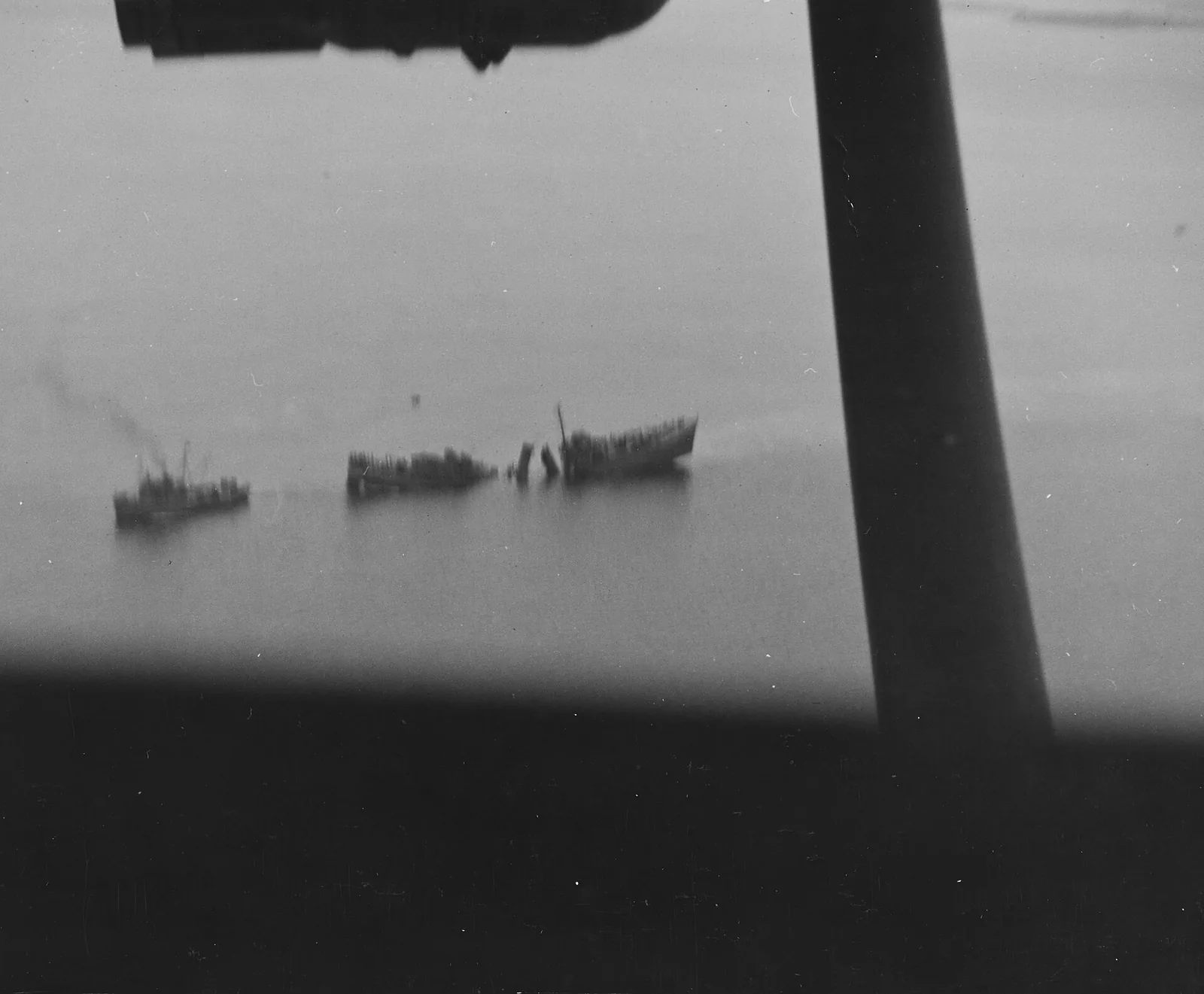
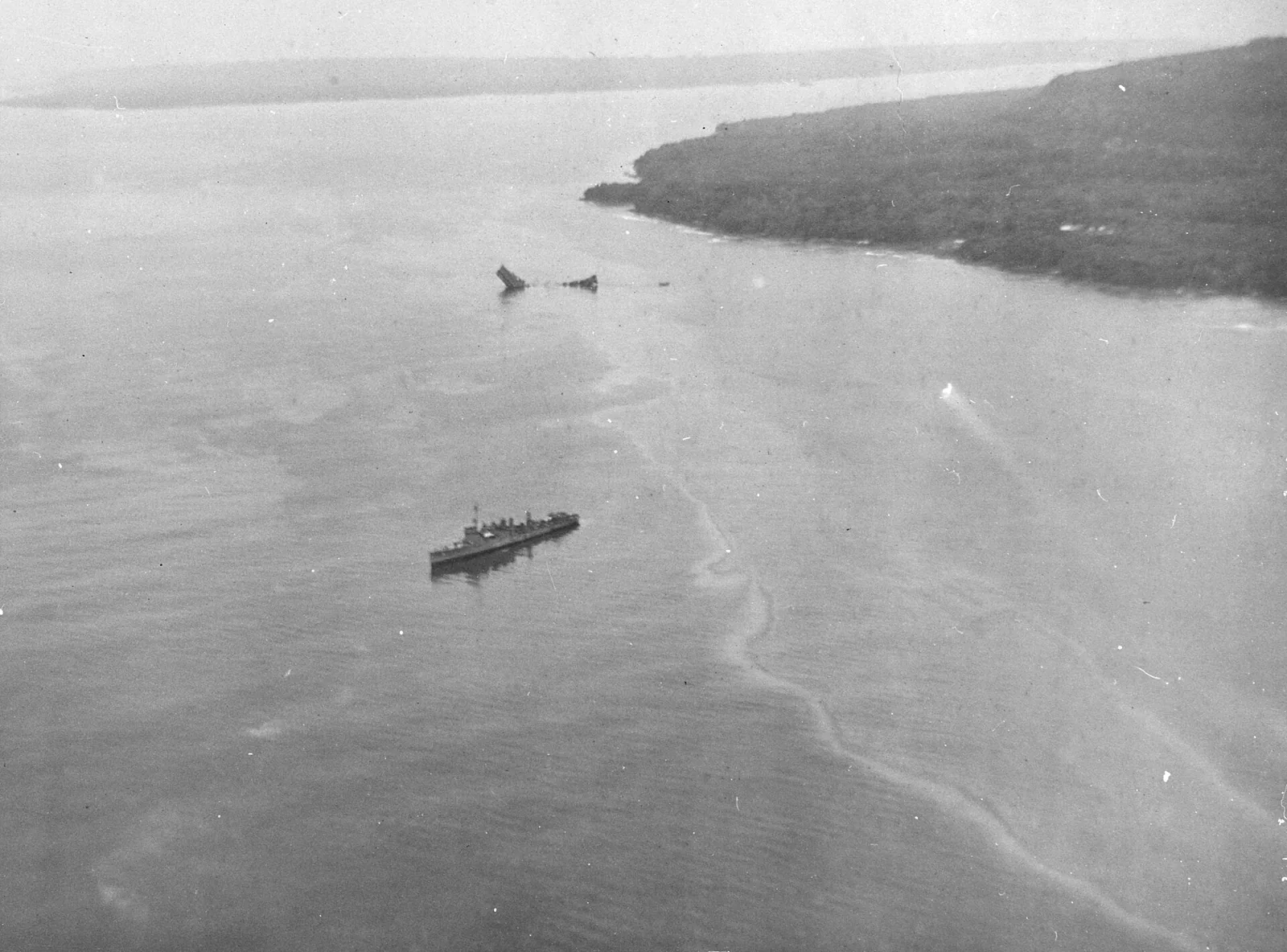
By the next morning, YP-346 had arrived on the scene and attempted to tow the stricken destroyer into shallower water to facilitate salvage operations. Breese (DMS-18) also arrived and stood by as YP-346 valiantly struggled to beach the foundering Tucker. However, the efforts soon came to naught; and Tucker jack-knifed and sank in 10 fathoms at 0445 on 4 August 1942.
The minefield into which she had steamed had been laid by United States forces only the day before, on 2 August, and its existence had not yet been radioed to Tucker and Nira Luckenbach. Thus, Tucker's commanding officer and her crew had no idea of the dangerous waters into which they had steamed so unknowingly. The destroyer's only casualties were three men killed in the initial explosion and three more listed as "missing."
Other photographs
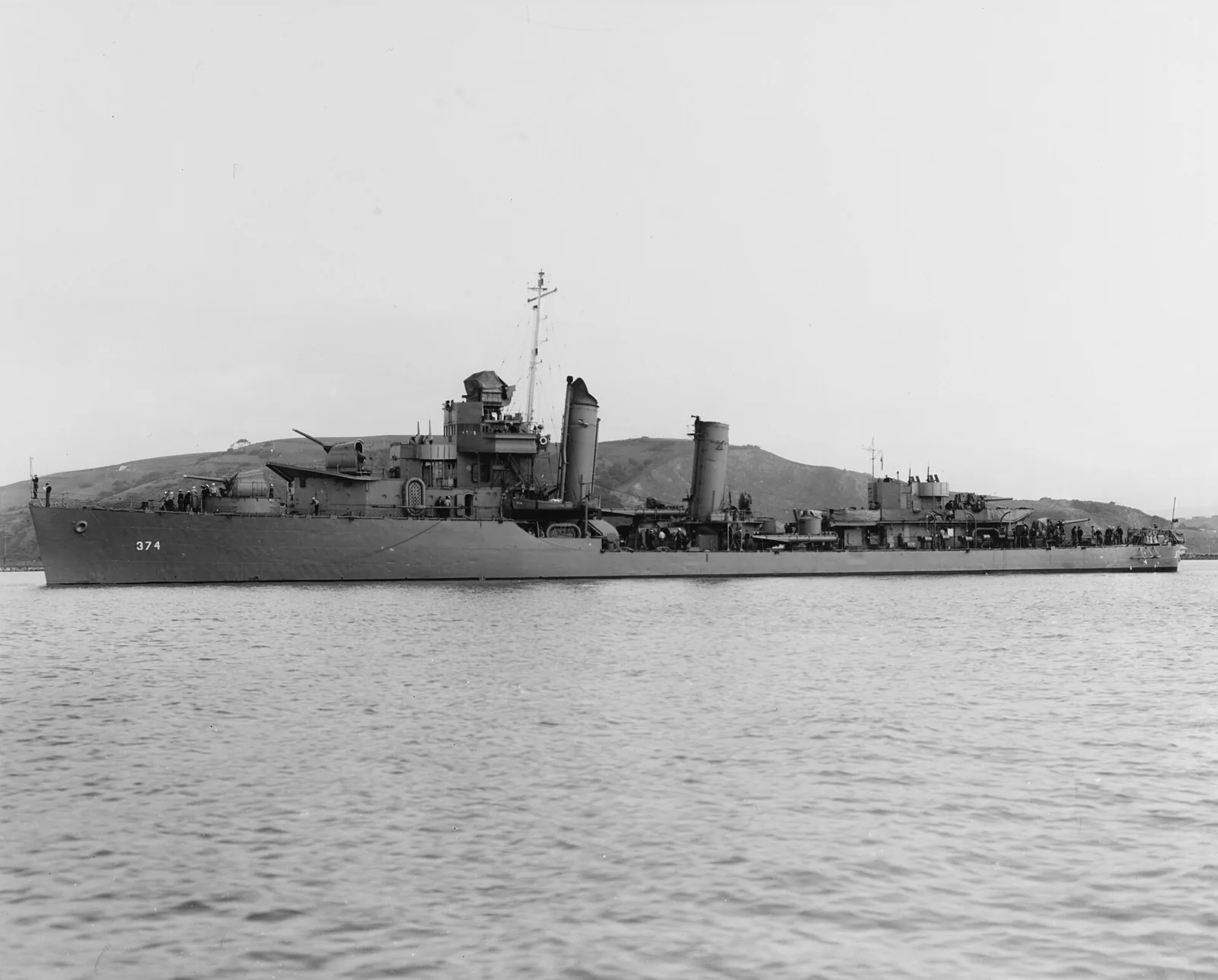
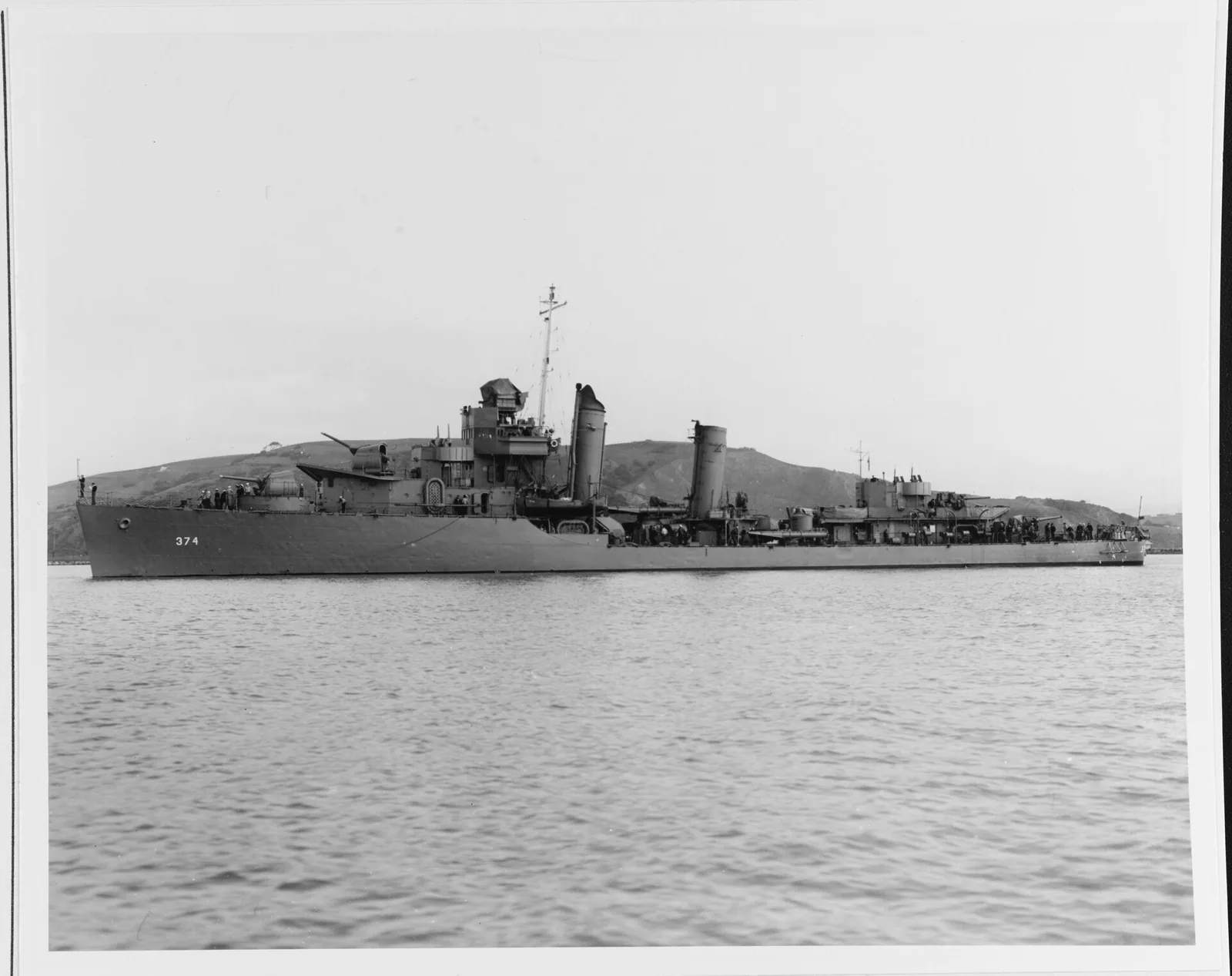
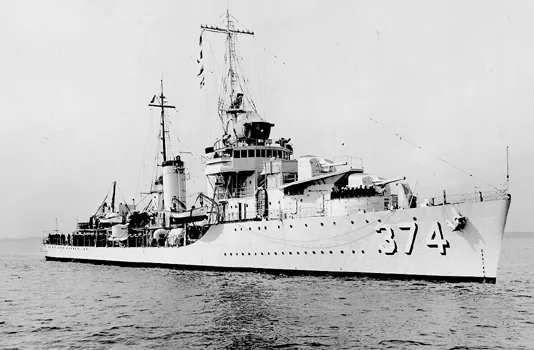
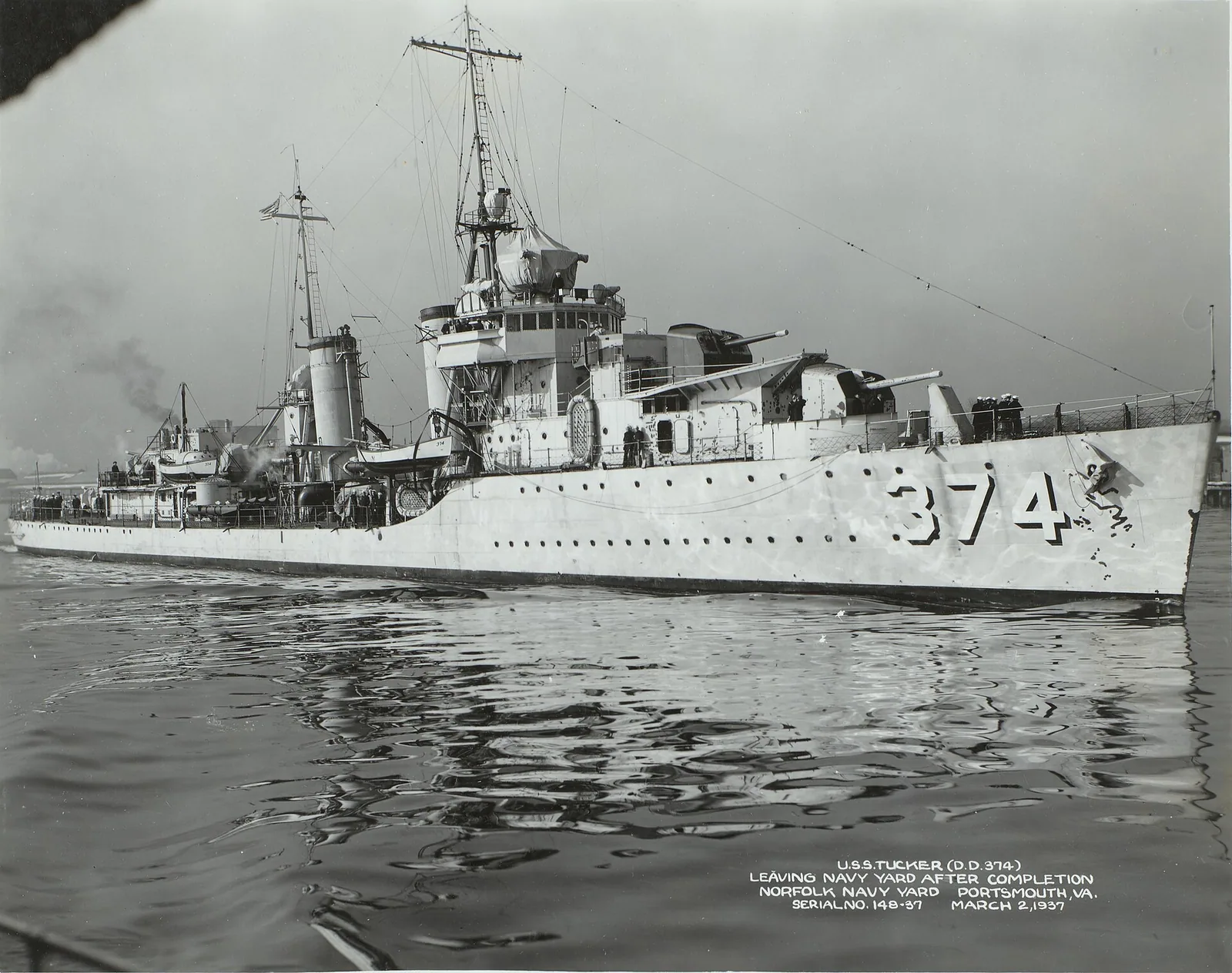
Held for this vessel, and not tied to any part of the account above.
References
Every work this entry draws on. There are no numbered markers in the text above: what we hold is the provenance of the page — this history, this article, these photographs.
- History Tucker II (DD-374) Dictionary of American Naval Fighting Ships, Naval History and Heritage Command. A work of the United States Government, in the public domain — the only text on this site reproduced verbatim.
- Facts USS Tucker (DD-374) Structured facts only — dates, dimensions, armament and fate. No wording is taken from it. Harvested 1 August 2026.
- Photograph USS Tucker Unknown author — http://www.history.navy.mil/photos/images/h63000/h63135.jpg — Public domain — Wikimedia Commons
- Photograph DD-374 sunk 5Aug1942 EspirituSanto NAN09-10-86 USN — U.S. Navy Naval Aviation News September/October 1986 [1] — Public domain — Wikimedia Commons
- Photograph Ships of US Navy Destroyer Division 6 at San Diego in October 1941 (80-G-K-14467) U.S. Navy — Official U.S. Navy photograph 80-G-K-14467 — Public domain — Wikimedia Commons
- Photograph Tucker YP-346 Unknown author — Naval History and Heritage Command — Public domain — Wikimedia Commons
- Photograph USS Breese (DM-18) standing by the sinking USS Tucker (DD-374) off Espiritu Santo on 4 August 1942 U.S. Navy, photographed from a plane based on USS Curtiss (AV-4). — Official U.S. Navy photo NH 77031 from the U.S. Navy Naval History and Heritage Command — Public domain — Wikimedia Commons
- Photograph USS Tucker (DD-374) - 19-N-28632 Unknown author — This image has been extracted from another file — Public domain — Wikimedia Commons
- Photograph USS Tucker (DD-374) - 19-N-28632 Unknown author — 19-N-28632 — Public domain — Wikimedia Commons
- Photograph USS Tucker (DD-374) before World War II USN — Official U.S. Navy photo [1] from the U.S. Navy Norfolk Naval Shipyard — Public domain — Wikimedia Commons
- Photograph USS Tucker DD-374 19-N-020-002-018 Unknown author or not provided — U.S. National Archives and Records Administration — Public domain — Wikimedia Commons
- Photograph Uss Tucker DD-374 Unknown author — Public domain — Wikimedia Commons