United States Navy — Battleship
USS Washington (BB-56) — service history
This is the full service history. For the vessel's particulars, photograph and specifications, see the entry.
In the words of the US Navy. The account below is reproduced verbatim from the Dictionary of American Naval Fighting Ships, compiled by the Naval History and Heritage Command — a work of the United States Government, in the public domain, and the only text on this site not written here.
Before commissioning
Washington , the 42nd state, was admitted to the Union on 11 November 1889. The first six Washingtons were named for George Washington; the seventh and eighth, for Washington state.
Interwar 1919–1938
1938
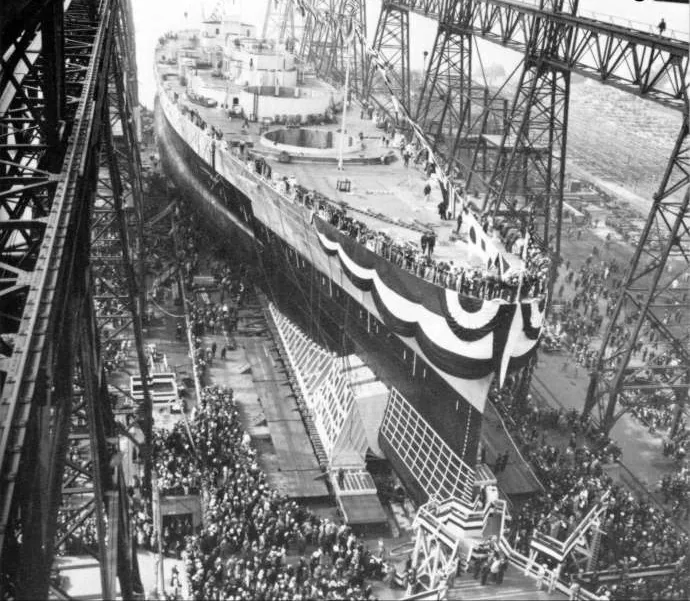
The eighth Washington (BB-56) was laid down on 14 June 1938 at the Philadelphia Navy Yard, Pa.; launched on 1 June 1940; sponsored by Miss Virginia Marshall, of Spokane, Wash., a direct descendant of former Chief Justice Marshall; and commissioned at the Philadelphia Navy Yard on 15 May 1941, Capt. Howard H. J. Benson in command.
Second World War 1939–1945
1941
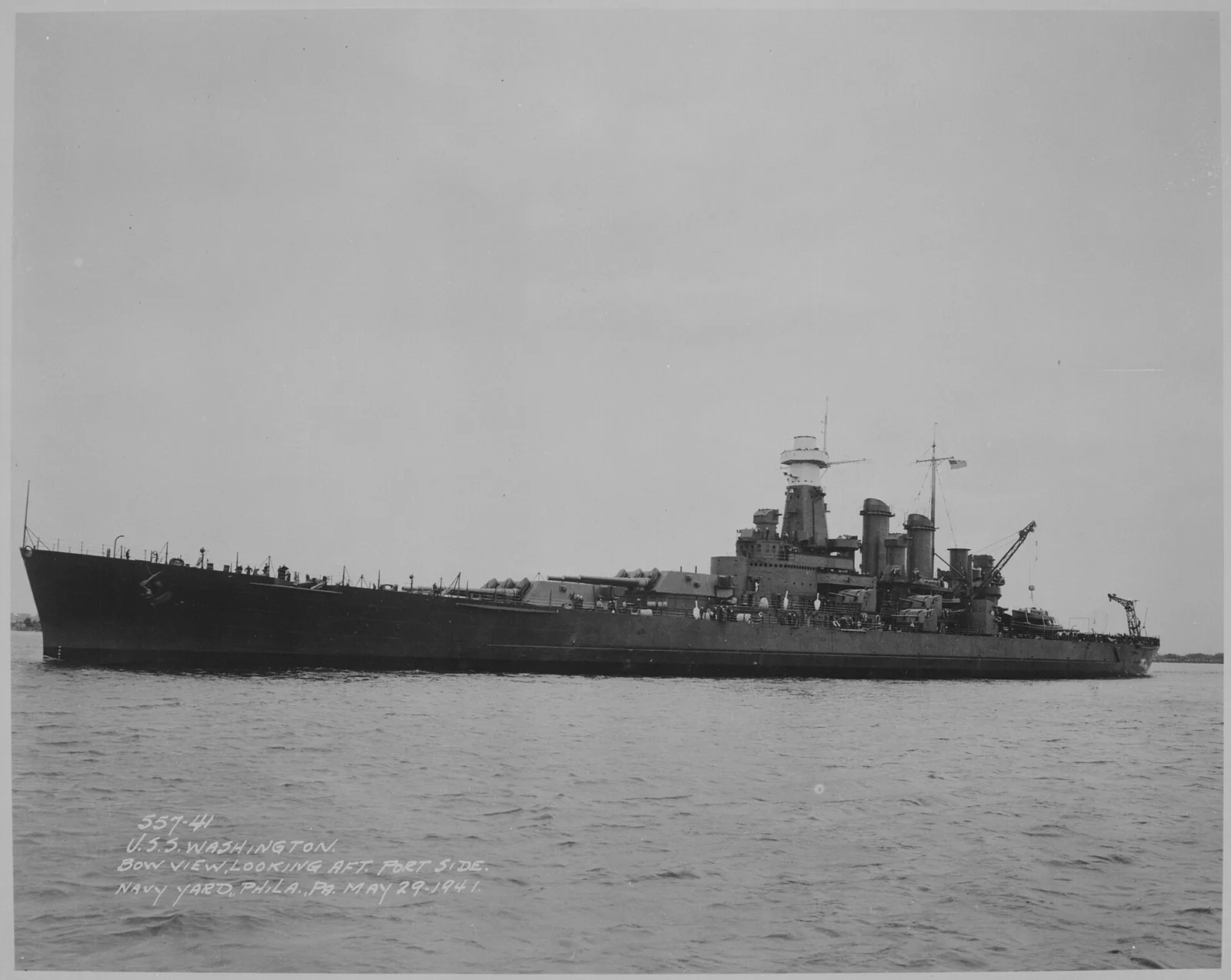
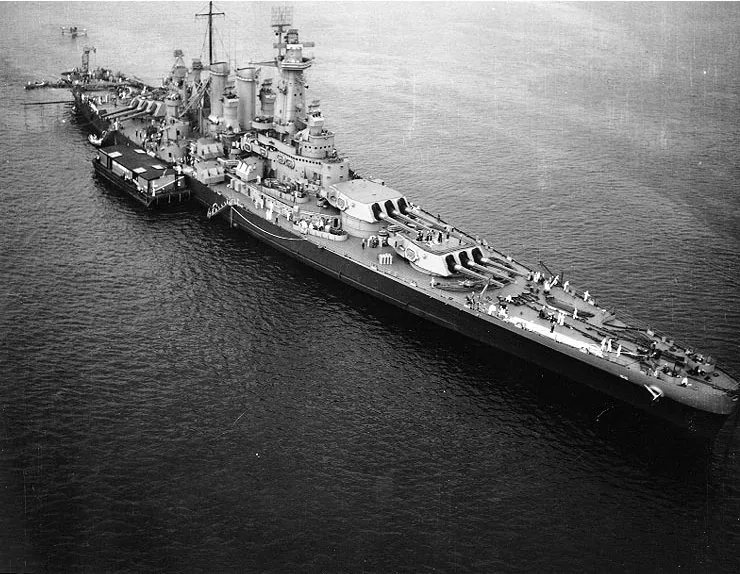
Her shakedown and underway training ranged along the eastern seaboard and into the Gulf of Mexico and lasted through American entry into World War II in December 1941. Sometimes operating in company with her sistership North Carolina (BB-55) and the new aircraft carrier Hornet (CV-8), Washington became the flagship for Rear Admiral John W. Wilcox, Commander, Battleship Division (ComBatDiv) 6, and Commander, Battleships, Atlantic Fleet.
1942
March 1942
Assigned duty as flagship for Task Force (TF) 39 on 26 March 1942 at Portland, Maine, Washington again flew Admiral Wilcox' flag as she sailed for the British Isles that day. Slated to reinforce the British Home Fleet, the battleship, together with the carrier Wasp (CV-7) and the heavy cruisers Wichita (CA-45) and Tuscaloosa (CA-37), headed for Scapa Flow, the major British fleet base in the Orkney Islands.
While steaming through moderately heavy seas the following day, 27 March, the "man overboard" alarm sounded on board Washington, and a quick muster revealed that Admiral Wilcox was missing. Tuscaloosa, 1,000 yards astern, maneuvered and dropped life buoys while two destroyers headed for Washington's wake to search for the missing flag officer. Planes from Wasp, despite the foul weather, also took off to aid in the search.
Lookouts in the destroyer Wilson (DD-408) spotted Wilcox' body in the water, face down, some distance away, but could not pick it up. The circumstances surrounding Wilcox being washed overboard from his flagship have never been fully explained to this day; one school of thought has it that he had suffered a heart attack.
At 1228 on the 27th, the search for Wilcox was abandoned, and command of the task force devolved upon the next senior officer, Rear Admiral Robert C. Giffen , whose flag flew in the cruiser Wichita. On 4 April, the task force reached Scapa Flow, joining the British Home Fleet under the overall command of Sir John Tovey, whose flag flew in the battleship HMS King George V.
Washington engaged in maneuvers and battle practice with units of the Home Fleet, out of Scapa Flow, into late April, when TF 39 was redesignated as TF 99 with Washington as flagship. On the 28th, the force got underway to engage in reconnaissance for the protection of the vital convoys running lend-lease supplies to Murmansk in the Soviet Union.
May 1942
During those operations, tragedy befell the group. On 1 May 1942, HMS King George V collided with a "Tribal"-class destroyer. HMS Punjabi, cut in two, sank quickly directly in the path of the oncoming Washington. Compelled to pass between the halves of the sinking destroyer, the battleship proceeded ahead, Punjabi's depth charges exploding beneath her hull as she passed.
Fortunately for Washington, she suffered no major hull damage nor developed any hull leaks from the concussion of the exploding depth charges. She did, however, sustain damage to some of her delicate fire control systems and radars; and a diesel oil tank suffered a small leak.
Two destroyers, meanwhile, picked up Punjabi's captain, four other officers and 182 men; HMS King George V then proceeded back to Scapa Flow for repairs. Washington and her escorts remained at sea until 5 May, when TF 99 put into the Icelandic port of Hvalfjordur to provision from the supply ship Mizar (AF-12). While at Hvalfjordur, the American and Danish ministers to Iceland called upon Admiral Giffen and inspected his flagship on 12 May.
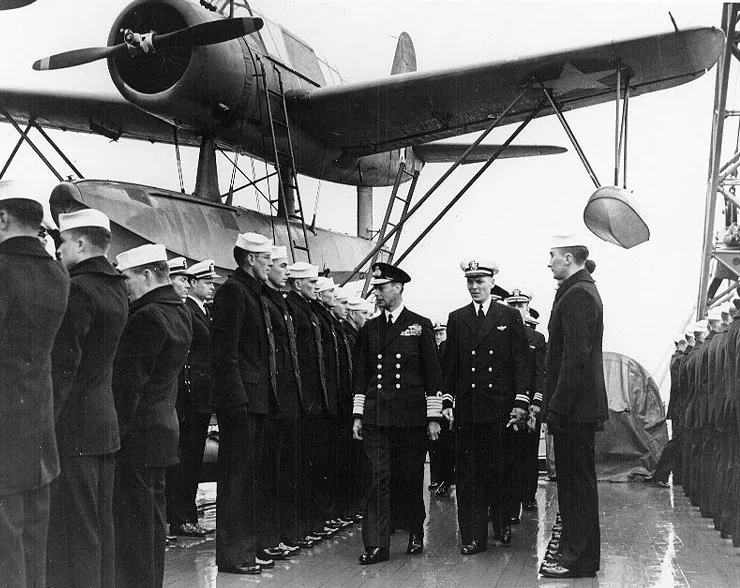
Task Force 99 subsequently sortied on the 15th to rendezvous with units of the Home Fleet and returned to Scapa Flow on 3 June. The next day, Admiral Harold R. Stark, Commander, Naval Forces, Europe, came on board and broke his flag in Washington, establishing a temporary administrative headquarters on board. The battleship played host to His Majesty, King George VI, at Scapa Flow on the 7th, when the King came on board to inspect the ship.
July 1942 Savo Island
Soon after Admiral Stark left Washington, the battleship resumed her operations with the Home Fleet, patrolling part of the Allied shipping lanes leading to Russian ports. On 14 July 1942, Admiral Giffen hauled down his flag in the battleship at Hvalfjordur and shifted to Wichita. That same day, Washington, with a screen of four destroyers, upped-anchor and put to sea, leaving Icelandic waters in her wake. She reached Gravesend Bay, N.Y., on 21 July; two days later, she shifted to the New York Navy Yard, Brooklyn, N.Y., for a thorough overhaul.
Upon completion of her refit, Washington sailed for the Pacific on 23 August, escorted by three destroyers. Five days later, she transited the Panama Canal and, on 14 September, reached Nukualofa Anchorage, Tongatabu, Tonga Island. On that day, Rear Admiral Willis A. "Ching" Lee, Jr., broke his flag in Washington as Commander, Battleship Division (BatDiv) 6, and Commander, Task Group 12.2.
The next day, 15 September, Washington put to sea bound for a rendezvous with TF 17, the force formed around the aircraft carrier Hornet. Washington then proceeded to Noumea, New Caledonia, and supported the ongoing Solomons campaign, providing escort services for various reinforcement convoys proceeding to and from Guadalcanal. During those weeks, the battleship's principal bases of operation were Noumea and Espiritu Santo, New Hebrides.
By mid-November, the situation in the Solomons was far from good for the Allies, who were now down to one aircraft carrier, Enterprise (CV-6), after the loss of Wasp in September and Hornet in October, and Japanese surface units were subjecting Henderson Field on Guadalcanal to heavy bombardments with disturbing regularity. Significantly, however, the Japanese only made their moves at night, since Allied planes controlled the skies during the day. That meant that the Allies had to move their replenishment and reinforcement convoys into Guadalcanal during the daylight hours.
Washington performed those vital duties into mid-November of 1942. On 13 November, she learned that three groups of Japanese ships, one consisting of about 24 transports, with escort, were steaming toward Guadalcanal. One enemy force sighted that morning was reported as consisting of two battleships, a light cruiser, and 11 destroyers.
At sunset on the 13th, Rear Admiral Lee took Washington, South Dakota (BB-57), and four destroyers and headed for Savo Island, the scene of the disastrous night action of 8 and 9 August, to be in position to intercept the Japanese convoy and its covering force. Lee's ships, designated as TF 64, reached a point about 50 miles south-by-west from Guadalcanal late in the forenoon on the 14th and spent much of the remainder of the day trying, unsuccessfully, to avoid being spotted by Japanese reconnaissance planes.
Approaching on a northerly course, nine miles west of Guadalcanal, TF 64-reported by the Japanese reconnaissance planes as consisting of a battleship, a cruiser, and four destroyers-steamed in column formation. Walke (DD-416) led, followed by Benham (DD-397), Preston (DD-377), Gwin (DD-433), and the two battleships, Washington and South Dakota.
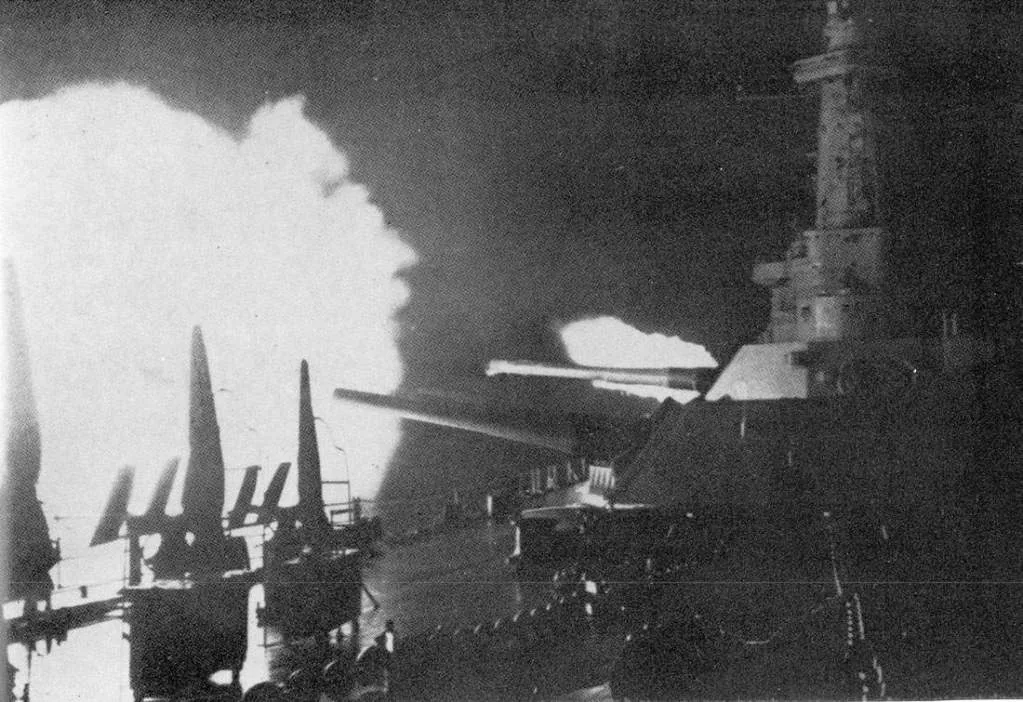
As the ship steamed through the flat calm sea beneath the scattered cirrus cumulus clouds in the night sky, Washington's radar picked up a contact, bearing to the east of Savo Island, at 0001 on 15 November. Fifteen minutes later, at 0016, Washington opened fire with her 16-inch main battery. The fourth Battle of Savo Island was underway.
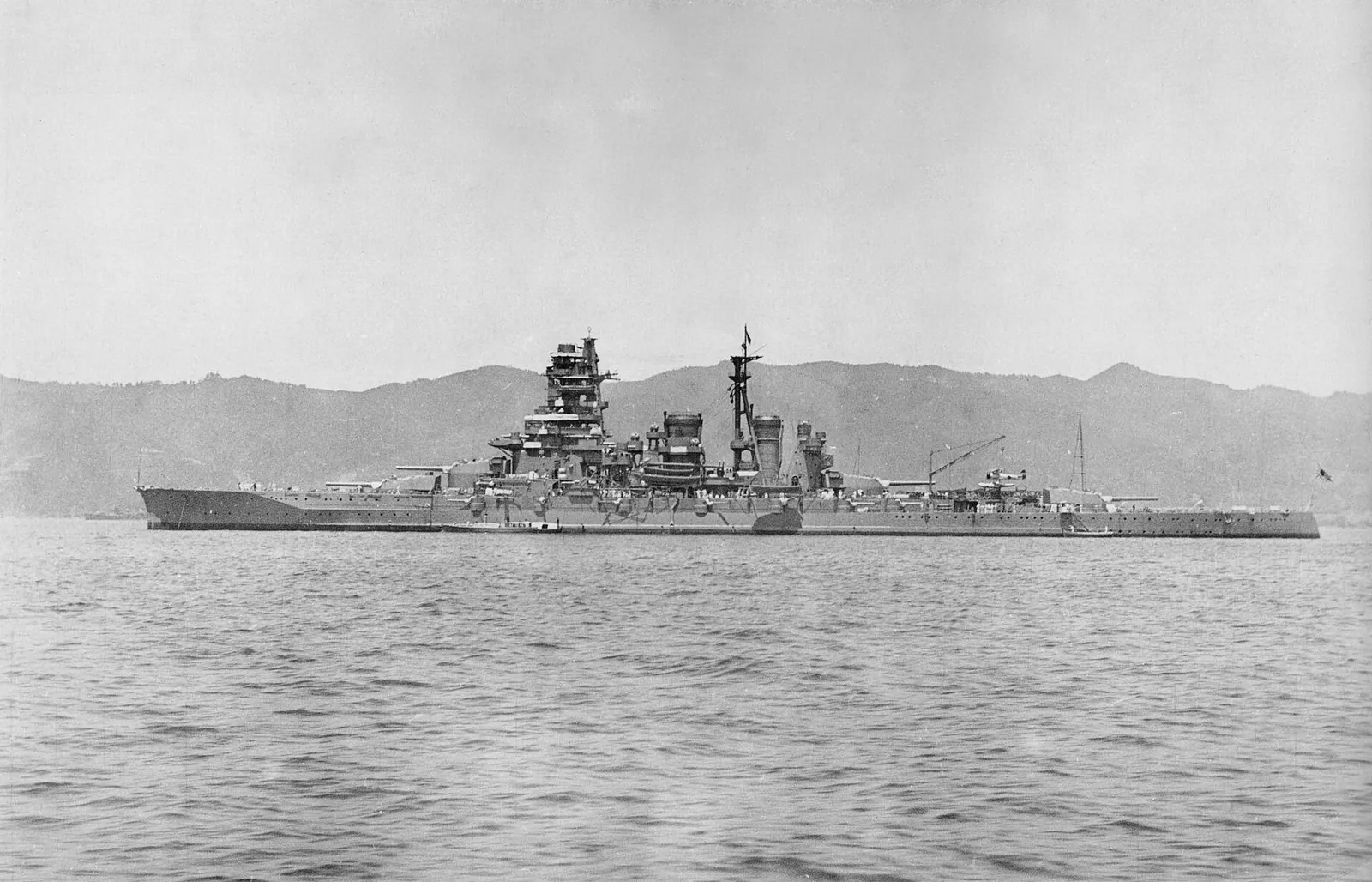
The Japanese force proved to be the battleship Kirishima, the heavy cruisers Atago and Takao, the light cruisers Sendai and Nagara, and a screen of nine destroyers escorting four transports. Planning to conduct a bombardment of American positions on Guadalcanal to cover the landing of troops, the Japanese force ran head-on into Lee's TF 64.
For the next three minutes, Washington's 16-inchers hurled out 42 rounds, opening at 18,500 yards range, her fire aimed at the light cruiser Sendai. Simultaneously, the battleship's 5-inch battery was engaging another ship also being engaged by South Dakota.
As gunflashes split the night and the rumble of gunfire reverberated like thunder off the islands nearby, Washington continued to engage the Japanese force. Between 0025 and 0034, the ship engaged targets at 10,000 yards range with her 5-inch battery.
Most significantly, however, Washington soon engaged Kirishima, in the first head-to-head confrontation of battleships in the Pacific war. In seven minutes, tracking by radar, Washington sent 75 rounds of 16-inch and 107 rounds of 5-inch at ranges from 8,400 to 12,650 yards, scoring at least nine hits with her main battery and about 40 with her 5-inchers, silencing the enemy battleship in short order. Subsequently, Washington's 5-inch batteries went to work on other targets spotted by her radar "eyes."
The battle, however, was not all one-sided. Japanese gunfire proved devastating to the four destroyers of TF 64, as did the dreaded and effective "long lance" torpedoes. Walke and Preston both took numerous hits of all calibers and sank; Benham sustained heavy damage to her bow, and Gwin sustained shell hits aft.
South Dakota had maneuvered to avoid the burning Walke and Preston but soon found herself the target of the entire Japanese bombardment group. Skewered by searchlight beams, South Dakota boomed out salvoes at the pugnacious enemy, as did Washington which was proceeding, at that point, to deal out severe punishment upon Kirishima -one of South Dakota's assailants.
South Dakota, the recipient of numerous hits, retired as Washington steamed north to draw fire away from her crippled sister battleship and the two crippled destroyers, Benham and Gwin. Initially, the remaining ships of the Japanese bombardment group gave chase to Washington but broke off action when discouraged by the battleship's heavy guns. Accordingly, they withdrew under cover of a smokescreen.
After Washington skillfully evaded torpedoes fired by the retiring Japanese destroyers in the van of the enemy force, she joined South Dakota later in the morning, shaping course for Noumea. In the battleship action, Washington had done well and had emerged undamaged. South Dakota had not emerged unscathed, however, sustaining heavy damage to her superstructure; 38 men had died; 60 lay wounded. The Japanese had lost the battleship Kirishima. Left burning and exploding, she later had to be abandoned and scuttled. The other enemy casualty was the destroyer Ayanami, scuttled the next morning.
Washington remained in the South Pacific theater, basing on New Caledonia and continuing as flagship for Rear Admiral "Ching" Lee. The battleship protected carrier groups and task forces engaged in the ongoing Solomons campaign until late in April of 1943, operating principally with TF 11, which included the repaired Saratoga (CV-3), and with TF 16, built around Enterprise.
1943
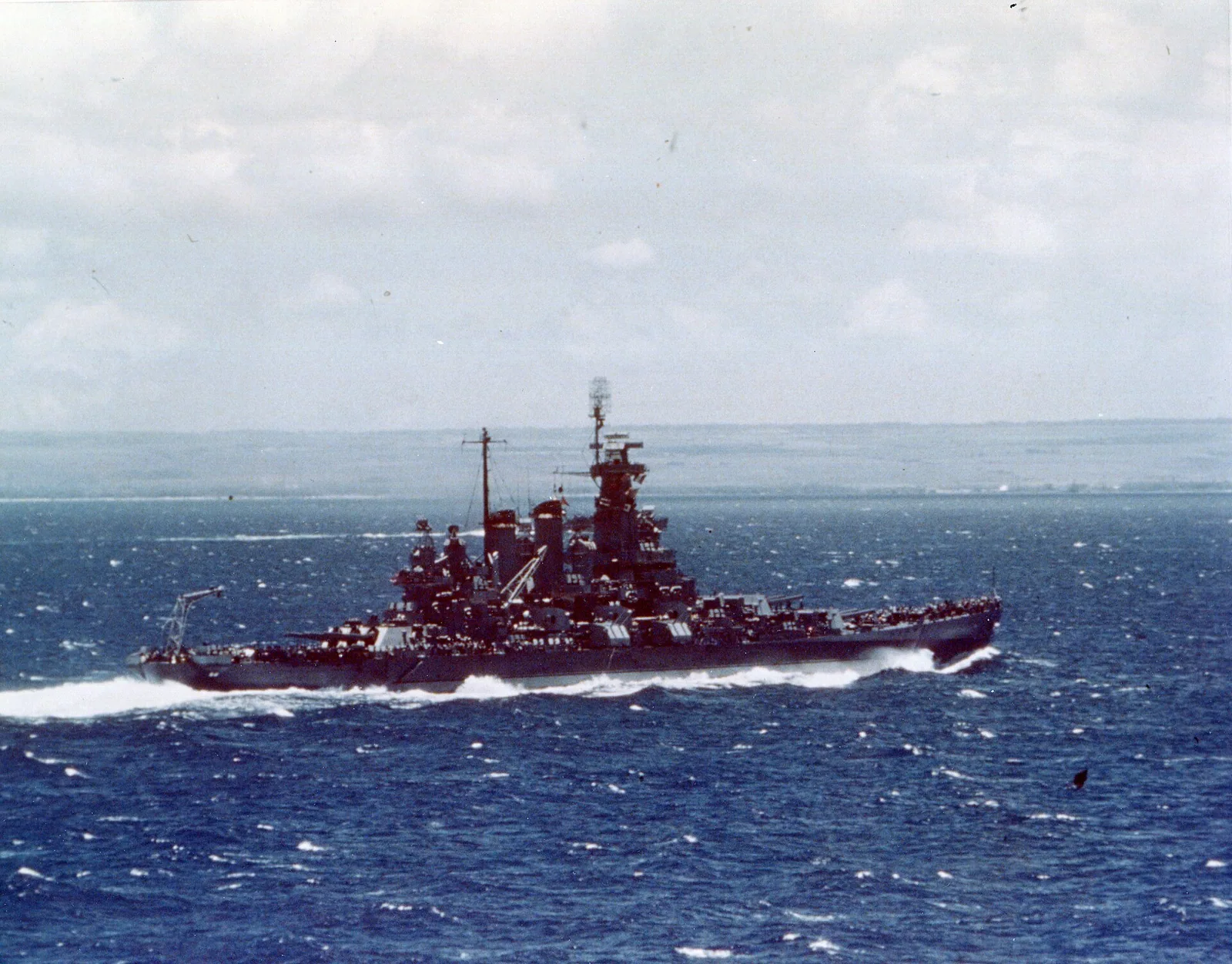
Washington departed Noumea on 30 April 1943, bound for the Hawaiian Islands. While en route, TF 16 joined up; and, together, the ships reached Pearl Harbor on 8 May. Washington, as a unit of, and as flagship for, TF 60, carried out battle practice in Hawaiian waters until 28 May 1943, after which time she put into the Pearl Harbor Navy Yard for overhaul.
Washington resumed battle practice in the Hawaiian operating area upon conclusion of those repairs and alterations and joined a convoy on 27 July to form Task Group (TG) 56.14, bound for the South Pacific. Detached on 5 August, Washington reached Havannah Harbor, at Efate, in the New Hebrides, on the 7th. She then operated out of Efate until late in October, principally engaged in battle practice and tactics with fast carrier task forces.
Departing Havannah Harbor on the last day of October, Washington sailed as a unit of TG 53.2, four battleships and six destroyers. The next day, the carriers Enterprise, Essex (CV-9), and Independence (CVL-22), as well as the other screening units of TG 53.3, joined TG 53.2 and came under Rear Admiral Lee. The ships held combined maneuvers until 5 November, when the carriers departed the formation. Washington, with her escorts, steamed to Viti Levu, in the Fiji Islands, arriving on the 7th.
Four days later, however, the battleship was again underway, with Rear Admiral Lee, by that point Commander, Battleships, Pacific, embarked, in company with other units of BatDivs 8 and 9. On the 15th, the battlewagons and their screens joined Rear Admiral C. A. "Baldy" Pownall's TG 50.1, Rear Admiral Pownall flying his two-starred flag in Yorktown (CV-10), the namesake of the carrier lost at Midway. The combined force then proceeded toward the Gilbert Islands to join in the daily bombings of Japanese positions in the Gilberts and Marshalls-softening them up for impending assault.
On the 19th, the planes from TG 50.1 attacked Mili and Jaluit in the Marshalls, continuing those strikes through 20 November, the day upon which Navy, Marine, and Army forces landed on Tarawa and Makin in the Gilberts. On the 22d, the task group sent its planes against Mili in successive waves; subsequently, the group steamed to operate north of Makin.
Washington rendezvoused with other carrier groups that composed TF 50 on 25 November and, during the reorganization that followed, was assigned to TG 50.4, the last carrier task group under the command of Hear Admiral Frederick C. "Ted" Sherman . The carriers comprising the core of the group were Bunker Hill (CV-17) and Monterey (CVL-26); the battleships screening them were Alabama (BB-50) and South Dakota. Eight destroyers rounded out the screen.
The group operated north of Makin, providing air, surface, and antisubmarine protection for the unfolding unloading operations at Makin, effective on 26 November. Enemy planes attacked the group on the 27th and 28th but were driven off without inflicting any damage on the fast carrier task forces.
As the Gilbert Islands campaign drew to a close, TG 50.8 was formed on 6 December, under Rear Admiral Lee, in Washington. Other ships of that group included sistership North Carolina (BB-55), Massachusetts (BB-59), Indiana (BB-58), South Dakota, and Alabama (BB-60) and the Fleet carriers Bunker Hill and Monterey. Eleven destroyers screened the heavy ships.
The group first steamed south and west of Ocean Island to take position for the scheduled air and surface bombardment of the island of Nauru. Before dawn on 8 December, the carriers launched their strike groups while the bombardment force formed in column; 135 rounds of 16-inch fire from the six battleships fell on the enemy installations on Nauru; and, upon completion of the shelling, the battleships' secondary batteries took their turn; two planes from each battleship spotted the fall of shot.
After a further period of air strikes had been flown off against Nauru, the task group sailed for Efate, where they arrived on 12 December. On that day, due to a change in the highest command echelons, TF 57 became TF 37.
1944 Philippine Sea
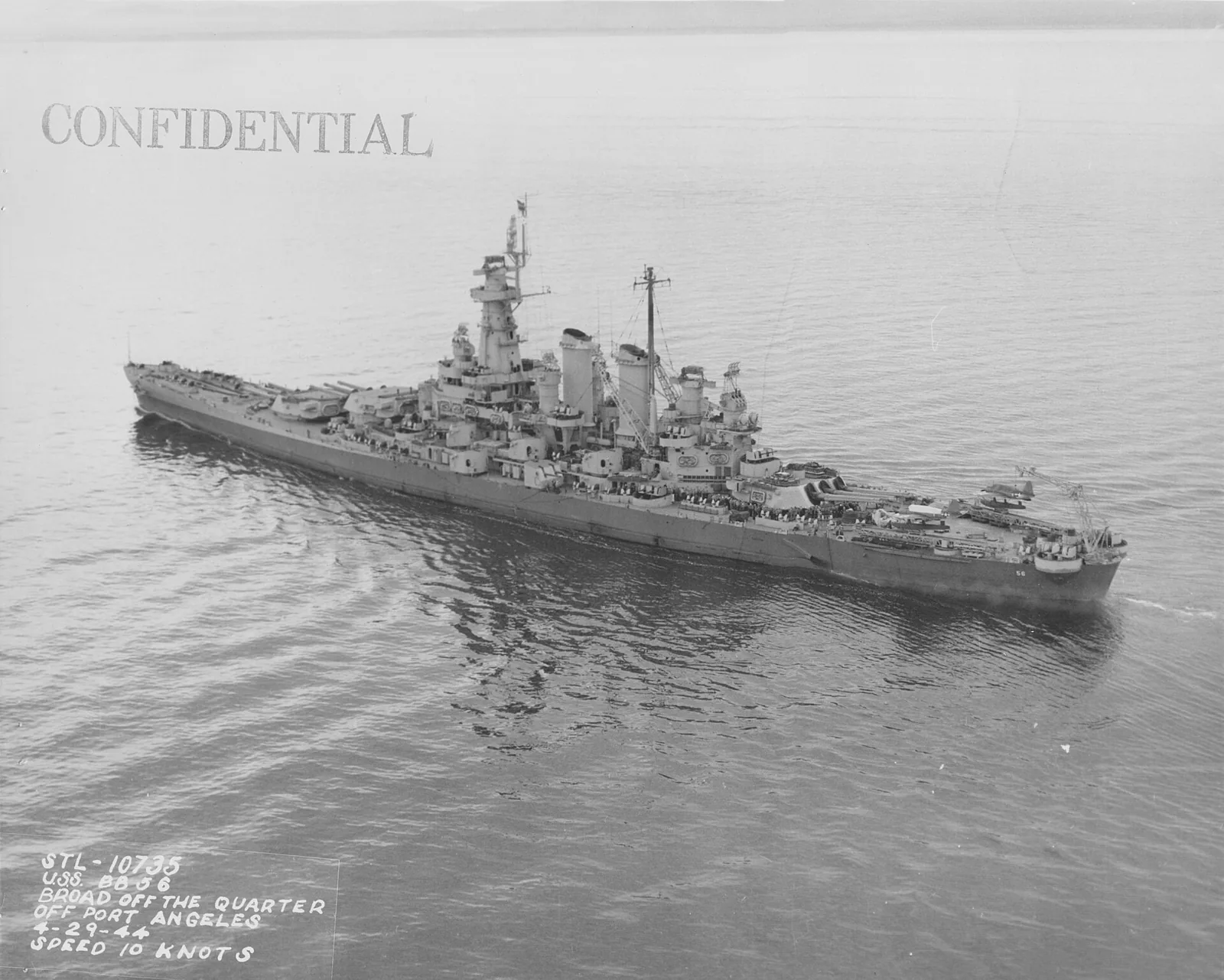
Washington tarried at Efate for less than two weeks. Underway on Christmas Day, flying Rear Admiral Lee's flag, the battleship sailed in company with her sister-ship North Carolina and a screen of four destroyers to conduct gunnery practice, returning to the New Hebrides on 7 January 1944.
Eleven days later, the battleship departed Efate for the Ellice Islands. Joining TG 37.2, carriers Monterey and Bunker Hill and four destroyers, en route, Washington reached Funafuti, Ellice Islands, on 20 January. Three days later, the battleship, along with the rest of the task group, put to sea to make rendezvous with elements of TF 58, the fast carrier task force under the overall command of Vice Admiral Marc A. "Pete" Mitscher . Becoming part of TG 58.1, Washington screened the fast carriers in her group as they launched air strikes on Taroa and Kwajalein in the waning days of January 1944. Washington, together with Massachusetts and Indiana, left the formation with four destroyers as screen and shelled Kwajalein Atoll on the 30th. Further air strikes followed the next day.
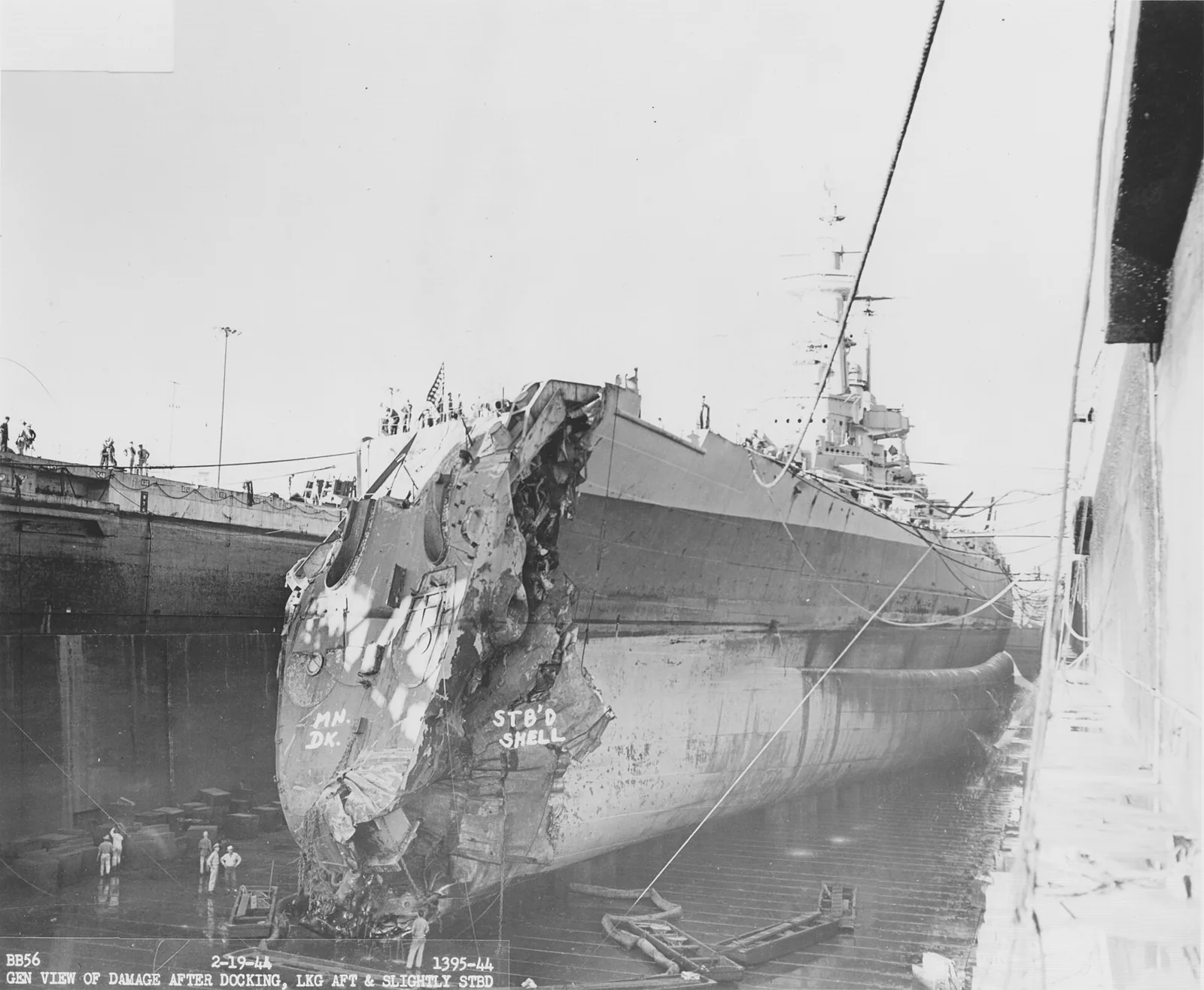
On 1 February, however, misfortune reared her head; Washington, while maneuvering in the inky darkness, rammed Indiana as she cut across Washington's bow while dropping out of formation to fuel escorting destroyers. Both battleships retired for repairs; Washington having sustained 60 feet of crumpled bow plating. Both ships put into the lagoon at Majuro the next morning. Subsequently, after reinforcing the damaged bow, Washington departed Majuro on 11 February, bound for the Hawaiian Islands.
With a temporary bow fitted at the Pearl Harbor Navy Yard, Washington continued on for the west coast of the United States. Reaching the Puget Sound Navy Yard, Bremerton, Wash., the battleship received a new bow over the weeks that followed her arrival. Joining BatDiv 4 at Port Townsend, Wash., Washington embarked 500 men as passengers and sailed for Pearl Harbor, reaching her destination on 13 June and disembarking her passengers.
Arriving back at Majuro on 30 May, Washington again flew Admiral Lee's flag as he shifted on board the battleship soon after her arrival. Lee, now a vice admiral, rode in the battleship as she headed out to sea again, departing Majuro on 7 June and joining Mitscher's fast carrier TF 58.
Washington supported the air strikes pummeling enemy defenses in the Marianas on the islands of Saipan , Tinian, Guam , Rota, and Pagan. Task Force 58's fliers also attacked twice and damaged a Japanese convoy in the vicinity on 12 June. The following day, Vice Admiral Lee's battleship-destroyer task group was detached from the main body of the force and conducted shore bombardment against enemy installations on Saipan and Tinian. Relieved on the 14th by two task groups under Rear Admirals J. B. Oldendorf and W. L. Ainsworth, Vice Admiral Lee's group retired momentarily.
On 15 June, Admiral Mitscher's TF 58 planes bombed Japanese installations on Iwo Jima in the Volcano Islands and Chichi Jima and Haha Jima in the Bonins. Meanwhile, Marines landed on Saipan under cover of intensive naval gunfire and carrier-based planes.
That same day, Admiral Jisaburo Ozawa, commanding the main body of the Japanese Fleet, was ordered to attack and destroy the invasion force in the Marianas. The departure of his carrier group, however, came under the scrutiny of the submarine Redfin (SS-272), as it left Tawi Tawi, the westernmost island in the Sulu Archipelago.
Flying Fish (SS-229) also sighted Ozawa's force as it entered the Philippine Sea. Cavalla (SS-244) radioed a contact report on an enemy refueling group on 16 June and continued tracking it as it headed for the Marianas. She again sighted Japanese Combined Fleet units on 18 June.
Admiral Raymond A. Spruance , commanding the 5th Fleet, had meanwhile learned of the Japanese movement and accordingly issued his battle plan. Vice Admiral Lee's force formed a protective screen around the vital fleet carriers. Washington, six other battleships, four heavy cruisers, and 14 destroyers deployed to cover the flattops; on 19 June, the ships came under attack from Japanese carrier-based and land-based planes as the Battle of the Philippine Sea commenced.
The tremendous firepower of the screen, however, together with the aggressive combat air patrols flown from the American carriers, proved too much for even the aggressive Japanese. The heavy loss of Japanese aircraft, sometimes referred to as the " Marianas Turkey Shoot ," caused serious losses in the Japanese naval air arm. During four massive raids, the enemy launched 373 planes-only 130 returned.
In addition, 50 land-based bombers from Guam fell in flames. Over 300 American carrier planes were involved in the aerial action; their losses amounted to comparatively few: 23 shot down and six lost operationally without the loss of a single ship in Mitscher's task force.
Only a few of the enemy planes managed to get through the barrage of flak and fighters, one scoring a direct hit on South Dakota -killing 27 and wounding 23. A bomb burst over the flight deck of the carrier Wasp (CV-18), killing one man, wounding 12, and covering her flight deck with bits of phosphorus. Two planes dove on Bunker Hill, one scoring a near miss and the other a hit that holed an elevator, knocking put the hanger deck gasoline system temporarily; killing three and wounding 73. Several fires started were promptly quenched. In addition, Minneapolis (CA-36) and Indiana also received slight damage.
Not only did the Japanese lose heavily in planes; two of their carriers were soon on their way to the bottom- Taiho, torpedoed and sunk by Albacore (SS-218); and Shokaku, sunk by Cavalla. Admiral Ozawa, his flagship, Taiho, sunk out from under him, transferred his flag to Zuikaku.
As the Battle of the Philippine Sea proceeded to a close, the Japanese Mobile Fleet steamed back to its bases, defeated. Admiral Mitscher's task force meanwhile retired to cover the invasion operations proceeding in the Marianas. Washington fueled east of that chain of islands and then continued her screening duties with TG 58.4 to the south and west of Saipan, supporting the continuing air strikes on islands in the Marianas, the strikes concentrated on Guam by that point.
On 25 July, aircraft of TG 58.4 conducted air strikes on the Palaus and on enemy shipping in the vicinity, continuing their schedule of strikes through 6 August. On that day, Washington, with Iowa (BB-61), Indiana, Alabama, the light cruiser Birmingham (CL-62), and a destroyer screen, was detached from the screen of TG 58.4, forming TG 58.7, under Vice Admiral Lee.
That group arrived at Eniwetok Atoll in the Marshalls to refuel and replenish on 11 August and remained there for almost the balance of the month. On 30 August, that group departed, headed for, first, the Admiralty Islands, and ultimately, the Palaus.
Washington's heavy guns supported the taking of Peleliu and Angaur in the Palaus and supported the carrier strikes on Okinawa on 10 October, on northern Luzon and Formosa from 11 to 14 October, as well as the Visayan air strikes on 21 October. From 5 November 1944 to 17 February 1945, Washington, as a vital unit of the fast carrier striking forces, supported raids on Okinawa, in the Ryukyus; Formosa; Luzon; Camranh Bay, French Indochina; Saigon, French Indochina; Hong Kong; Canton; Hainan Island; Nansei Shoto; and the heart of the enemy homeland-Tokyo itself.
1945 Iwo Jima
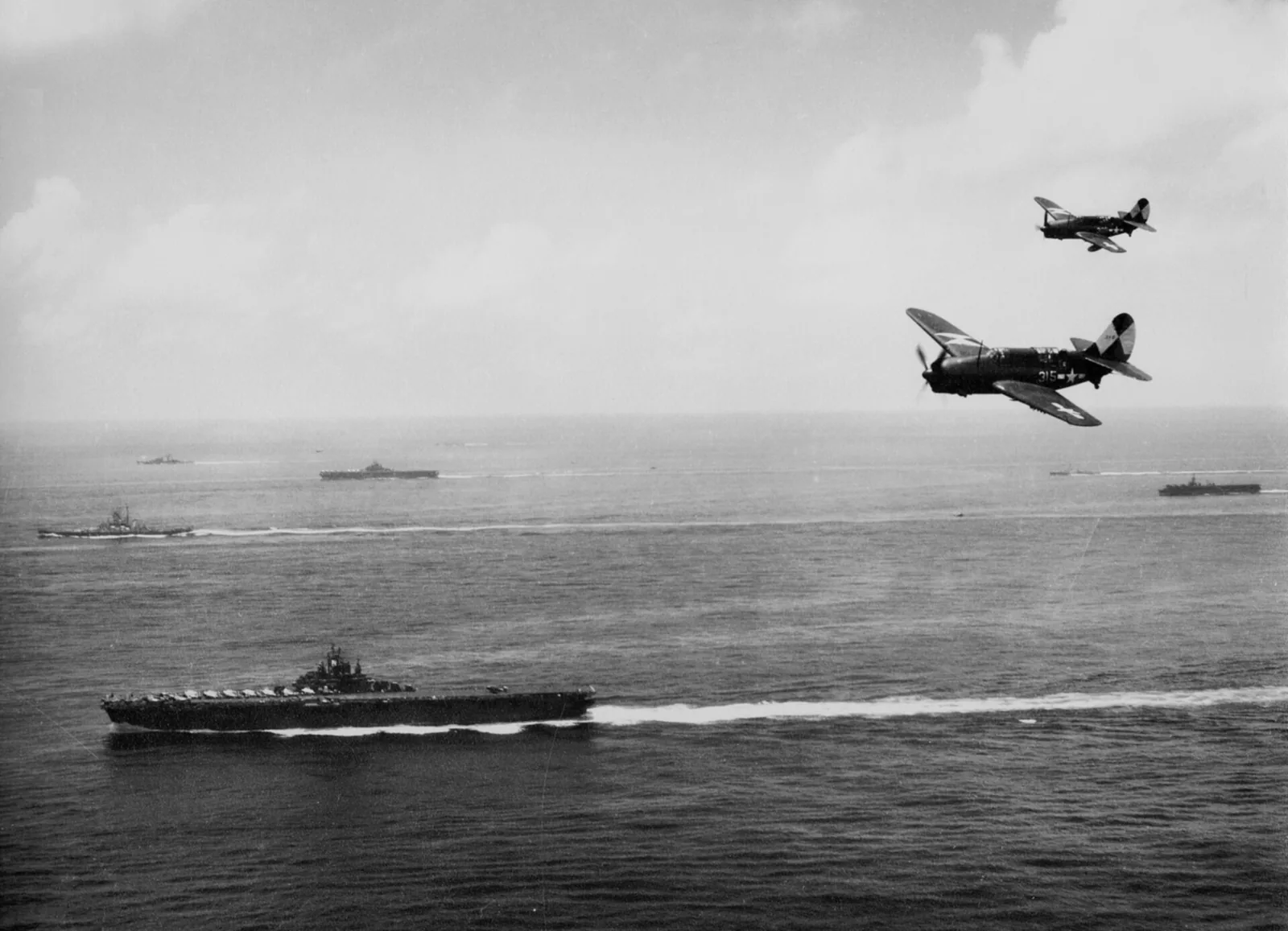
From 19 to 22 February 1945, Washington's heavy rifles hurled 16-inch shells shoreward in support of the landings on Iwo Jima . In preparation for the assault, Washington's main and secondary batteries destroyed gun positions, troop concentrations, and other ground installations. From 23 February to 16 March, the fast battleship supported the unfolding invasion of Iwo Jima, including a carrier raid upon Tokyo on 25 February. On 18, 19, and 29 March, Washington screened the Fleet's carriers as they launched airstrikes against Japanese airfields and other installations on the island of Kyushu. On 24 March, and again on 19 April, Washington lent her support to the shellings of Japanese positions on the island of Okinawa .
Anchoring at San Pedro Bay, Leyte, on 1 June 1945 after an almost ceaseless slate of operations, Washington sailed for the west coast of the United States on 6 June, making stops at Guam and Pearl Harbor before reaching the Puget Sound Navy Yard on 23 June.
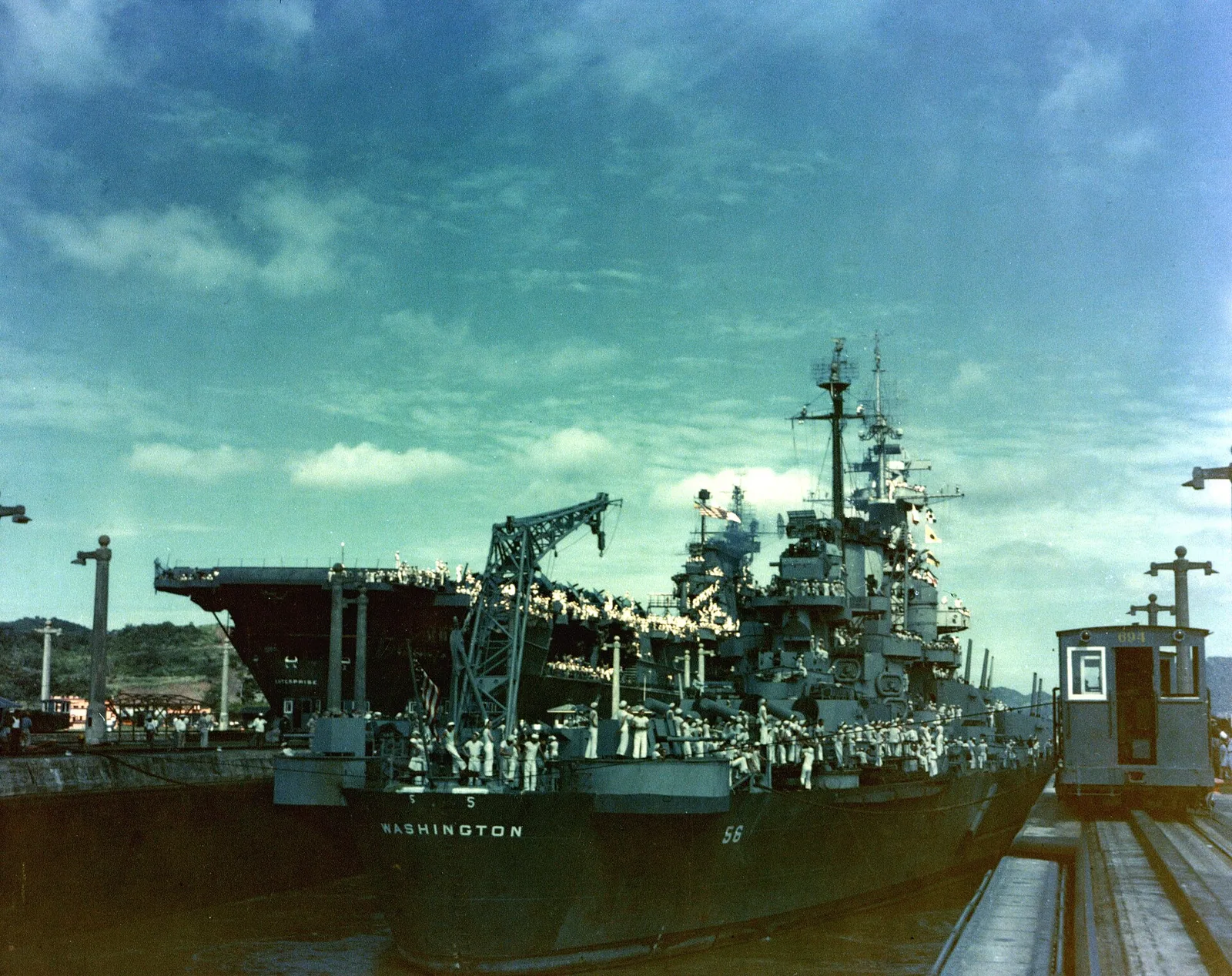
As it turned out, Washington would not participate in active combat in the Pacific theater again. Her final wartime refit carried on through V-J Day in mid-August of 1945 and the formal Japanese surrender in Tokyo Bay on 2 September. She completed her post-repair trials and conducted underway training out of San Pedro, Calif., before she headed for the Panama Canal, returning to the Atlantic Ocean. Joining TG 11.6 on 6 October, with Vice Admiral Frederick C. Sherman in overall command, she soon transited the Panama Canal and headed for Philadelphia, the place where she had been "born." Arriving at the Philadelphia Naval Shipyard on 17 October, she participated in Navy Day ceremonies there on the 27th.
Assigned to troop transport duty on 2 November 1945, as part of the "Magic Carpet" operations, Washington went into dockyard hands on that day, emerging on the 15th with additional bunking facilities below and a crew that now consisted of only 84 officers and 835 men. Sailing on 15 November for the British Isles, Washington reached Southampton, England, on 22 November.
Post-war 1946–1949
1947
After embarking 185 army officers and 1,479 enlisted men, Washington sailed for New York. She completed that voyage and, after that brief stint as a transport, was placed out of commission, in reserve, on 27 June 1947. Assigned to the New York group of the Atlantic Reserve Fleet, Washington remained inactive through the late 1950's, ultimately being struck from the Navy list on 1 June I960. The old warrior was sold on 24 May 1961 to the Lipsett Division, Luria Bros., of New York City, and was scrapped soon thereafter.
Washington (BB-56) earned 13 battle stars during World War II in operations that had carried her from the Arctic Circle to the western Pacific.
Other photographs
Held for this vessel, and not tied to any part of the account above.


References
Every work this entry draws on. There are no numbered markers in the text above: what we hold is the provenance of the page — this history, this article, these photographs.
- History Washington VIII (BB-56) Dictionary of American Naval Fighting Ships, Naval History and Heritage Command. A work of the United States Government, in the public domain — the only text on this site reproduced verbatim.
- Facts USS Washington (BB-56) Structured facts only — dates, dimensions, armament and fate. No wording is taken from it. Harvested 1 August 2026.
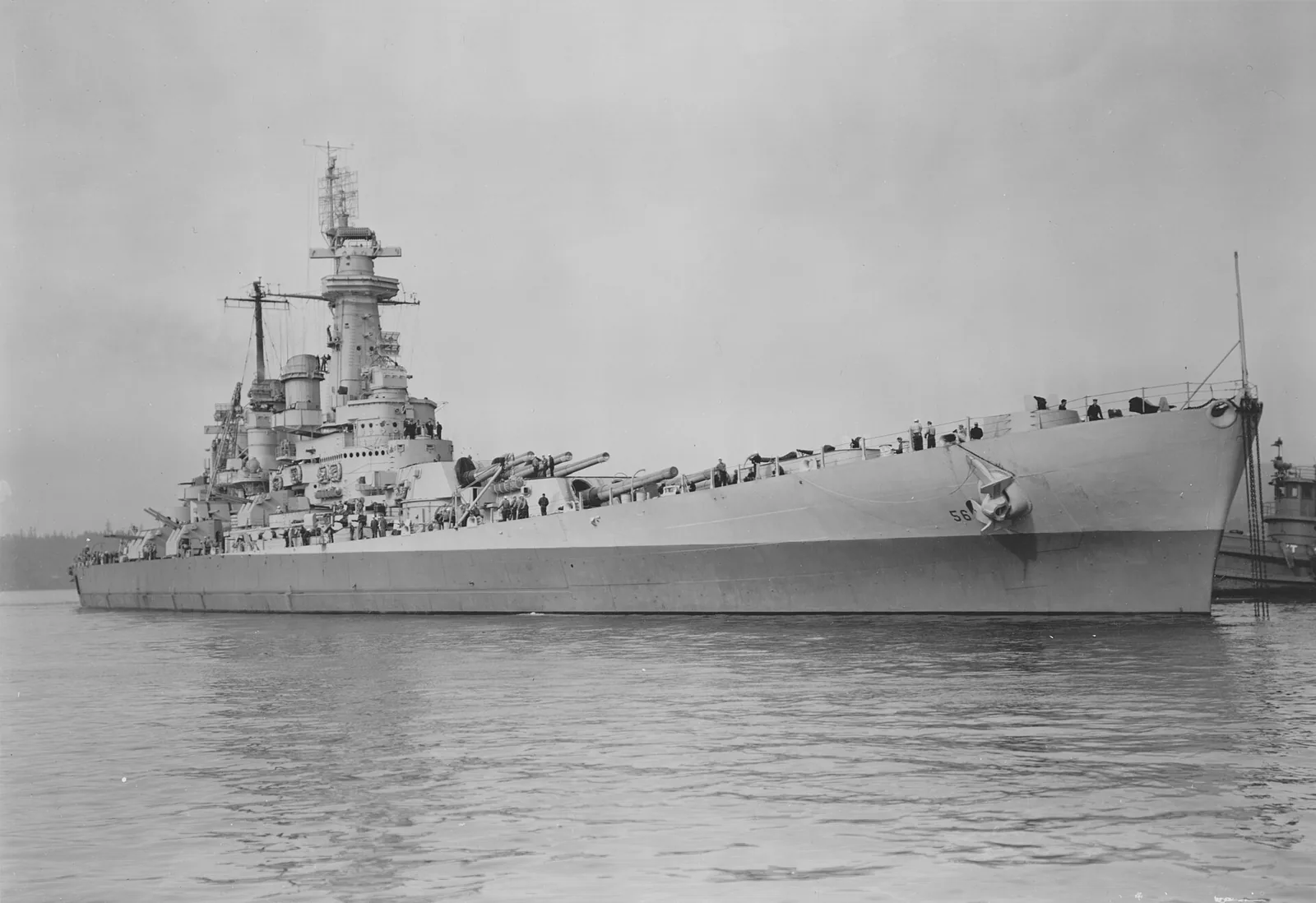
- Photograph USS Washington (BB-56) in Puget Sound, 10 September 1945 US Navy — Naval Historical Center ; "Photograph from the en:Bureau of Ships Collection in the U.S. National Archives." — Public domain — Wikimedia Commons
- Photograph North Carolina class battleship recognition drawings US Navy — NHC — Public domain — Wikimedia Commons
- Photograph 16in Gun Turret U.S. Navy — caption from p. 52 of Boys of the Battleship North Carolina , by Cindy Horrell Ramsey (John F. Blair, 2007, ISBN 0895873397 ); she obtained this image from the Battleship North Carolina Collection. Original was found in "Naval Ordnance and Gunnery - 1952" Navpers 16116-B, published by the Navy's Navy Personnel Command/ Bureau of Naval Personnel . This particular image/scan is from http://battleships.freewebsitehosting.com/16in50cal.html — Public domain — Wikimedia Commons
- Photograph USS Washington (BB-56) launching ceremony, 1 June 1940 US Navy Employee — navsource.org , stated as USN photo — Public domain — Wikimedia Commons
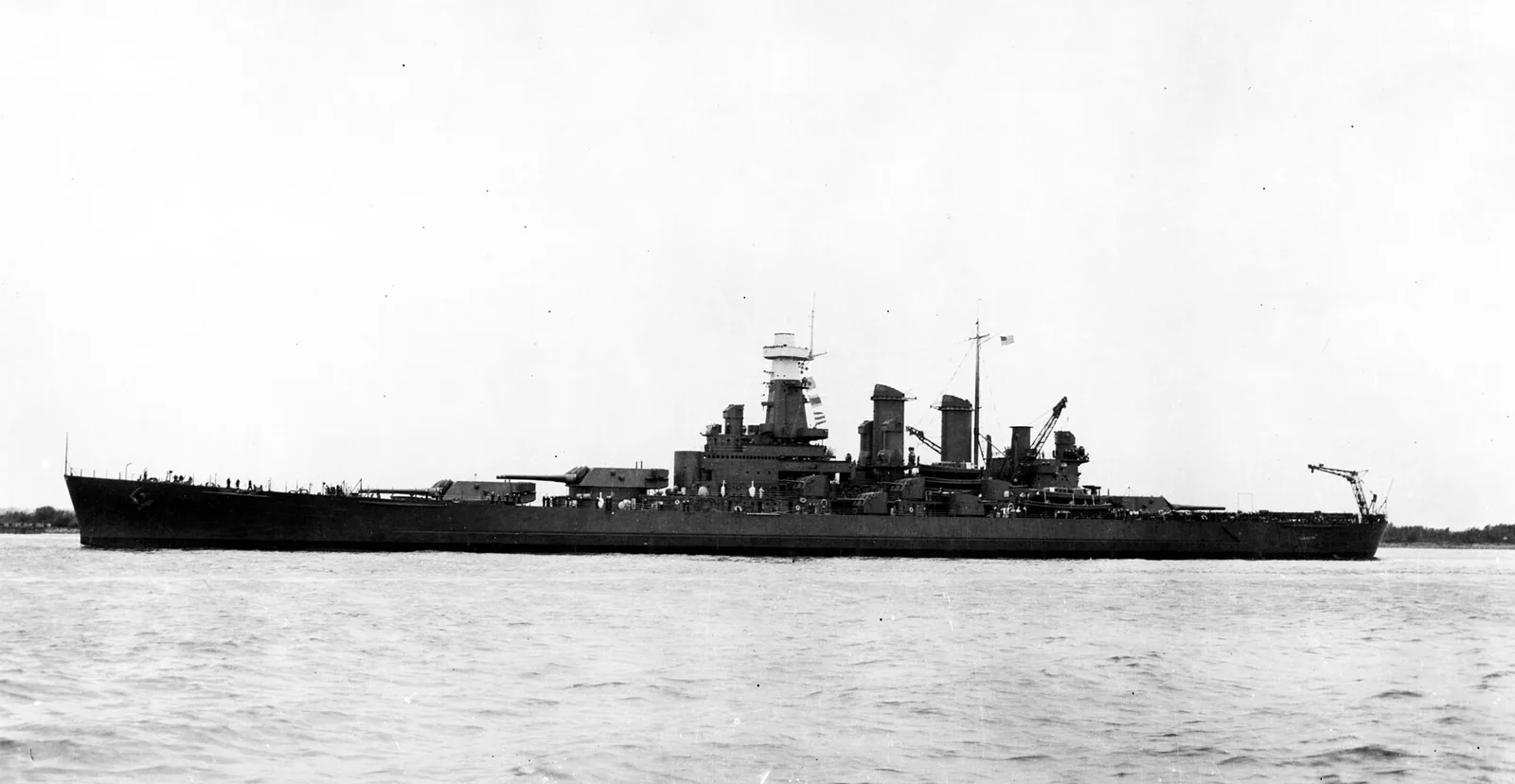
- Photograph Washington (BB56). Port bow, 05-29-1941 - NARA - 513042 Unknown author or not provided — U.S. National Archives and Records Administration — Public domain — Wikimedia Commons
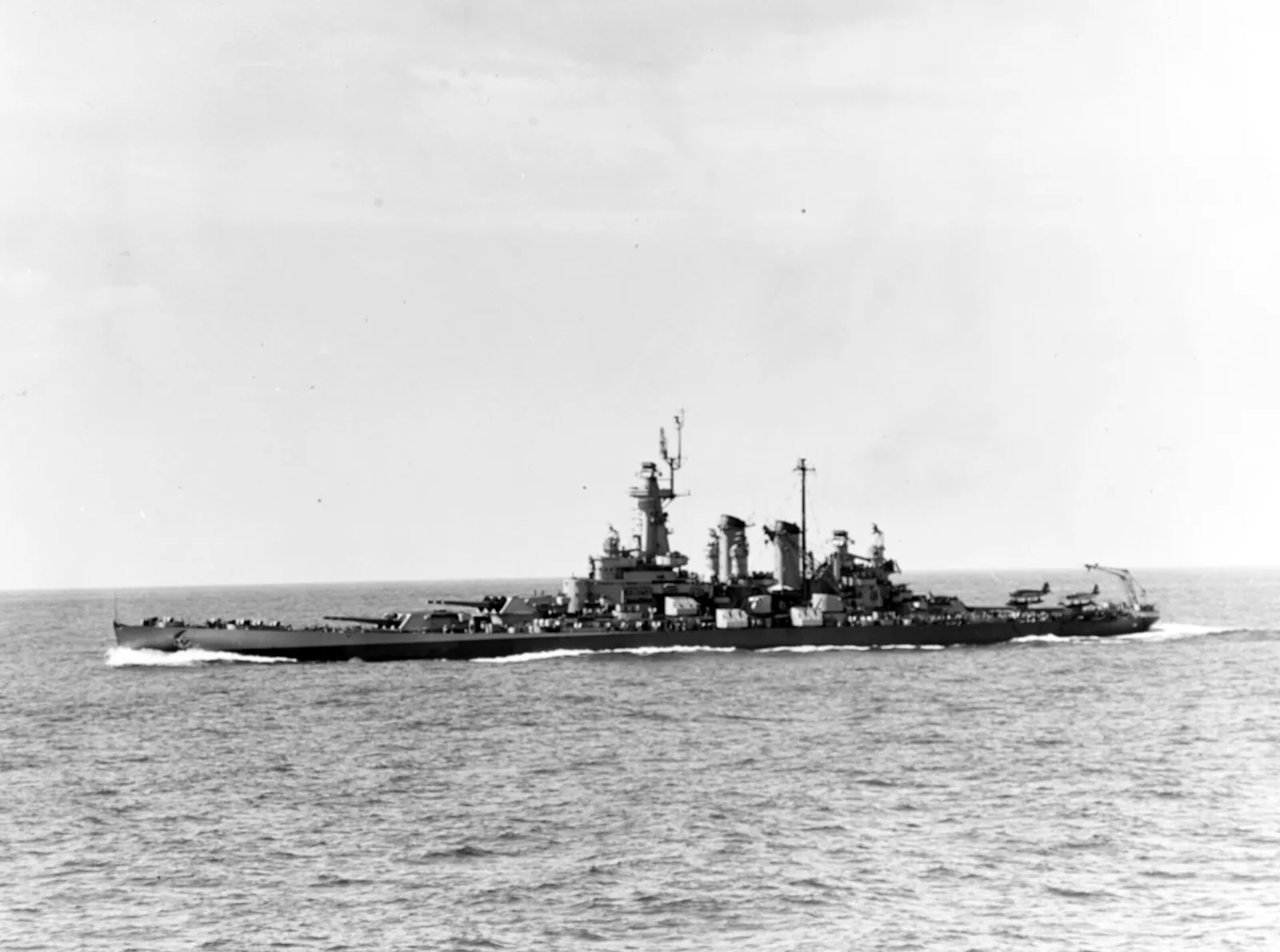
- Photograph USS Washington (BB-56) off New York City, August 1942 Bureau of Ships Collection — Naval Historical Center — Public domain — Wikimedia Commons
- Photograph Kirishima Tsukumowan 1937 Shizuo Fukui — Kure Maritime Museum, (edited by Kazushige Todaka), Japanese Naval Warship Photo Album: Battleships and Battle Cruisers , p. 124 — Public domain — Wikimedia Commons
- Photograph NavalGuadalcanalWashington U.S. Navy — U.S. Navy photo [1] from the USS Washington (BB-56) World War II cruise book available at Navysite.de — Public domain — Wikimedia Commons
- Photograph 80-G-K-15103 (24842873691) National Museum of the U.S. Navy — 80-G-K-15103 — Public domain — Wikimedia Commons
- Photograph SBD VB-16 over USS Washington 1943 U.S. Navy photo 80-G-204897 — U.S. Navy National Museum of Naval Aviation photo No. 1996.253.680 [1] — Public domain — Wikimedia Commons
- Photograph USS Washington damage after collision NARA BS 109965 United States Navy — U.S. National Archives and Records Administration — Public domain — Wikimedia Commons
- Photograph USS Washington off Port Angeles NARA STL-10735 United States Navy — U.S. National Archives and Records Administration — Public domain — Wikimedia Commons
- Photograph Map of Battle of Leyte Gulf United States Army — Scanned from Reports of General MacArthur (1994 facsimile printing), Vol 1. Plate #60 Transferred from en.wikipedia to Commons by Kelly using CommonsHelper — Public domain — Wikimedia Commons
- Photograph USS Washington collision damage repaired NARA BS 63999 United States Navy — U.S. National Archives and Records Administration — Public domain — Wikimedia Commons
- Photograph USS Essex (CV-9) with TG 38 3 off Okinawa 1945 U.S. Navy — U.S. Navy National Museum of Naval Aviation photo No. 1996.253.360 — Public domain — Wikimedia Commons
- Photograph USS Washington (BB-56) and USS Enterprise (CV-6) in the Panama Canal, October 1945 U.S. Navy — Official U.S. Navy photo 80-G-K-6568 from the U.S. Naval History and Heritage Command — Public domain — Wikimedia Commons
- Photograph 19-N-24148 (24568525969) National Museum of the U.S. Navy — 19-N-24148 — Public domain — Wikimedia Commons
- Photograph 80-G-358634 (24936151675) National Museum of the U.S. Navy — 80-G-358634 — Public domain — Wikimedia Commons
- Photograph 80-G-704582 Rear Admiral Glenn B. Davis, U.S. Navy U.S. Navy — Vice admiral Glenn B. Davis — Public domain — Wikimedia Commons
- Photograph King George VI inspects the crew of USS Washington (BB-56), June 1942 US Navy — NHC — Public domain — Wikimedia Commons