HMS Repulse (1916)
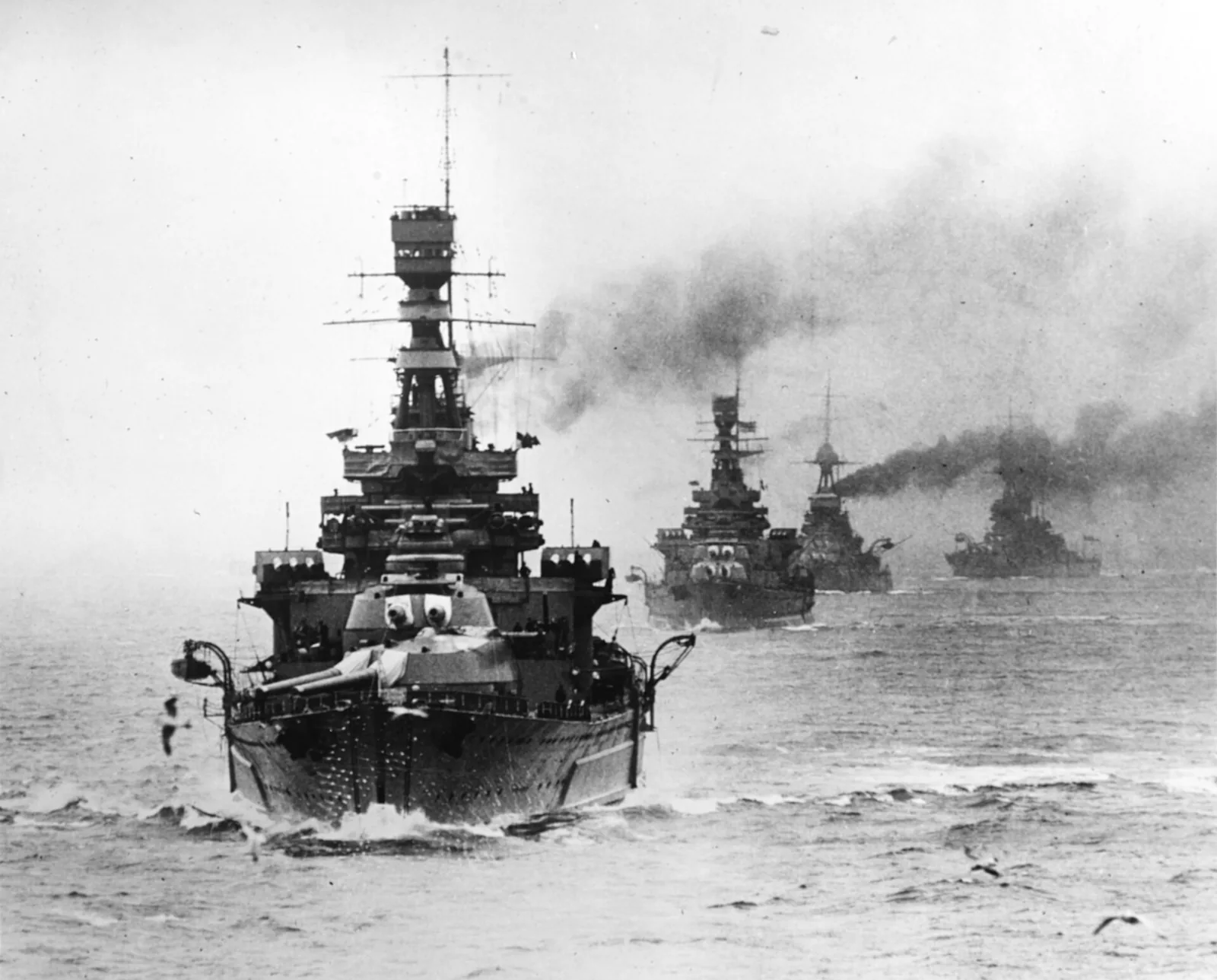
Service
- as Repulse18 August 1916 — 10 December 1941831 days of the war
- Name
- HMS Repulse
- Pennant / hull number
- 1916
- Builder
- John Brown & Company, Clydebank
- Ordered
- 30 December 1914
- Laid down
- 25 January 1915
- Launched
- 8 January 1916
- Commissioned
- 18 August 1916
- Fate
- Sunk by Japanese bombers, 10 December 1941
By aircraft (1941) - Status
- Wreck
Specifications — As built
- Displacement, standard
- 27,200 long tons (27,636 t)
- Displacement, full load
- 32,220 long tons (32,737 t)
- Length
- 228.6 m (750 ft)
- Beam
- 27.43 m (90 ft)
- Draught
- 8.23 m (27 ft)
- Speed
- 31.5 knots (58.3 km/h, 36.2 mph)
- Main gun
- 381 mm (15 in)
HMS Repulse was a Renown-class battlecruiser in service with the Royal Navy. She carried the pennant number 1916. John Brown & Company, Clydebank laid her keel on 25 January 1915. Launched on 8 January 1916, she entered service on 18 August 1916.
Two ships of the class were built. The class followed the HMS Tiger (1913) and was succeeded by the Courageous-class battlecruiser.
She displaced 27,200 long tons standard and 32,220 long tons at full load. She measured 228.6 m (750 ft) long with a beam of 27.4 m (90 ft). Her designed speed was 31.5 knots, and she carried a complement of 1,181.
Her main battery was six 381 mm (15 in) guns in three twin mountings. Her machinery developed 112,000 shp.
She was in commission for 831 days of the Second World War.
She was sunk on 10 December 1941 by aircraft, at 3°37′N 104°20′E. The wreck survives.
Written from the harvested record. Every figure above is sourced; the wording is this site's own.
Armament and machinery
This vessel is recorded in 2 configurations. Wartime refits changed armament and complement substantially, so each is kept separately rather than averaged into one set of figures. The figures above are as built.
As built
- Propulsion
- 4 × shafts, 2 × steam turbine sets
- Power
- 42 × water-tube boilers
- 112000 shp
- Armament
- 3 × twin 15 in guns
- 5 × triple, 2 × single 4 in guns
- 2 × single 3 in AA guns
- 2 × 21 in torpedo tubes
- Armour
- Belt: 3 - 6 in
- Decks: 1 - 2.5 in
- Barbettes: 4 - 7 in
- Gun turrets: 7 - 9 in
- Conning tower: 10 in
- Bulkheads: 3 - 4 in
1939
- Displacement, standard
- 34,600 long tons (35,155 t)
- Draught
- 8.84 m (29 ft)
- Speed
- 31 knots (57.4 km/h, 35.7 mph)
- Range
- 6,650 nmi (12,316 km)
- Complement
- 1,181
- Main gun
- 381 mm (15 in)
- Propulsion
- 4 × shafts, 4 × steam turbines
- Power
- 8 × boilers, 112000 shp
- Armament
- 3 × twin 15 in guns
- 3 × triple 4 in guns
- 6 × single 4 in AA guns
- 2 × quadruple 40 mm 2-pdr AA guns
- Armour
- Belt: 2 - 9 in
- Decks: 1 - 4 in
- otherwise no change
- Aircraft
- 4 × seaplanes
Sister ships
Sources
- Facts harvested from HMS Repulse (1916) on Wikipedia. Figures only — no wording is taken from it.
- Photograph: Underwood & Underwood — Official U.S. Navy photo NH 57183 from the U.S. Navy Naval History and Heritage Command — Public domain — Wikimedia Commons