United States Navy — Submarine
USS Argonaut (SS-475) — service history
This is the full service history. For the vessel's particulars, photograph and specifications, see the entry.
In the words of the US Navy. The account below is reproduced verbatim from the Dictionary of American Naval Fighting Ships, compiled by the Naval History and Heritage Command — a work of the United States Government, in the public domain, and the only text on this site not written here.
Before commissioning
A relative of the octopus, sometimes called the paper nautilus, which propels itself underwater by expelling a jet of water. The name argonaut may also have been inspired by the submarine of that name built in 1897 by Simon Lake which was the first submarine to navigate extensively in the open sea. Ultimately, the name is derived from the band of 50 heroes in Greek legend who sailed with Jason in the ship Argo to retrieve the Golden Fleece.
Second World War 1939–1945
1944
The second Argonaut (SS-475) was laid down on 28 June 1944 by the Portsmouth (N.H.) Navy Yard; launched on 1 October 1944; sponsored by Mrs. Allen R. McCann, the wife of Capt. McCann; and commissioned on 15 January 1945, Lt. Comdr. John Sneed Schmidt in command.
The submarine held shakedown in the Portsmouth area and in Narragansett Bay and returned briefly to Portsmouth on 27 March for post-shakedown availability. She then sailed on 14 April for Key West, Fla., where she conducted special tests for lighter-than-air craft and training operations with the Fleet Sound School. Argonaut departed the Florida coast on 13 May to transit the Panama Canal en route Hawaii. Reaching Pearl Harbor on 11 June, the submarine spent two weeks in repairs and training exercises before beginning her first war patrol on 28 June.
She made a fuel stop at Saipan on 10 July and then proceeded to the Formosa Strait and the East China and Yellow Seas to search for enemy shipping. On 16 July, Argonaut spotted a downed aviator, picked him up, and later transferred him to Quillback (SS-424). Her only contact with Japanese vessels during the patrol came on 12 August, when Argonaut sank a 25-ton junk with fire from her 40-millimeter and 20-millimeter guns. Since she terminated her patrol at Guam on 21 August, six days after Japan capitulated, this was her only combat action during World War II.
Argonaut departed Guam on 1 September and proceeded, via Pearl Harbor and the Panama Canal, to Tompkinsville, N.Y. She arrived in New York on 4 October but continued on to Portsmouth, N.H., for an overhaul. Early in 1946, Argonaut was assigned to the Atlantic Fleet and was based at Panama. While en route to Panama, Argonaut collided with Honolulu (CL-48) off the eastern coast between New York and Philadelphia during a heavy fog. Both ships sustained minor damage, and Argonaut continued on to Panama. Later in 1946, Argonaut became a unit of Submarine Squadron 2 based at New London, Conn.
Korean War period 1950–1953
1952
In July 1952, the submarine underwent a major conversion at the Philadelphia Naval Shipyard, during which she received a snorkel system and a streamlined conning tower. These changes gave the submarine greater underwater endurance. Argonaut operated from New London until July 1955, when she was reassigned to Submarine Squadron 6 at Norfolk, Va. Following this move, Argonaut was converted to a guided-missile submarine armed with a Regulus I missile.
In 1958, Argonaut's home port was changed to San Juan, Puerto Rico, where she remained for a year, engaged primarily in missile operations. The submarine returned to Norfolk in 1959. During an overhaul in early 1960, Argonaut's missile equipment was removed. When the alterations were completed, the submarine resumed her routine of supporting antisubmarine warfare (ASW) training operations out of Norfolk.
Cold War 1954–1963
1962
On 15 October 1962, Argonaut performed duties in conjunction with the naval quaratine of Cuba. She then had a routine overhaul at the Norfolk Naval Shipyard, Portsmouth, Va. The yard work was completed on 13 May 1963, and the submarine sailed to the New London area for refresher training. After further training in the Virginia capes area, she got underway on 19 August for the Mediterranean and service with the 6th Fleet. Her ports of call during the deployment included Gibraltar; Suda Bay, Crete; Rhodes, Greece; Izmir, Turkey; Toulon and Marseilles, France; and San Remo and Naples, Italy. The submarine returned to home port on 15 December.
Vietnam War period 1964–1975
1965
Argonaut continued her routine of operations along the east coast with periodic deployments to the Mediterranean through 1 December 1965. On that day, she commenced overhaul at the Norfolk Naval Shipyard. Argonaut left the shipyard on 10 June 1966 for sea trials and, on 20 January, headed for New London for refresher training. She then provided services to the submarine school at New London through the remainder of 1966.
The submarine moved to Norfolk early in 1967 but left the Virginia capes area on 9 January, bound for San Juan, Puerto Rico. Argonaut took part in Operation "Springboard" through the rest of January and most of February before leaving the Caribbean on 23 February to return to Norfolk, arriving there five days later. During the next two months, Argonaut prepared for a North Atlantic and Mediterranean cruise. She sailed on 26 May and made her first port call at Trondheim, Norway. The submarine also visited Cuxhaven, Germany; Leith, Scotland; Rota, Spain; Naples, Italy; and Valletta, Malta, before returning to her home port on 20 September. She remained in the local operating area through the duration of the year.
1968
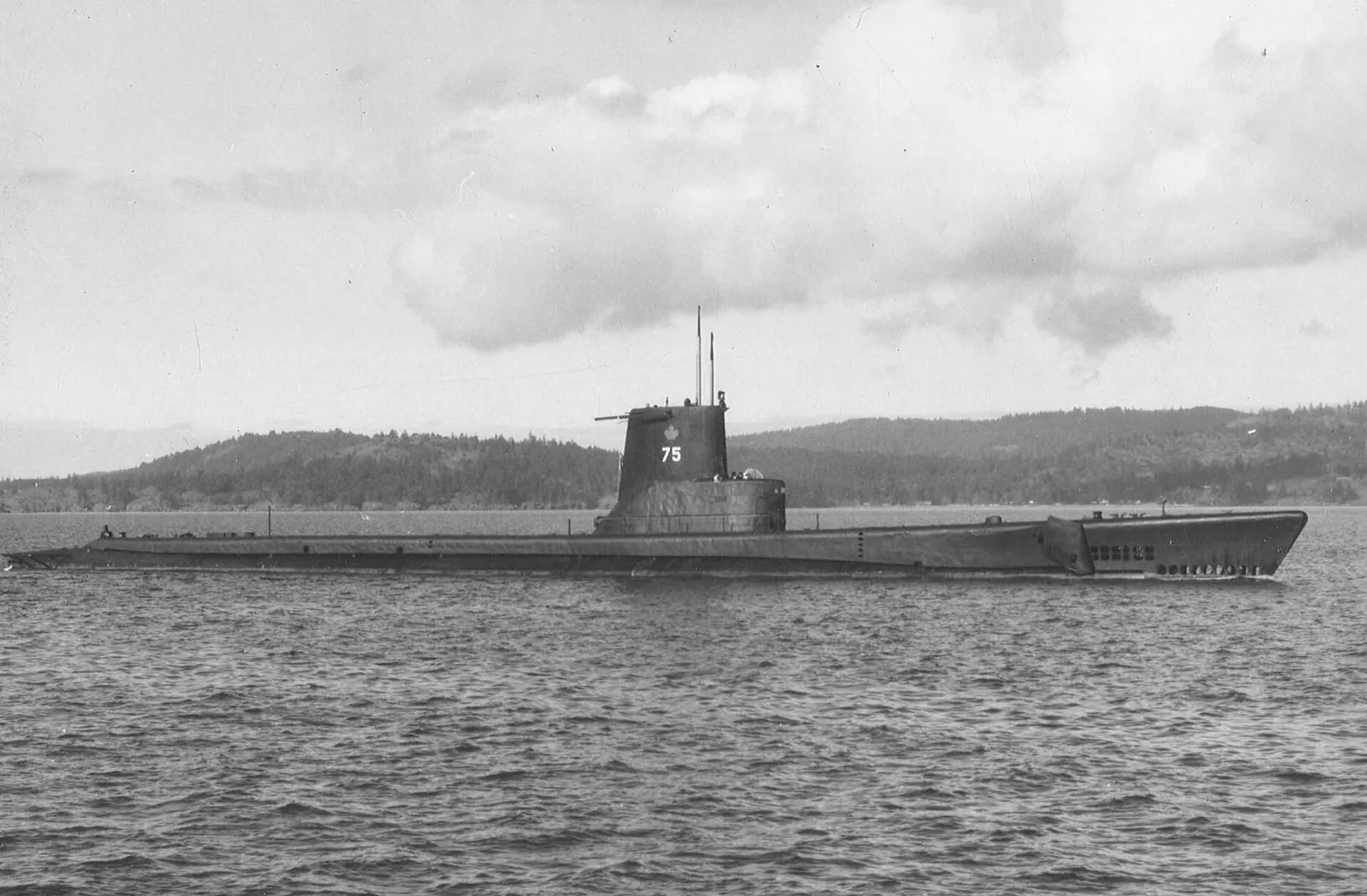
The submarine travelled to New London on 6 February 1968, entered drydock there on 9 February, and remained in it through the 26th. Argonaut left the keelblocks on 27 February and returned to Norfolk. She made a patrol in the Jacksonville, Fla., operating area in mid-March and put in at Port Everglades, Fla., on 22 March. Three days later, the submarine got underway for her home port. Upon her arrival in Norfolk on 29 March, she assumed a schedule of local operations. This was interrupted by another cruise to Port Everglades in October. She returned that month to Norfolk and began preparations for deactivation. Argonaut was decommissioned on 2 December, and her name was struck from the Navy list that same day. She was sold to Canada and served the Royal Canadian Navy as HMCS Rainbow.
Other photographs
Held for this vessel, and not tied to any part of the account above.
References
Every work this entry draws on. There are no numbered markers in the text above: what we hold is the provenance of the page — this history, this article, these photographs.
- History Argonaut II (SS-475) Dictionary of American Naval Fighting Ships, Naval History and Heritage Command. A work of the United States Government, in the public domain — the only text on this site reproduced verbatim.
- Facts USS Argonaut (SS-475) Structured facts only — dates, dimensions, armament and fate. No wording is taken from it. Harvested 1 August 2026.
- Photograph USS Argonaut (SS-475) 22 July 1963 U.S. Navy — https://www.navsource.net/archives/08/08475.htm — Public domain — Wikimedia Commons
- Photograph HMCS Rainbow (SS-75) U.S. Navy — https://www.navsource.net/archives/08/08475.htm — Public domain — Wikimedia Commons
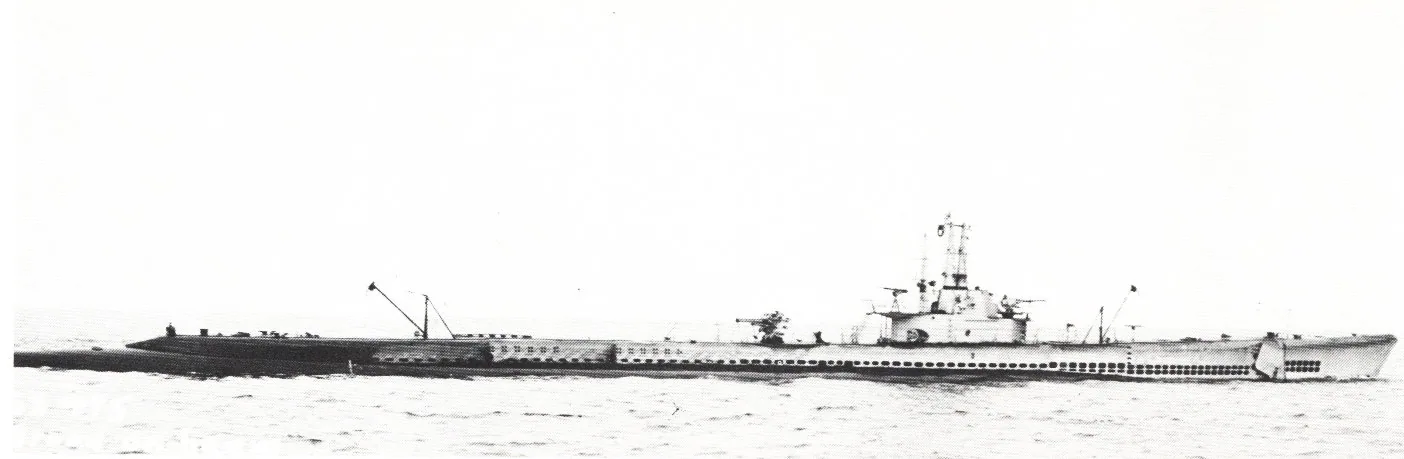
- Photograph USS Argonaut (SS-475) May 1945 U.S. Navy — https://www.navsource.net/archives/08/08475.htm — Public domain — Wikimedia Commons
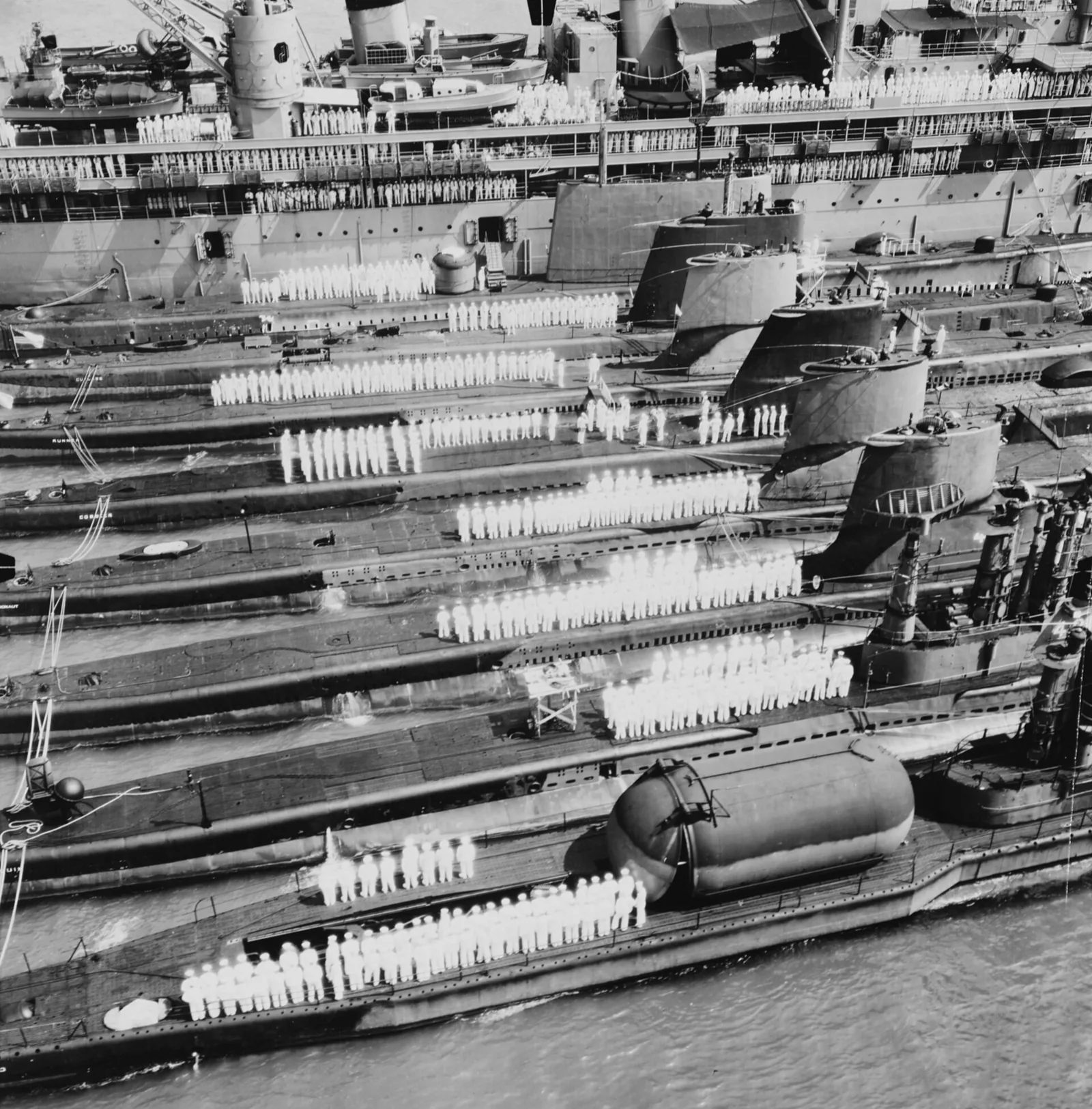
- Photograph USS Orion (AS-18) with submarines at Norfolk Naval Station in the late 1950s U.S. Navy — Official U.S. Navy photo NH 92321 from the U.S. Navy Naval History and Heritage Command — Public domain — Wikimedia Commons