United States Navy — Destroyer
USS Charrette — service history
This is the full service history. For the vessel's particulars, photograph and specifications, see the entry.
In the words of the US Navy. The account below is reproduced verbatim from the Dictionary of American Naval Fighting Ships, compiled by the Naval History and Heritage Command — a work of the United States Government, in the public domain, and the only text on this site not written here.
Before commissioning
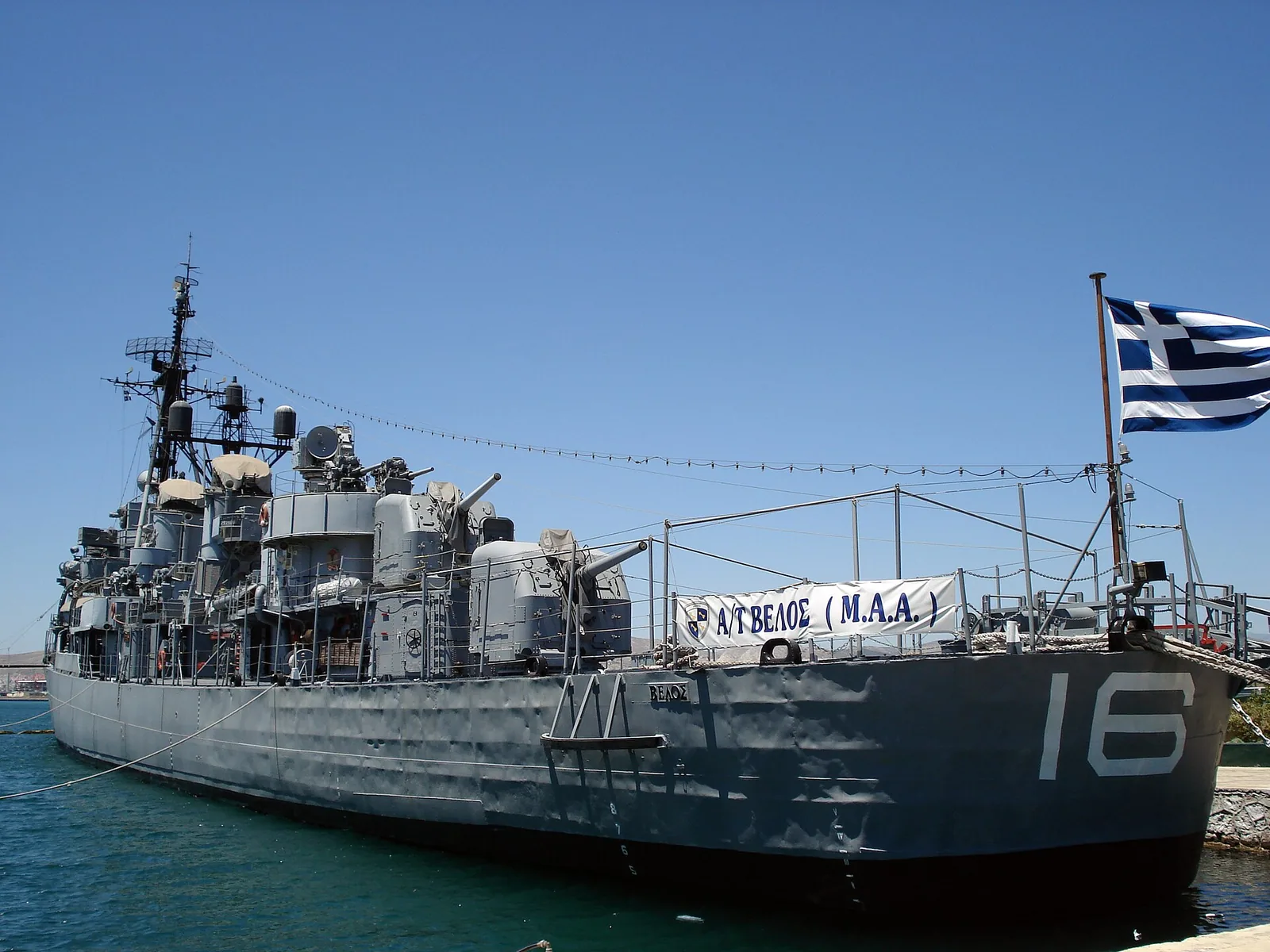
George Charrette, born in Lowell, Mass., 6 June 1867, enlisted in the Navy 24 September 1884. As a gunner's mate third class, on 2 June 1898, he volunteered with seven others to sink Merrimac under heavy Spanish fire across the entrance to the harbor of Santiago, Cuba, thus bottling up the enemy fleet. Taken prisoner by the Spanish, Charrette was exchanged 6 July 1898. He was awarded the Congressional Medal of Honor for extraordinary heroism, commissioned lieutenant 3 August 1920, and retired from the Navy in 1925. He died 7 February 1938.
Second World War 1939–1945
1942
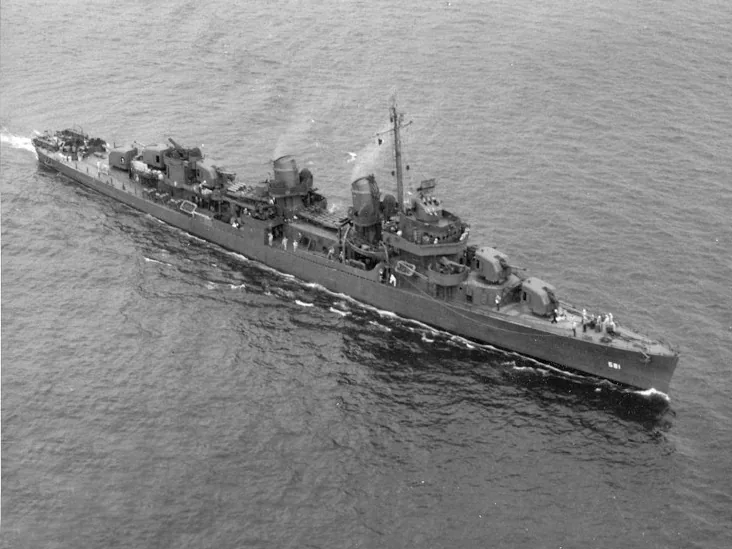
Charrette (DD-581) was launched 3 June 1942 by Boston Navy Yard; sponsored by Mrs. G. Charrette; and commissioned 18 May 1943, Commander E. S. Karpe in command.
1943 Makin
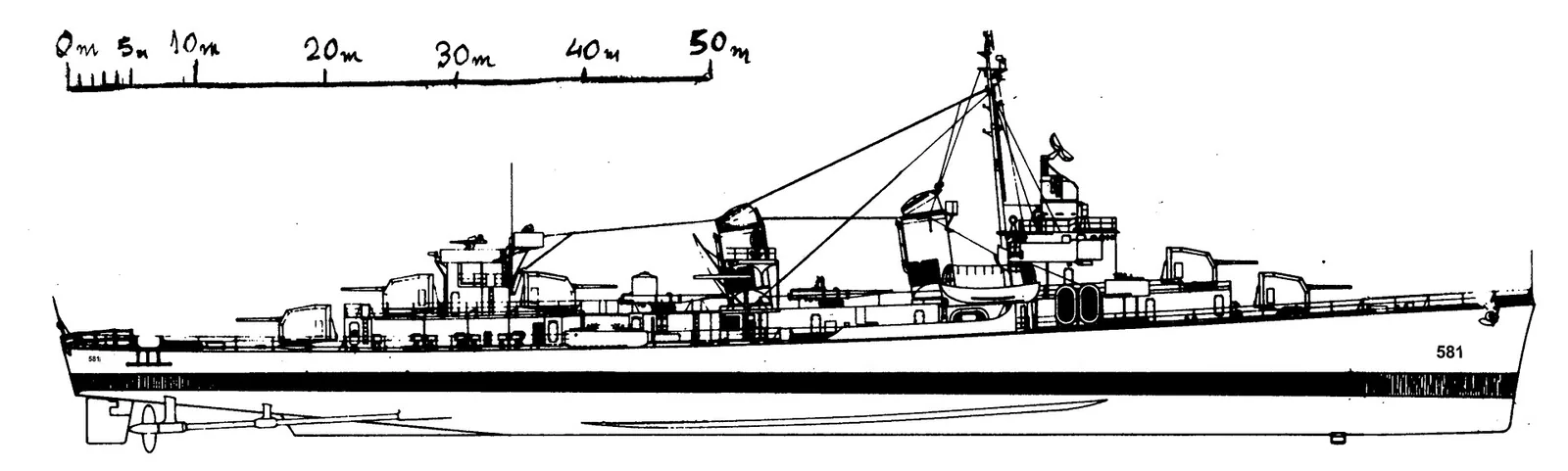
Charrette cleared New York 20 September 1943 to escort Monterey (CVL-26) to Pacific service. Arriving at Pearl Harbor 9 October, Charrette took part in training exercises until 10 November, when she put to sea with TF 50, for air raids on Japanese bases in the Marshalls. These strikes neutralized enemy air opposition to the landings at Makin and Tarawa which followed. On 26 November, Charrette joined the screen of the task group assigned to air-cover operations over Makin and Tarawa themselves, providing protection to the assault shipping and support for the Marines ashore. Twelve days later, the destroyer screened battleships in a pounding bombardment on Nauru Island, then rejoined the carriers sailing on to Efate. From this base Charrette sailed on 21 December to screen the carriers as they launched strikes against Kavieng, New Ireland, during the 3 days preceding the assault on Cape Gloucester 26 December. Continuing north, the group arrived at Funafuti 21 January 1944 to prepare for the operations against the Marshall Islands.
1944 Humboldt Bay
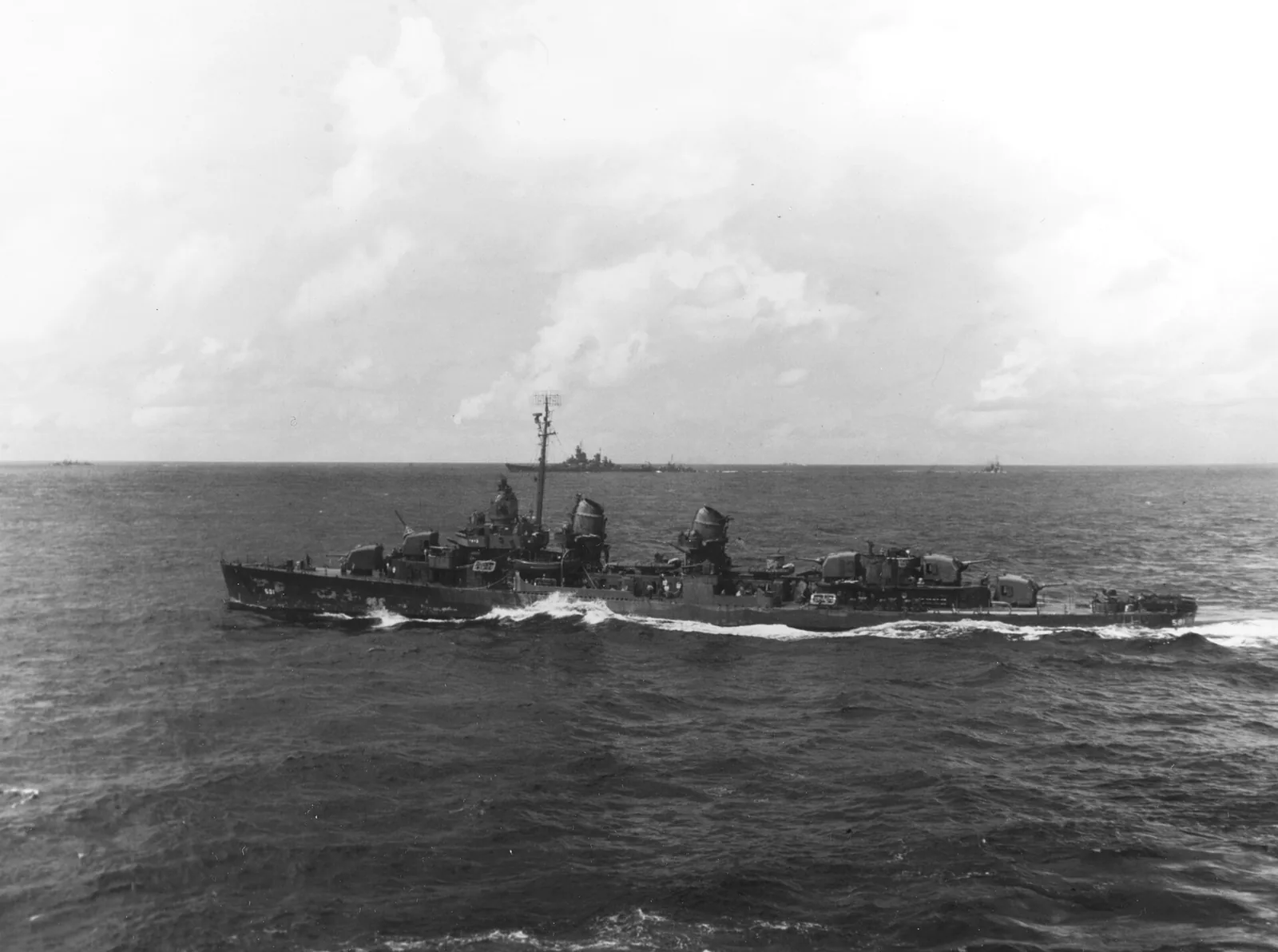
From 23 January to 5 February 1944, Charrette screened the carriers in a series of strikes on Kwajalein and Eniwetok. On the night of 4-5 February, Charrette left her screening station to investigate a radar contact reported by one of the battleships. After tracking the contact to 3,200 yards, she opened fire on the target, a submarine which dived at once. Charrette pressed home a depth charge attack, then used her radar to coach Fair (DE-35) in for the sinking of I-21. Next day, Charrette moored in newly won Majuro Lagoon.
The destroyer sailed 12 February 1944 for the first of the series of massive raids through which the great Japanese base at Truk was eventually sealed off from effective contribution to the Pacific war. After screening the carriers into position for their strikes, Charrette joined TG 50.9 in a sweep around the island on 17 February to catch Japanese shipping fleeing the air attacks on their base. The cruiser Katori, destroyer Maikaze, and a submarine chaser were sent to the bottom by TG 50.9, which rejoined the carriers next day.
After screening an oiler group to Majuro, Charrette sailed on for a brief overhaul at Pearl Harbor until 15 March 1944, when she put out to rejoin the carriers for attacks on Japanese ships which had retreated from Truk to the Palaus, a necessary preliminary to the New Guinea operation. A mighty force was assembled at Majuro for this bold thrust deep into Japanese-held waters, which sailed on 22 March. Charrette joined in beating off a Japanese air attack on 28 March, and continued her protective screening through the strikes of 30 March and 1 April. The carriers returned to Majuro 6 April, and sailed 7 days later to strike at airfields and defenses on New Guinea itself and to provide direct support to the landings at Humboldt Bay 22 April. After replenishing at Manus, Charrette sailed on with the carriers to screen strikes against Truk 29 April, and to guard the force's battleships as they pounded a bombardment at Ponape 1 May.
Charrette's next contribution came in the lengthy Marianas operation, for which she sailed 6 June 1944. She supported the carriers in their strikes on Guam, Saipan, and Rota 11 through 14 June, then turned north for strikes against the aircraft massed on Iwo Jima for attacks against the American landings on Saipan. As the carriers came into position on 15 June, scouting aircraft spotted a 1,900-ton freighter, and Charrette, with Boyd (DD-544) sped to sink the Japanese ship, recovering 112 survivors. After successful strikes, Charrette's group wheeled south to concentrate with TF 58 to meet the Japanese naval force known to be coming out. The great air Battle of the Philippine Sea broke on the morning of 19 June, and Charrette continued her screening, antiaircraft firing, and plane guard duties throughout the 2 days of action that broke the back of Japanese naval aviation. On the night of 20 June, she participated in the memorable night recovery of the last strikes, flashing beacon lights, and rescuing aviators forced to ditch by lack of gasoline. On 21 June the carrier force steamed back to cover the invasion forces in the Marianas, hurling strike after strike at Guam, Rota, and later the bases in the Pagan Islands and on Chichi Jima. Charrette fired in the bombardment of Chichi Jima 5 August, then returned to Eniwetok for training operations.
Charrette sailed from Eniwetok 29 August 1944 for the air strikes of early September against targets in the Palaus and the Philippines which paved the way for the invasion of Pelelui and marked the beginning of the return to the Philippines. In direct preparation for the invasion of Leyte, the carrier task force sailed again on 4 October for strikes designed to neutralize Japanese airfields on Okinawa, Northern Luzon, and Formosa during the assaults in the Philippines. On 12 October began the most important part of these strikes, against Formosa, which provoked return attacks by Japanese aircraft on the carrier forces. Charrette aided in splashing attackers and driving off the raids during which cruisers Canberra (CA-70) and Houston (CL-81) were hit. Charrette joined the screen which guarded the cripples during their slow retreat from enemy air range, then rejoined her carrier group for the dash north to intercept the approaching Japanese force. Thus she began her part in the epic Battle for Leyte Gulf, the decisive action which resulted in the end of the Japanese Navy as an effective fighting force. The carriers she guarded launched strikes at the Japanese northern force in the action termed the Battle off Cape Engano, sinking four Japanese carriers and a destroyer on 25 October.
Charrette replenished at Ulithi 29 October to 2 November 1944, then joined the screen of the fast carriers for strikes on Luzon airfields early in November, which sharply reduced enemy air opposition at the Leyte beachhead. Charrette returned to Manus 30 November to prepare for the Lingayen Gulf operation.
1945 Lingayen
Sailing 2 January 1945, Charrette joined the screen of the group which protected and supported the landings at Lingayen from 4 to 18 January, then guarded the approach and withdrawal of reinforcement convoys into Lingayen Gulf. She left the Philippines 2 February, and on 25 February arrived at Puget Sound Navy Yard for overhaul. She returned to action waters in June, beginning a month of support for the Borneo operations, followed by patrol duty in the Netherlands East Indies. On 2 August, she and Conner (DD-582) made contact with a ship which they tracked through the night, finding in the morning that it was the hospital ship Tachi bana Maru. A search party from Charrette boarding the ship found much ordnance and other contraband and able-bodied troops, who were made prisoners of war. Charrette and Conner brought their prize into Morotai 6August.
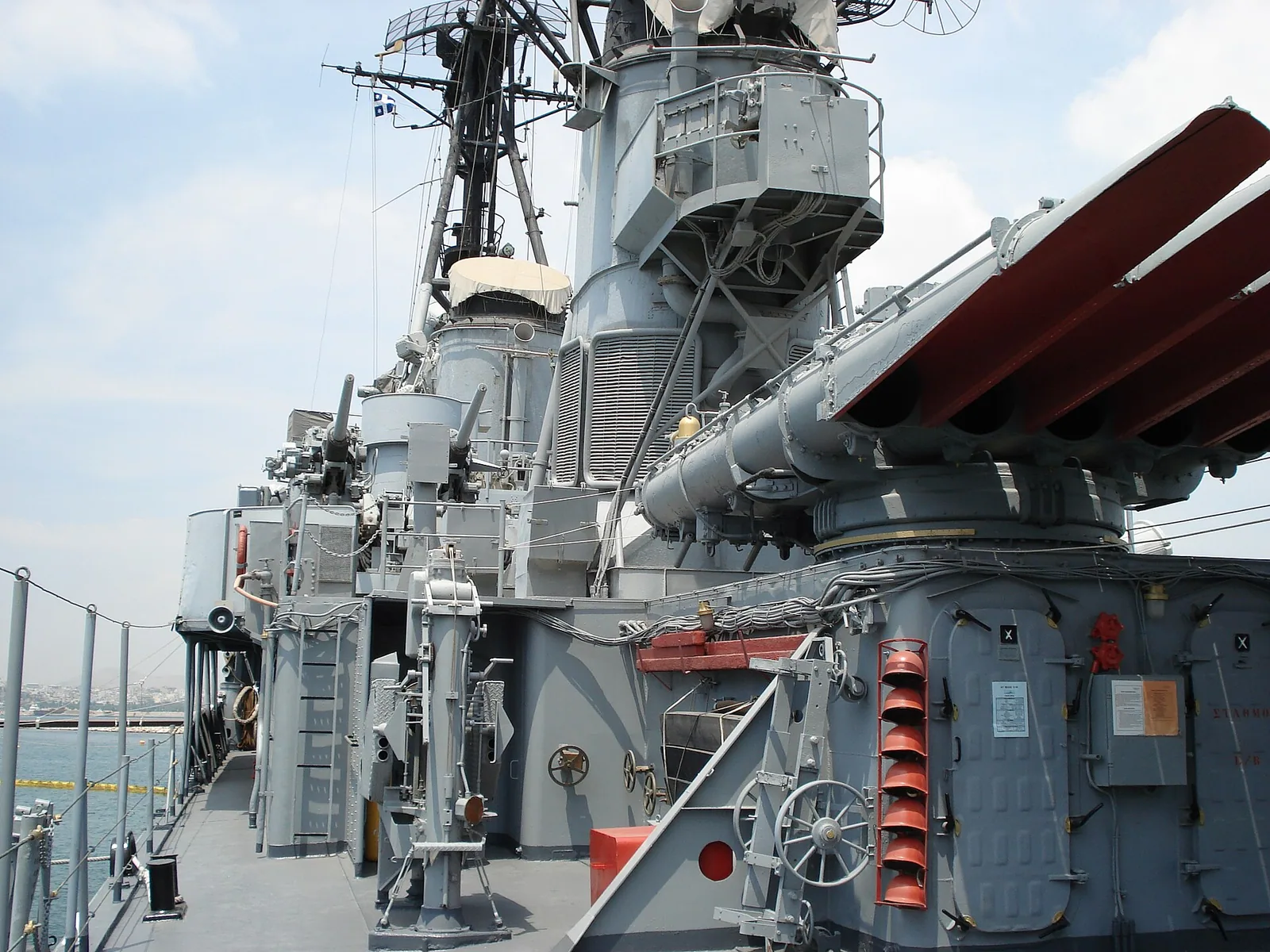
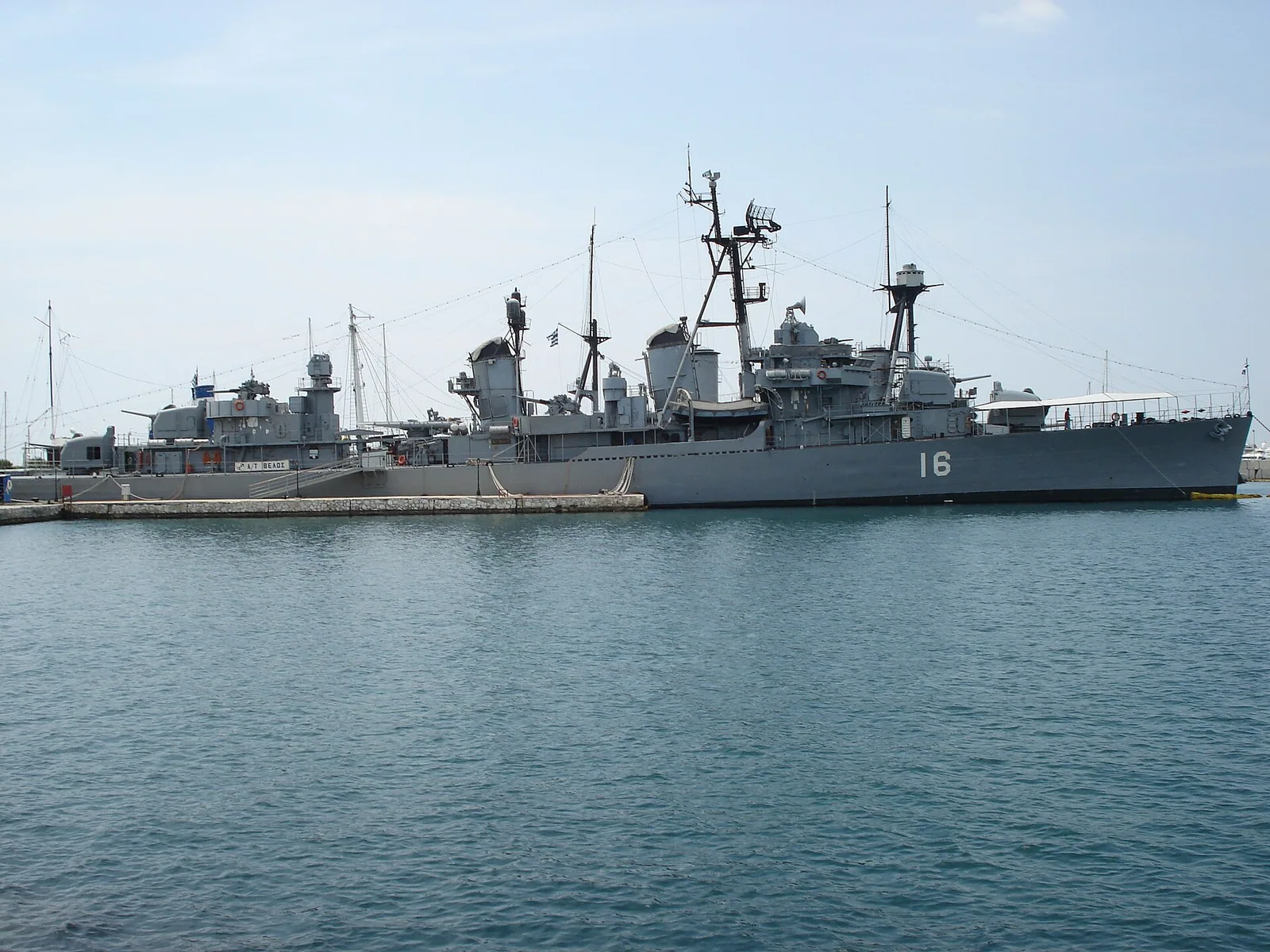
Charrette cleared Morotai 13 August 1945 to call at Subic Bay before reporting at Buckner Bay, Okinawa, September for duty escorting ships loaded with occupation troops, equipment, and supplies for Chinese ports. She sailed from Shanghai 12 December for San Francisco which she reached 30 December. Charrette was placed in commission in reserve at San Diego 4 March 1946, and out of commission in reserve 15 January 1947. On 16 June 1959 she was transferred to Greece, in whose Navy she serves as HHMS Velos.
Other photographs
Held for this vessel, and not tied to any part of the account above.
References
Every work this entry draws on. There are no numbered markers in the text above: what we hold is the provenance of the page — this history, this article, these photographs.
- History Charrette (DD-581) Dictionary of American Naval Fighting Ships, Naval History and Heritage Command. A work of the United States Government, in the public domain — the only text on this site reproduced verbatim.
- Facts USS Charrette Structured facts only — dates, dimensions, armament and fate. No wording is taken from it. Harvested 1 August 2026.
- Photograph USS Charrette;0558102 U.S. Navy — U.S. Navy photo 80-G-74846 from Navsource.org — Public domain — Wikimedia Commons
- Photograph Velos D16 Pmoshs at English Wikipedia — Transferred from en.wikipedia to Commons — Public domain — Wikimedia Commons
- Photograph Velos D16 stern Pmoshs at English Wikipedia — Transferred from en.wikipedia to Commons — CC BY-SA 3.0 — Wikimedia Commons
- Photograph Velos D16 amidships Pmoshs at English Wikipedia — Transferred from en.wikipedia to Commons — CC BY-SA 3.0 — Wikimedia Commons
- Photograph AT Velos starboard Pmoshs at English Wikipedia — Transferred from en.wikipedia to Commons — CC BY-SA 3.0 — Wikimedia Commons
- Photograph USS Charrette (DD-581) profile Pmoshs at English Wikipedia — Transferred from en.wikipedia to Commons — CC BY-SA 3.0 — Wikimedia Commons
- Photograph USS Charrette (DD-581) screening USS New Jersey (BB-62) during the Battle of Leyte Gulf, 24 October 1944 (80-G-K-2191) Unknown author — U.S. Navy photo 80-G-K-2191 — Public domain — Wikimedia Commons
- Photograph USS Charrette (DD-581) underway off Boston, Massachusetts (USA), on 4 August 1943 (80-G-74846) U.S. Navy — U.S. Navy photo 80-G-74846 from Navsource.org — Public domain — Wikimedia Commons