United States Navy — Destroyer
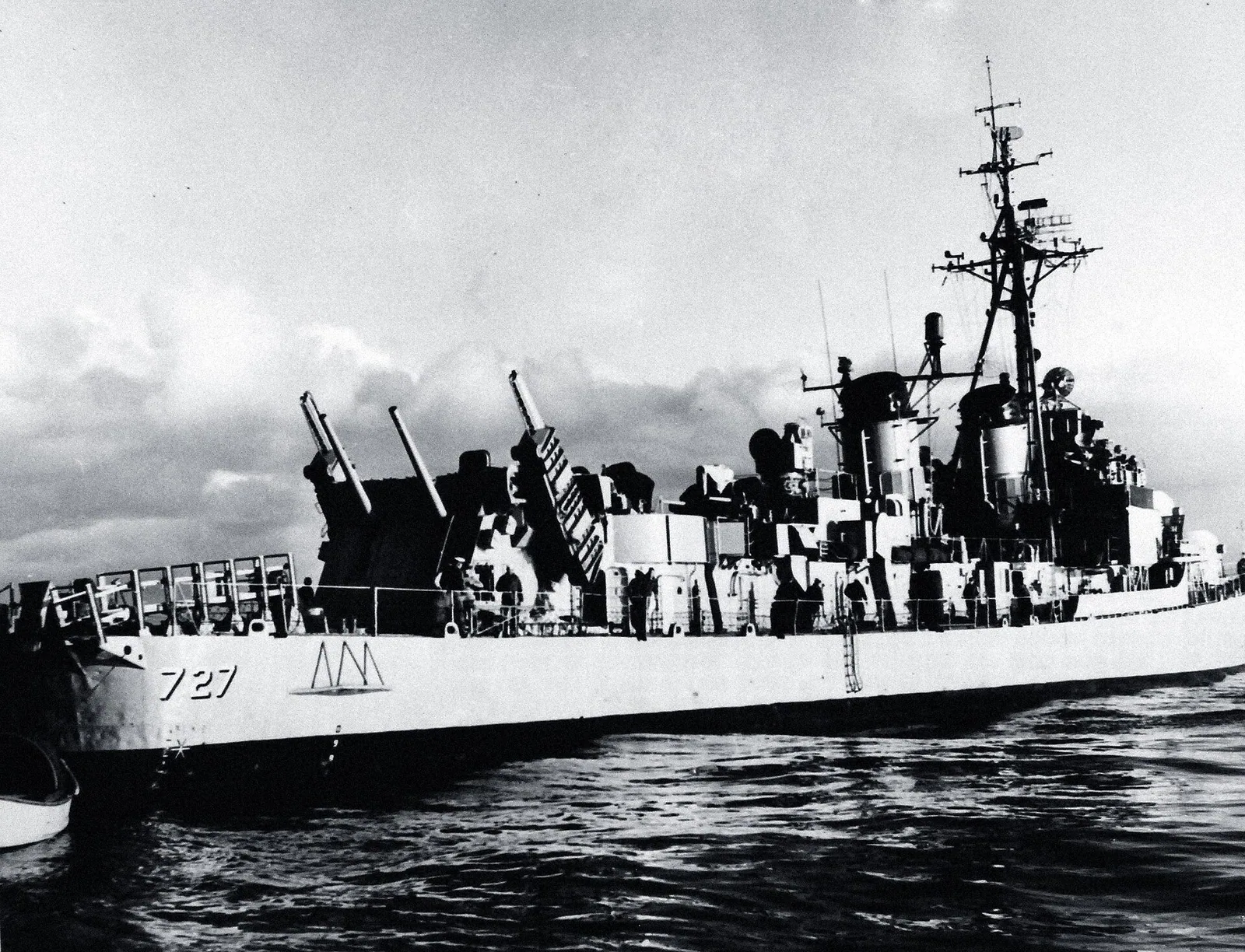
USS De Haven (DD-727) — service history
This is the full service history. For the vessel's particulars, photograph and specifications, see the entry.
In the words of the US Navy. The account below is reproduced verbatim from the Dictionary of American Naval Fighting Ships, compiled by the Naval History and Heritage Command — a work of the United States Government, in the public domain, and the only text on this site not written here.
Before commissioning
Edwin Jess De Haven, born in 1819 in Pennsylvania was appointed Acting Midshipman at the age of 10 and Passed Midshipman 5 years later. He served in Vin cennes, flagship of the Wilkes Exploring Expedition in its historic cruise of 1838 to 1842 to the Antarctic and among the Pacific Islands. De Haven served in the Mexican War, assisting in the capture of the Mexican schooner Creole. In command of the Grinnell Rescue Expedition in 1850, he led the search for Sir John Franklin lost in the Arctic. Only traces of the party were found, but De Haven discovered and named Grinnell Land, and was commended for the valuable scientific data he collected concerning the winds and currents of the ocean. He served in the Coast Survey Service until placed on the retired list in February 1862. He died at Philadelphia, Pa., 1 May 1865.
Second World War 1939–1945
1944 Leyte
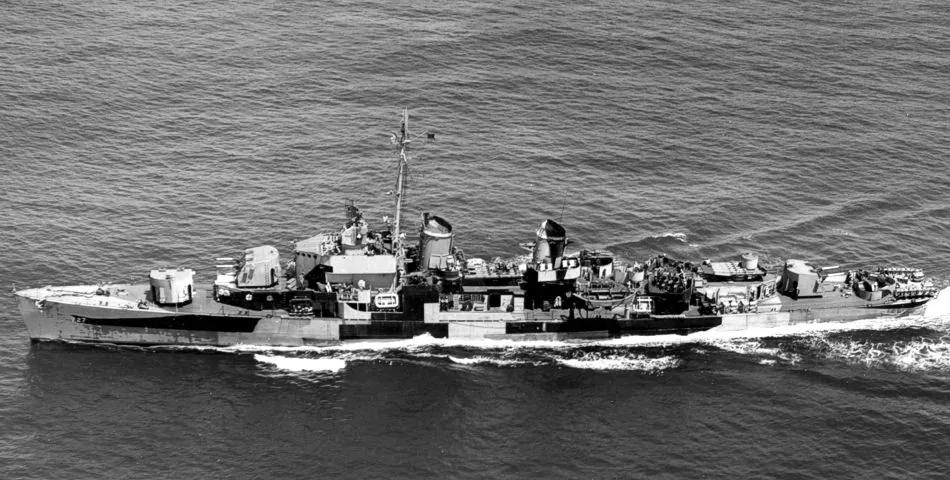
The second De Haven was launched 9 January 1944 by Bath Iron Works Corp., Bath, Maine; sponsored by Miss H. N. De Haven, sponsor of the first De Haven; and commissioned 31 March 1944, Commander J. B. Dimmick in command
De Haven escorted Ranger (CV-4) from Norfolk to Pearl Harbor, arriving 3 August 1944. She screened a convoy to Eniwetok between 16 and 30 August, and returned to Eniwetok 5 October. A week later she got underway for Ulithi to join TF 38. Operating from this base she screened the fast carriers striking Luzon in support of the invasion of Leyte during November and December. In coordination with the invasion of Lingayen Gulf, Luzon, the force hit Formosa, Luzon, Camranh Bay, Hong Kong, Hainan, and Okinawa in a score of strikes extending from 30 December 1944 to 26 January 1945.
1945 Iwo Jima
On 10 February 1945 De Haven sortied from Ulithi with TF 58, to prepare for the invasion of Iwo Jima, striking the Japanese mainland as well as the Nansei Shoto, and then providing fire support for the invading troops. Returning to Ulithi 4 March, she sailed 10 days later to screen air strikes on Kyushu, Japan, prior to the invasion of Okinawa. Until 13 June she screened the carriers and gave fire support at Okinawa. On 1 July she sailed from Leyte with TF 38 for the final air strikes and bombardments on the Japanese homeland which continued until the end of the war. Present in Tokyo Bay 2 September for the signing of the surrender, De Haven sailed on 20 September for the States, arriving at San Francisco 15 October.
Post-war 1946–1949
1946
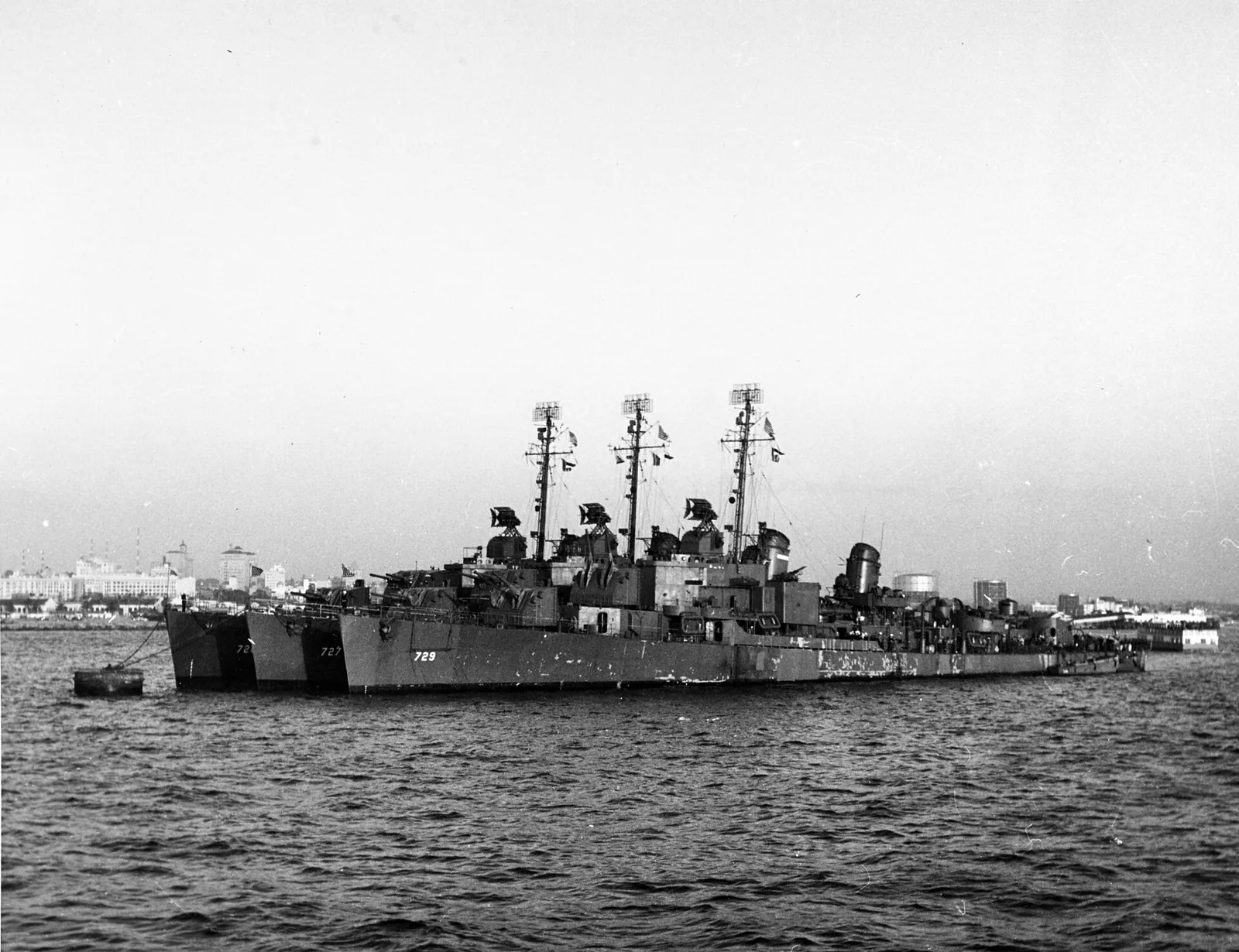
Between 1 February 1946 and 3 February 1947, De Haven served in the Western Pacific, joining the 7th Fleet in operations off the coast of China, and patrolling off the Japanese coast. She operated along the west coast through 1948 and 1949 and on 1 May 1950 cleared San Diego for another tour of duty in the western Pacific, arriving at Yokosuka the last day of May.
Korean War period 1950–1953
1950 Inchon
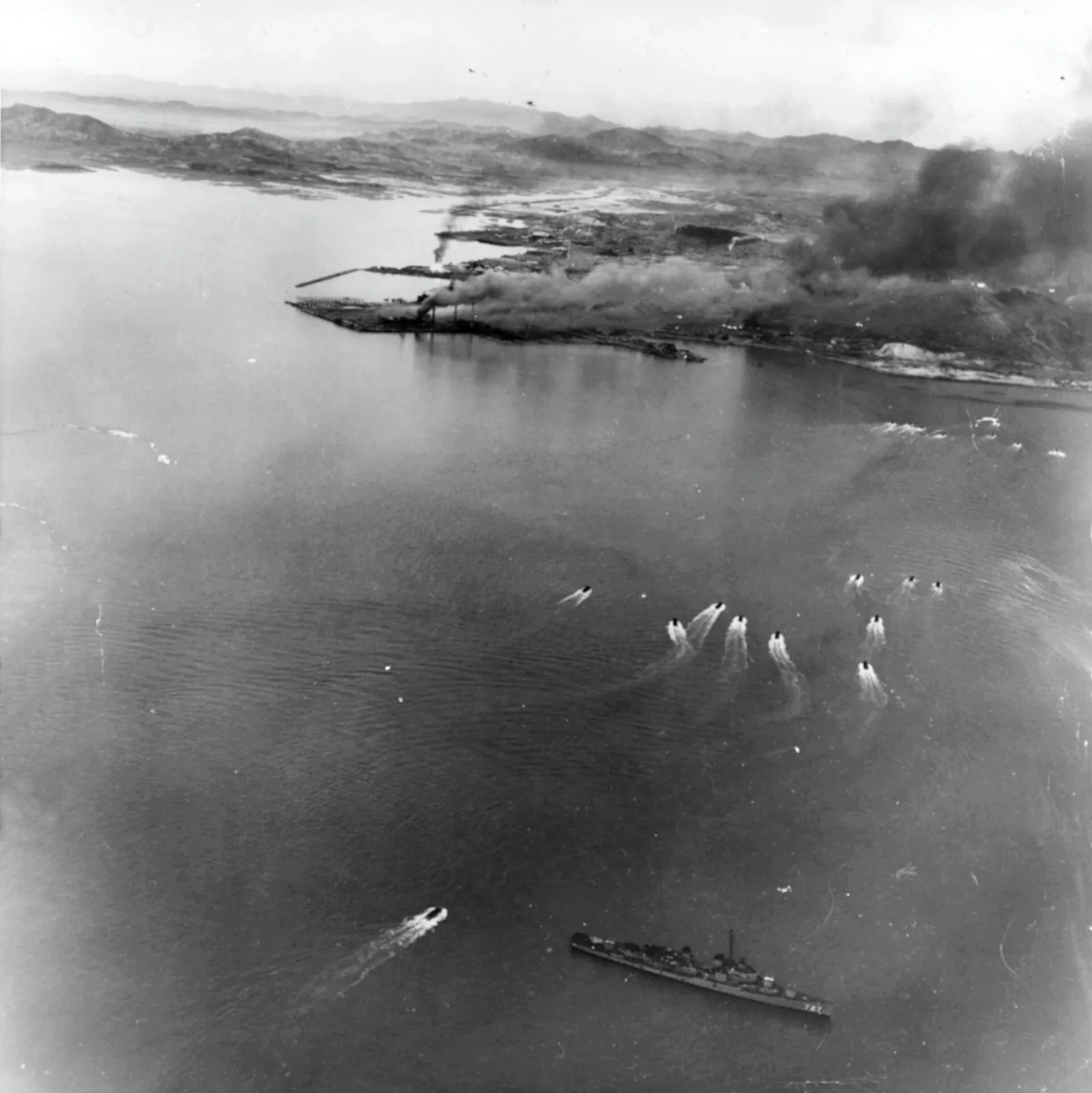
When the Communists invaded South Korea 25 June 1950, De Haven was assigned to patrol off the Korean coast. She screened the Norwegian ship Reinholt evacuating American dependents from Inchon to Yokosuka; patrolled on the blockade; bombarded shore targets; acted as lifeguard and communications linking ship for air strikes against Pyongyang and Haeju; and provided call fire support for United Nations troops. On 13 and 14 September she stood up a treacherous channel to anchor a scant 800 yards from Wolmi-Do and pour fire into the concealed gun emplacements in preparation for the bold assault on Inchon. De Haven provided gunfire support for the successful landings the following day, and for her part in this daring action was awarded the Navy Unit Commendation.
Returning to Blockade duty 25 September 1950 De Haven dispersed a Communist force attempting to ambush a Korean Army unit; aided the mined Brush (DD-745) and escorted her to Sasebo; and provided fire support for a British Commando raid on 6 and 7 October. She cleared Yokosuka 1 November for San Diego, arriving 18 November.
1951
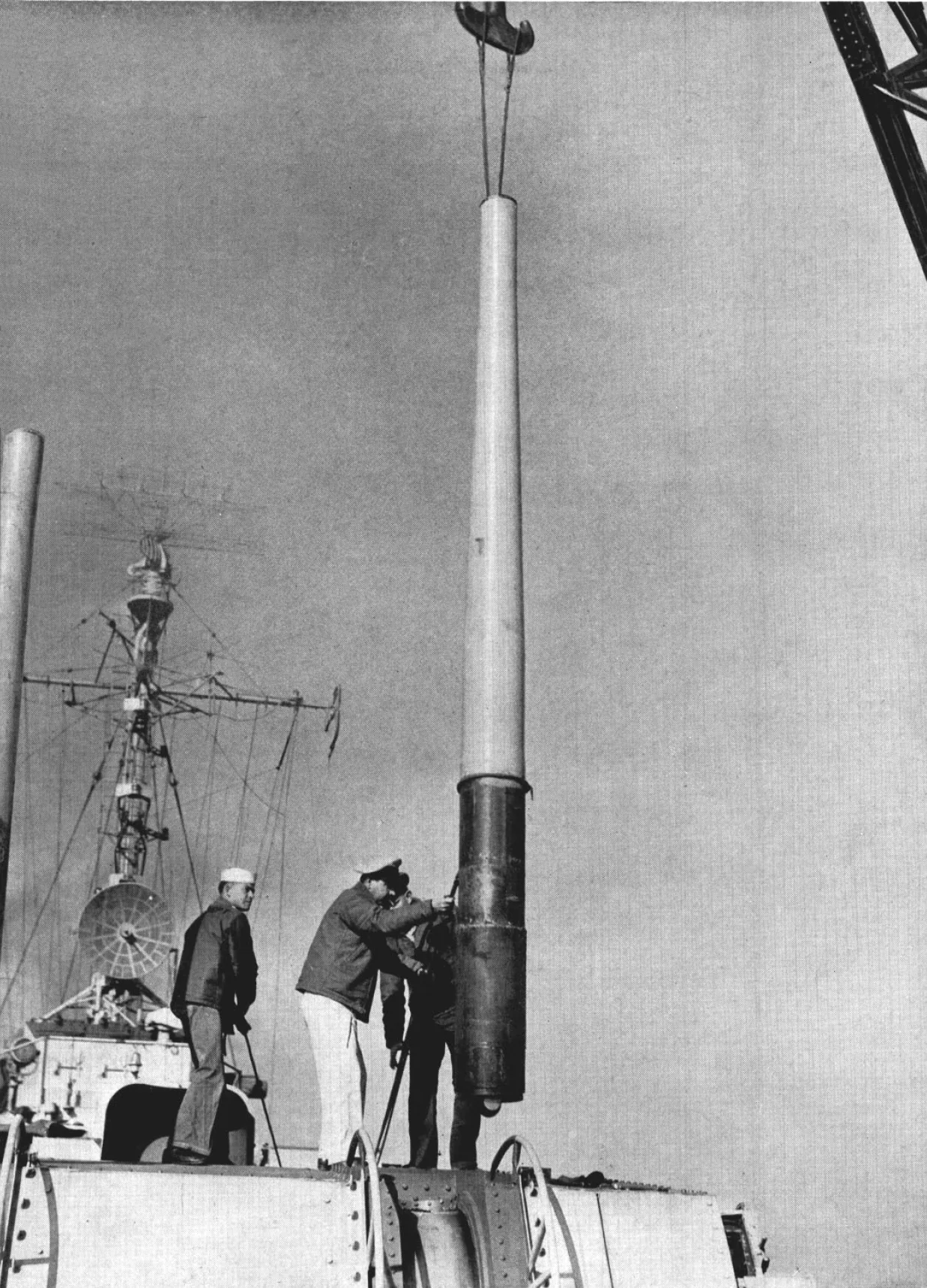
During De Haven's second tour of Korean duty from 18 June 1951 to 17 February 1952 she served primarily on blockade patrol. After an overhaul and local operations at San Diego, she sailed from Long Beach 16 September 1952 to serve as flagship for ships on patrol in the Chongjin-Songjin-Chaho area until 18 November. After patrol duty with TF 77, she returned to Korean waters for duty with TF 95 on patrol off Wonsan Harbor, supporting the minesweeping operations there from 12 to 18 February. She got underway from Sasebo 22 March for Long Beach, arriving 9 April.
Cold War 1954–1963
1960
De Haven continued to alternate duty in the western Pacific with local operations along the west coast, making six voyages to the Far East from 1953 through 1959. On 1 February 1960 she began a major overhaul for modernization at San Francisco, completed in September. De Haven returned to training activities through the remaining months of 1960.
De Haven received five battle stars for World War II service and in addition to her Navy Unit Commendation received six for Korean War service.
Other photographs
Held for this vessel, and not tied to any part of the account above.




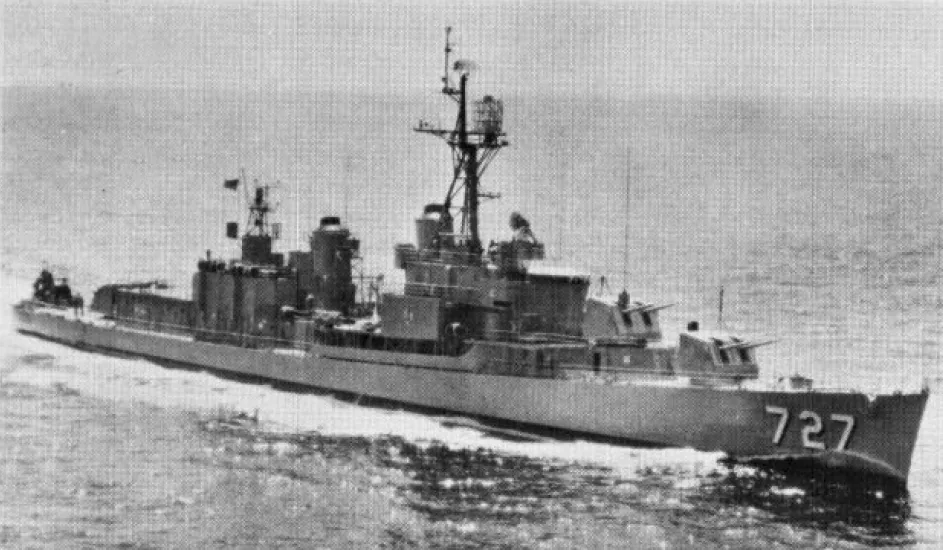
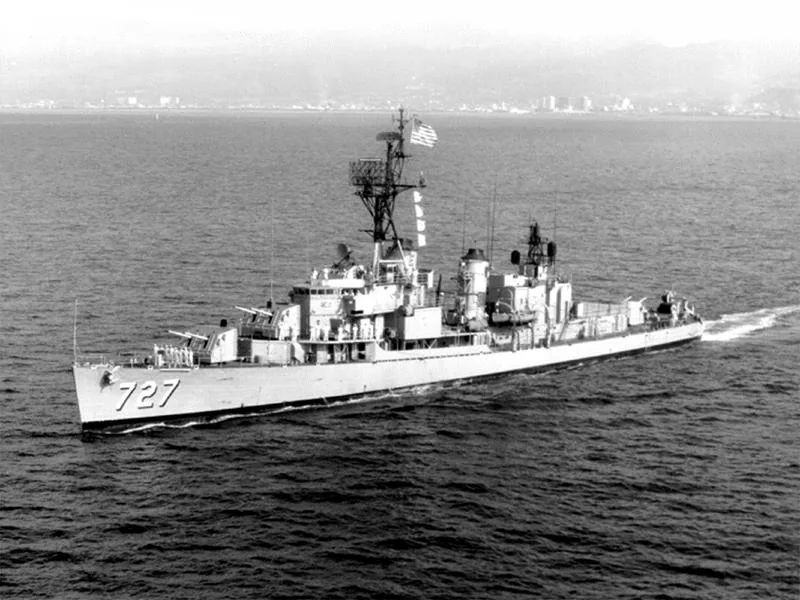

References
Every work this entry draws on. There are no numbered markers in the text above: what we hold is the provenance of the page — this history, this article, these photographs.
- History De Haven II (DD-727) Dictionary of American Naval Fighting Ships, Naval History and Heritage Command. A work of the United States Government, in the public domain — the only text on this site reproduced verbatim.
- Facts USS De Haven (DD-727) Structured facts only — dates, dimensions, armament and fate. No wording is taken from it. Harvested 1 August 2026.
- Photograph USS De Haven (DD-727) PH3 C.P. Weston, U.S. Navy — U.S. Navy photo NH 107136 — Public domain — Wikimedia Commons
- Photograph Landing craft approaching Inchon, Korea, on 15 September 1950 (NH 42351) Unknown author — U.S. Navy photo NH 42351 — Public domain — Wikimedia Commons
- Photograph 330-ps-9056-usn-710203 15207701263 o National Museum of the U.S. Navy — Public domain — Wikimedia Commons
- Photograph 330-ps-9056-usn-710204 15828691632 o National Museum of the U.S. Navy — Public domain — Wikimedia Commons
- Photograph Gun barrel of USS De Haven (DD-727) is replaced c1951 U.S. Navy — U.S. Navy All Hands magazine March 1952 , p. 67 — Public domain — Wikimedia Commons
- Photograph U.S. Navy destroyers bombard Wolmi-Do island, Korea, on 13 September 1950 (80-G-419905) Unknown author — U.S. Navy photo 80-G-419905 — Public domain — Wikimedia Commons
- Photograph US Navy Destroyer Division 91 receives Navy Unit Commendations at Sasebo in 1951 U.S. Navy (photograph and caption released by Commander Naval Forces, Far East, under date of 18 December 1951) — Official U.S. Navy photo NH 97090 from the U.S. Navy Naval History and Heritage Command — Public domain — Wikimedia Commons
- Photograph USS De Haven (DD-727) in heavy seas c1953 U.S. Navy — U.S. Navy All Hands magazine July 1953 , p. 1 — Public domain — Wikimedia Commons
- Photograph USS De Haven (DD-727) insignia Unknown author — https://www.navsource.net/archives/05/727.htm — Public domain — Wikimedia Commons
- Photograph USS De Haven (DD-727) refueling from Kearsarge (CVA-33) c1955 USN — U.S. Navy photo [1] from the USS Kearsarge (CVA-33) 1954-55 cruise book available at Navysite.de — Public domain — Wikimedia Commons
- Photograph USS De Haven (DD-727) underway c1967 USN — U.S. Navy All Hands magazine August 1967 , p. 32 — Public domain — Wikimedia Commons
- Photograph USS De Haven (DD-727) underway in November 1970 PH3 C.P. Weston, U.S. Navy — Official U.S. Navy photo USN 1146501 from the U.S. Navy website A Brief History of U.S. Navy Destroyers: Part III -- Korea, Vietnam & Cold War — Public domain — Wikimedia Commons
- Photograph USS De Haven (DD-727) underway off the coast of Oahu, Hawaii (USA), on 19 November 1970 (NH 107136) PH3 C.P. Weston, U.S. Navy — U.S. Navy photo NH 107136 — Public domain — Wikimedia Commons
- Photograph USS De Haven (DD-727) underway on 14 May 1944 USN — Official U.S. Navy photo 80-G-237961 available at Destroyerhistory.org — Public domain — Wikimedia Commons
- Photograph USS Lyman K. Swenson (DD-729) and USS De Haven (DD-727) moored at San Diego, California (USA), circa in 1945-1946 (NH 89289) Unknown author — U.S. Navy photo NH 89289 — Public domain — Wikimedia Commons
- Photograph USS Sierra (AD-18) moored to buoys c1946 U.S. Navy — Official U.S. Navy photo NH 107746 from the U.S. Navy Naval History and Heritage Command — Public domain — Wikimedia Commons