United States Navy — Destroyer escort
USS Griswold (DE-7) — service history
This is the full service history. For the vessel's particulars, photograph and specifications, see the entry.
In the words of the US Navy. The account below is reproduced verbatim from the Dictionary of American Naval Fighting Ships, compiled by the Naval History and Heritage Command — a work of the United States Government, in the public domain, and the only text on this site not written here.
Before commissioning
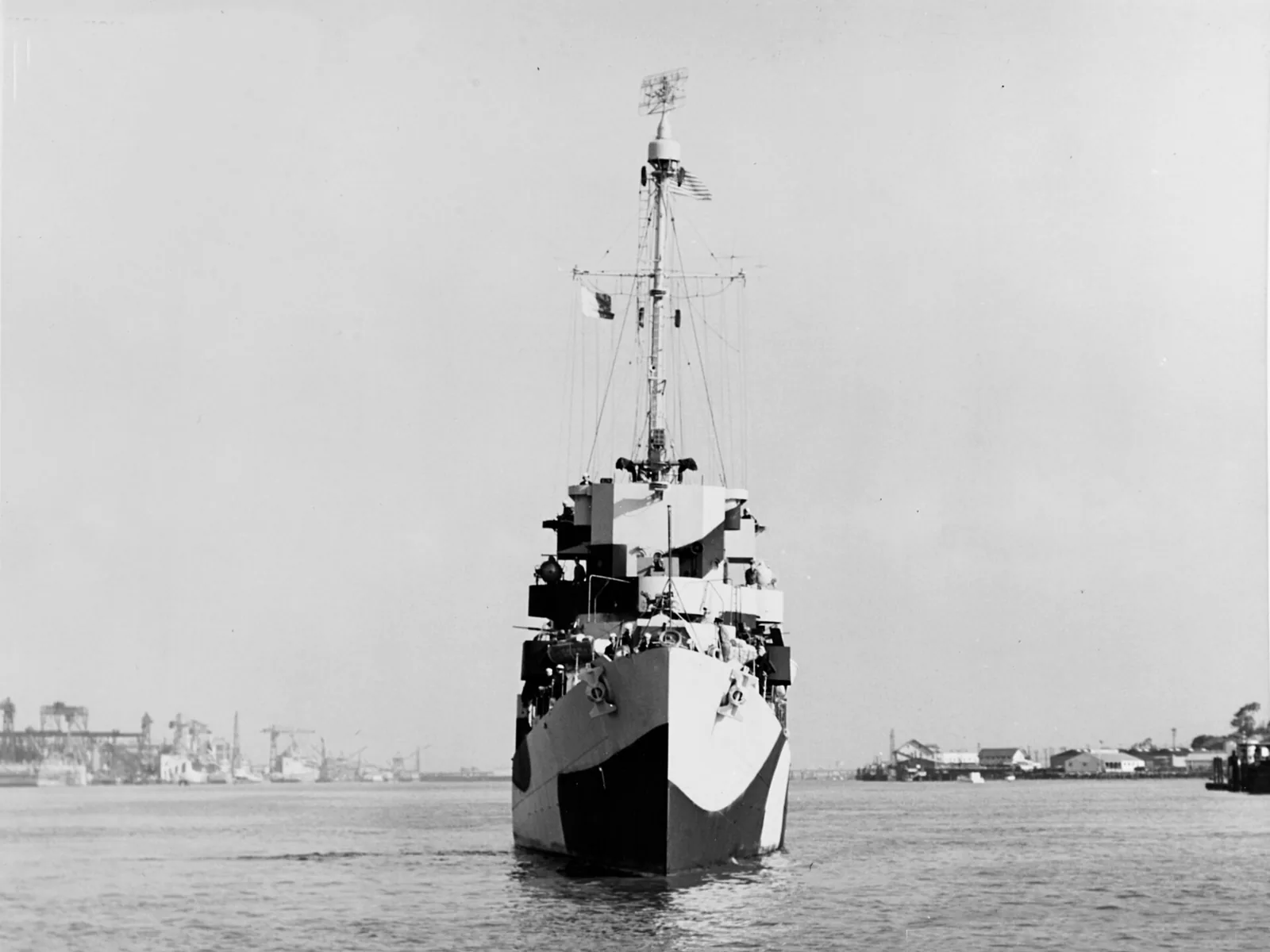
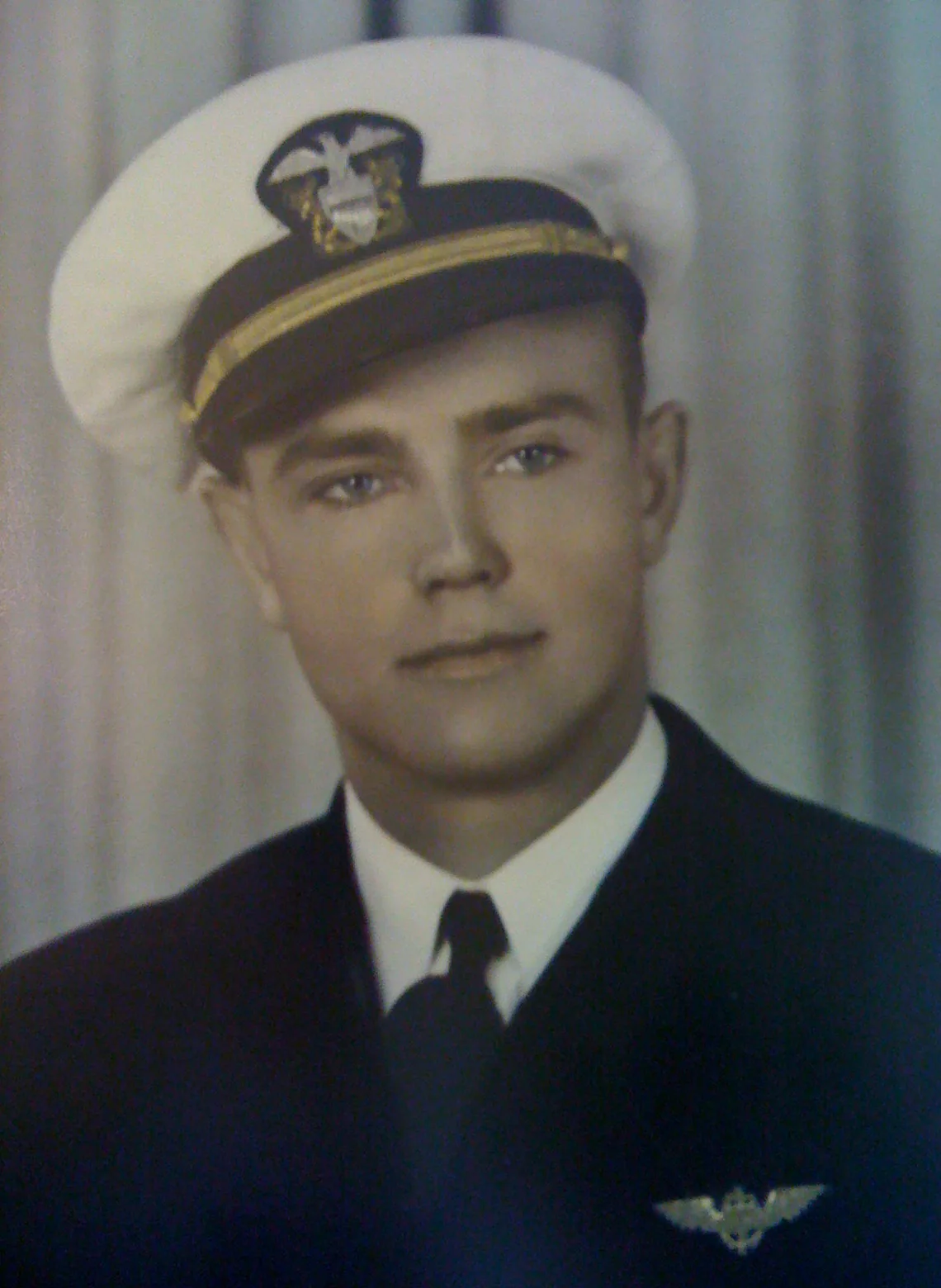
The first Griswold was a former name retained. The second Griswold is named for Ens. Don T. Griswold, Jr., born 8 July 1917 in Bryan, Tex. After attending Iowa State, Griswold joined the Naval Aviation Corps. During the crucial Battle of Midway, 6 June 1942, his scout-bomber scored a hit on a Japanese ship but paid dearly for it as he was hit by antiaircraft fire and plunged into the sea. Ens. Griswold was posthumously awarded the Distinguished Flying Cross.
Second World War 1939–1945
1943
The second Griswold (DE-7) was launched 28 April 1943 at the Boston Navy Yard; sponsored by Mrs. Don T. Griswold, mother of Ens. Griswold; and commissioned the same day, Lt. Comdr. Charles M. Lyons in command.
After shakedown in Bermuda, Griswold headed for the Pacific, reaching Bora Bora, Society Islands, via Norfolk and the Panama Canal 23 July 1943. Immediately pressed into service, she escorted convoys through the South Pacific, until April 1944. On 12 September she conducted a 4-hour attack on a Japanese submarine off Guadalcanal ; and, although debris and an oil slick rose to the surface, she was not credited with a kill.
Undaunted, Griswold struck again 3 months later and this time recorded a kill. At 2200 on the night of 23 December, patrolling off Lunga Point, Guadalcanal, she was dispatched to investigate a periscope sighting. Alert sonar operators picked up the contact immediately, and held it for the next 5 hours as the determined DE conducted attack after attack on the elusive Japanese raider. Oil slicks and air bubbles after the sixth and seventh attacks told Griswold that her quarry was hit-this was confirmed shortly before 0300 on 24 December when a periscope poked out of the water. Griswold charged in for her eighth attack, laying a lethal pattern of twelve depth charges. A heavy oil slick dotted with debris rose to the surface, and the tenacious ship and crew were credited with sinking I-39.
1944
After overhaul at Mare Island, the escort ship returned to the Pacific theatre on 3 June 1944 to escort convoys and participate in training exercises out of Pearl Harbor well into 1945. From 12 March to 6 May 1945, she remained on station at Eniwetok as flagship for Commander Task Group 96.3 under Comdr. T. F. Fowler. The long Pacific campaign was moving into its final phase that spring as American forces invaded Okinawa, a short step from the Japanese home islands; and Griswold soon moved up to the front.
Reaching Okinawa on 27 May, Griswold immediately took up station on the ASW screen, and was shortly rewarded with two kamikaze kills, 31 May and 5 June. The second of those would-be kamikazes dived on Griswold; but she evaded him and the marauder exploded into the ocean so close that fragments of the Japanese plane showered over her. That same day two other American ships were seriously damaged by kamikazes as Japan made her desperate, and futile, effort to reverse the tide of war.
1945
On 29 June Griswold departed Okinawa, escorting a convoy to Leyte Gulf, Philippines, and continuing on to Ulithi for screening work. At war's end she sailed triumphantly into Japanesee waters, anchoring in Tokyo Bay on 10 September. Embarking passengers for stateside, Griswold cleared Tokyo 6 days later and arrived San Pedro, Calif., 8 October via Eniwetok and Pearl Harbor. She decommissioned there 19 November 1945 and was struck from the Navy List 5 December. The hulk was sold to Dulien Steel Products, Seattle, Wash., for scrapping 27 November 1946.
Other photographs
Held for this vessel, and not tied to any part of the account above.
References
Every work this entry draws on. There are no numbered markers in the text above: what we hold is the provenance of the page — this history, this article, these photographs.
- History Griswold II (DE-7) Dictionary of American Naval Fighting Ships, Naval History and Heritage Command. A work of the United States Government, in the public domain — the only text on this site reproduced verbatim.
- Facts USS Griswold (DE-7) Structured facts only — dates, dimensions, armament and fate. No wording is taken from it. Harvested 1 August 2026.
- Photograph USS Griswold (DE-7) off the Mare Island Naval Shipyard on 23 May 1944 (NH 83877) Mare Island Naval Shipyard photo DE-7 3110-44 — U.S. Navy photo NH 83877 — Public domain — Wikimedia Commons
- Photograph Ensign Donald Thomas Griswold PaulGriswold — Own work — CC BY-SA 4.0 — Wikimedia Commons
- Photograph USS Griswold (DE-7) off the Mare Island Naval Shipyard on 23 May 1944 (NH 83880) Mare Island Naval Shipyard photo DE-7 3112-44 — U.S. Navy photo NH 83880 — Public domain — Wikimedia Commons