United States Navy — Submarine
USS Gurnard (SS-254) — service history
This is the full service history. For the vessel's particulars, photograph and specifications, see the entry.
In the words of the US Navy. The account below is reproduced verbatim from the Dictionary of American Naval Fighting Ships, compiled by the Naval History and Heritage Command — a work of the United States Government, in the public domain, and the only text on this site not written here.
Before commissioning
A trigloid fish having three free pectoral rays, a food fish of the genus Trigla. The striped gurnard inhabits the South Atlantic.
Second World War 1939–1945
1942
Gurnard was launched 1 June 1942 by the Electric Boat Co., Groton, Conn.; sponsored by Miss Suzanne Slingluff; and commissioned 18 September 1942, Lt. Comdr. C. H. Andrews in command.
Following shakedown out of New London, Gurnard sailed for Rosneath, Scotland, 2 November 1942 and reached that port 13 days later. Her first war patrol, 28 November to 27 December 1942, brought her to the Bay of Biscay where she lay off the Spanish coast awaiting German blockade runners bound for Spanish ports. The patrol was uneventful; no enemy ships were sighted and subsequently Gurnard returned to New London 9 February 1943 for repairs and alterations.
1943
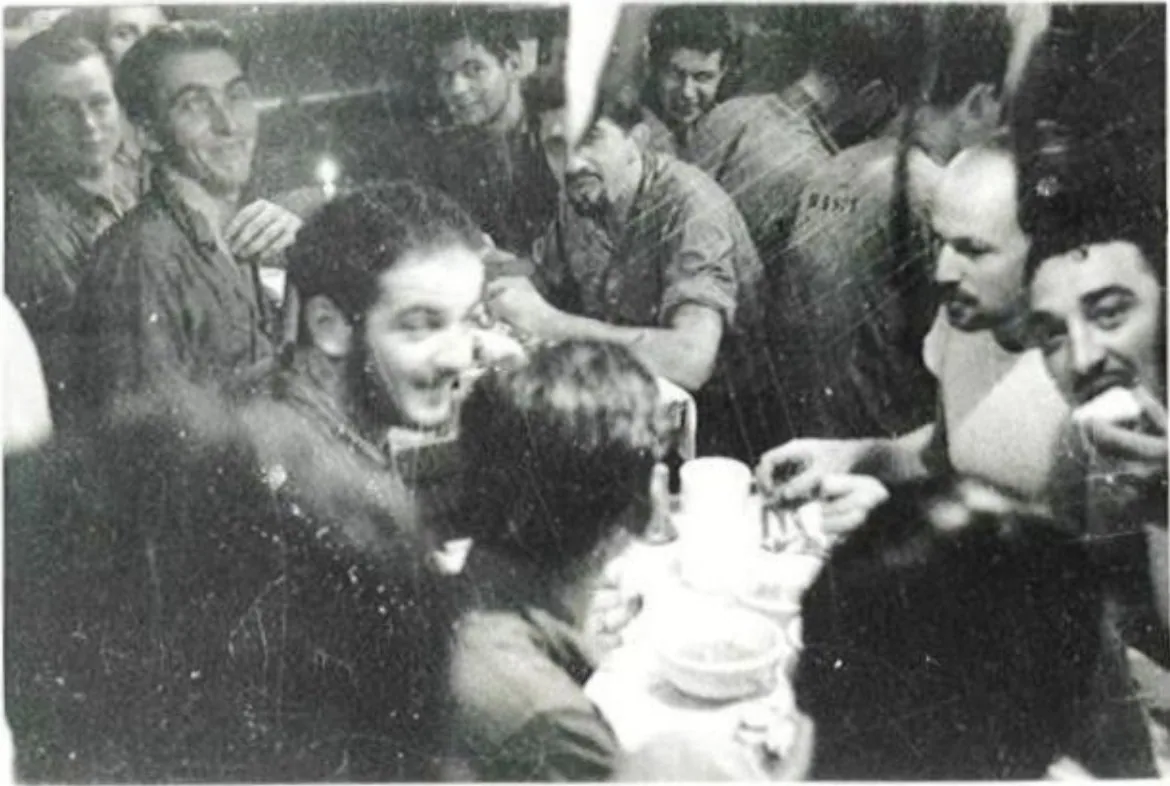
After reaching Pearl Harbor 26 May, the submarine got underway 12 June for her second war patrol. She patrolled off Toagel Mlungui Passage and on 29 June saw action for the first time, damaging two Japanese merchantmen and surviving 24 depth charges thrown by an enemy destroyer. Varied damage was inflicted on other ships in these waters before Gurnard made her first kill, sinking cargo ship Taiko Maru at 12-53 N°, 131-49 E° on 11 June 1943. Having expended all torpedoes, the submarine returned via Midway to Pearl Harbor, arriving 26 July for refit.
Underway again 6 September, she sailed to the South China Sea to begin her third war patrol. A five-ship convoy was sighted near midnight 7 October and Gurnard began her stalk, closing at 0139 on 8 October and sending to the bottom cargo ship Taian Maru and passenger-cargo ship Dainichi Maru west of Luzon. This successful patrol terminated at Pearl Harbor 28 October.
1944
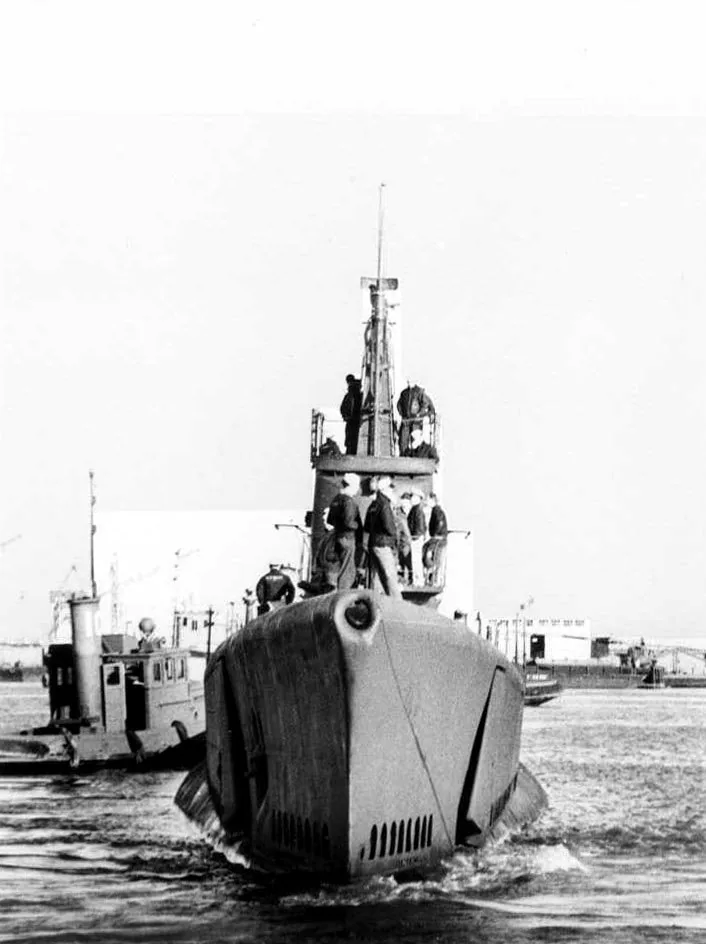
One month later she sailed on her fourth patrol to prowl off the southeast coast of Honshu and soon found good hunting. A convoy was sighted 24 December and at 0710 Gurnard attacked. Two minutes later cargo ship Seizan Maru No. 2 had broken in two and sunk; she was soon joined by cargo ship Tofuku Maru. Japanese destroyers attacked the submarine with over 80 depth charges without success; and after damaging another merchantman on 27 December Gurnard, returned to Pearl Harbor 7 January 1944.
Following overhaul at San Francisco Gurnard departed Pearl Harbor 16 April on her fifth war patrol bound for the eastern Celebes Sea. On this patrol she chalked up one of the highest single-patrol tonnage scores of the Pacific war, attacking a convoy 6 May and sinking 6,886-ton cargo ship Tenshinzan Maru, 6,995-ton passenger-cargo vessel Taijima Maru, and 5,824-ton passenger-cargo ship Aden Maru. Nearly a hundred depth charges rained down around her but she eluded the hunters and escaped undamaged. This vital convoy carried 40,000 troops intended to oppose MacArthur in New Guinea, and the embarked units suffered losses of nearly 50 percent. Gurnard's next kill occurred 24 May when several torpedoes sent under 10,090-ton tanker Tatekawa Maru. No further opportunities presented themselves; and Gurnard put in at Fremantle, Australia, 11 June 1944 with the completion of the patrol.
The submarine stood out on her sixth patrol 8 July for the Banda, Molucca, Celebes, Sulu, and Mindanao Seas. After topping off at Darwin she patrolled off the Peleng Straits and damaged one merchantman before returning to Fremantle 5 September.
Gurnard's seventh patrol commenced 9 October after refit and while cruising off Borneo she raised a five-ship enemy convoy. A successful attack was pressed home 3 November at the end of an 18-hour hunt and two torpedoes demolished cargo ship Taimei Mam. Gurnard returned to her Australian port 17 November after this victory.
The submarine's eighth and ninth patrols (11 December 1944-1 February 1945 and 10 March-9 May 1945) included reconnaissance off Camranh Bay and patrols with submarines Hammerhead and Boarfish, but hunting was poor and no ships were sunk. Gurnard finished her last patrol at Pearl Harbor 9 May and put in at Mare Island, Calif., 9 days later for a major overhaul. Following a round-trip voyage thence to Pearl Harbor and Midway, she returned to San Francisco 11 September 1945 and decommissioned there 27 November 1945.
Post-war 1946–1949
1949
Gurnard remained in reserve until 1 July 1949 when she reported to the San Francisco Naval Shipyard for activation as an armory for naval reserve submarine training. Towed to Pearl Harbor 27 November to 9 December 1949, the submarine served there until returning under tow to Tacoma, Wash., 18 May 1953 to continue reserve training duties in that port until June 1960. She was then inactivated in preparation for disposal. Her name was struck from the Navy List 1 May 1961. She was sold for scrapping 26 September 1961 to the National Metal & Steel Corp., Terminal Island, Calif.
Gurnard received six battle stars and the Navy Unit Commendation for service in World War II. War patrols numbers two through seven were designated "successful".
Other photographs
Held for this vessel, and not tied to any part of the account above.
References
Every work this entry draws on. There are no numbered markers in the text above: what we hold is the provenance of the page — this history, this article, these photographs.
- History Gurnard I (SS-254) Dictionary of American Naval Fighting Ships, Naval History and Heritage Command. A work of the United States Government, in the public domain — the only text on this site reproduced verbatim.
- Facts USS Gurnard (SS-254) Structured facts only — dates, dimensions, armament and fate. No wording is taken from it. Harvested 1 August 2026.
- Photograph USS Gurnard (SS-254) 1944 U.S. Navy photo — https://www.navsource.net/archives/08/08254a.htm — Public domain — Wikimedia Commons
- Photograph G9CjAJJXsAAoggX U.S. Navy — https://x.com/NavalInstitute/status/2004281060205449495?s=20 — Public domain — Wikimedia Commons
- Photograph G9Ci 8WXsAAsBPP U.S. Navy — https://x.com/NavalInstitute/status/2004281060205449495?s=20 — Public domain — Wikimedia Commons
- Photograph USS Gurnard;0825404 Unknown author — Unknown source — Public domain — Wikimedia Commons