United States Navy — Destroyer
USS Ingersoll (DD-652) — service history
This is the full service history. For the vessel's particulars, photograph and specifications, see the entry.
In the words of the US Navy. The account below is reproduced verbatim from the Dictionary of American Naval Fighting Ships, compiled by the Naval History and Heritage Command — a work of the United States Government, in the public domain, and the only text on this site not written here.
Before commissioning
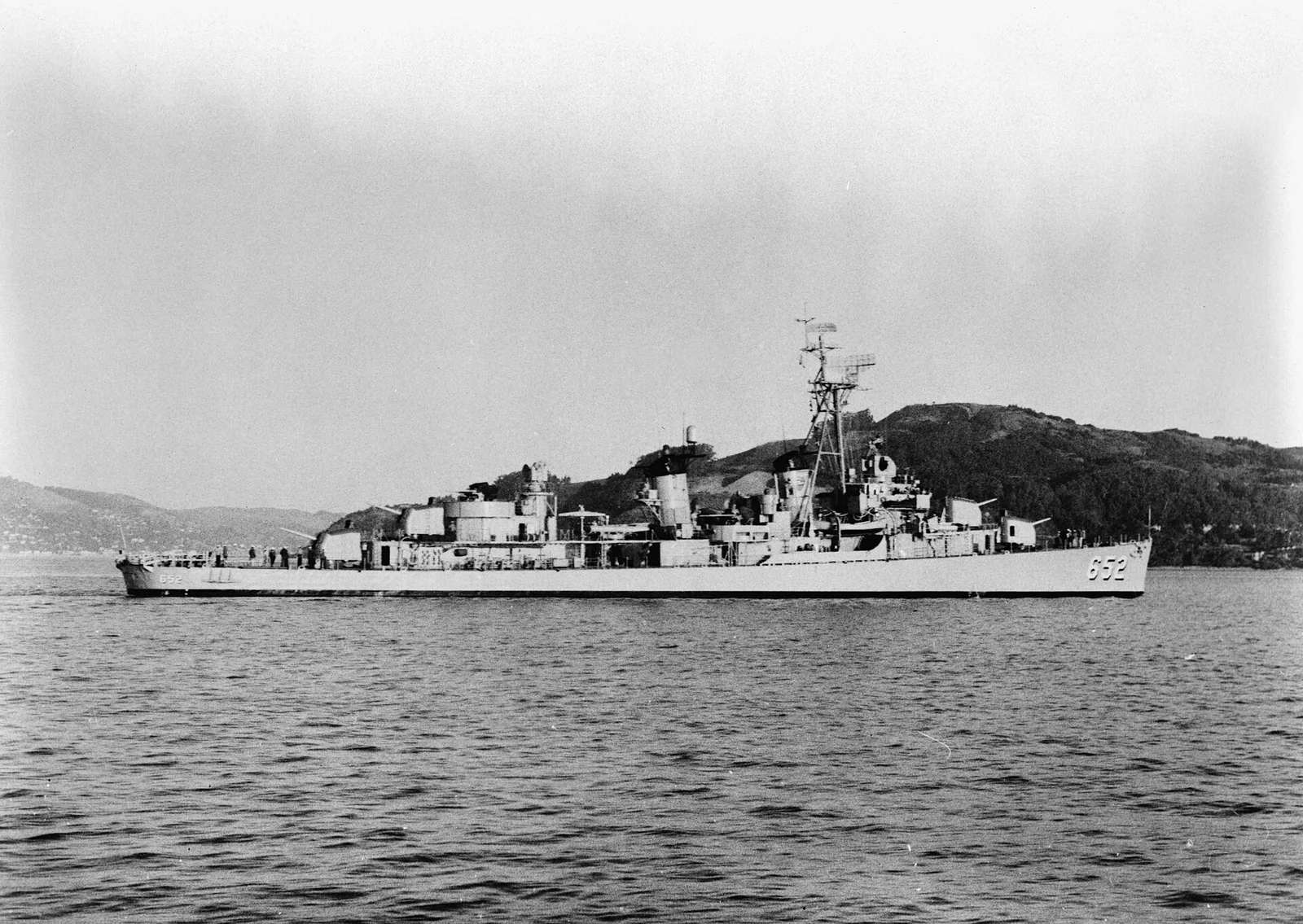
Royal Rodney Ingersoll was born in Niles, Mich., 4 December 1847, and graduated from the Naval Academy in 1868. He served in various ships of the fleet on the European and Asiatic Squadrons until 1876 when he was assigned to the Naval Academy. Ingersoll taught and wrote about Ordnance subjects during several tours at the Academy, and in the early years of the 20th century commanded such ships as Bennington, New Orleans, and Maryland. He was Chief of Staff of the Atlantic Fleet during the first part of its famous cruise around the world, and a member of the General Board in 1908. Rear Admiral Ingersoll retired in 1909, but was called back to duty during World War I as President of the Naval Ordnance Board. In 1919 he returned to his home in Laporte, Ind., where he was active in public affairs until his death 21 April 1931.
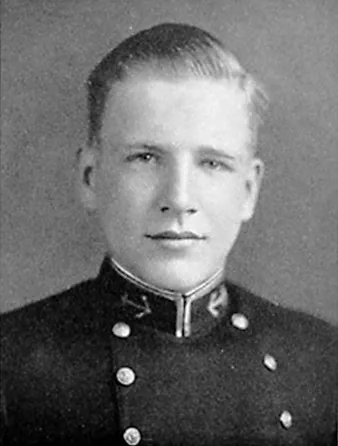
Royal Rodney Ingersoll III, the grandson of Admiral Ingersoll, was born at Manila, P.I., 17 December 1913. After graduating from the Naval Academy in 1934, he served in California, Cassin, and other ships during the thirties, and reported on board carrier Hornet during her fitting out period in 1941. Lieutenant Ingersoll served in Hornet during the critical early months of the Pacific war. In the great Battle of Midway 4 to 6 June 1942, in which the U.S. fleet decisively turned back the Japanese threat to the Hawaiian Islands, he was killed at his battle station by machine gun fire from Japanese aircraft.
Second World War 1939–1945
1942
Ingersoll (DD-652) was launched by Bath Iron Works Corp., Bath, Maine, 28 June 1942; cosponsored by Miss Alice Jean Ingersoll, granddaughter of Admiral Ingersoll, and Mrs. R. R. Ingersoll II, widow of Lieutenant Ingersoll; and commissioned at Boston Navy Yard 31 August 1943, Comdr. A. C. Veasy in command.
1943 Marshall Islands

Ingersoll conducted shakedown training off Bermuda during September and October 1943, and returned to Boston to embark Adm. R. E. Ingersoll, Commander in Chief of the Atlantic Fleet, who was son of the first namesake and father of the second, for a fleet review, 10 November 1943. The ship sailed 29 November to join the Pacific Fleet; and, after stops at the Panama Canal and San Diego, arrived Pearl Harbor 21 December. There she joined Task Force 58 for the invasion of the Marshall Islands.
The destroyer departed 16 January with the Southern Bombardment Group, and began preinvasion firing on Kwajalein 30 January. The landings began next day with Ingersoll lying offshore in her vital support role. With the victory won, she retired to Majuro 5 February, but was underway again 16 February to screen the fast carrier forces in their devastating raid on Truk 17 to 18 February. After this attack, "The Gibraltar of the Pacific" was untenable as a major base for the Japanese. After air strikes in the Marianas, Ingersoll returned with the carriers to Majuro 26 February.
Then on 7 March the versatile destroyer sailed for Espritu Santo, New Hebrides, but soon returned to Task Force 58 for carrier strikes against the Palaus and Hollandia. In the months that followed, the ships hit Ponape twice with shore bombardments and screened carrier strikes in the Palaus in connection with the advance of American combined forces. Ingersoll and the other ships remained at sea for long periods during these support operations, refueling and replenishing underway when necessary.
Ingersoll took part in preinvasion bombardments of Peleliu 7 September, and early in October joined in the sortie of Task Force 38 for one of the most important operations of the war. The giant fleet rendezvoused 7 October west of the Marianas, and launched air strikes on Okinawa and the Philippines. The ships then moved to their real objective, Japanese air strength on Formosa. In 3 days of attacks Formosa's value as a base was severely reduced, while air strikes on the American fleet were repulsed by Combat Air Patrol and the gunfire of Ingersoll and her sister ships. The carrier groups turned southward from Formosa to launch strikes against targets in the Philippines.
In late October the Japanese moved in a three-pronged attack to repel the invasion of the Philippines and force a decisive naval battle. The ensuing battle was the four-part Battle for Leyte Gulf, in which Ingersoll and her task group played an important role.
Her carrier planes struck Admiral Kurita's fleet a devastating blow in the Sibuyan Sea 24 October. That evening Admiral Halsey turned Task Force 38 northward in search of Admiral Ozawa's carrier group. Carrier strikes the next morning dealt crippling blows to the Japanese in the Battle off Cape Engano. When Admiral Halsey detached part of his fleet southward to intercept Kurita, who had slipped through San Bernadino Strait, Ingersoll joined Admiral Dubose's group in pursuit of the fleeing remnants of the Japanese fleet. During the long stern chase Ingersoll fired one torpedo at long range, but the group did not engage the remaining Japanese heavy ships.
1945
After the great victory Ingersoll returned to Ulithi for a well-earned rest and overhaul. She got underway again in January 1945 with fast carrier forces for strikes on Formosa, the Philippines, and the coast of China. From 3 to 9 January these operations supported the Lingayeu landings directly. Then Halsey took his ships on a daring foray into the South China Sea, striking Indo China, Hainan, and the China coast in a graphic demonstration of the power and mobility of American carrier groups when supported by destroyers and heavy units. This pivotal operation was completed 20 January; Inger soll was detached 1 February to sail to Pearl Harbor. She arrived 7 February, and after training exercises steamed to San Pedro 15 February 1945.
Following battle repairs and crew rotation Ingersoll got underway for Pearl Harbor 18 April 1945 and after training exercises sailed for Ulithi 2 May. From that staging base she steamed toward Okinawa, serving as a patrol vessel and screening flight operations. While off Okinawa 24 May the ship engaged a small suicide boat, and next day she shot down two Japanese aircraft during one of many air raids. Two more planes were splashed 28 May, and Ingersoll continued the hectic patrol and picket duty through June.
With Okinawa won, the ship rejoined Task Force 38 on 1 July 1945. Again acting as a screening and support ship, she took part in the final devastating raids on Japan and other Japanese-held islands. She also bombarded the iron -works at Kamaishi 15 July as part of a battleship, cruiser, and destroyer group in one of the first operations against the home islands toy surface ships.
After the surrender of Japan 15 August, Ingersoll assisted with the occupation; she was anchored in Tokyo Bay for the surrender ceremonies on board Missouri 2 September 1945. The veteran destroyer remained in Japan to help demilitarize Japanese bases, departing 5 December for the United States. After a long voyage via San Diego and the Canal Zone, she arrived Boston 17 January 1946. Ingersoll arrived Charleston, S.C., 4 April 1946; decommissioned 19 July; and joined the Atlantic Reserve Fleet.
Korean War period 1950–1953
1951
The destroyer recommissioned at Charleston 4 May 1951 in response to the U.N. Forces' growing need for naval support during the Korean conflict. The veteran fighting ship operated along the Atlantic Coast and in the Caribbean until departing for the Mediterranean 26 August 1952 to join the 6th Fleet. She operated in that crucial region, helping to prevent a spread of the conflict to Europe, until returning to Newport 10 February 1953.
Cold War 1954–1963
1954
Training operations occupied Ingersoll until she departed Newport for the Far East 10 August. Sailing via the Panama Canal, San Diego, and Pearl Harbor, she arrived Yokosuka, Japan, 14 September to begin operations with Task Force 77 off Korea. The ships sailed off Korea in support of the armistice, before moving to the Formosa area to help stabilize the volatile strait in November-December. Ingersoll then sailed to Singapore and steamed westward to transit the Suez Canal 13 February 1954. After stopping at various Mediterranean ports she completed her circuit of the globe upon arrival Fall River, Mass., 18 March 1954.
Following repairs and training, the veteran ship got underway again 30 November 1954 for the Pacific, arriving San Diego 15 December and departing 4 January 1955. She rejoined the 7th Fleet in time to take part in the evaculation of the Tachen Islands, which threatened to bring war between Chinese Nationalists and Communists. After fleet maneuvers the ship spent March and April at Formosa helping to train Nationalist sailors. In gersoll returned to San Diego 19 June 1955 ending another highly successful cruise in the Far East.
1956
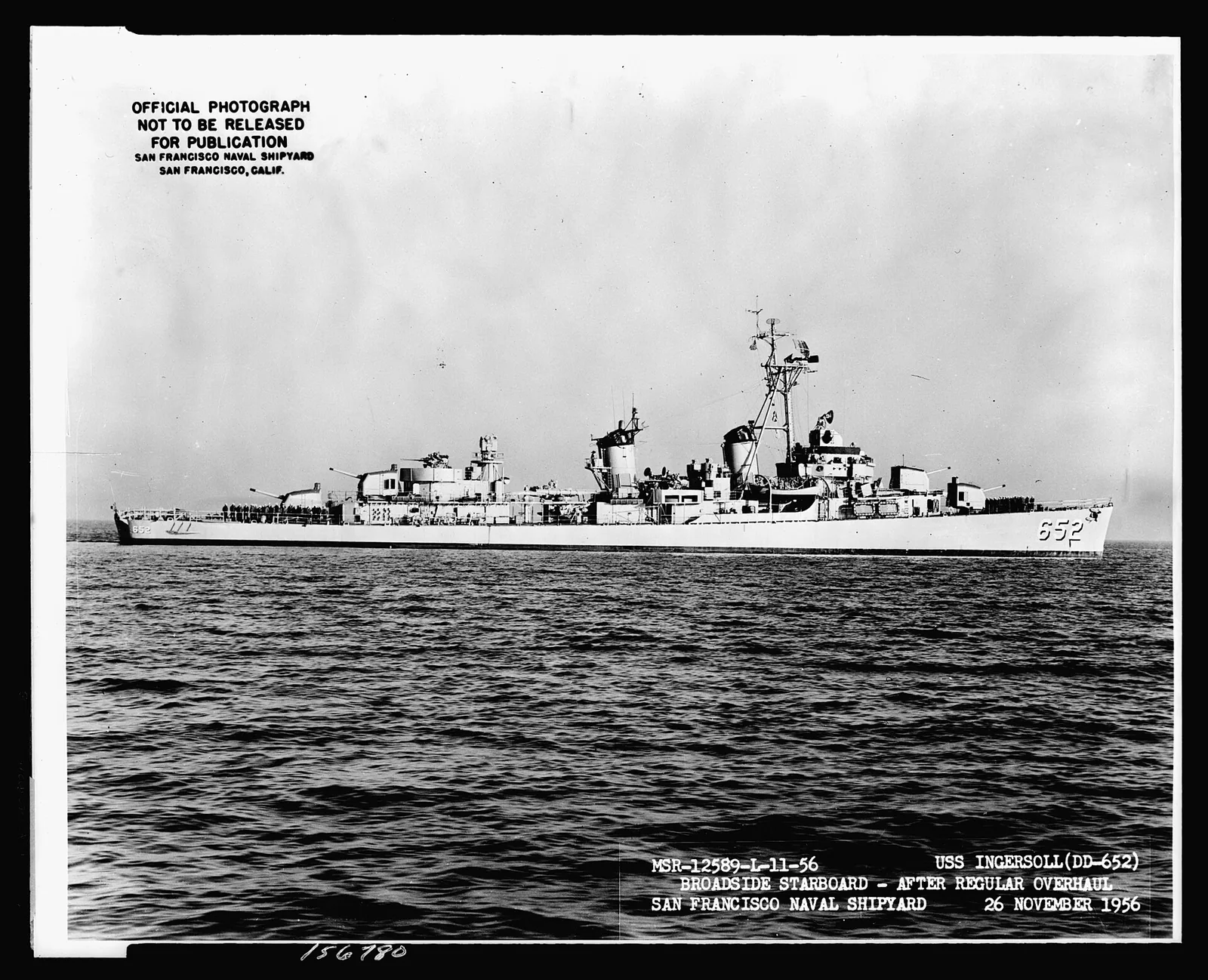
The destroyer returned to 7th Fleet duty January to April 1956; and, after her return to San Diego 26 April, engaged in training operations until August. From 27 August to 8 December Ingersoll underwent a yard period in San Francisco in which a new underwater fire control system was installed. After additional evaluation and antisubmarine training the ship sailed again 16 April 1957 for the western Pacific. On this cruise Ingersoll stopped at Melbourne, Australia, and the Fiji Islands, participating in fleet exercises off Guam and the Philippines. In August the destroyer steamed to Taiwan for the now-familiar Formosa Patrol, helping to maintain peace and stability in those troubled waters. After carrier exercises she sailed for home, arriving San Diego 14 October 1957.
1958
Ingersoll returned to the Far East with the 7th Fleet 25 June to 18 December 1958; and, in the early part of 1959, took part in type training and readiness operations off California. The veteran ship sailed westward once more 15 August 1959 and operated with a submarine hunter-killer group during most of her deployment. She returned 1 February 1960, as trouble began to mount in Southeast Asia.
1960
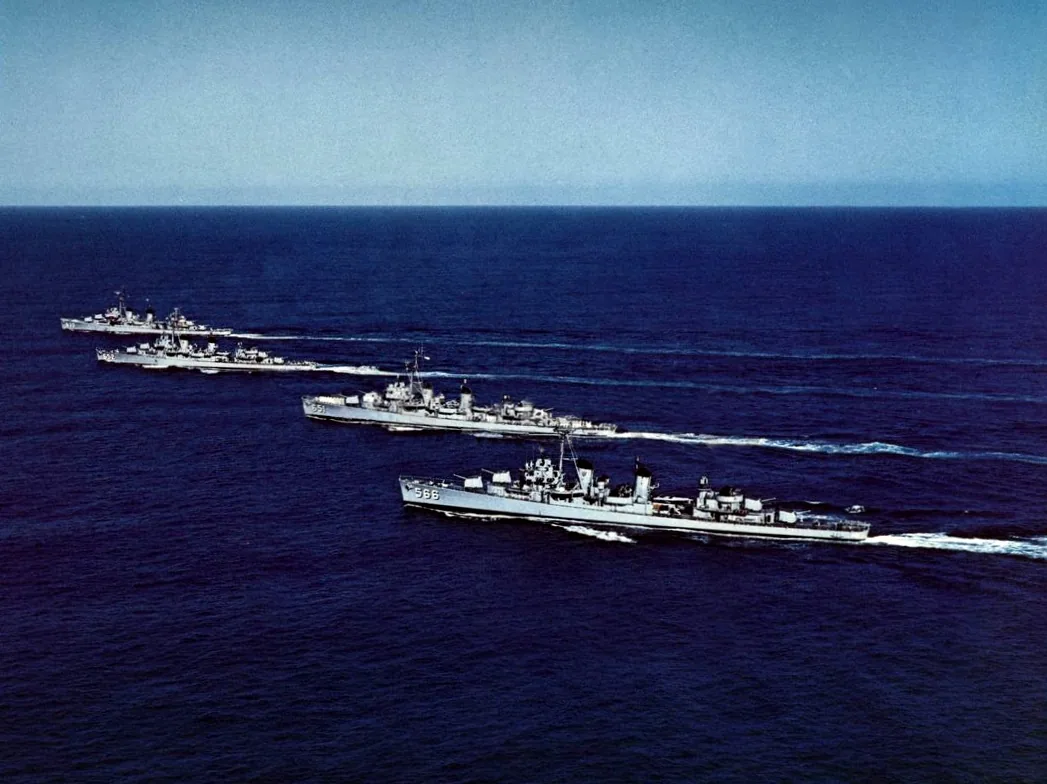
The destroyer got underway with a hunter-killer group for the Far East 1 October 1960, and after spending October and November training in Hawaiian waters steamed to the South China Sea to support American efforts to stabilize the threatened kingdom of Laos. In December she screened transports during the landing of a battalion landing team in Laos to enforce the Geneva solution. She remained off Laos until April, returning to her home port 2 May 1961.
1962
Ingersoll spent the remainder of 1961 on the West Coast, then sailed 6 January 1962 for duty with the 7th Fleet that included cruising with carrier Hancock off South Vietnam when trouble flared again in Laos. She also patrolled Taiwan Straits in response to the reports of Communist troops on the mainland opposite the Nationalist island. She returned to San Diego 18 July 1962 for western seaboard operations until October 1962 when the Cuban missile crisis broke. Ingersoll responded quickly, sailing with an amphibious group to the Canal Zone in case additional troops were needed in the emergency. When the sea blockade coupled with strenuous American diplomacy resulted in the removal of the missile threat, she resumed training out of San Diego. She returned to the Far East in October 1963 to support carrier operations in the East and South China Seas and resumed operations out of San Diego in the spring of 1964.
Vietnam War period 1964–1975
1965
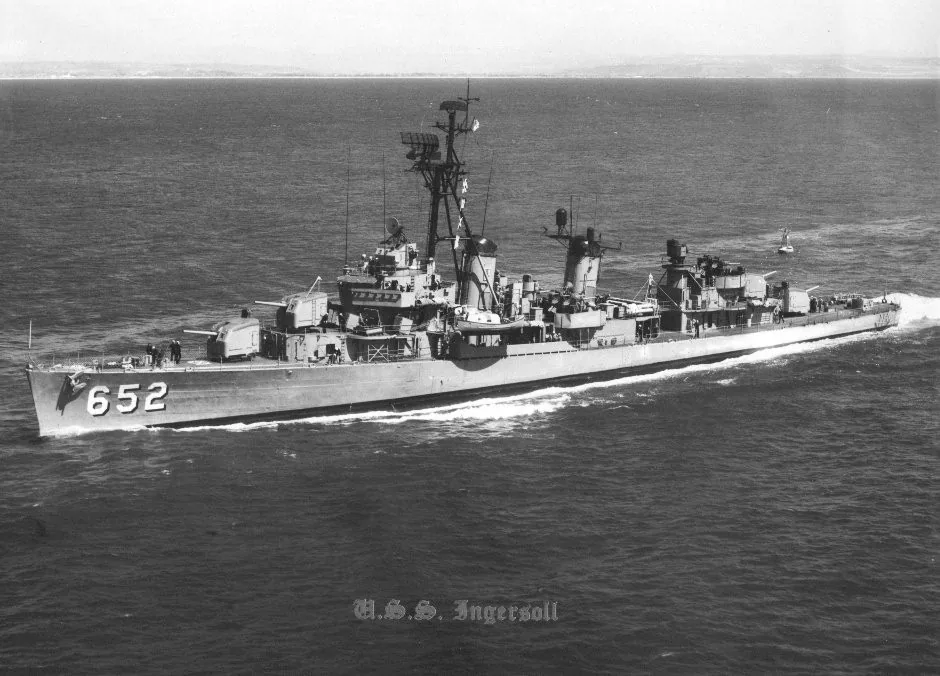
Ingersoll completed a yard overhaul 5 February 1965, conducted readiness operations along the seaboard, then sailed from San Diego 9 June 1965 for the coast of South Vietnam. Her "Market Time Patrols" to intercept Viet Cong men and supplies, were punctuated with 24 gunfire missions against 116 targets, contributing to the success in all 4 Vietnamese Corps Areas of the South China Sea coastline, and 3 missions fired 7 miles up the Saigon River in support of the IV Corps. She also took time out for plane guard and screen duties with fast carriers, including Independence and Midway as they launched hardhitting air strikes to inland and coastal targets in North Vietnam. She returned to San Diego 23 November 1965 for a much deserved leave and upkeep period extending through 31 December.
Ingersoll completed yard overhaul 5 February 1965 and immediately began training for a WestPac deployment. She sailed for the Far East 9 June and on 5 July began coastal surveillance patrols to help to stem the flow of men and munitions from North Vietnam. On the 20th she joined the naval gunfire support group off the coast of Quang Ngai. Her guns delivered powerful aid to friendly troops throughout the summer and well into the fall. On 10 October she was assigned to plane guard duty in the South China Sea. On 4 November she headed home and arrived San Diego on the 23d.
1966
Ingersoll operated along the West Coast until departing San Diego 5 November 1966 for the Far East. Upon reaching the war zone she participated in Operation "Sea Dragon," anti-shipping and interdiction operations, and plane guard duty for Kitty Hawk (OVA-63). On 5 December a North Vietnamese coastal battery fired on the destroyer whose prompt counter fire silenced the enemy guns. Ingersoll continued to operate in the war zone and other Oriental waters until returning home in the spring of 1967 to prepare for future assignments.
Other photographs
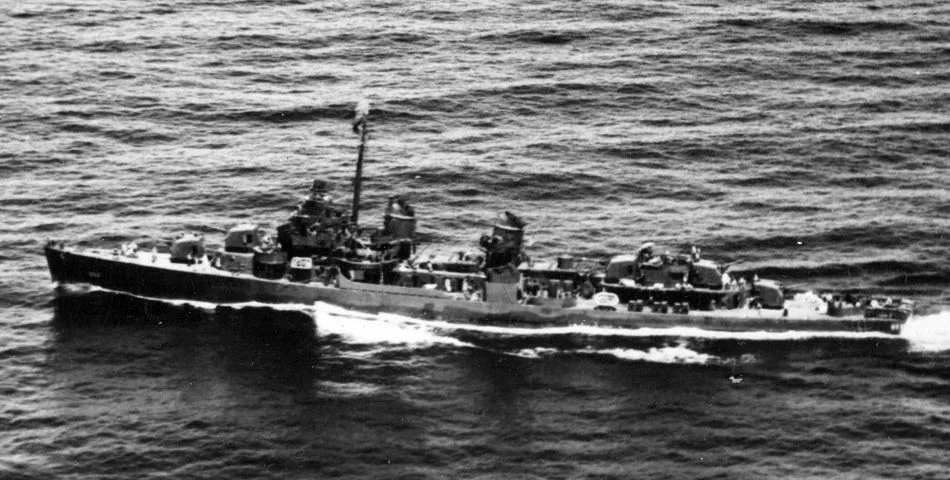
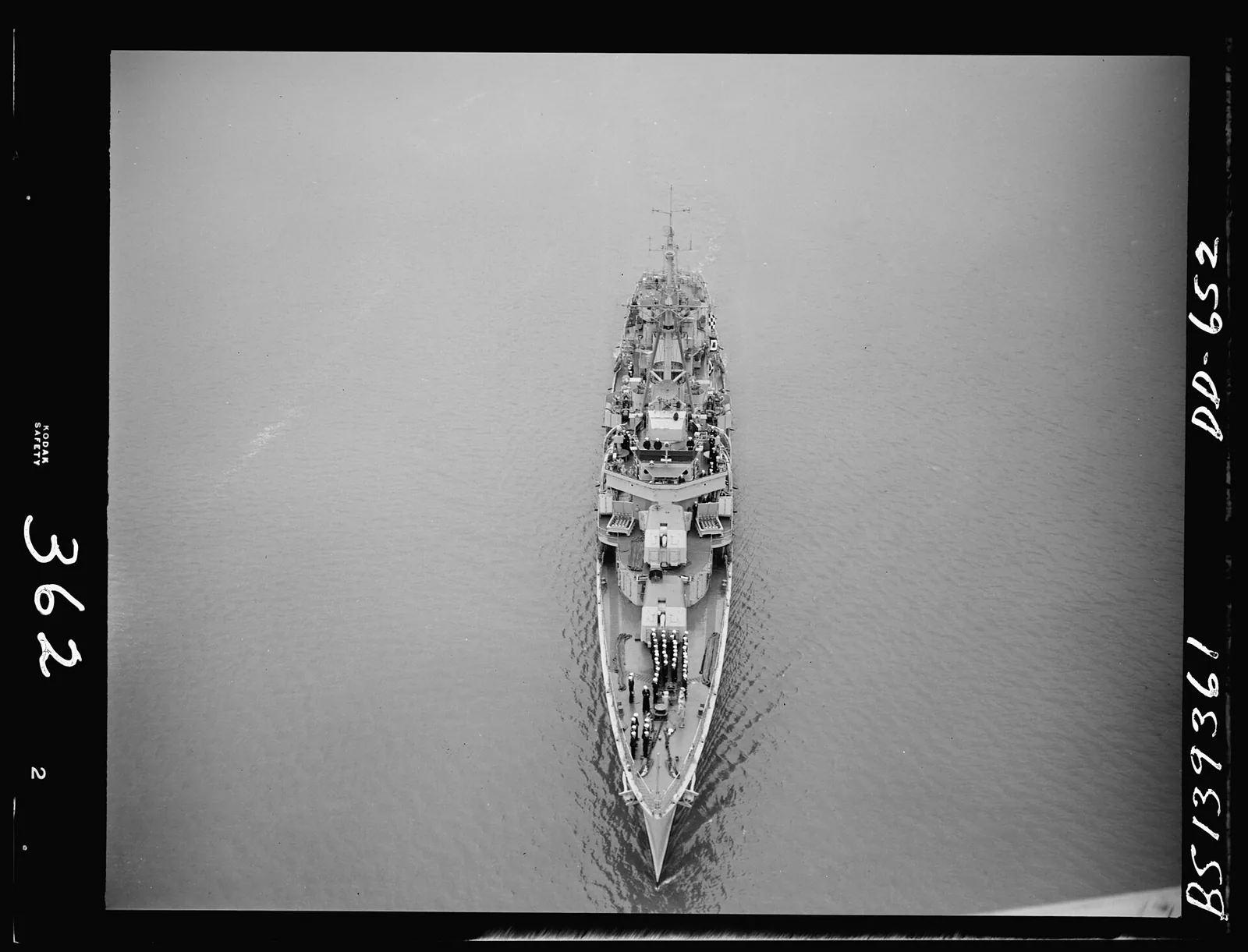
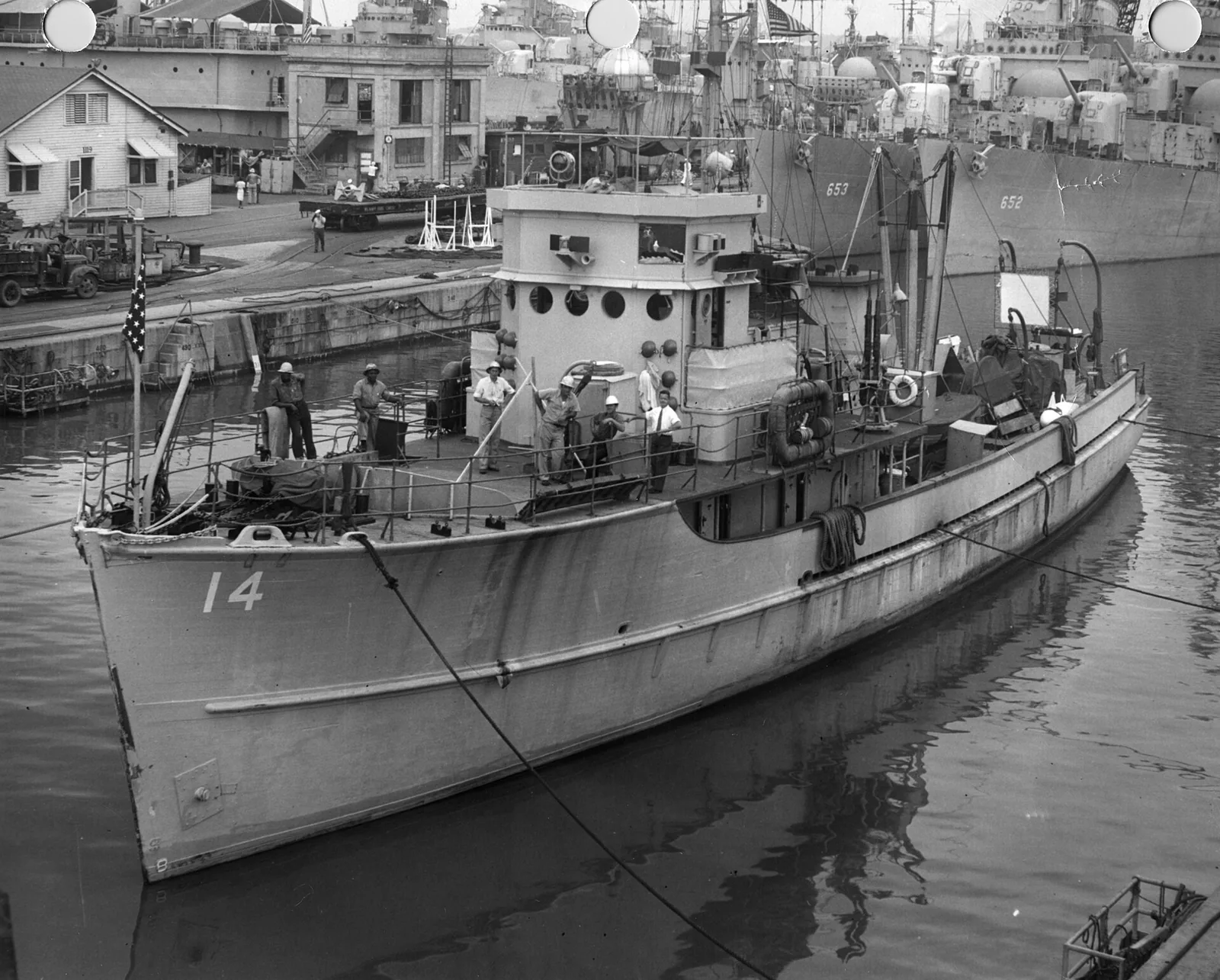
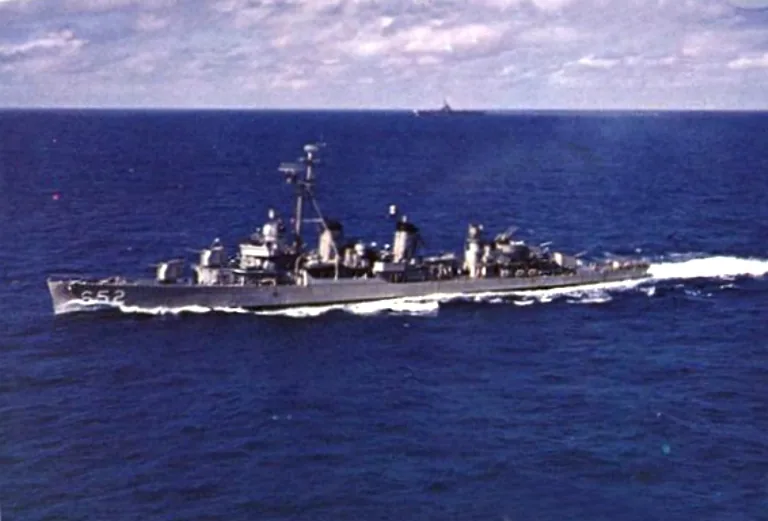
Held for this vessel, and not tied to any part of the account above.
References
Every work this entry draws on. There are no numbered markers in the text above: what we hold is the provenance of the page — this history, this article, these photographs.
- History Ingersoll (DD-652) Dictionary of American Naval Fighting Ships, Naval History and Heritage Command. A work of the United States Government, in the public domain — the only text on this site reproduced verbatim.
- Facts USS Ingersoll (DD-652) Structured facts only — dates, dimensions, armament and fate. No wording is taken from it. Harvested 1 August 2026.
- Photograph USS Ingersoll (DD-652) underway in 1966 PH2 J.V. Cullinan, USN — Official U.S. Navy photo NH 107203 from the U.S. Navy Naval History and Heritage Command — Public domain — Wikimedia Commons
- Photograph Royal Rodney Ingersoll II Unknown military photographer — U.S. War Department — Public domain — Wikimedia Commons
- Photograph USS Ingersoll (DD-652) off Taroa Island in 1944 USN — Official U.S. Navy photo 80-G-222927 available at Destroyerhistory.org — Public domain — Wikimedia Commons
- Photograph DD-652 Ingersoll - DPLA - 0c161acb65fcc33a5a029a907a29dfad Department of Defense. Department of the Navy. Bureau of Ships. 9/18/1947-5/1/1966 — This file was contributed to Wikimedia Commons by National Archives and Records Administration as part of a cooperation project. The donation was facilitated by the Digital Public Library of America , via its partner Digital Public Library of America . Record in source catalog DPLA identifier: 0c161acb65fcc33a5a029a907a29dfad National Archives Identifier: 24742543 — Public domain — Wikimedia Commons
- Photograph DD-652 Ingersoll - DPLA - fb86180d98f2c6f52469942f492c1167 Department of Defense. Department of the Navy. Bureau of Ships. 9/18/1947-5/1/1966 — This file was contributed to Wikimedia Commons by National Archives and Records Administration as part of a cooperation project. The donation was facilitated by the Digital Public Library of America , via its partner Digital Public Library of America . Record in source catalog DPLA identifier: fb86180d98f2c6f52469942f492c1167 National Archives Identifier: 24742517 — Public domain — Wikimedia Commons
- Photograph USS Braine (DD-630), USS Ingersoll (DD-652), USS Cogswell (DD-651) and USS Stoddard (DD-566) underway in the Pacific Ocean, circa in 1960 U.S. Navy — U.S. Navy photo [1] from the USS Bennington (CVS-20) 1960 cruise book available at Navysite.de — Public domain — Wikimedia Commons
- Photograph USS Grosbeak (AMS-14), possibly at Norfolk, Virginia (USA), circa in the later 1940s (L45-112.04.01) Unknown author — U.S. Naval History and Heritage Command photo L45-112.04.01 — Public domain — Wikimedia Commons
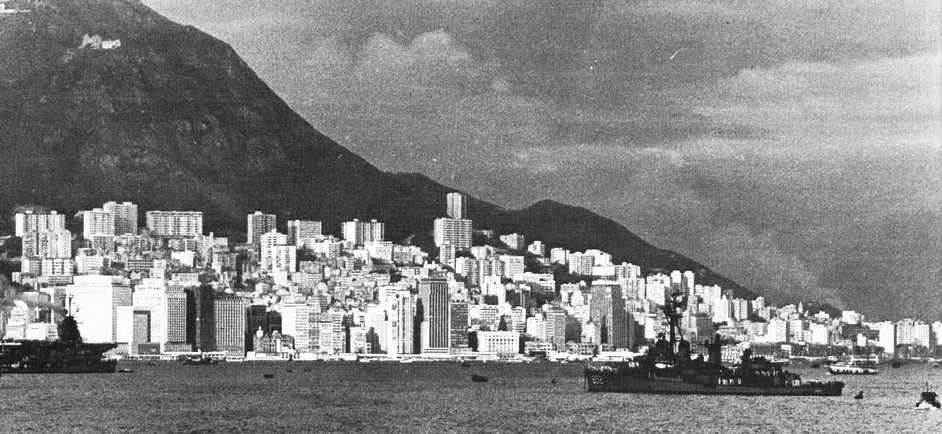
- Photograph USS Ingersoll (DD-652) at Hong Kong in 1968 U.S. Navy — U.S. Navy photo [1] from the USS Maddox (DD-731) 1968 cruise book available at Navysite.de — Public domain — Wikimedia Commons
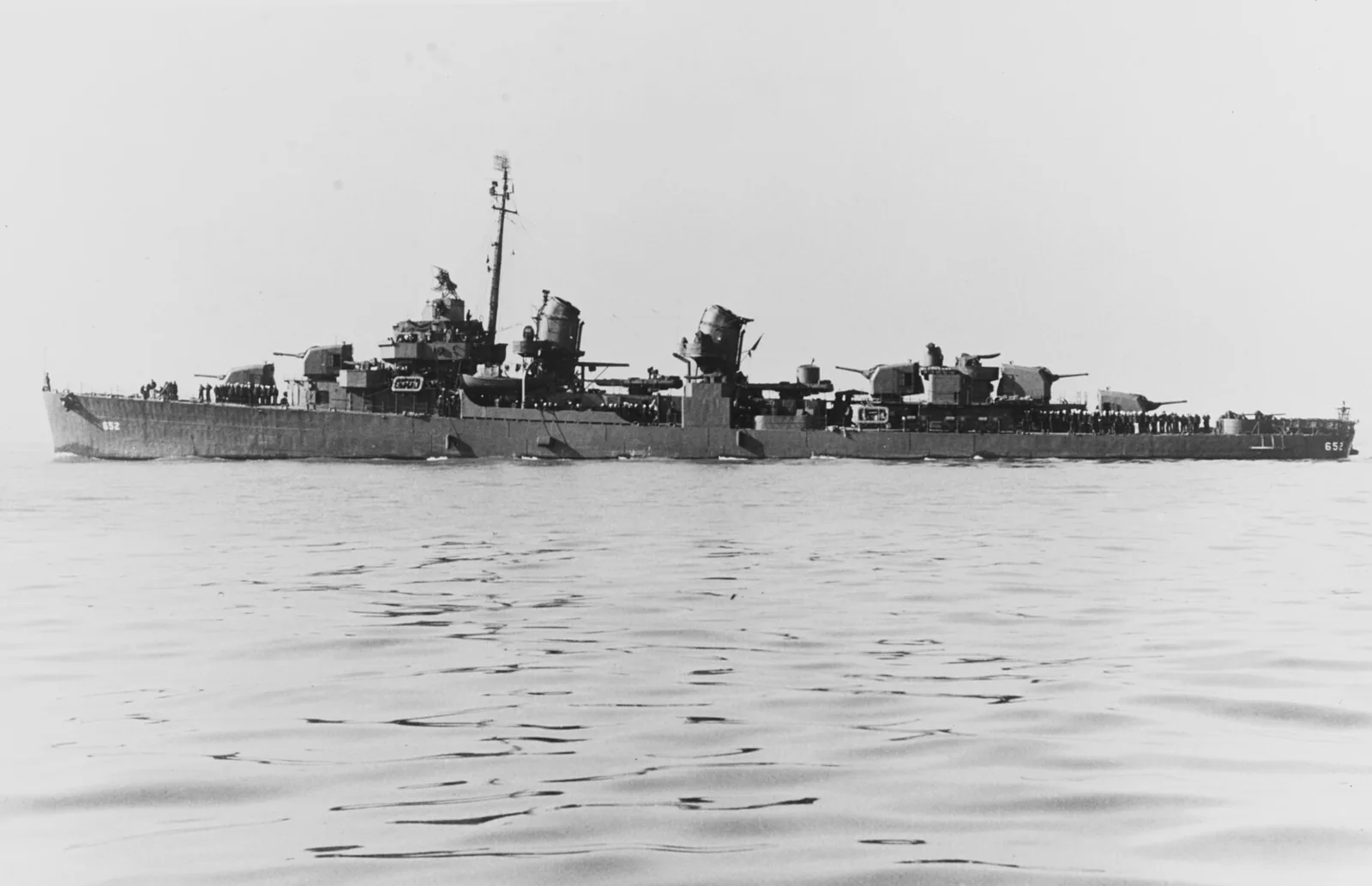
- Photograph USS Ingersoll (DD-652) at sea on 11 November 1943 U.S. Navy — Official U.S. Navy photo NH 90954 from the U.S. Navy Naval History and Heritage Command — Public domain — Wikimedia Commons
- Photograph USS Ingersoll (DD-652) insignia, circa in 1960 U.S. Navy, post-work Cobatfor — U.S. Navy photo [1] from the USS Bennington (CVS-20) 1960 cruise book available at Navysite.de — Public domain — Wikimedia Commons
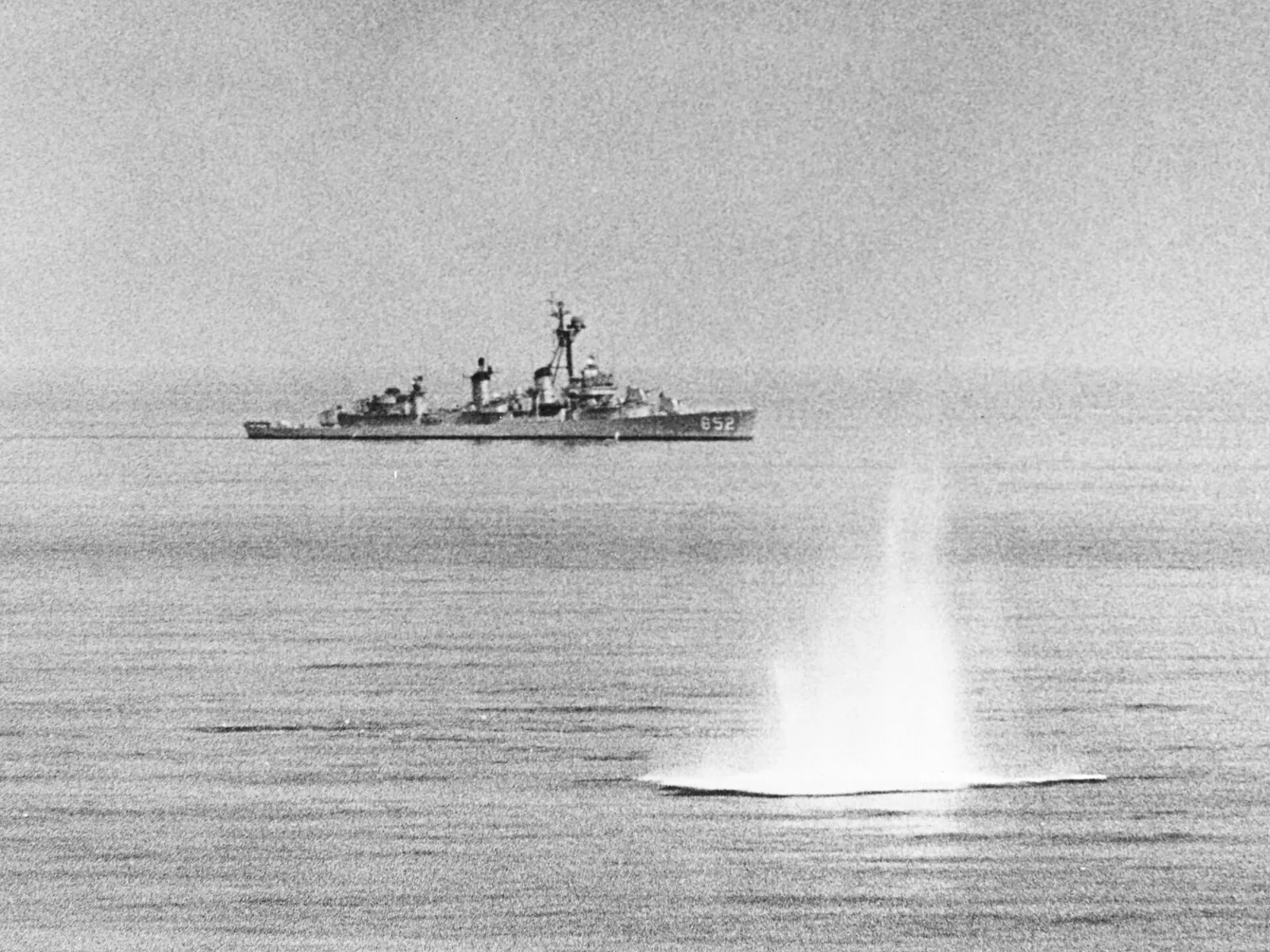
- Photograph USS Ingersoll (DD-652) under fire from North Vietnamese shore battery in March 1967 Chief Journalist Robert D. Moeser, U.S. Navy — U.S. Navy photo USN 1142161 — Public domain — Wikimedia Commons
- Photograph USS Ingersoll (DD-652) underway at sea, circa in 1965 The original uploader was Govus at English Wikipedia . — Transferred from en.wikipedia to Commons — Attribution — Wikimedia Commons
- Photograph USS Ingersoll (DD-652) underway in 1943 U.S. Navy — Official U.S. Navy photo NH 90903 from the U.S. Navy Naval History and Heritage Command — Public domain — Wikimedia Commons
- Photograph USS Ingersoll (DD-652) underway in the Pacific Ocean, circa in 1960 U.S. Navy — U.S. Navy photo [1] from the USS Bennington (CVS-20) 1960 cruise book available at Navysite.de — Public domain — Wikimedia Commons
- Photograph USS Ingersoll (DD-652) underway on 28 May 1959 U.S. Navy Burau of Ships photo 19-NN - DD-652 Ingersoll - 159895 — Public domain — Wikimedia Commons