United States Navy — Aircraft carrier
USS Lexington (CV-16) — service history
This is the full service history. For the vessel's particulars, photograph and specifications, see the entry.
In the words of the US Navy. The account below is reproduced verbatim from the Dictionary of American Naval Fighting Ships, compiled by the Naval History and Heritage Command — a work of the United States Government, in the public domain, and the only text on this site not written here.
Before commissioning
Minutemen fought a detachment of British troops at Lexington, Mass., 19 April 1776 opening the Revolutionary War with "the shot heard round the world."
Second World War 1939–1945
1941
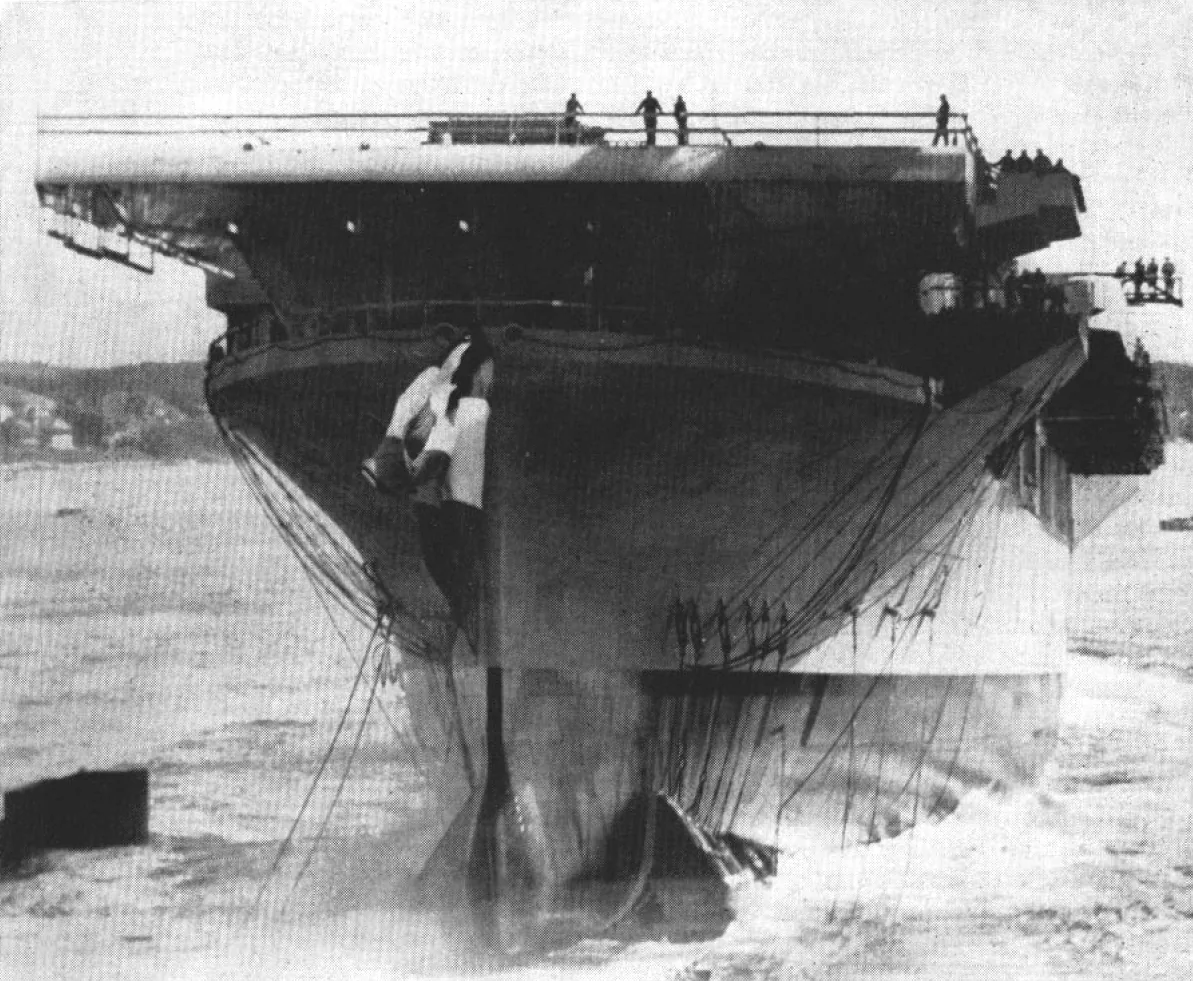
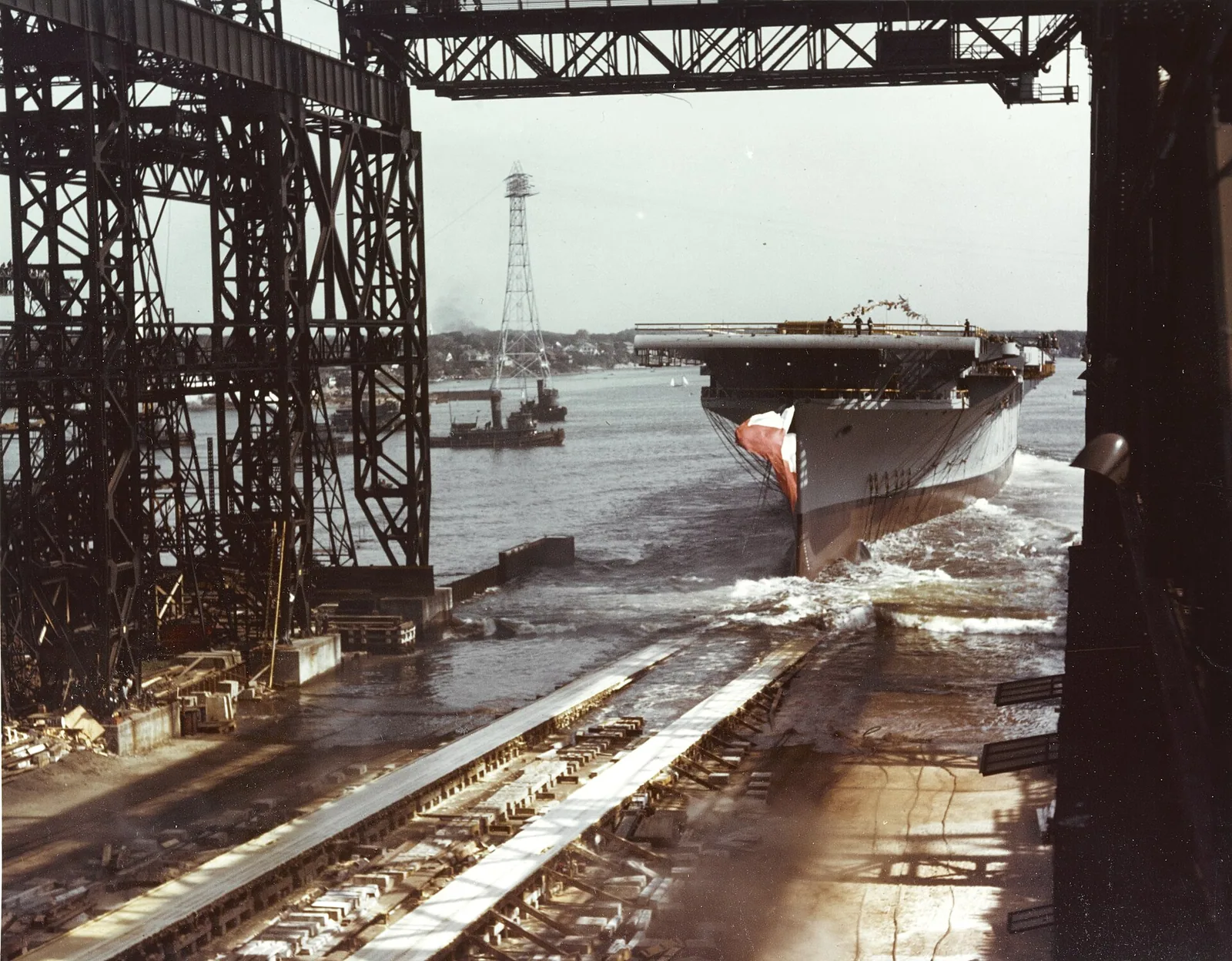
The fifth Lexington (CV-16) was laid down as Cabot 15 July 1941 by Bethlehem Steel Co., Quincy, Mass.; renamed Lexington 16June 1942; launched 26 September 1942; sponsored by Mrs. Theodore D. Robinson; and commissioned 17 February 1943, Capt. Felix B. Stump in command.
1943
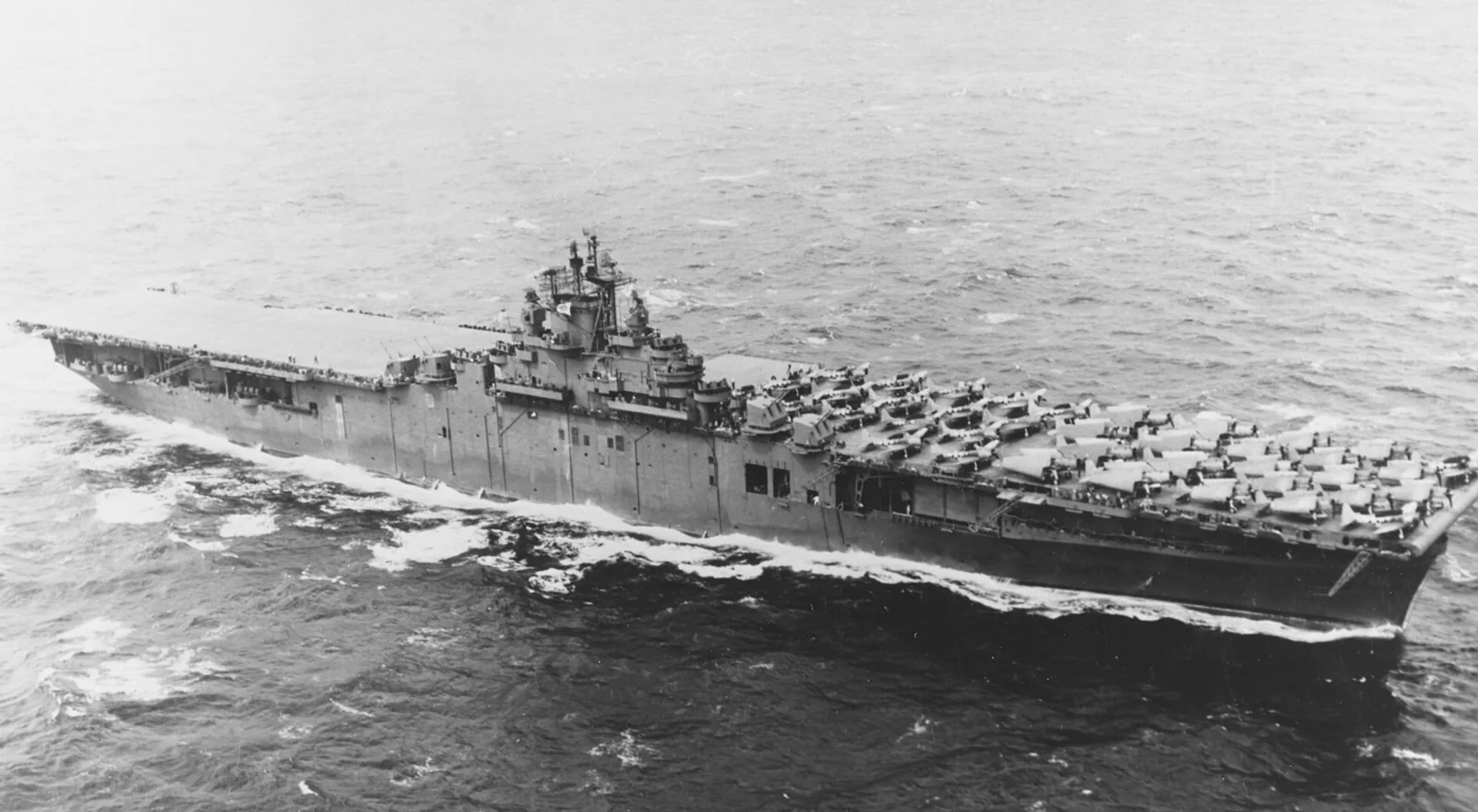
After Caribbean shakedown and yard work at Boston, Lexington sailed for Pacific action via the Panama Canal, arriving Pearl Harbor 9 August 1943. She raided Tarawa in late September and Wake in October, then returned Pearl Harbor to prepare for the Gilbert Islands operation. From 19 to 24 November she made searches and flew sorties in the Marshalls, covering the landings in the Gilberts. Her aviators downed 29 enemy aircraft on 23 and 24 November.
1944 Hollandia
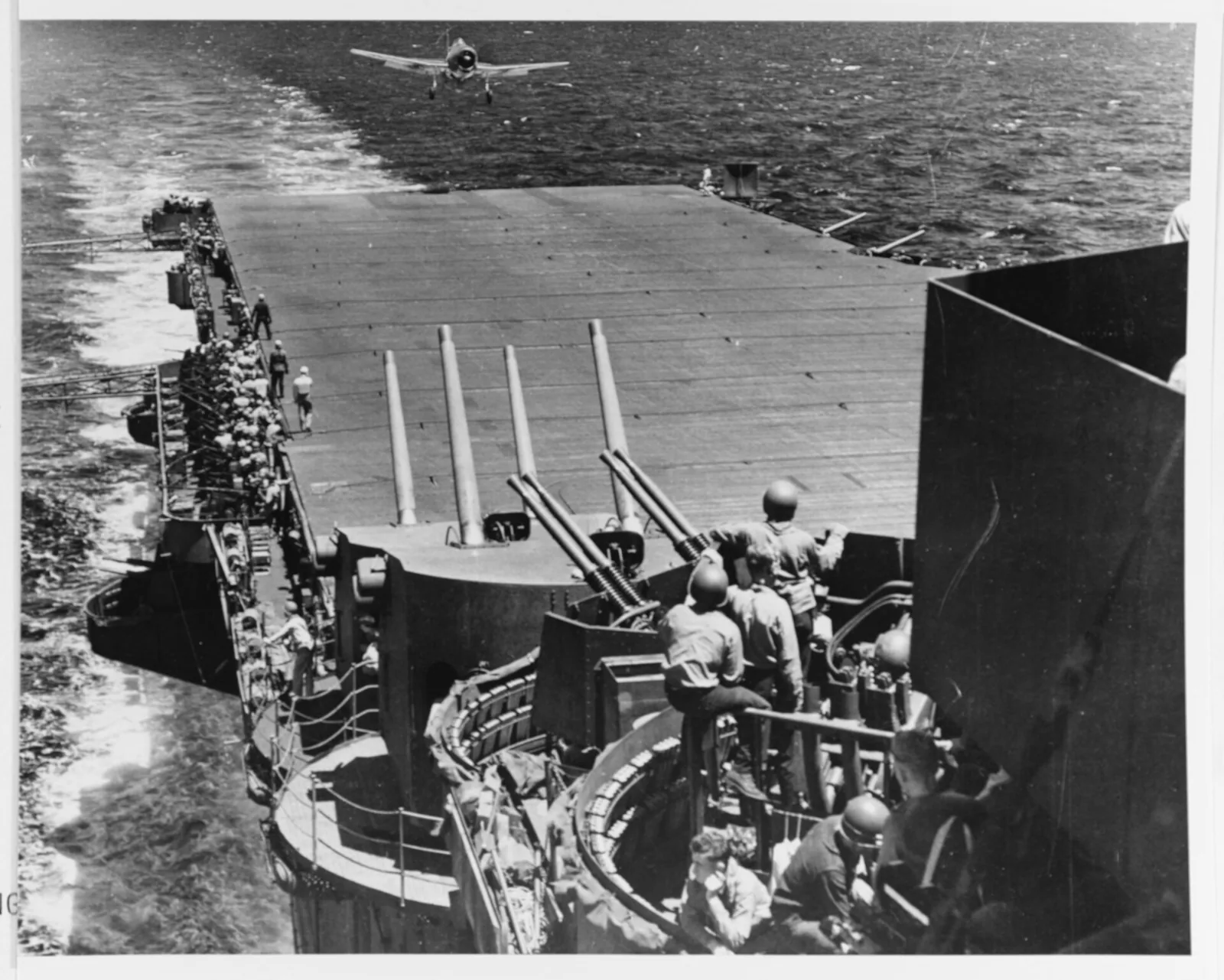
Lexington sailed to raid Kwajalein 4 December. Her morning strike destroyed a cargo ship, damaged two cruisers, and accounted for 30 enemy aircraft. Her gunners splashed two of the enemy torpedo planes that attacked at midday, and opened fire again at 1925 that night when a major air attack began. At 2322 parachute flares silhouetted the carrier, and 10 minutes later she was hit by a torpedo to starboard, knocking out her steering gear. Settling 5 feet by the stern, the carrier began circling to port amidst dense clouds of smoke pouring from ruptured tanks aft. An emergency hand-operated steering unit was quickly devised, and Lexington made Pearl Harbor for emergency repairs, arriving 9 December. She reached Bremerton, Wash., 22 December for full repairs completed 20 February 1944.
Lexington sailed via Alameda, Calif., and Pearl Harbor for Majuro, where Rear Adm. Marc Mitscher commanding TF 58 broke his flag in her 8 March. After a warmup strike against Mille, TF 58 operated against the major centers of resistance in Japan's outer empire, supporting the Army landing at Hollandia 13 April, and hitting supposedly invulnerable Truk 28 April. Heavy counterattack left Lexington untouched, her planes splashing 17 enemy fighters; but, for the second time, Japanese propaganda announced her sunk.
A surprise fighter strike on Saipan 11 June virtually eliminated all air opposition over the island, then battered from the air for the next 5 days. On 15 June Lexington fought off a fierce attack by Japanese torpedo planes based on Guam, once again to emerge unhurt, but sunk a third time by propaganda pronouncements. As Japanese opposition to the Mariannas operation provoked the Battle of the Philippine Sea 19 and 20 June, Lexington played a major role in TF 58's great victory. With over 300 enemy aircraft destroyed the first day, and a carrier, a tanker, and a destroyer sunk the second day, American aviators virtually knocked Japanese naval aviation out of the war; for with the planes went the trained and experienced pilots without whom Japan could not continue air warfare at sea.
Using Eniwetok as her base, Lexington flew sorties over Guam and against the Palaus and Bonins into August. She arrived in the Carolinas 6 September for 3 days of strikes against Yap and Ulithi, then began attacks on Mindanao, the Visayas, the Manila area, and shipping along the west coast of Luzon, preparing for the coming assault on Leyte. Her task force then blasted Okinawa 10 October and Formosa 2 days later to destroy bases from which opposition to the Philippines campaign might be launched. She was again unscathed through the air battle fought after the Formosa assault.
Now covering the Leyte landings, Lexington's planes scored importantly in the Battle for Leyte Gulf, the climactic American naval victory over Japan. While the carrier came under constant enemy attack in the engagement in which Princeton was sunk, her planes joined in sinking Japan's superbattleship Musashi and scored hits on three cruisers 24 October. Next day, with Essex aircraft, they sank carrier Chitose, and alone sank Zuikako. Later in the day, they aided in sinking a third carrier, Zuiho. As the retiring Japanese were pursued, her planes sank heavy cruiser Nachi with four torpedo hits 5 November off Luzon.
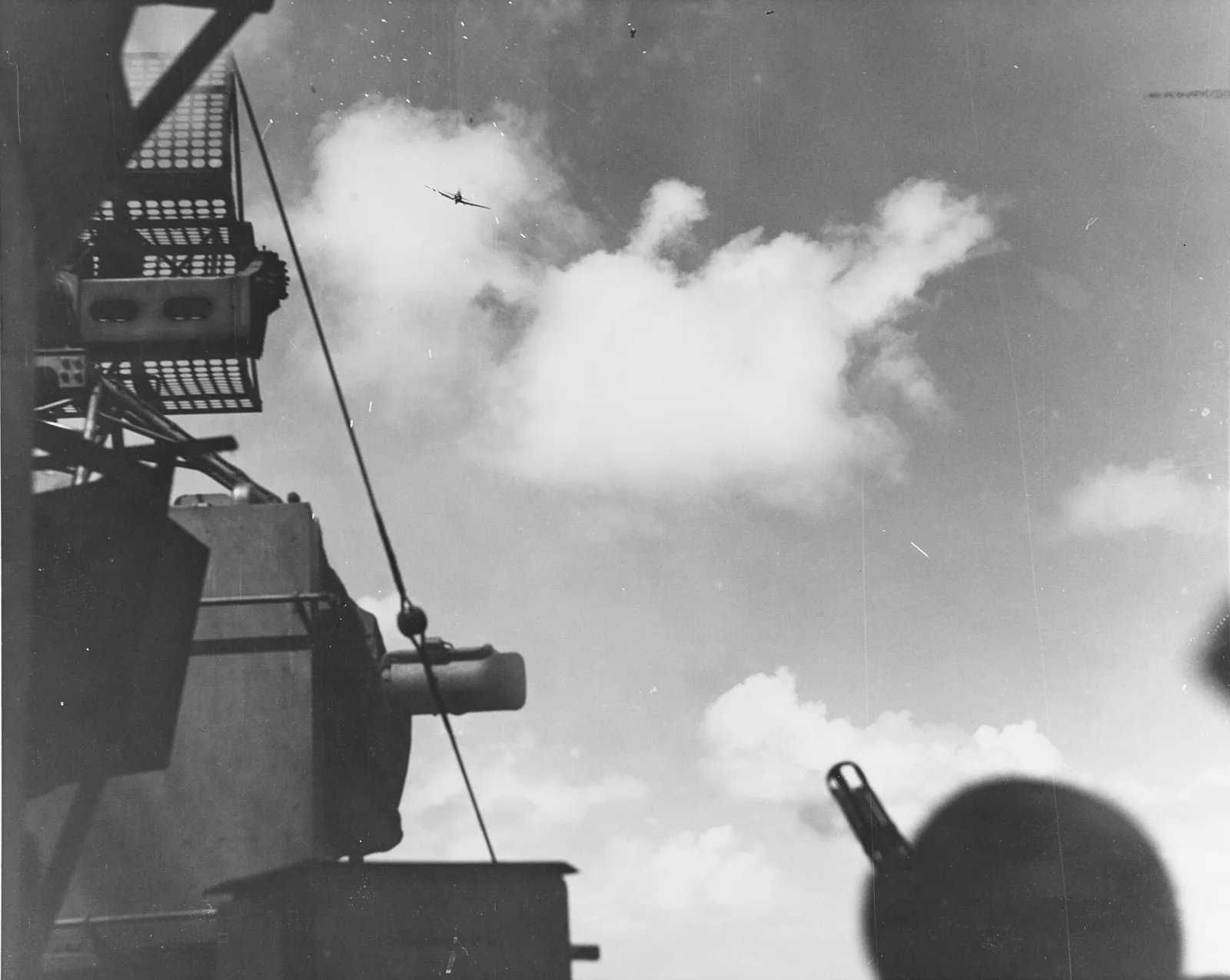
But in the same action, she was introduced to the kamikaze as a flaming Japanese plane crashed near her island, destroying most of the island structure and spraying flre in all directions. Within 20 minutes major blazes were under control, and she was able to continue normal flight actions, her guns knocking down a would-be kamikaze heading for carrier Ticonderoga as well. On 9 November Lexington arrived Ulithi to repair battle damage and learn that Tokyo once again claimed her destroyed.
1945
Chosen flagship for TG 58.2 on 11 December, she struck at the airfields of Luzon and Formosa during the first 9 days of January 1945, encountering little enemy opposition. The task force then entered the China Sea to strike enemy shipping and air installations. Strikes were flown against Saipan, Camranh Bay in then Indochina, Hong Kong, the Pescadores, and Formosa. Task force planes sank four merchant ships and four escorts in one convoy, and destroyed at least 12 in another, at Camranh Bay 12 January. Leaving the China Sea 20 January, Lexington sailed north to strike Formosa again 21 January and Okinawa again 22 January.
After replenishing at Ulithi, TG 58.2 sailed 10 February to hit airfields near Tokyo 16 and 17 February to minimize opposition to the Iwo Jima landings 19 February. Lexington flew close support for the assaulting troops 19 to 22 February, then sailed for further strikes against the Japanese home islands and the Nansei Shoto before heading for overhaul at Puget Sound.
Lexington was combat bound again 22 May, sailing via Alameda and Pearl Harbor for San Pedro Bay, Leyte, where she joined Rear Adm. T. L. Sprague's task force for the final round of airstrikes which battered the Japanese home islands through July until 15 August, when the last strike was ordered to jettison its bombs and return to Lexington on receiving word of Japanese surrender. During this period she had launched attacks on Honshu and Hokkaido airfields, and Yokosuka and Kure naval bases to destroy the remnants of the Japanese fleet. She had also flown bombing attacks on industrial targets in the Tokyo area.
After hostilities ended, she continued to fly precautionary patrols over Japan, and dropped supplies to prisoner of war camps on Honshu. She supported the occupation of Japan until leaving Tokyo Bay 3 December with homeward bound veterans for transportation to San Francisco, where she arrived 15 December.
Post-war 1946–1949
1947
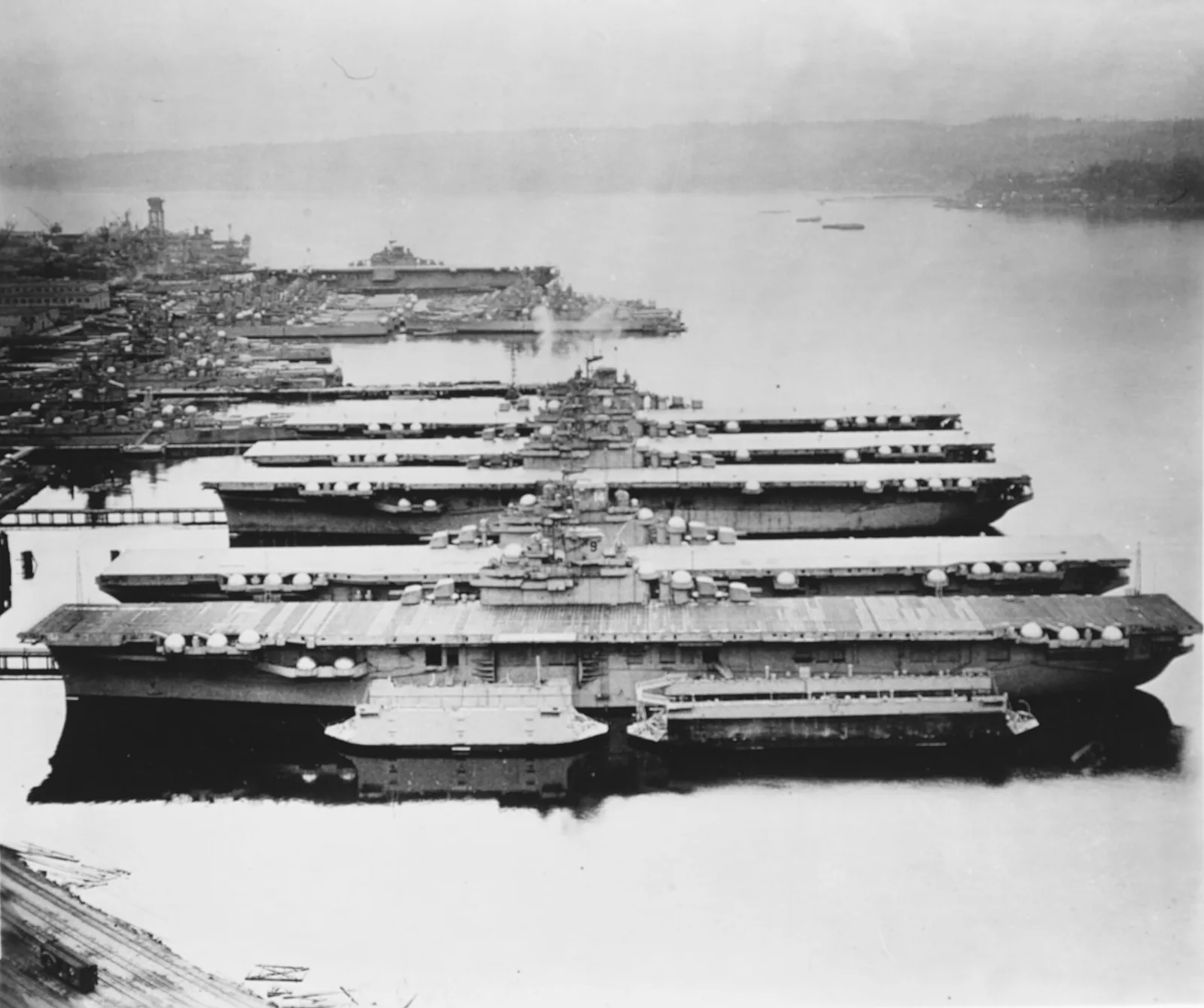
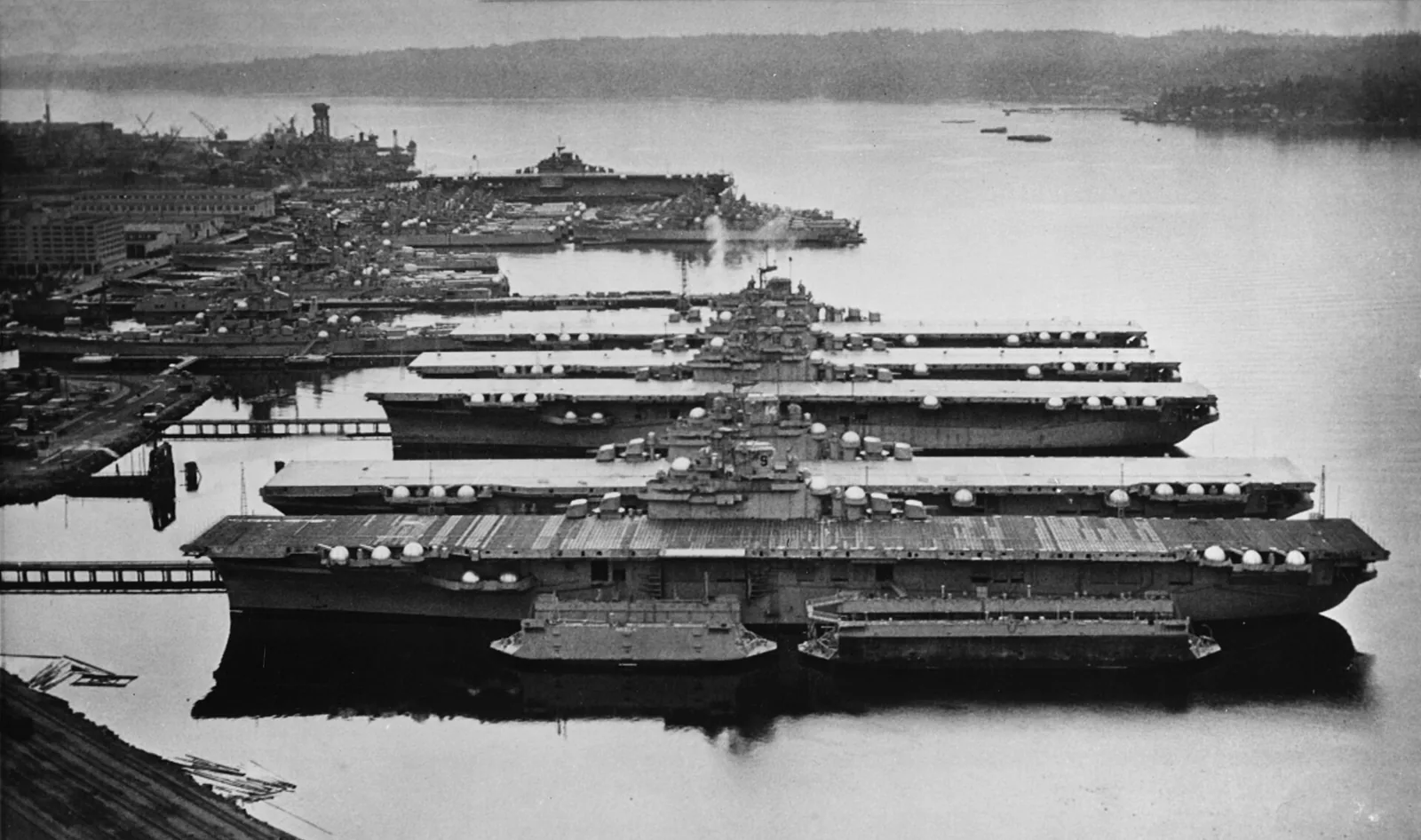
After west coast operations, Lexington decommissioned at Bremerton, Wash., 23 April 1947 and entered the Reserve Fleet there. Designated attack carrier CVA-16 on 1 October 1952, she began conversion and modernization in Puget Sound Naval Shipyard 1 September 1953, receiving the new angled flight deck.
Cold War 1954–1963
1955

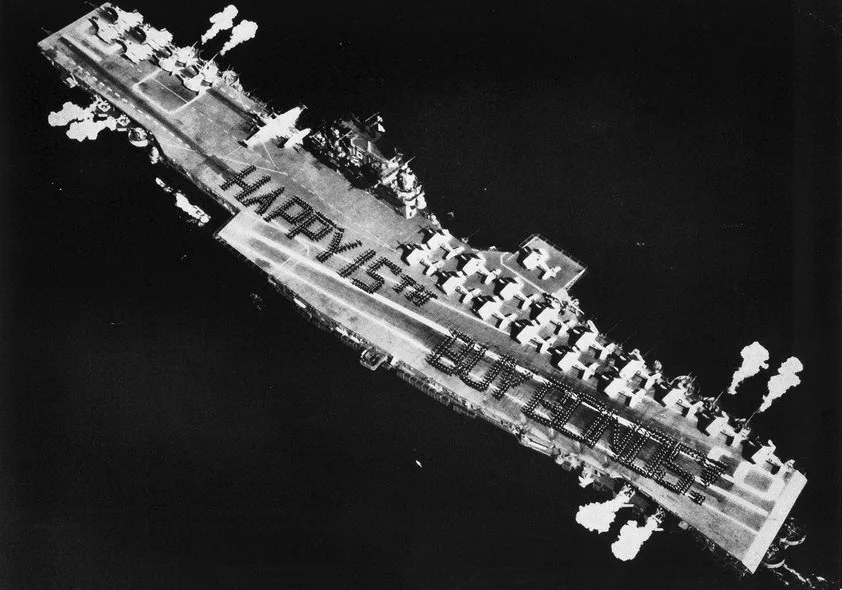
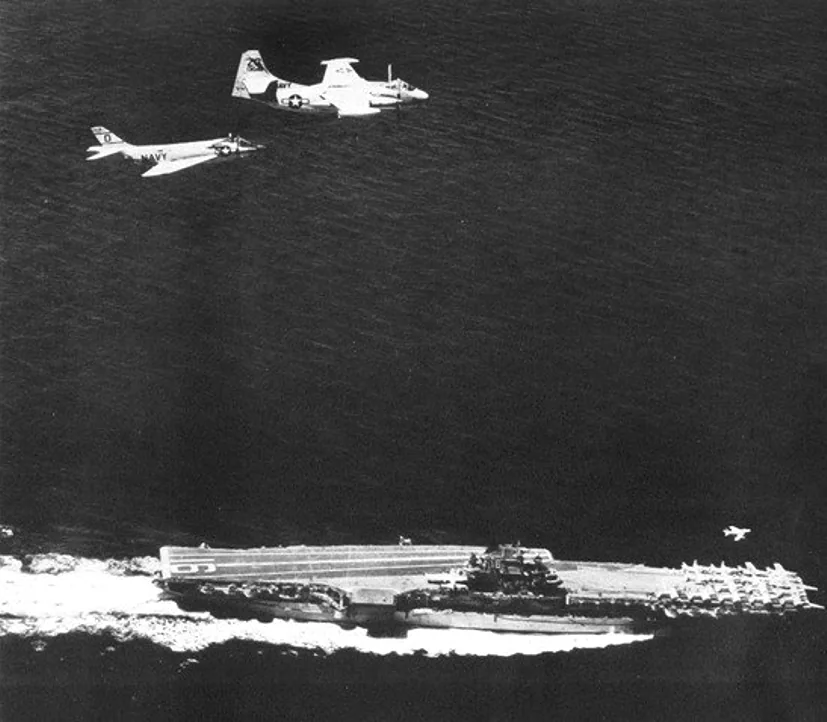
Lexington recommissioned 15 August 1955, Capt. A. S. Heyward, Jr., in command. Assigned San Diego as her home port, she operated off California until May 1956, sailing then for a 6-month deployment with the 7th Fleet. She based on Yokosuka for exercises, maneuvers, and search and rescue missions off the coast of China, and called at major Far Eastern ports until returning San Diego 20 December. She next trained Air Group 12, which deployed with her on the next 7th Fleet deployment. Arriving Yokosuka 1 June 1957, Lexington embarked Rear Adm. H. D. Riley, Commander Carrier Division 1, and sailed as his flagship until returning San Diego 17 October.
1958

Following overhaul at Bremerton, her refresher training was interrupted by the Lebanon crisis; on 14 July 1958 she was ordered to embark Air Group 21 at San Francisco and sail to reinforce the 7th Fleet off Taiwan, arriving on station 7 August. With another peacekeeping mission of the U.S. Navy successfully accomplished, she returned San Diego 19 December. Now the first carrier whose planes were armed with air-to-surface Bullpup guided missile, Lexington left San Francisco 26 April 1959 for another tour of duty with the 7th Fleet. She was on standby alert during the Laotian crisis of late August and September, then exercised with British forces before sailing from Yokosuka 16 November for San Diego, arriving 2 December. Through early 1960 she overhauled at Puget Sound Naval Shipyard.
1962
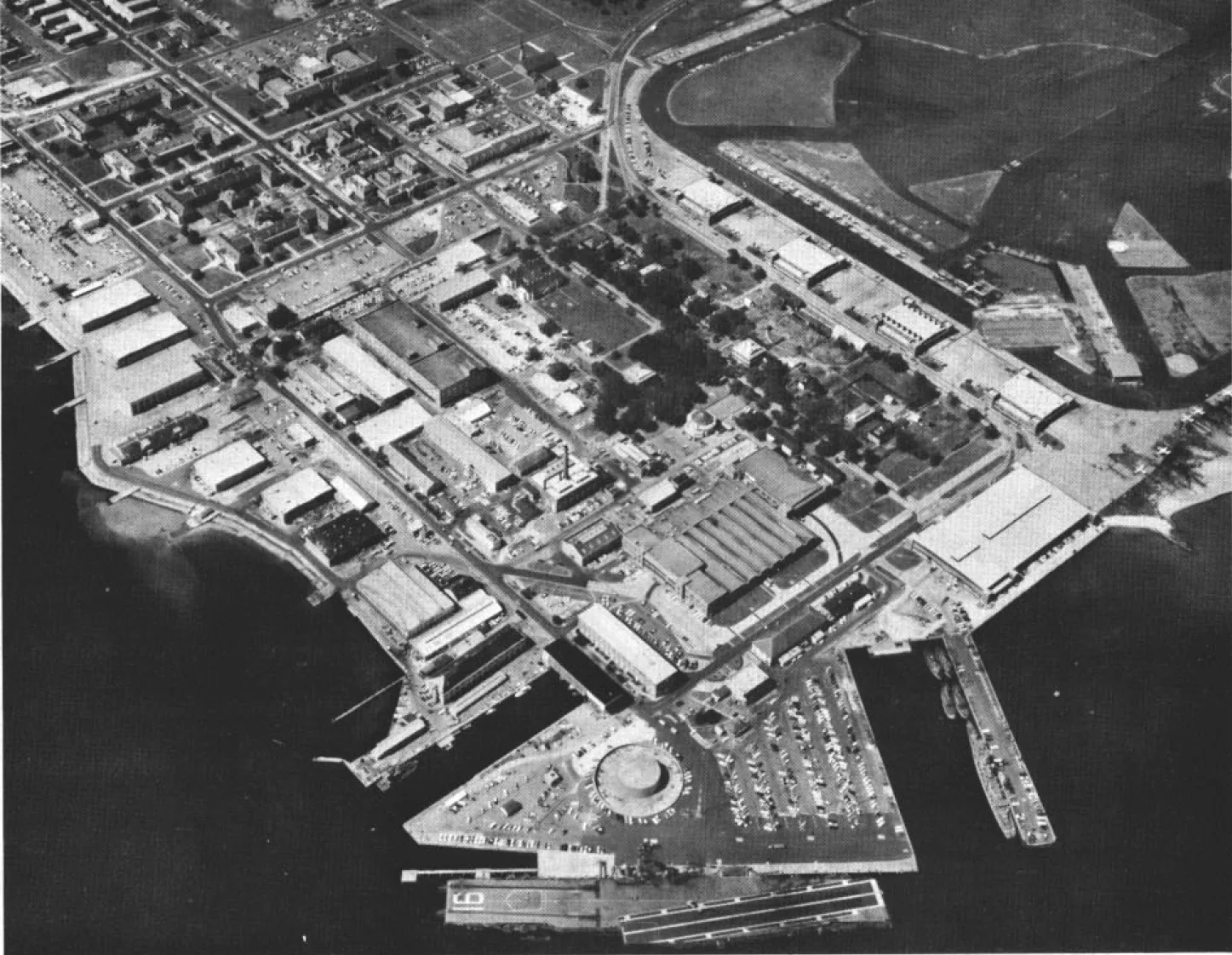
Lexington's next Far Eastern tour began late in 1960 and was extended well into 1961 by renewed tension in Laos. Returning to west coast operations, she was ordered in January 1962 to prepare to relieve Antietam (CVS-36) as aviation training carrier in the Gulf of Mexico, and she was redesignated CVS-16 on 1 October 1962. However, during the Cuban missile crisis, she resumed duty as an attack carrier, and it was not until 29 December 1963 that she relieved Antietam at Pensacola.
Vietnam War period 1964–1975
1967 Coral Sea Site
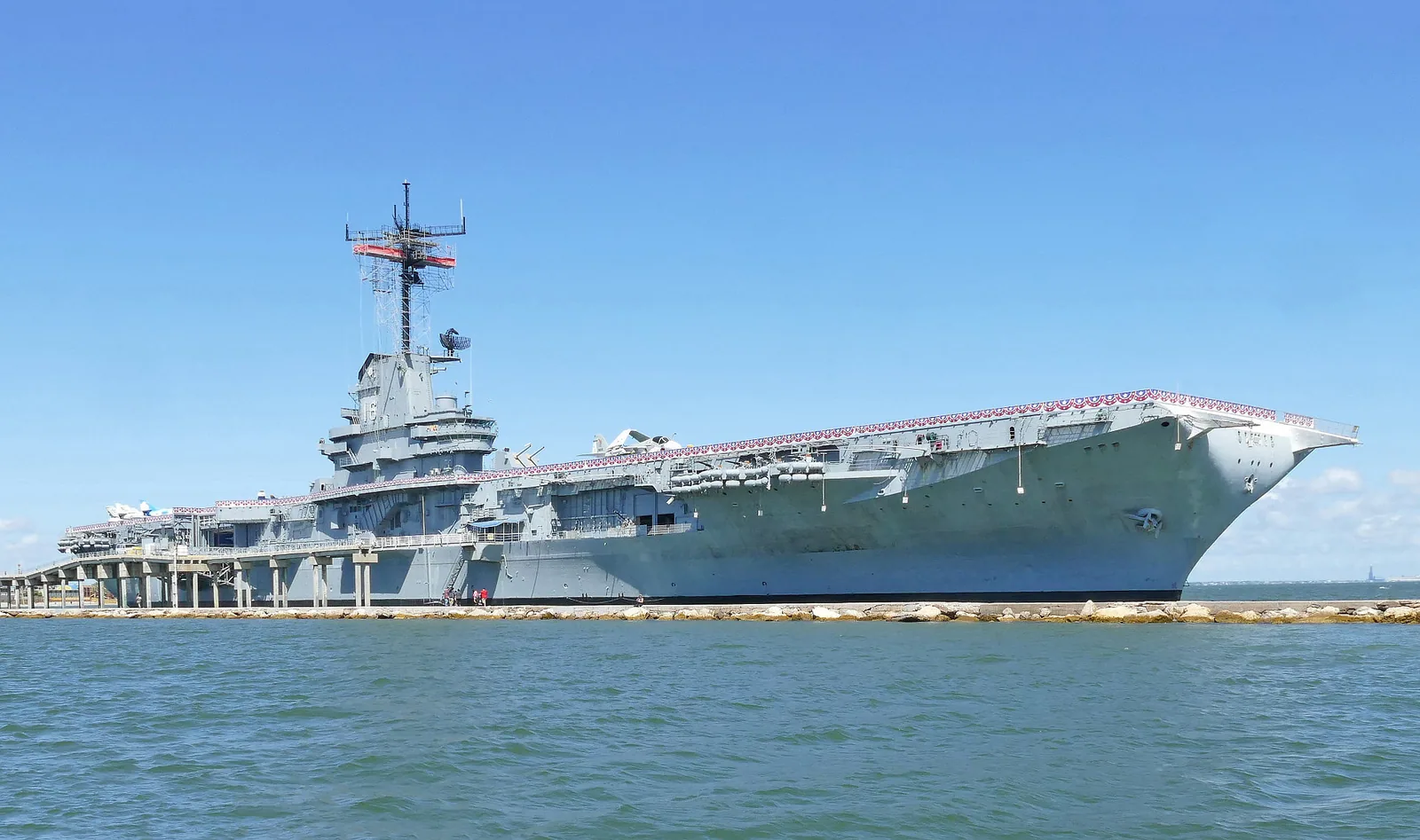
Into 1969, Lexington has operated out of her home port, Pensacola, as well as Corpus Christi and New Orleans, qualifying student aviators and maintaining the high state of training of both active duty and reserve naval aviators. Her work has been of increasing significance as she has prepared the men vital to the continuing Navy and Marine Corps operations over Vietnam, where naval aviation has played a major role in defending the cause of freedom. Lexington marked her 200,000th arrested landing 17 October 1967, and was redesignated CVT-16 on 1 January 1969.
On 13 February 2025, the Australian Minister for the Environment and Water, the Hon. Tanya Plibersek MP entered Lexington , Neosho II (AO-23) and Sims I (DD-409) in to the National Heritage List of the Battle of the Coral Sea Site. The National Heritage List recognizes and protects places of outstanding significance to Australia.
Other photographs
Held for this vessel, and not tied to any part of the account above.

References
Every work this entry draws on. There are no numbered markers in the text above: what we hold is the provenance of the page — this history, this article, these photographs.
- History Lexington V (CV-16) Dictionary of American Naval Fighting Ships, Naval History and Heritage Command. A work of the United States Government, in the public domain — the only text on this site reproduced verbatim.
- Facts USS Lexington (CV-16) Structured facts only — dates, dimensions, armament and fate. No wording is taken from it. Harvested 1 August 2026.
- Photograph USS Lexington (CVA-16) underway at sea on 16 August 1958 U.S. Navy — Official U.S. Navy Photograph CVA-16-2720-(L)-8-58 available on Navsource.org — Public domain — Wikimedia Commons
- Photograph USS Lexington (CV-16) underway on 12 November 1943 M. Hansen, U.S. Navy — Official U.S. Navy photo 80-G-268028 from the U.S. Navy Naval History and Heritage Command — Public domain — Wikimedia Commons
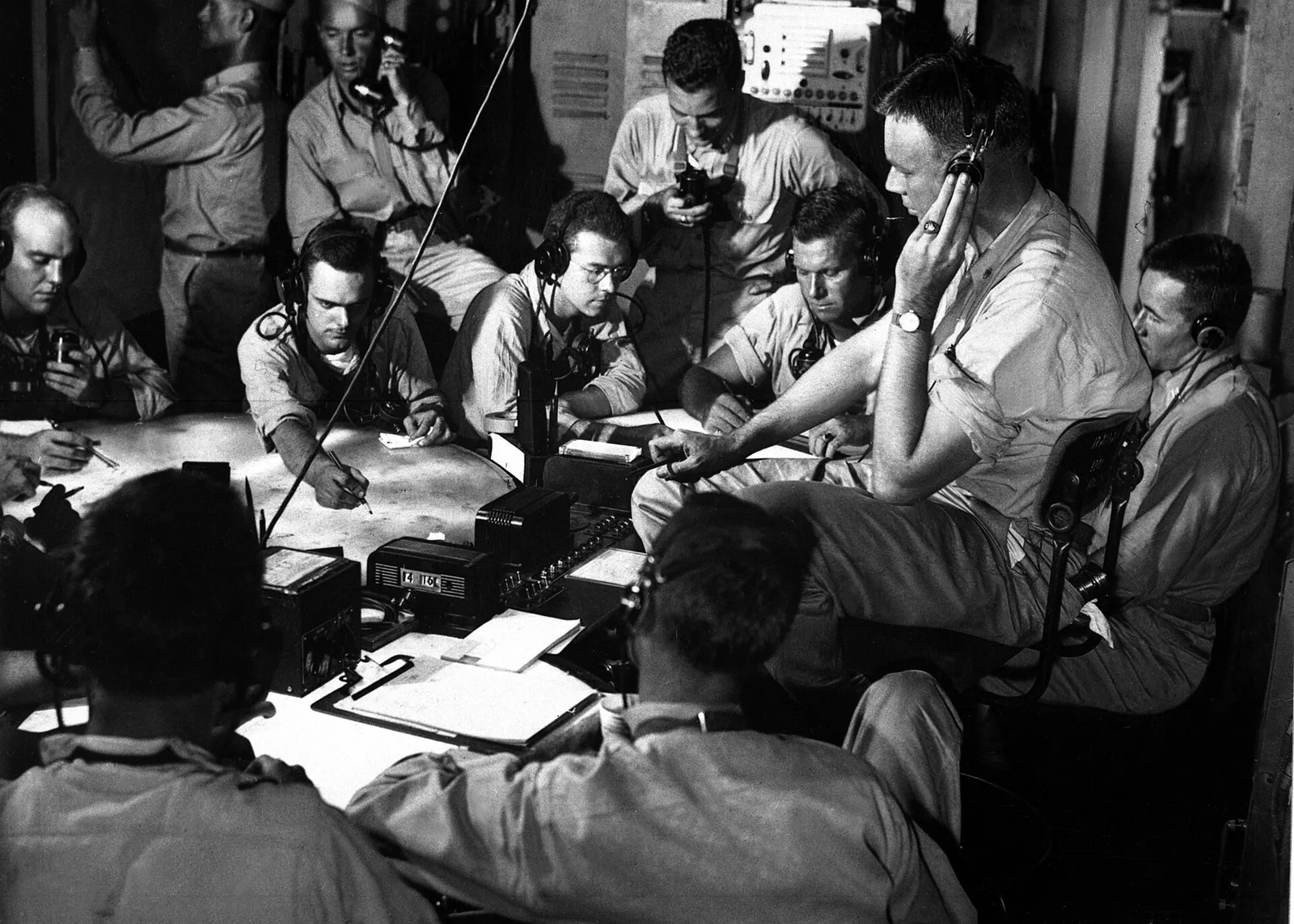
- Photograph USS Lexington (CV-16) chart room 1943-12 Edward Steichen — High resolution download from http://www.dodmedia.osd.mil/DVIC_View/Still_Details.cfm?SDAN=HDSN9902628&JPGPath=/Assets/Still/1999/DoD/HD-SN-99-02628.JPG — Public domain — Wikimedia Commons
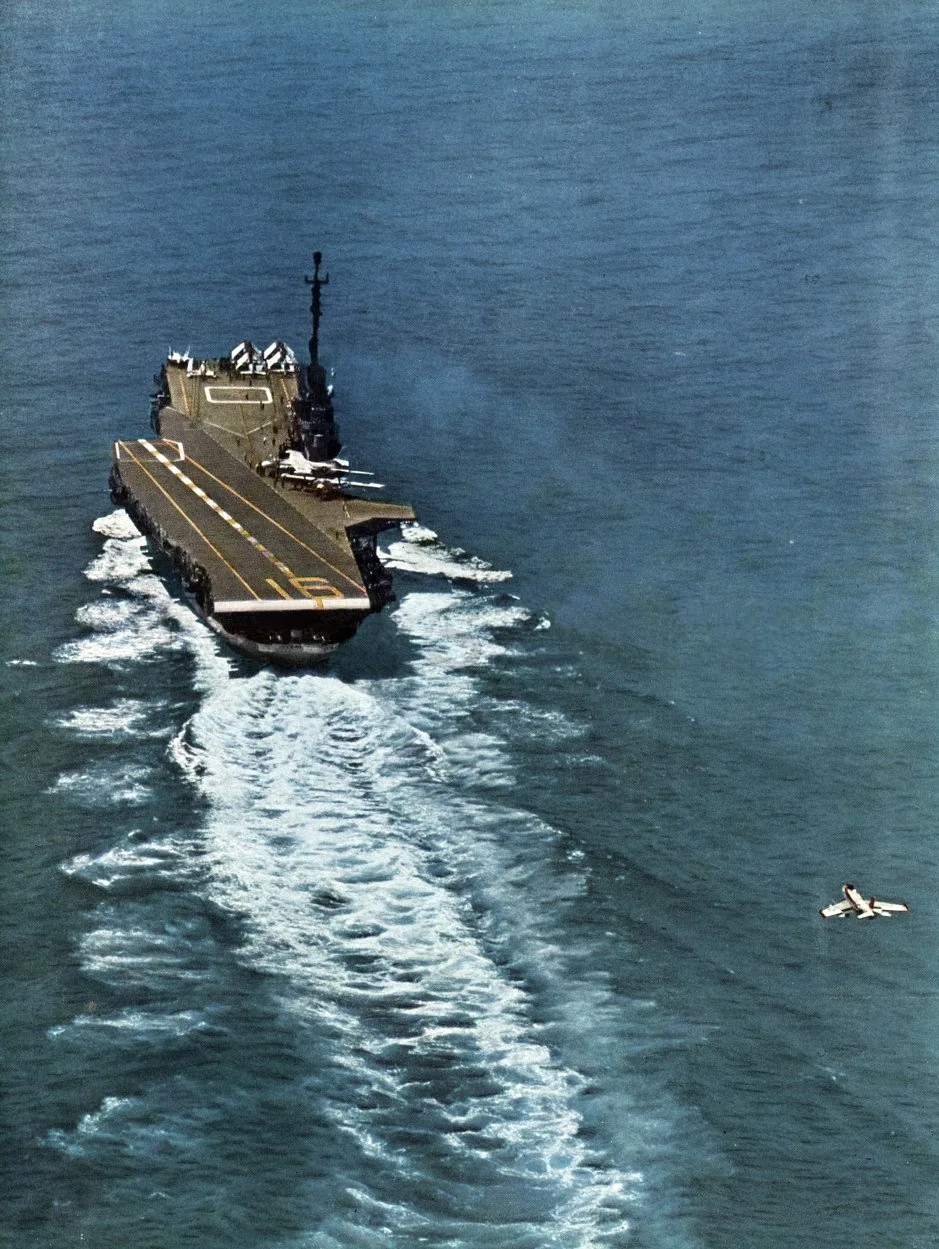
- Photograph USS Lexington (CVA-16) leaving the Puget Sound Naval Shipyard, circa in September 1955 U.S. Navy — U.S. Navy Naval Aviation News / [1] November 1955 , p. 16. Also U.S. Navy photo [2] available at Navsource.org — Public domain — Wikimedia Commons
- Photograph USS Lexington -- The-Blue-Ghost' -- Corpus Christi Jim Evans — Own work — CC BY-SA 4.0 — Wikimedia Commons
- Photograph 330-ps-9159-usn-1038075 15106699683 o Unknown author — National Museum of the U.S. Navy — Public domain — Wikimedia Commons
- Photograph Aerial view of NAS Pensacola c1964 U.S. Department of Defense — U.S. Navy All Hands magazine May 1964 , p. 9 — Public domain — Wikimedia Commons
- Photograph Aerial view of USS Lexington (CVA-16) in 1956 USN — U.S. Navy photo [1] from the USS Lexington (CVA-16) 1956 cruise book available at Navysite.de — Public domain — Wikimedia Commons
- Photograph Aft view of USS Lexington (CVA-16) in 1957 Lt. J. Harris, U.S. Navy (VFP-61 Det.G) — U.S. Navy photo [1] from the USS Lexington (CVA-16) 1957 cruise book available at Navysite.de — Public domain — Wikimedia Commons
- Photograph AJ-2 Savage of VAH-6 refuels F3H-2 of VF-124 over USS Lexington (CVA-16) in 1957 U.S. Navy — U.S. Navy photo [1] from the USS Lexington (CVA-16) 1957 cruise book available at Navysite.de — Public domain — Wikimedia Commons
- Photograph An F6F-3 Hellcat fighter lands aboard USS Lexington (CV-16) during the Marianas Turkey Shoot phase of the battle, 19 June 1944 U.S. Navy — https://www.history.navy.mil/content/history/nhhc/our-collections/photography/numerical-list-of-images/nara-series/80-g/80-G-230000/80-G-236955.html — Public domain — Wikimedia Commons
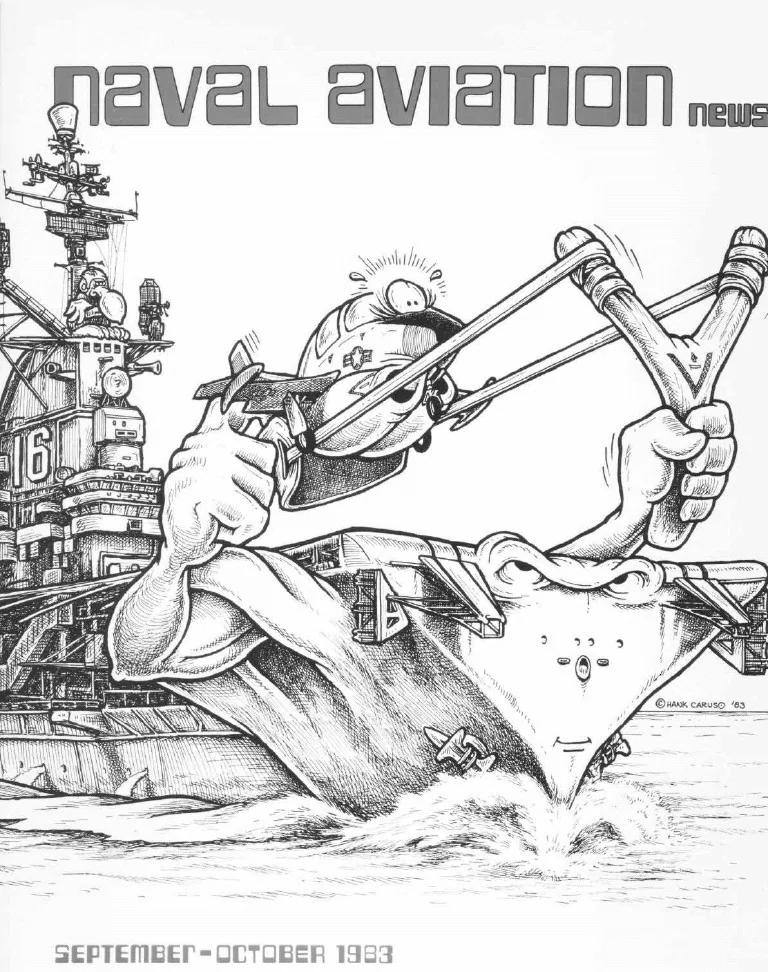
- Photograph AVT-16 cover NAN9-10-83 USN — U.S. Navy Naval Aviation News September/October 1983 [1] — Public domain — Wikimedia Commons
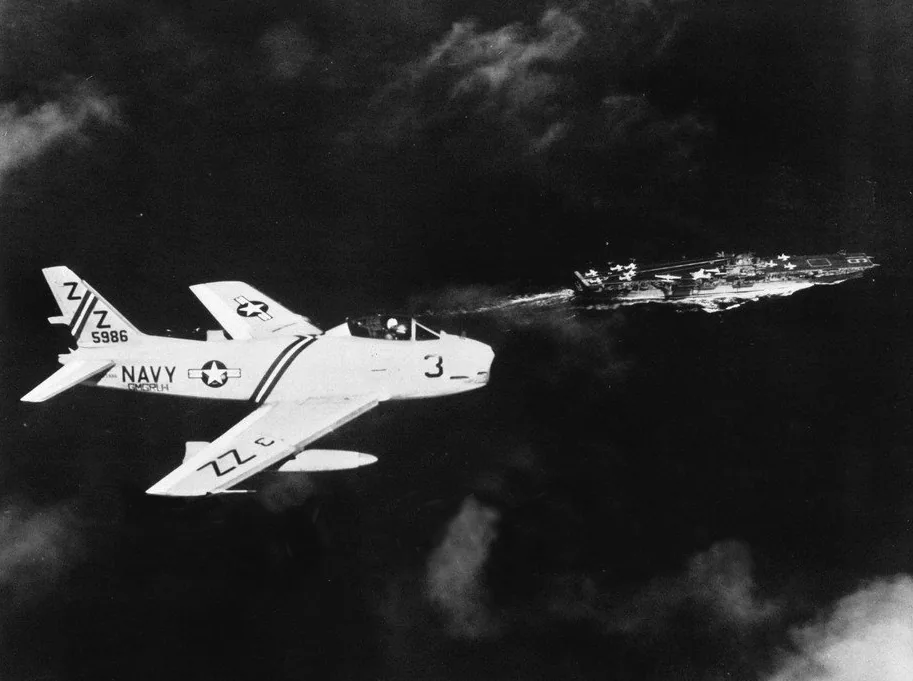
- Photograph FJ-3D Fury of GMGRU-1 flies over USS Lexington (CVA-16) in 1957 U.S. Navy — U.S. Navy photo [1] from the USS Lexington (CVA-16) 1957 cruise book available at Navysite.de — Public domain — Wikimedia Commons
- Photograph FJ-3M Fury of VF-121 approaches USS Lexington (CVA-16) in 1957 U.S. Navy — U.S. Navy photo [1] from the USS Lexington (CVA-16) 1957 cruise book available at Navysite.de — Public domain — Wikimedia Commons
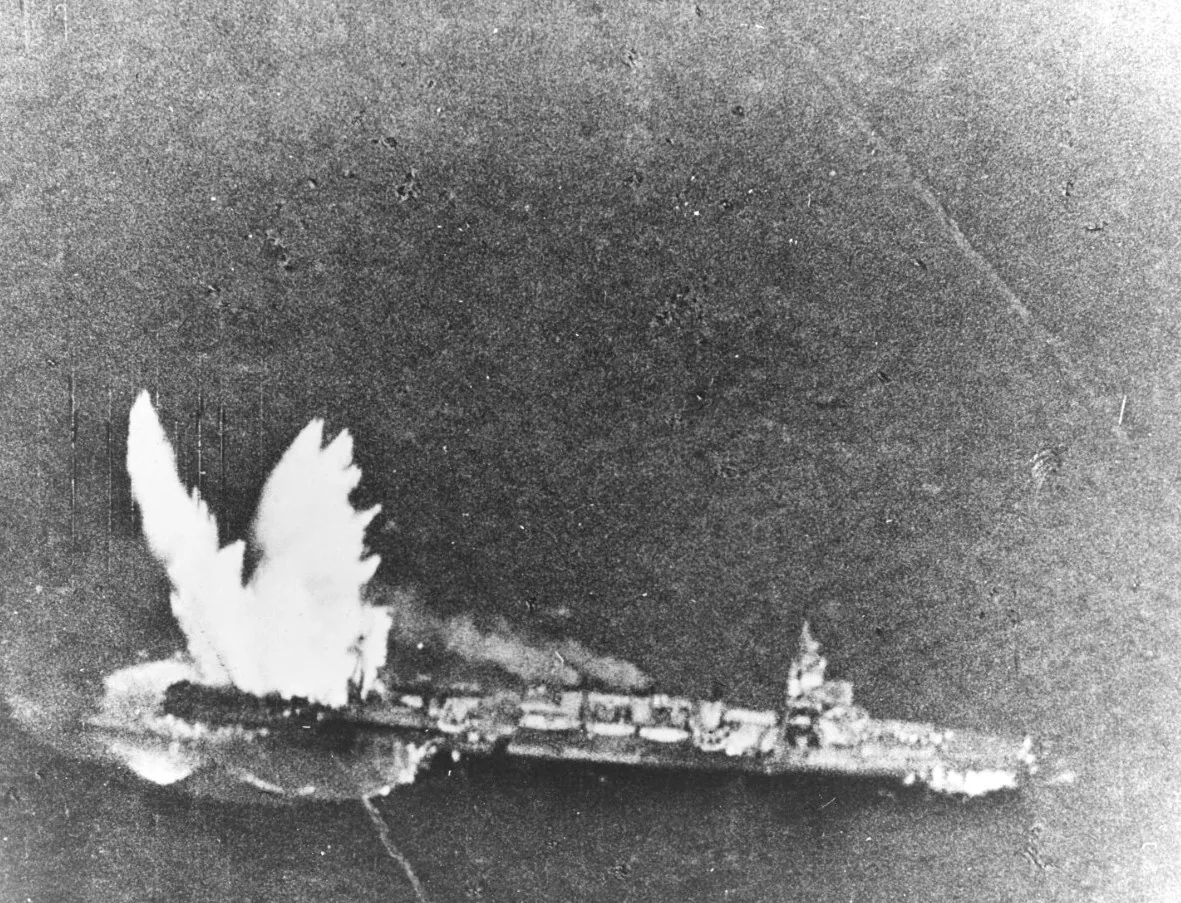
- Photograph Isuzu-hit Unknown author — Naval History and Heritage command — Public domain — Wikimedia Commons
- Photograph Launch of USS Lexington (CV-16) at the Fore River Shipyard in 1942 U.S. Navy — U.S. Navy All Hands magazine October 1942 , p. 34 — Public domain — Wikimedia Commons
- Photograph Launch of USS Lexington (CV-16) at the Fore River Shipyard on 26 September 1942 U.S. Navy — Official U.S. Navy photo 80-G-K-13954 from the U.S. Navy Naval History and Heritage Command — Public domain — Wikimedia Commons
- Photograph Mitsubishi A6M Zero Kamikaze diving on USS Lexington (CV-16) November 5th 1944 (50232366411) tormentor4555 — Mitsubishi A6M Zero Kamikaze diving on USS Lexington (CV-16) November 5th 1944 — PDM-owner — Wikimedia Commons
- Photograph Mothballed aircraft carriers at the Puget Sound Naval Shipyard in 1948 (80-G-428458) USN — Official U.S. Navy photo 80-G-428458 from the U.S. Navy Naval History and Heritage Command — Public domain — Wikimedia Commons
- Photograph Mothballed aircraft carriers at the Puget Sound Naval Shipyard in 1948 (NH 79051) USN — Official U.S. Navy photo NH 79051 from the U.S. Navy Naval History and Heritage Command , now in the U.S. National Archives [1] ; United States Naval Aviation 1910-1995 , page 419, Appendix 2 , photo USN-428458 — Public domain — Wikimedia Commons