United States Navy — Cruiser
USS New Orleans (CA-32) — service history
This is the full service history. For the vessel's particulars, photograph and specifications, see the entry.
In the words of the US Navy. The account below is reproduced verbatim from the Dictionary of American Naval Fighting Ships, compiled by the Naval History and Heritage Command — a work of the United States Government, in the public domain, and the only text on this site not written here.
Before commissioning

Largest city of Louisiana, New Orleans was the scene of Andrew Jackson's great victory at the close of the War of 1812, in which small naval forces under Commodore David Patterson played a large role; and of a key naval action in the Civil War, in which Admiral David Farragut opened the southern Mississippi to Union forces.
Interwar 1919–1938
1931
The second New Orleans (CA-32), formerly CL-32, was laid down 14 March 1931 by New York Navy Yard; launched 12 April 1933; sponsored by Miss Cora S. Jahncke, daughter of Assistant Secretary of the Navy Ernest L. Jahncke; and commissioned 15 February 1934, Captain Allen B. Reed in command.
1934
New Orleans made a shakedown cruise to Northern Europe in May and June 1934, returning to New York 28 June. On 5 July she sailed to rendezvous with Houston, President Franklin D. Roosevelt embarked, for a cruise through the Panama Canal and an exercise with airship Macon and her brood of aircraft off California. The cruise ended at Astoria, Oreg., 2 August, and New Orleans sailed at once for Panama and Cuba. New Orleans exercised off New England into 1935, then visited her namesake city while en route to join Cruiser Division 6 in operations in the eastern Pacific for over a year. She returned to New York from 20 August to 7 December, 1936 and was once more in the Pacific early in 1937. Aside from winter training in the Caribbean early in 1939, she served out of California ports until joining the Hawaiian Detachment 12 October 1939 for exercises, training, and, as war drew close, vigilant patrol.
Second World War 1939–1945
1941
Moored in Pearl Harbor 7 December 1941, New Orleans was taking power and light from the dock, her engines under repair. With yard power out during the attack, New Orleans' engineers fought to raise steam, working by flashlight, while on deck men fired on the Japanese attackers with rifles and pistols. Though guns had to be worked by hand, within 10 minutes all her AA batteries were in action. A number of her crew were injured when a fragmentation bomb exploded close aboard.
1942 Coral Sea
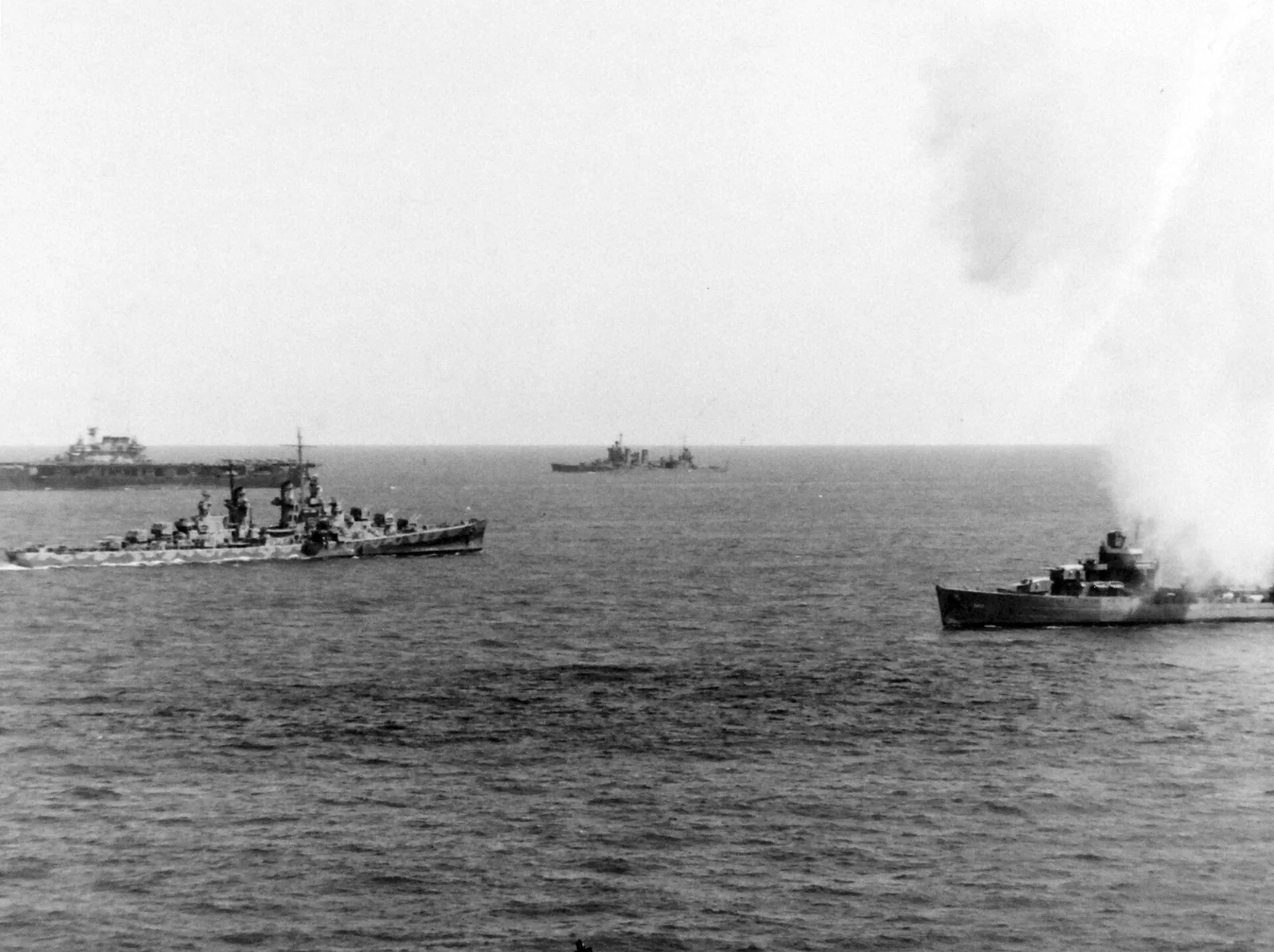
The cruiser convoyed troops to Palmyra and Johnston; she then returned to San Francisco 13 January 1942 for engineering repairs and installation of new search radar and 20mm guns. She sailed 12 February commanding the escort for a troop convoy to Brisbane; from Australia she screened a convoy to Noumea, and returned to Pearl Harbor to join TF 11.
TF 11 sortied 15 April to join the Yorktown task force southwest of the New Hebrides. It was this joint force, together with a cruiser-destroyer group, which won the great Battle of the Coral Sea 7-8 May, driving back a southward thrust of the Japanese which threatened Australia and New Zealand and their seaborne life lines. This mighty duel of carrier aircraft was not without price; Lexington was mortally wounded and New Orleans stood by, her men diving overboard to rescue survivors and her boat crews closing the burning carrier, oblivious to the dangers of flying debris and exploding ordnance as they saved 580 of Lexington's crew who were landed at Noumea. New Orleans then patrolled the eastern Solomons until sailing to replenish at Pearl Harbor.
New Orleans sailed 28 May screening Enterprise, to surprise the Japanese in the Battle of Midway . On 2 June, she made rendezvous with the Yorktown force, and two days later joined battle. Three of the 4 Japanese carriers were sunk by hits scored in the dive bomber attacks; the fourth went down later, but not before her dive bombers had damaged Yorktown so badly she had to be abandoned. New Orleans, veteran of the battle that halted Japanese expansion southward, had now played a significant role protecting her carrier in the great victory that turned back Japan's eastward movement and heavily crippled her naval air arm in a decisive battle.
Again New Orleans replenished at Pearl Harbor, sailing 7 July to rendezvous off Fiji for the invasion of the Solomons, during which she screened Saratoga. Fighting off vicious enemy air attacks 24-25 August, New Orleans aided the Marines holding the precious toehold on Guadalcanal, as a Japanese landing expedition was turned back in the Battle of the Eastern Solomons . When Saratoga was torpedoed 31 August, New Orleans guarded her passage to Pearl Harbor, arriving 21 September.
1943 Tassafaronga

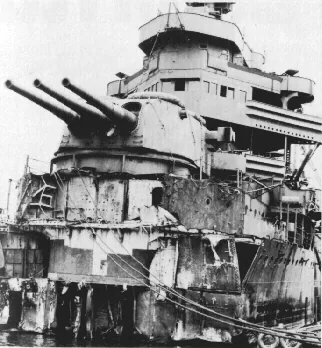
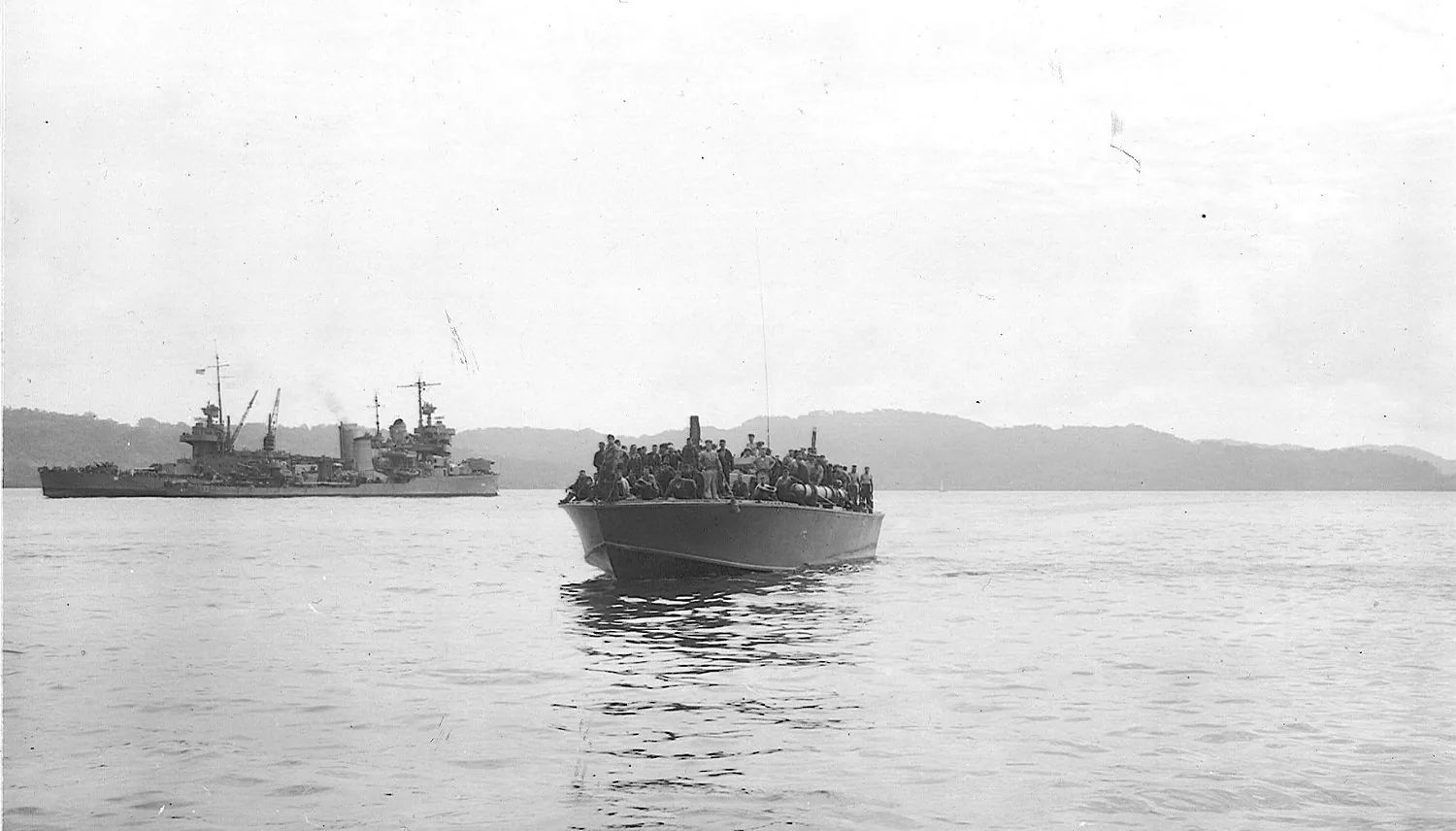
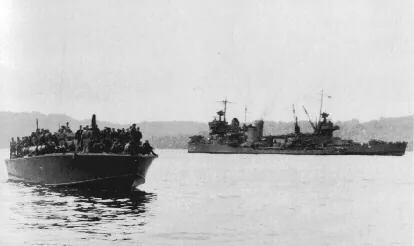
With the repaired carrier, New Orleans sailed to Fiji early in November, then proceeded to Espiritu Santo, arriving 27 November to return to action in the Solomons. With four other cruisers and six destroyers she fought in the Battle of Tassafaronga on the night of 30 November, engaging a Japanese destroyer transport force. When flagship Minneapolis was struck by two torpedoes, New Orleans, next astern, was forced to sheer away to avoid collision, and ran into the track of a torpedo which ripped off her bow. Bumping down the ship-s port side, the severed bow punched several holes in New Orleans' hull. A fifth of her length gone, slowed to 2 knots, and blazing forward, the ship fought for survival. Individual acts of heroism and self-sacrifice along with skillful seamanship kept her afloat, and under her own power she entered Tulagi Harbor near daybreak 1 December. Camouflaging their ship from air attack, the crew jury-rigged a bow of coconut logs, and 11 days later New Orleans sailed to replace a damaged propeller and make other repairs in Sydney, Australia, arriving 24 December. On 7 March 1943, she was underway for Puget Sound Navy Yard, where a new bow was fitted and all battle damage repaired.
Returning to Pearl Harbor 31 August for combat training, New Orleans next joined a cruiser-destroyer force to bombard Wake , 5-6 October, repulsing a Japanese torpedo-plane attack. Her next sortie from Pearl Harbor came 10 November when she sailed to fire preinvasion bombardment in the Gilberts 20 November, then to screen carriers striking the eastern Marshalls 4 December. In aerial attacks that day, the new Lexington, namesake of the carrier whose men New Orleans had pulled from the Coral Sea, was torpedoed, and New Orleans guarded her successful retirement to repairs at Pearl Harbor, arriving 9 December.
1944 Hollandia
From 29 January 1944, New Orleans fired on targets in the Marshalls, hitting air installations and shipping as the Navy took Kwajalein. She fueled at Majuro, then sailed 11 February to join the fast carriers in a raid on Truk, Japanese bastion in the Carolines 17-18 February. While air strikes were flown, New Orleans with other warships circled the atoll to catch escaping ships; the task force's combined gunfire sank a light cruiser, a destroyer, a trawler, and a submarine chaser. The force sailed on to hit the Marianas, then returned to Majuro and Pearl Harbor.
The carriers, with New Orleans in escort, again heaped destruction on targets in the Carolines late in March, then in April sailed south to support Allied landings at Hollandia, New Guinea . There 22 April a disabled Yorktown plane flew into New Orleans' mainmast, hitting gun mounts as it fell into the sea. The ship was sprayed with gas as the plane exploded on hitting the water; one crewmember was lost, another badly injured, but New Orleans continued in action, patrolling and plane guarding off New Guinea, then joining in further raids on Truk and Satawan, which she bombarded 30 April. She returned to Majuro 4 May.
Preparations were made in the Marshalls for the invasion of the Marianas , for which New Orleans sortied from Kwajalein 10 June. She bombarded Saipan 15 and 16 June, then joined the screen protecting carriers as they prepared to meet the Japanese Mobile Fleet in the Battle of the Philippine Sea . In this last major carrier combat the Japanese were able to mount, American naval aviators and submariners sank three enemy carriers and destroyed almost every aircraft launched against them, 395 in all. The few enemy planes which penetrated to the American carriers were shot down by New Orleans and other escorts. The Marianas operation continued, and Japanese naval aviation was virtually nonexistent after this great victory of 19-20 June.
New Orleans made patrols and bombardments on Saipan and Tinian into August, returned to Eniwetok the 13th, and sailed the 28th for carrier raids on the Bonins, bombardments of Iwo Jima 1-2 September, and direct air support for the invasion of the Palaus. After reprovisioning at Manus, the task force assaulted Okinawa , Formosa, and Northern Luzon, destroying Japanese land-based aviation which otherwise would have threatened the landings on Leyte 20 October. The carriers continued to send raids aiding troops ashore, as they prepared to meet the Japanese, who were sending almost every surface ship left afloat in one great effort to break up the Philippines operation. New Orleans guarded her carriers as they joined in the great Battle for Leyte Gulf, first attacking the Japanese Southern Force 24 October, then raiding the Center Force in the Sibuyan Sea, and next destroying the Japanese Northern Force of decoy carriers in the Battle off Cape Engano. The carriers then sped south to aid the gallant escort carriers holding off the powerful Japanese battleshipcruiser force in the Battle off Samar . A stunning American victory was followed by strikes against the retreating Japanese remnant.
1945 Mindoro

After replenishing at Ulithi, New Orleans guarded carriers during raids throughout the Philippines in preparation for the invasion of Mindoro, then late in December sailed for a Mare Island overhaul, followed by training in Hawaii. She returned to Ulithi 18 April 1945, and two days later departed to give direct gunfire support at Okinawa, arriving 23 April. Here she dueled with shore batteries and fired directly against the enemy lines. After nearly two months on station, she sailed to replenish and repair in the Philippines, and was at Subic Bay when hostilities ceased.
Post-war 1946–1949
1946
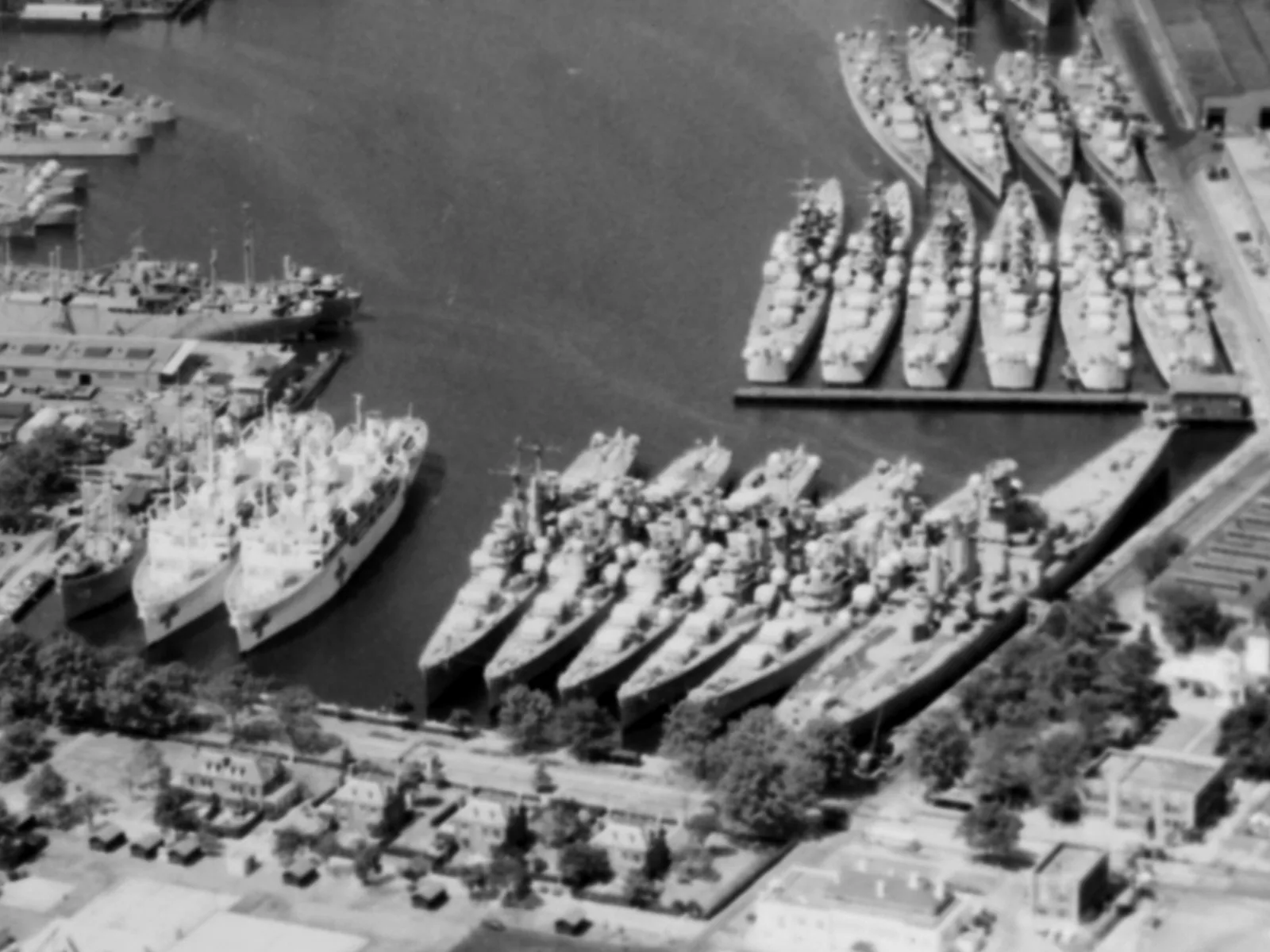
New Orleans sailed 28 August with a cruiser-destroyer force to ports of China and Korea. She covered the internment of Japanese ships at Tsingtao, the evacuation of liberated Allied prisoners-of-war, and the landing of troops in Korea and China, until sailing 17 November from the mouth of the Peking River, carrying veterans homeward bound. More returning troops came aboard at Sasebo, and all were disembarked at San Francisco 8 December. After similar duty took her to Guam in January 1946, she sailed through the Panama Canal for a 10-day visit to her namesake city, then steamed to Philadelphia Navy Yard, arriving 12 March. There she decommissioned 10 February 1947 and lay in reserve until struck from the Navy List 1 March 1959 and sold for scrapping 22 September 1959 to Boston Metals Co., Baltimore, Md.
On 7 July 2025, a team of scientists and explorers aboard Exploration Vessel Nautilus located and imaged the lost bow of USS New Orleans (CA 32). The bow was found at a depth of approximately 675 meters in Iron Bottom Sound near Guadalcanal, Solomon Islands.
Other photographs
Held for this vessel, and not tied to any part of the account above.







References
Every work this entry draws on. There are no numbered markers in the text above: what we hold is the provenance of the page — this history, this article, these photographs.
- History New Orleans II (CA-32) Dictionary of American Naval Fighting Ships, Naval History and Heritage Command. A work of the United States Government, in the public domain — the only text on this site reproduced verbatim.
- Facts USS New Orleans (CA-32) Structured facts only — dates, dimensions, armament and fate. No wording is taken from it. Harvested 1 August 2026.
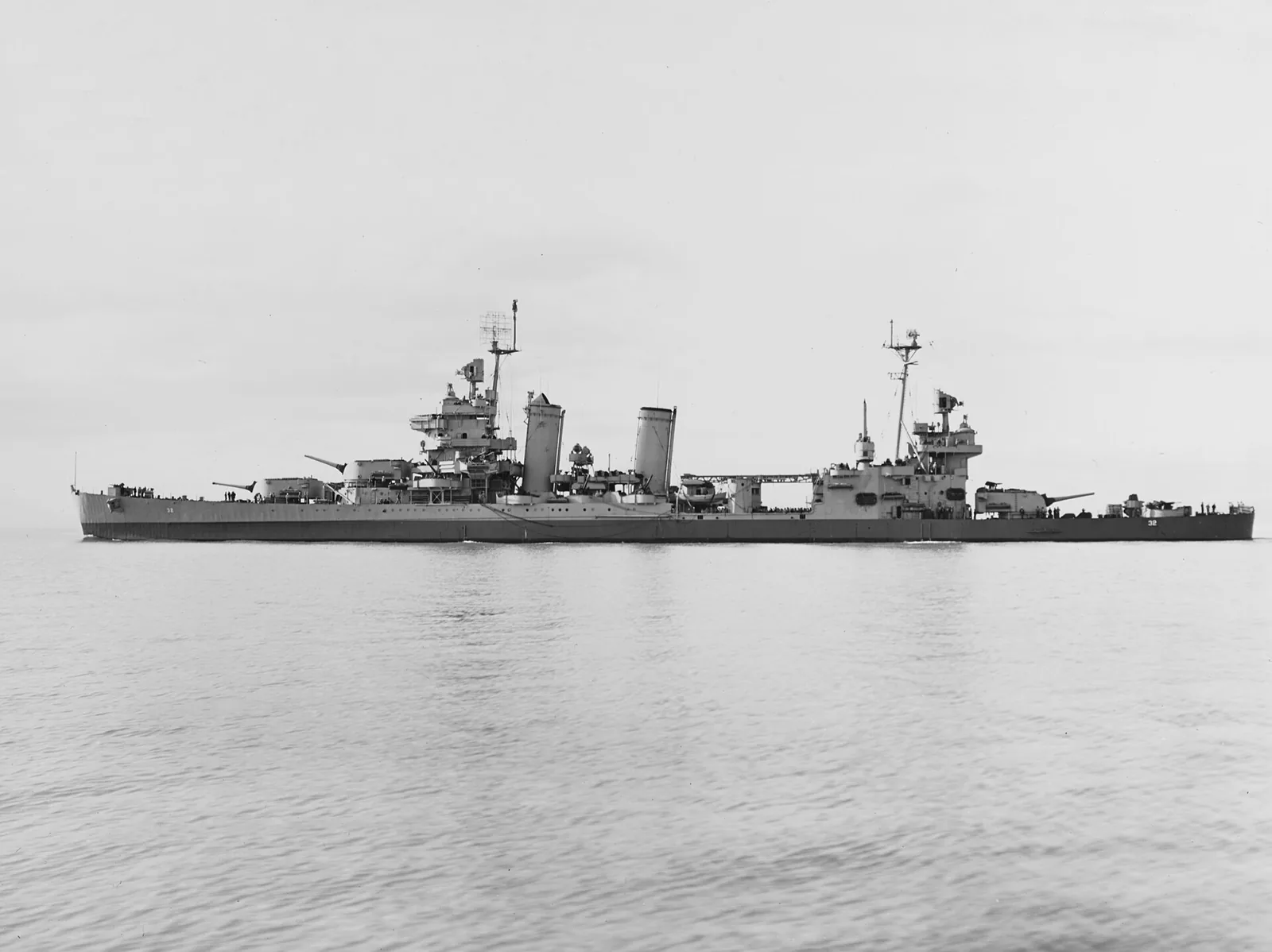
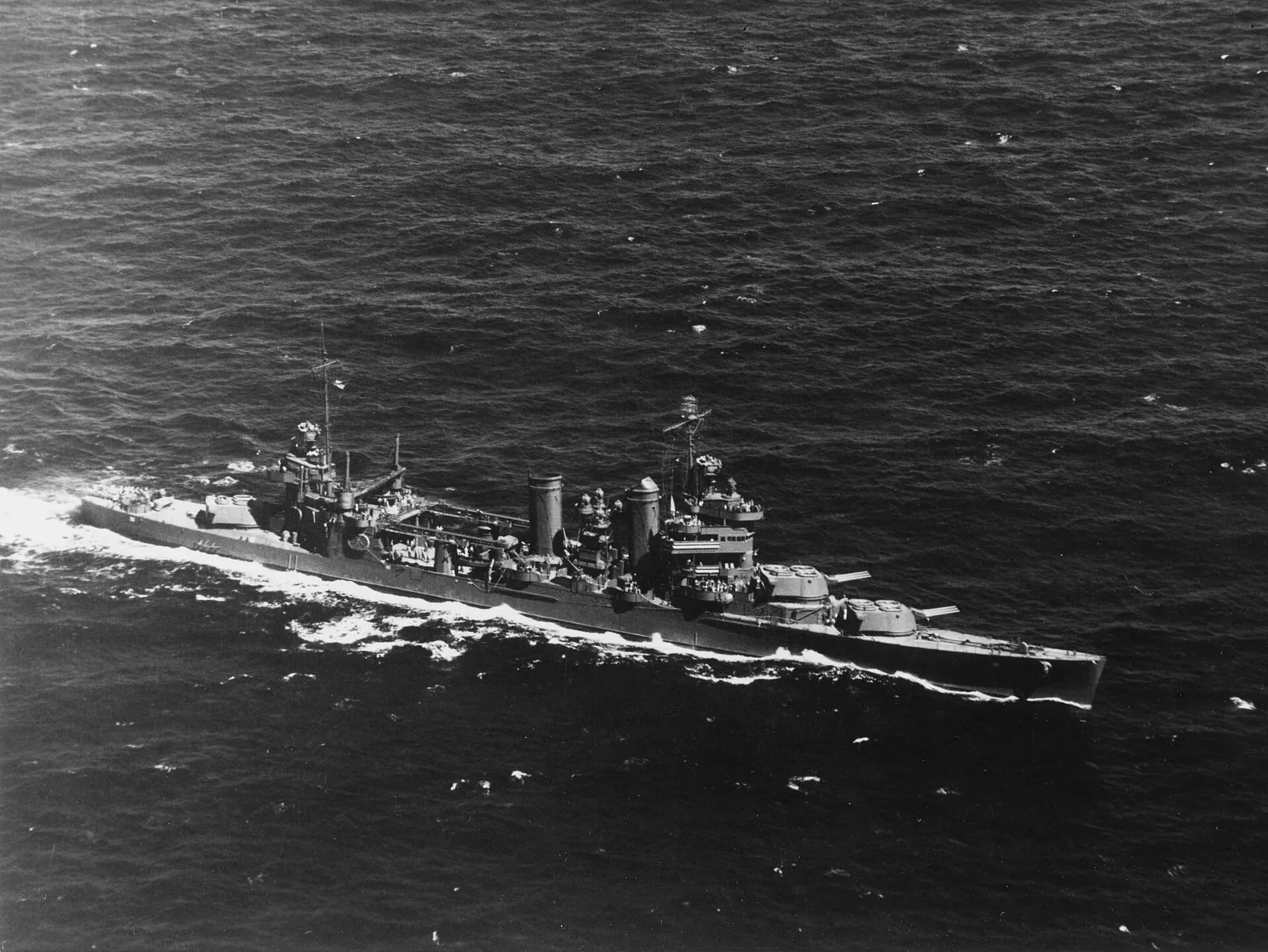
- Photograph USS New Orleans (CA-32) underway in Puget Sound on 30 July 1943 (NH 94847) Unknown author — U.S. Navy photo NH 94847 — Public domain — Wikimedia Commons
- Photograph USS Salt Lake City (CA-25), USS Pensacola (CA-24) and USS New Orleans (CA-32) at Pearl Harbor on 31 October 1943 U.S. Navy — Official U.S. Navy photo 80-G-264236 from the U.S. Navy Naval History and Heritage Command — Public domain — Wikimedia Commons
- Photograph -USS Hornet (CV-8), USS New Orleans (CA-32), USS Atlanta (CL-51) and USS Phelps (DD-360) at sea on 6 June 1942 (80-G-7750) U.S. Navy — Official U.S. Navy photo 80-G-7750 from the National Museum of the U.S. Navy — Public domain — Wikimedia Commons
- Photograph Camouflaged bridge of USS New Orleans (CA-32) at Tulagi, in December 1942 (74250510) U.S. Marine Corps photo 127-GR-89-52200-A — Public domain — Wikimedia Commons
- Photograph Damaged bow of USS New Orleans (CA-32), circa in December 1942, following the Battle of Tassafaronga U.S. Navy — U.S. Navy photo [1] from Navsource.org — Public domain — Wikimedia Commons
- Photograph Damaged USS New Orleans (CA-32) reaching Tulagi on 1 December 1942 U.S. Navy — U.S. Navy photo [1] from Navsource.org — Public domain — Wikimedia Commons
- Photograph False bow being fitted to USS New Orleans Australian armed forces — Public domain — Wikimedia Commons
- Photograph New Orleans (CA-32) - Passengers, December 1944 - DPLA - f7351d74e0d9d08fd385fa0884d80c02 Department of Defense. Department of the Navy. Bureau of Naval Personnel. 9/18/1947-1982 — This file was contributed to Wikimedia Commons by National Archives and Records Administration as part of a cooperation project. The donation was facilitated by the Digital Public Library of America , via its partner Digital Public Library of America . Record in source catalog DPLA identifier: f7351d74e0d9d08fd385fa0884d80c02 National Archives Identifier: 112327538 — Public domain — Wikimedia Commons
- Photograph New Orleans (CA-32) - Report of Changes, July (BLANK) - DPLA - 035f8484b4bc4a555a224cfbcd9f8f0c Department of Defense. Department of the Navy. Bureau of Naval Personnel. 9/18/1947-1982 — This file was contributed to Wikimedia Commons by National Archives and Records Administration as part of a cooperation project. The donation was facilitated by the Digital Public Library of America , via its partner Digital Public Library of America . Record in source catalog DPLA identifier: 035f8484b4bc4a555a224cfbcd9f8f0c National Archives Identifier: 112325956 — Public domain — Wikimedia Commons
- Photograph PT-109 Unknown author — Navsource Online — Public domain — Wikimedia Commons
- Photograph Retired US cruisers at Philadelphia Navy Yard 1947 U.S. Navy — U.S. Navy All Hands magazine October 1978 , p. 32; Official U.S. Navy photo NH 92254 from the U.S. Navy Naval History and Heritage Command — Public domain — Wikimedia Commons
- Photograph Ships in drydock at Mare Island Naval Shipyard c1944 Mare Island Naval Shipyard photo # 610-45. — U.S. Historic American Buildings Survey/Historic American Engineering Record/Historic American Landscapes Survey , U.S. Library of Congress Prints and Photographs HABS CAL,48-MARI,1--127 — Public domain — Wikimedia Commons
- Photograph Survivors on PT boat after Tassafaronga USN — U.S. Navy photo on Navsource.org [1] — Public domain — Wikimedia Commons
- Photograph Temporary bow fitted to USS New Orleans Australian armed forces — Public domain — Wikimedia Commons
- Photograph Titan lifting temporary bow to be welded to USS New Orleans (Naval Historical Collection) — Public domain — Wikimedia Commons
- Photograph USS Hawaii (CB-3) and other cruisers in reserve at the Philadelphia Naval Shipyard on 19 May 1955 (80-G-668655) Unknown author — U.S. Navy photo 80-G-668655 (cropped) — Public domain — Wikimedia Commons
- Photograph USS Hornet (CV-8), USS New Orleans (CA-32) and USS Atlanta (CL-51) at sea on 6 June 1942 (80-G-88908) U.S. Navy photograph — maritimequest.com [1] ; National Museum of the U.S. Navy photo 80-G-88908 — Public domain — Wikimedia Commons
- Photograph USS New Orleans (CA-32) off the Mare Island Naval Shipyard, California (USA), on 8 March 1945 (19-N-80227) Unknown author — U.S. Navy Bureau of Ships photo 19-N-80227 — Public domain — Wikimedia Commons
- Photograph USS New Orleans (CA-32) underway during exercises off Hawaii on 8 July 1942 (80-G-10115) Unknown author — U.S. Navy photo 80-G-10115 — Public domain — Wikimedia Commons
- Photograph USS New Orleans (CA-32) underway in Puget Sound on 30 July 1943 (NH 94847) (cropped) Unknown author — U.S. Navy photo NH 94847 — Public domain — Wikimedia Commons