United States Navy — Cruiser
USS Pensacola (CA-24) — service history
This is the full service history. For the vessel's particulars, photograph and specifications, see the entry.
In the words of the US Navy. The account below is reproduced verbatim from the Dictionary of American Naval Fighting Ships, compiled by the Naval History and Heritage Command — a work of the United States Government, in the public domain, and the only text on this site not written here.
Interwar 1919–1938
1926
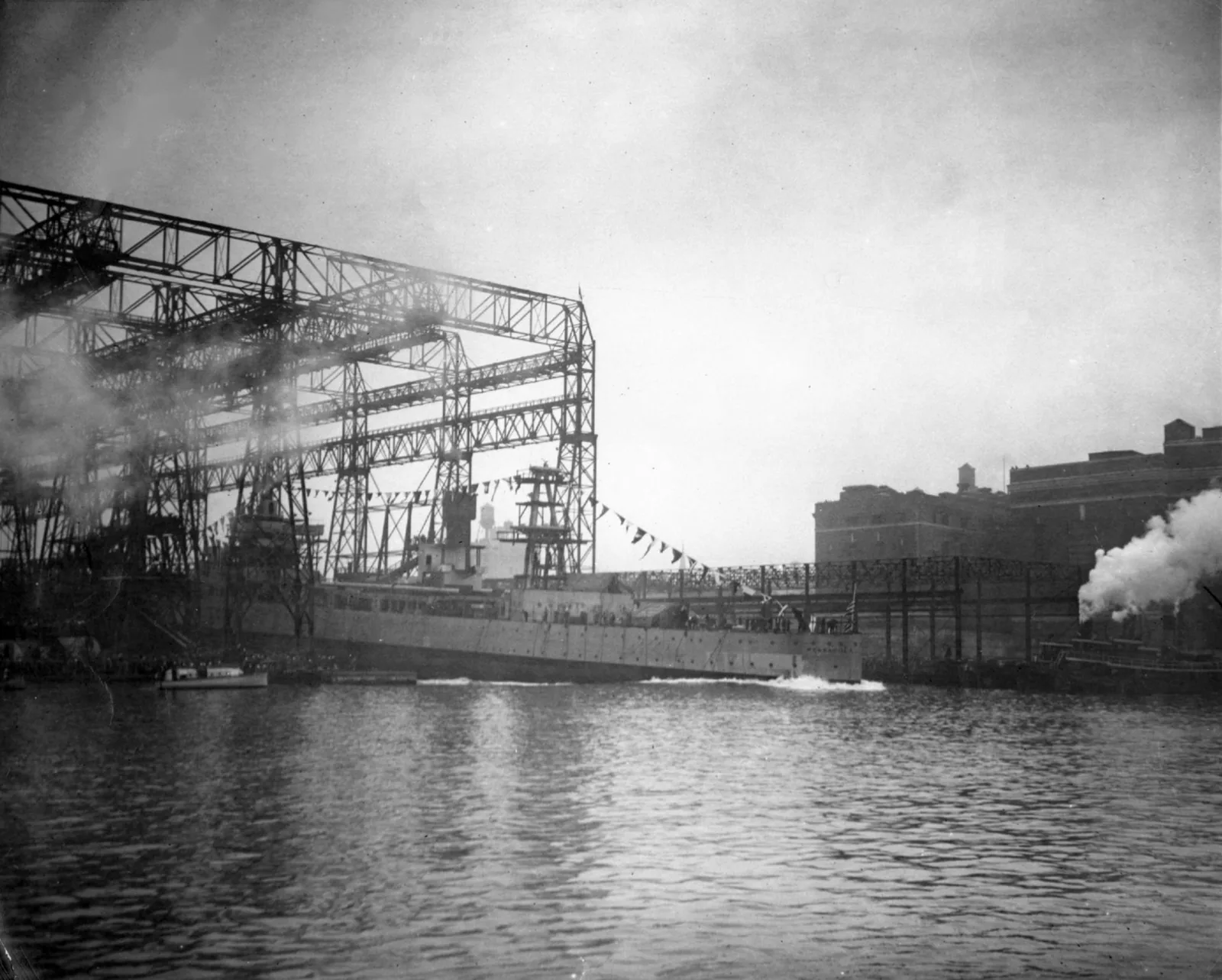
The third Pensacola (CA-24) was laid down by the New York Navy Yard 27 October 1926; launched 25 April 1929; sponsored by Mrs. Joseph L. Seligman; and commissioned 6 February 1930, Capt. Alfred G. Howe in command.
1930
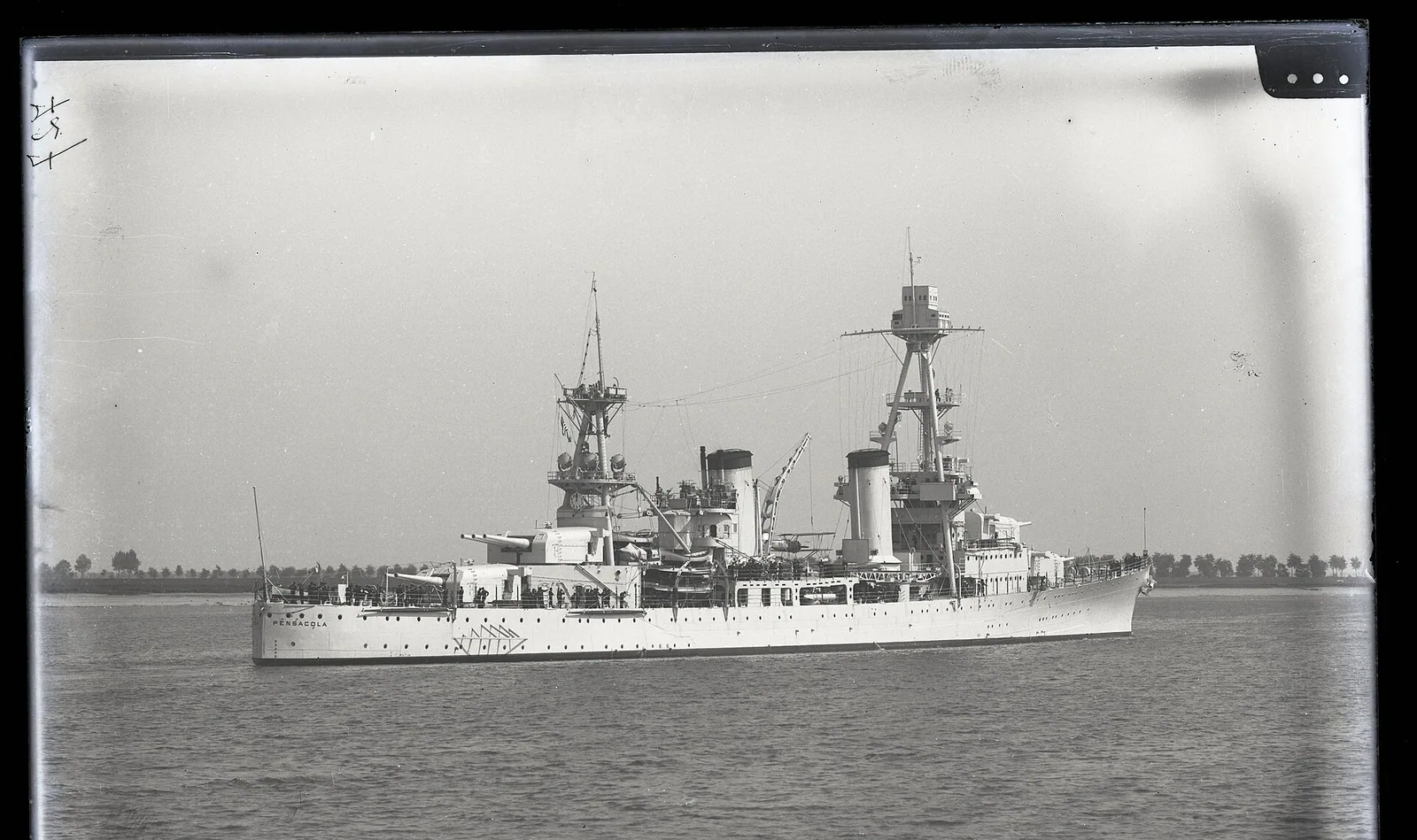
Pensacola departed New York 24 March 1930, transited the Panama Canal to Callao, Peru, and Valparaiso, Chile, before returning to New York 5 June. For the next four years she operated along the eastern seaboard and in the Caribbean Sea, several times transiting the Panama Canal for combined Fleet battle practice ranging from California to Hawaii.
1935
Pensacola departed Norfolk 15 January 1935 to join the Pacific Fleet arriving San Diego, her new home port, 30 January. Fleet problems ranged to Hawaii, one cruise took her to Alaska, and combined fleet maneuvers returned her briefly to the Caribbean Sea before she sailed 5 October 1939 to base at Pearl Harbor, arriving the 12th. Maneuvers frequently found the cruiser off Midway and French Frigate Shoals, and she made one voyage to Guam.
Second World War 1939–1945
1941 Midway
Pensacola departed Pearl Harbor 29 November 1941 with a convoy bound for Manila in the Philippines. After the in famous raid on Pearl Harbor, the convoy was deverted to Australia, entering Brisbane Harbor 7 January 1942. Pensacola returned to Pearl Harbor 19 January and put to sea 5 February to patrol the approaches to the Samoan Islands. On 17 February 1942 she rendezvoused off Samoa with Carrier Task Force II, built around the aircraft carrier Lexington (CV-2).
Near Bougainville, Solomons, Pensacola's gunners helped repel two waves of Japanese bombers, 20 February. Not a ship of the carrier task force was damaged. Antiaircraft fire and Lexington Combat Air Patrol planes shot down 17 of the 18 attackers. One pilot, Lt. Edward H. O'Hare, destroyed five enemy planes in a gallant fight that made him the first Ace of the Navy in World War II and won him the Medal of Honor.
Pensacola continued to help guard Lexington on offensive patrol in the Coral Sea until carrier Yorktown joined the task force 6 March. The American ships steamed for the Gulf of Papua where 10 March Lexington launched planes for a surprise strike over the Owen Stanley mountains at Japanese shipping and installations at Salamaua and Lae. A complete surprise, the raid caused heavy damage. The task force then turned toward Noumea, New Caledonia, to replenish. Pensacola patrolled with the Yorktown carrier task force until 8 April, then headed via Samoa for Pearl Harbor, arriving 21 April. She carried Marine Fighting Squadron 212 to Efate in the New Hebrides Islands and returned to Pearl Harbor with famed carrier Enterprise (CV-6) 26 May.
Pensacola departed Pearl Harbor 28 May with the Enterprise task force for a rendezous 2 June northeast of Midway with units of Task Force 17. Two days later, 4 June, when the Japanese armada came within range of the American carriers, the decisive Battle of Midway commenced.
Adm. Spruance's torpedo planes and dive-bombers attacked the Japanese carriers. Akagi and Kaga went up in flames, and Soryu was badly damaged. A fourth enemy carrier, Hiryu, still at large, launched strikes at Yorktown and the American flattops struck back, leaving the enemy carrier, hit many times, in a mass of flames. Meanwhile, gallant Yorktown. hit by three bombs was fighting for her life. Pensacola raced from the Enterprise screen to aid the stricken carrier. Yorktown was dead in the water when Pensacola arrived, and the cruiser assisted in shooting down four enemy torpedo bombers during a second attack.
Despite all that could be done, Yorktown received two torpedo hits amidships and had to be abandoned. Pensacola rejoined the screen of Enterprise to pursue the retiring Japanese.
Pensacola returned to Pearl Harbor 13 June and, with Enterprise, again put to sea 22 June carrying 1,157 Marines of Marine Aircraft Group 22 to Midway. She patrolled and trained in Hawaiian waters until 7 August. As Marines stormed the shores of Guadalcanal, the cruiser set course for the Solomons in the screen of carriers Saratoga (CV-3), Hornet (CV -8) and Wasp (CV-7) to support the leathernecks in that bitter campaign. In submarine infested waters, torpedoes damaged Saratoga 31 August and sank Wasp 15 September, Pensacola arrived at Noumea, New Caledonia, 26 September and departed with carrier Hornet 2 October to strike the enemy in the Santa Isabel Guadalcanal area. On 24 October Hornet's carrier task group joined Enterprise and the combined force steamed to intercept enemy warships approaching the Guadalcanal-Tulagi area.
1942 Santa Cruz Islands

On 26 October 1942, search planes located a Japanese carrier and battleship formation, beginning the Battle of Santa Cruz Islands which was fought without contact being made between surface ships of the opposing forces. Air strikes inflicted severe bomb damage to Japanese carriers Zuiho and Shokaku, and sank Japanese cruiser Yura. Bomb hits damaged battleship Kirishima and other enemy ships.
Pensacola helped fight off a coordinated dive bombing and torpedo plane raid which damaged Hornet so severely that she had to be abandoned. Within minutes of the attack on Hornet, 24 dive bombers dropped 23 bombs in a run on Enterprise (CV-6). Despite damage, the famed "Fighting Lady" launched a large number of planes from abandoned Hornet besides her own.
Pensacola received 55 officers and 133 men-survivors from Hornet whom she debarked at Noumea, 30 October 1942. The Task Force had turned back a Japanese attempt to regain Guadalcanal, sunk cruiser Yura, and damaged a number of enemy capital ships. Japanese carriers had lost 123 planes.
Pensacola departed Noumea 2 November 1942 to guard transports landing Marine reinforcements, and supplies, at Aola Bay, Guadalcanal. She helped guard Enterprise during the Naval Battle of Guadalcanal 12-13 November 1942. Planes from Enterprise assisted in the sinking of battleship Hiei, one cruiser, three destroyers, and eleven auxiliaries and the damaging of four Japanese cruisers and four destroyers.
Pensacola returned to Espiritu Santo to join cruiser-destroyer Task Force 67 under Rear Admiral Carleton H. Wright. On 29 November, the task force sailed to intercept a Japanese destroyer-transport force expected off Guadalcanal the next night. Just before midnight of the 30th, the American ships transited Lengo Channel and headed past Henderson Field on Guadalcanal as the Japanese task group steamed on a southerly course west of Savo Island to enter "Ironbottom Sound."
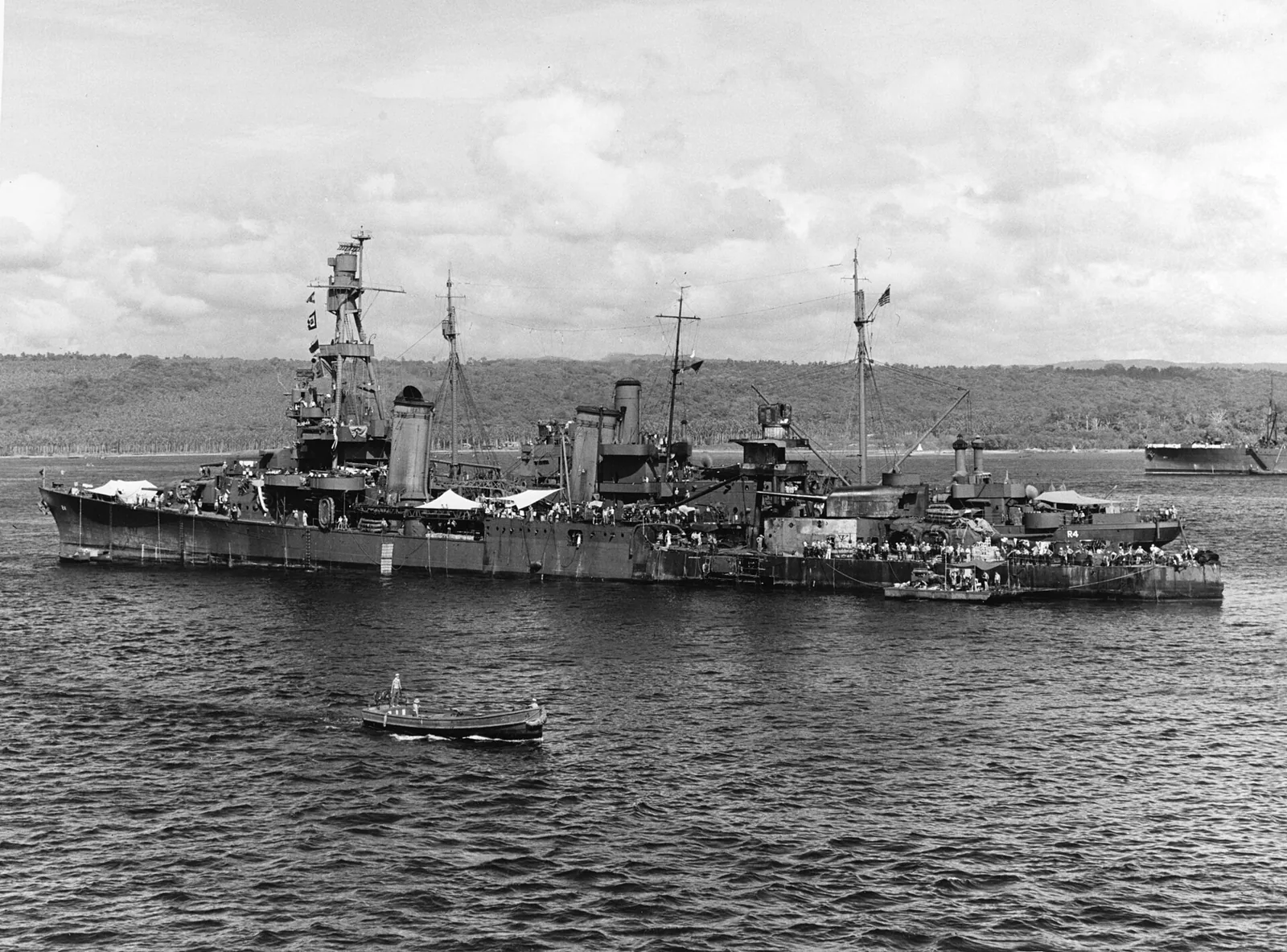
The two opposing task forces clashed in the Battle of Tassafaronga. American destroyers launched torpedoes as the enemy range came within five miles of Pensacola's cruiser formation. Now gun flashes, tracers, and star shell candles stained the inky darkness. Japanese destroyer Takanami hit many times, was afire and exploding. American flagship Minneapolis (CA-36) took two torpedo hits that blasted her bow downward like an immense scoop and left her forecastle deck awash, but she continued to fight on. New Orleans (CA-32) next astern, closed the disabled Minneapolis and ran into the track of a torpedo that ripped off the forward part of the warship.
Pensacola turned left to prevent collision with two damaged American ships ahead of her. Silhouetted by the burning American cruisers, she came in the Japanese line of fire. One of 18 torpedoes launched by Japanese destroyers hit her below the mainmast on the portside. Her engine room flooded, three gun turrets went out of commission, and her oil tanks ruptured to make a soaked torch of her mast. Meantime Honolulu (CL-48) maneuvered radically at 30 knots, her guns continuing their rapid fire as she escaped the trap. But the last American cruiser in column, Northampton (CA-26), took two torpedo hits to duplicate on a larger scale the havoc inflicted on Pensacola.
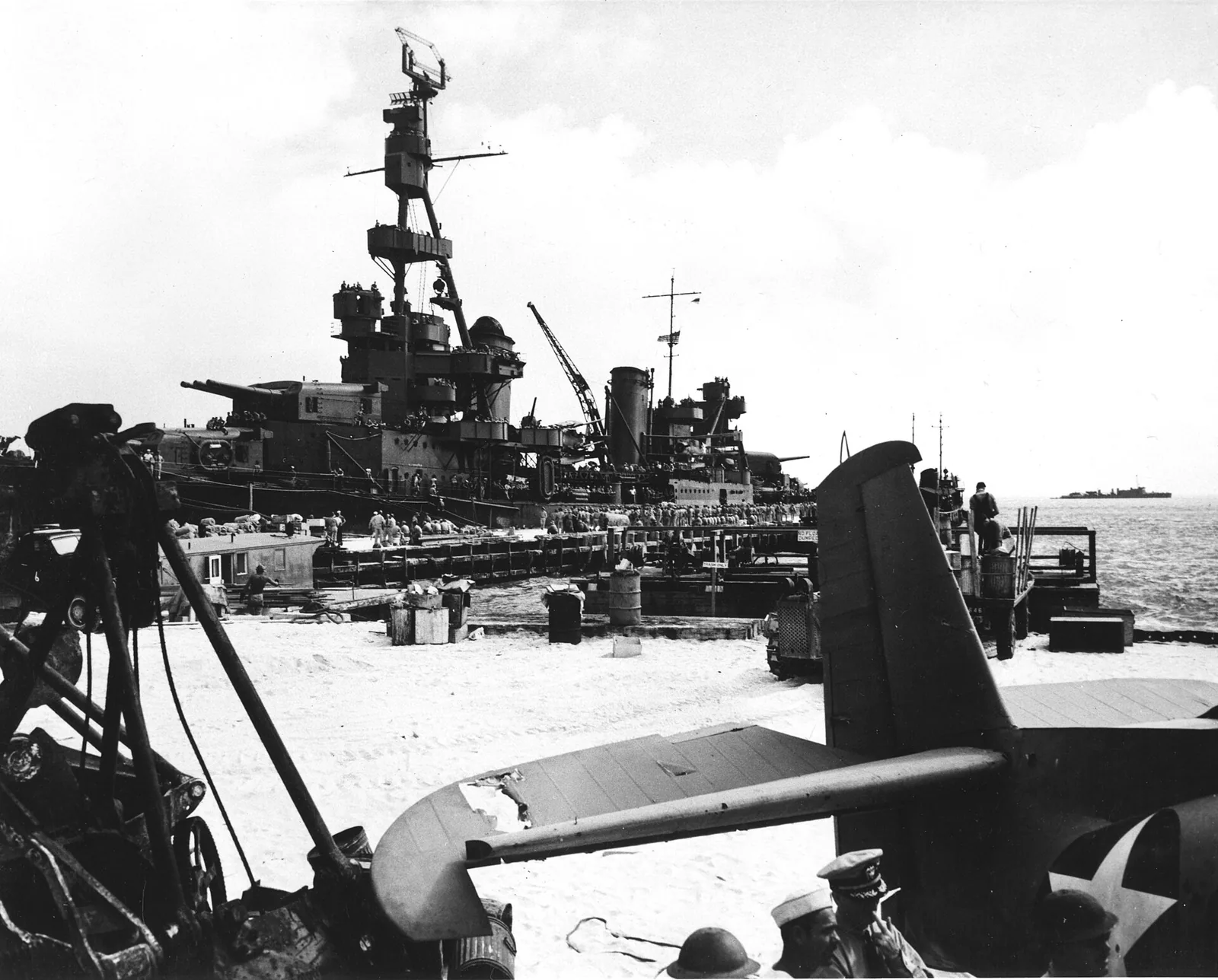
The oil-fed flames engulfed Pensacola-s main deck aft where torpedoes and machine gun ammunition exploded. Only supreme effort and skillful damage control by her gallant men saved the ship. The fire, punctuated by the frightful explosion of 8-inch projectiles in her Number 3 turret, gradually subsided. Pensacola made steady progress towards Tulagi. She arrived there still aflame. After twelve hours the last fire was quenched. Her dead numbered 7 officers and 118 men. One officer and 67 men were injured.
1943

Camouflaged as part of the island, Pensacola made repairs in Tulagi Harbor that enabled her to steam to Espiritu Santo, New Hebrides Island. She arrived there 6 December for emergency repairs by tender Vestal until she sailed 7 January 1943 via Samoa to Pearl Harbor, arriving 27 January.
1944 Cape Engano
On 8 November Pensacola sailed from Pearl Harbor in the screen of Southern Attack Force aircraft carriers. On 19 November Pensacola made bombardment runs on Betio and Tarawa. She rained 600 projectiles to put coast defense guns out of action, and destroyed enemy beach defenses and numerous buildings. As troops stormed ashore on Tarawa 20 November, the cruiser screened carriers launching air strikes supporting the landings. That night she fought off Japanese torpedo bombers and assisted torpedo-damaged carrier Independence (CVL-22) into Funafuti, Ellice Islands. For the next two months she ranged out of that base to screen carriers covering the movement of reinforcements and supplies to the Gilberts. On 29 January 1944 she began strikes and bombardments to destroy Japanese air power and shipping in the Marshall Islands. That night Pensacola helped bombard Tarao in the Eastern Marshalls. She then slammed shells into airfield runways, seaplane ramps, ammunition stowage areas and buildings on Wotje. She continued pounding these targets as Marines and Army troops landed 31 January to seize Kwajalein and Majuro Atolls. Invasion of the Marshall Islands continued 1 February as Marines occupied Roi and Namur Islands. Pensacola continued to hit hard at Tarao, Maloelap Atoll through 18 February, destroying coastal defenses and air bases of the enemy in the eastern Marshalls. Operating from Majuro and Kwajalein, she continued to patrol in approaches of the Marshalls. She again served in the screen of fast carriers conducting raids in the Carolines 30 March-1 April, against Japanese defenses at Palau, Yap, Ulithi and Woleai.
Pensacola departed Majuro 25 April sailing via Pearl Harbor and Mare Island for duty in the Northern Pacific, arriving in Kulak Bay 27 May. On 13 June, she joined her cruiserdestroyer task force in raining destruction on the airfields of Matsuwa, Kuriles. In the early morning of 26 June she fired 300 8-inch projectiles to destroy shipping, airfields and installations at Kurabu Zaki, Paramushiru To, Kuriles, returning to Kulak Bay 28 June. Pensacola continued patrol in Alaskan waters until departing Kulak Bay 8 August for Hawaii.
Pensacola arrived Pearl Harbor 13 August and put to sea the 29th. Enroute to the Marianas 3 September, she joined an air-sea bombardment of Wake Island. On 9 October she pounded the main radio station and installations on Marcus Island. She and her sister cruisers and destroyers stirred up a fire melee in their "impersonation" of Halsey's 3rd Fleet to lead the Japanese into thinking the ladder of islands to the Bonins was next on the American timetable for invasion. Meanwhile Adm. Halsey's units advanced on the Philippines while Fast Carriers rained destruction on the enemy air and Fleet bases at Okinawa and Formosa.
Pensacola made rendezvous with the units of the Fast Carrier Task Force retiring from the great air battles over Formosa. After protecting battle-damaged cruisers Canberra (CA-70) and Houston (CL-81) to Ulithi, she joined a Fast Carrier Task Group including Wasp 16 October. The following day, troops supported by the 7th Fleet, began the liberation of the Philippine Islands.
Pensacola screened fast aircraft carriers striking Luzon and directly supported the invasion of Leyte beginning 20 October. She raced north to aid in the destruction of the enemy carrier force in the Battle of Cape Engano 25 October, then turned south as the fast carriers launched planes to aid the gallant escort carriers.
Pensacola bombarded Iwo Jima the night of 11-12 November and returned to Ulithi the 14th. As she was about to depart for Saipan 20 November, she spotted a periscope about 1,200 yards to starboard. As she maneuvered clear, destroyer Case (DD-370) rammed the enemy. Four minutes later her men witnessed the flaming explosion that destroyed fleet oiler Mississinewa (AO-59), victim of a Japanese midget submarine.
1945 Iwo Jima
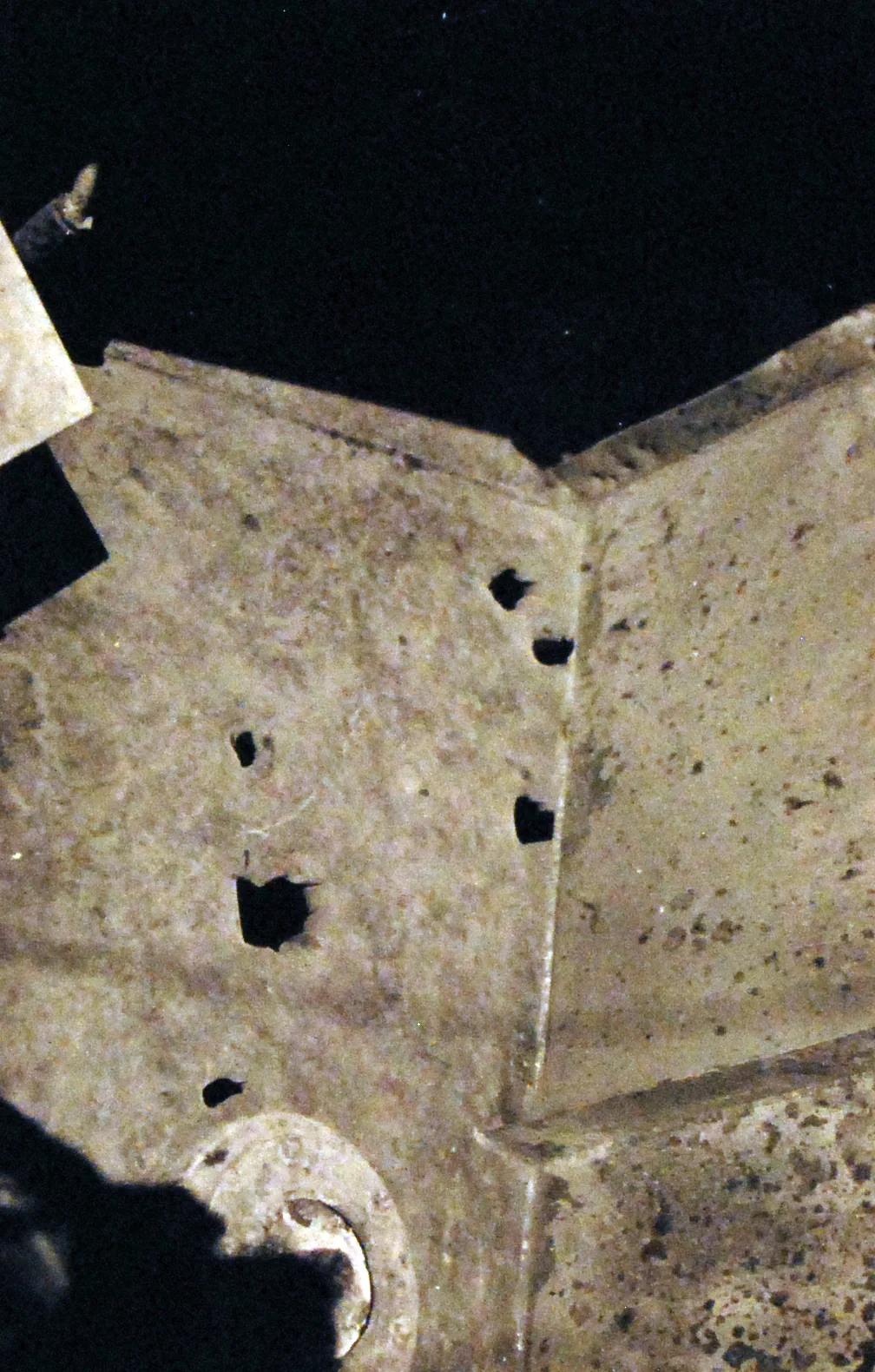
Pensacola arrived Saipan 22 November to prepare for the invasion of Iwo Jima. Five nights later, she helped splash several attacking Japanese aircraft. She departed Saipan 6 December, plastered Iwo Jima with 500 8-inch projectiles on the 8th. She returned to Iwo Jima on the 24th and the 27th pounding mountain gun positions, north of Suribachi Mountain. She hit defenses on Chichi Jima and Haha Jima as well as pounding mountain gun positions, north of Suirbachi Mountain. She hit defenses on Chi Jima and Haha Jima as well as Iwo Jima on 5 and 24 January 1945.
At Ulithi, 27 January, Pensacola formed with a battleshipcruiser-destroyer gunstrike task force under Rear Admiral B. J. Rodgers. Six battleships, four cruisers and a destroyer screen comprised the bombardment force which sailed 10 February via Tinian to Iwo Jima.
On 16 February Pensacola opened fire on the northwest sector of Iwo Jima to prepare for the landings. That afternoon Lt. (j.g.) Douglas W. Gandy, USNR, piloting one of Pensacola-s gun-spotter scout planes, shot down a Japanese fighter. The next morning Pensacola took six hits from enemy shore batteries as her guns covered operations of the mine-sweepers close inshore. Three of her officers and 14 men were killed. Another five officers and 114 men were injured.
Pensacola fired back as she retired for temporary repairs, then returned to her bombardment station. The morning of 19 February she commenced harassing and counter-battery fire in direct support of the invasion landings. Her deadly guns fought day and night into 1 March when she silenced enemy shore batteries which had hit destroyer Terry (DD-513) amidships. After helping Terry's wounded, she resumed direct bombardment support to advancing Marines that continued into 3 March.
She arrived in Ulithi 5 March and put to sea on the 20th to support the invasion and capture of Okinawa, the "last stepping stone" to Japan.
On 25 March Pensacola bombarded enemy defenses and covered the operations of minesweepers preparing the way for the Okinawa invasion landings. On 27 March she spotted a torpedo wake on her port quarter. A second "fish" streaked towards the ship from dead astern. As her 40-mm gunners opened fire on the torpedoes, Pensacola went hard left then hard right to parallel the deadly missiles. The first torpedo missed her starboard quarter by less than twenty feet. The second passed some twenty yards along the port side of the cruiser as her gunners opened with automatic weapons on a submarine periscope.
Pensacola gave direct bombardment support to the initial invasion of Okinawa 1 April and continued to blast at enemy targets until the 15th. She then sailed via Guam and Pearl Harbor for home. She arrived at Mare Island 7 May for overhaul.
She sailed 3 August for Adak, Alaska and was there when hostilities ended. On the 31st she sailed with units of Cruiser Division Five enroute to Ominato, Northern Honshu, Japan. She anchored in the outer harbor of Ominato 8 September.
Post-war 1946–1949
1946
Pensacola departed Ominato 14 November to embark 200 veterans at Iwo Jima, then touched Pearl Harbor enroute to San Francisco, Calif., arriving 3 December. Five days later she put to sea for Apra Harbor, Guam, where she embarked nearly 700 veterans for transport to San Diego, arriving 9 January 1946.
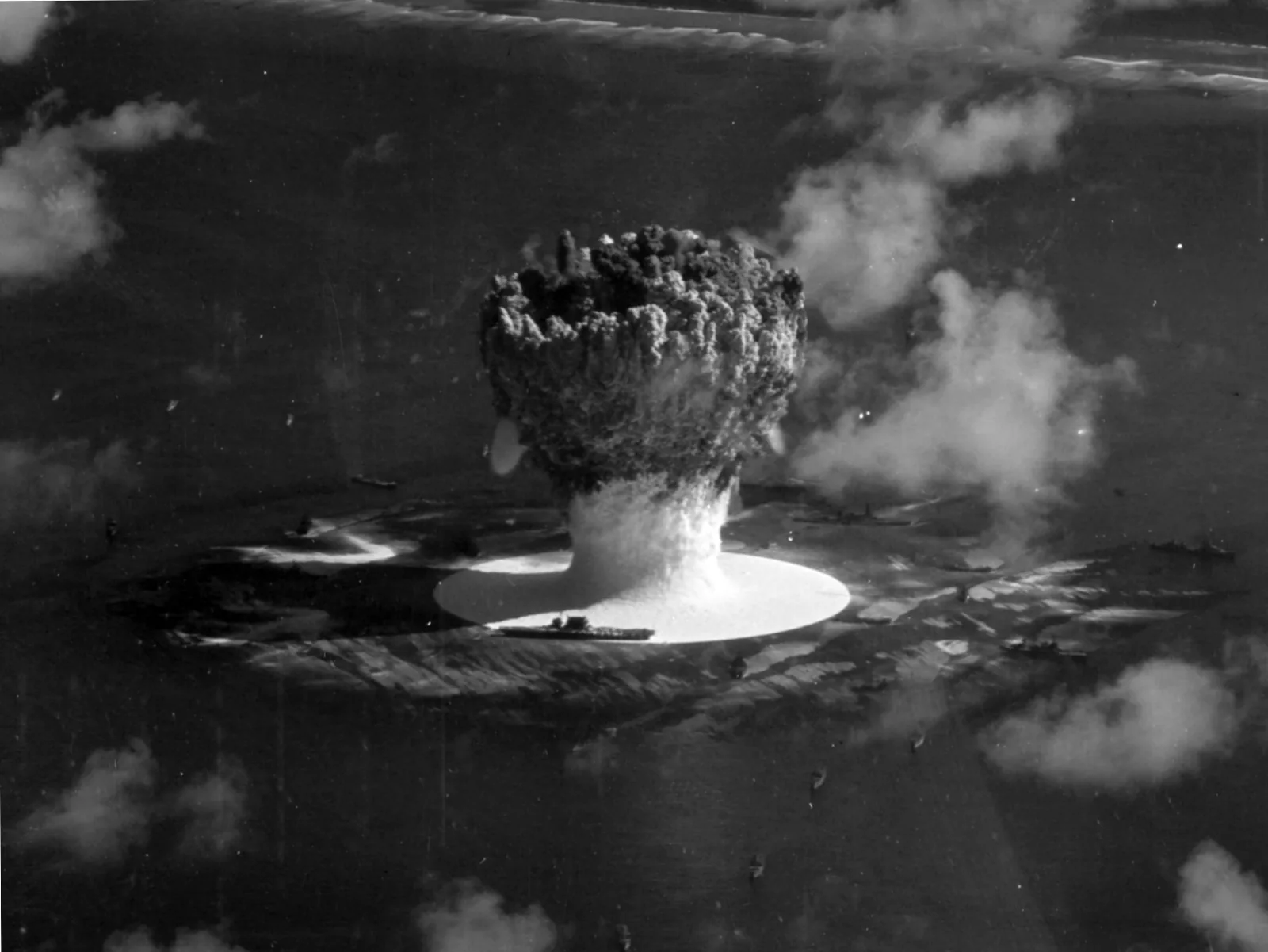
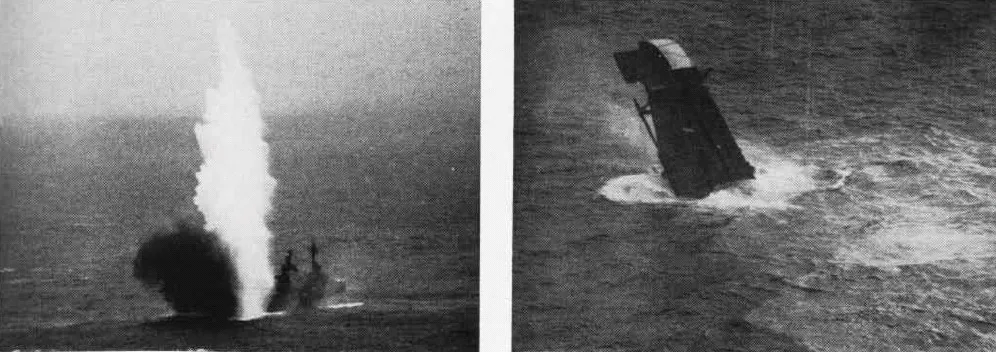
Pensacola departed San Pedro 29 April to stage with units of Joint Task Force One at Pearl Harbor in preparation for operation "Crossroads," the atomic bomb experiments at Bikini Atoll. She stood out of Pearl Harbor 20 May and reached Bikini the 29th to serve as a target ship. She survived the tests of 1 July and 25 July 1946. On 24 August 1946 she was taken in tow for Kwajalein where she decommissioned 26 August 1946. Her hulk was turned over to the custody of Joint Task Force One for radiological and structural studies. On completion of these studies, her hulk was sunk 10 November 1948.
Other photographs
Held for this vessel, and not tied to any part of the account above.





References
Every work this entry draws on. There are no numbered markers in the text above: what we hold is the provenance of the page — this history, this article, these photographs.
- History Pensacola III (CA-24) Dictionary of American Naval Fighting Ships, Naval History and Heritage Command. A work of the United States Government, in the public domain — the only text on this site reproduced verbatim.
- Facts USS Pensacola (CA-24) Structured facts only — dates, dimensions, armament and fate. No wording is taken from it. Harvested 1 August 2026.
- Photograph Pensacola CA-24 Louis Claes Louis Claes — File:Pensacola Kruiser, asset zF8SvdD6jnVTSGlIY2FoSnA6.jpg — CC0 — Wikimedia Commons
- Photograph USS Pensacola (CA-24) alongside of USS Vestal (AR-4) after the Battle of Tassafaronga, 17 December 1942 (80-G-33862) Unknown author — U.S. Navy photo 80-G-33862 — Public domain — Wikimedia Commons
- Photograph USS Salt Lake City (CA-25), USS Pensacola (CA-24) and USS New Orleans (CA-32) at Pearl Harbor on 31 October 1943 U.S. Navy — Official U.S. Navy photo 80-G-264236 from the U.S. Navy Naval History and Heritage Command — Public domain — Wikimedia Commons
- Photograph CA-24 sinking 10Nov1948 U.S. Navy — U.S. Naval Aviation News March 1949 [1] — Public domain — Wikimedia Commons
- Photograph 80-G-307158 (29508721655) National Museum of the U.S. Navy — 80-G-307158 — Public domain — Wikimedia Commons
- Photograph 80-G-307160 (29508720945) National Museum of the U.S. Navy — 80-G-307160 — Public domain — Wikimedia Commons
- Photograph 80-G-307163 (29508720445) National Museum of the U.S. Navy — 80-G-307163 — Public domain — Wikimedia Commons
- Photograph 80-G-307166 (28886492933) National Museum of the U.S. Navy — 80-G-307166 — Public domain — Wikimedia Commons
- Photograph 80-G-307167 (28886492573) National Museum of the U.S. Navy — 80-G-307167 — Public domain — Wikimedia Commons
- Photograph Aerial view of the Crossroads Baker atomic test, less than one second after the detonation, on 25 July 1946 (NH 96250) Unknown author — U.S. Navy photo NH 96250 — Public domain — Wikimedia Commons
- Photograph Damaged USS Hornet (CV-8) surrounded by cruisers during Battle of the Santa Cruz Islands 1942 U.S. Navy — Official U.S. Navy photo 80-G-304513 from the U.S. Navy Naval History and Heritage Command — Public domain — Wikimedia Commons
- Photograph Launch of USS Pensacola (CA-24) at Brooklyn Navy Yard 1929 U.S. Navy — U.S. Navy National Museum of Naval Aviation photo No. 1986.049.004 — Public domain — Wikimedia Commons
- Photograph Pattern sheet, MS-32 14D for Pensacola class cruisers US Navy Bureau of Ships — http://www.history.navy.mil/photos/images/g100000/g109727c.htm — Public domain — Wikimedia Commons
- Photograph Pensacola Kruiser, asset ExErUPQUfXZCJNzJfwyH9TN3 Claes, Louis (fotograaf) — https://dams.antwerpen.be/asset/ExErUPQUfXZCJNzJfwyH9TN3 — Public domain — Wikimedia Commons
- Photograph Pensacola Kruiser, asset u1i5fQFLCIe9TkLtTcJMZfrR Claes, Louis (fotograaf) — https://dams.antwerpen.be/asset/u1i5fQFLCIe9TkLtTcJMZfrR — Public domain — Wikimedia Commons
- Photograph Pensacola Kruiser, asset zF8SvdD6jnVTSGlIY2FoSnA6 Claes, Louis (fotograaf) — https://dams.antwerpen.be/asset/zF8SvdD6jnVTSGlIY2FoSnA6 — Public domain — Wikimedia Commons
- Photograph USS Adams (DM-27) off Mare Island in June 1945 USN — Official U.S. Navy Bureau of Ships photo [1] available at Destroyerhistory.org ; Official U.S. Navy photo 19-N-86927 from the U.S. Navy Naval History and Heritage Command — Public domain — Wikimedia Commons
- Photograph USS Pensacola (CA-24) at anchor in September 1942 Unknown author — U.S. Navy photo 19-N-34705 — Public domain — Wikimedia Commons
- Photograph USS Pensacola (CA-24) at Midway in late June 1942 Unknown author — U.S. Naval History and Heritage Command photo 80-G-12147 — Public domain — Wikimedia Commons
- Photograph USS Pensacola (CA-24) at sea with tugs on 14 October 1943 (19-N-67932) Unknown author — U.S. Navy Bureau of Ships photo 19-N-67932 — Public domain — Wikimedia Commons