United States Navy — Aircraft carrier
USS Randolph (CV-15) — service history
This is the full service history. For the vessel's particulars, photograph and specifications, see the entry.
In the words of the US Navy. The account below is reproduced verbatim from the Dictionary of American Naval Fighting Ships, compiled by the Naval History and Heritage Command — a work of the United States Government, in the public domain, and the only text on this site not written here.
Before commissioning
Peyton Randolph, born at Tazewell Hall, Williamsburg, Va. in September 1721, graduated from William and Mary College and studied law in England at Inner Temple, London. He was appointed King's Attorney for Virginia in 1748 and served in the House of Burgesses from that year to 1774, becoming speaker in 1766. His conservative temperament was balanced by a deep concern for colonial liberty.
During the Stamp Act crisis, Randolph wrote a remonstrance to the King in 1764 opposing suggested stamp duties, but the following year opposed Patrick Henry's radical "Stamp Act Resolutions." In the ensuing decade, he led the patriotic movement in Virginia, presiding over every revolutionary assemblage in the colony, especially the Committee of Correspondence, formed in 1773, and the Conventions of 1774 and 1775.
A member of the First Continental Congress, he was chosen as its first president on 5 September, 1774. He died of apoplexy in Philadelphia on the 22d of October, 1775.
Second World War 1939–1945
1943
The second Randolph (CV-15) was laid down 10 May 1943 by Newport News Shipbuilding & Dry Dock Co., Newport News, Va.; launched 28 June 1944; sponsored by Mrs. Guy M. Gillette; and commissioned 9 October 1944, Capt. Felix Baker in command.
Following shakedown off Trinidad, Randolph got underway for the Panama Canal and the Pacific. On 31 December she reached San Francisco where Air Group 87 was detached and Air Group 12 reported on board for 4 months duty.
On 20 January Randolph departed San Francisco, for Ulithi whence she sortied, 10 February, with TF 58. She launched attacks 16 and 17 February against Tokyo airfields and the Tachikawa engine plant. The following day she made a strike on the island of Chichi Jima. On 20 February, she launched three aerial sweeps in support of ground forces invading Iwo Jima and two against Haha Jima. During the next 4 days, further strikes hit Iwo Jima and combat air patrols were flown almost continuously. Three sweeps against airfields in the Tokyo area and one against Hachijo Jima followed on 25 February before the carrier returned to Ulithi.
Riding at anchor at Ulithi 11 March, a kamikaze "Frances," a twin-engine bomber, hit Randolph on the starboard side aft just below the flight deck, killing 25 men and wounding 106. Repaired at Ulithi, Randolph joined the Okinawa Task Force 7 April. Combat air patrols were flown daily until 14 April, when strikes were sent against Okinawa, Ie Shima, and Kakeroma Island. The following day, an air support mission of fighters, bombers, and torpedo planes hit Okinawa and a fighter sweep struck an airfield in southern Kyushu. Under daily air attack from 17 April on, Randolph continued to send her aircraft on CAP and support missions throughout the month.
During May planes from the carriers hit the Ryukyus and southern Japan, Kikai-Amami Island naval base and airfields and Kyushu airfields. Becoming flagship TF 58 on 15 May, Randolph continued her support of the occupation of Okinawa Shima until 29 May, when she retired via Guam to the Philippines.
On her next war cruise, as a part of Admiral Halsey's famed 3d Fleet, Randolph made a series of strikes up and down the Japanese home islands. With Air Group 16 replacing Air Group 12, the ship launched eight raids on 10 July against airfields in the Tokyo area, principally those on the peninsula east of Tokyo Bay. On the 14th, her planes struck the airfields and shipping in and near Tsugaru Strait. In this attack two of the important Honshu-Hokkaido train ferries were sunk and three were damaged. Attacks on the Japanese home islands continued for the next few days, and, on 18 July, Nagato lying camouflaged alongside a pier at the Yokosuka Naval Base, was bombed.
Moving southwest, Randolph and other carriers were off the coast of Shikoku, 24 July, for an antishipping sweep of the Inland Sea, during which the carrier-battleship Hyuga was heavily damaged and airfields and industrial installations on Kyushu, Honshu, and Shikoku were hit hard. Randolph's pilots estimated that, from 10 to 25 July they had destroyed 25 to 30 ships, ranging in size from small luggers to a 6,000-ton freighter, and had damaged 35 to 40 others. Randolph's strikes continued right up to the morning of the 15 August surrender, when her planes hit Kisarazu Airfield and surrounding installations.
Post-war 1946–1949
1948
Following the end of the war, Randolph headed home. Transiting the Panama Canal in late September, she arrived at Norfolk, 15 October, where she was rigged for the "Magic Carpet" service. Before the end of the year, she completed two trips to the Mediterranean area to return American servicemen. Then, in 1946, she became a training ship for reservists and midshipmen, and made a Mediterranean cruise in the latter half of the year. After another voyage to the Caribbean, she embarked midshipmen in the early summer of 1947 for a cruise to northern European waters. Randolph was placed out of commission, in reserve, 25 February 1948, and berthed at Philadelphia.
Korean War period 1950–1953
1952
Reclassified CVA-15 on 1 October 1952, Randolph recommissioned 1 July 1953. After shakedown off Guantanamo Bay with Carrier Air Group 10, she took on Carrier Air Group 14, departed Norfolk for the Mediterranean, and joined the 6th Fleet on 3 February 1954. Deployed to the Mediterranean for 6 months of Fleet and NATO exercises during 1954 and 1955, Randolph entered the Norfolk Navy Yard 18 June 1955 for installation of an angled deck and other modernization.
Cold War 1954–1963
1956
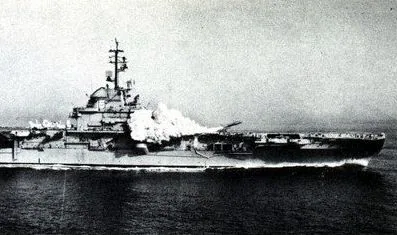
Leaving the yard in January 1956, Randolph conducted air operations off the east coast for the next 6 months, and was the first Atlantic Fleet carrier to launch a Regulus guided missile from her flight deck.
On 14 July 1956, Randolph again steamed east for a 7-month tour of duty with the 6th Fleet in the Mediterranean. When Israel, Britain, and France invaded the United Arab Republic in October of that year, Randolph stood ready. Operating near the Suez Canal, her aircraft provided air cover and surface and air reconnaissance for the evacuation of U.S. nationals from Alexandria. She returned to the United States 19 February 1957.
1957
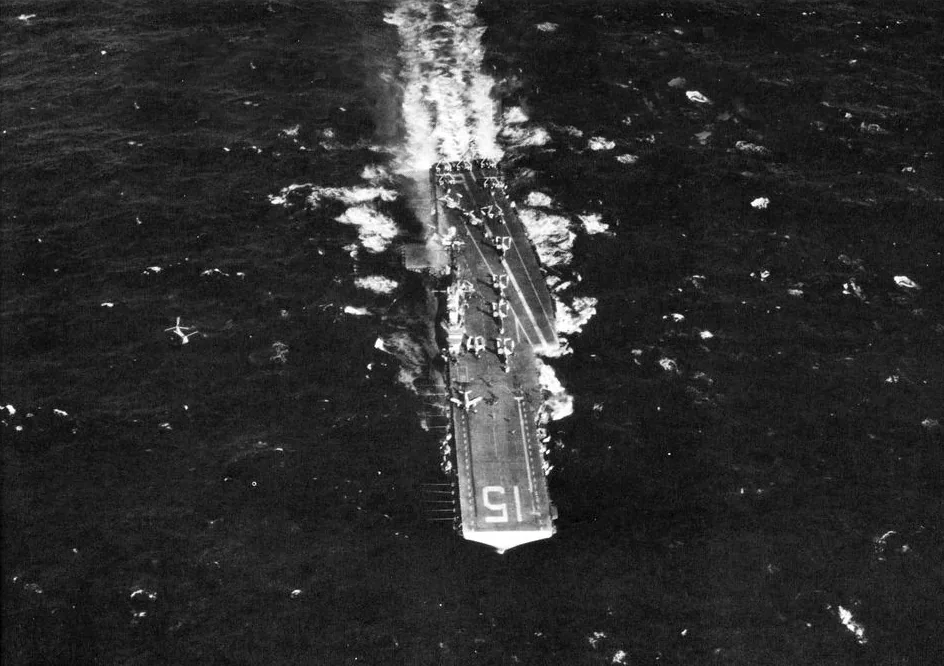
After a few months operating off the east coast, Randolph deployed to the Mediterranean again 1 July 1957. Between August and December, as political turmoil in Syria threatened to further disturb the already turbulent Mideast, she patrolled the eastern Mediterranean. Back in the United States on 24 February 1958, the flattop made her 5th Mediterranean deployment 2 September 1958 to 12 March 1959.
1959
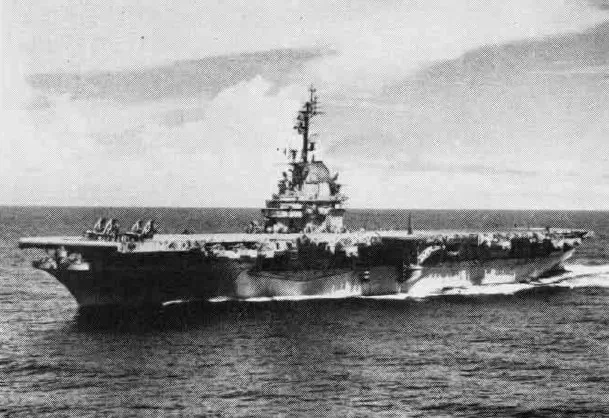
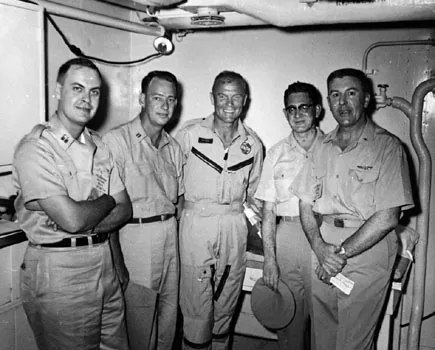
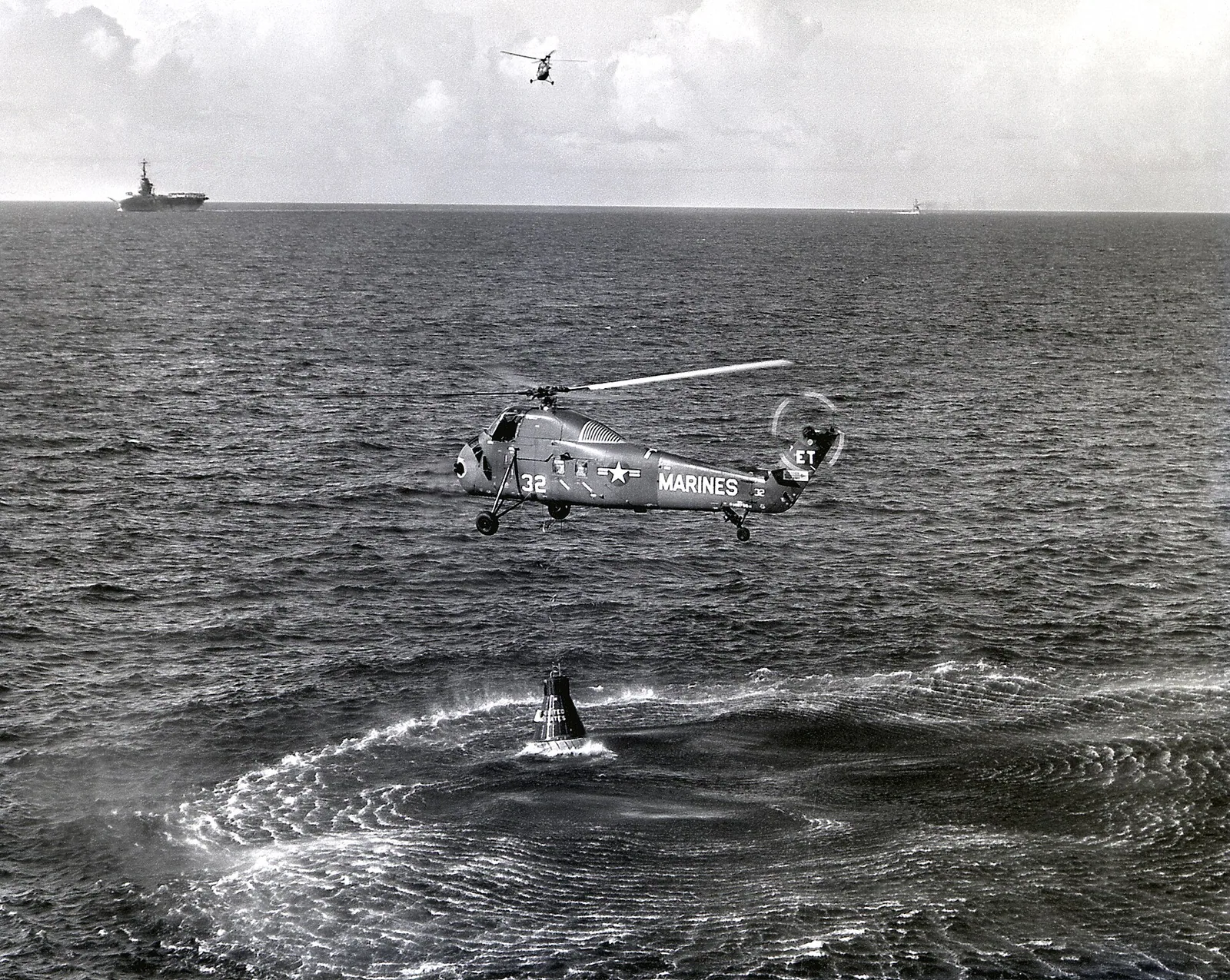
Randolph was reclassified CVS-15 on 31 March 1959, and conducted ASW operations off the east coast throughout that year and the next, receiving her fourth Battle Efficiency "E" in a row in September 1960. After overhaul at Norfolk, Randolph sailed for operations in the Caribbean and served as the recovery ship for Astronaut Virgil Grissom on America's second manned space flight, a suborbital shot. In February 1962, Randolph was the primary recovery ship for Astronaut John Glenn on his flight, the first American orbital voyage in space. After his historic three-orbit flight, he landed safely near destroyer Noa (DD-841) from which he was transferred, by helicopter, to Randolph .
In the summer of 1962, Randolph again steamed to the Mediterranean. Returning to the western Atlantic as the Cuban missile crisis broke, she operated in the Caribbean from the end of October through November. After a Norfolk overhaul, Randolph resumed her station in the Atlantic. During the next 5 years she made two Mediterranean cruises and a northern European cruise, while spending most of her time off the east coast and in the Caribbean.
Vietnam War period 1964–1975
1968
On 7 August 1968, the Defense Department announced that it would inactivate Randolph and 49 other ships to reduce fiscal expenditures in 1969. Randolph was placed out of commission, in reserve, berthed at Philadelphia, 13 February 1969, where she remained until 1 June 1973 when she was stricken from the Navy list.
Other photographs
Held for this vessel, and not tied to any part of the account above.



References
Every work this entry draws on. There are no numbered markers in the text above: what we hold is the provenance of the page — this history, this article, these photographs.
- History Randolph II (CV-15) Dictionary of American Naval Fighting Ships, Naval History and Heritage Command. A work of the United States Government, in the public domain — the only text on this site reproduced verbatim.
- Facts USS Randolph (CV-15) Structured facts only — dates, dimensions, armament and fate. No wording is taken from it. Harvested 1 August 2026.
- Photograph USS Randolph (CVS-15) underway on 25 October 1959 (USN 1059601) Unknown author — U.S. Navy photo USN 1059601 — Public domain — Wikimedia Commons
- Photograph USS Randolph (CV-15) under repair USN — Official U.S. Navy photograph 80-G-344531, now in the collections of the National Archives [1] — Public domain — Wikimedia Commons
- Photograph USS Randolph (CV-15) at anchor in the western Pacific in June 1945 Lieutenant Barrett Gallagher, U.S. Navy — Official U.S. Navy photo NH 97489 from the U.S. Navy Naval History and Heritage Command — Public domain — Wikimedia Commons
- Photograph USS Randolph CVA-15 after SCB25A NAN10-55 USN — U.S. Navy Naval Aviation News October 1955 [1] — Public domain — Wikimedia Commons
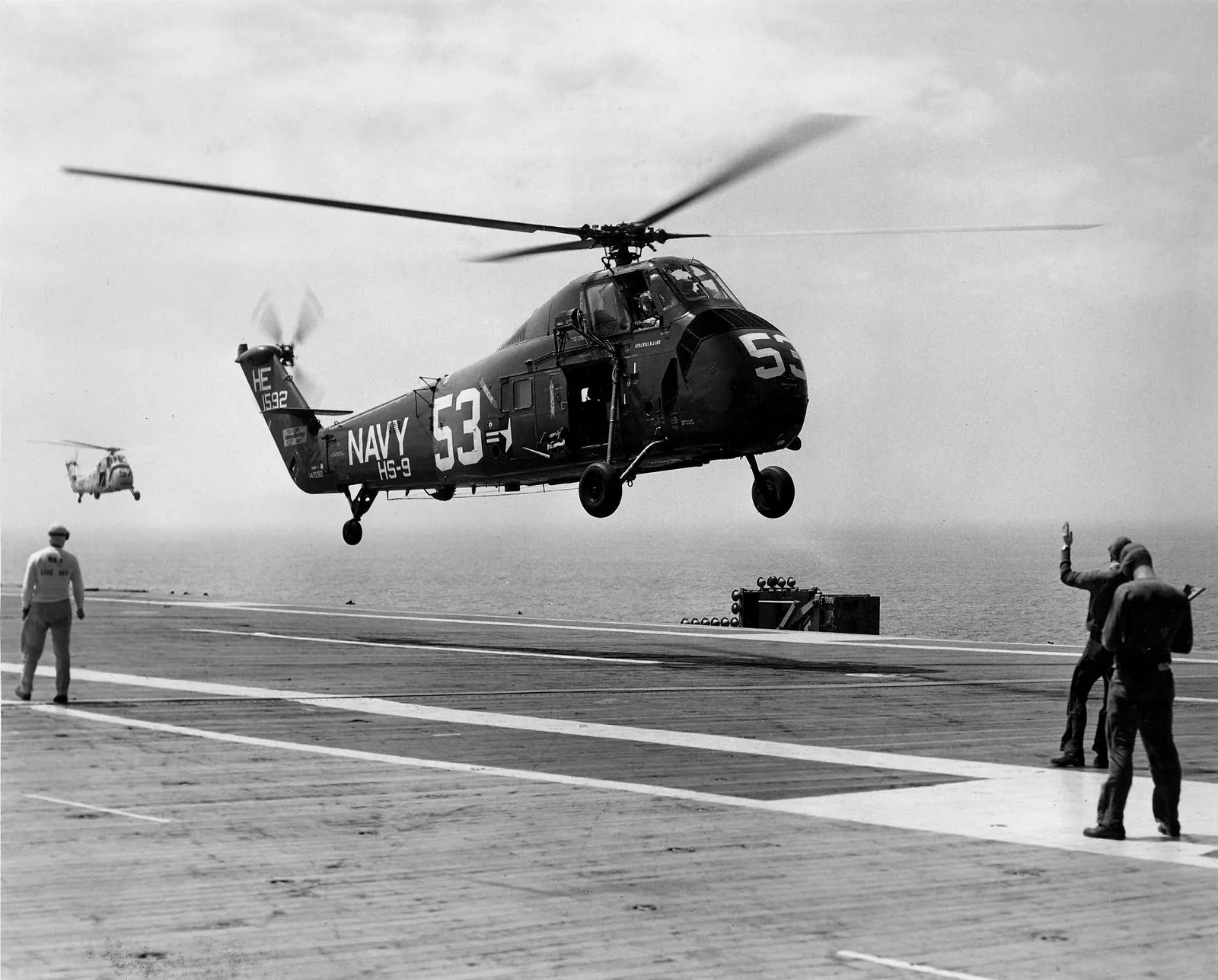
- Photograph HSS-1 Seabat of HS-9 lands on USS Randolph (CVS-15) in July 1959 U.S. Navy — U.S. Navy National Museum of Naval Aviation photo No. 2011.113.089 — Public domain — Wikimedia Commons
- Photograph 19620220-JohnGlennMedical Unknown author — Original uploader was Sheldunn at en.wikipedia ( Original text: NASA ) — Public domain — Wikimedia Commons
- Photograph 330-ps-9329-428-gx-usn-1039206 14980152574 o Unknown author — National Museum of the U.S. Navy — Public domain — Wikimedia Commons
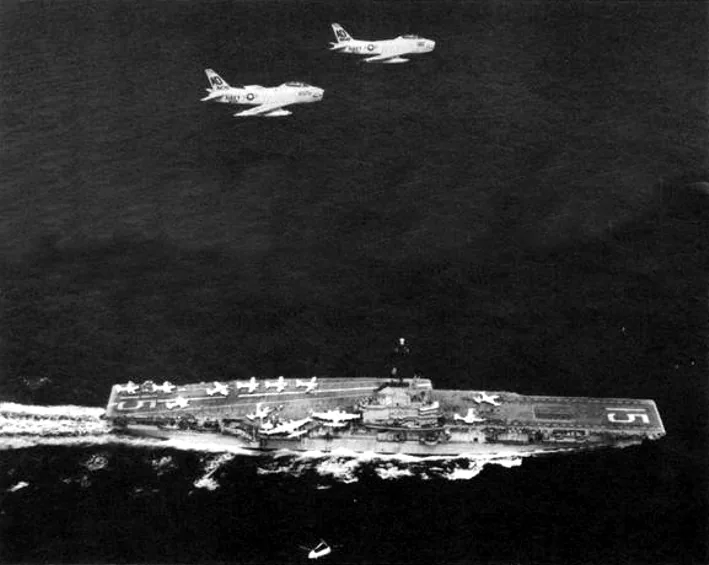
- Photograph A4D-2 Skyhawks of VA-86 in flight over USS Randolph (CVA-15), circa in 1958 U.S. Navy — U.S. Navy Naval Aviation News May 1959 [1] — Public domain — Wikimedia Commons
- Photograph Aerial view of USS Randolph (CVA-15) underway at sea, circa in 1957 Photographic Reconnaissance Squadron 62 (VFP-62) Det.36, U.S. Navy — U.S. Navy photo [1] from the USS Randolph (CVA-15) 1957-1958 cruise book available at Navysite.de — Public domain — Wikimedia Commons
- Photograph Aerial view of USS Randolph (CVA-15) underway, circa in 1957 Photographic Reconnaissance Squadron 62 (VFP-62) Det.36, U.S. Navy — U.S. Navy photo [1] from the USS Randolph (CVA-15) 1957-1958 cruise book available at Navysite.de — Public domain — Wikimedia Commons
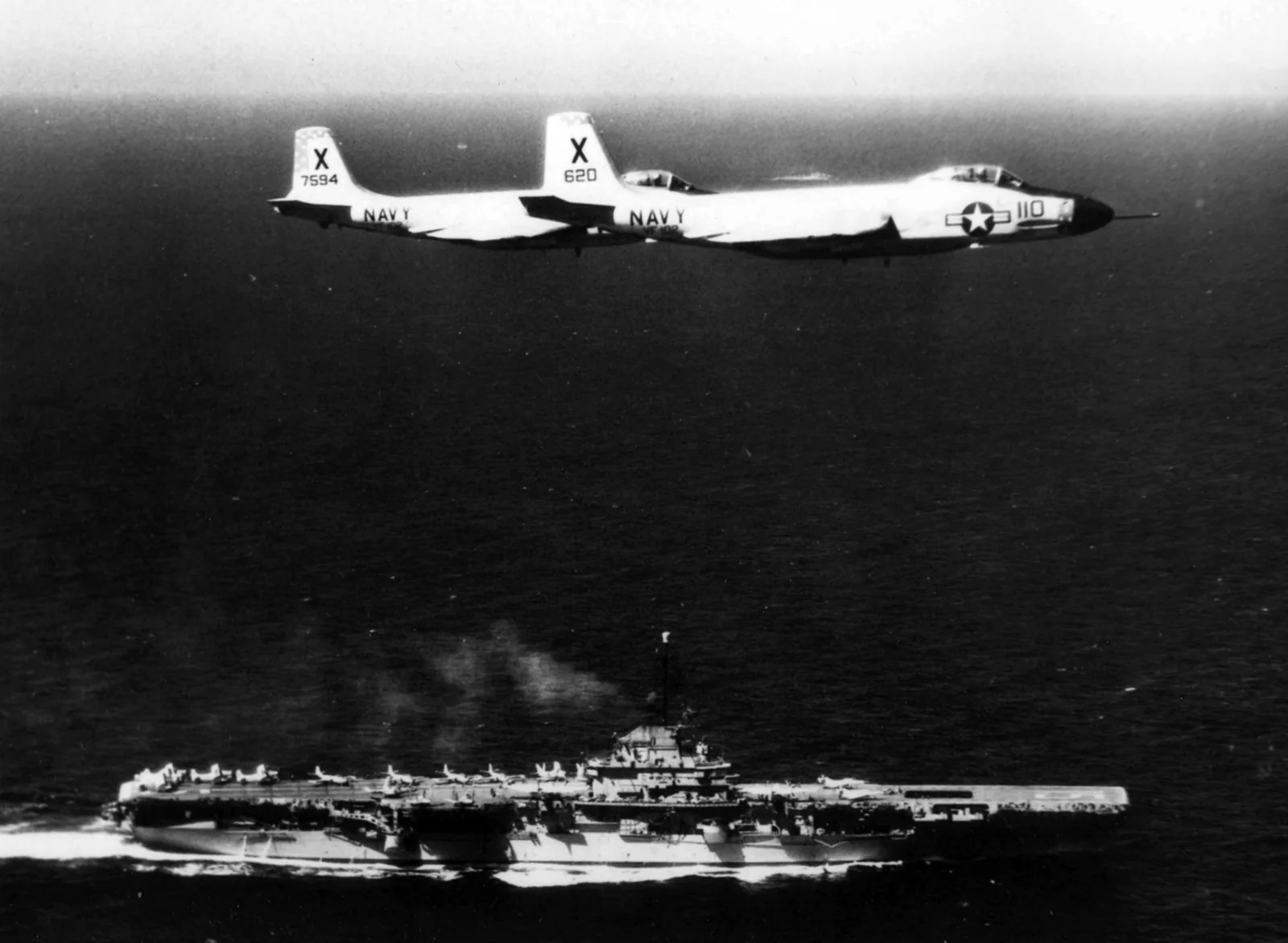
- Photograph F2H-4s VF-102 over USS Randolph (CVA-15) 1956 U.S. Navy — U.S. Navy National Museum of Naval Aviation photo No. 1996.253.7245.029 — Public domain — Wikimedia Commons
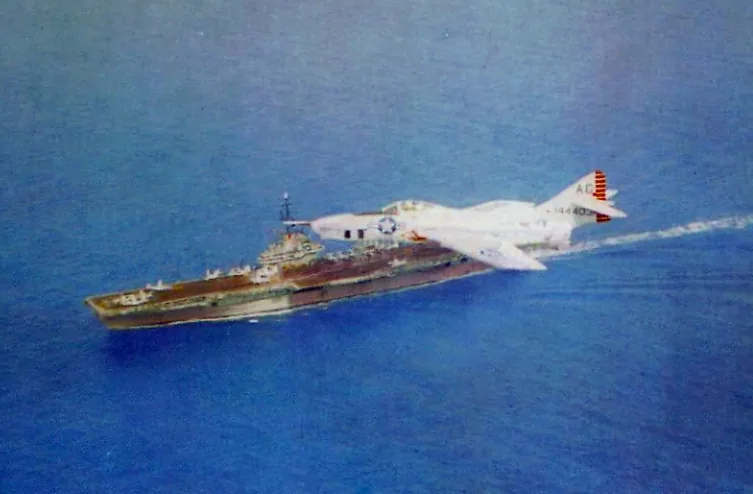
- Photograph F9F-8P VFP-62 over USS Randolph (CVA-15) c1958 USN — U.S. Navy USS Randolph 1958-59 cruise book [1] photo [2] — Public domain — Wikimedia Commons
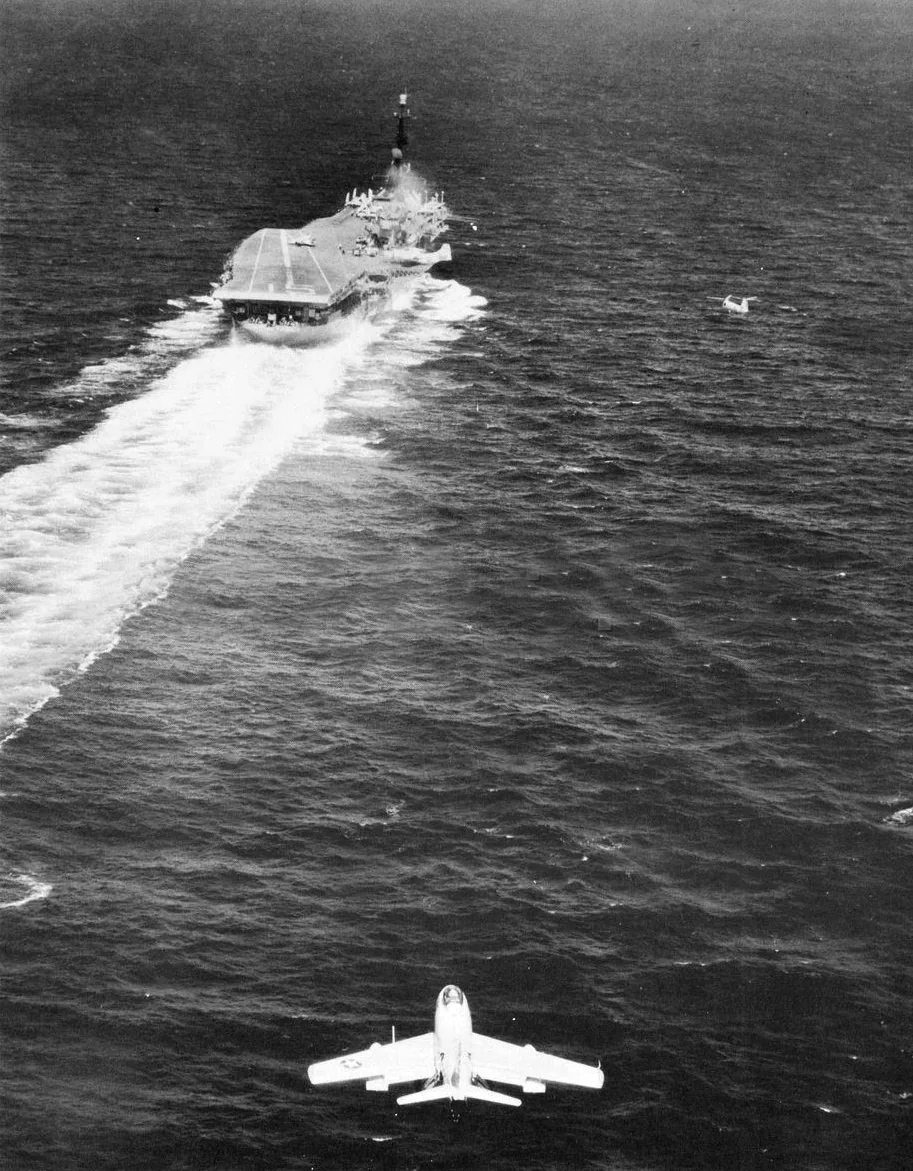
- Photograph FJ-3 Fury approaches USS Randolph (CVA-15), circa in 1957 Photographic Reconnaissance Squadron 62 (VFP-62) Det.36, U.S. Navy — U.S. Navy photo [1] from the USS Randolph (CVA-15) 1957-1958 cruise book available at Navysite.de — Public domain — Wikimedia Commons
- Photograph Regulus missile launch from USS Randolph (CVA-159 c1956 USN — U.S. Navy photo [1] from the USS Randolph (CVA-15) 1956-57 cruise book available at Navysite.de — Public domain — Wikimedia Commons
- Photograph Retrieval attempt of Liberty Bell 7 MSFC-6116424 NASA — Marshall Space Flight Center 's Marshall Image Exchange: description , image file — Public domain — Wikimedia Commons
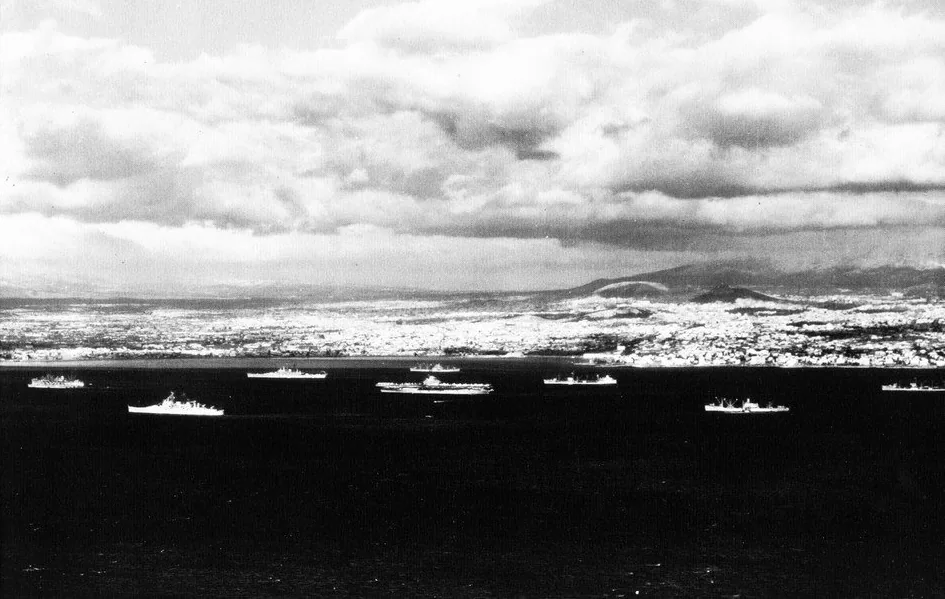
- Photograph US 6th Fleet ships off Athens in December 1957 U.S. Navy — U.S. Navy photo [1] from the USS Randolph (CVS-15) 1962 cruise book available at Navysite.de — Public domain — Wikimedia Commons
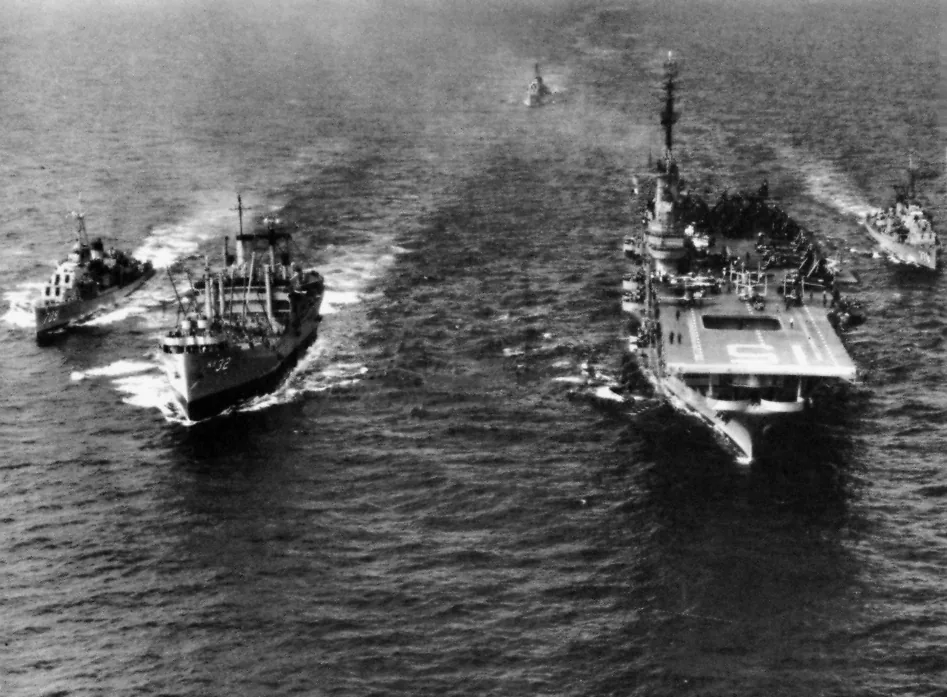
- Photograph USS Altair (AKS-32) replenishes USS Randolph (CVA-15) and USS Hugh Purvis (DD-709), circa in 1955 U.S. Navy — U.S. Navy photo [1] from the USS Randolph 1954-55 cruise book available at Navysite.de — Public domain — Wikimedia Commons
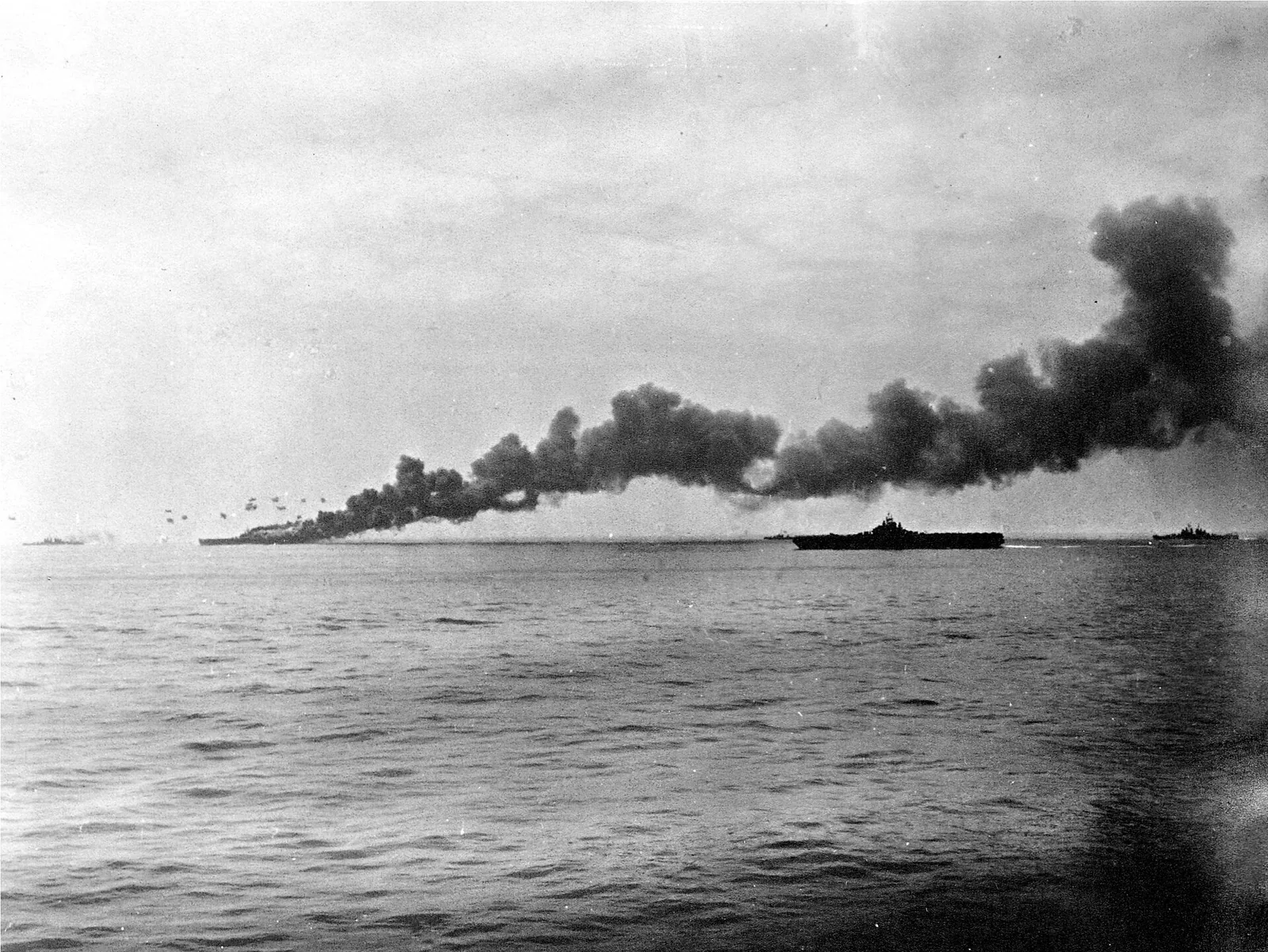
- Photograph USS Bunker Hill (CV-17) burning and Randolph (CV-15) in May 1945 U.S. Navy — U.S. Navy National Museum of Naval Aviation photo No. 1983.046.010.142 — Public domain — Wikimedia Commons
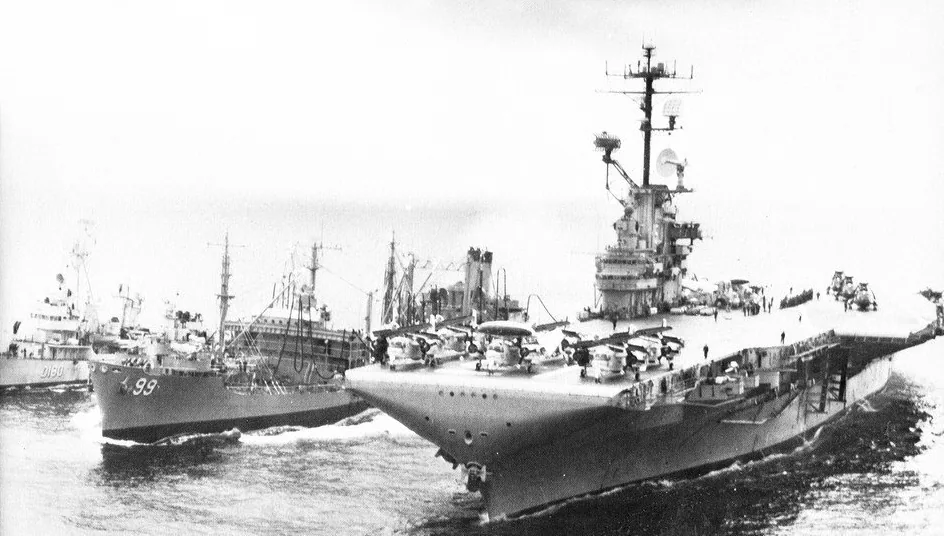
- Photograph USS Canisteo (AO-99) refuels USS Randolph (CVA-15) and USS Robert H. McCard (DD-822), circa in 1957 Nicklay, U.S. Navy — U.S. Navy photo [1] from the USS Randolph (CVA-15) 1957-1958 cruise book available at Navysite.de — Public domain — Wikimedia Commons
- Photograph USS Canisteo (AO-99) refuels USS Randolph (CVS-15) and German destroyer Z6 in 1966 USN — U.S. Navy photo [1] from the USS Randolph (CVS-15) 1966 cruise book available at Navysite.de — Public domain — Wikimedia Commons