United States Navy — Destroyer
USS Stewart (DD-224) — service history
This is the full service history. For the vessel's particulars, photograph and specifications, see the entry.
In the words of the US Navy. The account below is reproduced verbatim from the Dictionary of American Naval Fighting Ships, compiled by the Naval History and Heritage Command — a work of the United States Government, in the public domain, and the only text on this site not written here.
Before commissioning
Charles Stewart was born at Philadelphia, Pa., on 28 July 1778. He went to sea at the age of thirteen as a cabin boy and rose through the grades to become master of a merchantman. During the Quasi-War with France, Stewart was commissioned a lieutenant in the United States Navy on 9 March 1798 and joined the frigate United States for a cruise in the West Indies. He took command of the schooner Experiment on 16 July 1800 and soon captured two armed French vessels and freed several captured American ships. After brief command of Chesapeake in 1801 and service in Constellation in 1802, Stewart sailed to the Mediterranean in command of the brig Siren. There he participated in the destruction of Philadelphia after her capture by Tripoli, helped to maintain the blockade of Tripoli, and distinguished himself in assaults on the enemy in August and September 1804. After the war, he participated in a show of force at Tunis and returned home as captain in 1806. On the outbreak of war in 1812, Stewart commanded, successively, Argus, Hornet, and Constellation. But, as the latter was closely blockaded in Norfolk, he took command of Constitution at Boston in 1813. He made two brilliant cruises in her between 1813 and 1815.
The frigate captured HMS Cyane and HMS Levant on 20 February 1815. Stewart's later service included command of a squadron in the Mediterranean from 1816 to 1820 and of one in the Pacific from 1820 to 1824. He served as a Naval Commissioner from 1830 to 1832 and commanded the Philadelphia Navy Yard from 1838 to 1841, in 1846, and again from 1854 to 1861. By a bill passed on 2 March 1859, Congress made Stewart "senior flag officer," an office created for him in recognition of his distinguished and meritorious service. He became rear admiral on the retired list on 16 July 1862, and he died at Bordentown, N.J., on 6 November 1869.
Interwar 1919–1938
1919
The second Stewart (Destroyer No. 224) was laid down on 9 September 1919 by William Cramp and Sons, Philadelphia, Pa.; launched on 4 March 1920; sponsored by Mrs. Margaretta Stewart Stevens, granddaughter of Rear admiral Stewart; and commissioned on 15 September 1920, Lt. S. G. Lamb in command.
1921
After a year of coastal operations with a reserve division, Stewart joined Destroyer Squadron, Atlantic, on 12 October 1921. She participated in fleet exercises in the Caribbean from 12 January to 22 April 1922; and, after repairs, departed Newport, R.I., on 20 June and proceeded, via the Mediterranean Sea and the Indian Ocean, to the Philippines for service in the Asiatic Fleet. She was destined not to return home for 23 years.
1923
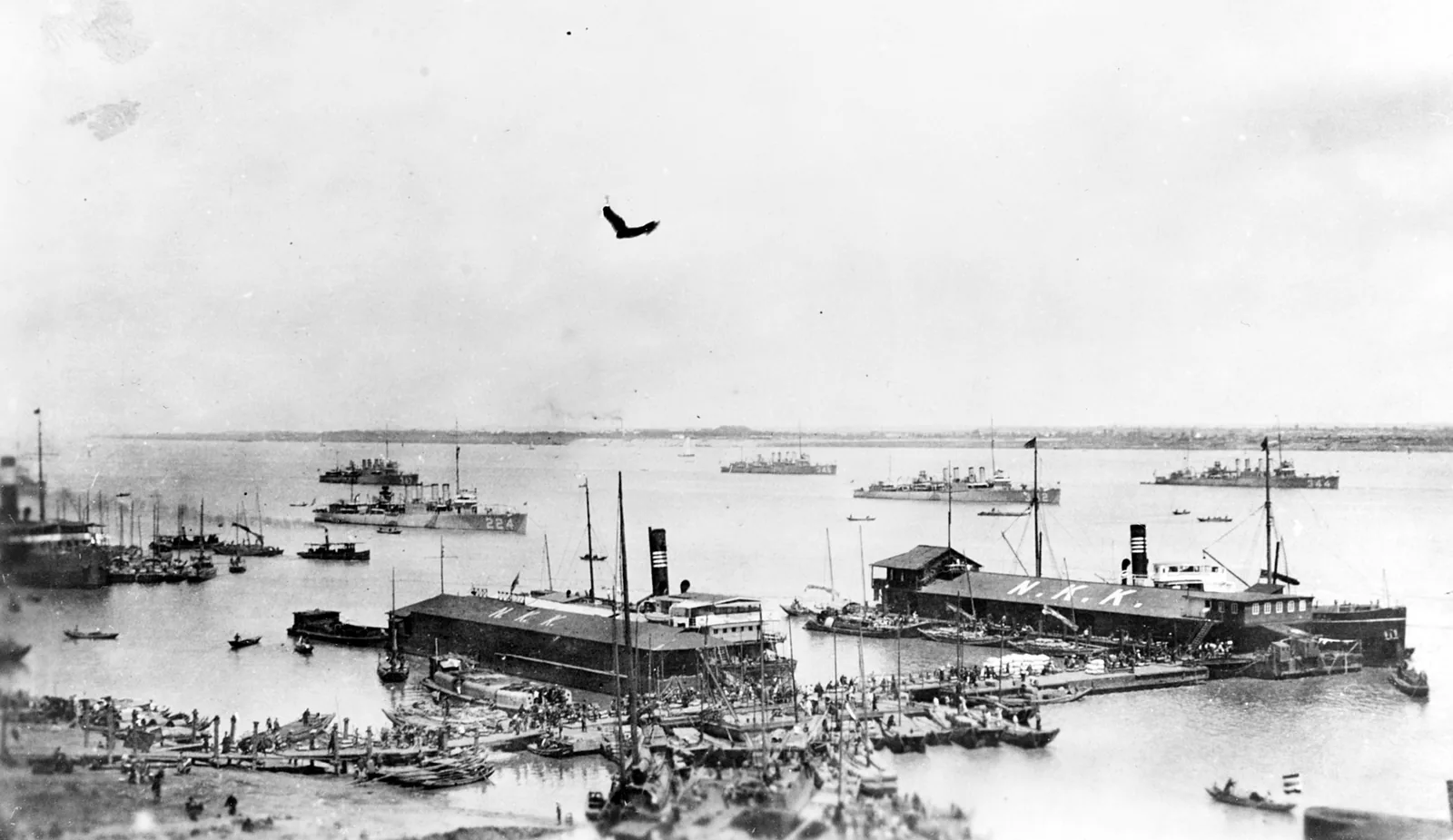
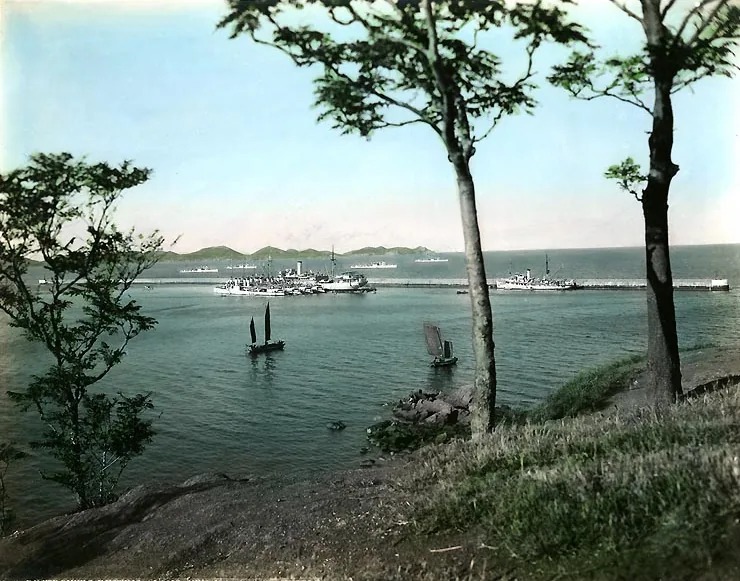
Arriving at Chefoo, China, on 26 August, Stewart entered the routine of the Asiatic Fleet, conducting training exercises from bases at Chefoo and Tsingtao in the summer and Manila in the winter and making calls at Chinese ports during the transit in each direction. Her routine was broken briefly between 6 and 21 September 1923 by a voyage to Yokosuka, Japan, to relieve victims of an earthquake which had nearly destroyed that city and Tokyo on 30 and 31 August. From 25 May to 16 June, Stewart supported the flight of four Army aircraft around the world, operating first in Japan and then at Shanghai.
1925
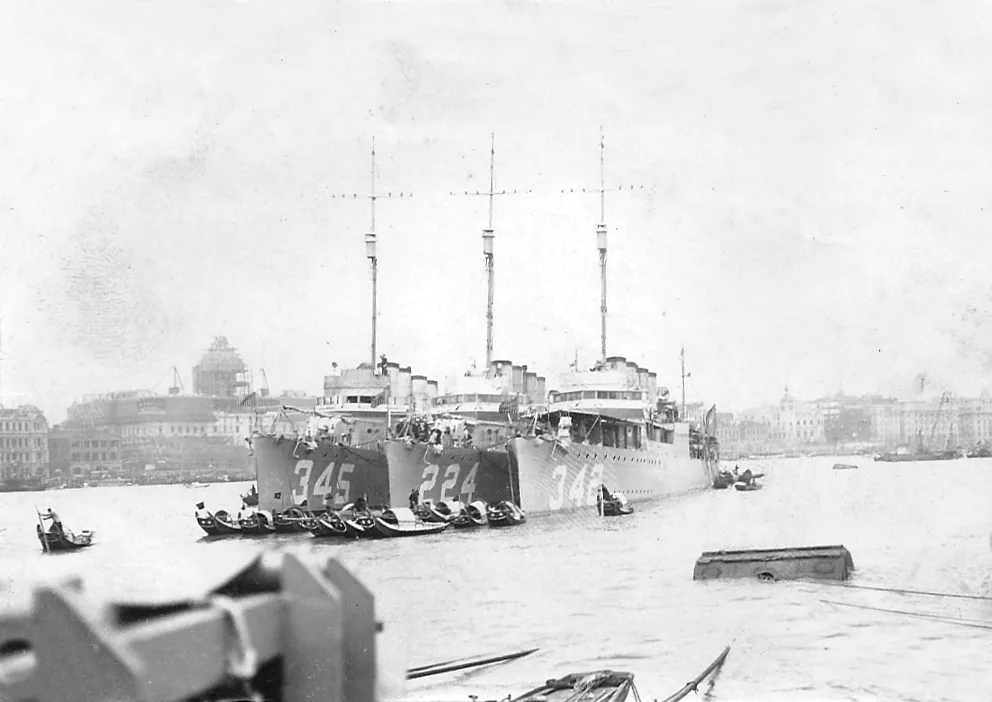
Between 1924 and 1928, unrest in China came to a head with the outbreak of anti-foreign disturbances at Shanghai and Canton. Stewart transported Marines to Shanghai in January 1925; and, during the next years, spent periods augmenting the normal gunboat patrols on the Yangtze River and on the coast near Canton. She was at Shanghai on 24 March 1927 when Chinese Communist troops attacked foreigners at Nanking; and, for the next three and one-half months, the destroyer was stationed at Wuhu, Nanking, Shanghai, and Chenglin to protect American nationals and shipping along the Yangtze. She was also on the China coast when the Japanese launched an air and sea attack on Shanghai in late January 1932, and protected Americans at Swatow and Amoy from 1 to 3 and 9 to 24 February and at Shanghai from 26 February to 23 May. After full-scale war between Japan and China broke out in 1937: Stewart was again often on station in Chinese ports, at Tsingtao and Shanghai from 15 August to 18 December 1937; from 21 February to 21 March 1938; and from 3 June to 4 September 1939. On the latter date, after the outbreak of war in Europe, she was ordered south for patrol duties in the Philippines, which she continued until entering the Cavite Navy Yard for overhaul on 5 April 1940. Upon leaving the yard on 1 June, Stewart acted as plane guard vessel for seaplanes flying between Guam and the Philippines and then made a final tour of Chinese Yellow Sea ports from 7 July to 23 September 1940. During 1941, she remained in the Philippines as the international situation worsened; and, on 27 November, she was ordered, along with the other major surface combatants of the Asiatic Fleet, to the Dutch East Indies.
Second World War 1939–1945
1942
Stewart was at Tarakan Roads, Borneo, with other American and Dutch ships, when news of hostilities with Japan arrived on 8 December. During the final weeks of 1941, she escorted naval auxiliaries from the Philippines to Port Darwin, Australia. In January 1942, she escorted convoys within the Dutch East Indies, as Japanese invasion forces drew closer.
On 30 January, Stewart joined the cruiser, Marblehead (CL-12), and sortied with her from Bunda Roads on 4 February to intercept Japanese forces at the south entrance to the Macassar Strait. However, Marblehead was badly damaged by air attacks during the day; and Stewart escorted her back to the base at Tjilatjap, Java.
Stewart joined Admiral Doorman's combined Dutch-American striking force at sea on 14 February for an attack on Japanese forces advancing along the northern coast of Sumatra. During the approach, Stewart had to back her engines to avoid a Dutch destroyer ahead of her which had run aground on a reef in Stolze Strait; and, on the following day, 15 February, she survived numerous air attacks in the Bangka Strait. Although they damaged no Allied ships, the air attacks convinced Admiral Doorman that further advance without air cover would be foolhardy; and the Allied force retired. Stewart was detached on 16 February to fuel at Ratai Bay in Sumatra.
Admiral Doorman's forces were scattered when the Japanese landed on Bali on 19 February, and he threw his ships against the enemy in three groups on the night of 19 and 20 February. Stewart was lead ship in the second group; and, in several brief but furious night engagements, came under extremely accurate fire from Japanese destroyers. Her boats were shot away, her torpedo racks and galley were hit, and a crippling shot hit the destroyer aft below her water line, opening her seams and flooding the steering engine room. However, the steering engine continued to operate under two feet of water; and the destroyer was able to maintain her station in column and return to Surabaya the next morning.
Stewart, as the most severely damaged ship, was the first to enter the floating drydock at Surabaya on 22 February. However, she was inadequately supported in the dock; and, as the dock rose, the ship fell off the keel blocks onto her side in 12 feet of water, bending her propeller shafts and causing further hull damage. With the port under enemy air attack and in danger of falling to the enemy, the ship could not be repaired. Responsibility for the destruction of the ship was given to naval authorities ashore, and Stewart's last crew members left the embattled port on the afternoon of 22 February. Subsequently, demolition charges were set off within the ship, a Japanese bomb hit amidships further damaged her; and, before the port was evacuated on 2 March, the drydock containing her was scuttled. Her name was struck from the Navy list on 25 March 1942 and was soon assigned to a new destroyer escort.
1943
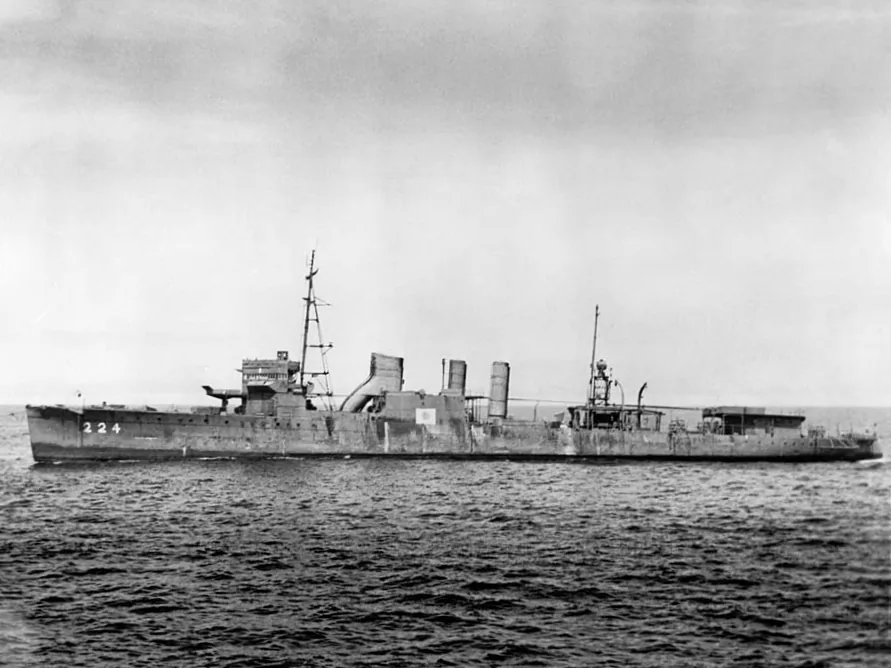
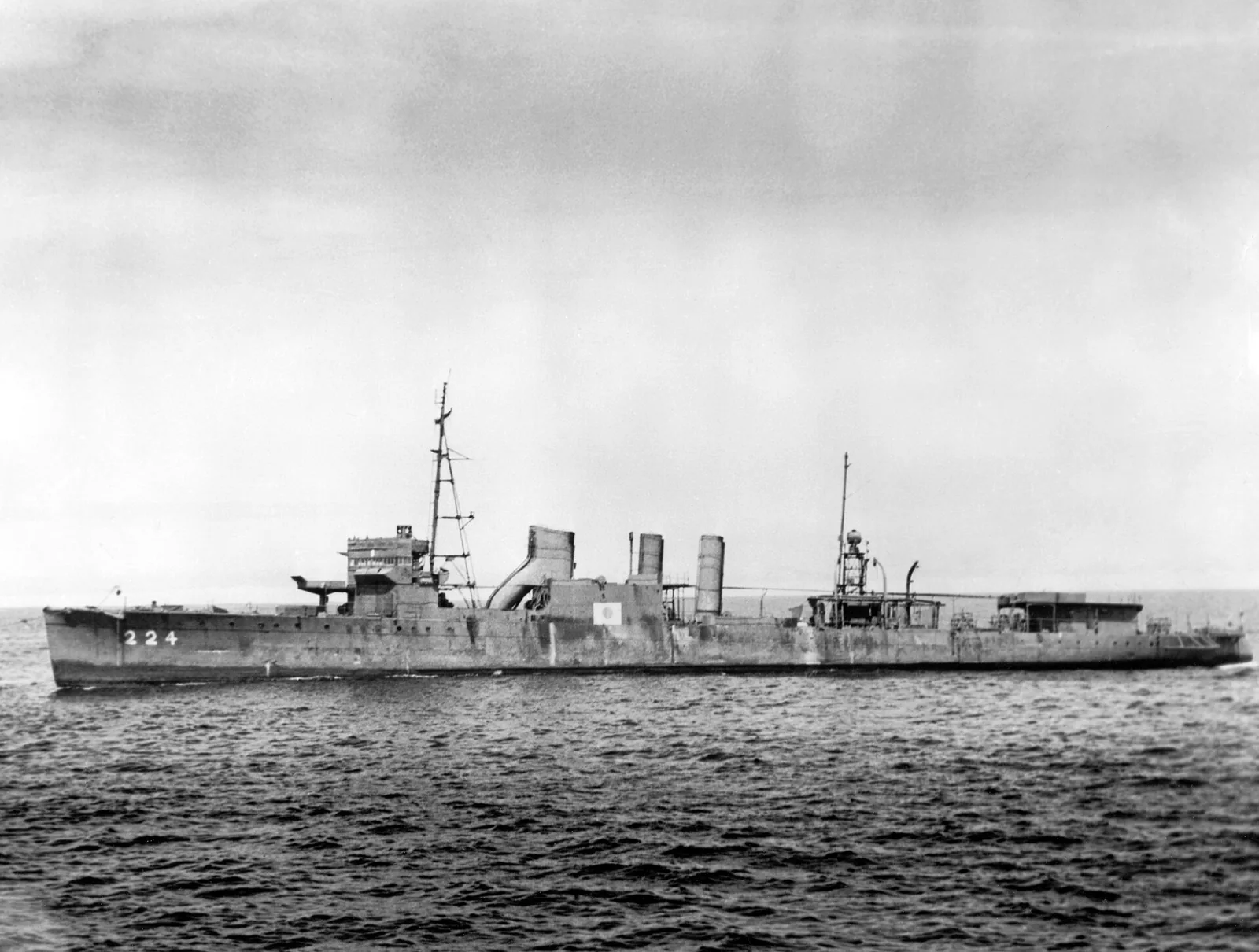
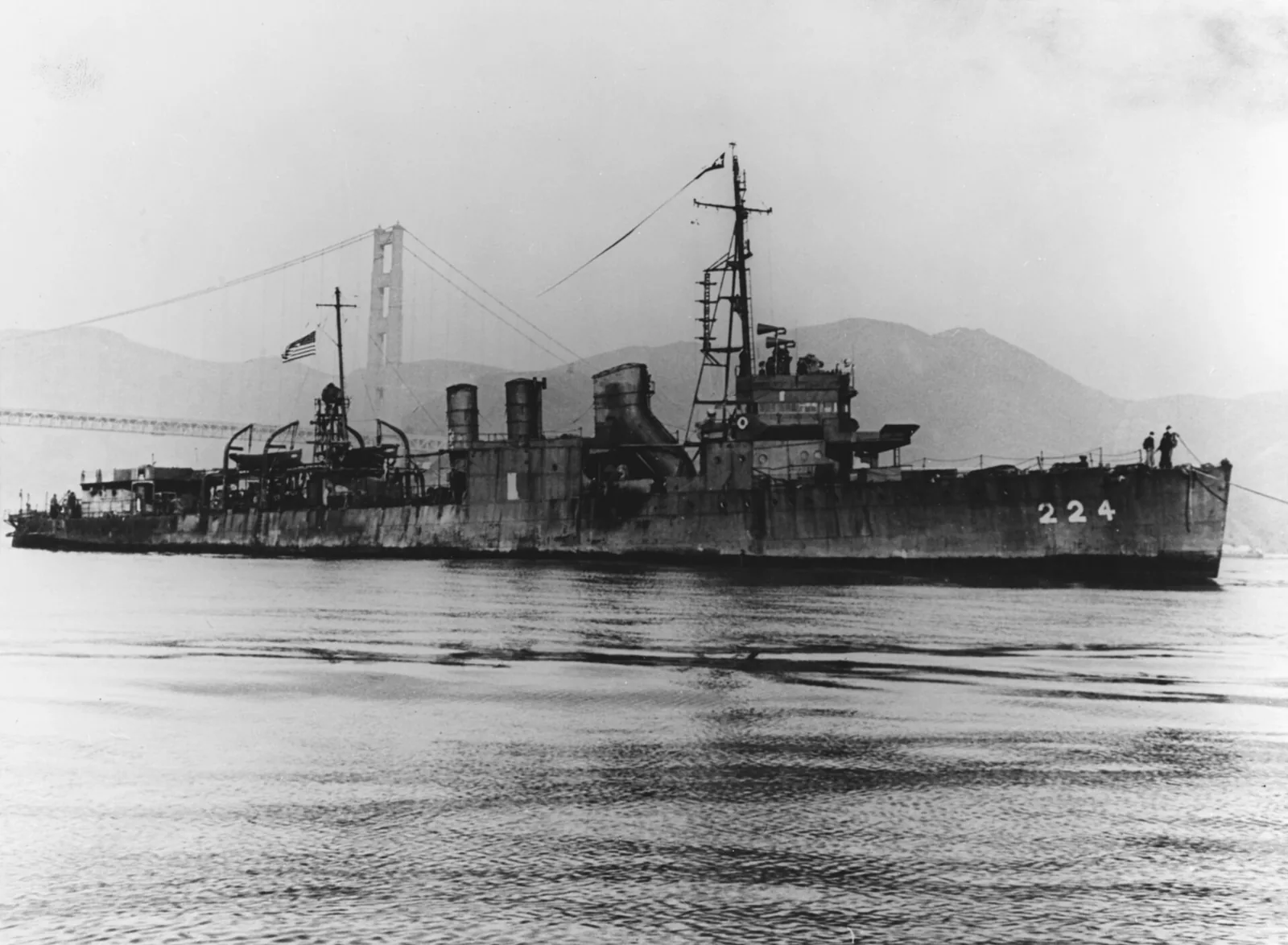
Later in the war, American pilots began reporting an American warship operating far within enemy waters. The ship had a Japanese trunked funnel but the lines for her four-piper hull were unmistakable. After almost a year under water, Stewart had been raised by the Japanese in February 1943 and commissioned by them on 20 September 1943 as Patrol Boat No. 102. She was armed with two 3" guns and operated with the Japanese Southwest Area Fleet on escort duty until arriving at Kure for repairs in November 1944. There her antiaircraft battery was augmented, and she was given a light tripod foremast. She then sailed for the Southwest Pacific, but the American reconquest of the Philippines blocked her way. On 28 April 1945, still under control of the Southwest Area Fleet, she was bombed and damaged by United States Army aircraft at Mokpo, Korea. She was transferred on 30 April to the control of the Kure Navy District; and, in August 1945, was found by American occupation forces laid up in Hiro Bay near Kure.
1945
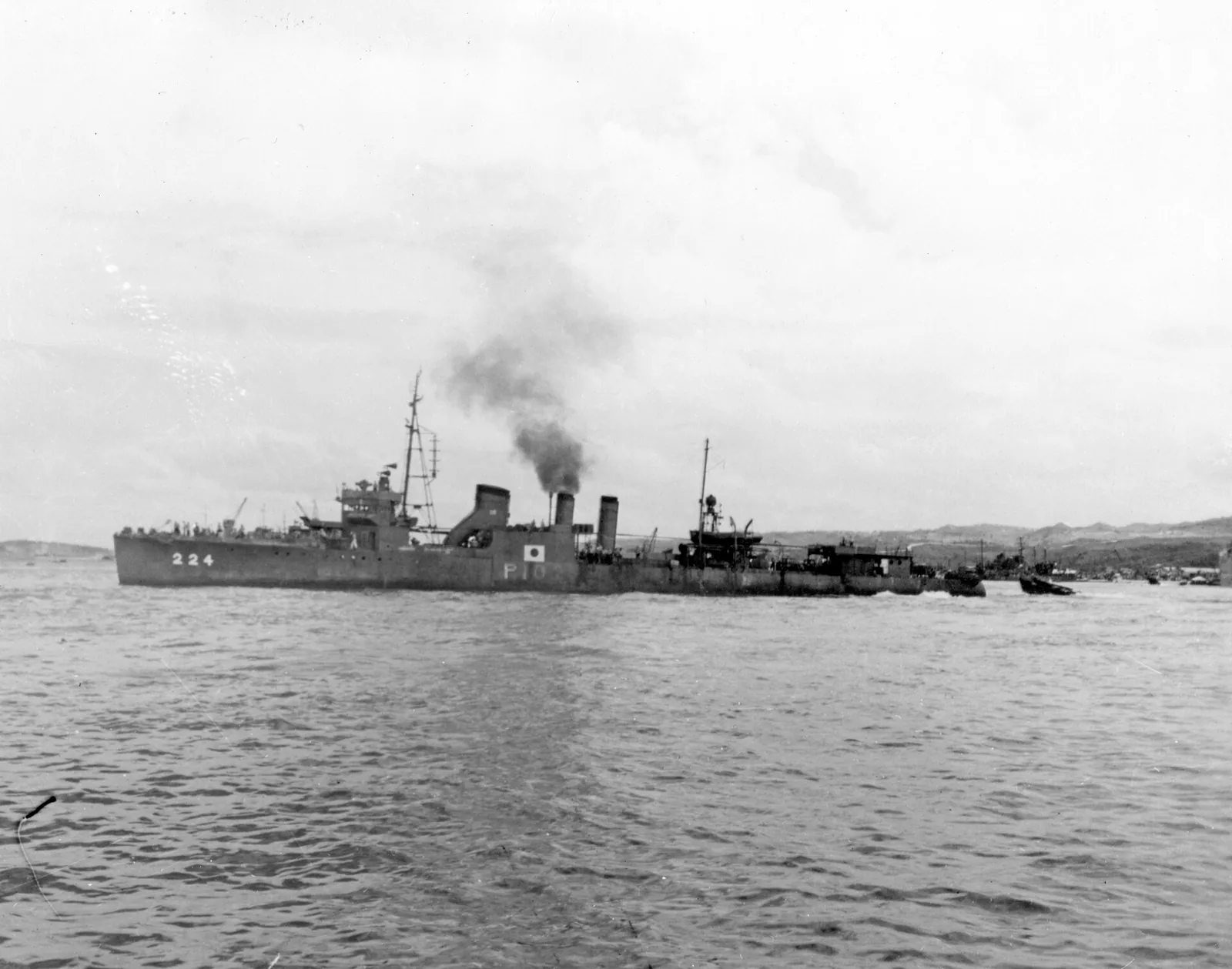
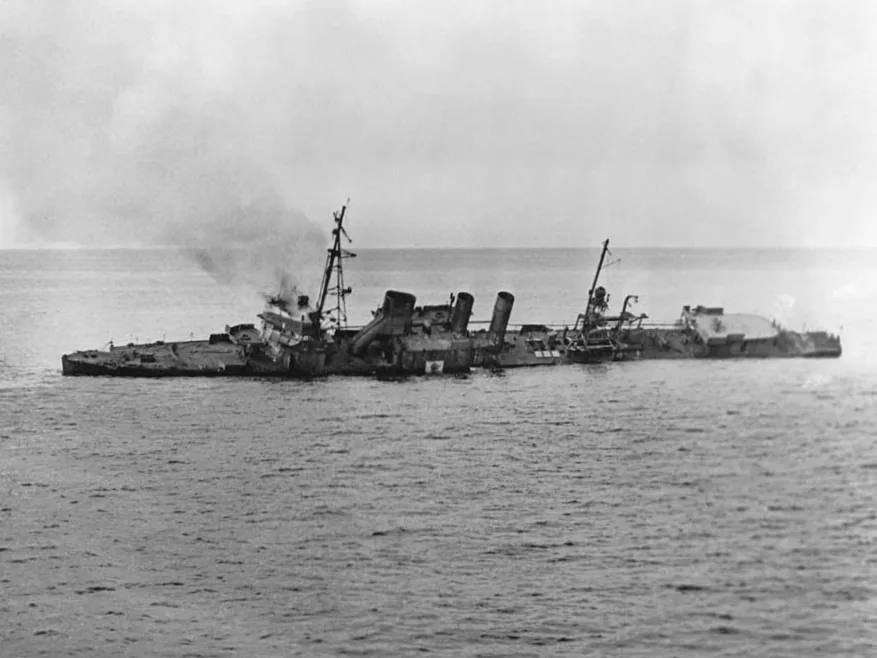
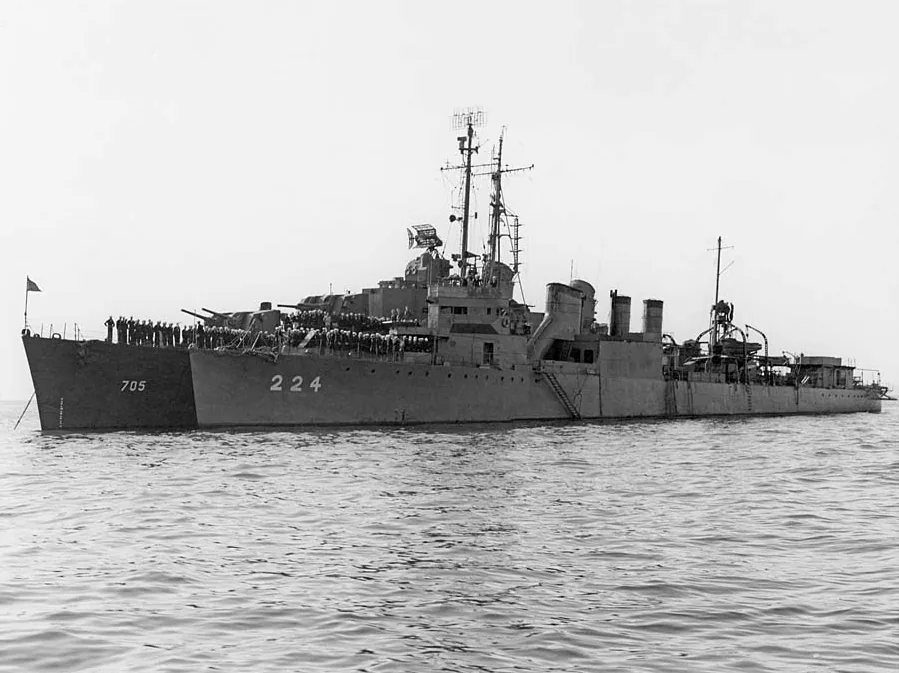
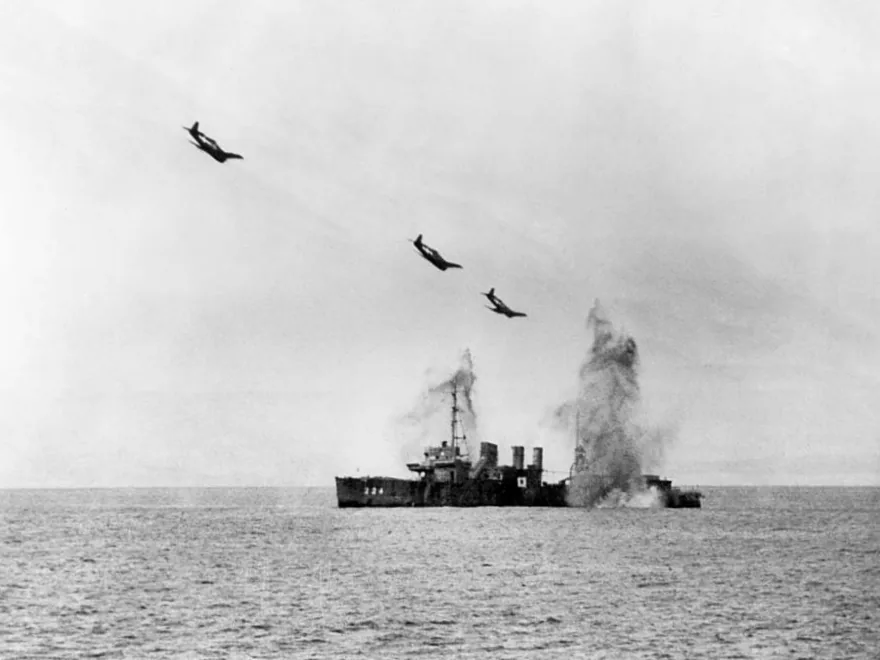
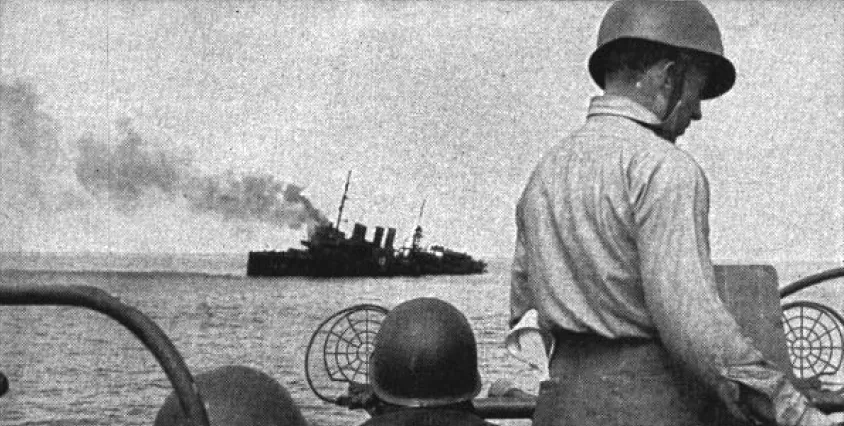
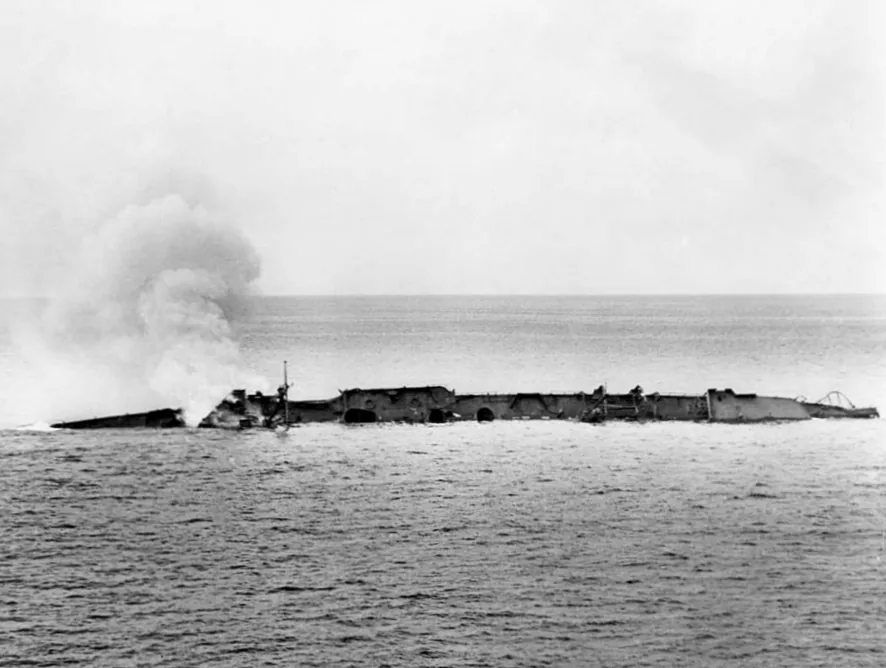
In an emotional cremony on 29 October 1945, the old ship was recommissioned in the United States Navy at Kure. Although officially called simply DD-224, she was nicknamed by her crew "RAMP-224," standing for "Recovered Allied Military Personnel." On the trip home, her engines gave out near Guam, and she arrived at San Francisco in early March 1946 at the end of a towline. DD-224 was struck from the Navy list on 17 April 1946, decommissioned on 23 May 1946, and sunk a day later off San Francisco as a target for aircraft.
Other photographs
Held for this vessel, and not tied to any part of the account above.

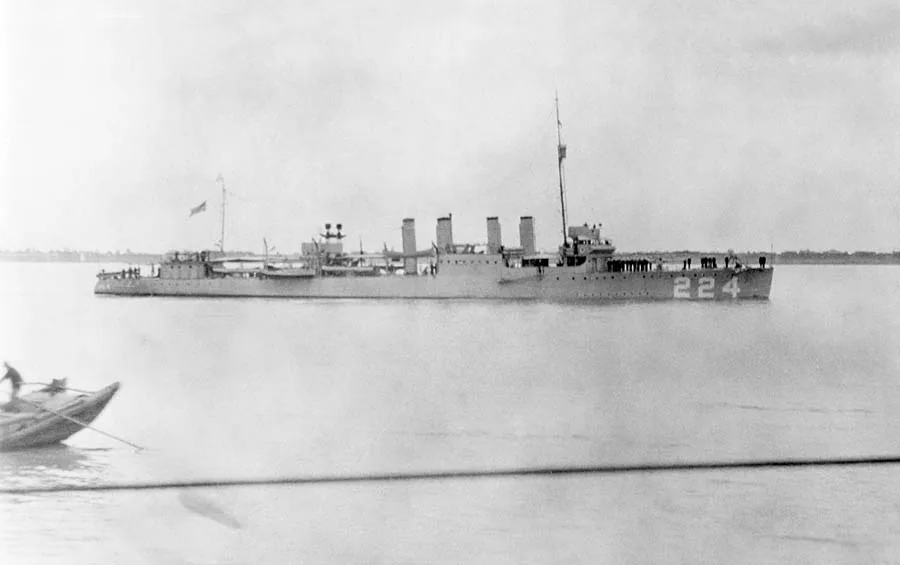
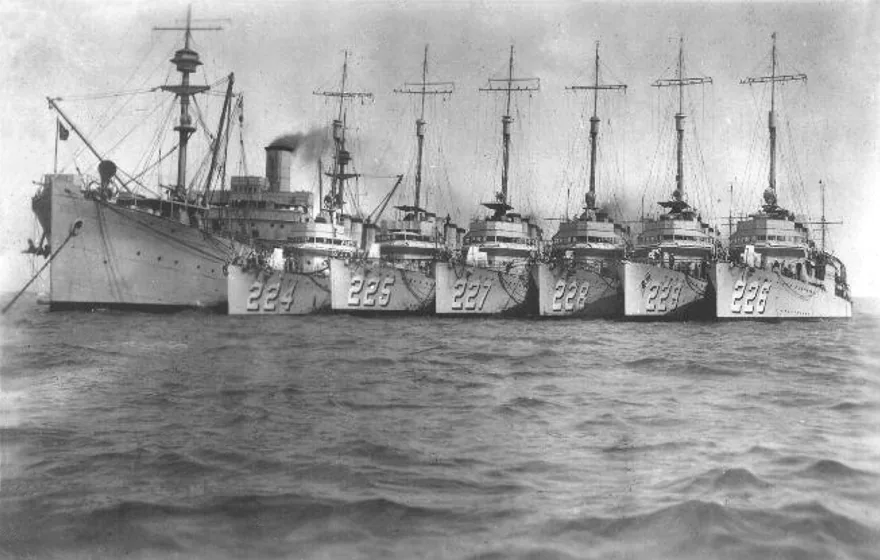
References
Every work this entry draws on. There are no numbered markers in the text above: what we hold is the provenance of the page — this history, this article, these photographs.
- History Stewart II (Destroyer No. 224) Dictionary of American Naval Fighting Ships, Naval History and Heritage Command. A work of the United States Government, in the public domain — the only text on this site reproduced verbatim.
- Facts USS Stewart (DD-224) Structured facts only — dates, dimensions, armament and fate. No wording is taken from it. Harvested 1 August 2026.
- Photograph USS Stewart (DD-224) underway c1930s U.S. Navy — Official U.S. Navy photo NH 61898 from the U.S. Navy Naval History and Heritage Command — Public domain — Wikimedia Commons
- Photograph USS Stewart (DD-224) U.S. Navy — Official U.S. Navy photo 80-G-702833 from the U.S. Navy Naval History and Heritage Command — Public domain — Wikimedia Commons
- Photograph USS Stewart (DD-224) sinking U.S. Navy; The original uploader was Everyguy at English Wikipedia .; 2007-04-12 (original upload date). — Official U.S. Navy photo 80-G-702832 from the U.S. Navy Naval History and Heritage Command — Public domain — Wikimedia Commons
- Photograph 80-G-496014 (16665266714) National Museum of the U.S. Navy — 80-G-496014 — Public domain — Wikimedia Commons
- Photograph 80-G-702833 (17099993158) National Museum of the U.S. Navy — 80-G-702833 — Public domain — Wikimedia Commons
- Photograph NH 67242 U.S. Asiatic Fleet Destroyers off Hankow, China Unknown author — https://www.history.navy.mil/content/history/nhhc/our-collections/photography/numerical-list-of-images/nhhc-series/nh-series/NH-67000/NH-67242.html — Public domain — Wikimedia Commons
- Photograph US warships off Yantai, China, in the late 1930s Color-tinted photograph by the Ah-Fung O.K. Photo Service. Collection of James E. Thompson, 1979. U.S. Naval History and Heritage Command Photograph. — Official U.S. Navy photo NH 90544-KN from the U.S. Navy Naval History and Heritage Command — Public domain — Wikimedia Commons
- Photograph USS Preble (DD-345), USS Stewart (DD-224) and USS Hulbert (DD-342) at Shanghai, China, circa in 1927 William Grandville Verge — Attribution — Wikimedia Commons
- Photograph USS Stewart (DD-224) and USS Compton (DD-705) in October 1945 U.S. Navy — Official U.S. Navy photo 80-G-356625 from the U.S. Navy Naval History and Heritage Command — Public domain — Wikimedia Commons
- Photograph USS Stewart (DD-224) arriving at San Francisco in March 1946 U.S. Navy — Official U.S. Navy photo NH 85604 from the U.S. Navy Naval History and Heritage Command — Public domain — Wikimedia Commons
- Photograph USS Stewart (DD-224) being sunk as target01 1946 U.S. Navy — U.S. Navy All Hands magazine July 1946 , p. 50; official U.S. Navy photo 80-G-702830 from the U.S. Navy Naval History and Heritage Command — Public domain — Wikimedia Commons
- Photograph USS Stewart (DD-224) being sunk as target02 1946 U.S. Navy — U.S. Navy All Hands magazine July 1946 , p. 50 — Public domain — Wikimedia Commons
- Photograph USS Stewart (DD-224) being sunk as target03 1946 U.S. Navy — U.S. Navy All Hands magazine July 1946 , p. 50; Official U.S. Navy photo 80-G-702834 from the U.S. Navy Naval History and Heritage Command — Public domain — Wikimedia Commons
- Photograph USS Stewart (DD-224) in late 1945 U.S. Navy — U.S. Navy All Hands magazine April 1946 , p. 49; official U.S. Navy photo 80-G-496014 from the U.S. Navy Naval History and Heritage Command — Public domain — Wikimedia Commons
- Photograph USS Stewart (DD-224) off Hangzhou (China) c1922 U.S. Navy — Official U.S. Navy photo NH 67131 from the U.S. Navy Naval History and Heritage Command — Public domain — Wikimedia Commons
- Photograph USS Whitney (AD-4) at anchor with USS Stewart (DD-224), USS Pope (DD-225), USS Pillsbury (DD-227), USS John D. Ford (DD-228), USS Truxtun (DD-229) and USS Peary (DD-226), in the 1930s The original uploader was Revragnarok at English Wikipedia ., 2006-08-27 (original upload date) — U.S. Navy photo [1] from Navsource.org . Transferred from en.wikipedia to Commons — Public domain — Wikimedia Commons