HMS Chaser
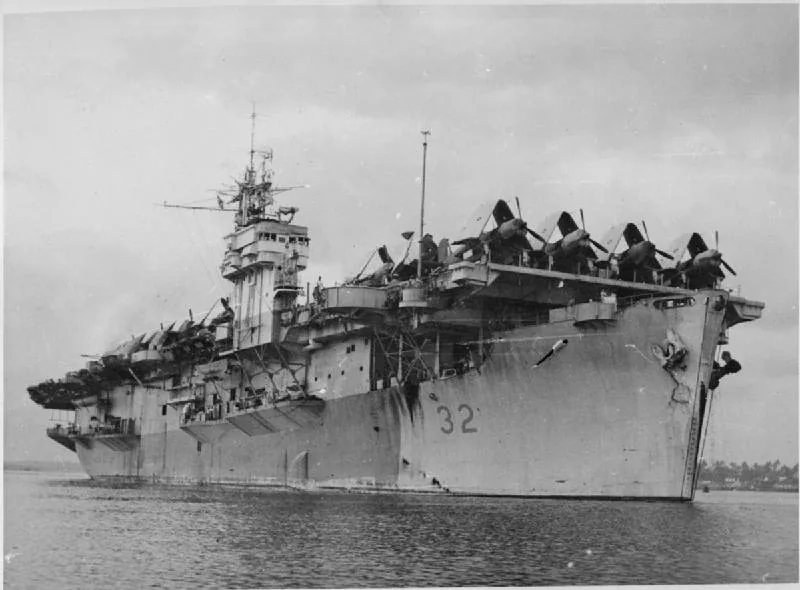
Service
- as Mormacgulf27 March 1943 — 9 April 194313 days of the war
- as Chaser9 April 1943 — 12 May 1946877 days of the war
- as CVE-1012 May 1946 — 3 August 1946
- Name
- HMS Chaser
- Pennant / hull number
- AVG-10
- Namesake
- Moore-McCormack Lines, Inc.
- Builder
- Ingalls Shipbuilding, Pascagoula, Mississippi
- Laid down
- 28 June 1941
- Launched
- 19 June 1942
- Commissioned
- 9 April 1943
- Struck
- 3 August 1946
- Fate
- Sold for merchant use, 20 Dec 1946 (1946)
- Status
- Unknown
Specifications
- Displacement, standard
- 8,385 long tons (8,520 t)
- Displacement, full load
- 13,976 long tons (14,200 t)
- Length
- 150.88 m (495 ft) OA
- Beam
- 21.03 m (69 ft)
- Draught
- 7.01 m (23 ft)
- Speed
- 18 knots (33.3 km/h, 20.7 mph)
- Complement
- 646
- Main gun
- 102 mm (4 in)
HMS Chaser was a escort carrier of the Bogue-class escort carrier (USA), operated by the United States Navy. She carried the pennant number AVG-10. The ship was named after Moore-McCormack Lines. Her keel was laid at Ingalls Shipbuilding, Pascagoula, Mississippi on 28 June 1941. Launched on 19 June 1942, she entered service on 9 April 1943.
Her class ran to 14 ships. The class followed the Long Island-class escort carrier and was succeeded by the Sangamon-class escort carrier.
Displacement was 8,385 long tons standard and 13,976 long tons at full load. She measured 150.9 m (495 ft) long with a beam of 21.0 m (69 ft). Her designed speed was 18 knots, and she carried a complement of 646.
Her main battery was two 102 mm (4 in) guns. She carried 24 aircraft. Her machinery developed 8,500 shp.
She served with the United States Navy as Mormacgulf until 9 April 1943. She then passed to the Royal Navy, serving as Chaser from 9 April 1943. She then passed to the United States Navy, serving as CVE-10 from 12 May 1946. She was in commission for 890 days of the Second World War. She was struck from the register on 3 August 1946.
Written from the harvested record. Every figure above is sourced; the wording is this site's own.
Armament and machinery
Armament and machinery
- Propulsion
- 1 × Allis-Chalmers steam turbine
- 1 × Screw
- Power
- 2 × Foster-Wheeler 285 psi (1,970 kPa) boilers
- 8,500 shp (6,300 kW)
- Armament
- 2 × 4 in/50 caliber MK 9 guns
- 4 × twin 40 mm Bofors anti-aircraft guns (AA) (4×2)
- 8 × twin 20 mm Oerlikon AA cannons
- 10 × single 20 mm Oerlikon AA cannons
- Aircraft
- 24
Sister ships
Sources
- Facts harvested from HMS Chaser on Wikipedia. Figures only — no wording is taken from it.
- Photograph: Royal Navy official photographer — This photograph A 29289 comes from the collections of the Imperial War Museums — Public domain — Wikimedia Commons