USS Mason (DE-529)
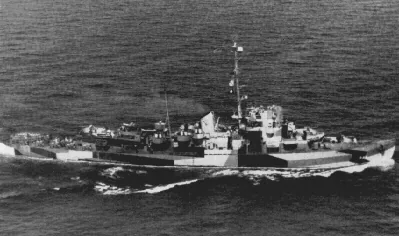
Service
- as Mason20 March 1944 — 12 October 1945531 days of the war
- Name
- USS Mason
- Pennant / hull number
- DE-529
- Laid down
- 14 October 1943
- Launched
- 17 November 1943
- Commissioned
- 20 March 1944
- Decommissioned
- 12 October 1945
- Struck
- 1 November 1945
- Fate
- Sold for scrap 1947 (1947)
- Status
- Scrapped
Specifications
- Displacement, standard
- 1,018 long tons (1,034 t)
- Length
- 88.09 m (289 ft)
- Beam
- 10.67 m (35 ft)
- Draught
- 2.44 m (8 ft)
- Speed
- 21 knots (38.9 km/h, 24.2 mph)
- Complement
- 156
- Main gun
- 20 mm (0.8 in)
Newton Henry Mason was born on 24 December 1918, in New York City, N.Y., the son of David W. and Ida K. Mason. He enlisted as a seaman in the U.S. Navy Reserve on 7 November 1940, and then later received appointment as an aviation cadet, A-V (N), USNR, on 10 February 1941. After earning his wings, Ens. Mason went to the Pacific for his first operational assignment. A Grumman F4F Wildcat pilot, Mason initially reported to Fighting Squadron 3 (VF-3) on board the aircraft carrier Saratoga (CV-3). After being torpedoed in January 1942, Saratoga had to undergo extensive repairs and Mason was re-assigned to VF-2 on board Lexington (CV-2).
In May 1942, U.S. and Australian forces moved to repel a Japanese invasion fleet targeting Port Moresby, Papua New Guinea, and Tulagi, Solomon Islands—ultimately culminating in the pivotal Battle of the Coral Sea (4–8 May 1942). During the initial stages of the Japanese offensive, on 3 and 4 May, Japanese forces successfully invaded Tulagi, but were harassed by planes from Yorktown (CV-5). American and Japanese carrier forces then made their way to the Coral Sea, where, from 7 to 8 May, they launched multiple devastating airstrikes against each other.
Lexington and her air group were among the U.S. aircraft carriers that participated in the battle. On 8 May 1942, Ens. Mason took off from Lexington for his first and last combat mission. Only a few hours into the action he was shot down while battling a group of Mitsubishi A6M Zero fighters from the Japanese aircraft carrier Shōkaku .
Continue to the full service history About 4,111 words
From the Dictionary of American Naval Fighting Ships, compiled by the Naval History and Heritage Command (Mason II (DE-529)). A work of the United States Government, in the public domain.
Armament and machinery
Armament and machinery
- Armament
- 3 × 3-inch/50-caliber guns
- 4 × 1.1-inch/75-caliber guns
- 9 × Oerlikon 20mm cannon
- 2 × depth charge tracks
- 8 × depth charge projector
- 1 × Hedgehog anti-submarine projector
Sister ships
- HMS Bazely
- HMS Goodson
- HMS Inglis
- HMS Lawford (K514)
- USS Andres
- USS Austin (DE-15)
- USS Bebas
- USS Brackett
- USS Brennan
- USS Burden R. Hastings
- USS Cabana
- USS Canfield
- USS Carlson
- USS Charles R. Greer
- USS Cloues
- USS Connolly
- USS Crouter
- USS Crowley
- USS Decker
- USS Deede
- USS Dempsey (DE-26)
- USS Dionne
- USS Dobler
- USS Doherty
Sources
- Facts harvested from USS Mason (DE-529) on Wikipedia. Figures only — no wording is taken from it.
- Service history reproduced verbatim from Mason II (DE-529) , Dictionary of American Naval Fighting Ships — public domain, a work of the United States Government.
- Photograph: US Navy Employee — NHV Photo #: 80-G-245458 via https://www.navsource.net/archives/06/529.htm — Public domain — Wikimedia Commons