USS Odax
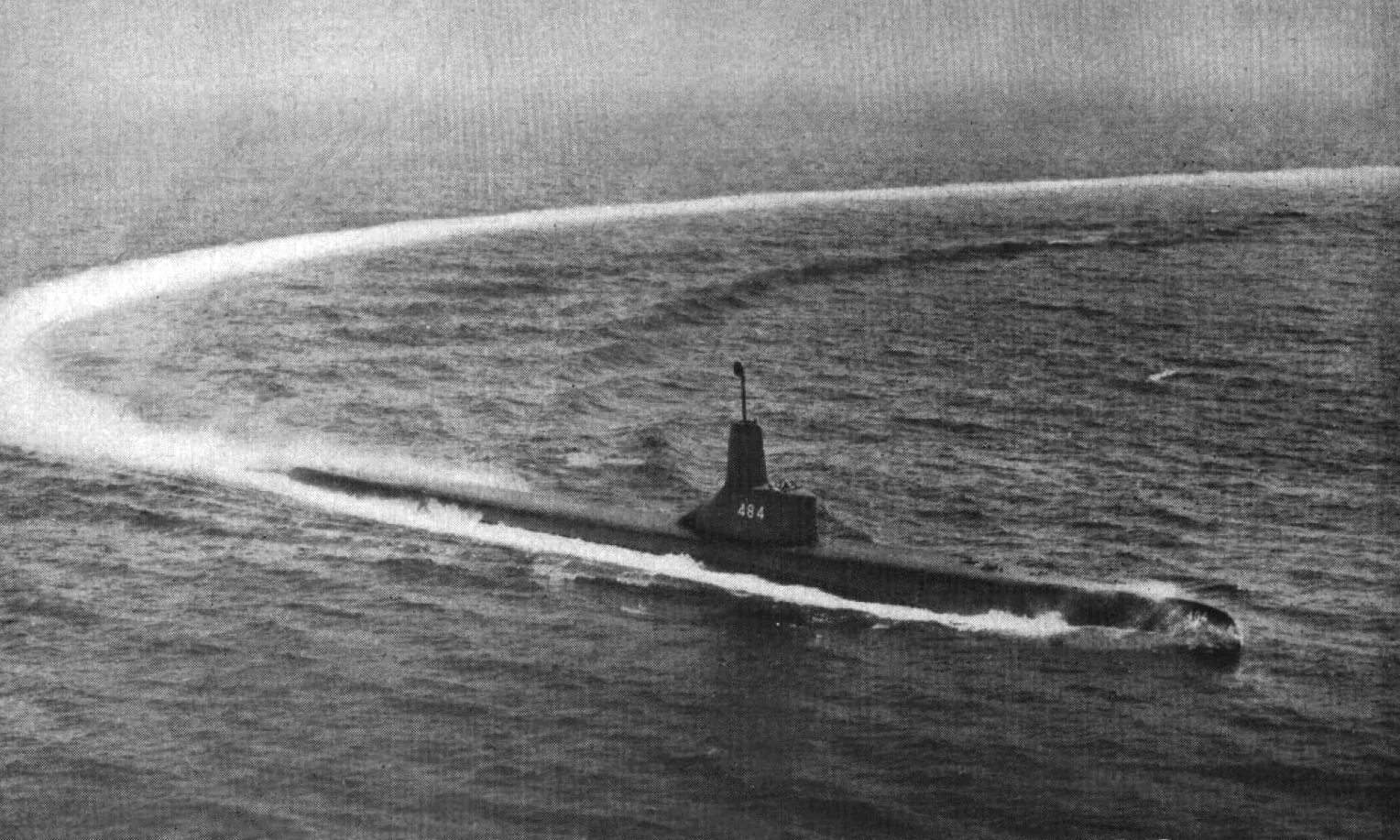
Service
- as USS Odax (SS-484)11 July 1945 — 8 July 197253 days of the war
- as Rio de Janeiro (S-13)8 July 1972 — 1978
- Name
- USS Odax
- Builder
- Portsmouth Naval Shipyard, Kittery, Maine
- Laid down
- 4 December 1944
- Launched
- 10 April 1945
- Commissioned
- 11 July 1945
- Decommissioned
- 8 July 1972
- Struck
- 8 July 1972
- Fate
- Broken up, 1981 (1981)
- Status
- Scrapped
Specifications — As built
- Displacement, surfaced
- 1,570 long tons (1,595 t)
- Displacement, submerged
- 2,414 long tons (2,453 t)
- Length
- 94.79 m (311 ft)
- Beam
- 8.23 m (27 ft)
- Draught
- 5.18 m (17 ft)
- Speed
- 20.3 knots (37.5 km/h, 23.3 mph)
- Range
- 11,000 nmi (20,372 km)
- Complement
- 81
- Main gun
- 127 mm (5 in)
USS Odax was a Tench-class diesel-electric submarine, operated by the United States Navy. Her keel was laid at Portsmouth Naval Shipyard, Kittery, Maine on 4 December 1944. Launched on 10 April 1945, she entered service on 11 July 1945.
24 ships of the class were built. The class followed the Balao-class submarine and was succeeded by the Barracuda class.
The boat displaced 1,570 long tons surfaced and 2,414 long tons submerged. She measured 94.8 m (311 ft) long with a beam of 8.2 m (27 ft). Her designed speed was 20.2 knots, and she carried a complement of 81. Her main battery was of 127 mm (5 in) calibre.
She served with the United States Navy as USS Odax (SS-484) until 8 July 1972. She then passed to the Brazilian Navy, serving as Rio de Janeiro (S-13) from 8 July 1972. She was in commission for 53 days of the Second World War. She was decommissioned on 8 July 1972. She was struck from the register on 8 July 1972.
She was broken up for scrap in 1981.
Written from the harvested record. Every figure above is sourced; the wording is this site's own.
Armament and machinery
This vessel is recorded in 2 configurations. Wartime refits changed armament and complement substantially, so each is kept separately rather than averaged into one set of figures. The figures above are as built.
As built
- Propulsion
- 4 × Fairbanks-Morse Model 38D8-⅛ 10-cylinder opposed piston diesel engines driving electrical generators
- 2 × 126-cell Sargo batteries
- 2 × low-speed direct-drive Elliott electric motors
- two propellers
- 5,400 shp (4.0 MW) surfaced
- 2,740 shp (2.0 MW) submerged
- Armament
- 10 × 21-inch (533 mm) torpedo tubes
- (6 forward, 4 aft)
- 28 torpedoes
- 1 × 5-inch (127 mm) / 25 caliber deck gun
- Bofors 40 mm and Oerlikon 20 mm cannon
Guppy II
- Displacement, surfaced
- 1,870 long tons (1,900 t)
- Displacement, submerged
- 2,440 long tons (2,479 t)
- Length
- 93.57 m (307 ft)
- Beam
- 8.23 m (27 ft)
- Draught
- 5.18 m (17 ft)
- Speed
- 18 knots (33.3 km/h, 20.7 mph)
- Range
- 15,119 nmi (28,000 km)
- Complement
- 9
- Propulsion
- Snorkel added
- Batteries upgraded to GUPPY type, capacity expanded to 504 cells (1 × 184 cell, 1 × 68 cell, and 2 × 126 cell batteries)
- Armament
- 10 × 21 inch (533 mm) torpedo tubes
- (six forward, four aft)
- all guns removed
Sister ships
- PNS Ghazi
- USS Amberjack (SS-522)
- USS Argonaut (SS-475)
- USS Conger
- USS Cutlass
- USS Diablo
- USS Grampus (SS-523)
- USS Irex
- USS Medregal
- USS Pickerel (SS-524)
- USS Quillback
- USS Remora
- USS Requin
- USS Runner (SS-476)
- USS Sea Leopard
- USS Tench
- USS Thornback
- USS Tigrone
- USS Tirante
- USS Toro
- USS Torsk
- USS Trutta
- USS Volador (SS-490)
Sources
- Facts harvested from USS Odax on Wikipedia. Figures only — no wording is taken from it.
- Photograph: U.S. Navy — U.S. Navy All Hands magazine March 1948 . p. 19.; U.S. Navy All Hands magazine October 1951 , p. 2 — Public domain — Wikimedia Commons