USS Haddock (SS-231)
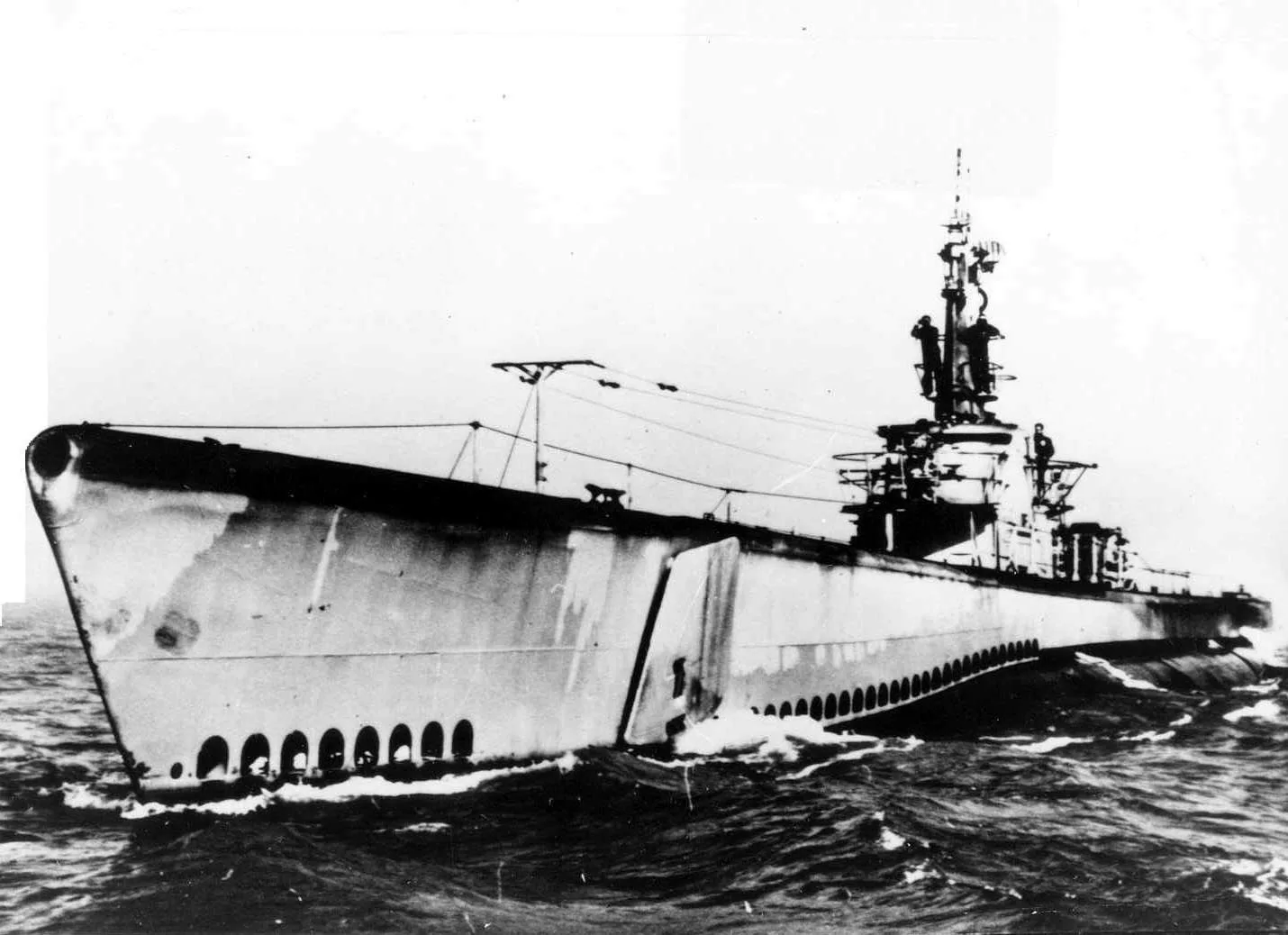
Service
- 14 March 1942 — 12 February 19471,268 days of the war
- Name
- USS Haddock
- Pennant / hull number
- SS-231
- Builder
- Portsmouth Naval Shipyard, Kittery, Maine
- Laid down
- 31 March 1941
- Launched
- 20 October 1941
- Commissioned
- 14 March 1942
- Decommissioned
- 12 February 1947
- Struck
- 1 June 1960
- Fate
- Sold for scrap, 23 August 1960 (1960)
- Status
- Scrapped
Specifications
- Displacement, surfaced
- 1,525 long tons (1,549 t)
- Displacement, submerged
- 2,424 long tons (2,463 t)
- Length
- 94.79 m (311 ft)
- Beam
- 8.23 m (27 ft)
- Draught
- 5.18 m (17 ft)
- Speed
- 21 knots (38.9 km/h, 24.2 mph)
- Range
- 11,000 nmi (20,372 km)
- Complement
- 60
- Main gun
- 76 mm (3 in)
The first Haddock (SS-231) was launched by Navy Yard, Portsmouth, N.H., 20 October 1941; sponsored by Mrs. William H. Allen; and commissioned 14 March 1942, Lt. Cmdr. Arthur H. Taylor in command.
After shakedown and training cruises off New England, Haddock sailed for the Pacific 19 June 1942 and arrived Pearl Harbor 16 July. She departed on her first war patrol 28 July, the first submarine to do so with the new SJ-type submarine surface radar. This equipment added greatly to her power in seeking out and destroying enemy ships in darkness or reduced visibility. Penetrating into the Bonin Island-East China Sea area, Haddock attacked a freighter on the surface 12 August, damaged her, and next day sank an unidentified transport of about 4,000 tons. In the Formosa Straits 26 August she missed with four stern shots at Teinshum Maru but sent the target to the bottom by swinging around hard for a shot from the bow tubes. Haddock patrolled off Okinawa before returning to Midway 19 September 1942.
Haddock's second war patrol, commencing 11 October from Midway, was carried out in the Yellow Sea. After two attacks without hits, the submarine torpedoed Tekkai Maru amidships 3 November, breaking her in two. She was forced to break off another attack 6 November because of destroyers and search aircraft, but during the night of 11 November blew off the stern of cargo ship Venice Maru east of the island of Honshu. Haddock damaged another ship 13 November, only to be prevented from finishing her off by escort craft, and expended her last torpedo on an empty tanker 16 November. After a brief gunfire duel with her victim, the submarine headed for Pearl Harbor, arriving 4 December.
Continue to the full service history About 1,176 words
From the Dictionary of American Naval Fighting Ships, compiled by the Naval History and Heritage Command (Haddock I (SS-231)). A work of the United States Government, in the public domain.
Armament and machinery
Armament and machinery
- Propulsion
- 4 × Fairbanks-Morse Model 38D8-<templatestyles src="Fraction/styles.css" />1⁄8 9-cylinder opposed-piston diesel engines driving electrical generators
- 2 × 126-cell Sargo batteries
- 4 × high-speed Elliott electric motors with reduction gears
- 2 × propellers
- 5,400 shp (4.0 MW) surfaced
- 2,740 shp (2.04 MW) submerged
- Armament
- 10 × 21-inch (533 mm) torpedo tubes
- 6 forward, 4 aft
- 24 torpedoes
- 1 × 3-inch (76 mm) / 50 caliber deck gun
- Bofors 40 mm and Oerlikon 20 mm cannon
Sister ships
- USS Albacore (SS-218)
- USS Amberjack (SS-219)
- USS Angler
- USS Barb (SS-220)
- USS Bashaw
- USS Blackfish
- USS Bluefish (SS-222)
- USS Bluegill
- USS Bonefish (SS-223)
- USS Bream
- USS Cavalla (SS-244)
- USS Cero (SS-225)
- USS Cobia
- USS Cod
- USS Corvina
- USS Croaker
- USS Dace (SS-247)
- USS Darter (SS-227)
- USS Dorado (SS-248)
- USS Drum (SS-228)
- USS Finback (SS-230)
- USS Flasher (SS-249)
- USS Flier
- USS Flounder
Sources
- Facts harvested from USS Haddock (SS-231) on Wikipedia. Figures only — no wording is taken from it.
- Service history reproduced verbatim from Haddock I (SS-231) , Dictionary of American Naval Fighting Ships — public domain, a work of the United States Government.
- Photograph: Unknown author — Unknown source — Public domain — Wikimedia Commons