USS Atule
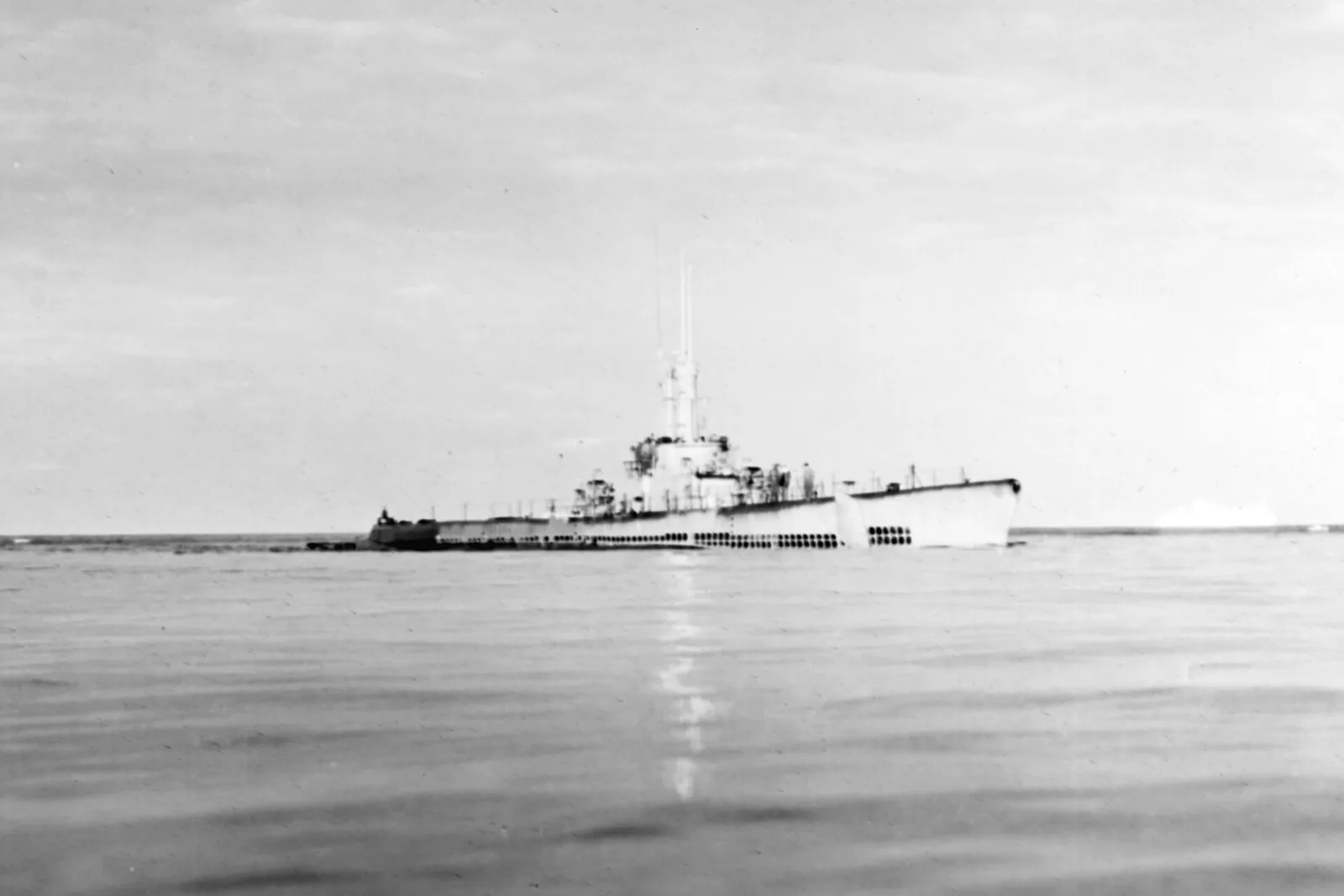
Service
- as USS Atule (SS-403)21 June 1944 — 6 April 1970438 days of the war
- as BAP Pacocha (SS-48)31 July 1974 — 26 August 1988
- Name
- USS Atule
- Builder
- Portsmouth Naval Shipyard, Kittery, Maine
- Laid down
- 2 December 1943
- Launched
- 6 March 1944
- Commissioned
- 21 June 1944
- Decommissioned
- 8 September 1947
- Recommissioned
- 8 March 1951
- Struck
- 15 August 1973
- Fate
- Rammed and sunk by a fishing trawler on 26 August 1988 (1988)
- Status
- Wreck
Specifications — World War II
- Displacement, submerged
- 1,526 long tons (1,550 t)
- Length
- 94.79 m (311 ft)
- Beam
- 8.23 m (27 ft)
- Draught
- 4.88 m (16 ft)
- Range
- 11,000 nmi (20,372 km)
- Complement
- 10
- Main gun
- 127 mm (5 in)
USS Atule was a Balao-class submarine diesel-electric submarine, operated by the United States Navy. Her keel was laid at Portsmouth Naval Shipyard, Kittery, Maine on 2 December 1943. She entered service on 21 June 1944, having been launched on 6 March 1944.
Her class ran to 111 ships. The class followed the Gato-class submarine and was succeeded by the Tench-class submarine.
The boat displaced 1,526 long tons submerged. She measured 94.8 m (311 ft) long with a beam of 8.2 m (27 ft). Her designed speed was 17.3 knots, and she carried a complement of 10. Her main battery was of 127 mm (5 in) calibre.
She served with the United States Navy as USS Atule (SS-403) until 6 April 1970. She then passed to the Peruvian Navy, serving as BAP Pacocha (SS-48) from 31 July 1974. She was in commission for 438 days of the Second World War. She was decommissioned on 8 September 1947. She recommissioned on 8 March 1951. She was struck from the register on 15 August 1973.
She was sunk on 26 August 1988. The wreck survives.
Written from the harvested record. Every figure above is sourced; the wording is this site's own.
Armament and machinery
This vessel is recorded in 2 configurations. Wartime refits changed armament and complement substantially, so each is kept separately rather than averaged into one set of figures. The figures above are as built.
World War II
- Propulsion
- 4 × Fairbanks-Morse Model 38D8-⅛ 10-cylinder opposed piston diesel engines driving electrical generators
- 2 × 126-cell Sargo batteries
- 4 × high-speed Elliott electric motors with reduction gears
- two propellers
- 5,400 shp (4.0 MW) surfaced
- 2,740 shp (2.0 MW) submerged
- Armament
- 10 × 21-inch (533 mm) torpedo tubes
- 6 forward, 4 aft
- 24 torpedoes
- 1 × 5-inch (127 mm) / 25 caliber deck gun
- Bofors 40 mm and Oerlikon 20 mm cannon
Guppy IA
- Displacement, submerged
- 1,830 long tons (1,859 t)
- Length
- 93.57 m (307 ft)
- Beam
- 8.23 m (27 ft)
- Draught
- 5.18 m (17 ft)
- Speed
- 17.3 knots (32 km/h, 19.9 mph)
- Range
- 17,000 nmi (31,484 km)
- Complement
- 10
- Propulsion
- Submarine snorkel added, Batteries upgraded to Sargo standard II
- Armament
- 10 × 21 inch (533 mm) torpedo tubes (six forward, four aft), all guns removed
Sister ships
- ARA Santa Fe (S-21)
- USS Apogon
- USS Archerfish (SS-311)
- USS Aspro (SS-309)
- USS Balao
- USS Bang
- USS Barbel (SS-316)
- USS Barbero
- USS Batfish (SS-310)
- USS Baya
- USS Becuna
- USS Bergall (SS-320)
- USS Besugo
- USS Billfish (SS-286)
- USS Blackfin
- USS Blanquillo (SS-323)
- USS Blenny
- USS Blower
- USS Blueback (SS-326)
- USS Boarfish
- USS Bowfin
- USS Brill
- USS Bugara
- USS Bullhead
Sources
- Facts harvested from USS Atule on Wikipedia. Figures only — no wording is taken from it.
- Photograph: Unknown author — U.S. Navy photo 80-G-636420 — Public domain — Wikimedia Commons