USS Sand Lance (SS-381)
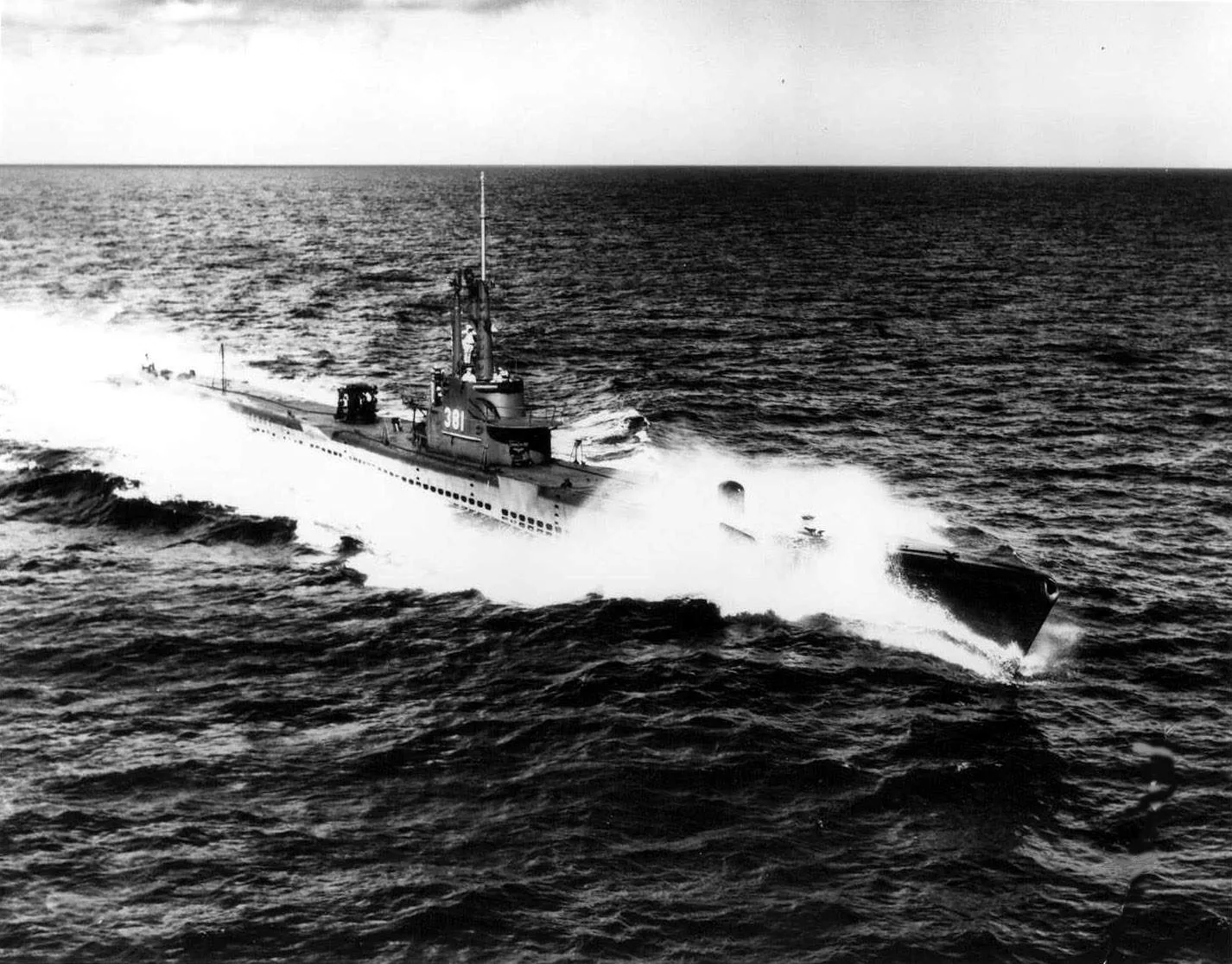
Service
- as USS Sand Lance (SS-381)9 October 1943 — 7 September 1963694 days of the war
- as Rio Grande do Sul (S-11)7 September 1963 — 15 September 1972
- Name
- USS Sand Lance
- Pennant / hull number
- SS-381
- Namesake
- Sand lance
- Builder
- Portsmouth Naval Shipyard, Kittery, Maine
- Laid down
- 12 March 1943
- Launched
- 25 June 1943
- Commissioned
- 9 October 1943
- Decommissioned
- 14 February 1946
- Recommissioned
- 6 April 1963
- Struck
- 1 September 1972
- Fate
- Cannibalized for spare parts
- Status
- Unknown
Specifications
- Length
- 94.79 m (311 ft)
- Beam
- 8.23 m (27 ft)
- Draught
- 4.88 m (16 ft)
- Speed
- 20.3 knots (37.5 km/h, 23.3 mph)
- Range
- 11,000 nmi (20,372 km)
- Complement
- 10
- Main gun
- 127 mm (5 in)
The first Sand Lance, a submarine, was laid down on 12 March 1943 by the Portsmouth (N.H.) Naval Shipyard; launched on 25 June 1943; sponsored by Mrs. Edith Burrows; and commissioned on 9 October 1943 at Portsmouth, N.H., Comdr. Malcolm E. Garrison in command.
Sand Lance conducted training exercises out of New London, Conn., until 18 December 1943 when she sailed for the Panama Canal. She transited the canal on 30 December and reached her base of operations, Pearl Harbor, Hawaii, on 17 January 1944. On 8 February, she got underway for the first of her five war patrols. She stopped at Midway Island for fuel, then headed for the Kuril Islands.
Before entering her patrol area off Paramushiro on 24 February, she passed through two typhoons and encountered fields of slush ice and patches of drift ice. Sand Lance encountered her first victim, Kaika Maru, taking shelter from a blizzard in the lee of Paramushiro's southeast point. Her well-aimed torpedoes sent that enemy ship to the bottom. Though her number one periscope had been heavily damaged by drift ice, she pressed home attacks on a convoy on the night of 2 and 3 March, sinking the 4,521-ton cargo ship, Akashisan Maru, and damaging other ships.
Continue to the full service history About 997 words
From the Dictionary of American Naval Fighting Ships, compiled by the Naval History and Heritage Command (Sand Lance I (SS-381)). A work of the United States Government, in the public domain.
Armament and machinery
Armament and machinery
- Propulsion
- 4 × Fairbanks-Morse Model 38D8-⅛ 10-cylinder opposed piston diesel engines driving electrical generators
- 2 × 126-cell Sargo batteries
- 4 × high-speed Elliott electric motors with reduction gears
- two propellers
- 5,400 shp (4.0 MW) surfaced
- 2,740 shp (2.0 MW) submerged
- Armament
- 10 × 21-inch (533 mm) torpedo tubes
- 6 forward, 4 aft
- 24 torpedoes
- 1 × 5-inch (127 mm) / 25 caliber deck gun
- Bofors 40 mm and Oerlikon 20 mm cannon
Sister ships
- ARA Santa Fe (S-21)
- USS Apogon
- USS Archerfish (SS-311)
- USS Aspro (SS-309)
- USS Atule
- USS Balao
- USS Bang
- USS Barbel (SS-316)
- USS Barbero
- USS Batfish (SS-310)
- USS Baya
- USS Becuna
- USS Bergall (SS-320)
- USS Besugo
- USS Billfish (SS-286)
- USS Blackfin
- USS Blanquillo (SS-323)
- USS Blenny
- USS Blower
- USS Blueback (SS-326)
- USS Boarfish
- USS Bowfin
- USS Brill
- USS Bugara
Sources
- Facts harvested from USS Sand Lance (SS-381) on Wikipedia. Figures only — no wording is taken from it.
- Service history reproduced verbatim from Sand Lance I (SS-381) , Dictionary of American Naval Fighting Ships — public domain, a work of the United States Government.
- Photograph: U.S. Navy photo — https://www.navsource.net/archives/08/08381.htm — Public domain — Wikimedia Commons