USS Sea Devil (SS-400)
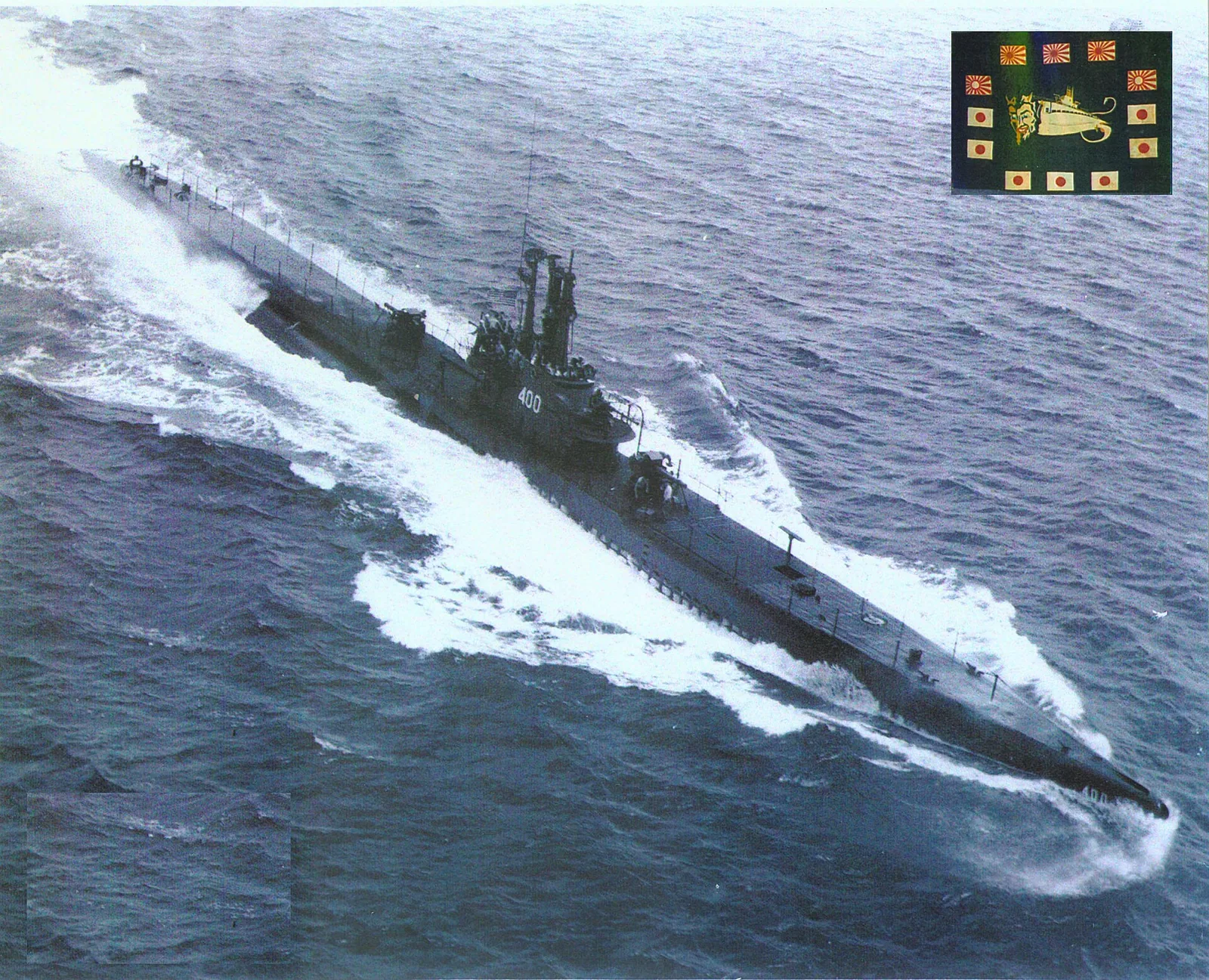
Service
- as USS Sea Devil24 May 1944 — 17 February 1964466 days of the war
- Name
- USS Sea Devil
- Pennant / hull number
- SS-400
- Namesake
- The sea devil, also known as the manta ray and devil ray
- Builder
- Portsmouth Naval Shipyard, Kittery, Maine
- Laid down
- 18 November 1943
- Launched
- 28 February 1944
- Commissioned
- 24 May 1944
- Decommissioned
- 9 September 1948
- Recommissioned
- 3 March 1951
- Struck
- 1 April 1964
- Fate
- Sunk as a target off southern California 24 November 1964 (1964)
- Status
- Wreck
Specifications
- Displacement, submerged
- 2,391 long tons (2,429 t)
- Length
- 94.79 m (311 ft)
- Beam
- 8.23 m (27 ft)
- Draught
- 4.88 m (16 ft)
- Speed
- 20.3 knots (37.5 km/h, 23.3 mph)
- Range
- 11,000 nmi (20,372 km)
- Complement
- 10
- Main gun
- 127 mm (5 in)
The first Sea Devil (SS-400) was laid down on 18 November 1943 at the Portsmouth (N.H.) Navy Yard; launched on 28 February 1944; sponsored by Mrs. Sherman K. Kennedy; and commissioned on 24 May 1944, Comdr. Ralph E. Styles in command.
Completing shakedown training at New London, Sea Devil departed that port on 11 July 1944 and arrived at her home port, Pearl Harbor, on 9 August to join Submarine Division (SubDiv) 281 and prepare for her first war patrol. On 3 September, she sailed west. By the 15th, she was 500 miles off Honshu, and, during the early morning darkness, made contact with her first enemy ships, two sampan-type patrol vessels. Rough seas, however, precluded an attack; and she continued on to patrol in the shipping lanes to Japan's major ports: Yokohama, Kobe, and Osaka.
On the 16th, at 0432, Sea Devil made her second contact; submerged; and commenced closing the target. At 0538, the enemy, a cargo submarine, was sighted. At 0545, Sea Devil made her first attack. Four torpedoes were fired. Two exploded against the target. Sea Devil lost depth control. A minute later, periscope depth was regained. Brown smoke marked the enemy's previous location. Seven underwater explosions followed. By 0553, a large oil slick covered the site where I-364 had gone down.
Continue to the full service history About 2,567 words
From the Dictionary of American Naval Fighting Ships, compiled by the Naval History and Heritage Command (Sea Devil I (SS-400)). A work of the United States Government, in the public domain.
Armament and machinery
Armament and machinery
- Propulsion
- 4 × Fairbanks-Morse Model 38D8-⅛ 10-cylinder opposed piston diesel engines driving electrical generators
- 2 × 126-cell Sargo batteries
- 4 × high-speed Elliott electric motors with reduction gears
- two propellers
- 5,400 shp (4.0 MW) surfaced
- 2,740 shp (2.0 MW) submerged
- Armament
- 10 × 21-inch (533 mm) torpedo tubes
- 6 forward, 4 aft
- 24 torpedoes
- 1 × 5-inch (127 mm) / 25 caliber deck gun
- Bofors 40 mm and Oerlikon 20 mm cannon
Sister ships
- ARA Santa Fe (S-21)
- USS Apogon
- USS Archerfish (SS-311)
- USS Aspro (SS-309)
- USS Atule
- USS Balao
- USS Bang
- USS Barbel (SS-316)
- USS Barbero
- USS Batfish (SS-310)
- USS Baya
- USS Becuna
- USS Bergall (SS-320)
- USS Besugo
- USS Billfish (SS-286)
- USS Blackfin
- USS Blanquillo (SS-323)
- USS Blenny
- USS Blower
- USS Blueback (SS-326)
- USS Boarfish
- USS Bowfin
- USS Brill
- USS Bugara
Sources
- Facts harvested from USS Sea Devil (SS-400) on Wikipedia. Figures only — no wording is taken from it.
- Service history reproduced verbatim from Sea Devil I (SS-400) , Dictionary of American Naval Fighting Ships — public domain, a work of the United States Government.
- Photograph: U.S. Navy (USN photo provided by Capt. Ralph E. Styles, former CO of the boat) — U.S. Navy photo [1] from Navsource.org — Public domain — Wikimedia Commons